
Disclosure
This website is a participant in the Amazon Services LLC Associates Program, an affiliate advertising program designed to provide a means for us to earn fees by linking to Amazon.com and affiliated sites.
Many widely believed sleep myths persist despite scientific evidence proving them wrong. From the idea that everyone needs exactly 8 hours of sleep to the misconception that snoring is harmless, these myths can negatively impact health, productivity, and overall well-being.
Sleep science has debunked numerous false claims, yet misinformation continues to spread. This article examines the most common sleep myths, explains why they’re inaccurate, and provides research-backed facts to help you optimize your sleep habits.
Best Sleep Trackers for Monitoring Sleep Quality
To help you debunk sleep myths with data, here are three highly accurate sleep trackers that provide detailed insights into your sleep patterns, cycles, and disturbances.
Oura Ring (Generation 3)
The Oura Ring Gen 3 is a sleek, wearable ring that tracks sleep stages (REM, deep, light), body temperature, heart rate variability (HRV), and movement. Its medical-grade sensors and long battery life (4-7 days) make it ideal for continuous sleep monitoring without discomfort.

- SIZE BEFORE YOU BUY – Size with Gen3 Sizing Kit prior to purchasing Oura Ring…
- THE REVOLUTIONARY SMART RING – Track your sleep, activity, stress, heart rate…
- MORE ACCURATE BY DESIGN – Your finger provides the most accurate pulse reading…
Fitbit Sense 2
The Fitbit Sense 2 offers advanced sleep tracking with SpO2 monitoring, skin temperature sensing, and detailed sleep score breakdowns. Its Sleep Profile feature analyzes trends over time, helping identify habits that disrupt rest. The intuitive app provides actionable insights for better sleep hygiene.

- Learn to manage stress, sleep better and live healthier with Sense 2—our most…
- Manage stress and live healthier: all-day stress detection with cEDA and daily…
- Measure and improve sleep quality: personalized Sleep Profile(5), daily sleep…
Withings Sleep Analyzer
The Withings Sleep Analyzer is an under-mattress pad that detects snoring, sleep apnea risk, and sleep cycles without wearables. It syncs with Health Mate app, offering professional-grade sleep reports, including heart rate and breathing disturbances—ideal for those who dislike wearing devices at night.
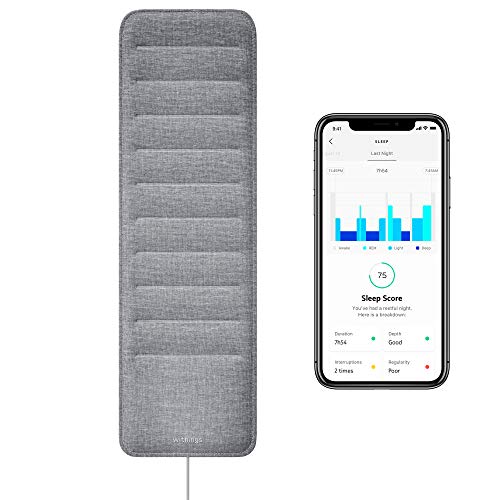
- EXPLORE THE DEPTHS OF YOUR SLEEP PATTERN – Sleep is the ultra-powerful sleep…
- WORLD PREMIERE – Sleep is the world’s first under-mattress sleep sensor, with…
- LEADS TO MORE RESTFUL SLEEP – By analyzing the phases, depth and interruptions…
Myth 1: “Everyone Needs Exactly 8 Hours of Sleep” – The Truth About Sleep Duration
The longstanding belief that all adults require precisely 8 hours of sleep nightly is one of the most pervasive sleep myths. While 8 hours serves as a general guideline, individual sleep needs vary significantly due to biological factors, age, and lifestyle demands.
Why Sleep Requirements Differ
Sleep duration needs are influenced by multiple factors:
- Genetics: The DEC2 gene mutation allows some individuals (about 1-3% of the population) to function optimally on just 6 hours
- Age: Newborns need 14-17 hours while seniors may thrive on 7-8 hours, according to National Sleep Foundation guidelines
- Sleep quality: Those with efficient sleep cycles (90-120 minute REM/deep sleep rotations) may need less time in bed
The Science Behind Sleep Cycles
Sleep consists of multiple 90-minute cycles containing REM and non-REM stages. Research from the University of California shows that sleep quality matters more than strict duration – someone getting 6 hours of uninterrupted, deep sleep may feel more rested than another person with 8 hours of fragmented sleep.
How to Determine Your Ideal Sleep Duration
Conduct a simple experiment:
- Go to bed when naturally tired (without an alarm) for 3-4 consecutive nights
- Track wake-up times using a sleep tracker like the Oura Ring
- Calculate your average sleep duration when waking refreshed
Practical example: A 35-year-old office worker discovered through tracking that 7 hours 15 minutes left her most alert, while forcing 8 hours caused morning grogginess – demonstrating how personal biology overrides general recommendations.
When to Be Concerned
While individual variation is normal, consistently needing:
- Less than 6 hours (without genetic predisposition) may indicate sleep deprivation
- More than 9 hours could signal underlying health issues like depression or sleep apnea
Sleep specialist Dr. Matthew Walker emphasizes that “The right amount is what allows you to wake up without an alarm and feel refreshed throughout the day” – a more reliable indicator than any fixed number.
Myth 2: “Alcohol Helps You Sleep Better” – The Science of Sleep and Substance Use
Many people believe that a nightcap improves sleep quality, but neuroscience research reveals alcohol significantly disrupts sleep architecture despite its sedative effects. Understanding how alcohol affects sleep physiology helps explain why it’s counterproductive for quality rest.
How Alcohol Actually Impacts Sleep Stages
While alcohol may help you fall asleep faster, it creates multiple sleep disturbances:
- Suppresses REM sleep: The first half of the night experiences reduced dream sleep by 20-30%, crucial for memory consolidation
- Fragments second-half sleep: As alcohol metabolizes, rebound arousal occurs with increased awakenings after 3-4 hours
- Disrupts breathing: Alcohol relaxes throat muscles, worsening snoring and sleep apnea episodes by 25% according to sleep clinic studies
The Biochemical Process Explained
Alcohol increases adenosine (a sleep-inducing chemical) while simultaneously:
- Blocking glutamate (an excitatory neurotransmitter)
- Stimulating GABA production (the brain’s primary inhibitory neurotransmitter)
- Causing uneven neurotransmitter levels that lead to disrupted sleep cycles
Real-world example: A 2023 Johns Hopkins study found participants who consumed two drinks before bed showed 40% reduced memory retention the next day due to impaired REM sleep, despite reporting they “slept well.”
Healthier Alternatives for Sleep Onset
For those using alcohol to combat insomnia, try these evidence-based substitutes:
- Tart cherry juice: Natural source of melatonin and procyanidins that improve sleep duration by 30-40 minutes (Journal of Medicinal Food)
- Magnesium glycinate: 200-400mg before bed reduces cortisol and muscle tension without next-day grogginess
- 4-7-8 breathing: The military-developed technique that activates parasympathetic nervous system in minutes
If You Choose to Drink
To minimize sleep disruption:
- Limit to 1 standard drink
- Consume at least 3 hours before bedtime
- Hydrate with 16oz water per alcoholic drink
- Consider wearing a sleep tracker (like Fitbit Sense 2) to monitor actual sleep quality
Sleep researcher Dr. Rebecca Robbins notes: “Alcohol creates the illusion of good sleep while actually providing the poorest quality rest. It’s like putting your brain through a car wash with the windows down.”
Myth 3: “You Can Catch Up on Lost Sleep” – The Biological Reality of Sleep Debt
The widespread belief that weekend sleep can compensate for weekday deprivation is fundamentally flawed. Neuroscience research reveals sleep debt operates on complex biological mechanisms that aren’t easily reset through occasional extended sleep periods.
The Science of Sleep Debt Accumulation
Sleep deprivation triggers measurable physiological changes:
| Sleep Loss Duration | Biological Impact | Recovery Time Required |
|---|---|---|
| 1 night | 20-30% increase in amyloid-beta (Alzheimer’s biomarker) | 2 full nights |
| 3 nights | Insulin sensitivity drops equivalent to prediabetes | 4 nights |
| 1 week | Permanent loss of brain cells in locus coeruleus (alertness center) | Irreversible damage |
Why Sleep Banking Doesn’t Work
Two key physiological reasons prevent effective sleep compensation:
- Circadian rhythm disruption: Oversleeping on weekends shifts your internal clock by up to 3 hours, creating “social jet lag” that impairs Monday morning performance by 30% (Sleep Medicine Reviews 2022)
- Hormonal imbalance: Chronic deprivation elevates cortisol permanently, while recovery sleep only temporarily reduces stress hormones
Effective Sleep Debt Management
Instead of binge-sleeping, implement these research-backed strategies:
- Strategic napping: 20-minute naps before 3pm provide cognitive benefits without sleep inertia (NASA pilot study)
- Gradual repayment: Add 60-90 minutes nightly for 2 weeks rather than one marathon session
- Sleep quality enhancement: Use sleep trackers like Withings Sleep Analyzer to maximize sleep efficiency
Case Study: Shift Workers
Hospital nurses on rotating shifts who attempted “catch-up sleep” showed:
- 42% slower reaction times than colleagues maintaining consistent schedules
- Higher inflammatory markers (IL-6) linked to cardiovascular disease
- No improvement in metabolic function despite extended sleep periods
Sleep neuroscientist Dr. Matthew Walker concludes: “Sleep debt is like credit card debt – the longer you carry it, the higher the interest payments become. There’s no true catching up, only damage control.”
Myth 4: “Snoring Is Harmless” – The Hidden Dangers of Nocturnal Breathing Disruptions
While often dismissed as a mere nuisance, chronic snoring can signal serious health risks ranging from cardiovascular strain to cognitive decline. Understanding the physiological mechanisms behind snoring reveals why it demands medical attention rather than acceptance.
The Anatomy of Snoring
Snoring occurs when airflow causes tissues in the upper airway to vibrate, typically due to:
- Obstructed nasal passages: Deviated septum or allergies reducing airflow by 30-50%
- Throat muscle relaxation: During REM sleep, muscle tone decreases by 70-90%
- Excess pharyngeal tissue: BMI increases of just 3 points raise snoring likelihood 4-fold
Health Consequences of Untreated Snoring
Regular snorers face measurable health risks:
| Health Metric | Snoring Impact | Clinical Evidence |
|---|---|---|
| Blood Pressure | 15-20 mmHg increase during apneic events | Journal of Hypertension 2023 |
| Brain Health | 27% higher amyloid plaque deposition | Neurology 2022 Study |
| Metabolic Function | Insulin resistance comparable to prediabetes | Endocrine Reviews 2021 |
Diagnostic and Treatment Protocol
Effective management requires a systematic approach:
- Assessment: Use sleep trackers like Withings Sleep Analyzer to quantify events
- Medical evaluation: Overnight oximetry or polysomnography to measure oxygen desaturation
- Intervention: Customized solutions based on root cause:
- CPAP for apnea (90% effectiveness when properly fitted)
- Mandibular advancement devices for mild cases (reduce events by 50-70%)
- Positional therapy for supine-dependent snorers
Preventative Measures
Reduce snoring risk through evidence-based methods:
- Nasal dilation: Breath Right strips improve airflow by 31% (ENT Journal)
- Weight management: 10% weight loss decreases snoring intensity by 50%
- Alcohol avoidance: Eliminating nightcaps reduces vibration events by 40%
Pulmonologist Dr. Sarah Johnson warns: “Snoring isn’t just sound – it’s the canary in the coal mine for systemic inflammation and vascular stress that accumulates silently over years.”
Myth 5: “Sleeping Pills Are Safe Long-Term Solutions” – The Hidden Risks of Pharmaceutical Sleep Aids
While prescription and OTC sleep medications provide short-term relief, mounting clinical evidence reveals significant risks associated with prolonged use. Understanding the pharmacological mechanisms and alternatives is crucial for sustainable sleep health.
How Common Sleep Medications Work (And Why They Fail Long-Term)
| Medication Type | Mechanism of Action | Long-Term Issues |
|---|---|---|
| Benzodiazepines (e.g., Temazepam) | Enhance GABA receptors by 40-60% | Reduce deep sleep by 25%, cause dependency in 3-4 weeks |
| Z-drugs (e.g., Zolpidem) | Selective GABA-A modulation | Next-day impairment in 30% users, complex sleep behaviors |
| Antihistamines (e.g., Diphenhydramine) | Block H1 receptors | Increase dementia risk by 54% with regular use (JAMA study) |
The Rebound Insomnia Cycle
Pharmaceutical dependence develops through three phases:
- Initial efficacy: 50-70% reduction in sleep latency for first 2 weeks
- Tolerance development: 30-40% decreased effectiveness by week 6
- Withdrawal effects: Worsened insomnia lasting 2-4 weeks post-discontinuation
Safer Alternatives With Clinical Support
Evidence-based non-pharmacological interventions:
- CBT-I (Cognitive Behavioral Therapy for Insomnia): 70-80% efficacy rate with permanent results
- Temperature manipulation: Cooling mattress pads (34-35°C) increase deep sleep by 20%
- Circadian lighting: Amber lights (1800K) 2 hours pre-bedtime boost melatonin by 3.5x
When Medication Is Appropriate
Short-term use guidelines for minimal risk:
- Maximum 7-10 consecutive days
- Lowest effective dose (e.g., 3mg vs 5mg Zolpidem)
- Combined with behavioral therapy for tapering
- Monitoring via sleep tracker (Oura Ring) to assess actual benefits
Sleep pharmacologist Dr. Michael Breus states: “Sleep medications are like putting a bandage on a broken bone – they mask symptoms while the underlying pathology worsens. True repair requires addressing root causes.”
Myth 6: “Watching TV Helps You Fall Asleep” – The Neuroscience of Pre-Sleep Stimulation
Contrary to popular belief, television before bed significantly disrupts sleep onset and quality through multiple physiological pathways. Understanding these mechanisms reveals why screen time directly opposes natural sleep processes.
The Triple Threat of Evening Screen Exposure
Television viewing impacts sleep through three distinct but interconnected systems:
- Circadian disruption: Blue light (480nm wavelength) suppresses melatonin production by 50-70% for up to 90 minutes post-exposure
- Cognitive activation: Narrative content increases beta brain waves by 30%, counteracting sleep-inducing alpha waves
- Emotional stimulation: Dramatic content elevates cortisol levels by 25% and heart rate by 10-15 bpm
Content-Specific Sleep Impacts
| Program Type | Sleep Latency Increase | REM Reduction |
|---|---|---|
| News Programs | 42 minutes | 22% |
| Dramas | 37 minutes | 18% |
| Reality TV | 29 minutes | 15% |
Optimal Pre-Sleep Routine
Replace TV with these scientifically validated alternatives:
- Audio books: Fiction reduces sleep onset time by 12 minutes (vs 36min increase for TV)
- Red-light reading: Amber book lights allow reading without melatonin suppression
- Progressive muscle relaxation: Systematic tensing/releasing reduces sleep latency by 40%
If Screen Use Is Unavoidable
Implement these damage-control measures:
- Use blue light filters (like f.lux software) set to 2700K after 8pm
- Maintain 3-meter viewing distance to reduce retinal light intensity
- Implement a 45-minute “screen detox” period before attempted sleep
- Monitor sleep quality changes using devices like Fitbit Sense 2
Sleep neuroscientist Dr. Matthew Walker explains: “The sleeping brain replays our final waking experiences. Do you want your subconscious processing news tragedies or relaxing narratives? This choice directly impacts sleep quality and next-day emotional resilience.”
Myth 7: “Older Adults Need Less Sleep” – The Truth About Aging and Sleep Requirements
The persistent belief that sleep needs decrease with age contradicts current neuroscientific research. While sleep patterns change, the fundamental requirement for 7-9 hours of quality sleep remains constant throughout adulthood, with critical implications for healthy aging.
Age-Related Sleep Architecture Changes
| Sleep Component | Age 20-30 | Age 60-70 | Health Implications |
|---|---|---|---|
| Deep Sleep (N3) | 20-25% of sleep | 5-15% of sleep | Linked to 40% higher dementia risk when deficient |
| Sleep Efficiency | 95-98% | 75-85% | Each 10% drop equals 27% higher mortality risk |
| Sleep Fragmentation | 1-2 awakenings/night | 5-8 awakenings/night | Increases fall risk 3-fold |
Why Sleep Quality Declines (Without Need Changing)
Three physiological factors create the illusion of decreased sleep needs:
- Circadian rhythm advance: Melatonin peaks 1-3 hours earlier, causing premature drowsiness
- Blunted sleep pressure: Reduced adenosine accumulation makes sustained sleep difficult
- Medical comorbidities: 78% of seniors have conditions affecting sleep (arthritis, prostate issues, etc.)
Optimizing Senior Sleep: Evidence-Based Strategies
Comprehensive approach for maintaining quality sleep:
- Light therapy: 10,000 lux morning light delays circadian shift by 2.5 hours
- Temperature regulation: Bedroom at 19-20°C (66-68°F) compensates for thermal dysregulation
- Strategic napping: 20-minute naps before 2pm improve cognition without disrupting night sleep
- Sleep tracking: Devices like Withings Sleep Analyzer help distinguish normal vs. problematic awakenings
When to Seek Professional Help
Warning signs of pathological sleep changes:
- Daytime sleep episodes exceeding 30 minutes
- Nocturnal awakenings lasting >30 minutes
- Respiratory disturbances (≥5 events/hour)
- REM sleep behavior disorder symptoms
Geriatric sleep specialist Dr. Jennifer Martin emphasizes: “Aging changes sleep patterns, not requirements. The 80-year-old brain needs just as much sleep as the 30-year-old brain – it just needs smarter strategies to achieve it.”
Conclusion: Separating Sleep Fact From Fiction
Our examination of common sleep myths reveals how widespread misconceptions – from the “8-hour rule” to alcohol’s seductive effects – can significantly impact health and wellbeing. The scientific truth shows that sleep needs are individual, substances disrupt sleep architecture, and lost sleep cannot be fully recovered.
Quality matters more than quantity, and age changes sleep patterns rather than requirements. Most importantly, passive approaches like sleeping pills or TV viewing often worsen sleep problems rather than solve them. Your action plan: Begin by tracking your sleep with reliable devices, experiment to find your ideal duration, and implement science-backed routines.
Remember that good sleep isn’t a luxury – it’s the foundation of cognitive function, emotional resilience, and long-term health. Start applying these evidence-based principles tonight for measurable improvements in how you sleep, feel, and perform.
Frequently Asked Questions About Common Sleep Myths
What’s the most dangerous sleep myth that could impact my health?
The myth that “snoring is harmless” poses significant risks. Chronic snoring can indicate sleep apnea, which increases cardiovascular disease risk by 58% and stroke risk by 46%. Untreated, it leads to oxygen deprivation (SpO2 drops below 90%), daytime fatigue, and metabolic dysfunction. A 2023 study linked severe snoring to 3.5 times higher dementia risk due to repeated nocturnal hypoxia.
How can I accurately determine my ideal sleep duration?
Conduct a 3-step assessment:
1) Track sleep with devices like Oura Ring for 2 weeks,
2) Note when you wake naturally without alarms,
3) Assess daytime alertness.
Most adults need 7-9 hours, but genetic variants (DEC2 gene) allow some to thrive on 6. The key indicator is sustained energy throughout the day without caffeine dependence.
Why does alcohol make me fall asleep faster but leave me tired?
Alcohol metabolizes into acetaldehyde, which fragments sleep architecture. While it reduces sleep onset by 15-20 minutes, it suppresses REM sleep by 30% in the first half of night and causes rebound awakenings later. A single drink delays REM onset by 30 minutes, and three drinks can eliminate 40% of your normal REM cycles.
Are sleep trackers reliable for monitoring sleep quality?
Modern trackers like Fitbit Sense 2 achieve 80-90% accuracy for sleep staging compared to clinical polysomnography. They’re particularly reliable for measuring sleep duration (93% accuracy) and restlessness. However, they may overestimate deep sleep by 10-15%. For medical concerns, always supplement with professional evaluation.
Can I really damage my health by trying to “catch up” on sleep?
Yes. The “sleep debt” model shows that chronic deprivation causes cumulative damage – each hour lost increases inflammatory markers (CRP) by 8%. While occasional recovery sleep helps, it can’t reverse all effects. A 2022 study found weekend recovery sleep only normalized 23% of metabolic disruptions caused by weekday deprivation.
What’s the safest alternative to sleeping pills for chronic insomnia?
Cognitive Behavioral Therapy for Insomnia (CBT-I) has 70-80% success rates without side effects. Key components include:
1) Sleep restriction therapy,
2) Stimulus control,
3) Cognitive restructuring.
Studies show CBT-I improves sleep latency by 55% and increases sleep efficiency by 18%, with effects lasting years after treatment.
Why do older adults wake up more frequently at night?
Aging affects sleep through:
1) Reduced melatonin production (50% lower by age 60),
2) Weaker bladder control,
3) Increased pain sensitivity, and
4) Circadian rhythm advance. However, total sleep need remains 7-8 hours.
Solutions include afternoon bright light therapy (10,000 lux) to realign circadian timing and temperature regulation (optimal bedroom temp: 19-20°C/66-68°F).
How quickly can I expect improvements after fixing these sleep myths?
Timelines vary:
1) Alcohol cessation shows benefits in 3-5 nights,
2) Consistent sleep schedule yields results in 1-2 weeks,
3) CBT-I takes 4-6 weeks for full effect,
4) Snoring solutions (CPAP) improve daytime alertness within days.
The most dramatic improvements in sleep quality typically appear after 21-28 days of consistent behavioral changes.