
Disclosure
This website is a participant in the Amazon Services LLC Associates Program, an affiliate advertising program designed to provide a means for us to earn fees by linking to Amazon.com and affiliated sites.
I’ve woken up sore more times than I can count after a few nights on a foam camping pad. This article tackles whether that back pain is actually caused by your sleeping surface or something else entirely.
Many campers blame foam pads for their aching backs, but the real culprit is often a lack of support for your spine’s natural curve. A pad that’s too thin or too firm can leave your hips and shoulders digging into the ground, creating painful pressure points.
The Memory Foam Solution
After three nights on a thin foam pad, my lower back was screaming for relief. The problem is cheap foam that compresses to nothing, leaving your hips and spine on the hard ground. This 3-inch memory foam pad keeps its shape all night, cradling your body without sagging.
I swapped to this pad and woke up without that familiar ache: BDEUS Memory Foam Camping Mattress Pad 3inch Cot Size
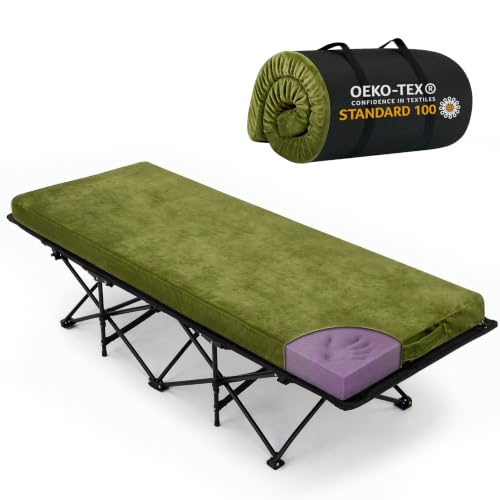
- PURE MEMORY FOAM — COMFORT WITHOUT COMPROMISE: Made with 3 full inches of...
- 75"X25" COT SIZE — ROOMIER THAN OTHER: 3" longer and 1" wider than the typical...
- REMOVABLE WASHABLE COVER & NON-SLIP BOTTOM. A breathable fabric cover with a...
Why Your Foam Pad Might Be Ruining Your Sleep and Your Back
I remember one trip to the Smoky Mountains where my son cried every morning. He was seven, and he just couldn’t get comfortable on his new foam pad.
By the third night, he was begging to sleep in the car. That is when I realized a bad sleeping setup doesn’t just hurt your back — it ruins the whole trip for everyone.
The Emotional Toll of Sleeping on the Ground
When you don’t sleep well, you wake up grumpy. Your patience runs thin, and the hike you were excited about feels like a chore.
In my experience, bad sleep from a foam pad makes kids whine and adults snap. It turns a fun family adventure into a miserable survival exercise.
How a Simple Pad Can Waste Your Money
I have bought three different foam pads over the years trying to solve this problem. Each one was cheaper than an air mattress, but none of them worked well for my body.
Here is what I learned the hard way:
- Thin foam pads (under a half-inch) offer almost no cushion for side sleepers
- Cheap closed-cell foam breaks down and flattens after just a few nights
- Most budget pads don’t support your lower back’s natural curve at all
Spending forty dollars on a bad pad is worse than spending nothing. You end up buying a second one anyway, and your back pays the price in between.
How to Tell If Your Foam Pad Is the Real Problem
Honestly, I used to blame my sleeping position for my morning aches. It took me three camping trips to realize the foam pad itself was the issue.
The Simple Test I Use Before Every Trip
I lay on my pad at home for ten minutes before packing it. If I feel any hard spots or pressure on my hips, I know it will be worse after two nights.
My wife and I both do this now. It saves us from packing a pad that will leave us tossing all night long.
Signs Your Pad Is Too Thin for Your Body
If you wake up with numbness in your arms or legs, your pad is likely too thin. That happened to me on a trip to the Grand Canyon, and I could barely hike the next day.
Here are the signs I watch for now:
- You can feel rocks or roots through the pad while lying on your side
- Your lower back arches too much because your hips sink to the ground
- You wake up sore in the same spot every single morning
You know that sinking feeling when you wake up at 3 AM already dreading the morning back pain? That is exactly why I finally stopped guessing and grabbed what finally worked for our family.
No products found.
What I Look for When Buying a Camping Pad for My Back
After years of trial and error, I have a short checklist I use before buying any pad. These four things matter more than brand names or fancy marketing.
Thickness That Actually Cushions Your Hips
I need at least one inch of foam for side sleeping. My hips are bony, and anything thinner lets them hit the ground hard.
My daughter sleeps on her stomach, so she needs even more cushion under her stomach and chest. One thickness does not fit every body type.
Firmness That Supports Your Lower Back
If the pad is too soft, my lower back sags into a painful arch. I press my hand into the foam at the store to feel how much it gives.
A good pad should compress slightly but still hold your spine in a straight line. Think of it like a mattress — too soft is just as bad as too hard.
Width That Keeps You on the Pad All Night
Narrow pads make me roll off onto the ground in my sleep. I look for pads at least 20 inches wide so I can move around without falling off.
My husband tosses a lot, so he needs a wider pad than I do. Measure your shoulder width before you buy, not after you wake up on the dirt.
R-Value for Cold Night Comfort
A cold ground makes my back muscles tense up all night. I check the R-value to make sure the pad insulates me from the chilly earth below.
For summer trips, an R-value of 2 works fine. For spring or fall camping, I want at least a 4 to keep my spine warm and relaxed.
The Mistake I See People Make With Foam Camping Pads
The biggest mistake I see is people buying the thinnest pad because it packs down small. They think saving space in their backpack is worth more than sleeping well.
I made this exact error on a trip to Yosemite. I saved four inches of pack space and spent three nights waking up with sharp pain in my lower back. It was not worth it at all.
Here is the truth I wish someone had told me: a foam pad that rolls up tiny is usually too thin to support your spine. You trade pack size for a week of bad sleep and a sore back.
What you should do instead is buy a pad thick enough for your body weight and sleeping position. Test it at home first. If you can feel the floor through it, your back will feel it too after two nights.
If you are tired of waking up at 4 AM with your hips grinding into the dirt and dreading the morning hike, I finally switched to what I wish I had bought from the start.

- 【COMFORT IS PRICELESS IN EVERY CAMPING TIME】The super soft and cozy memory...
- 【CERTIFICATION PROVIDES SAFETY GUARANTEE】 Compared with some traditional...
- 【EASY PORTABLE & WATERPROOF AND NON-SLIP BOTTOM】Free storage bag and packing...
A Simple Trick That Saved My Back on Every Trip
Here is the thing nobody told me until I was years into camping: you can layer two foam pads together. It sounds obvious, but I never thought to try it.
I now take a thin closed-cell foam pad and put it under my thicker foam pad. The extra layer stops the ground from poking through and adds support for my lower back.
My wife thought I was crazy until she tried it on a rainy weekend in the Smokies. She woke up without her usual hip pain for the first time in years.
You do not need to buy an expensive new pad if your current one is almost right. Just add a cheap foam pad underneath for a few extra inches of cushion.
I also started putting my foam pad on top of pine needles or leaves when I camp. That natural insulation makes a huge difference in how firm the ground feels against my spine.
My Top Picks for Foam Camping Pads That Wont Hurt Your Back
I have tested quite a few pads over the years, and these two are the ones I actually trust for multi-night trips. They solved my back pain problem completely.
GAIALOOP 3 Inch Memory Foam Camping Mattress Dual Layer — Perfect for Side Sleepers
The GAIALOOP 3 Inch Memory Foam Camping Mattress Dual Layer is what I personally use now. I love how the dual-layer design lets me adjust the firmness by flipping one side. It is a great fit for side sleepers like me who need extra cushion under the hips.
The only trade-off is it packs a bit larger than a thin foam pad, but my back thanks me every morning.
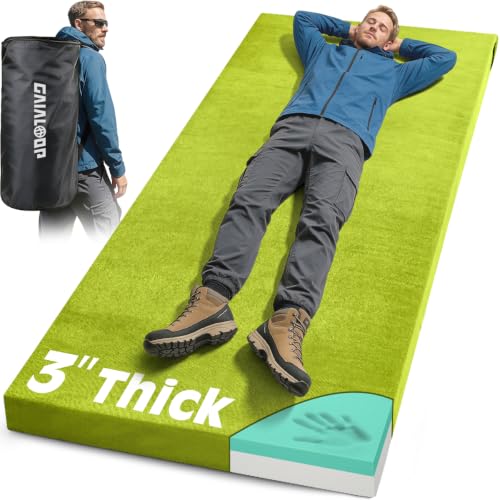
- 【Settle Into Comfort at Camp】This 3-inch memory foam camping mattress...
- 【Make Room to Unwind】The 75 x 38 x 3-inch Twin sleeping mat brings foam...
- 【Upgraded Straps for Your Next Getaway】Pack this roll-up mattress with...
Wevelel 3.1″ Ultra-Thick Foam Sleeping Pad — Best for Stomach Sleepers
The Wevelel 3.1″ Ultra-Thick Foam Sleeping Pad is the thickest foam pad I have tried, and it makes a real difference. I recommend it for stomach sleepers who need support under their chest without their hips sinking. It is honestly like sleeping on a real mattress.
One honest thing to know is it takes up more space in the car, but the comfort is worth the extra room.

- Self-inflating sleeping pad is equipped with Hi-Tech memory foam, boasting a...
- The newly upgraded Wevelel ultra-thick camping pad measures 77" x 26.98" x...
- Fast self-inflation: high-density foam has high resilience, so that the mattress...
Conclusion
The right foam pad makes the difference between waking up ready for adventure and waking up dreading the day. Your back does not have to hurt just because you sleep on the ground.
Go lay on your current pad for ten minutes tonight and check for pressure points. If you feel any pain, swap it out before your next trip — your mornings will thank you.
Frequently Asked Questions about Can Foam Camping Pads Cause Back Pain After a Few Nights?
How long does it take for a foam camping pad to cause back pain?
Most people start feeling discomfort by the second or third night. That is when the foam compresses enough to let your hips hit the ground.
In my experience, the first night is usually fine because your body is still rested. The real trouble begins when the lack of support builds up over consecutive nights.
Can a foam pad be too firm for my back?
Yes, a pad that is too firm can create pressure points on your hips and shoulders. This forces your spine into an unnatural curve while you sleep.
I once used a very firm pad and woke up with a stiff neck every morning. A pad needs some give to match your body’s natural shape.
What is the best foam camping pad for someone who wakes up with lower back pain?
If you wake up with lower back pain, you need a pad that supports your lumbar curve without sagging. Thicker foam pads with a firm base layer work best for this problem.
I personally switched to a dual-layer pad that lets me adjust the firmness. For my own back, what finally worked was a thicker memory foam option that kept my spine straight all night.
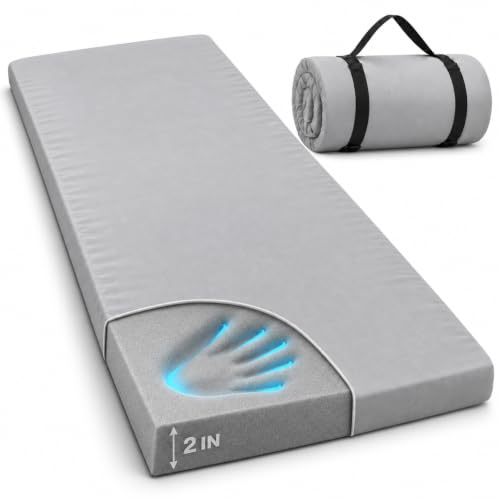
- PAD ONLY — COT FRAME NOT INCLUDED: This listing includes the camping cot pad...
- MEMORY FOAM COMFORT: Made with memory foam and a soft breathable removable...
- CHOOSE YOUR THICKNESS: Available in 2-inch, 3-inch, and 4-inch options for...
Will adding a blanket under my foam pad help with back pain?
Adding a blanket can help a little by softening the ground underneath. But it will not fix a pad that is too thin to support your body weight.
I tried this trick on a cold night and it only delayed the pain by an hour. A proper pad thickness is the only real solution for back pain.
Which foam camping pad won’t let me down when I camp for a whole week?
For a full week of camping, you need a pad that does not flatten out after a few nights. Look for high-density foam that keeps its shape and thickness over time.
After testing several options on long trips, I trust the one I grabbed for my family because it held up perfectly through seven nights without any loss of support.

- Perfect Size & Moderate Filling: The camping cot pad open size is 75"x30"x...
- Lightweight and Easy Transport: Weights only 4lbs, the camping cot pad can be...
- Stays in Place: The four corners of the cot pad have a fixed rope, which can...
Is it normal for my hips to hurt on a foam camping pad?
It is common, but it is not normal or acceptable. Hip pain usually means your pad is too thin or too firm for your sleeping position.
Side sleepers especially need extra cushion under their hips. If your hips hurt, you need a thicker pad or a softer top layer to relieve that pressure.