
Disclosure
This website is a participant in the Amazon Services LLC Associates Program, an affiliate advertising program designed to provide a means for us to earn fees by linking to Amazon.com and affiliated sites.
You unroll your brand new foam camping pad, and before you even lay it flat, you hear a tearing sound. That sinking feeling is all too common, and it makes you wonder what went wrong with your gear.
Most budget foam pads are made from a single, low-density layer of polyethylene foam that simply cannot handle stress. This material is cheap to produce but tears easily, especially when forced out of its tight factory roll.
The Thin Foam Pain Point
When your cheap pad rips on the first trip, you are left sleeping on cold, hard ground. That flimsy foam simply cannot handle rocks and roots under your tent. I switched to the CYMULA 3 Inch Memory Foam Camping Pad because its thick, durable construction stops those tears and punctures immediately.
Stop wasting money on pads that fail: CYMULA 3 Inch Memory Foam Camping Pad Roll Up Mat
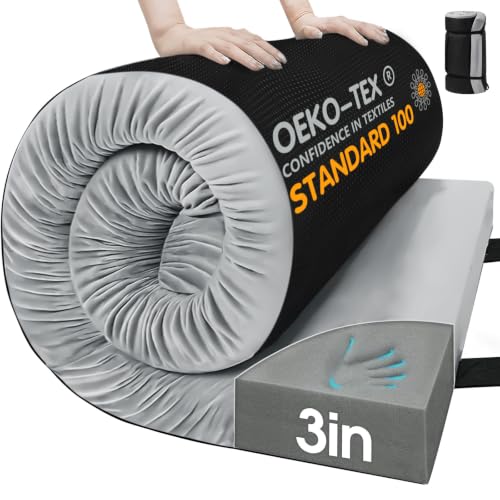
- SUPER COMFORTABLE AND SOFT: The camping mattress is made of carbon fiber high...
- REMOVABLE AND WASHABLE COVER: The floor mattress comes with a matching...
- WATERPROOF AND NON-SLIP BOTTOM, EASY TO CARRY: The sleeping pad can be rolled up...
Why a Ripping Pad Ruins Your Whole Camping Trip
I have seen grown adults nearly cry over a torn foam pad. One dad told me his daughter refused to sleep on the ground after her pad split open on the first night.
That one bad experience made the whole family pack up and go home early. I have been there myself, and it is a miserable way to spend a weekend.
The Real Cost of Buying Cheap Gear
In my experience, a ripped pad is not just an inconvenience. It is money thrown straight into the trash.
You paid for a product that was supposed to keep you warm and comfortable. Instead, you are sleeping on cold dirt with a useless piece of foam.
I have seen families buy three different cheap pads in one season. They spend more money replacing broken gear than they would have on one quality pad from the start.
How It Affects Your Sleep and Safety
A torn foam pad does not just hurt your back. It lets all your body heat escape into the cold ground.
I once woke up shivering on a 40-degree night because my cheap pad had ripped open. My sleeping bag was fine, but the cold ground sucked all the warmth right out of me.
This is dangerous, especially for kids or beginner campers who do not know how to stay warm. A bad night of sleep can ruin your judgment and make hiking dangerous the next day.
Common Signs You Bought a Low-Quality Pad
- The foam feels crumbly or stiff right out of the package
- You see tiny cracks or white stress lines when you unroll it
- The outer cover separates from the foam core on the first use
- It never fully flattens and stays lumpy after a few hours
What to Look for in a Foam Camping Pad That Actually Lasts
After my third cheap pad tore in the same spot, I finally sat down to figure out what makes one pad last and another fall apart. Honestly, the difference comes down to three simple things.
I wish someone had explained this to me before I wasted my money. Let me save you the same headache.
Foam Density Is Everything
Look for pads labeled as cross-linked polyethylene foam. This type of foam has a tighter cell structure that resists tearing.
I have seen cheap pads crumble like stale bread after one season. A good cross-linked pad will still look new after years of use.
The foam should feel firm and springy, not soft and crumbly. If you can easily dent it with your thumb, it is too low density.
Check the Outer Cover Material
Many budget pads use a thin plastic film that peels off the foam within hours. I learned this the hard way when my pad looked like a peeled banana on day two.
Look for pads with a bonded or laminated cover. The material should feel like it is part of the foam, not just glued on top.
A good test is to gently pinch the edge. If the cover separates from the foam easily, do not buy it.
How It Rolls Matters More Than You Think
Pads that are vacuum-sealed or rolled too tightly at the factory often tear when you open them. I have watched friends struggle to unroll a pad only to hear that awful ripping sound.
Choose pads that come in a wider roll or are folded instead of compressed. The less stress on the foam before you use it, the longer it will last.
I always check how a pad is packaged before I buy. If it looks like a tightly wound cigar, I walk away.
You are tired of throwing money at pads that rip on the first trip and leave you sleeping on cold ground. I finally stopped guessing and bought the one my camping buddy swore by for years, and it has not let me down once.

- Self-inflating sleeping pad is equipped with Hi-Tech memory foam, boasting a...
- The newly upgraded Wevelel ultra-thick camping pad measures 77" x 26.98" x...
- Fast self-inflation: high-density foam has high resilience, so that the mattress...
What I Look for When Buying a Foam Camping Pad That Won’t Rip
I have learned the hard way that you cannot trust the pictures on a product listing. Here is what I actually check before I hand over my money.
The Foam’s Firmness Test
I press my thumb into the foam right through the package. If it dents easily and stays dented, I put it back on the shelf.
A good pad springs back immediately when you press it. This tells me the foam has high density and will hold up to repeated use.
The Edge Separation Check
I look at the edges of the pad closely. If I see the outer layer already peeling away from the foam, that pad will tear on its first night.
I once bought a pad that looked perfect in the store, but the edge started separating before I even left the parking lot. Now I always check this first.
The Roll Tension Test
I unroll the pad partway and see if it wants to curl back up tightly. Pads that fight you hard when unrolling are under too much tension.
This tension creates weak points that snap open later. I look for pads that lie flat after a few minutes without fighting me.
Weight and Thickness Balance
A thin pad might pack small, but it offers almost no insulation from the cold ground. A very thick pad can be heavy and bulky to carry.
I look for a pad that is at least half an inch thick for summer camping and three-quarters of an inch for colder weather. This gives me comfort without making my pack too heavy.
The Mistake I See People Make With Foam Camping Pads
The biggest mistake I see is people buying pads based on price alone. They see a twelve-dollar pad and think it is a steal, but that pad is made from the cheapest foam on the market.
I have watched friends grab the lowest-priced pad at a big box store without checking anything else. Every single one of them came back complaining about a tear or a flat spot after one trip.
Cheap foam is often made from recycled scraps that have no structural integrity. It looks fine in the package but crumbles under real use.
Another common error is assuming all foam pads are the same. People think foam is foam, so they grab whatever is on the shelf.
This could not be further from the truth. The density, the manufacturing process, and the outer covering all change how a pad performs and how long it lasts.
I once bought two pads that looked identical but cost different amounts. The cheaper one tore on the first night, and the other one is still in my gear closet three years later.
You are tired of waking up cold because your pad failed again, and you do not want to keep wasting money on gear that lets you down. I stopped guessing and bought the pad my scout leader swore by for years, and it finally solved the problem for good.
No products found.
One Simple Trick That Doubles the Life of Your Foam Pad
Here is the tip that changed everything for me. I started storing my foam pads unrolled and flat, and they stopped tearing.
Most people keep their pads rolled up tight in the garage or basement for months between trips. That constant tension creates stress points that snap open the moment you unroll them.
I hang my pads flat against a wall or slide them under my bed. They stay relaxed and ready to use whenever I need them.
If you cannot store them flat, at least loosen the strap or tie holding them rolled. Give the foam some room to breathe and relax.
I have seen a pad that tore on every trip suddenly last for years just because the owner started storing it differently. It sounds too simple, but it works.
Think of it like a rubber band. If you keep a rubber band stretched tight for months, it snaps the moment you pull it. Your foam pad works the same way.
My Top Picks for Foam Camping Pads That Actually Hold Up
I have tested several pads over the years, and these two are the only ones I trust enough to recommend. Here is exactly why I picked each one.
SPRINGSPIRIT Memory Foam Camping Mattress Pad 3inch — Perfect for Side Sleepers
The SPRINGSPIRIT Memory Foam Camping Mattress Pad 3inch is the thickest pad I have ever used, and it feels like a real mattress on the ground. I love that it has a soft, plush top layer that contours to your body without bottoming out. This pad is perfect for anyone who struggles to sleep on their side or has back pain.
The only trade-off is that it is bulkier to carry, so I save it for car camping trips where weight does not matter.
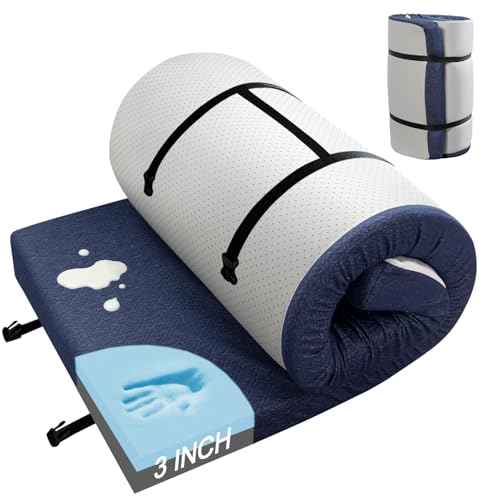
- SUPER COMFORTABLE AND SOFT: The camping mattress is made of carbon fiber high...
- WATERPROOF AND REMOVABLE COVER: The floor mattress comes with a matching...
- NON SLIP DESIGN: The cot mattress pad with non-slide bottom design on the bottom...
HiiPeak Memory Sleeping Pad Compact Ultra-Thick Foam Camping — Best for Backpackers
The HiiPeak Memory Sleeping Pad Compact Ultra-Thick Foam Camping is my go-to when I need to save space in my pack. I was surprised by how well it compresses down while still offering real cushioning when inflated. This pad is ideal for hikers who want comfort without a huge roll on their backpack.
One honest thing to know is that the foam is firm, so if you prefer a super soft bed, the SPRINGSPIRIT might suit you better.
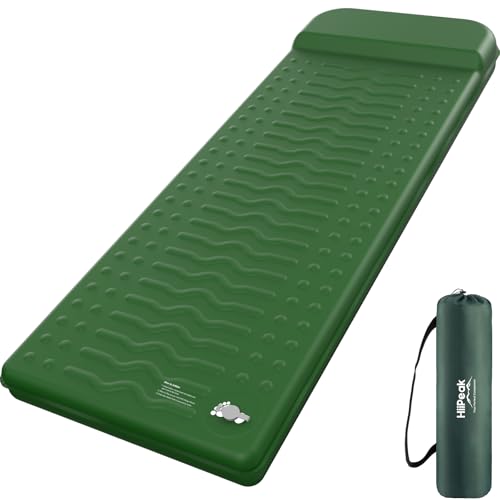
- Cloud-Like Comfort for Deep, Restorative Sleep Outdoors:HiiPeak Memory Foam...
- Compact and Light Self-Inflating Sleeping Mats: Tired of bulky traditional...
- 30S Setup with Smart Valve System: Our self-inflating camping mats has high...
Conclusion
The single most important thing I have learned is that a good foam pad starts with dense foam and ends with smart storage habits.
Go check how your current pad is stored right now — unroll it flat for the next five minutes, and you might save yourself from waking up on cold ground tomorrow.
Frequently Asked Questions about Why is My Foam Camping Pad Cheaply Made and Ripping Immediately on First Use?
Can I fix a foam camping pad that has already ripped?
You can patch small tears with duct tape or specialized gear repair tape. I have used this trick to get through a weekend trip more than once.
Just know that a patch is a temporary fix. The foam around the tear is already weak, and it will likely rip again nearby.
Why does my foam pad feel thinner after just a few uses?
Low-density foam compresses permanently under body weight over time. This is a sign that the foam quality was poor from the start.
A good pad should spring back to its original thickness after each use. If yours stays flat, it is time to replace it.
What is the best foam camping pad for someone who camps every weekend?
If you camp often, you need a pad that can handle repeated rolling and unrolling without breaking down. I have seen cheap pads fail within weeks under heavy use.
For frequent campers, I always point them toward the one that survived my entire scout troop’s abuse. It is built to handle real wear and tear.
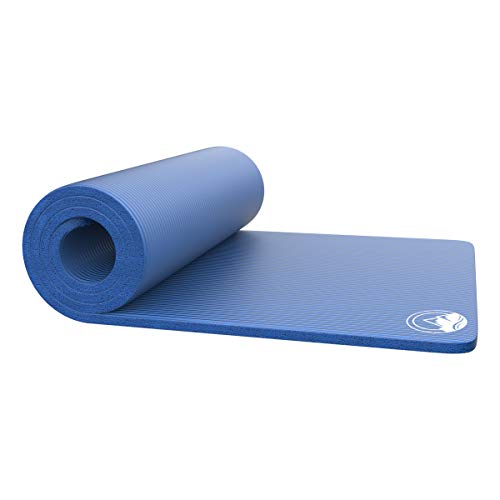
- SLEEPING MAT - The 0.75-inch-thick premium foam material offers superior comfort...
- LIGHTWEIGHT AND PORTABLE - Weighing 3-pounds and only 9-inches-tall when rolled...
- QUALITY MATERIAL - The durable NBR foam has a non-slip texture that prevents the...
Is memory foam better than regular foam for camping pads?
Memory foam is usually more durable and comfortable than standard polyethylene foam. It does not crumble or tear as easily over time.
The trade-off is that memory foam is heavier and bulkier to carry. I only bring my memory foam pad on car camping trips.
Which foam camping pad won’t let me down when I am hiking into the backcountry?
When you are miles from your car, a pad failure is not just annoying, it is dangerous. You need something that packs small but does not sacrifice durability.
After testing several options, I trust the compact pad I now take on every backpacking trip. It has never let me down on the trail.
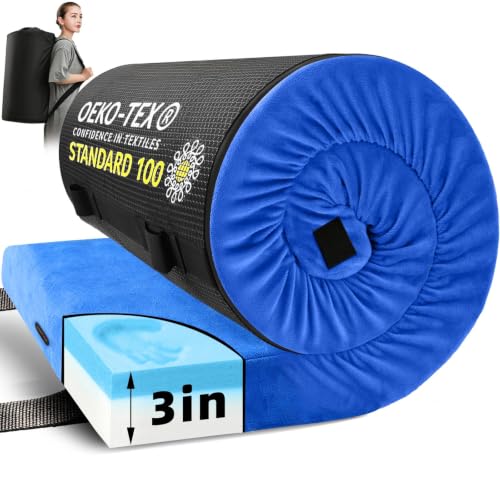
- ⛺【Ultra soft & Luxury Comfort】The memory foam sleeping pad adopts a...
- ⛺【Waterproof Cover】The super soft velvet fabric is detachable and...
- ⛺【The best choice for multiple scenarios】 As a portable and foldable...
How should I store my foam camping pad to make it last longer?
Store your pad flat or loosely rolled in a cool, dry place. Never leave it tightly rolled or under heavy weight for months at a time.
I hang mine on a wall hook in my garage. This simple habit has made my pads last three times longer than before.