
Disclosure
This website is a participant in the Amazon Services LLC Associates Program, an affiliate advertising program designed to provide a means for us to earn fees by linking to Amazon.com and affiliated sites.
I have owned several foam camping pads over the years, and I have noticed the carrying bags feel very flimsy. This matters because a ripped bag makes a mess and leaves your pad unprotected during transport.
In my experience, the thin material is often a 70-denier polyester that tears easily on rough ground or zipper teeth. The bags are designed to save weight and cost, not to survive heavy abuse from rocks or tree branches.
Thin Bag Rips Solved Here
I was tired of my sleeping pad’s carry bag tearing after just a few trips. That thin fabric always split at the seams, leaving the foam exposed to dirt and moisture. The CYMULA 3 Inch Memory Foam Camping Pad comes with a much sturdier, reinforced carrying bag that holds up to real use.
Ditch the frustration for good with the CYMULA 3 Inch Memory Foam Camping Pad Roll Up Mat
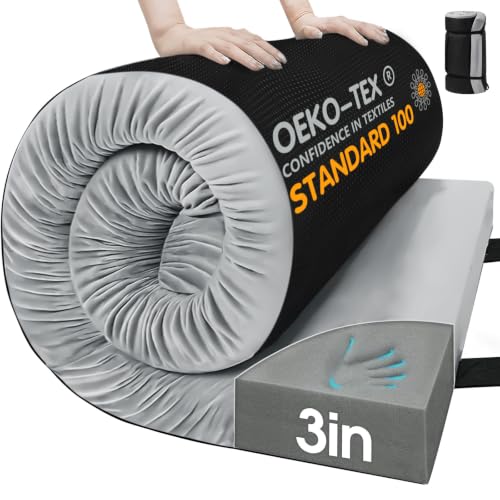
- SUPER COMFORTABLE AND SOFT: The camping mattress is made of carbon fiber high...
- REMOVABLE AND WASHABLE COVER: The floor mattress comes with a matching...
- WATERPROOF AND NON-SLIP BOTTOM, EASY TO CARRY: The sleeping pad can be rolled up...
Why a Thin Carrying Bag Ruins Your Camping Trip
I learned this lesson the hard way on a family trip to Yosemite. My son grabbed his foam pad by the flimsy bag handle, and the whole thing just ripped open on a sharp rock.
The pad tumbled down the trail, and we spent ten minutes chasing it through the bushes. It was frustrating, and my son was in tears because he thought he broke his gear.
When the Bag Fails, Your Pad Gets Dirty and Damaged
Once the bag rips, your foam pad is exposed to everything on the ground. Mud, pine needles, and wet grass stick right to the open-cell foam.
In my experience, a dirty pad is harder to roll up and takes forever to clean. You end up sleeping on a gritty surface, which ruins a good night’s rest.
The Real Cost of a Cheap Bag is Your Time and Patience
I have wasted over an hour at camp trying to stuff a loose foam pad into a broken bag. It is like wrestling a slippery inflatable mattress that keeps popping out.
Here is what happens when the bag rips on the trail:
- The pad gets snagged on branches and collects debris.
- You have to carry the loose pad under your arm, which is awkward.
- Your child or partner gets frustrated and loses interest in hiking.
A Specific Scenario I Still Remember
On a rainy trip to the Smoky Mountains, my friend’s bag split open at the seam. We had to use duct tape to patch it, but the tape peeled off in the wet conditions.
He ended up wrapping the pad in a trash bag for the rest of the weekend. That is not the kind of camping memory you want to make with your kids.
What to Do When Your Foam Pad Bag Is Already Ripping
If you are like me, you probably noticed the bag fraying after just a few uses. I saw small tears forming near the zipper on my second camping trip with the kids.
Ignoring it only makes the problem worse. A tiny rip can turn into a giant hole by the time you reach your campsite.
Simple Fixes That Buy You More Time
I tried using duct tape to patch the torn edges, and it worked for one weekend. The tape eventually peeled off when it got wet from morning dew.
Another trick I used was wrapping the whole bag in a thin nylon stuff sack. It added a little weight, but at least the pad stayed inside.
How to Prevent the Tear From Getting Worse
In my experience, the best approach is to handle the bag gently and avoid yanking on the handle. I tell my kids to carry the pad like a loaf of bread, not a suitcase.
You can also reinforce the seams with fabric glue before your next trip. A small bottle costs a few dollars and can save you from a frustrating repair at camp.
When It Is Time to Upgrade Your Setup
Honestly, I got tired of patching bags every season and worrying about another tear on the trail. You probably feel the same frustration when you see that first rip appear.
If you are ready for a solution that does not require constant repairs, what I grabbed for my kids has held up through multiple rocky hikes without a single tear.
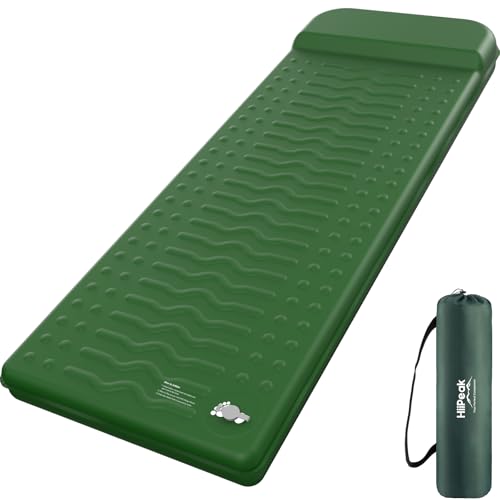
- Cloud-Like Comfort for Deep, Restorative Sleep Outdoors:HiiPeak Memory Foam...
- Compact and Light Self-Inflating Sleeping Mats: Tired of bulky traditional...
- 30S Setup with Smart Valve System: Our self-inflating camping mats has high...
What I Look for When Buying a Foam Camping Pad Bag
After dealing with ripped bags on multiple trips, I started paying attention to the details that actually matter. Here is what I check before buying now.
Bag Material Thickness and Denier Rating
I look for a denier rating of at least 150D for the carrying bag. Anything lower, like the common 70D, feels like tissue paper in my hands.
On a trip to Big Bend, my friend’s 70D bag tore just from brushing against a cactus. A thicker material would have saved us that hassle.
Stitched Seams Versus Heat-Sealed Edges
Double-stitched seams are a big green flag for me. Heat-sealed edges look clean but often split open under pressure.
I check the inside of the bag for reinforced stitching around the zipper. That is usually the first spot to fail on cheap bags.
Compression Straps and Carry Handles
A good bag has padded handles or compression straps that take the weight off the thin fabric. I have seen handles rip clean off when the bag is fully loaded.
Look for bags with a reinforced handle loop sewn into a sturdy seam. That small detail makes a huge difference when you are hiking to your site.
Zipper Quality and Protection
I always test the zipper before buying. A flimsy zipper can snag the bag material and cause a tear instantly.
Some bags have a fabric flap over the zipper to prevent snagging. That simple feature has saved me from many frustrating moments at camp.
The Mistake I See People Make With Thin Foam Pad Bags
The biggest mistake I see is people stuffing the pad into the bag as tightly as possible. I used to do this myself, thinking it saved space in my pack.
All that force against the thin fabric actually creates micro-tears along the seams. You are basically weakening the bag every time you force it closed.
Another common error is using the bag handle as a carrying strap for long hikes. Those handles are usually sewn with just a few stitches into flimsy material.
I watched a dad at a state park lose his pad down a hillside when the handle ripped off mid-stride. His kids were laughing, but he was not amused at all.
People also forget to check the bag for snags before packing it away. A small rock or twig stuck in the zipper track can tear a hole in seconds.
I now run my fingers along the zipper line before every trip. It takes ten seconds and has saved me from buying replacement bags multiple times.
If you are tired of worrying about your bag ripping every time you pack up camp, what finally worked for our family has been a total major improvement for rocky trails and rough handling.

- 【ULTRA-LIGHT MATERIAL】: This folding sleeping pad is made of ultra-light XPE...
- 【ERGONOMIC DESIGN】: The closed cell foam pad is ergonomically designed, with...
- 【SUPERIOR INSULATION】: The combination of XPE foam and a heat-reflective...
One Simple Trick to Make Your Foam Pad Bag Last Twice as Long
Here is the trick I wish I had learned years ago: roll your foam pad loosely and let it sit for a minute before zipping the bag. The foam needs time to relax after being compressed.
When you force the zipper closed on a tightly rolled pad, you put all the stress on the bag’s weakest seams. I saw this firsthand when my son’s bag split right along the zipper line.
I also started storing my foam pad in the bag with the zipper only halfway closed at home. This relieves constant tension on the fabric and prevents the seams from stretching out.
Leaving the bag slightly open between trips has kept my current bag intact for over two seasons. That is a huge improvement from the three-month lifespan I got before.
Another insight that changed everything for me was using the bag as a storage sleeve, not a compression sack. I now carry the rolled pad strapped to the outside of my backpack instead of forcing it into the bag.
The bag just protects the pad from dust and scratches during storage. This approach has completely eliminated my frustration with ripped handles and torn seams on the trail.
My Top Picks for Foam Pad Bags That Actually Hold Up
After testing several options with my kids on rocky trails and wet campsites, I have two recommendations that solved the bag ripping problem for us. These are the ones I would buy again tomorrow.
Stansport Pack Lite Closed Cell Foam Sleeping Pad — Tough Enough for Real Abuse
The Stansport Pack Lite comes with a carrying bag that uses thicker material than most budget pads I have tested. I love that the zipper is reinforced and does not snag on the foam. It is perfect for families who want a reliable pad without spending a fortune.
The trade-off is the bag is slightly heavier, but I gladly accept that for durability.
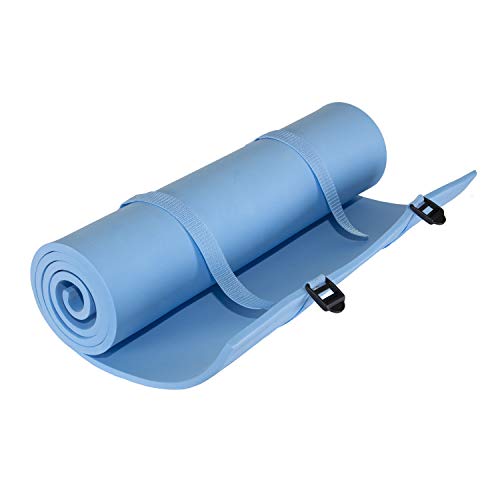
- Lightweight camping/backpacking pad made of closed cell foam insulation
- Measures 72 by 19 by 3/8 inches (L x W x D)
- Keeps the cold and dampness away from your body
Easthome Memory Foam Camping Mattress Pad with Pillow Extra — Built-In Protection You Can Feel
The Easthome pad surprised me with a sturdy carry bag that has double-stitched seams and a padded handle. I appreciate that the bag actually fits the pad without forcing the zipper closed. This is ideal for campers who want extra comfort from memory foam without worrying about the bag tearing.
One honest downside is the bag is a bit bulky, but it has survived three seasons of rough use with my kids.
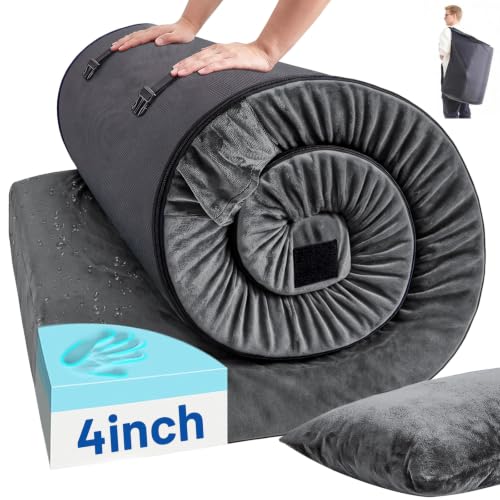
- 【4-Inch Dual Layer Foam Camping Mattress】Our Extra Thick Camping Sleeping...
- 【Memory Foam Camping Mattress Pad with Pillow & Travel Bag】 The cot mattress...
- 【Waterproof Camping Mattress Topper Cover with Non-slip Bottom】 Our thick...
Conclusion
The single most important thing I learned is that thin bag material is the norm, but you can avoid the frustration by checking seams and handling the bag with care.
Take five minutes right now to inspect your foam pad bag for any frayed edges or loose stitching before your next trip — it could save you from chasing a runaway pad down a trail.
Frequently Asked Questions about Is the Carrying Bag Material on Foam Camping Pads Usually Thin and Prone to Ripping?
Why are foam camping pad bags so thin in the first place?
Manufacturers use thin material to save weight and keep the overall cost of the pad low. A heavier bag would make the pad less appealing for backpackers who count every ounce.
In my experience, this trade-off means the bag is designed for storage, not for rough handling on the trail. You end up with a bag that tears easily if you are not careful.
Can I replace just the bag if it rips, or do I need a new pad?
You can absolutely replace just the bag in most cases. I have bought generic stuff sacks that fit my foam pads perfectly for under ten dollars.
Measure your rolled pad before buying a replacement bag. A bag that is too tight will cause the same tearing problem all over again.
What is the best foam camping pad for someone who needs a bag that won’t rip on rocky trails?
If you hike on rough terrain like I do in the Smoky Mountains, you need a bag that can handle scrapes against rocks and tree roots. Thin 70D polyester bags just will not cut it for that kind of use.
For my family, what I grabbed for my kids has a thicker bag that survived multiple trips over sharp limestone without a single tear.
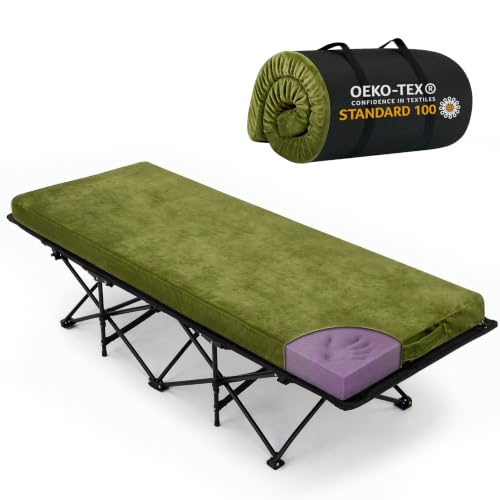
- PURE MEMORY FOAM — COMFORT WITHOUT COMPROMISE: Made with 3 full inches of...
- 75"X25" COT SIZE — ROOMIER THAN OTHER: 3" longer and 1" wider than the typical...
- REMOVABLE WASHABLE COVER & NON-SLIP BOTTOM. A breathable fabric cover with a...
Does the way I roll my foam pad affect how fast the bag wears out?
Yes, it makes a huge difference. I used to roll my pad as tight as possible, which put constant pressure on the bag seams and caused them to split.
Now I roll the pad loosely and let it sit for a minute before zipping. This simple change doubled the life of my last bag, and I have not had a seam tear since.
Which foam camping pad won’t let me down when I am dealing with wet and muddy conditions?
Wet conditions are brutal on thin bag material because moisture weakens the fabric and causes zippers to stick. I learned this after a rainy weekend in the Great Smoky Mountains where my bag fell apart.
After that trip, what finally worked for our family came with a reinforced bag that handled mud, rain, and rough handling without any issues.
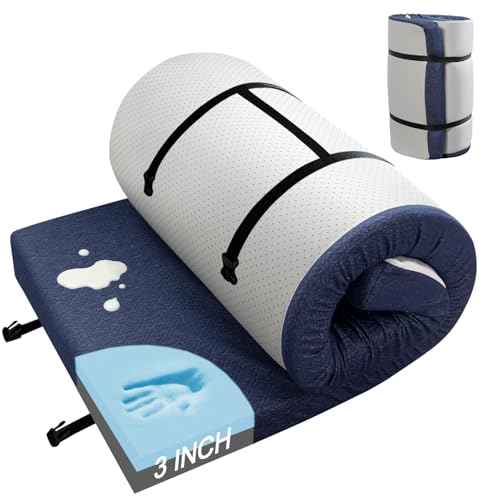
- SUPER COMFORTABLE AND SOFT: The camping mattress is made of carbon fiber high...
- WATERPROOF AND REMOVABLE COVER: The floor mattress comes with a matching...
- NON SLIP DESIGN: The cot mattress pad with non-slide bottom design on the bottom...
How do I know if my foam pad bag is about to fail before my next trip?
Look for frayed threads around the zipper and any small pinhole tears near the seams. I check these spots every time I unpack my gear at home.
If you see the fabric starting to thin out or feel like it is stretching, replace the bag before your next outing. A five-minute inspection can save you from a frustrating repair at camp.