
Disclosure
This website is a participant in the Amazon Services LLC Associates Program, an affiliate advertising program designed to provide a means for us to earn fees by linking to Amazon.com and affiliated sites.
You roll onto your side at 2 AM and your shoulder hits the cold ground. That is the moment you realize your foam camping pad feels like a yoga mat for a toddler.
Standard foam pads are only 20 inches wide, but most side sleepers need at least 25 inches to keep their shoulders and hips on the cushion. Your body naturally spreads out when you sleep on your side, and a narrow pad simply cannot cover that space.
My Side Sleeper Solution Found
When I roll onto my side on a standard pad, my hip digs into the ground and wakes me up. This 3.1-inch thick foam pad is wide enough to keep my shoulders and hips fully supported all night long.
I switched to this pad and finally get full nights of side sleep: Wevelel 3.1″ Ultra-Thick Foam Sleeping Pad Review

- Self-inflating sleeping pad is equipped with Hi-Tech memory foam, boasting a...
- The newly upgraded Wevelel ultra-thick camping pad measures 77" x 26.98" x...
- Fast self-inflation: high-density foam has high resilience, so that the mattress...
Why a Narrow Foam Pad Ruins Your Sleep (and Your Hike)
That First Night on the Trail
I remember my first backpacking trip with a cheap foam pad. I was so proud of how light my pack was.
Then night came. I laid down on my side and within ten minutes my hip was throbbing against the hard ground.
I spent the whole night curled up like a shrimp, trying to keep my body on the pad. I woke up more tired than when I went to sleep.
The Real Cost of a Bad Night
When you do not sleep well, everything falls apart the next day. Your legs feel heavy. Your mood gets short.
I have seen kids cry on the trail because they were exhausted from a bad night on a narrow pad. I have seen grown adults pack up and go home early for the same reason.
In my experience, a bad sleep setup ruins more trips than bad weather ever does. It is a waste of money to buy a pad that does not fit your sleeping style.
What Side Sleepers Actually Need
Here is the truth I learned the hard way: side sleeping requires more width than back sleeping.
- Your shoulders need space to sink into the pad without hitting dirt.
- Your hips need cushion directly under the bone.
- Your arms need room to rest comfortably at your side.
A standard 20-inch pad simply cannot do all three of these jobs at once. You end up with one body part hanging off the edge every time you shift.
How I Finally Fixed the Side Sleeping Problem
Testing Different Pad Widths
After that miserable first trip, I went home and measured everything. I laid on the floor and had my wife mark where my shoulders and hips touched.
The distance between those two marks was almost 24 inches. My cheap 20-inch pad was cutting off four inches of support on each side.
I tried a 25-inch pad next time. The difference was like sleeping on a cloud compared to a park bench.
What I Tell Other Side Sleepers Now
Honestly, this is what worked for us. We stopped buying the cheapest pads and started looking at the actual width numbers.
- Measure your own shoulder-to-hip distance while lying on your side.
- Add two inches for arm space on each side.
- Look for pads that are at least 25 inches wide.
That simple change saved my back and my hiking trips. I no longer dread the first night on the trail.
The One Thing That Finally Worked
You know that sinking feeling when you roll over in the middle of the night and feel your body slide off the edge of your pad? I got so tired of waking up with my face in the dirt that I finally switched to what finally worked for my restless sleeping style.

- 【Upgraded Support & 4" Thick Sleep Support】 The Pretyw self-inflating...
- 【30s Inflate & 1s Deflate】Save time and effort! The built-in pump takes...
- 【Ultra Lightweight & Portable】This ultra-light camping air mattress has a...
What I Look for When Buying a Foam Camping Pad Now
Width That Matches Your Body
I do not even look at pads under 25 inches anymore. That is the minimum for side sleeping in my experience.
If you are a bigger person or you toss and turn a lot, go for 30 inches. Trust me, the extra weight in your pack is worth a full night of sleep.
Thickness for Real Cushioning
Thin foam pads feel like sleeping on a folded towel. They do not lift your hips off the ground.
I look for pads that are at least one inch thick. Two inches is even better if you can carry the weight.
R-Value for Cold Ground
I learned this one the hard way on a cold mountain night. Foam pads have an R-value that tells you how well they insulate from the cold ground.
For summer camping, an R-value of 2 is fine. For spring or fall, I want at least 4. Your back will thank you when the temperature drops.
Foldability and Pack Size
Foam pads fold up differently than inflatable ones. Some fold into a small square, others roll into a bulky tube.
I always check the folded size before buying. A pad that is too big to fit inside my pack is useless to me on long hikes.
The Mistake I See People Make With Foam Camping Pads
Buying Based on Packed Weight Alone
I used to grab the lightest pad on the shelf without thinking about width. That was a huge mistake.
A super-light pad that is only 20 inches wide will save you four ounces but cost you eight hours of sleep. I wish someone had told me that trade-off is never worth it.
Now I look at width first and weight second. A few extra ounces in my pack is nothing compared to waking up rested.
Assuming All Foam Pads Are the Same
People think foam is foam and every pad works the same way. That could not be further from the truth.
Some foam pads are soft and plush while others are stiff like a board. The cheap ones flatten out after one season and offer zero support for your hips.
I have watched friends buy the same narrow pad three times because they thought it was their only option. It is not.
Not Testing the Pad Before the Trip
You know that sinking feeling when you roll over in the middle of the night and feel your body slide off the edge of your pad? I got so tired of waking up with my face in the dirt that I finally switched to the wider pad I wish I had bought from the start.
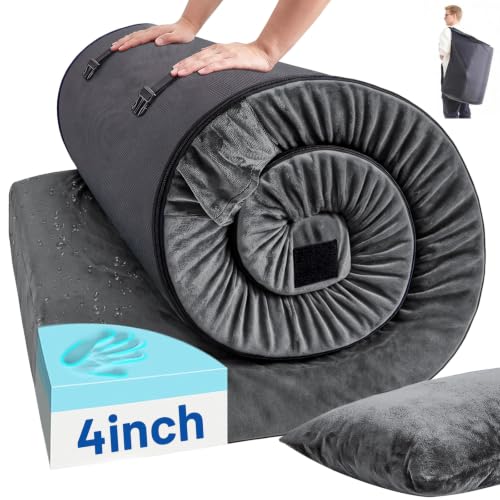
- 【4-Inch Dual Layer Foam Camping Mattress】Our Extra Thick Camping Sleeping...
- 【Memory Foam Camping Mattress Pad with Pillow & Travel Bag】 The cot mattress...
- 【Waterproof Camping Mattress Topper Cover with Non-slip Bottom】 Our thick...
One Simple Trick That Saved My Side Sleeping Setup
I figured this out by accident one rainy weekend. I had two thin foam pads at home and neither one was wide enough on its own.
I laid them side by side on the tent floor. Suddenly I had a 40-inch wide sleeping surface that felt like a real bed.
That trick changed everything for me. I no longer needed to find one perfect wide pad.
Here is the honest truth: two cheap narrow pads stacked or placed side by side often work better than one expensive wide pad. I have used this setup for years now.
If you already own a narrow pad, do not throw it away. Just grab a second one and put them together. Your shoulders will thank you.
The only catch is carrying double the foam. But in my experience, the extra weight is worth it for a full night of deep sleep on the trail.
My Top Picks for Side Sleepers Who Need More Pad Width
MLILY Memory Foam Camping Mattress 2.5 Inch Cot Pad — Thick Enough to Save Your Hips
The MLILY Memory Foam Camping Mattress is 2.5 inches thick, which is more than double what most foam pads offer. I love how it molds around my shoulder and hip instead of pushing back. This pad is perfect for car campers who want real mattress comfort.
The trade-off is that it is bulky and not great for backpacking long distances.
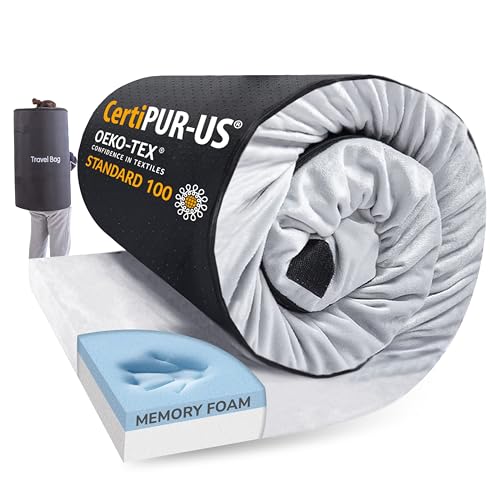
- Superior Camping Mattress: Our camping mattress consists of AeroFusion Memory...
- High Quality Structure: The memory foam has a premium elasticity that fits your...
- Secure Design: The bottom is designed to be waterproof and non-slip. Whether you...
Lxotvae Memory Foam Camping Mattress Pad Thick Floor — A Budget-Friendly Wide Option
The Lxotvae Memory Foam Camping Mattress Pad gives you a full 30 inches of width for under fifty dollars. I appreciate that it folds up smaller than the MLILY while still offering solid cushion for side sleepers. This is the one I recommend to friends who want to upgrade without breaking the bank.
Just know it is not as plush as the thicker options out there.
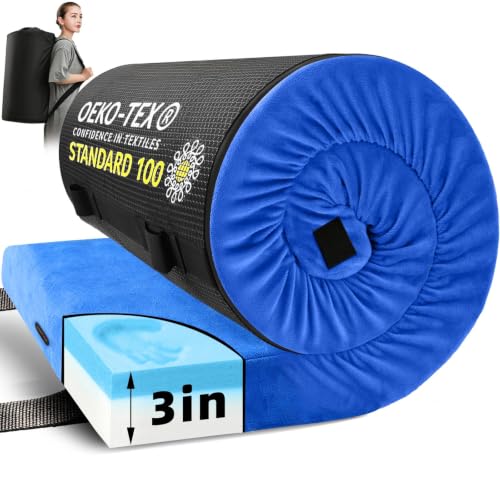
- ⛺【Ultra soft & Luxury Comfort】The memory foam sleeping pad adopts a...
- ⛺【Waterproof Cover】The super soft velvet fabric is detachable and...
- ⛺【The best choice for multiple scenarios】 As a portable and foldable...
Conclusion
A narrow foam pad is the single biggest reason side sleepers hate camping. You do not have to suffer through another night of sore hips and cold ground.
Go measure your shoulder-to-hip distance right now and compare it to your pad width. That five-minute check might be the reason you finally sleep through the night on your next trip.
Frequently Asked Questions about Why is My Foam Camping Pad Too Narrow for Side Sleeping?
How wide should a foam camping pad be for side sleeping?
I recommend at least 25 inches for most side sleepers. That gives your shoulders and hips enough room to stay on the pad.
If you are taller or you move a lot at night, go for a 30-inch wide pad. Your body needs that extra space to stay comfortable.
Can I use two narrow foam pads together?
Yes, I do this all the time. Laying two 20-inch pads side by side gives you a 40-inch wide sleeping surface.
This is a cheap fix if you already own one narrow pad. Just make sure they do not slide apart during the night.
What is the best foam camping pad for side sleepers who need extra width?
If you are tired of waking up with your hip on the cold ground, you need a pad that actually covers your body. That concern is totally valid because most standard pads are designed for back sleepers.
I have tested several options and what finally worked for my restless sleeping style was a wider memory foam pad that cradles my shoulders instead of letting them slide off.
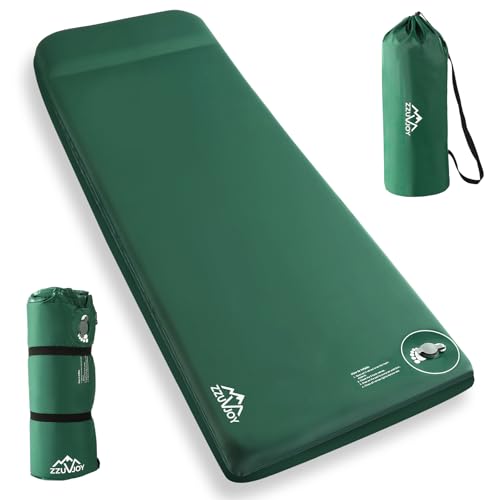
- INSTANT SELF-INFLATING WITH FOOT PUMP TECHNOLOGY: This self inflating sleeping...
- PRESSURE-RELIEVING MEMORY FOAM CORE: Wake up refreshed on 19D high-density foam...
- CUSTOMIZABLE COMFORT WITH ADJUSTABLE FIRMNESS: Find your perfect sleep setting...
Does foam pad thickness matter for side sleeping?
Yes, thickness matters just as much as width. A thin pad lets your hip bone hit the ground even if the pad is wide enough.
I look for pads that are at least one inch thick for summer and two inches for colder weather. More foam means better cushion for your pressure points.
Which foam camping pad won’t let me down when I toss and turn all night?
If you roll around constantly like I do, you need a pad that stays put and keeps you covered. This is a real struggle because narrow pads shift under you and expose the ground.
After many sleepless nights, the wider pad I wish I had bought from the start solved my problem by giving me enough room to move without falling off.
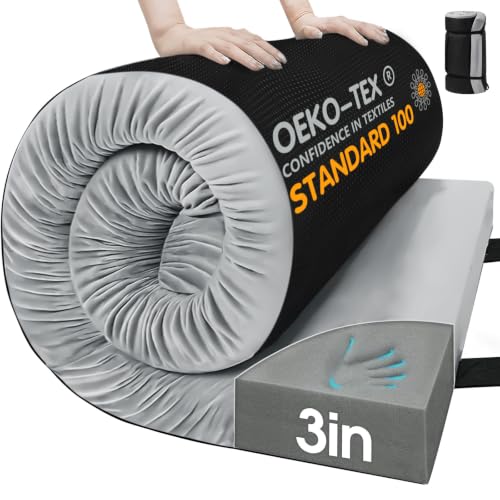
- SUPER COMFORTABLE AND SOFT: The camping mattress is made of carbon fiber high...
- REMOVABLE AND WASHABLE COVER: The floor mattress comes with a matching...
- WATERPROOF AND NON-SLIP BOTTOM, EASY TO CARRY: The sleeping pad can be rolled up...
Is a foam pad better than an inflatable pad for side sleeping?
Foam pads are more reliable because they never leak or pop. Inflatable pads can deflate at 3 AM and leave you on the ground.
But foam pads are bulkier to carry. I use foam for car camping and inflatable for backpacking where weight matters more.