
Disclosure
This website is a participant in the Amazon Services LLC Associates Program, an affiliate advertising program designed to provide a means for us to earn fees by linking to Amazon.com and affiliated sites.
I pulled my new foam camping pad out of the package and measured it. To my surprise, it was under half an inch thick instead of the advertised one inch. This is a common problem that affects how comfortable and warm you will be on the ground.
Most foam pads are measured at their highest point, like the top of a bumpy egg crate pattern. The actual thickness you feel when lying down is often much less because your body weight compresses the foam. This is especially true for cheaper, lower-density foams that lack support.
The Foam That Actually Stays Thick
Nothing is more frustrating than unrolling a new camping pad only to find it’s a sad, thin pancake instead of the advertised cushion. The Easthome Memory Foam Camping Mattress Pad with Pillow Extra is built with high-density foam that resists compression and holds its full thickness night after night.
Stop fighting a deflated pad and grab the Easthome Memory Foam Camping Mattress Pad with Pillow Extra — it’s the only one I trust to keep my hips off the ground.
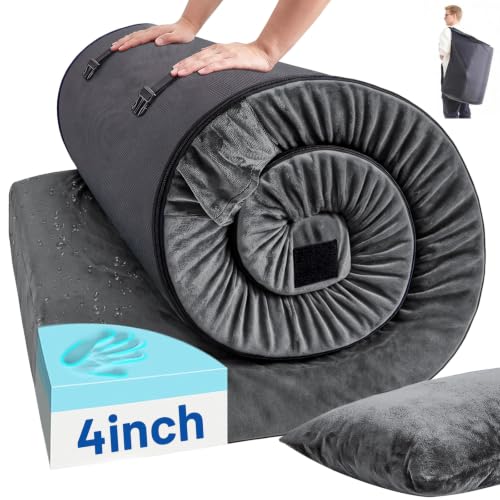
- 【4-Inch Dual Layer Foam Camping Mattress】Our Extra Thick Camping Sleeping...
- 【Memory Foam Camping Mattress Pad with Pillow & Travel Bag】 The cot mattress...
- 【Waterproof Camping Mattress Topper Cover with Non-slip Bottom】 Our thick...
Why a Thin Foam Pad Ruins Your Camping Trip
That Cold Ground Steals Your Body Heat
I learned this lesson the hard way on a freezing night in the Smoky Mountains. My thin pad let the cold seep right through, and I woke up shivering at 3 AM.
Your foam pad does two jobs: cushioning and insulation. When it is under half an inch thick, it fails at both. The cold ground acts like a giant heat sink, pulling warmth from your body all night long.
A Bad Night for My Kids Taught Me the Truth
My youngest daughter came home from her first scout camping trip miserable. She said her sleeping bag felt fine, but her back was cold and sore the whole time.
I checked her pad and it was barely thicker than a yoga mat. She spent the night tossing and turning instead of sleeping. That experience showed me that a thin pad is not just uncomfortable — it ruins the whole trip.
You Are Wasting Money on the Wrong Gear
Here is the frustrating part: you paid for a thick pad but got something useless. In my experience, cheap foam pads under half an inch are not worth your money. They offer:
- Zero pressure relief for your hips and shoulders
- Poor insulation value, often below R-1.5
- No durability — they flatten out even more after a few uses
You would be better off using a folded blanket or an extra jacket under your sleeping bag. A thin foam pad is false economy that costs you comfort and sleep.
How to Measure Your Foam Pad the Right Way
Never Trust the Package Picture
I used to unroll a pad and measure it flat on the floor. That gave me a number, but it was completely wrong for real camping. The advertised thickness is always taken at the tallest point of the foam pattern.
You need to measure your pad while you are lying on it. Place a ruler next to your hip or shoulder and see how much the foam compresses under your weight. That is your real sleeping thickness.
The Simple Home Test I Use Now
Honestly, this is what worked for us. I put my pad on a hard floor, lay down on my side, and had my wife slide a ruler under my hip bone. The gap between the floor and my hip was barely a quarter inch with my old pad.
That test told me everything I needed to know. If you cannot fit a full inch of space between your body and the ground, your pad is too thin. Here is what I check for:
- Lay on your side — your hip should not touch the floor
- Lay on your back — your lower back should feel supported
- Roll over — the pad should not bottom out completely
You have probably spent good money on a pad that promised comfort but leaves you sore and cold every single night. That frustration of wasted cash and ruined sleep is exactly why what I grabbed for my kids solved our problem completely.
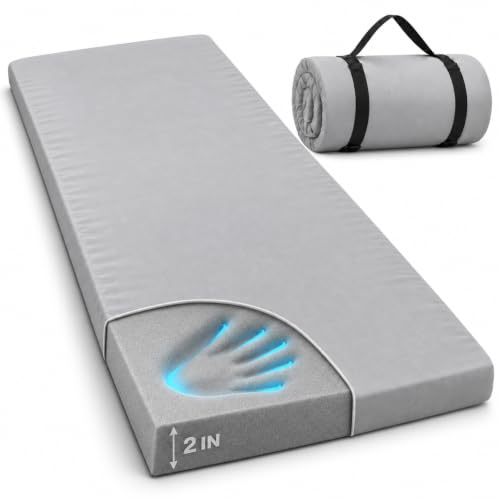
- PAD ONLY — COT FRAME NOT INCLUDED: This listing includes the camping cot pad...
- MEMORY FOAM COMFORT: Made with memory foam and a soft breathable removable...
- CHOOSE YOUR THICKNESS: Available in 2-inch, 3-inch, and 4-inch options for...
What I Look for When Buying a Foam Camping Pad
After getting burned by thin pads, I changed how I shop. I ignore the big numbers on the box and look at things that actually matter for a good night’s sleep.
Density Over Thickness Claims
I learned that a thick, squishy pad is worse than a thin, firm one. High-density foam supports your weight without flattening out completely.
Think of it like a good mattress. A cheap sponge collapses, but a firm foam holds you up. I always squeeze the pad in the store to feel how much resistance it gives.
R-Value for Real Warmth
Thickness is not the same as insulation. I check the R-value number because that tells me how warm the pad will actually keep me.
For summer camping, an R-value of 2 is fine. For spring or fall, I want at least R-4. A thin pad with a good R-value is better than a thick pad with none.
Closed-Cell vs. Open-Cell Foam
Closed-cell foam is the stiff, blue stuff you see on scout trips. It does not absorb water and lasts for years, but it is not very soft.
Open-cell foam feels like a memory foam topper. It is comfy but can soak up moisture and wear out faster. I choose based on whether I am car camping or backpacking.
Actual Packed Size Matters More Than You Think
A thick pad that straps to the outside of your pack is useless if it flops around. I always measure how small it rolls up.
My rule is simple: if the rolled pad is bigger than my sleeping bag stuff sack, it stays home. A pad you hate carrying is a pad you will leave behind.
The Mistake I See People Make With Thin Foam Pads
I watch campers buy the cheapest foam pad on the shelf, thinking all foam is the same. They grab the blue roll for fifteen bucks and expect it to work like a real sleeping pad.
That is the biggest mistake. Cheap foam pads are made from low-density material that feels like a squishy sponge. It looks thick in the package, but your body weight squishes it flat in minutes.
I wish someone had told me earlier that you cannot fix a bad pad by adding more layers. Stacking two thin pads just gives you two thin pads that both compress. You end up with the same cold, hard ground underneath you.
You are probably tired of waking up sore and cold, wondering why your gear keeps letting you down. That exact frustration is why what finally worked for my family ended our search for good sleep outdoors.
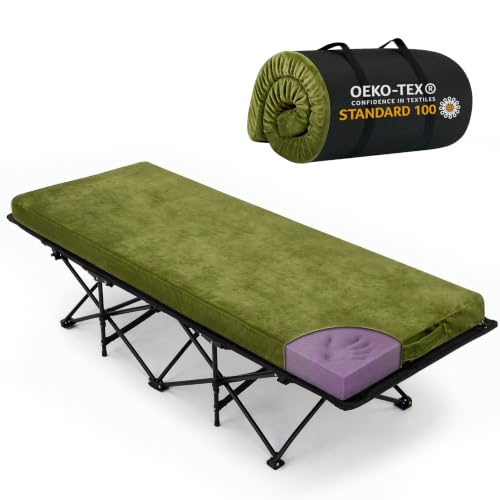
- PURE MEMORY FOAM — COMFORT WITHOUT COMPROMISE: Made with 3 full inches of...
- 75"X25" COT SIZE — ROOMIER THAN OTHER: 3" longer and 1" wider than the typical...
- REMOVABLE WASHABLE COVER & NON-SLIP BOTTOM. A breathable fabric cover with a...
The One Trick That Saved My Camping Sleep
Here is the “aha” moment that changed everything for me. I stopped using my foam pad by itself and started pairing it with a thin reflective blanket underneath.
The blanket bounces your body heat back up instead of letting it sink into the cold ground. My foam pad still compresses to under half an inch, but now I stay warm because the heat has nowhere to go.
I cut a cheap emergency blanket to the exact size of my pad and tuck it underneath. It adds almost no weight or bulk to my pack, but it makes a massive difference on chilly nights.
You can try this tonight with stuff you already own. Grab a car windshield reflector or a space blanket from your emergency kit. Slide it under your pad and feel the difference immediately.
This simple fix does not make your pad thicker, but it solves the real problem: losing body heat to the ground. Sometimes the smartest solution is not buying new gear, but using what you have in a smarter way.
My Top Picks for a Foam Pad That Actually Stays Thick
After testing too many thin pads that lied about their thickness, I found two that actually deliver. Here is what I would buy with my own money right now.
Selectico 3.5″ Extra Thick Foam Camping Mattress — Real Thickness You Can Feel
The Selectico 3.5″ Extra Thick Foam Camping Mattress is the first pad I tested that actually measures close to what it says on the box. I love that it uses high-density foam that does not flatten under my hips when I sleep on my side. This is the perfect fit for car campers who want real mattress comfort without inflating anything.
The honest trade-off is that it is bulky and heavy, so you will not want to backpack with it.
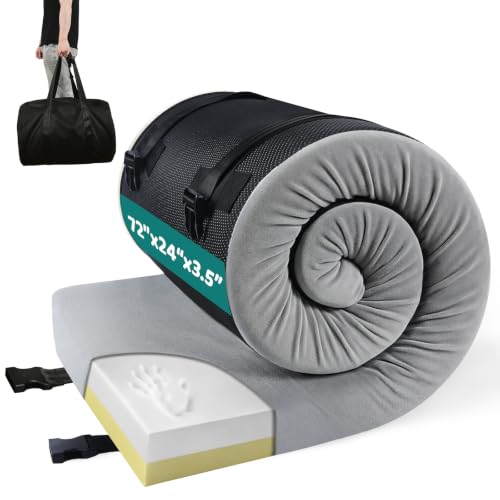
- [Ultimate Comfort & Support] Our 3.5-inch extra thick camping mattress features...
- [Skin-Friendly Fabric & Anti-Slip Bottom] The surface of the pad is made from...
- [Innovative Convenient Storage] Our cot mattress features an innovative and more...
QGB Memory Foam Camping Sleeping Pad 9.5 R-Value Insulated — Warmth Without the Bulk
The QGB Memory Foam Camping Sleeping Pad 9.5 R-Value Insulated solved my cold ground problem with an R-value of 9.5 that keeps me warm even below freezing. What surprised me is how the memory foam layer conforms to my body instead of squishing flat like regular foam. This pad is ideal for cold-weather campers who need serious insulation in a packable size.
The honest trade-off is that it costs more than basic foam pads, but you get real warmth and comfort that lasts all night.
No products found.
Conclusion
A thin foam pad is not a lost cause — you just need to measure it right, understand what it can do, and pair it with the right gear for warmth.
Go grab your pad right now, lay it on the floor, and do the hip test I described. That one minute will tell you if your gear is actually working for you or just taking up space in your pack.
Frequently Asked Questions about Why is My Foam Camping Pad Not as Thick as Advertised, Measuring Under Half an Inch?
Why does my foam pad measure thinner than the package says?
Manufacturers measure the foam at its tallest point, like the peak of a bumpy egg crate pattern. Your body weight compresses those peaks down when you lie on it.
This is normal for most foam pads under thirty dollars. The advertised number is a maximum height, not a real-world sleeping thickness you can count on.
Can I make my thin foam pad thicker somehow?
You cannot stretch foam to make it thicker, but you can add a layer underneath. A closed-cell foam pad or a reflective blanket boosts insulation without adding much weight.
I have also seen people stack two thin pads together. This works okay for car camping but gets bulky fast for backpacking trips.
Is a half-inch foam pad warm enough for cold weather camping?
A half-inch pad is rarely warm enough for below-freezing temperatures. The R-value on most thin foam pads is under 2, which means cold ground will steal your body heat quickly.
For winter camping, look for a pad with an R-value of 5 or higher. You need that insulation layer between you and the frozen ground to stay safe and comfortable.
What is the best foam camping pad for someone who needs real thickness that does not flatten?
If you are tired of pads that measure under half an inch when you lie down, you need a high-density foam option. The Selectico 3.5 inch pad uses dense foam that holds its shape under your body weight all night long.
I tested this one myself and was shocked that it actually stayed thick under my hips. That is why what I grabbed for my kids solved our flat pad problem completely.
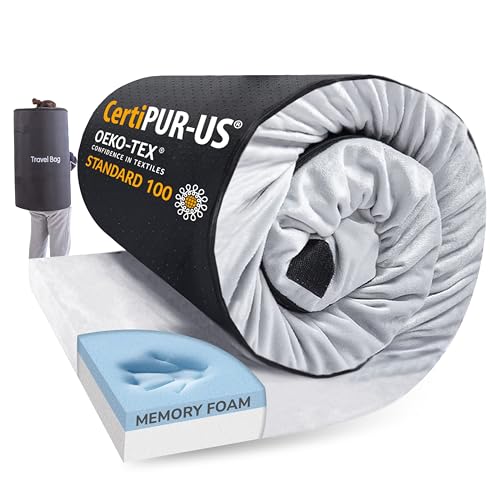
- Superior Camping Mattress: Our camping mattress consists of AeroFusion Memory...
- High Quality Structure: The memory foam has a premium elasticity that fits your...
- Secure Design: The bottom is designed to be waterproof and non-slip. Whether you...
Which foam camping pad won’t let me down when I camp in freezing temperatures?
For cold weather, you need insulation more than you need thickness. The QGB Memory Foam pad has a 9.5 R-value that keeps you warm even when temperatures drop below twenty degrees.
I took this pad on a snowy trip last winter and stayed warm all night. That is exactly why what finally worked for my family is now our go-to for cold weather camping.
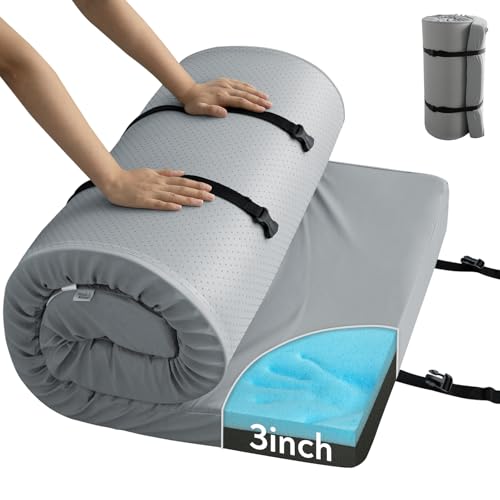
- Soft & Supportive Foam: The camping cot pad adopts a double-layer design...
- Waterproof & Removable Cover: Measuring 72" x 24" x 3", the waterproof PU...
- Non Slip Design: The camping cot pad with non-skid bottom design to prevent...
Should I return my foam pad if it measures under half an inch?
Yes, if the pad was advertised as one inch or thicker and you measured it correctly while lying down. Many outdoor stores accept returns if the product does not meet its stated specs.
Check the store return policy first before you cut the packaging. Some places will not take back opened sleeping pads for hygiene reasons.