
Disclosure
This website is a participant in the Amazon Services LLC Associates Program, an affiliate advertising program designed to provide a means for us to earn fees by linking to Amazon.com and affiliated sites.
I have often wondered if my sore back after camping comes from my sleeping pad. Many people ask if the firmness of foam camping pads is linked to back pain. It matters because a bad night’s sleep can ruin your whole trip.
From my experience, a pad that is too soft lets your hips sink and curves your spine. But a pad that is too firm can create pressure points that also cause pain. The right firmness supports your natural body alignment.
Stop Waking Up Stiff
Waking up with back pain after camping is miserable. You need a pad that supports pressure points without sagging. The Kingfun 3 Inch Memory Foam Camping Mattress Pad solves this by combining thick memory foam with a supportive base layer.
I use this pad and it ended my morning back pain for good: Kingfun 3 Inch Memory Foam Camping Mattress Pad Review
No products found.
Why Foam Camping Pad Firmness Matters for Your Back
I remember one trip where I woke up feeling like I had been wrestling a bear all night. My back was so stiff I could barely roll out of my tent.
This is why the firmness of your foam camping pad matters so much. When your spine isn’t supported properly, your muscles work overtime to keep you comfortable. That leads to soreness that follows you through your whole hiking day.
The Real Cost of a Bad Night on a Wrongly Firm Pad
Think about the last time you spent money on camping gear that just did not work. Maybe you bought a pad that was too soft because it felt nice in the store. Then you paid for it with a sleepless night and a cranky morning.
In my experience, the wrong pad firmness does more than hurt your back. It steals your energy for the next day’s adventure. You end up cutting your hike short or skipping that beautiful sunrise view.
How Your Body Reacts to Different Foam Pad Firmness Levels
When I sleep on a pad that is too firm, my hips and shoulders feel like they are pressing into concrete. I toss and turn all night trying to find a comfortable spot.
On the other hand, a pad that is too soft lets my lower back sag into a U-shape. This puts strain on my spine and leaves me with morning stiffness.
The right firmness keeps your spine in a neutral position. Your hips should sink just enough to stay aligned with your shoulders.
What Happens When Kids Use the Wrong Pad Firmness
My kids have complained about sore backs after camping more times than I can count. At first, I thought they were just being dramatic.
But then I realized their lightweight foam pads were too thin for their growing bodies. A child’s spine needs proper support just like an adult’s does.
- Soft pads cause kids to curl up and put pressure on their lower backs
- Firm pads make them roll off during the night
- Medium-firm pads help them sleep flat and wake up happy
How to Pick the Right Foam Camping Pad Firmness for Your Back
After years of trial and error, I have learned a few simple tricks for choosing the right pad. Honestly, this is what worked for us on countless camping trips.
You do not need to be an expert to get it right. You just need to pay attention to how your body feels on different surfaces.
The Simple Test I Use to Check Pad Firmness at Home
Before you go camping, unroll your foam pad on your living room floor. Lie on it for at least five minutes without moving.
If you feel any pressure points in your hips or shoulders within the first minute, the pad is too firm for you. If your lower back feels unsupported after a few minutes, it is too soft.
I do this test with every new pad I buy. It has saved me from many uncomfortable nights in the woods.
Why Your Sleeping Position Changes the Firmness You Need
Side sleepers need a slightly softer foam pad that lets their hips and shoulders sink in. Back sleepers usually do best with a medium-firm pad that supports the natural curve of their spine.
Stomach sleepers are rare in my experience, but they need a very firm pad. A soft pad makes their hips sink and puts strain on their lower back.
Think about how you sleep at home. That is the position you will likely use in your tent too.
How Temperature Affects Foam Pad Firmness
I learned this the hard way during a cold spring camping trip. My foam pad turned into a brick in the freezing temperatures.
Cold weather makes most foam pads much firmer than they feel in your warm house. If you camp in chilly conditions, you need a pad that feels slightly soft at room temperature.
Warm weather does the opposite. Your pad will feel softer when it is hot outside.
I have wasted money on pads that felt perfect in the store but were terrible in real camping conditions. What finally worked was getting a pad designed for the specific temperatures I camp in, like the one I now grab for every trip.
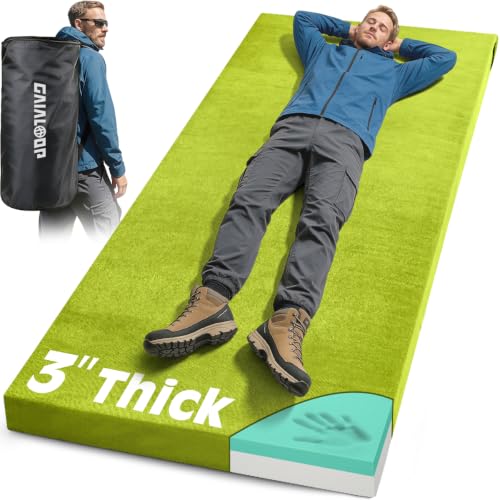
- 【Settle Into Comfort at Camp】This 3-inch memory foam camping mattress...
- 【Make Room to Unwind】The 75 x 38 x 3-inch Twin sleeping mat brings foam...
- 【Upgraded Straps for Your Next Getaway】Pack this roll-up mattress with...
What I Look for When Buying a Foam Camping Pad for Back Pain
After testing many pads over the years, I have narrowed down what actually matters. Here is what I check before spending my money.
Thickness and How It Supports Your Spine
Thicker foam pads usually offer better support for your back. I look for at least one inch of foam to keep my hips from hitting the ground.
Thin pads might save space in your pack, but they often leave your spine unsupported. I learned this when my cheap half-inch pad left me sore after every trip.
Density and How Long the Pad Keeps Its Shape
High-density foam holds its shape all night long. Low-density foam tends to flatten out under your body weight by morning.
I press my thumb into the foam when shopping. If it bounces back quickly, it is dense enough to support my back through the night.
Closed-Cell vs Open-Cell Foam for Different Needs
Closed-cell foam is firm and does not soak up water. I use this type for backpacking because it is lightweight and works on wet ground.
Open-cell foam is softer and more comfortable. But it can get heavy if it gets wet, so I only use it for car camping.
R-Value and Staying Warm for Back Comfort
A cold ground makes your back muscles tense up all night. I always check the R-value to make sure the pad insulates me from the cold earth.
For summer camping, an R-value of 2 is enough for me. For spring or fall trips, I look for an R-value of 4 or higher to keep my back relaxed.
The Mistake I See People Make With Foam Camping Pad Firmness
I wish someone had told me this earlier. The biggest mistake people make is thinking firmer is always better for back pain.
Many campers buy the hardest foam pad they can find. They believe a stiff surface will keep their spine straight and prevent soreness.
But the truth is different. A pad that is too firm creates pressure points that cut off circulation. Your body then shifts all night trying to get comfortable.
Why Firm Pads Can Actually Make Back Pain Worse
When your hip presses into a rock-hard pad, your spine twists to compensate. That twisting puts strain on your lower back muscles.
I made this mistake on my first solo camping trip. I bought the firmest pad I could find and woke up with a backache that lasted three days.
What You Should Do Instead to Protect Your Back
Look for a pad that lets your body sink just slightly into the foam. Your hips and shoulders should feel cradled, not pushed up.
Think of it like a mattress at home. You do not sleep on a concrete floor, so do not expect your back to enjoy one in a tent.
If you are tired of waking up with a stiff back and wasting money on pads that do not work, I finally found what I wish I had bought from the start.
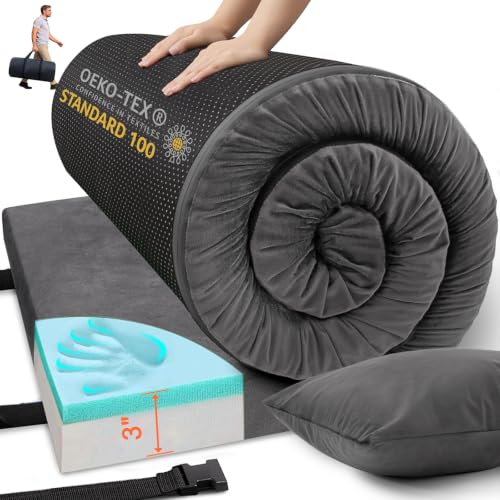
- 3" Thick Comfort & Support:This sleeping pad combines premium memory foam and...
- OEKO-TEX Certified Soft Fabric:The surface is made with OEKO-TEX certified...
- Versatile for Multiple Uses:Whether you're camping in a tent, sleeping on a...
The Simple Trick That Saved My Back on Every Camping Trip
Here is what I actually recommend and why it changed everything for me. I started stacking a thin closed-cell foam pad on top of a slightly softer open-cell pad.
The firm bottom layer keeps me off the cold ground. The softer top layer lets my hips and shoulders sink into a comfortable position.
This combination gives me the support I need without the pressure points. My back feels great in the morning, and I do not dread getting out of my sleeping bag.
Why Two Layers Work Better Than One Thick Pad
One thick pad can feel too soft in the middle and too firm at the edges. Two layers let you adjust each piece for your specific body.
I use a firm closed-cell pad on the bottom for insulation. Then I put a medium-firm open-cell pad on top for comfort.
This setup costs less than a single high-end pad and works better for my back. I have used this trick for years and never looked back.
How to Test Your Own Pad Setup Tonight
You do not need to buy anything new to try this. Just grab a yoga mat or a thick blanket and put it under your current foam pad.
Lie down for ten minutes and see how your back feels. If your hips still hurt, add another layer of blanket for more cushion.
This simple test showed me exactly what firmness my back needed. It took me from dreading camping trips to actually looking forward to sleeping in a tent.
My Top Picks for Foam Camping Pads That Helped My Back Pain
I have tested many foam pads over the years. Here are the two I actually recommend to friends and family who ask about back pain.
Therm-a-Rest Z Lite Original Camping Sleeping Pad — Firm Support That Travels Light
The Therm-a-Rest Z Lite is my go-to for backpacking trips. I love how the accordion fold makes it easy to strap onto my pack. This pad is perfect for side sleepers who need firm support without extra weight.
One honest trade-off is that it is thinner than other pads, so you feel the ground a bit through the foam.
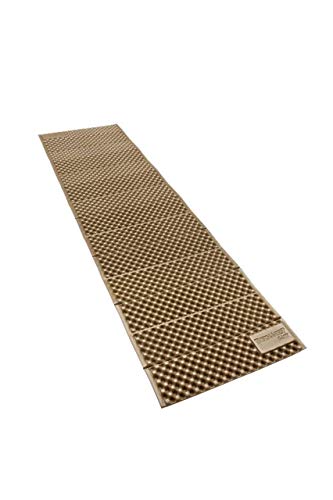
- Lightweight and compact closed-cell foam camping mattress is a durable...
- Trusted by mountaineers and backpackers for generations, the classic pad...
- Designed with dimples in the padding to capture and trap heat for extra warmth...
HomeMate Memory Foam Camping Mattress Pad Portable Roll Up — Plush Comfort for Car Campers
The HomeMate Memory Foam Pad is what I use for car camping with my family. I love how the memory foam molds to my hips and shoulders for a pressure-free night. This pad is perfect for back sleepers who want a softer feel without sinking too deep.
One honest trade-off is that it is bulky to carry, so I only use it when driving to the campsite.

- Enhanced Camping Comfort: The 3-inch roll-up camping mattress combines memory...
- Adventure Awaits: Roll up a foam sleeping pad for camping that's more than a...
- Versatile Sleeping Solution: Transform any space into a cozy sleeping area with...
Conclusion
The firmness of your foam camping pad directly affects how your back feels the next morning, so do not just grab the cheapest one on the shelf.
Go lie on your current pad for five minutes tonight and pay attention to where your hips and shoulders press into the foam — that simple test might save you from waking up sore on your next trip.
Frequently Asked Questions about Is the Firmness of Foam Camping Pads Linked to Back Pain?
Can a foam camping pad that is too soft cause back pain?
Yes, a pad that is too soft lets your hips sink down while your shoulders stay higher. This creates a hammock effect that curves your spine unnaturally.
Your back muscles then work all night to keep your spine straight. This leads to stiffness and soreness in the morning.
How firm should my foam camping pad be for side sleeping?
Side sleepers need a medium-firm pad that lets their hips and shoulders sink slightly into the foam. If the pad is too hard, those pressure points will ache by morning.
I recommend testing a pad by lying on your side for five minutes. If you feel any sharp pressure in your hip, the pad is too firm for you.
What is the best foam camping pad for someone who needs to protect their lower back?
If you wake up with lower back pain after camping, you need a pad with consistent support across the whole surface. A pad that dips in the middle will make your back ache.
In my experience, what finally worked for my own lower back was a pad with high-density foam that does not flatten overnight. I have been using what I grabbed for my own recovery and my mornings are much better now.
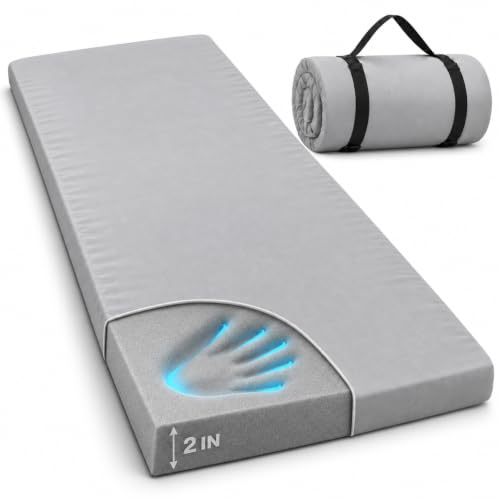
- PAD ONLY — COT FRAME NOT INCLUDED: This listing includes the camping cot pad...
- MEMORY FOAM COMFORT: Made with memory foam and a soft breathable removable...
- CHOOSE YOUR THICKNESS: Available in 2-inch, 3-inch, and 4-inch options for...
Does sleeping on a firm foam pad help with existing back problems?
Not always. Many people think a very firm pad will keep their spine straight, but it can actually create pressure points that make back problems worse.
You want a pad that supports your spine’s natural curves without pushing back too hard. A medium-firm pad is usually the best choice for existing back issues.
Which foam camping pad won’t let me down when I camp in cold weather?
Cold weather makes most foam pads turn stiff and hard, which can hurt your back. You need a pad with a high R-value that stays flexible in low temperatures.
I learned this lesson on a freezing trip where my pad felt like a board. What finally worked was a closed-cell foam pad that kept its shape and warmth, like the one I now take on every cold-weather trip.
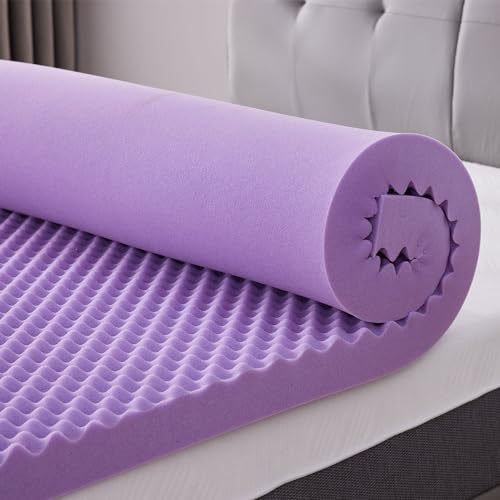
- Egg Crate Memory Foam
- Product Note: Due to compressed packaging, the memory foam may initially appear...
- Improved Comfort: The egg-shaped design provides more comprehensive support by...
How do I know if my foam pad is the right firmness for my body weight?
Heavier people need firmer foam to prevent their hips from bottoming out against the ground. Lighter people need softer foam so their pressure points do not ache.
A simple test is to lie on your pad and slide your hand under your lower back. If you can easily slide your hand in, the pad is too firm. If you cannot get your hand under at all, it is too soft.