
Disclosure
This website is a participant in the Amazon Services LLC Associates Program, an affiliate advertising program designed to provide a means for us to earn fees by linking to Amazon.com and affiliated sites.
You bought a foam camping pad expecting comfort, but it feels like sleeping on a board. That firm, thin layer offers almost no cushioning against the hard ground.
I have learned that many new foam pads need a break-in period before they feel softer. The dense foam cells are compressed from manufacturing and shipping, so your body heat and weight need time to loosen them up.
Fix the Firm Pad Problem
When your foam camping pad feels like sleeping on a board, pressure points build up fast. That hard surface stops you from getting real rest outdoors. The SINWEEK 2 Inch Egg Crate Memory Foam Topper adds soft cushioning that molds to your body, instantly fixing that too-firm feel.
Grab the topper that turned my stiff pad into a cloud: SINWEEK 2 Inch Egg Crate Memory Foam Mattress Topper Twin
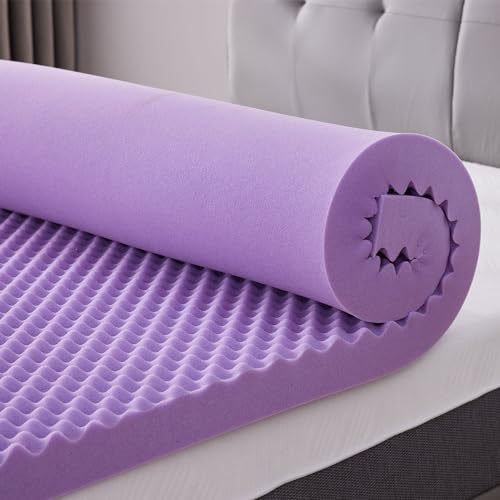
- Egg Crate Memory Foam
- Product Note: Due to compressed packaging, the memory foam may initially appear...
- Improved Comfort: The egg-shaped design provides more comprehensive support by...
Why a Too-Firm Pad Ruins Your Sleep and Your Trip
When your foam pad feels like concrete, your hips and shoulders take the worst of it. I remember one cold night in the Smokies when I woke up every hour, sore and shivering.
You do not just lose comfort. You lose sleep, and bad sleep makes you grumpy and careless the next day on the trail.
The Pain of a Bad Night on the Ground
My youngest son cried on his first overnight trip because his new pad felt like a rock. He tossed and turned until I gave him my jacket to put under his hips.
That is the real cost of a pad that is too firm. You waste money on gear that does not work, and you might turn a kid off from camping forever.
How a Firm Pad Hurts Your Whole Trip
A firm pad does more than bruise your bones. It steals your energy for the next day’s hike.
- You wake up stiff and sore, not rested
- Cold ground seeps through thin foam faster
- You snap at your friends over small stuff
I have seen grown adults pack up and leave early because they could not sleep on a hard pad. Do not let that be you.
What Actually Makes a Foam Pad Feel Firm or Soft
Not all foam is the same. I learned this the hard way after buying a cheap pad that felt like a yoga mat folded in half.
The density of the foam and the thickness of the pad are the two biggest factors. Thicker foam with lower density usually feels softer right out of the package.
Closed-Cell vs Open-Cell Foam
Closed-cell foam is the stiff, crunchy stuff you see on budget pads. It is durable but gives you almost no cushion.
Open-cell foam has air pockets inside that squish down under your weight. That is what you want for real comfort on rocky ground.
Why Storage Temperature Matters
I keep my pads in the garage, which gets cold in winter. When I pulled one out for a spring trip, it was stiff as a board for the first two hours.
Cold foam does not compress well. If you store your pad in a chilly basement, let it warm up inside your tent for thirty minutes before lying down.
I wasted money on three different pads before I found one that actually let me sleep through the night without hip pain. If you are tired of tossing and turning on a pad that feels like concrete, what finally worked for me was switching to a thicker open-cell design that actually gives under pressure.

- 【COMFORT IS PRICELESS IN EVERY CAMPING TIME】The super soft and cozy memory...
- 【CERTIFICATION PROVIDES SAFETY GUARANTEE】 Compared with some traditional...
- 【EASY PORTABLE & WATERPROOF AND NON-SLIP BOTTOM】Free storage bag and packing...
What I Look for When Buying a Foam Camping Pad
After sleeping on too many hard pads, I finally learned what to check before buying. Here are the three things that matter most.
Thickness in Inches, Not Millimeters
Look for pads that are at least one inch thick. Anything thinner and your hips will hit the ground no matter how soft the foam is.
I made this mistake with a half-inch pad and woke up with bruises on my shoulder blades. Two inches is even better for side sleepers like me.
R-Value for Cold Ground
R-value tells you how well the pad insulates you from cold dirt. A rating of two or higher is fine for summer, but you want four or more for spring and fall trips.
I used a low-R-value pad in October once and shivered all night. The foam felt even firmer because the cold made it stiff.
Weight Versus Comfort Trade-Off
Ultralight pads are thin and hard. Thicker pads are heavier but way more comfortable for real sleep.
For car camping, I bring a bulky pad and sleep great. For backpacking, I accept some firmness to save weight on my back.
The Mistake I See People Make With Firm Foam Pads
The biggest mistake I see is people thinking all foam pads break in the same way. They buy a cheap closed-cell pad and expect it to soften up after a few nights.
Closed-cell foam does not really get softer. It stays stiff because the cells are sealed and cannot compress much under your weight.
I watched my friend suffer through three nights on a brand new pad, waiting for it to “break in.” It never did, and he went home with a sore back and a bad attitude about camping.
If you are tired of waking up with numb hips and a stiff neck after every trip, the one that finally let me sleep uses open-cell foam that actually gives under pressure instead of fighting your body all night.

- Enhanced Camping Comfort: The 3-inch roll-up camping mattress combines memory...
- Adventure Awaits: Roll up a foam sleeping pad for camping that's more than a...
- Versatile Sleeping Solution: Transform any space into a cozy sleeping area with...
One Simple Trick That Softened My Pad Instantly
Here is something I wish I knew years ago. You can actually make a firm foam pad feel softer without buying a new one.
I lay my pad in the sun for about twenty minutes before setting up camp. The warmth relaxes the foam cells and makes them more flexible.
On cold mornings, I stuff my pad inside my sleeping bag for a few minutes before lying down. Body heat does the same thing the sun does, just slower.
Another trick I use is putting a thin layer of pine needles or dry leaves under my pad. That extra inch of natural cushion takes the pressure off my hips without adding weight to my pack.
I also started sleeping with my knees slightly bent instead of flat on my back. That small change shifts my weight off the bony spots and onto the meaty parts of my body.
My Top Picks for a Camping Pad That Actually Cushions
I have tested a lot of pads over the years. Here are the two I would actually buy with my own money right now.
Selectico 3.5″ Extra Thick Foam Camping Mattress — Best for Side Sleepers Who Need Real Cushion
The Selectico is the thickest foam pad I have ever used. At 3.5 inches, my hips never touch the ground no matter how I toss and turn. It is perfect for car campers who prioritize sleep over pack weight.
The trade-off is that it is bulky and heavy for backpacking trips.
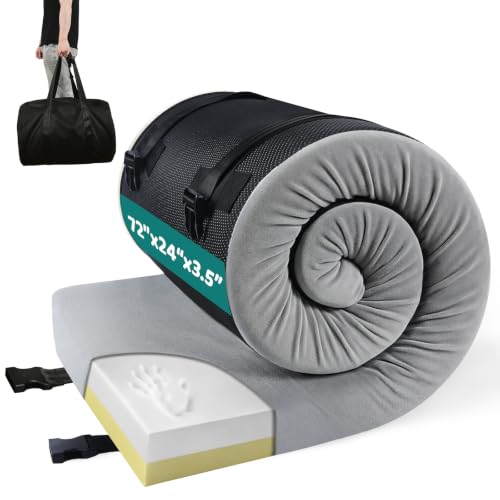
- [Ultimate Comfort & Support] Our 3.5-inch extra thick camping mattress features...
- [Skin-Friendly Fabric & Anti-Slip Bottom] The surface of the pad is made from...
- [Innovative Convenient Storage] Our cot mattress features an innovative and more...
fitply Ultralight Foam Sleeping Pad Waterproof Insulation — Best for Backpackers Who Hate Heavy Gear
The fitply is my go-to for long hikes where every ounce counts. It is thin but uses dense foam that still takes the edge off rocky ground. I love that it rolls up small enough to strap outside my pack.
Just know it will not feel as plush as a thick car camping pad.

- 【ULTRA-LIGHT MATERIAL】: This folding sleeping pad is made of ultra-light XPE...
- 【ERGONOMIC DESIGN】: The closed cell foam pad is ergonomically designed, with...
- 【SUPERIOR INSULATION】: The combination of XPE foam and a heat-reflective...
Conclusion
The biggest lesson I learned is that foam pad firmness comes down to density and thickness, not just brand or price. Do not suffer through another sleepless night on a pad that fights your body.
Go grab your pad right now and press your hand into it while it is warm inside your house. If it does not give at all, it is time to swap it for something that will actually let you rest on your next trip.
Frequently Asked Questions about Why is My Foam Camping Pad Too Firm with Minimal Cushioning?
Will my foam camping pad get softer over time?
It depends on the type of foam. Open-cell foam does soften slightly as the air pockets break in after several nights of use.
Closed-cell foam, however, stays firm forever because the cells are sealed. If you have a closed-cell pad, do not wait for it to change.
Why does my foam pad feel harder in cold weather?
Cold temperatures make foam molecules tighten up, which turns the pad stiff and unyielding. This is normal for all foam pads.
Warm the pad inside your sleeping bag or in the sun for twenty minutes before lying on it. That small step makes a huge difference.
Can I add extra cushioning to a firm foam pad?
Yes, you can put a thin foam topper or a folded blanket on top of your pad. I have used my puffy jacket under my hips before.
Another option is layering two thin pads together. I tried this once with a yoga mat under my foam pad and it worked well.
What is the best foam camping pad for someone who needs to sleep on their side?
Side sleepers need at least two inches of foam to keep hips and shoulders off the ground. Thin pads just do not cut it for this position.
After years of waking up sore, what finally worked for me was a thick open-cell pad that actually cushions bony pressure points instead of fighting them.
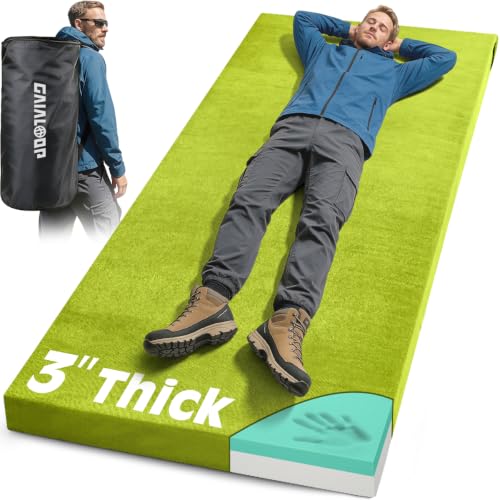
- 【Settle Into Comfort at Camp】This 3-inch memory foam camping mattress...
- 【Make Room to Unwind】The 75 x 38 x 3-inch Twin sleeping mat brings foam...
- 【Upgraded Straps for Your Next Getaway】Pack this roll-up mattress with...
Which foam camping pad won’t let me down when I camp on rocky ground?
Rocky ground demands thick foam with a high density rating. Cheap thin pads let every stone poke through and ruin your sleep.
I camp on gravel sites often, and the ones I sent my sister to buy have enough thickness to smooth out uneven terrain without bottoming out under her weight.

- Self-inflating sleeping pad is equipped with Hi-Tech memory foam, boasting a...
- The newly upgraded Wevelel ultra-thick camping pad measures 77" x 26.98" x...
- Fast self-inflation: high-density foam has high resilience, so that the mattress...
Is it worth buying a more expensive foam pad for better comfort?
In my experience, yes. Cheap pads use stiff closed-cell foam that saves money but costs you sleep every single night.
Spending a bit more gets you open-cell foam that is softer and warmer. I stopped buying bargain pads after one miserable trip in the rain.