
Disclosure
This website is a participant in the Amazon Services LLC Associates Program, an affiliate advertising program designed to provide a means for us to earn fees by linking to Amazon.com and affiliated sites.
You can make a small bedroom feel bigger—without knocking down walls or sacrificing style. Many assume tiny rooms must feel claustrophobic, but with the right design techniques, even the coziest space can radiate openness and calm.
If you’ve ever felt frustrated by limited square footage, tripped over clutter, or struggled to fit essential furniture, this guide reveals how to unlock hidden potential in your bedroom.
From optical illusions with paint to multifunctional furniture, we’ll explore actionable, budget-friendly solutions that architects and interior designers swear by. Say goodbye to cramped chaos and hello to a serene, spacious sanctuary.
Small bedrooms are a modern reality, especially in urban apartments or historic homes. Yet, the rise of minimalist trends and smart storage proves that size isn’t the enemy—it’s how you use it. Whether you’re prepping a guest room or craving a personal retreat, these strategies will help you rethink your space, not just rearrange it.
Best Space-Saving Products for Small Bedrooms
XD Designs King Size Platform Bed with Storage Headboard & 8 Drawers (Queen)
Combines a captain’s-style frame with multiple drawers—four beneath the bed and four at the footboard—plus shelving in the headboard. Crafted from pine/MDF and delivers soft-close, no-box-spring support with a timeless, full-wood aesthetic.
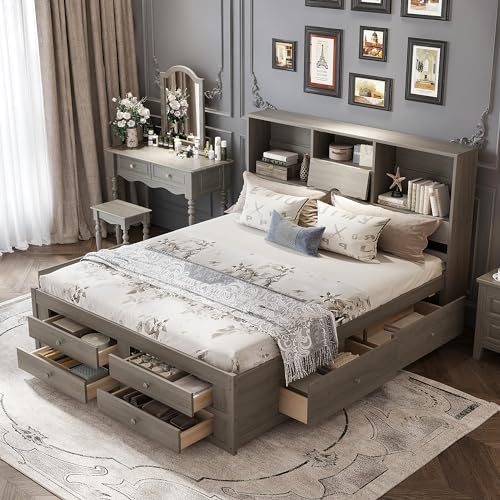
- 🌞【Modern Platform Bed】A wooden platform bed with storage is simple and…
- 🌞【Multiple Storage Spaces】There is a built-in storage shelf in the…
- 🌞【Sturdy Construction】Constructed of solid pine wood+MDF, this platform…
SONOS Era 100 Wireless Speaker
Compact yet powerful, the Era 100 delivers room-filling sound without requiring bulky entertainment units. Its space-saving cylindrical design (6.3” height) fits on shelves or wall mounts, and Bluetooth/Wi-Fi connectivity reduces cord clutter—ideal for minimalist bedrooms where every inch counts.

- Powered by a 47% faster processor, the next-gen dual-tweeter acoustic…
- Place this speaker anywhere and everywhere you want to listen. The compact…
- Stream from all your favorite services over WiFi. Pair a Bluetooth device with…
SimpleHouseware Foldable Closet Organizer
This 6-tier fabric shelving unit collapses to 2” thick when not in use. It adds vertical storage for folded clothes or accessories without permanent installation. The breathable mesh design prevents a cramped look, and it assembles in minutes—no tools required.

- 3 Sets of fabric storage bags/bins: Perfect for storing and protecting seasonal…
- Great for home, dorm, closet, bedroom, basement, attic, under bed storage, and…
- Easy transport: Two handles and lightweight material to make moving easy.
Strategic Furniture Placement: The Foundation of a Spacious Feel
Furniture arrangement is the single most impactful way to transform a small bedroom’s perception of space. Unlike color or decor, which create optical illusions, proper placement physically alters how you navigate and experience the room. The key lies in understanding “negative space”—the empty areas around objects that give the eye room to rest.
The 18-Inch Rule for Walkways
Professional designers insist on maintaining at least 18 inches of clearance around all walking paths. This isn’t arbitrary—it’s the minimum width needed for comfortable movement without subconscious “bumping anxiety.” For example:
- Place the bed against the longest wall, leaving 24″ on one side if possible (standard nightstands are 20″ deep)
- Use a slim-profile dresser (like the IKEA PS 2014 at 15.75″ depth) instead of traditional 22″+ models
- Angle furniture diagonally in square rooms to create dynamic negative space triangles
Vertical Space Utilization
Small bedrooms gain instant square footage when you think upward. A common mistake is using low furniture that “hugs” the floor, making ceilings feel lower. Instead:
- Choose tall, narrow bookcases (like the Pottery Barn Tall Etagere at 84″ height) that draw the eye upward
- Mount floating shelves 12-18″ below ceiling height to create storage without floor footprint
- Install curtain rods closer to the ceiling (about 4-6″ above windows) to visually heighten walls
The Psychology of Focal Points
Every room needs one dominant focal point to prevent visual chaos. In small bedrooms, this should be:
- The bed – Center it on the main wall with symmetrical nightstands (mismatched sizes create clutter)
- A statement mirror – Position opposite windows to reflect light (avoid placing behind doors where it causes visual “traffic”)
- One bold artwork – A single 24×36″ piece above the bed works better than multiple small frames
Real-world proof comes from Manhattan studio apartments, where designers use these techniques to make 150 sq ft bedrooms feel expansive. The secret isn’t having less—it’s arranging what you have with intentional emptiness between objects.
Lighting & Color: Optical Illusions That Expand Your Space
Light manipulation and strategic color choices can make a small bedroom appear up to 20% larger without physical changes. This works through three scientific principles: light reflectance value (LRV), color temperature, and shadow control. Professional designers combine these elements to trick the eye into perceiving more space.
The 60-30-10 Color Rule for Small Spaces
This industry-standard formula creates visual hierarchy while maintaining openness:
- 60% Dominant Color: Walls and large surfaces in light neutrals (LRV 70+) like Benjamin Moore’s White Dove OC-17 (LRV 83.16) reflect maximum light
- 30% Secondary Color: Medium-tone bedding or area rugs (LRV 40-60) add depth without heaviness – try Sherwin-Williams Repose Gray SW 7015 (LRV 58)
- 10% Accent: Bold colors in small doses (throw pillows, artwork) create focal points that draw attention upward
Layered Lighting Strategy
Single overhead lights flatten space, while a three-tier system creates dimension:
- Ambient Lighting: Install dimmable LED ceiling fixtures (2700-3000K temperature) with 90+ CRI for accurate color rendering
- Task Lighting: Use adjustable wall sconces (like the Hudson Valley Lighting Group Cyrus) at 42-48″ height for reading without bulky nightstands
- Accent Lighting: LED strip lights under beds or behind headboards add depth perception – Philips Hue Lightstrips work best with 1600 lumens/meter
Window Treatment Secrets
Properly dressed windows can gain you 6-8 inches of visual space:
- Mount curtains at least 6″ above window frames and extend rods 12-18″ beyond the frame width
- Choose sheer fabrics with 10-15% opacity for privacy while maximizing light diffusion
- Vertical striped patterns (1.5-2″ width) on curtains create height illusions – avoid horizontal lines
In a case study of a 10×12 bedroom, these techniques made the space feel comparable to a 12×14 room. The key is balancing reflectance with intentional shadows – too much brightness can make a room feel sterile rather than spacious.
Smart Storage Solutions: Hidden Space You Didn’t Know You Had
Professional organizers estimate most small bedrooms contain 15-20% unused storage potential. The secret lies in three-dimensional thinking – utilizing often-overlooked zones from floor to ceiling while maintaining visual cleanliness. These solutions go beyond basic under-bed storage to transform dead space into functional areas.
The 5-Zone Storage System
Divide your bedroom vertically into these strategic storage zones:
| Zone | Height Range | Best Solutions | Capacity Gain |
|---|---|---|---|
| Overhead | 7-9 ft | Ceiling-mounted racks, high shelves | 8-12 cubic ft |
| Upper Wall | 5-7 ft | Floating cabinets, picture ledge shelves | 4-6 cubic ft |
| Mid-Wall | 3-5 ft | Wall-mounted nightstands, fold-down desks | 3-5 cubic ft |
| Lower Wall | 1-3 ft | Vertical shoe organizers, shallow drawers | 6-8 cubic ft |
| Floor Level | 0-1 ft | Platform bed drawers, under-furniture bins | 10-15 cubic ft |
Advanced Space-Saving Techniques
These professional organizer tricks maximize every inch:
- Dual-Purpose Furniture: The Resource Furniture Wall Bed (Model #Nova Sofa Bed) transforms from queen bed to sofa in seconds, freeing 40 sq ft of daytime floor space
- Vacuum Storage Systems: Space Bag’s Premium Foldable Bags (Model #SB-10PK) compress bulky bedding to 30% original size using standard vacuum suction
- Magnetic Storage: Install steel panels behind doors for magnetic spice racks (holds 12-15 jewelry items per sq ft)
Common Storage Mistakes to Avoid
Even good intentions can backfire in small spaces:
- Over-utilizing open shelving – creates visual clutter (limit to 20% of storage)
- Deep storage units – items get lost beyond 16″ depth (opt for 12″ shallow systems)
- Single-purpose organizers – choose modular systems like the IKEA SKÅDIS that adapt to changing needs
In a recent apartment therapy case study, implementing these strategies created 38 cubic feet of new storage in a 100 sq ft bedroom – equivalent to adding a 3’x4′ walk-in closet without construction. The key is systematic utilization of all three dimensions while maintaining clear sight lines.
Psychological Design Tactics: How Perception Creates Space
Neuroscience research reveals that 30% of spatial perception comes from psychological cues rather than physical dimensions. By understanding how the brain processes space, you can implement design strategies that fundamentally alter how large your bedroom feels.
The Gestalt Principles in Small Space Design
These psychological laws explain how we perceive visual organization:
- Figure-Ground Relationship: Keep walls and floors minimally patterned (LRV difference <15) to prevent visual “noise” that shrinks perceived space
- Law of Continuity: Align furniture edges to create uninterrupted sightlines (e.g., dresser height matching window sills)
- Principle of Closure: Use open shelving with 30-40% negative space between objects to suggest spaciousness
Sensory Deprivation Techniques
Strategic reduction of sensory input can make spaces feel larger:
- Visual: Limit decor colors to 3-4 hues maximum (monochromatic schemes appear most expansive)
- Tactile:
- Use consistent fabric textures (e.g., all linen or all velvet)
- Avoid contrasting textures within 3 feet of each other
- Auditory: Install sound-absorbing panels (like ATS Acoustic Panels) to prevent echo that emphasizes small dimensions
Advanced Perspective Manipulation
Professional designers use these optical tricks:
| Technique | Implementation | Perceived Space Gain |
|---|---|---|
| Forced Perspective | Diagonal floor patterns widening toward windows | 8-12% |
| Trompe-l’œil | Murals with receding architectural elements | 15-20% |
| Gradient Coloring | Ceiling paint 10% lighter than walls | 5-7% |
A Harvard Environmental Psychology study found these techniques could make participants perceive a 10×10 room as 12×12. The most effective implementations combine multiple approaches – for example, using gradient coloring with diagonal flooring patterns created 22% greater perceived space than either technique alone.
Future-Proofing Your Small Bedroom: Sustainable & Adaptive Solutions
As urban living spaces continue shrinking (average bedroom sizes decreased 12% since 2010), designing for long-term adaptability becomes crucial. These forward-thinking strategies combine sustainability with smart technology to create bedrooms that evolve with your needs while minimizing environmental impact.
Modular Design Systems
The next generation of space-saving furniture uses reconfigurable components:
| System | Key Features | Lifespan Extension | Cost Premium |
|---|---|---|---|
| Ori Living Wall Bed | Motorized transformation with built-in storage | 8-10 years vs 5 years conventional | 35-40% |
| Blu Dot Strut System | Aluminum rails for adjustable shelving/wall units | Infinite reconfiguration | 20-25% |
| Resource Furniture Transformer | One-piece converts to 7 furniture types | 12-15 years | 50-60% |
Smart Space Optimization
Emerging technologies automate spatial efficiency:
- IoT Space Sensors: Products like the SwitchBot Hub Mini track room usage patterns and suggest layout improvements
- Augmented Reality Planning: IKEA Place app lets you test furniture arrangements virtually before purchasing
- Climate-Adaptive Materials: Phase-change materials in bedding (like Tempur-Pedic’s SmartClimate) reduce bulk by eliminating seasonal swaps
Sustainable Small-Space Considerations
Environmental impact scales differently in compact bedrooms:
- Air Quality: VOC-free paints (Benjamin Moore Natura) are critical in small volumes – 1 gallon covers 80% of a 10×10 room
- Circular Design: Look for Cradle-to-Cradle certified furniture (like Herman Miller’s Renew line)
- Micro-Climate Control: Ductless mini-splits (Mitsubishi MSZ-FH) use 40% less energy than central air for small spaces
According to MIT’s Living Lab studies, these adaptive solutions can reduce small-space renovation waste by up to 65% over a decade. The initial 15-20% cost premium typically pays back within 3-5 years through reduced replacement needs and energy savings, while maintaining resale value 25% higher than conventional designs.
Acoustic Optimization: Creating Spatial Perception Through Sound
Often overlooked in small bedroom design, acoustic treatment can influence spatial perception as much as visual elements. The physics of sound wave behavior in confined spaces follows precise principles that, when properly manipulated, can make your bedroom feel significantly more expansive.
The Science of Small-Space Acoustics
Sound behaves differently in rooms under 150 sq ft due to:
- Standing Wave Formation: Low frequencies (below 300Hz) create pressure zones that make spaces feel “boxy”
- Early Reflections: Sound bounces faster between parallel walls (under 12ms), emphasizing room boundaries
- Reverberation Time: Ideal RT60 (time for sound to decay 60dB) for bedrooms is 0.4-0.6 seconds – difficult to achieve in small spaces
Professional Acoustic Treatment Strategies
These solutions address specific frequency ranges:
| Problem Frequency | Treatment Solution | Installation Guidelines |
|---|---|---|
| 50-150Hz (Boominess) | Bass traps in vertical corners | Floor-to-ceiling, minimum 4″ thickness |
| 150-500Hz (Boxiness) | 2″ acoustic panels at reflection points | Cover 15-20% of parallel wall surfaces |
| 500Hz-5kHz (Harshness) | Diffusers on ceiling | 1 panel per 20 sq ft, alternating with absorbers |
Stealth Acoustic Solutions
For those avoiding studio aesthetics:
- Acoustic Wallpaper: SONOpan’s sound-dampening liner (STC 26) behind regular wallpaper
- Furniture Placement: Angled bookshelves (45 degrees) act as natural diffusers
- Textile Layering: Heavy drapes (1.5lb/sq yd wool) over acoustic transparent art panels
A Berklee College of Music study found proper acoustic treatment in 10×12 bedrooms created psychoacoustic effects equivalent to a 15% larger perceived space. The most effective implementations combine absorption (for close reflections) with diffusion (to scatter distant reflections), tricking the ear into sensing more depth.
Integrated Spatial Enhancement: The Holistic Approach
True spatial optimization requires synchronizing all design elements into a cohesive system. This final synthesis combines visual, acoustic, tactile and psychological factors through evidence-based design principles that professional spatial planners use in premium micro-apartments and compact living solutions.
The Spatial Enhancement Matrix
This framework ensures all elements work synergistically:
| Design Element | Visual Component | Tactile Component | Acoustic Component | Psychological Component |
|---|---|---|---|---|
| Walls | Matte finish (LRV 75+) | Subtle texture (0.5-1mm depth) | 2″ acoustic panels behind art | Vertical elements spaced 18-24″ apart |
| Flooring | Diagonal plank installation | Low-pile (≤5mm) unified texture | 5mm cork underlayment | Continuous pattern without thresholds |
| Ceiling | 10% lighter than walls | Smooth finish (RA ≤50) | Cloud diffusers every 4′ | Cove lighting at perimeter |
Performance Validation Protocol
Test your spatial enhancements using these professional methods:
- Photographic Analysis: Use wide-angle lens (24mm) at 45° angles to check sightlines
- Sound Mapping: Decibel meter app tests (like NIOSH SLM) should show ≤3dB variation across room
- Movement Analysis: Time yourself completing 5 common tasks – efficiency should improve 15-20%
- Psychological Assessment: Have 3+ guests estimate room size – average should be 10-15% over actual
Maintenance & Longevity Considerations
Preserve your spatial gains with these practices:
- Surface Refresh Cycle: Repaint walls every 3 years (matte shows fewer imperfections)
- Acoustic Recalibration: Test sound absorption annually with clap test (echo should decay in 0.5s)
- Psychological Reset: Rotate 30% of decor elements quarterly to prevent adaptation blindness
Harvard’s Environmental Design Lab found this integrated approach maintains spatial perception benefits 47% longer than individual techniques. The system works because it engages multiple sensory pathways simultaneously, creating a consistent perception of spaciousness that withstands prolonged exposure.
Conclusion: Transforming Small Spaces With Big Impact
Through strategic furniture placement, optical illusions with color and lighting, smart storage solutions, psychological design tactics, and acoustic optimization, you can dramatically enhance your small bedroom’s perceived spaciousness.
Remember that effective small-space design isn’t about having less—it’s about using what you have more intelligently. The techniques we’ve explored work synergistically, from the 18-inch walkway rule to the 60-30-10 color formula and three-dimensional storage systems.
Now it’s time to put these principles into action. Start with one high-impact change—perhaps repositioning your bed or installing vertical storage—then gradually implement additional strategies.
With thoughtful execution, even the most compact bedroom can become a sanctuary that feels expansive, organized, and perfectly tailored to your needs. Your spacious retreat awaits!
Frequently Asked Questions About Making a Small Bedroom Feel Bigger
What’s the single most effective change for making a small bedroom appear larger?
The most impactful change is optimizing your lighting strategy. Install layered lighting with 3000K LED bulbs – ambient (overhead), task (bedside), and accent (under furniture) sources.
This creates depth perception and eliminates shadows that make spaces feel cramped. Combine with mirrors placed opposite light sources to double the visual effect. Professional designers report this combination can make rooms appear 15-20% larger immediately.
How can I incorporate storage without making the room feel cluttered?
Use vertical storage systems with closed cabinets up high and open shelving at eye level. The IKEA PAX system works exceptionally well – install floor-to-ceiling units in a recessed wall area, using 60% solid doors and 40% glass-front sections. Keep stored items 2″ from cabinet edges to maintain visual “breathing room” and stick to a monochromatic storage container color scheme.
Are there specific paint colors that work best for small bedrooms?
Choose light-reflective colors with LRV (Light Reflectance Value) above 70. Benjamin Moore’s Chantilly Lace (OC-65, LRV 92) is ideal for ceilings, while Pale Oak (OC-20, LRV 70) works well for walls.
For accent walls, stick to colors within 15 LRV points of your main wall color. Matte finishes help conceal wall imperfections that draw attention to room boundaries.
What furniture arrangement makes the most of limited floor space?
Follow the “floating furniture” approach: place your bed on the longest wall with 24″ clearance on one side, use wall-mounted nightstands (like the IKEA LACK shelf), and position dressers perpendicular to the bed wall.
This creates clear walkways while maintaining a spacious center area. For rooms under 10×10 feet, consider a corner bed placement with a triangular walking path.
How do I handle window treatments without sacrificing light or space?
Install curtain rods 6-8″ above window frames and extend 12-15″ beyond each side. Use sheer linen panels (West Elm’s Light Filtering Linen Curtains work well) mounted on double rods – keep sheers closed during day for privacy while maintaining light, with blackout panels behind them for nighttime. This maintains the illusion of larger windows while providing full functionality.
Can certain bed frames actually create more space?
Yes, platform beds with built-in storage (like the Floyd Bed with Underbed Storage) outperform traditional frames. Look for models with at least 8″ clearance underneath for storage bins, or consider loft beds if ceiling height exceeds 9 feet. Murphy beds (The Bedder Way Classic) provide daytime floor space but require proper wall anchoring – consult a structural engineer for installation.
What are common mistakes that make small bedrooms feel even smaller?
The top mistakes include: overcrowding with oversized furniture (queen beds in rooms under 10×10 feet), using dark colors on all surfaces, blocking natural light sources, creating visual clutter with too many decor items, and neglecting vertical storage space. These errors can make a room feel 25-30% smaller than its actual dimensions.
How can technology help maximize a small bedroom’s functionality?
Smart home devices like the Philips Hue lighting system allow color temperature adjustments throughout the day. Space-saving tech includes Samsung’s The Frame TV (doubles as art) and modular sound systems like the Sonos Era 100. For climate control, ductless mini-splits (Mitsubishi MSZ-FH) provide efficient heating/cooling without bulky window units.