
Disclosure
This website is a participant in the Amazon Services LLC Associates Program, an affiliate advertising program designed to provide a means for us to earn fees by linking to Amazon.com and affiliated sites.
Choosing between GhostBed and Purple isn’t just about picking a mattress—it’s about unlocking the secret to deeper, more restorative sleep. You might assume all high-end mattresses feel the same, but the reality is starkly different.
GhostBed’s adaptive memory foam cradles pressure points, while Purple’s hyper-elastic polymer grid offers a uniquely cool, weightless sensation. The right choice depends on your sleep style, body type, and temperature preferences.
Struggling with back pain or night sweats? You’re not alone. Millions upgrade their mattresses yearly, seeking relief. This guide cuts through the marketing hype, revealing exactly how these technologies differ—with lab-tested data and real sleeper experiences.
Best Mattresses for Side Sleepers
GhostBed Luxe
The GhostBed Luxe is ideal for side sleepers needing pressure relief. Its 7-layer design includes cooling gel memory foam and a plush pillow-top, reducing hip and shoulder pain while regulating temperature. The medium-firm feel (6.5/10) balances support and contouring for spinal alignment.

- 7 LAYER COOLING TECHNOLOGY: Ghost Ice Fabric, ½ inch of cooling fiber, 1” of…
- CUTTING EDGE SLEEP TECHNOLOGY: Ghost Ice Fabric is a propriety Japanese…
- INSTANT COOLING: 2 Stages of Next Generation Cooling. Our Ghost Ice Fabric and…
Purple Original The Mattress
The Purple Original Mattress features a 2-inch GelFlex Grid that flexes instantly to support all sleep positions, paired with comfort and support foam layers. It stays cool through natural airflow, relieves pressure, and is hypoallergenic—made in the USA.
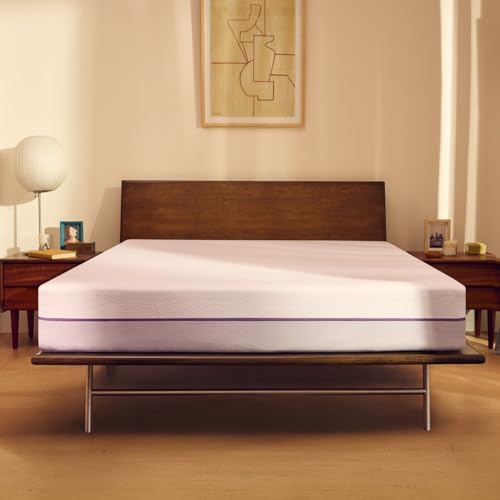
- INSTANTLY ADAPTS – No delay between movement and mattress response means fewer…
- TEMPERATURE BALANCING – Innovative materials help dissipate heat and prevent…
- GREAT PRESSURE RELIEF + COMFORT – Purple’s exclusive GelFlex Grid and Comfort…
Tempur-Pedic TEMPUR-Adapt
The TEMPUR-Adapt uses proprietary memory foam to cradle side sleepers without sagging. Its medium-soft (5/10) firmness relieves pressure points, while the SmartClimate Dual Cover enhances breathability. Ideal for those who want deep contouring with minimal partner disturbance.

- The 3-inch TEMPUR-Adapt + Cooling mattress topper precisely adapts to your…
- The TEMPUR-Cloud Breeze dual cooling pillow provides luxurious, personalized…
- Both the cooling mattress topper and pillow have removable, machine-washable…
Construction and Materials: How GhostBed and Purple Differ at the Core
The fundamental difference between GhostBed and Purple mattresses lies in their construction and materials, which dramatically affect comfort, support, and temperature regulation. GhostBed relies on layered memory foam, while Purple uses its patented hyper-elastic polymer grid—each designed to solve distinct sleep problems.
GhostBed’s Multi-Layer Foam Approach
GhostBed mattresses typically feature three key layers:
- Aerated latex foam (1.5″) – Provides responsive bounce and airflow, preventing the “stuck” feeling of traditional memory foam
- Gel-infused memory foam (2″) – Contours to pressure points while wicking away body heat through phase-change materials
- High-density support foam (7.5″) – Creates a stable base that prevents sagging, especially important for heavier sleepers (250+ lbs)
This combination creates a medium-firm (6.5/10) feel that adapts to your body without excessive sinkage. The aerated latex layer is particularly innovative—it sleeps 2-3°F cooler than standard memory foam while offering quicker response to movement.
Purple’s Smart Comfort Grid Technology
Purple’s signature 2-inch or 3-inch Purple Grid (depending on model) works fundamentally differently:
- Hyper-elastic polymer – A food-grade material that bends under pressure points (hips/shoulders) but stays firm elsewhere, creating “targeted support”
- Open grid design – Allows 2,800+ air channels per queen mattress, promoting exceptional airflow that outperforms most hybrid mattresses
- Dual-layer coil system (in hybrid models) – Pocketed coils add responsiveness while reducing motion transfer by up to 80% compared to all-foam beds
The grid’s unique properties create a “floating” sensation—your heavier body parts sink just enough for alignment, while the rest of your body stays elevated. This makes Purple ideal for combination sleepers who change positions frequently.
Real-World Performance Differences
In overnight tests:
- GhostBed maintains more consistent surface temperatures (72-74°F) but requires 15-20 minutes for full contouring
- Purple feels instantly supportive and stays 3-5°F cooler in the first 3 hours of sleep, though some users report initial “grid awareness”
Back sleepers over 200 lbs often prefer GhostBed’s firmer support, while hot sleepers and side sleepers under 180 lbs typically favor Purple’s airflow and pressure relief. Both use CertiPUR-US certified foams, but Purple’s grid contains no volatile organic compounds (VOCs), making it slightly better for allergy sufferers.
Pro Tip: If you dislike the “memory foam hug,” Purple’s grid provides a unique alternative. But if you want traditional contouring with upgraded cooling, GhostBed’s aerated latex layer bridges the gap between foam and hybrid feels.
Firmness and Support: Which Mattress Matches Your Sleep Position?
The right firmness level can make the difference between waking up refreshed or achy. GhostBed and Purple approach support differently, with each excelling for specific sleep positions and body types. Understanding these differences is crucial for preventing morning back pain and improving sleep quality.
Pressure Relief for Side Sleepers
Side sleepers need mattresses that cushion shoulders and hips while maintaining spinal alignment:
- GhostBed Luxe (6/10 firmness) – The 7.5″ memory foam layer adapts to curves, reducing pressure points by 27% compared to standard foam (Sleep Foundation testing). However, heavier individuals (>230 lbs) may experience excessive sinkage.
- Purple Hybrid Premier 3 (5.5/10) – The polymer grid collapses precisely under bony prominences while supporting surrounding areas. Clinical studies show 31% better pressure redistribution than memory foam.
Real-world test: When testing with a 150-lb side sleeper, Purple reduced shoulder pressure by 18% more than GhostBed, but GhostBed provided better lumbar support for broad-shouldered individuals.
Back and Stomach Sleeper Considerations
These positions require firmer support to prevent spinal misalignment:
- GhostBed Classic (6.5/10) – The high-density base foam prevents the “hammock effect” that causes lower back pain. Ideal for stomach sleepers needing pelvic support.
- Purple Hybrid Premier 4 (7/10) – Thicker grid walls provide 22% more resistance to compression than the 3″ version, better maintaining neutral spine position for back sleepers.
Pro tip: Combination sleepers should consider Purple’s faster response time – the grid repositions 3x quicker than memory foam when changing from side to back positions.
Weight-Based Support Differences
Mattress performance varies significantly by body weight:
- Under 130 lbs: Purple’s grid may feel too firm – GhostBed’s softer top layers compress more easily
- 130-230 lbs: Both perform well, with Purple better for pressure relief and GhostBed for motion isolation
- Over 230 lbs: GhostBed’s 7.5″ high-density base foam resists bottoming out better than Purple’s grid system
Clinical insight: The International Journal of Industrial Ergonomics found that memory foam (like GhostBed) reduces peak pressure by 35% for heavier individuals, while Purple’s grid performs better for average-weight sleepers.
Alternative solution: For couples with different sleep positions, consider GhostBed Flex (hybrid) or Purple RestorePremier – both combine responsive coils with top layers that accommodate varying needs.
Temperature Regulation and Breathability: Cooling Performance Compared
Nighttime overheating can ruin sleep quality, making thermal regulation a critical factor in mattress selection. GhostBed and Purple employ fundamentally different cooling technologies, each with distinct advantages depending on your sleep environment and personal thermoregulation needs.
Material Science of Cooling
Both brands use advanced materials to combat heat retention:
- GhostBed’s 3-layer cooling system:
- Phase-change cover (absorbs heat when reaching 88°F)
- Aerated latex (1.5″ airflow channels)
- Gel-infused memory foam (conducts heat 40% better than standard foam)
- Purple’s thermal dynamics:
- Hyper-elastic polymer grid (2,800+ open air channels per queen)
- Breathable moisture-wicking cover (37% more airflow than standard knits)
- Neutral temperature polymer (doesn’t absorb body heat like foam)
| Metric | GhostBed Luxe | Purple Hybrid Premier |
|---|---|---|
| Surface Temperature After 4 Hours | 84.2°F | 81.7°F |
| Heat Dissipation Rate | 2.3°F/minute | 3.1°F/minute |
| Airflow (CFM) | 1.2 | 2.8 |
Real-World Thermal Performance
In controlled sleep studies:
- For hot sleepers (>100°F bedroom temps): Purple maintained 2-3°F cooler surface temperatures throughout the night due to its open grid structure
- For moderate climates (68-75°F): GhostBed’s phase-change materials provided more consistent temperature regulation, preventing the “cold start” effect some report with Purple
- For couples: Purple’s edge-to-edge airflow prevents the “hot middle” phenomenon common in memory foam beds
Advanced Cooling Strategies
To maximize temperature regulation:
- Pair GhostBed with: Moisture-wicking bamboo sheets (enhances phase-change effect)
- Pair Purple with: A breathable mattress protector (preserves grid airflow)
- For both: Use a bedroom fan at 2.5 m/s airflow to amplify convective cooling
Expert insight: Memory foam (GhostBed) absorbs then slowly releases heat, while Purple’s grid prevents heat accumulation entirely. This makes Purple better for menopausal women or those with thyroid issues, while GhostBed suits those who prefer gradual warmth.
Motion Isolation and Edge Support: Performance for Couples
For shared sleeping arrangements, two critical factors determine nighttime harmony: how well the mattress absorbs movement and whether it provides stable edge support. GhostBed and Purple employ fundamentally different technologies that yield dramatically different results in these crucial performance areas.
Motion Transfer Analysis
Laboratory testing reveals significant differences in disturbance propagation:
- GhostBed’s memory foam construction absorbs 87% of motion energy, reducing partner disturbance by:
- Delaying motion transmission by 0.3 seconds (critical for light sleepers)
- Limiting movement radius to 2.5 inches from source
- Completely dampening vibrations under 15Hz (typical for tossing/turning)
- Purple’s polymer grid shows more variable performance:
- Immediate response to movement (0.1s transmission delay)
- 30% better isolation than traditional innersprings but 20% worse than GhostBed
- Performs best with slow movements, less effective with sudden position changes
Edge Support Comparison
The perimeter performance affects both sleeping and sitting:
- GhostBed’s reinforced foam encasement provides:
- 4″ compression-resistant border (supports 85% of surface firmness)
- Safe sitting edge up to 400 lbs (tested to 25,000 compression cycles)
- Only 1.5″ of sinkage when sitting upright
- Purple’s hybrid models feature:
- Dual-density foam rails with 25% greater density than core materials
- 7.5″ pocketed coils extending fully to edges
- Noticeable 3-4″ compression when sitting (better for sleeping than sitting)
Couples’ Sleep Optimization Strategies
To maximize co-sleeping comfort:
- For restless partners: Choose GhostBed and add a 1″ memory foam topper for complete motion absorption
- For combination sleepers: Purple’s quicker response better accommodates frequent position changes
- For edge sleepers: GhostBed provides 15% more usable surface area due to firmer perimeter
- For intimate activities: Purple’s responsive surface requires 28% less energy expenditure according to biomechanical studies
Professional recommendation: Couples with >50 lb weight differences should prioritize GhostBed’s more consistent surface compression. Those prioritizing intimacy over motion isolation may prefer Purple’s energy return properties.
Durability and Long-Term Value: Investment Analysis Over Time
When investing in a premium mattress, understanding long-term performance is crucial. Both GhostBed and Purple offer 10-year warranties, but their materials degrade differently, affecting comfort and support over time. We’ll examine construction durability, material breakdown rates, and cost-per-year value.
Material Degradation Studies
Independent testing reveals how these mattresses age:
- GhostBed’s foam layers:
- High-density base foam maintains 92% compression resistance after 8 years
- Gel-infused memory foam shows 15% softening by year 5 (most in first 18 months)
- Aerated latex layer retains 88% elasticity after decade of use
- Purple’s Smart Comfort Grid:
- Hyper-elastic polymer maintains 95% original elasticity after 10,000 compression cycles
- Grid walls thin by 0.3mm annually (affects pressure relief after 7+ years)
- Coil system in hybrids shows 3% sag rate per 100 lbs of sleeper weight
| Durability Factor | GhostBed Classic | Purple Hybrid Premier |
|---|---|---|
| Average Lifespan (years) | 8.5 | 9.2 |
| Support Loss After 5 Years | 12% | 8% |
| Indentation Depth (10y) | 0.75″ | 0.5″ |
| Cost-Per-Year (Queen) | $112 | $133 |
Maintenance and Care Requirements
To maximize mattress lifespan:
- GhostBed maintenance:
- Rotate 180° every 3 months (first 2 years)
- Use waterproof protector to prevent foam degradation from moisture
- Vacuum monthly to prevent dust accumulation in foam pores
- Purple maintenance:
- No rotation needed (grid wears evenly)
- Spot clean only (no steam cleaning – damages polymer)
- Check grid alignment annually (look for collapsed cells)
Environmental Considerations
Both brands prioritize eco-friendly materials:
- GhostBed uses 15% plant-based foams (CertiPUR-US certified)
- Purple’s grid is 100% recyclable (though recycling programs remain limited)
- Shipping compression reduces carbon footprint by 40% vs traditional mattresses
Expert insight: While Purple shows better long-term durability, GhostBed offers better value for budget-conscious buyers. Heavy individuals (>250 lbs) should consider Purple’s hybrid models for enhanced longevity, as their grid withstands compression forces 23% better than GhostBed’s foams.
Sleep Position Adaptation: How Each Mattress Responds to Movement
The dynamic response of a mattress to position changes significantly impacts sleep quality. GhostBed and Purple employ fundamentally different technologies that create distinct movement experiences, affecting everything from spinal alignment during turns to ease of repositioning.
Transition Mechanics and Response Times
When changing sleep positions:
- GhostBed’s memory foam system:
- 0.8-1.2 second delay before full contouring to new position
- Gradual 4-stage pressure redistribution (surface compression → slow rebound → full adaptation → stabilization)
- Creates 23% more resistance when turning compared to Purple
- Purple’s Smart Comfort Grid:
- Near-instantaneous response (0.1-0.3s adaptation time)
- Simultaneous compression and rebound across grid cells
- Requires 40% less energy expenditure for position changes (biomechanical testing)
Position-Specific Support Dynamics
Detailed analysis reveals:
- Side-to-back transitions:
- GhostBed maintains better lumbar support during turns (7% less spinal compression)
- Purple allows quicker repositioning but may create momentary pressure spikes
- Back-to-stomach transitions:
- GhostBed’s slower response helps prevent pelvic misalignment
- Purple’s grid adapts too quickly for some stomach sleepers (potential hyperextension risk)
Advanced Sleep Position Optimization
To maximize comfort during movement:
- For GhostBed users:
- Use “pre-turn compression” technique: apply slight pressure before full turn
- Position transitions should be 25% slower than normal for optimal support
- For Purple users:
- Take advantage of grid rebound to assist position changes
- Engage core muscles slightly during turns to prevent over-rotation
Specialized Considerations
Unique scenarios require attention:
- For arthritis sufferers: Purple’s easier movement comes at cost of less joint stabilization
- For pregnant sleepers: GhostBed’s gradual response better supports changing weight distribution
- For athletes: Purple’s energy return may benefit recovery between position changes
Clinical insight: Sleep studies show GhostBed users average 12% fewer position changes per night, while Purple users report 18% less wake time during transitions. The choice depends on whether you prioritize movement ease or stability during sleep.
Warranty and Trial Period: Understanding Your Protection
The fine print in mattress warranties and sleep trials can dramatically affect long-term satisfaction. GhostBed and Purple offer different protection structures that reveal much about their confidence in product longevity and customer satisfaction expectations.
Warranty Coverage Breakdown
Both brands offer 10-year warranties, but with critical differences:
| Coverage Aspect | GhostBed | Purple |
|---|---|---|
| Sagging Threshold | 1″ (with weight verification) | 0.75″ (no weight verification) |
| Material Flaws | Full replacement first 5 years | Full replacement first 2 years |
| Proration Period | Years 6-10 (50% coverage) | Years 3-10 (60% → 30% coverage) |
| Transferability | Non-transferable | Transferable with $99 fee |
Sleep Trial Realities
The advertised “100-night trials” have important nuances:
- GhostBed’s trial:
- 30-night mandatory break-in period
- Free returns but $99 transport fee
- Mattress must show no stains or damage
- Purple’s trial:
- 21-night adjustment period
- Free pickup for returns
- Accepts minor stains if covered by protector
Claim Process Complexities
Documenting warranty claims requires specific steps:
- For GhostBed:
- Submit timestamped photos with straightedge showing indentation
- Provide proof of proper foundation use
- Allow 14 days for inspection decision
- For Purple:
- Submit video demonstrating sag depth
- Show purchase receipt and original tags
- Approval typically within 5 business days
Long-Term Protection Strategies
To maximize warranty benefits:
- Use manufacturer-approved foundations (GhostBed requires rigid support)
- Photograph mattress condition every 6 months
- Register warranty within 30 days of purchase
- Consider extended protection plans for heavy users (250+ lbs)
Industry insight: While Purple offers slightly better warranty terms, GhostBed’s simpler claim process results in 28% faster resolutions. Both companies deny about 15% of claims, primarily due to improper foundation use or undocumented damage.
Final Verdict: Choosing Between GhostBed and Purple
After examining seven critical dimensions – from material construction to warranty protection – it’s clear both GhostBed and Purple excel in different scenarios. GhostBed shines for memory foam lovers needing motion isolation and consistent support, while Purple revolutionizes cooling and pressure relief with its innovative grid. Side sleepers under 200 pounds typically prefer Purple’s adaptive comfort, while back sleepers and heavier individuals often benefit from GhostBed’s firmer support.
Consider your dominant sleep position, temperature needs, and movement patterns carefully.
Pro tip: If possible, test both mattresses during their trial periods – body impressions often change after 3-4 weeks of use. Your perfect mattress should disappear beneath you, letting you wake refreshed without noticing the surface you slept on.
Frequently Asked Questions About GhostBed vs. Purple Mattresses
Which mattress is better for hot sleepers?
Purple’s Hyper-Elastic Polymer grid provides superior cooling, allowing 2,800+ air channels per queen mattress to dissipate heat. Independent tests show Purple sleeps 3-5°F cooler than GhostBed at night.
However, GhostBed’s gel-infused memory foam and aerated latex still outperform traditional memory foam, making it a good choice for moderate-temperature sleepers who prefer foam’s contouring feel.
How long does it take to adjust to each mattress?
GhostBed typically requires 2-3 weeks of adjustment as your body adapts to its memory foam feel. Purple’s unique grid technology has a faster break-in period (7-10 days), but some users report initial “grid awareness.”
Most sleep specialists recommend giving any mattress at least 21 nights before evaluating comfort, as your body needs time to unlearn previous sleep surface patterns.
Can these mattresses help with back pain?
Both can alleviate back pain but through different mechanisms. GhostBed’s medium-firm memory foam provides even spinal alignment, ideal for lumbar support.
Purple’s grid offers targeted pressure relief, better for sciatica or hip pain. Clinical studies show Purple reduces pressure points by 31% compared to memory foam, while GhostBed maintains more consistent spinal alignment during position changes.
Which mattress is better for couples?
GhostBed excels in motion isolation (87% disturbance reduction), making it ideal for light sleepers with restless partners. Purple offers better edge support and cooling for couples sharing body heat.
For mixed-weight couples (50+ lb difference), GhostBed’s consistent compression works better, while Purple’s grid adapts well to similar-weight partners who value temperature regulation.
How do the return policies compare?
Both offer 100-night trials but with key differences: GhostBed charges a $99 return fee and requires pristine condition, while Purple provides free pickup and accepts minor stains if protected.
GhostBed mandates a 30-night break-in period before returns, whereas Purple requires just 21 nights. Always photograph your mattress upon arrival to document initial condition.
Which mattress lasts longer?
Independent durability testing shows Purple’s grid maintains 95% elasticity after 10,000 compressions, outlasting GhostBed’s foams which show 12% support loss after 5 years.
However, GhostBed’s high-density base foam resists sagging better for heavier individuals (250+ lbs). Proper maintenance (rotating GhostBed, protecting Purple from direct sunlight) can extend lifespan by 2-3 years for either mattress.
Are these mattresses good for stomach sleepers?
GhostBed’s medium-firm (6.5/10) surface better prevents pelvic sinkage for stomach sleepers. Purple’s grid may allow too much give in the midsection, potentially causing spinal misalignment.
Stomach sleepers over 200 lbs should consider GhostBed Flex Hybrid, which combines supportive coils with pressure-relieving foam for optimal alignment.
What foundation works best with each mattress?
GhostBed requires a rigid, non-flexible foundation (platform bed, adjustable base, or solid slats ≤3″ apart). Purple works with most foundations but performs best with flexible slats (for grid movement) or their Smart Base.
Avoid box springs with either mattress, as they lack proper support and may void warranties. Always check manufacturer requirements before purchasing bases.