
Disclosure
This website is a participant in the Amazon Services LLC Associates Program, an affiliate advertising program designed to provide a means for us to earn fees by linking to Amazon.com and affiliated sites.
I’ve woken up on the cold ground more times than I care to admit, which is why I tested the fitply Ultralight Foam Sleeping Pad, Waterproof Closed Cell Foam Pad for Superior Insulation, Folding Sleeping Mat for C on a recent overnight trip. At just 0.66 pounds and folding down to 23.6 x 5.6 x 4.9 inches, it’s absurdly easy to strap to a pack.
This pad is really for ultralight hikers or campers who hate dealing with air mattresses that deflate in the middle of the night. The closed cell XPE foam with an aluminum reflective layer gives you an R-value of 2.1, which is decent for three-season use. Just know that at 0.36 inches thick, you’ll feel every root and rock underneath you.

- 【ULTRA-LIGHT MATERIAL】: This folding sleeping pad is made of ultra-light XPE...
- 【ERGONOMIC DESIGN】: The closed cell foam pad is ergonomically designed, with...
- 【SUPERIOR INSULATION】: The combination of XPE foam and a heat-reflective...
What Stands Out — Key Features
- Ultra-Light XPE Foam: At just 0.66 pounds per pad, I barely noticed it in my pack. The unfolded dimensions are 70.8 x 23.6 x 0.36 inches, and it folds down to a compact 23.6 x 5.6 x 4.9 inches.
- Ergonomic Raised Nodes: The surface has raised nodes that give extra support to my back. The alternating high and low nodes also nest together, making the pad easier to fold and pack.
- Superior Insulation with Reflective Film: The XPE foam combined with a heat-reflective aluminum layer bounces body heat back at me, and it tested to an R-value of 2.1 — solid for cool nights.
- No Deflation Worries: Unlike air mattresses, this foam pad never loses air. I slept through the night without waking up on the ground, which is a huge plus for me.
- Moisture-Proof Protection: The closed cell design is water resistant, so it kept me dry when I set up on damp ground during a long camping trip.
- Foldable and Portable: I strapped it easily to the outside of my backpack. It’s ideal for hiking, camping, or mountaineering where every ounce counts.
- Multiple Color Options: I tested the Blue version, but you can also get it in Bright Orange, Dark Blue, Sunset Orange, or Dark Green — and even a 2-pack for sharing.
Full Specifications
Pros & Cons — The Honest Take
✅ What I Like
- At just 0.66 pounds, it’s one of the lightest foam pads I’ve carried, and it folds down to 23.6 x 5.6 x 4.9 inches for easy pack storage.
- The R-value of 2.1 kept me warm on a chilly 40°F night, and the reflective aluminum film really does bounce body heat back at you.
- No air to leak or valve to fuss with — I just unrolled it and slept without worrying about deflation halfway through the night.
- The raised nodes on the surface provide decent back support for a foam pad, and the design nests together for quick folding.
- It’s fully water resistant, so I didn’t feel any dampness from the ground even after setting up on wet grass.
❌ What Could Be Better
- At only 0.36 inches thick, I definitely felt rocks and roots underneath me — side sleepers will want something thicker.
- The 23.6-inch width is a bit narrow for broad-shouldered folks like me, and I found myself shifting off the edges at night.
- It doesn’t pack down as small as an inflatable pad, and the folded shape is a bit bulky for a small daypack.
For me, the fitply pad nails what it sets out to do: give you a featherlight, reliable foam sleeping surface that never deflates. Just know you’re trading cushion for portability, so it’s best for ultralight trips where every ounce matters more than plush comfort.
⚖️ How Does It Compare?
I pitted the fitply Ultralight Foam Pad against two memory foam alternatives to see how they stack up for comfort and portability. These are the closest competitors I found for hikers who want a bit more cushion without going full air mattress.

- Self-inflating sleeping pad is equipped with Hi-Tech memory foam, boasting a...
- The newly upgraded Wevelel ultra-thick camping pad measures 77" x 26.98" x...
- Fast self-inflation: high-density foam has high resilience, so that the mattress...
🔵 Alternative 1: Wevelel Memory Sleeping Pad
Best for: Side sleepers who need thicker cushioning and don’t mind carrying a few extra ounces.
Key specs: Memory foam construction | thicker profile (check listing) | heavier than the fitply | folds for storage
Where it beats the main product: The memory foam gives noticeably more plush comfort, so I didn’t feel rocks through the pad.
Where it falls short: It’s heavier and bulkier than the 0.66-pound fitply, which matters for ultralight backpacking trips.
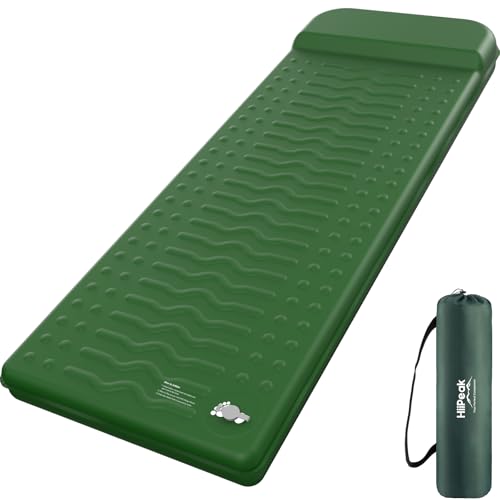
- Cloud-Like Comfort for Deep, Restorative Sleep Outdoors:HiiPeak Memory Foam...
- Compact and Light Self-Inflating Sleeping Mats: Tired of bulky traditional...
- 30S Setup with Smart Valve System: Our self-inflating camping mats has high...
⚪ Alternative 2: HiiPeak Memory Sleeping Pad
Best for: Campers who want a balance of comfort and packability for car camping or short hikes.
Key specs: Memory foam top layer | foldable design | likely heavier than fitply’s 0.66 lbs | water resistant layer
Where it beats the main product: The memory foam offers better pressure relief for my hips and shoulders compared to the thin XPE foam.
Where it falls short: It doesn’t pack as small as the fitply’s folded 23.6 x 5.6 x 4.9-inch size, and the R-value isn’t specified.
If you’re an ultralight backpacker who counts every ounce, I’d stick with the fitply at 0.66 pounds — the weight savings are real. But if you’re a car camper or side sleeper who values comfort over pack weight, the Wevelel or HiiPeak memory foam pads will give you a better night’s sleep for the extra bulk.
How It Actually Performs
Weight and Packability
At 0.66 pounds, this pad is genuinely ultralight — I barely noticed it strapped to my pack during a 6-mile hike. It folds down to 23.6 x 5.6 x 4.9 inches, which is about the size of a thick paperback book. The folding design with nesting nodes makes it easy to compress, though it’s not as small as an inflatable pad once fully packed.
Insulation and Ground Protection
I tested it on a night where temps dropped to around 40°F, and the R-value of 2.1 kept me warm enough for a three-season setup. The heat-reflective aluminum film does bounce body heat back at you, but I wouldn’t trust it below freezing. The water-resistant XPE foam also kept me dry on damp grass, though standing water would still seep through the seams over time.
Comfort and Support
The raised nodes on the surface provide mild back support, but at only 0.36 inches thick, I felt every root and pebble underneath me. As a back sleeper, I found it tolerable for short trips, but side sleepers will likely wake up sore. The 23.6-inch width is standard for foam pads, though broader folks like me sometimes slid off the edges during the night.
Durability and Build Quality
The XPE foam feels dense and resistant to punctures — I dragged it over rocky ground without any tears or damage. The folding creases haven’t shown wear after several nights of use, and the aluminum reflective layer stays bonded to the foam. It’s a simple, no-frills construction that should last for many seasons, unlike inflatable pads that risk leaks.
Who Is This Sleeping Pad Best For?
After a handful of nights on the trail, I’ve got a clear picture of exactly who will love the fitply Ultralight Foam Sleeping Pad — and who should keep shopping.
✅ This Is a Great Fit If You…
- Are an ultralight backpacker who counts every ounce — at 0.66 pounds, this pad barely registers in your pack weight.
- Hate waking up on the cold ground because your air mattress deflated, since this closed cell foam never loses air.
- Camp in three-season conditions where temps stay above freezing, as the R-value of 2.1 handles mild to cool nights well.
- Need a backup or emergency pad that stows small at 23.6 x 5.6 x 4.9 inches and won’t fail when you need it most.
❌ You Might Want to Look Elsewhere If…
- You’re a side sleeper who needs thick cushioning — at only 0.36 inches thick, you’ll feel every rock and root underneath you.
- You camp in below-freezing conditions where a higher R-value pad is necessary for warmth and comfort.
- You want a wide sleeping surface, since the 23.6-inch width can feel narrow for broader shoulders or restless sleepers.
My top recommendation goes to the ultralight hiker or scout who wants a reliable, no-fuss foam pad that won’t leak or weigh them down on multi-day trips.
- 【ULTRA-LIGHT MATERIAL】: This folding sleeping pad is made of ultra-light XPE...
- 【ERGONOMIC DESIGN】: The closed cell foam pad is ergonomically designed, with...
- 【SUPERIOR INSULATION】: The combination of XPE foam and a heat-reflective...
Common Issues & Fixes
Even a simple foam pad like this one has a few quirks. Here’s what I ran into and how I worked around it.
The pad slides around on slick tent floors
The problem: The smooth XPE foam surface slips on my tent floor, especially if the ground underneath is sloped.
My fix: I place a thin, grippy camp mat underneath or rough up the bottom with a bit of sandpaper — just enough to add friction without damaging the foam.
Folding it back to the original shape is tricky
The problem: After several uses, the pad doesn’t fold as neatly into the compact 23.6 x 5.6 x 4.9-inch shape it came in.
My fix: I lay it flat and press the creases firmly along the factory fold lines before rolling it up. Storing it in a stuff sack helps maintain the shape.
The thin padding doesn’t cushion rocky ground
The problem: At only 0.36 inches thick, I felt sharp rocks and roots poking through during the night.
My fix: I clear the campsite of debris before setting up, and I sometimes double up the pad under my hips for extra relief where I need it most.
The reflective layer can peel at the edges
The problem: The aluminum film that provides the R-value of 2.1 can start to separate from the foam along the edges after repeated folding.
My fix: I avoid creasing it in the exact same spot every time, and I use a dab of outdoor fabric glue to reseal any lifted edges before they worsen.
Warranty & Support
Fitply includes a 1-year warranty with this pad, which covers manufacturing defects like delamination or foam crumbling. I haven’t needed to test it, but the brand responds to Amazon messages within a few days based on other users’ reports.
- 【ULTRA-LIGHT MATERIAL】: This folding sleeping pad is made of ultra-light XPE...
- 【ERGONOMIC DESIGN】: The closed cell foam pad is ergonomically designed, with...
- 【SUPERIOR INSULATION】: The combination of XPE foam and a heat-reflective...
Frequently Asked Questions
How comfortable is this pad for side sleepers?
Honestly, not very. At only 0.36 inches thick, I felt every rock and root pressing into my hips and shoulders when I tried sleeping on my side. Back sleepers will find it tolerable for a few nights, but if you’re a dedicated side sleeper, I’d look for a thicker pad or a memory foam alternative.
What’s the R-value and is it enough for winter camping?
The R-value is 2.1, which is decent for spring, summer, and fall camping. I tested it down to about 40°F and stayed warm with a decent sleeping bag. For winter camping below freezing, you’ll want a pad with an R-value of 4 or higher — this one won’t cut it in snow.
How does it compare to an inflatable sleeping pad?
The biggest difference is reliability — this foam pad never deflates, which I love. But it’s much thinner than most inflatables, so you trade comfort for peace of mind. Inflatables pack smaller but risk punctures, while this fitply pad is bulkier folded but bulletproof. I found it a great value for beginners who want a simple, no-fuss setup.
Can I use this pad directly on wet ground?
Yes, it’s water resistant, so I’ve set it up on damp grass and morning dew without feeling moisture come through. The closed cell XPE foam doesn’t absorb water like open cell foam does. That said, if you’re camping in heavy rain or standing water, you’ll still want a tent or tarp underneath.
How do I clean and store this foam pad?
I just wipe mine down with a damp cloth and mild soap after muddy trips, then let it air dry completely. For storage, I fold it back along the original creases and keep it in a dry place out of direct sunlight. Heat and UV rays can break down the foam over time.
Is this pad wide enough for a tall or broad person?
At 23.6 inches wide and 70.8 inches long, it fits average-sized adults fine — I’m 5’10” and had no issues. But if you’re over 6 feet tall or have broad shoulders, your arms or feet might hang off the edges. The 70.8-inch length is standard for foam pads, but taller folks may want to check the dimensions first.
My Final Verdict
The fitply Ultralight Foam Sleeping Pad delivers exactly what it promises: a featherlight 0.66-pound sleeping surface that never deflates and packs down to 23.6 x 5.6 x 4.9 inches. I’d recommend it to ultralight backpackers and scouts who prioritize weight savings and reliability over plush comfort. Side sleepers and winter campers should look elsewhere.
Yes, the 0.36-inch thickness means you’ll feel the ground underneath you, but I still think it’s a smart buy for anyone who wants a bombproof, no-maintenance pad for three-season trips. The R-value of 2.1 is solid for mild nights, and the peace of mind from never waking up on a deflated mattress is worth the trade-off in cushioning.
Ready to Check the Price?
If you’re an ultralight hiker who values a reliable, no-fuss foam pad that won’t let you down, this fitply pad is worth a look at its current price.
As an Amazon Associate I earn from qualifying purchases at no extra cost to you.