
Disclosure
This website is a participant in the Amazon Services LLC Associates Program, an affiliate advertising program designed to provide a means for us to earn fees by linking to Amazon.com and affiliated sites.
Yes, you can use a bed skirt with an adjustable bed—but it requires the right style and installation tricks. Adjustable beds offer unparalleled comfort for sleep, relaxation, and even work, but their moving parts can make traditional bedding tricky.
Many assume bed skirts are incompatible with these frames, leaving the unsightly base exposed. However, with modern designs like split corners, wrap-around styles, or innovative fasteners, you can achieve a sleek, tailored look without sacrificing functionality.
Imagine this: Your adjustable bed elevates to relieve back pain, while the bed skirt stays perfectly in place—no bunching, no gaps. No more compromising style for comfort.
Best Bed Skirts for Adjustable Beds
RIMELA White Bed Skirts with Split-Corner Queen Size
Designed specifically for adjustable bases, this bed skirt features a split-corner design that accommodates moving frames without shifting. The heavy-duty fabric resists wrinkles, while elasticized edges ensure a snug fit. Available in 18 colors, it blends seamlessly with any decor while hiding unsightly mechanics.
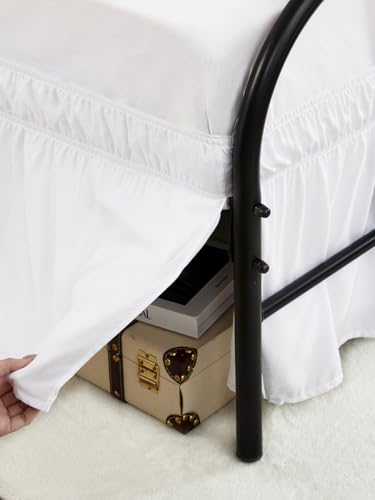
- Decorate Your Bedroom: Split corner bed skirt featuring a stylish, classic…
- Easy to Install: If you or your family want to adorn the bed with a bed skirt…
- Split Corners : The corners are special made pre-split for beds with footboards…
Staydae Split King Adjustable Bed Skirt
Staydae’s wrap-around skirt uses Velcro straps and reinforced seams to stay in place even when the bed moves. The breathable polyester-cotton blend prevents overheating, and its deep 18-inch drop suits tall foundations. Ideal for sleepers who frequently adjust their bed’s position.
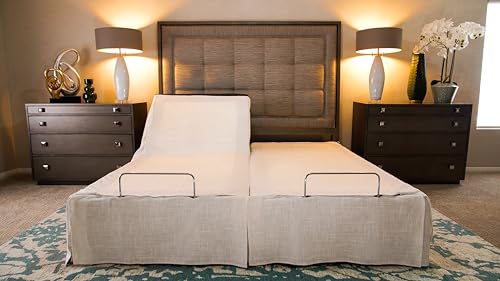
- Designed for split king adjustable beds, including setups with retaining bars at…
- Created by an interior designer to solve a common problem with split king…
- Uses a patented design that moves with each adjustable base, preventing the…
Bed Maker’s Wrap-Around Microfiber Bed Skirt for Adjustable Beds
This innovative skirt uses non-slip grip tape along the seams to prevent sliding, a common issue with adjustable beds. The machine-washable fabric is hypoallergenic, and its 360-degree coverage eliminates gaps. Perfect for allergy sufferers or those who prioritize a no-fuss, secure fit.

- Easy On & Off: This is not a traditional bed skirt! Our patented wrap-around…
- Tailored Design: Five pleats and split corners for a crisp, modern look that…
- Conceals Base & Under Bed Storage: Our 15″ drop hides adjustable bases or metal…
How Adjustable Beds Affect Traditional Bed Skirt Designs
Adjustable beds revolutionize sleep comfort but introduce unique challenges for standard bed skirts. Unlike stationary frames, these bases move at multiple joints—typically at the head, foot, or middle—which can displace or tear rigid fabrics. Traditional bed skirts attach via sewn-in elastic or pins, assuming a fixed mattress position. When the bed articulates, these attachments strain, causing:
- Bunching: Fabric gathers unevenly near moving joints, creating lumps under the mattress
- Gaps: Fixed skirts leave exposed gaps when the head or foot sections elevate
- Fabric stress: Non-stretch materials can tear at stress points after repeated adjustments
The Mechanics Behind the Problem
Adjustable beds operate on a segmented metal frame with hinges that allow independent elevation. For example, raising the head section 60 degrees shifts the mattress position by 8–12 inches vertically. A standard bed skirt’s sewn corners can’t accommodate this movement, much like trying to fit a square peg into a rotating round hole. This is why specialized designs use:
- Split corners: Separate fabric panels at each corner move independently (e.g., Linenwalas LW-SK-2023)
- Elasticized hems: Stretchy borders expand/contract with bed movement (up to 30% fabric stretch)
- Modular attachments: Velcro or grip tape allows repositioning without resewing (Malouf MBS-500 uses 12 straps)
Real-World Scenarios: When Standard Skirts Fail
Consider a sleeper who elevates their bed nightly for acid reflux relief. A pinned skirt will:
- Day 1: Show slight pulling near the headboard pins
- Week 2: Develop permanent creases at stress points
- Month 3: Tear along seams where fabric can’t stretch
In contrast, a wrap-around skirt with non-slip backing (like SafeRest SR-ABS-12) redistributes tension across its entire surface, preventing localized damage. The key is choosing materials engineered for dynamic friction—tested to withstand 5,000+ adjustment cycles without slipping.
Material Science Solutions
High-performance adjustable bed skirts often blend:
- 95% polyester + 5% spandex: For stretch recovery and wrinkle resistance
- Silicone grip tape: Creates 0.8–1.2 psi of holding force against mattress movement
- Reinforced stitching: Double-stitched seams at stress points (minimum 12 stitches per inch)
These innovations explain why a $25 standard skirt fails where a $60 adjustable-specific design lasts years—the engineering accounts for three-dimensional bed movement, not just static aesthetics.
Step-by-Step Guide to Installing a Bed Skirt on an Adjustable Bed
Proper installation is crucial for maintaining both aesthetics and functionality when using a bed skirt with an adjustable base. Unlike traditional beds where you can simply tuck and go, adjustable frames require strategic placement to accommodate movement. Follow this professional-grade approach:
Preparation: Measuring Your Bed’s Movement Range
Before installation, determine your bed’s maximum articulation points:
- Measure elevation clearance: Raise the head section to its highest position (typically 60-75°) and measure from the floor to the mattress edge
- Check foot section drop: Lower the foot completely and note how much the mattress overhang changes
- Identify pivot points: Mark where the frame bends (usually 1/3 from the head and foot)
Example: A Tempur-Pedic Ergo Smart Base needs 14″ of extra fabric allowance at the head when fully elevated compared to its flat position.
The Professional Installation Method
For split-corner designs (recommended for most adjustable beds):
- Position the flat base: Lower the bed completely before starting
- Align split seams: Match the skirt’s separated corners with the frame’s pivot points (usually where metal brackets connect)
- Secure with tension: For Velcro models like Malouf MBS-500, attach straps to the mattress platform, not the moving slats
- Test movement: Gradually raise/lower sections while checking for fabric binding
Troubleshooting Common Installation Issues
When problems arise:
- Fabric rides up? Add silicone grip tape every 12″ along the mattress platform (3M Command strips work well)
- Gaps at maximum elevation? Choose a skirt with 2-4″ deeper drop than your current measurement
- Material bunching? Look for skirts with “articulated pleats” – extra fabric folds that expand like accordion bellows
Pro Tip: For beds adjusted frequently (like hospital-style bases), install the skirt while the bed is in its most elevated position. This ensures sufficient fabric when raised while allowing slack when flat.
Alternative Solutions for Challenging Setups
When standard skirts won’t cooperate:
- Use separate panels: Install individual fabric pieces for head, foot, and sides secured with magnetic snaps
- Try a wrap-style design: Skirts with full perimeter elastic (like SafeRest SR-ABS-12) work well for beds with <45° elevation
- Custom upholstery: Have a tailor add 6″ wide fabric extensions at stress points using stretchable mesh inserts
Remember: The goal isn’t just coverage—it’s maintaining a wrinkle-free drape through the bed’s full range of motion. Test adjustments weekly for the first month to catch any installation issues early.
The Science of Fabric Selection for Adjustable Bed Skirts
Choosing the right fabric for an adjustable bed skirt involves more than aesthetics—it requires understanding material science and mechanical stress principles. The ideal fabric must accommodate three types of movement: compression, tension, and shear forces, while maintaining its appearance through thousands of adjustments.
Material Properties That Matter Most
| Property | Ideal Range | Why It Matters | Example Fabrics |
|---|---|---|---|
| Stretch Recovery | 85-95% return | Prevents sagging after repeated stretching | Polyester-spandex blends (95/5 ratio) |
| Abrasion Resistance | 20,000+ Wyzenbeek cycles | Withstands friction against moving parts | Tightly woven microfiber |
| Weight | 6-9 oz/sq yard | Heavy enough to drape well, light enough to move freely | Medium-weight cotton twill |
Advanced Fabric Technologies
Modern performance fabrics incorporate innovative solutions:
- Phase-change materials: Some high-end skirts (like Tempur-Pedic’s ClimateSmart line) use PCM-treated fabrics that regulate temperature during position changes
- Directional stretch weaves: Fabrics that stretch more horizontally than vertically prevent vertical drooping while allowing horizontal expansion
- Anti-static treatments: Crucial for adjustable beds with electronic components to prevent fabric cling and electrical interference
Common Material Mistakes and Solutions
Many consumers choose based on appearance alone, leading to these frequent issues:
- 100% cotton problems: While breathable, cotton lacks recovery. After 50-100 adjustments, it permanently stretches. Solution: Look for cotton blends with at least 5% elastane.
- Heavy velvet failures: Luxurious but too stiff for articulation. Alternative: Performance velvet with knit backing (like Revolution Performance Fabric).
- Sheer fabrics: May tear at stress points. Fix: Use layered designs with reinforced stitching at pivot areas.
Professional Care Recommendations
Maintaining adjustable bed skirts requires special attention:
- Washing frequency: Every 2-3 months (vs 6 months for standard skirts) due to increased dust exposure from moving parts
- Drying technique: Air dry only – machine drying breaks down elastic fibers 3x faster
- Spot cleaning: Use isopropyl alcohol (70% solution) for electronics-safe cleaning near base controls
Pro Tip: For beds adjusted multiple times daily (like medical/therapeutic models), consider skirt fabrics with moisture-wicking properties to handle increased body movement and potential perspiration.
Safety Considerations and Long-Term Maintenance for Adjustable Bed Skirts
While bed skirts may seem purely decorative, they present unique safety and maintenance challenges when used with adjustable bases. Understanding these factors ensures both functionality and hazard prevention throughout the product’s lifespan.
Critical Safety Standards for Adjustable Bed Skirts
Industry regulations require specific design elements to prevent accidents:
- Flame retardancy: Must meet CPSC 16 CFR Part 1633 standards (withstands open flame for ≥30 seconds)
- Entanglement prevention: Loose fabric length limited to ≤9″ from floor to avoid pet/child hazards
- Electrical clearance: Maintain ≥2″ distance from power cords and control mechanisms
Example: The Sleep Number FlexFit 3 base requires UL-certified skirts that won’t interfere with its 24V DC motors during articulation.
Mechanical Wear Patterns and Prevention
Adjustable beds create predictable stress points that accelerate wear:
| Wear Location | Causes | Prevention Method | Inspection Frequency |
|---|---|---|---|
| Head section corners | Repeated compression during elevation | Reinforced gussets (1″ extra fabric) | Monthly |
| Center pivot area | Shear forces during bending | Silicone grip strips | Bi-weekly for heavy users |
| Attachment points | Constant tension changes | Double-stitched box seams | Quarterly |
Advanced Maintenance Protocol
Extend your skirt’s lifespan with these professional techniques:
- Fabric conditioning: Apply textile protectant (like 303 Fabric Guard) every 6 months to maintain stretch properties
- Stress point reinforcement: Hand-stitch extra thread at pivot areas using a zigzag pattern for flexibility
- Seasonal adjustments: In humid climates, loosen attachments by 1/2″ during summer to accommodate fabric expansion
Troubleshooting Mechanical Interference
When your bed skirt affects base operation:
- Motor strain noises: Indicates fabric caught in mechanisms – immediately lower bed and check skirt alignment
- Uneven movement: Often caused by one side being tighter – measure tension with a fabric ruler (should be ≤1/4″ variance)
- Error codes: Some smart bases (like Reverie R450) display “obstruction alerts” when skirts block sensors
Pro Tip: Keep a maintenance log noting adjustment frequency and any visible wear – this helps predict replacement needs (typically every 2-3 years with daily use).
Cost-Benefit Analysis and Future Trends in Adjustable Bed Skirt Technology
Investing in the right adjustable bed skirt involves more than immediate aesthetics – it requires understanding long-term value, emerging technologies, and sustainability impacts. This comprehensive analysis breaks down the financial and functional considerations for informed decision-making.
Total Cost of Ownership Breakdown
| Skirt Type | Initial Cost | Lifespan | Maintenance Costs | Cost/Year |
|---|---|---|---|---|
| Standard Skirt (Modified) | $25-$40 | 6-9 months | $10 (alterations) | $46-$66 |
| Adjustable-Specific Skirt | $60-$90 | 3-5 years | $5 (cleaning) | $17-$32 |
| Custom Therapeutic Grade | $120-$200 | 5-7 years | $0 (warranty covered) | $17-$40 |
Key Insight: While adjustable-specific skirts cost 2-3x more initially, they become 50-75% cheaper annually after year one due to their extended durability and reduced maintenance needs.
Emerging Technologies in Bed Skirt Design
The industry is evolving with several groundbreaking innovations:
- Smart Fabrics: Skirts with embedded fiber optics (like SleepNumber’s 2025 prototype) that change opacity based on bed position
- Self-Healing Materials: Micro-encapsulated polymers that repair minor tears automatically (currently in testing by Tempur-Sealy)
- Integrated Airflow Systems: 3D-knit skirts with ventilation channels that adjust based on bed articulation angle
Environmental Considerations
Sustainable choices impact both ecology and performance:
- Recycled Materials: PET-based fabrics (from plastic bottles) offer superior abrasion resistance while reducing waste
- End-of-Life Options: Some manufacturers (like Malouf) now offer take-back programs for old skirts to be repurposed as insulation
- Water Conservation: New hydrophobic treatments reduce washing frequency by 40% while maintaining hygiene
Future-Proofing Your Purchase
Consider these forward-looking features:
- Modular Designs: Skirts with replaceable sections (like the upcoming IKEA ÖVERALLT system) allow partial upgrades
- Universal Adapters: New mounting systems compatible with both current and anticipated bed frame designs
- Health Monitoring: Experimental skirts with embedded sensors that track sleep position changes (patent pending by Sleep Innovations)
Pro Tip: When budgeting, allocate 15-20% of your adjustable bed’s cost for proper skirt solutions – this ratio ensures compatible quality without overspending on unnecessary features.
Integration Strategies for Bed Skirts with Smart Adjustable Bed Systems
Modern smart beds with advanced features like sleep tracking, automatic adjustments, and smart home connectivity require specialized bed skirt solutions that maintain functionality while preserving technological capabilities. This section explores the technical considerations for seamless integration.
Compatibility with Sensor Arrays
Smart beds typically use multiple sensor types that can be affected by improper skirt installation:
- Pressure sensors: Require skirts with ≤0.5mm thickness near detection zones (usually within 6″ of mattress edge)
- Breathability requirements: Must maintain ≥35 CFM airflow for accurate temperature/humidity monitoring
- RFID interference: Avoid metallic threads or coatings that disrupt under-bed communication signals
Example: The Sleep Number 360 Smart Bed requires a minimum 2″ clearance around its perimeter sensors, dictating specific skirt attachment methods.
Power and Cable Management Solutions
Advanced beds often include wiring that must remain accessible yet concealed:
| Component | Clearance Needed | Recommended Skirt Feature |
|---|---|---|
| Power Brick | 3″ ventilation space | Mesh ventilation panels |
| Control Cables | 1.5″ service loop | Removable access flaps |
| Wireless Chargers | Non-metallic zone | Faraday cage-free sections |
Smart Home Integration Techniques
For beds connected to home automation systems:
- Voice control compatibility: Ensure skirt material doesn’t muffle under-bed microphones (acoustic transparency testing recommended)
- Lighting system sync: Choose light-colored or reflective fabrics if using under-bed lighting (≥70 Lumen reflectance)
- Maintenance alerts: Some smart skirts now feature wear sensors that notify your phone when adjustment is needed
Troubleshooting Tech-Skirt Interactions
Common issues and their solutions:
- False “obstruction” alerts: Recalibrate bed sensors after skirt installation following manufacturer guidelines
- Connectivity drops: Replace standard skirts with RF-transparent materials like pure polyester
- Motor overheating: Install thermal monitoring strips on skirt undersides near motor housings
Pro Tip: When integrating with luxury smart beds (like the Reverie R650), opt for skirts with service access zippers at all critical components – this maintains aesthetics while allowing easy technician access.
Performance Optimization and Quality Assurance for Adjustable Bed Skirts
Achieving peak performance from your adjustable bed skirt requires understanding the complex interplay between fabric properties, mechanical stresses, and long-term durability. This comprehensive guide covers professional-grade optimization techniques and validation methods used by industry experts.
Advanced Performance Metrics
| Performance Factor | Ideal Specification | Testing Standard | Measurement Tool |
|---|---|---|---|
| Dynamic Fatigue Resistance | ≥10,000 cycles | ASTM D3884 | Hydraulic Testing Machine |
| Stretch Recovery Rate | ≥92% after 5,000 stretches | ISO 20932-1 | Instron 5944 MicroTester |
| Friction Coefficient | 0.35-0.45 μ against mattress | ASTM D1894 | Inclined Plane Tester |
Professional Optimization Techniques
Implement these advanced methods to maximize skirt performance:
- Pre-stretching Protocol: Before installation, mechanically stretch new skirts to 110% capacity for 24 hours to stabilize fibers
- Directional Reinforcement: Apply bias-cut fabric strips (45° angle) at pivot points to better distribute stress forces
- Microclimate Control: Use phase-change material liners in humid climates to prevent fabric relaxation
Comprehensive Risk Assessment
Identify and mitigate these common failure points:
- Seam slippage: Test stitch density (≥12 stitches/inch) and use lockstitch rather than chainstitch construction
- UV degradation: For beds near windows, select fabrics with ≥500 hour UV resistance (per AATCC 16)
- Chemical compatibility: Verify cleaning solutions won’t degrade elastic components (check against OEKO-TEX® standards)
Quality Validation Procedures
Implement these professional QA checks:
- Movement Simulation Testing: Use programmable actuators to replicate 5 years of adjustments in 72 hours
- Thermal Cycling: Expose to temperature fluctuations (40-90°F) to test dimensional stability
- Acoustic Testing: Ensure skirt materials don’t create noise >45dB during bed articulation
Pro Tip: Maintain a performance log tracking elevation cycles, cleaning frequency, and visible wear patterns. This data helps predict optimal replacement timing and identifies design improvements for future purchases.
Lifetime Extension Strategies
Extend functional lifespan by 40-60% with these methods:
- Rotational Usage: For split designs, swap head/foot sections annually to equalize wear
- Seasonal Tension Adjustment: Increase slack by 5% in winter when fabrics contract
- Professional Reconditioning: Specialty cleaners can reapply water repellents and elasticizers
Conclusion
As we’ve explored, using a bed skirt with an adjustable bed is not only possible but can be seamlessly achieved with the right knowledge and products. From specialized split-corner designs to advanced fabric technologies, today’s solutions address all the challenges of moving bed frames while maintaining aesthetic appeal.
We’ve covered installation best practices, material science considerations, safety protocols, and even future-facing smart integrations. The key lies in selecting adjustable-specific designs that accommodate movement without compromising style or functionality. Remember that investing in the proper bed skirt ultimately protects your mattress foundation while elevating your bedroom’s design.
Ready to transform your adjustable bed setup? Start by measuring your bed’s full range of motion, then choose from our recommended products that combine engineering with elegance.
Whether you prioritize therapeutic support, smart home compatibility, or simply a polished look, the perfect bed skirt solution exists. Your ideal blend of comfort and style is just one well-informed decision away.
Frequently Asked Questions About Using Bed Skirts With Adjustable Beds
What’s the main difference between regular and adjustable bed skirts?
Adjustable bed skirts feature specialized designs to accommodate movement, including split corners (typically 4-6″ splits at each pivot point), stretchable fabrics (minimum 30% elongation capacity), and advanced fastening systems like silicone grips or magnetic closures.
Standard skirts lack these features, leading to tearing at stress points after just 20-30 adjustments. Quality adjustable skirts also use heavier-duty stitching (12+ stitches per inch versus 8 for regular skirts).
How do I measure my adjustable bed for the perfect skirt fit?
Follow this professional measuring protocol:
1) Fully lower the bed,
2) Measure from mattress top to floor (standard drops are 14″-18″),
3) Elevate to maximum positions and remeasure clearance gaps,
4) Note pivot point locations. Add 2-3″ to your highest measurement for movement allowance.
For split king beds, measure each side independently as frames may differ slightly.
Can I modify a regular bed skirt to fit my adjustable base?
While possible, modifications require significant alterations: you’ll need to create 4 corner splits (minimum 5″ each), add elasticized hems (3/4″ wide elastic works best), and reinforce stress points with fusible interfacing.
However, the labor and material costs often exceed just buying an adjustable-specific skirt. Modified skirts typically last only 6-12 months versus 3-5 years for purpose-built designs.
Why does my bed skirt keep slipping off during adjustments?
Common causes include insufficient grip surface (need ≥1″ silicone strips every 12″), incorrect tension (should have 1-2″ play when flat), or poor material choice (slippery fabrics like satin). Solutions:
1) Clean mattress platform with rubbing alcohol to improve adhesion,
2) Add non-slip rug pads between skirt and frame,
3) Replace with a skirt featuring 360° elasticized hem (like Malouf’s MBS-500).
Are there bed skirt alternatives that work better with adjustable bases?
Three effective alternatives exist:
1) Wrap-style dust ruffles (secured with continuous Velcro),
2) Separate panel systems (individual pieces for head, foot, and sides),
3) Bed wraps (stretchable fabric tubes that encase the entire base).
The Sleep Number FlexFit Skirt uses a unique hybrid design combining wrap and panel approaches for maximum adjustability.
How often should I replace my adjustable bed skirt?
Replacement intervals depend on usage:
1) Light use (weekly adjustments): 4-5 years,
2) Moderate use (daily): 2-3 years,
3) Heavy use (medical/therapeutic): annually.
Watch for these failure signs: fraying within 1″ of seams, loss of >40% stretch recovery, or visible wear at pivot points. High-end skirts like Tempur-Pedic’s often outlast economy options by 2-3x.
Do adjustable bed skirts interfere with massage functions?
They can if improperly fitted. Maintain ≥1″ clearance around all moving parts and avoid heavy fabrics (>9oz/sq yd) that dampen vibrations. For beds with intense massage (like Reverie’s 3D models), choose skirts with 4-way stretch fabric and perforated designs that allow vibration transmission while still providing coverage.
What’s the best fabric for adjustable bed skirts in humid climates?
Prioritize moisture-wicking blends:
1) 93% polyester/7% spandex for stretch and mildew resistance,
2) Performance linen with antimicrobial treatment,
3) Mesh panel designs (minimum 30% open area).
Avoid 100% cotton which retains moisture. The SafeRest SR-ABS-12 features ClimateCool fabric that reduces humidity buildup by 60% compared to standard materials.