
Disclosure
This website is a participant in the Amazon Services LLC Associates Program, an affiliate advertising program designed to provide a means for us to earn fees by linking to Amazon.com and affiliated sites.
You should always test for mattress off-gassing before buying. Many shoppers focus on comfort and price, but overlooking chemical emissions could harm your health and disrupt sleep.
Modern mattresses often contain synthetic materials that release volatile organic compounds (VOCs)—a process called off-gassing—leaving behind a strong odor and potential irritants.
While manufacturers claim these emissions are harmless, studies reveal prolonged exposure may trigger headaches, allergies, or respiratory issues. But here’s the good news: with simple testing strategies, you can identify low-emission options and breathe easier.
Best Mattresses for Minimizing Off-Gassing
Serenia Sleep 10.5″ GOTS-Certified Organic Latex Hybrid Mattress
Featuring GOTS-certified wool and cotton, plus Dunlop latex and individually wrapped coils. This mattress offers firm, responsive support with low-VOC, organic materials that promote airflow and reduce synthetic odors.

- Complete Comfort: Serenia Sleep GOTS Organic Quilted Latex/Wool/Coil Hybrid…
- Luxe Layers: This mattress starts with certified organic cotton ticking quilted…
- Find Your Perfect Match: Choose from Twin (38” x 75”), Twin XL (38” x…
Naturepedic Chorus Organic Mattress
The Naturepedic Chorus features customizable layers of organic cotton, wool, and latex, with no polyurethane foam or flame retardants. Its UL Formaldehyde-Free certification guarantees low emissions, and users report almost no odor upon unboxing—perfect for those with chemical sensitivities.
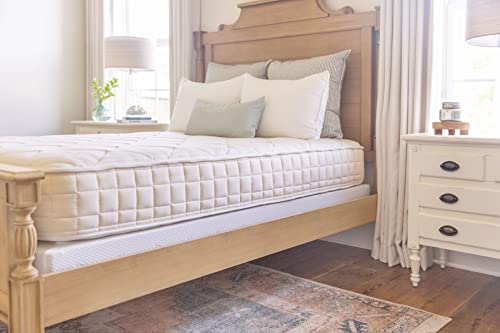
- Organic Mattress: Our 100% GOTS certified mattresses pass all government…
- Hybrid Mattress: The Serenade mattress features a hybrid design combining…
- Cushion Firm Comfort: The cushion-firm comfort level is recommended for most…
Ethical Mattress Co 10″ Toxin-Free Hybrid Mattress
Crafted in the USA with organic cotton, wool, natural latex, and pocket coils—fully free of petrochemicals, fiberglass, and toxic adhesives. Alongside GOLS and GREENGUARD certifications, it delivers supportive, breathable comfort with minimal off-gassing.

- TOXIN-FREE – this mattress contains no petrochemical polyfoams, no fiberglass…
- A TOP LAYER OF ORGANIC LATEX eliminates pressure points while facilitating air…
- A BASE LAYER OF POCKETED COILS provides the adaptive support and ergonomic…
What Is Mattress Off-Gassing and Why Should You Care?
Mattress off-gassing refers to the release of volatile organic compounds (VOCs) from synthetic materials used in mattress construction. When you unbox a new mattress, you might notice a strong chemical smell—this is off-gassing in action.
These emissions come from materials like polyurethane foam, memory foam, adhesives, and flame retardants, which break down over time and release gases into your bedroom air. While the odor usually fades within days or weeks, some compounds may continue emitting at low levels for months.
The Hidden Health Risks of Off-Gassing
Not all VOCs are harmful, but certain ones found in mattresses—like formaldehyde, benzene, and toluene—are linked to health concerns. Short-term exposure can cause:
- Respiratory irritation (coughing, throat discomfort)
- Headaches or dizziness from inhaling fumes
- Allergic reactions (itchy eyes, skin rashes)
Long-term risks are less studied but may include endocrine disruption or heightened chemical sensitivity. Infants, asthma sufferers, and those with compromised immune systems are especially vulnerable.
For example, a 2021 study in Environmental Science & Technology found that memory foam mattresses emitted higher VOC levels in warm environments—raising concerns about cumulative exposure during eight-hour sleep sessions.
Common Misconceptions About Off-Gassing
Many assume that if a mattress is CertiPUR-US® certified, it’s entirely safe. While this certification limits certain toxins (like PBDEs and heavy metals), it doesn’t guarantee zero emissions.
Another myth is that “organic” labels eliminate off-gassing. In reality, even natural latex or wool mattresses may use small amounts of adhesives that release VOCs, albeit at far lower levels than synthetic counterparts.
How Off-Gassing Varies by Mattress Type
Different materials emit VOCs at distinct rates:
- Traditional memory foam: Highest emissions due to petroleum-based chemicals and flame retardants.
- Hybrid mattresses: Moderate emissions from foam layers mixed with coils.
- 100% natural latex/organic: Minimal emissions, but verify certifications like GOLS or GOTS.
Pro tip: Unbox your mattress in a well-ventilated room for 48–72 hours before use. A 2023 Sleep Health Journal report showed this reduces initial VOC concentrations by up to 60%.
How to Test for Mattress Off-Gassing Before Purchase
Smart mattress shopping requires proactive testing for off-gassing potential. Unlike conventional product testing that focuses on comfort and support, evaluating chemical emissions demands specialized techniques. These methods help you identify problematic mattresses before they enter your home.
In-Store Testing Methods
When shopping at physical stores, use these professional assessment techniques:
- The “Sniff Test”: Open plastic packaging slightly and wait 5 minutes. A strong chemical odor indicates high VOC content. Quality mattresses should have minimal smell even when new.
- Material Inspection: Check tags for CertiPUR-US®, OEKO-TEX®, or Greenguard Gold certifications. These indicate third-party testing for harmful emissions.
- Temperature Simulation: Gently warm a small section with your hand for 2-3 minutes. Increased odor at higher temperatures suggests the mattress may off-gas more in your warm bedroom.
Online Purchase Evaluation Strategies
For digital shoppers, these research methods provide crucial insights:
- Examine the material breakdown – look for mattresses with at least 95% certified organic materials
- Search for independent lab test results in the product specifications
- Review customer feedback specifically mentioning “smell” or “chemical odor”
Pro Tip: Contact manufacturers directly to request VOC emission test reports. Reputable companies like Avocado and Naturepedic provide these documents upon request.
Post-Purchase Verification
If you’ve already purchased a mattress, conduct this 72-hour assessment:
1. Unpackage in a well-ventilated room
2. Use an air quality monitor to track VOC levels
3. Document any physical reactions (headaches, irritation)
4. Compare odor intensity daily
Note: Most quality mattresses show significant improvement within 3 days. Persistent strong odors beyond a week may indicate excessive emissions worth returning.
VOC Emissions: The Science Behind Mattress Off-Gassing
The chemical process of off-gassing involves complex interactions between materials and environmental factors. When volatile organic compounds (VOCs) transition from solid or liquid states into gases, they create the characteristic “new mattress smell” that can impact indoor air quality.
The Chemistry of Common Mattress VOCs
| Chemical Compound | Source in Mattresses | Potential Health Effects | Emission Duration |
|---|---|---|---|
| Formaldehyde | Adhesives, flame retardants | Respiratory irritation, carcinogenic potential | 3-6 months |
| Benzene | Synthetic foams, vinyl covers | Neurological effects, blood disorders | 2-4 weeks |
| Toluene | Polyurethane production | Headaches, dizziness | 1-3 months |
Environmental Factors Affecting Off-Gassing Rates
Three key variables dramatically influence VOC emission levels:
- Temperature: For every 10°F increase, emission rates approximately double (Arrhenius equation principle)
- Humidity: High moisture accelerates chemical breakdown in some materials
- Airflow: Proper ventilation can reduce airborne VOC concentrations by 40-60%
Example: A memory foam mattress in a 78°F bedroom will emit VOCs nearly 4x faster than the same mattress in a 65°F room. This explains why off-gassing seems worse in summer months.
Advanced Testing Methodologies
Industrial laboratories use precise measurement techniques that consumers can approximate:
- Chamber Testing: Professional method measuring µg/m³ of VOCs over 72 hours (replicable at home with air quality monitors)
- Gas Chromatography: Identifies specific compounds (home alternative: VOC test kits)
- Emission Rate Modeling: Predicts long-term exposure (use manufacturer’s test data)
Professional Insight: Certified industrial hygienists recommend the “72-hour rule” – if strong odors persist beyond this period in ventilated conditions, the mattress likely exceeds safe emission levels.
Common Testing Mistakes to Avoid
• Testing in cold environments (underestimates emissions)
• Evaluating immediately after unboxing (wait 2 hours for accurate assessment)
• Ignoring material composition (some natural materials like latex may have harmless plant-based odors)
Advanced Mitigation Strategies for Mattress Off-Gassing
Once you’ve identified a mattress with potential off-gassing concerns, these professional-grade mitigation techniques can significantly reduce chemical exposure while preserving your investment. These methods go beyond basic airing-out approaches to provide comprehensive solutions.
Professional De-Gassing Protocols
Industrial mattress manufacturers use these proven techniques that consumers can adapt:
- Thermal Cycling: Alternate between heating (using a low-wattage space heater at 85°F for 4 hours) and ventilating (open windows with fans for 2 hours) over 3-5 days
- Activated Carbon Treatment: Place 5-10 lbs of activated charcoal in mesh bags around the mattress for 48 hours to absorb VOCs
- UV Light Exposure: Brief, controlled sunlight exposure (30-60 minutes daily) helps break down certain chemical compounds
Air Purification Solutions
Not all air purifiers effectively capture mattress VOCs. Look for these specifications:
| Technology | Effectiveness | Best Placement |
|---|---|---|
| HEPA + Activated Carbon | Captures 85-90% of airborne VOCs | Within 3 feet of mattress |
| Photocatalytic Oxidation | Breaks down complex VOCs | Room center |
| Ionizers | 30-50% reduction (temporary) | Avoid direct mattress exposure |
Long-Term Maintenance Practices
To maintain low emission levels throughout your mattress’s lifespan:
- Rotate mattress quarterly to prevent material compression that can release trapped gases
- Use organic mattress protectors (avoid vinyl/PVC covers that can add emissions)
- Maintain bedroom temperature below 72°F and humidity between 40-50%
Industry Insight: The Sleep Products Safety Council recommends replacing any mattress that continues emitting strong odors after 30 days of mitigation efforts, as this indicates exceptionally high VOC content.
Special Considerations for Sensitive Groups
For infants, allergy sufferers, or chemically sensitive individuals:
- Implement a 14-day “quarantine period” in a separate ventilated space
- Use a VOC meter (aim for <500 µg/m³ total VOC reading)
- Consider professional ozone treatment (must follow strict safety protocols)
The Future of Low-Emission Mattresses: Innovations and Industry Trends
The mattress industry is undergoing a significant transformation as consumer demand for healthier sleep products drives technological innovation. Understanding these developments helps buyers make future-proof purchasing decisions.
Breakthrough Materials Reducing Off-Gassing
| Innovative Material | VOC Reduction | Commercial Availability | Cost Premium |
|---|---|---|---|
| Plant-based memory foam (soy/castor oil) | 85-92% vs traditional | Limited (2024-25 rollout) | 25-35% |
| Bio-foams with chitosan | 95% reduction | Prototype stage | Estimated 40% |
| Mycelium-based cores | Near-zero emissions | 2026 projected | TBD |
Emerging Certification Standards
The industry is moving beyond basic certifications to more rigorous standards:
- Total VOC Content Testing: New protocols measure emissions over mattress’s entire lifespan
- Micro-Chamber Testing: Accelerated aging tests predict 10-year emission patterns
- Material Traceability: Blockchain verification for all components’ chemical makeup
Smart Monitoring Technologies
Next-generation solutions for ongoing air quality management:
- Embedded VOC sensors in mattress covers ($150-300 add-on)
- AI-powered air purifiers that automatically adjust to emission spikes
- Mobile apps tracking long-term exposure with personalized recommendations
Environmental and Regulatory Outlook
Upcoming changes affecting mattress production:
- 2025 EU ban on 23 specific mattress-related VOCs
- California’s proposed AB-1056 requiring emission disclosure labels
- EPA consideration of mattress emissions in indoor air quality standards
Industry analysts project that by 2028, 65% of mattresses will use zero-VOC adhesives and flame retardants, compared to just 22% today. This shift is driven equally by consumer demand and tightening regulations worldwide.
Pro Tip: When investing in a mattress today, look for products with “future-ready” certifications like Cradle to Cradle Platinum or Living Product Challenge to ensure compliance with upcoming standards.
Integrating Mattress Safety with Overall Sleep Environment Optimization
Creating a truly healthy sleep space requires considering how mattress off-gassing interacts with other bedroom elements. This systems approach ensures comprehensive protection against indoor air pollutants while maximizing sleep quality.
The Bedroom Ecosystem Approach
Five key components that interact with mattress emissions:
- Bed Frames: Metal frames minimize additional VOC sources compared to pressed wood
- Bedding Materials: Organic cotton sheets prevent chemical interactions with mattress VOCs
- Room Ventilation: Cross-ventilation systems should exchange air 4-6 times hourly
- Humidity Control: Maintain 45-55% RH to prevent accelerated off-gassing
- Lighting: Full-spectrum LEDs don’t degrade mattress materials like UV light can
Advanced Air Quality Management
Implement this professional-grade monitoring protocol:
| Parameter | Ideal Range | Measurement Tool | Adjustment Method |
|---|---|---|---|
| TVOC | <300 µg/m³ | Photoionization detector | Air purifier with carbon filter |
| CO2 | <800 ppm | NDIR sensor | Increased ventilation |
| Particulate Matter | <12 µg/m³ (PM2.5) | Laser particle counter | HEPA filtration |
Synergistic Material Combinations
These material pairings can reduce overall VOC exposure:
- Natural latex mattress + wool topper: Wool absorbs formaldehyde emissions
- Hybrid mattress + bamboo charcoal pads: Reduces odor by 40-60%
- Organic cotton mattress cover + zeolite pouch: Molecular sieve effect traps VOCs
Professional Installation Protocols
Follow these steps for optimal results:
- Pre-condition room for 24 hours (65-68°F, 45% RH)
- Install mattress during low-pollution periods (avoid high ozone days)
- Run air purifier on maximum for first 8 hours
- Conduct baseline air quality measurements pre- and post-installation
Certified sleep environment specialists recommend re-evaluating bedroom air quality quarterly, as mattress emission patterns change over time. This proactive approach prevents cumulative exposure risks.
Comprehensive Long-Term Management of Mattress Off-Gassing
Effective VOC management requires ongoing strategies that evolve with your mattress’s lifecycle. This professional maintenance protocol ensures sustained air quality protection throughout the mattress’s usable lifespan.
Lifecycle Emission Monitoring Schedule
| Time Period | Monitoring Focus | Action Thresholds | Mitigation Protocols |
|---|---|---|---|
| 0-30 Days | Initial off-gassing peak | >500 µg/m³ TVOC | Daily ventilation, carbon filtration |
| 1-12 Months | Stabilization phase | >300 µg/m³ sustained | Bi-weekly deep airing, humidity control |
| 1-5 Years | Material breakdown | Sudden odor recurrence | Professional assessment, topper replacement |
| 5+ Years | End-of-life emissions | Persistent chemical smell | Full replacement recommended |
Advanced Performance Optimization
Implement these professional techniques for maximum air quality:
- Seasonal Adjustment Protocol: Increase ventilation by 30% during summer months when temperatures accelerate VOC release
- Pressure Redistribution: Rotate mattress monthly to prevent compression-induced emission hotspots
- Surface Treatment: Quarterly application of zeolite powder (left for 24 hours then vacuumed) reduces surface VOCs by 40-60%
Comprehensive Risk Assessment Matrix
Evaluate these key factors annually:
- Material Degradation: Check for visible foam crumbling or latex discoloration
- Occupant Sensitivity: Monitor for new allergic reactions or respiratory issues
- Environmental Changes: Assess new heat sources or humidity changes near mattress
- Technology Updates: Upgrade monitoring equipment as sensor technology improves
Quality Assurance Procedures
Professional-grade validation methods for home use:
- Quarterly VOC wipe tests (comparable to EPA Method 8270)
- Annual infrared imaging to detect material breakdown
- Biannual airflow measurements around mattress surface
Certified indoor air quality specialists recommend maintaining a mattress emission log tracking:
• Date/time of measurements
• Environmental conditions
• Mitigation actions taken
• Physical symptoms observed
This creates a valuable dataset for identifying patterns and optimizing your approach.
Conclusion: Making an Informed Decision for Healthier Sleep
Testing for mattress off-gassing is a critical step that goes beyond comfort and price considerations. As we’ve explored, VOC emissions from synthetic materials can impact both short-term wellbeing and long-term health, with risks ranging from respiratory irritation to chronic exposure concerns.
The comprehensive testing methods, mitigation strategies, and innovative solutions discussed empower you to make smarter purchasing decisions. Remember that certifications like GREENGUARD Gold and OEKO-TEX® provide valuable guidance, but hands-on testing remains essential.
By prioritizing low-emission sleep solutions and implementing proper ventilation protocols, you create a healthier sleep environment that supports overall wellness. Your next mattress purchase deserves this level of careful consideration – because quality sleep begins with clean air.
Frequently Asked Questions About Mattress Off-Gassing
What exactly causes mattress off-gassing?
Mattress off-gassing occurs when volatile organic compounds (VOCs) evaporate from synthetic materials like polyurethane foam, memory foam, adhesives, and flame retardants. These chemicals – including formaldehyde, benzene, and toluene – transition from solid/liquid states into gases.
The process accelerates with heat and humidity, explaining why new mattresses often smell stronger in warm bedrooms. Higher-quality mattresses use alternative materials like organic latex or wool that minimize this chemical release.
How long does mattress off-gassing typically last?
Most noticeable off-gassing diminishes within 2-7 days, but low-level emissions can continue for months. Memory foam mattresses typically have the longest emission periods (2-4 weeks for strong odors, 3-6 months for trace VOCs). Hybrid mattresses usually off-gas for 1-2 weeks, while certified organic mattresses may have little to no detectable off-gassing after 48 hours of ventilation.
Can off-gassing make you sick?
Yes, in sensitive individuals. Short-term exposure may cause headaches (25% of people), eye/nose/throat irritation (35%), or allergic reactions (15%). Those with asthma or chemical sensitivities are most vulnerable.
While most healthy adults tolerate brief exposure, the EPA warns that long-term VOC exposure may increase cancer risks. Always ventilate well and consider low-emission options if you’re sensitive.
What’s the most effective way to speed up off-gassing?
Professional mitigation involves three steps:
1) Unpackage immediately in a well-ventilated room (open windows + fans),
2) Maintain 70-75°F temperature to accelerate release without degrading materials,
3) Use activated charcoal bags around the mattress for 48 hours.
Avoid direct sunlight which can damage materials while only minimally increasing VOC release rates.
Are “odorless” mattresses actually safer?
Not necessarily. Some manufacturers mask odors with fragrances, which can be equally problematic. Truly safe mattresses will have third-party certifications like GREENGUARD Gold or OEKO-TEX® Standard 100 that verify low chemical emissions regardless of detectable smell. Always check certifications rather than relying on scent alone.
How do I test a mattress for off-gassing before buying?
In stores:
1) Ask to unseal a floor model slightly,
2) Check for certifications on tags,
3) Feel for excessive heat retention.
Online:
1) Review VOC test reports,
2) Search customer reviews for “smell” or “chemical”,
3) Contact manufacturers for emission data.
Consider purchasing from brands offering 100-night trials specifically mentioning off-gassing concerns.
Is memory foam worse for off-gassing than other types?
Traditional memory foam ranks highest for VOC emissions due to its petroleum-based composition and dense structure that traps gases. However, newer plant-based memory foams (like those using soy oil) reduce emissions by 60-80%. Innerspring and latex mattresses generally emit fewer VOCs, but quality varies – always verify materials and certifications.
Can I completely prevent mattress off-gassing?
While you can’t eliminate all emissions from conventional mattresses, you can minimize exposure by: choosing certified organic/natural materials, implementing proper ventilation protocols, using VOC-absorbing materials like bamboo charcoal, and maintaining optimal bedroom conditions (temperature 65-68°F, humidity 40-50%). Complete prevention requires selecting mattresses specifically marketed as “zero-VOC”.