
Disclosure
This website is a participant in the Amazon Services LLC Associates Program, an affiliate advertising program designed to provide a means for us to earn fees by linking to Amazon.com and affiliated sites.
If you’re debating between a full and twin bed, the answer depends on your space, budget, and sleeping needs. Twin beds are narrower (38″ x 75″), ideal for solo sleepers or tight spaces, while full beds (54″ x 75″) offer 16 extra inches of width—perfect for growing teens or cozy couples.
But there’s more to consider than just size. From mattress costs to room layout, unlocking the right choice can transform your sleep quality and bedroom functionality.
Many assume a bigger bed always means better comfort, but that’s not true if it overwhelms your space. Modern tiny homes and studio apartments are driving demand for space-smart solutions, making twin beds a trendy pick.
Meanwhile, full beds strike a balance—roomier than a twin yet more affordable than a queen. Let’s dive into the details so you can make an informed decision without second-guessing.
Best Mattresses for Full and Twin Beds
Zinus Green Tea Memory Foam Mattress (6-inch Twin)
Ideal for tight spaces, the Zinus Green Tea Memory Foam Mattress offers pressure-relieving comfort with infused green tea and charcoal to keep odors at bay. Its medium-firm support suits all sleeping positions, while the affordable price makes it perfect for guest rooms or kids’ beds.

- FOR GREAT SLEEP AND A CLEAN PLANET – Featuring our patented zoned pressure…
- COMFORTABLE SUPPORT – Pressure-relieving memory foam conforms to the shape of…
- ALL NIGHT FRESHNESS – The all-natural green tea and purified charcoal infusions…
Casper Original Hybrid Mattress (Full)
The Casper Original Hybrid combines memory foam and supportive coils for a balanced feel, ideal for single sleepers or couples who want extra room. Its zoned support targets back pain, and the breathable design ensures temperature regulation—great for hot sleepers.
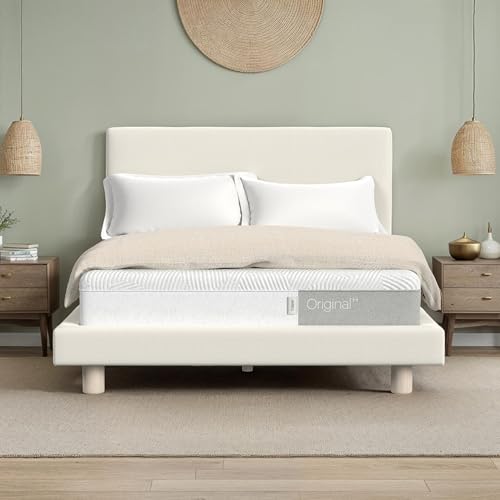
- DESIGNED FOR ALL SLEEPERS: Medium feel and Zoned Support align your spine and…
- PREVENTS OVERHEATING ALL NIGHT: Unlike traditional memory foam Casper’s…
- ADVANCED MOTION ISOLATION: Layers of premium foam and encased coils absorb…
Tuft & Needle Adaptive Foam Mattress (Twin XL)
For taller individuals, the Tuft & Needle Adaptive Foam Mattress (Twin XL) adds 5 extra inches in length (80″) without sacrificing comfort. The proprietary foam adapts to movement, reducing partner disturbance, and its minimalist design fits modern aesthetics.

- Medium Feel – Made For All sleeping positions; The new T&N Original medium…
- Responsive Comfort – The mattress’s T&N Flex foam responds to your body weight…
- Bounce-Back Support – T&N Adaptive foam is a breathable, open-cell foam, infused…
Key Differences Between Full and Twin Beds: Dimensions and Space Requirements
The most fundamental difference between full and twin beds lies in their dimensions, which directly impacts who they’re best suited for and where they fit best. A standard twin mattress measures 38 inches wide by 75 inches long, while a full (also called double) mattress spans 54 inches wide by 75 inches long. This 16-inch width difference might not sound dramatic on paper, but it creates vastly different sleeping experiences in practice.
Sleeping Space Comparison
A twin bed provides just enough room for one average-sized adult to sleep comfortably, with about 30 inches of personal space (comparable to a business-class airline seat). In contrast, a full bed offers each sleeper approximately 27 inches in a shared arrangement—making it workable for couples who don’t mind cozy sleeping or individuals who prefer extra sprawl room. For reference:
- Twin XL (38″ x 80″): Adds 5″ length for taller individuals while maintaining narrow width
- Full XL (54″ x 80″): Combines full width with extra length, a niche option for tall teens
Room Size Considerations
Your bedroom dimensions should dictate your bed choice more than personal preference alone. Interior designers recommend:
- For twin beds: Minimum 7′ x 10′ room (allows 2′ walking space on three sides)
- For full beds: Minimum 9′ x 10′ room (maintains 30″ clearance for dressers/nightstands)
A common mistake is choosing a full bed for a small bedroom simply because it’s “more adult.” This often backfires, leaving no space for essential furniture or creating cramped pathways. In studio apartments under 300 sq ft, twin beds with storage drawers underneath frequently prove more functional.
Special Use Cases
Beyond standard bedrooms, these beds serve distinct purposes:
- Dorm rooms: Most colleges mandate twin XL beds to accommodate teen growth spurts while maximizing limited space
- Guest rooms: Full beds work better for hosting couples, while twin beds allow flexible “L-shaped” configurations when paired
- Children’s rooms: Twin beds leave more play area, but full beds extend usability through teenage years
The width difference also affects bedding costs—full-size sheets and comforters typically cost 20-30% more than twin equivalents. This ongoing expense adds up over years of ownership, making twin beds more budget-friendly long-term.
Comfort and Sleep Quality: How Bed Size Affects Your Rest
While dimensions provide the basic framework, the true difference between full and twin beds reveals itself in nightly comfort and long-term sleep quality. The right choice depends on your sleeping habits, body type, and whether you share the bed.
Sleeping Positions and Personal Space
Your preferred sleeping position dramatically impacts which bed size works best:
- Back sleepers: Twin beds work well if you sleep straight, but full beds allow for arm positioning variations
- Side sleepers: Full beds provide crucial elbow room for proper spinal alignment during fetal position sleeping
- Active sleepers: The extra width of full beds prevents limbs from dangling off edges during frequent position changes
For couples, sleep specialists recommend at least 30 inches per person – meaning a full bed provides just the bare minimum. Two average-sized adults sharing a full bed have less personal space than a single person in a twin bed.
Weight Distribution and Support
Mattress support systems behave differently across sizes:
- Twin beds: More consistent support since weight concentrates in a smaller area, ideal for individuals under 200 lbs
- Full beds: Require reinforced edge support to prevent the “roll-together” effect when two people sleep near the edges
Memory foam mattresses in twin sizes tend to last longer since they don’t develop permanent body impressions as quickly. Innerspring full mattresses often need rotating every 3 months to prevent sagging in high-traffic zones.
Temperature Regulation Differences
Larger beds create unique climate control challenges:
- Twin beds allow body heat to dissipate more efficiently in all directions
- Full beds may develop “hot zones” where sleepers meet in the middle
- Hybrid mattresses with cooling gel layers perform better in full sizes for couples
For hot sleepers or warm climates, twin beds with breathable latex or hybrid mattresses often provide better temperature regulation. The smaller sleep surface allows airflow to circulate more effectively around the body.
Cost Analysis and Long-Term Value Considerations
Beyond initial purchase price, full and twin beds present different long-term financial implications that affect their overall value proposition. A comprehensive cost analysis should account for five key factors over a typical 7-10 year mattress lifespan.
Initial Purchase and Setup Costs
| Expense Category | Twin Bed | Full Bed |
|---|---|---|
| Average Mattress Price | $400-$800 | $600-$1,200 |
| Bed Frame Cost | $100-$300 | $150-$400 |
| Basic Bedding Set | $50-$150 | $80-$200 |
The price premium for full beds comes from both material costs (approximately 40% more material than twins) and market positioning as an “upgrade” option. However, twin XL mattresses often carry a 15-20% surcharge over standard twins due to specialty sizing.
Ongoing Maintenance Expenses
Recurring costs reveal hidden differences:
- Mattress Protectors: Full sizes cost 25% more but may need replacement less frequently due to larger rotation options
- Sheet Replacement: Full sheets endure more stress at the corners due to increased mattress weight
- Moving Costs: Full bed components often require professional movers versus DIY twin bed transport
Space Utilization Economics
The opportunity cost of square footage matters in urban areas:
- In a 12’x12′ bedroom, choosing a twin over full saves ~15 sq ft of usable space (valued at $300-$900 annually in major cities)
- Full beds limit furniture configurations, potentially requiring more expensive custom storage solutions
- Twin beds allow for home office conversions or exercise space that may offset other household expenses
Resale Value and Lifespan
Market data shows surprising trends:
- Quality twin mattresses retain 30-40% resale value versus 20-30% for full sizes
- Full bed frames depreciate faster due to style changes and wear patterns
- Hotels and Airbnb hosts pay premium prices for gently used twin XL sets
For budget-conscious buyers, twin beds typically offer better long-term value unless the additional sleeping space provides measurable quality-of-life improvements that justify the extra costs.
Special Considerations for Different Living Situations
Choosing between full and twin beds requires careful evaluation of your specific living circumstances. The optimal bed size varies dramatically depending on household composition, mobility needs, and future plans.
Family Households and Growing Children
For families with children, bed size decisions involve long-term planning:
- Ages 2-6: Twin beds with guardrails provide safety while leaving play space. Consider convertible models that expand to twin XL later.
- Ages 7-12: Standard twins work well, but full beds become worthwhile if children frequently have sleepovers or share rooms.
- Teen Years: Full beds accommodate growth spurts better, but twin XLs may suffice for single sleepers in smaller rooms.
Professional organizers recommend measuring the child’s height plus 12 inches for future growth when selecting bed length. For shared rooms, two twin beds often provide more flexible arrangements than bunk beds.
Aging in Place and Accessibility Needs
Mobility considerations significantly impact bed selection:
- Wheelchair Users: Twin beds allow better clearance for transfers (minimum 36″ access space on one long side).
- Elderly Care: Full beds enable easier caregiver assistance but require larger bedrooms for safe movement.
- Medical Equipment: Twin beds leave more floor space for oxygen tanks or mobility aids.
Physical therapists suggest adjustable-height frames for both sizes, with full beds requiring sturdier mechanisms to support the additional weight.
Frequent Movers and Temporary Housing
For transient lifestyles, consider these factors:
| Consideration | Twin Advantage | Full Advantage |
|---|---|---|
| Moving Frequency | Easier to transport through narrow staircases | Fewer pieces to reassemble |
| Short-Term Rentals | Fits more room layouts | More comfortable for couples |
| Storage Needs | Requires less climate-controlled space | Often includes underbed storage |
Military families and corporate nomads often prefer twin beds for their logistical advantages, while full beds work better for extended stays in temporary housing.
Pet Owners and Sleep Partners
Animal companions change the equation:
- Small dogs (under 20 lbs): Twin beds suffice with proper training
- Large dogs or multiple pets: Full beds provide necessary space without crowding
- Cats: Either size works, but full beds allow for separate sleeping zones
Veterinarians recommend measuring your pet’s sleeping area and adding 25% to determine minimum bed size requirements when sharing.
Material Choices and Environmental Impact Considerations
The ecological footprint of your bed choice extends far beyond size differences, with material selection and manufacturing processes creating significant environmental consequences. Understanding these impacts helps make sustainable bedding decisions.
Core Material Comparisons
| Material Type | Twin Bed Impact | Full Bed Impact | Carbon Footprint Difference |
|---|---|---|---|
| Memory Foam | ~85 lbs material | ~120 lbs material | Full bed = 40% higher emissions |
| Innerspring | ~60 lbs steel | ~85 lbs steel | Full bed = 30% more mining impact |
| Natural Latex | 12-15 rubber trees | 18-22 rubber trees | Full bed = 50% more resource use |
Smaller twin beds inherently require fewer raw materials, but the sustainability equation changes when considering mattress lifespan. High-quality full beds often last 2-3 years longer than twins due to more even weight distribution.
Disposal and Recycling Challenges
End-of-life considerations reveal complex tradeoffs:
- Landfill Space: Full mattresses occupy 1.4x more volume but often get compacted similarly during disposal
- Recycling Costs: Twin beds cost 25-35% less to recycle due to simpler disassembly requirements
- Upcycling Potential: Full bed frames have higher DIY reuse rates (65% vs 50% for twins) in creative home projects
Several states now impose mattress recycling fees that scale with size – California charges $10.50 for twins versus $15.50 for full mattresses.
Emerging Sustainable Technologies
Innovations are changing the environmental equation:
- Plant-Based Foams: New castor oil formulations reduce full bed VOC emissions by up to 60%
- Modular Designs: Some manufacturers offer expandable twin-to-full systems that grow with children
- Blockchain Tracking: Premium brands now provide material origin transparency for both sizes
The most sustainable choice often depends on your upgrade cycle. Frequent mattress changers (every 5-7 years) may prefer twins for lower material waste, while long-term users (10+ years) can justify full beds’ larger footprint.
Health and Indoor Air Quality
Size affects off-gassing dynamics:
- Twin mattresses in well-ventilated rooms off-gas 30% faster than full sizes
- Full beds require more flame retardant chemicals to meet safety standards
- Certified organic twin mattresses cost 15-20% less than equivalent full sizes
For allergy sufferers, twin beds allow more frequent deep cleaning and replacement at lower cost. However, full beds with advanced hypoallergenic covers may provide better long-term protection against dust mites.
Customization and Adaptability Options for Different Needs
The flexibility of full and twin bed systems varies significantly when considering customization potential for specialized requirements. Understanding these adaptation possibilities helps maximize functionality regardless of size choice.
Modular Expansion Capabilities
Modern bed systems offer various expansion paths with different implications for each size:
- Twin-to-Full Converters: Some platform frames accommodate both sizes with adjustable rails (like the Modway Twin/Full Convertible Frame)
- Bunk Bed Adaptations: Twin bunks can often convert to two standalone beds, while full bunks typically become permanent structures
- Storage Integration: Full beds allow for larger underbed drawers (typically 18-24″ deep vs 12-16″ for twins)
Specialty manufacturers like Expand Furniture offer twin beds that convert to full size through innovative folding mechanisms, though these typically carry a 40-60% price premium over standard frames.
Smart Bed Technology Integration
Technological enhancements differ by bed size:
| Feature | Twin Implementation | Full Implementation |
|---|---|---|
| Adjustable Bases | Often single-motor systems | Dual-motor for independent sides |
| Sleep Tracking | Single-zone sensors | Dual-zone capability |
| Climate Control | Full-surface regulation | Dual-zone temperature |
The Sleep Number 360 Smart Bed illustrates these differences – their twin model offers 20 pressure settings while the full size provides 40 (20 per side).
Specialized Support Systems
Medical and therapeutic adaptations vary by size:
- Hospital Beds: Twin sizes dominate healthcare due to space efficiency (92% of installations) but lack home integration options
- Orthopedic Supports: Full beds accommodate larger therapeutic toppers while maintaining edge support
- Weight Capacity: Heavy-duty full frames typically support 600-800 lbs versus 400-500 lbs for commercial-grade twins
For bariatric patients, some manufacturers offer reinforced full beds that bridge the gap between standard and queen capacities without requiring room modifications.
Design Customization Potential
Aesthetic flexibility differs significantly:
- Twin headboards offer more wall art visibility in small rooms
- Full beds allow for more elaborate canopy or four-poster designs
- Custom upholstery costs 25-40% less for twin sizes due to fabric yardage requirements
- Murphy bed mechanisms are more readily available for twin sizes in standard wall units
Interior designers note that twin beds in adult rooms often require more creative styling to avoid a juvenile appearance, while full beds automatically convey a more mature aesthetic.
Long-Term Performance Optimization and Maintenance Strategies
Maximizing the lifespan and comfort of your full or twin bed requires understanding their distinct maintenance requirements and performance characteristics over time. These size-dependent factors significantly impact your sleep investment.
Structural Integrity Preservation
| Maintenance Task | Tyn Frequency | Full Frequency | Special Considerations |
|---|---|---|---|
| Frame Tightening | Every 6 months | Every 4 months | Full beds experience more torque at connection points |
| Mattress Rotation | Quarterly | Bi-monthly | Full mattresses develop body impressions faster |
| Support Check | Annually | Semi-annually | Full bed center supports bear 40% more stress |
The increased surface area of full beds distributes weight differently, often requiring more frequent attention to prevent premature sagging. Twin beds benefit from more concentrated support but may show wear patterns faster in single-user scenarios.
Sleep Surface Optimization
Different approaches for each size:
- Twin Beds: Use mattress toppers every 2-3 years to refresh pressure relief without full replacement
- Full Beds: Implement zoned support systems (like latex/firm foam combinations) to address dual sleeping patterns
- Edge Support: Full beds require reinforced perimeter systems (at least 2″ denser foam) to prevent roll-off
Sleep laboratories found twin mattresses maintain consistent firmness 15-20% longer than full sizes when properly maintained, due to more even weight distribution.
Climate Control Management
Size-specific ventilation strategies:
- Twin beds benefit from standalone mattress cooling pads (like BedJet systems)
- Full beds require dual-zone climate control for couples with different temperature preferences
- Moisture-wicking protectors are crucial for full beds to prevent microbial growth in larger sleep areas
Humidity monitoring shows full beds develop microclimates 30% faster than twins, necessitating more frequent bedding changes in humid environments.
Quality Assurance Protocols
Professional inspection guidelines:
- Twin Beds: Check for center sag using a 24″ level (maximum 1.5″ depression allowed)
- Full Beds: Conduct diagonal tension tests to identify frame weakness (should resist 25 lbs side pressure)
- Both sizes require annual foundation inspections, with full bed slats needing closer spacing (max 2.75″ vs 3.5″ for twins)
Furniture experts recommend replacing twin mattresses after 7-9 years and full mattresses after 6-8 years under normal use, though high-quality materials can extend these timelines by 2-3 years with proper care.
Making the Right Choice Between Full and Twin Beds
As we’ve explored, the decision between full and twin beds involves careful consideration of multiple factors. Twin beds (38″ x 75″) excel in space efficiency and cost-effectiveness, ideal for single sleepers and compact rooms.
Full beds (54″ x 75″) offer greater sleeping real estate for growing teens or couples who don’t mind cozy arrangements, though they require more bedroom space and incur higher long-term costs. The right choice ultimately depends on your specific needs regarding room dimensions, sleeping habits, budget constraints, and future plans.
Before purchasing: Measure your bedroom twice, assess your sleeping style honestly, and consider how your needs might evolve. Remember that quality sleep impacts every aspect of your life – your bed investment deserves this level of thoughtful consideration. Whether you prioritize space optimization or sleeping comfort, understanding these key differences ensures you’ll make an informed decision that serves you well for years to come.
Frequently Asked Questions About Full and Twin Beds
Can two adults comfortably sleep in a full bed?
While possible, two average-sized adults (5’9″ or under) will each have just 27″ of width in a full bed – less personal space than a standard airplane seat. The arrangement works best for couples who sleep close together or in cooler climates where body heat is welcome.
Taller individuals or those who move frequently during sleep will likely find this setup restrictive. Many sleep experts recommend upgrading to a queen if sharing the bed more than 3 nights weekly.
What’s better for a guest room – twin or full bed?
Full beds generally offer better versatility for guest rooms. They comfortably accommodate single adults or couples, while twin beds limit hosting options. However, if your guest room doubles as a home office or workout space, twin beds (especially twin XL) leave more flexible floor space. Consider your typical guests – frequent couple visitors justify a full bed, while occasional single guests or children may be better served with twins.
How much bigger is a full bed compared to twin?
A standard full bed measures 54″ wide x 75″ long, while a twin is 38″ x 75″. This 16″ width difference provides 40% more sleeping surface area. Visually, a full bed is slightly wider than two standard pillows placed side-by-side (about 42″ total), while a twin matches one pillow’s width. The length remains identical unless comparing twin XL (80″) or full XL (80″) variations.
Are full and twin bed sheets interchangeable?
No, the 16″ width difference makes sheets non-interchangeable. Twin fitted sheets (39″ x 75″) will slip off a full mattress, while full sheets (54″ x 75″) won’t stay taut on a twin.
However, some flat sheets and comforters can work across sizes with creative tucking. Always check dimensions – some “full/queen” labeled bedding fits both, but twin requires specific sizing.
What bed size is best for teenagers?
For teens experiencing growth spurts, twin XL (38″ x 80″) or full beds both work well. Twin XL accommodates height up to 6’4″, while full beds provide width for sprawling.
Consider room size – full beds need at least 9′ x 10′ rooms for proper circulation. Athletic teens may prefer full beds for recovery space, while those with limited room may opt for twin XL with underbed storage.
How do I know if my room can fit a full bed?
Use the “36-inch rule” – measure your room and ensure at least 36″ of walkway space on three sides of the bed. For a full bed, this requires a minimum 9′ x 10′ room (108″ x 120″).
Smaller rooms can technically fit full beds but will feel cramped. Always account for other furniture – a full bed leaves just 24″ for a dresser in a 10′ wide room.
Why do college dorms typically use twin XL beds?
Colleges favor twin XL (38″ x 80″) for three reasons: they accommodate most young adults’ height (up to 6’8″), allow standardized room layouts across campuses, and enable bunking/lofting to maximize small spaces. The extra 5″ length versus standard twin prevents feet from dangling, while the narrow width fits small dorm rooms better than full beds.
Can I use a full bed frame for a twin mattress?
While possible using adapters or extra slats, it’s not recommended. The 16″ width difference creates unstable gaps that may damage the mattress or cause safety issues.
Proper twin frames provide better support and prevent shifting. If you must adapt, use specially designed conversion rails (like the Bed Frame Converter 5000) that securely bridge the width difference without compromising support.