
Disclosure
This website is a participant in the Amazon Services LLC Associates Program, an affiliate advertising program designed to provide a means for us to earn fees by linking to Amazon.com and affiliated sites.
Choosing the best bed sheet isn’t just about aesthetics—it’s about transforming your sleep experience. You might think higher thread count always means better quality, but that’s only part of the story.
With so many options—cotton, linen, bamboo, sateen, or percale—how do you pick the right one for cool, breathable, and long-lasting comfort? Poor choices lead to restless nights, pilling fabric, or sheets that fade after a few washes. Luckily, understanding fabric types, weave styles, and care requirements unlocks the secret to luxurious sleep. Let’s dive into what truly makes a bed sheet worth investing in.
Today’s shoppers prioritize sustainability, temperature regulation, and durability—trends reshaping the bedding industry. Whether you’re a hot sleeper, allergy sufferer, or simply crave hotel-quality softness, the right sheet set can make all the difference. Ready to decode the details? Here’s your definitive guide.
Best Bed Sheets for Ultimate Comfort and Durability
Boll & Branch Signature Hemmed Sheet Set
Made from 100% organic long-staple cotton with a 300-thread count percale weave, these sheets offer crisp, breathable comfort ideal for hot sleepers. The OEKO-TEX® certification ensures no harmful chemicals, while reinforced stitching enhances durability. Available in multiple colors and sizes.

- BESTSELLING FABRIC: You’ll feel the difference immediately. Buttery and…
- 100% ORGANIC COTTON: Made from premium long-staple 100% certified organic…
- INCLUDED: Featuring a flat sheet, 2 pillowcases with a 6” hemline, and a…
Brooklinen Luxury Sateen 4 Piece Full Size Sheets
This 480-thread count sateen-weave sheet set delivers silky smoothness with a slight sheen, perfect for those who love a luxurious feel. The long-staple cotton resists pilling, and the deep pockets fit mattresses up to 16″. Machine-washable without losing softness over time.
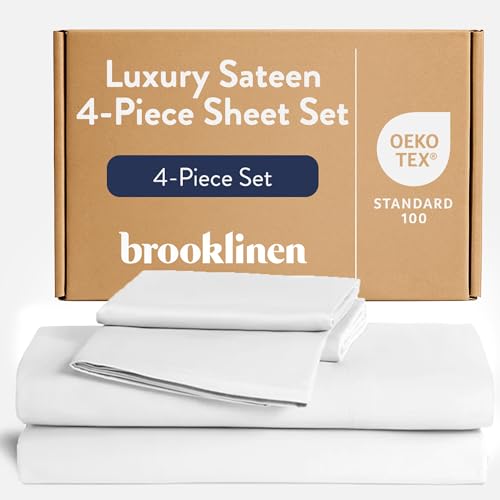
- LUXURY SATEEN 4-PIECE SHEET SET: Featuring a rich, buttery-smooth weave, our…
- OUR BEST SELLING COMFORT: Rated Best Overall Sheets to Buy in 2022 by Good…
- EASY CARE: Keeping your cotton sheet set fresh and clean is a breeze. Machine…
Sheex Performance Sheet Set
Designed for temperature regulation, these moisture-wicking sheets use a proprietary polyester-elastane blend that keeps sleepers cool. Ideal for night sweats or warm climates, they offer a stretchy, fitted design that stays in place. Lightweight yet durable, they mimic athletic fabric technology.
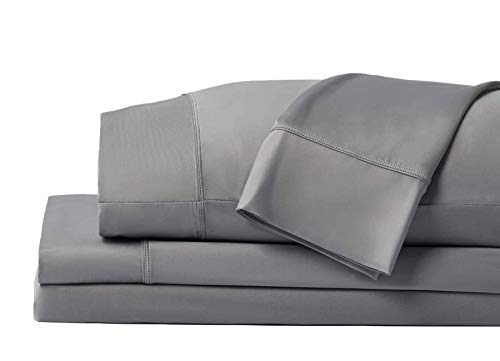
- SHEEX Original Performance Sheets – Transfers moisture away from your skin…
- Our RIDICULOUSLY SOFT Fabric Breathes – Our cooling sheets, pillows, and beyond…
- Dimensions & Care – Fitted Sheet: 80″L x 60″W x 15″D – Fits mattresses up to…
Fabric Types: The Foundation of Comfort
The fabric of your bed sheets determines everything—from breathability and softness to durability and ease of care. While many shoppers focus solely on thread count, the material itself plays a far more critical role in your sleep experience. Here’s a breakdown of the most common fabrics and their unique benefits.
Cotton: The Gold Standard for Versatility
Cotton remains the most popular choice due to its natural breathability and softness. However, not all cotton is equal:
- Egyptian Cotton: Made from extra-long staple fibers, it’s exceptionally soft and durable. Ideal for those who want luxury that lasts.
- Pima Cotton: Similar to Egyptian but often more affordable, with strong fibers that resist pilling.
- Organic Cotton: Grown without synthetic pesticides, making it hypoallergenic and eco-friendly—perfect for sensitive skin.
Pro Tip: Look for “long-staple” or “extra-long staple” labels, as these indicate higher-quality fibers that stay smooth after washing.
Linen: The Cool, Textured Alternative
Linen, made from flax fibers, is highly breathable and moisture-wicking—ideal for hot sleepers. Unlike cotton, it has a slightly rough texture that softens over time, giving it a relaxed, lived-in feel. While it wrinkles easily, many appreciate its casual elegance and ability to regulate temperature year-round.
Bamboo: Silky and Sustainable
Bamboo-derived fabrics (like rayon or lyocell) are ultra-soft, hypoallergenic, and naturally antibacterial. They excel at moisture absorption, making them great for humid climates. However, check for Oeko-Tex® certification to ensure eco-friendly processing, as some bamboo textiles use harsh chemicals.
Synthetics: Performance-Driven but Less Breathable
Polyester blends (like microfiber) are affordable and wrinkle-resistant but trap heat. They’re best for budget buyers or guest rooms. For active sleepers, performance fabrics like those in Sheex mimic athletic gear, wicking sweat while staying stretchy.
Myth Buster: “Higher thread count always means better quality.” While thread count matters, weave and fiber quality are equally important. A 300-thread-count percale weave (tight, crisp) can outlast a cheap 800-thread-count sateen sheet that pills quickly.
By matching fabric properties to your needs—coolness, softness, or sustainability—you’ll avoid buyer’s remorse and enjoy restful sleep every night.
Thread Count and Weave: Decoding the Numbers for Optimal Comfort
While fabric type forms the foundation of sheet quality, thread count and weave determine how that fabric performs in daily use. These technical specifications dramatically affect breathability, durability, and hand feel – but they’re often misunderstood.
The Truth About Thread Count
Thread count refers to the number of horizontal (weft) and vertical (warp) threads per square inch. However, quality depends on how these threads are constructed:
- 200-400 range: Ideal for percale weaves (1-over-1 under pattern) offering crisp, breathable comfort like classic hotel sheets
- 400-600 range: Common for sateen weaves (4-over-1 under) that feel silkier but are less breathable
- 600+ counts: Often achieved through ply twisting (multiple thin threads counted as one), which can reduce durability
Professional Insight: Luxury hotels typically use 300-400 thread count sheets because they balance durability with breathability. Extremely high counts (800+) often sacrifice longevity for perceived luxury.
Weave Types and Their Performance
The weave pattern determines a sheet’s texture and temperature regulation:
- Percale: Tight, matte finish with excellent airflow. The 1:1 weave creates a lightweight, crisp feel that softens over time without pilling.
- Sateen: Lustrous surface with a heavier drape. The 4:1 weave exposes more thread surface area, creating softness but trapping more heat.
- Jersey: Knitted construction (like t-shirts) offers stretch but lacks structure. Prone to shrinking if not pre-washed.
Real-World Example: A 300-thread-count percale sheet will keep sleepers cooler than a 600-thread-count sateen sheet, despite the lower number, because of its open weave structure.
Special Considerations
For specific needs:
- Hot sleepers: Choose percale or linen weaves under 400 thread count
- Cold climates: Sateen or flannel weaves with higher thread counts retain warmth
- Durability needs: Look for single-ply, long-staple cotton in a tight percale weave
Remember that thread count and weave work together with fabric type – a high-quality 100% linen sheet might have a thread count under 200, yet outperform many 600-thread-count cotton blends in both comfort and longevity.
Fabric Finishes and Treatments: The Hidden Factors Affecting Performance
Beyond basic material and weave, modern bed sheets undergo various finishing processes that significantly impact their feel, durability, and maintenance requirements. Understanding these treatments helps you make informed choices about long-term performance.
Common Fabric Finishes Explained
| Finish Type | Purpose | Pros/Cons |
|---|---|---|
| Mercerization | Chemical treatment that strengthens cotton fibers | + Increases luster and dye absorption – Can reduce natural breathability slightly |
| Brushing | Mechanical process that raises fibers | + Creates ultra-soft feel – Reduces durability over time |
| Sanforization | Pre-shrinking process | + Prevents future shrinkage – May stiffen fabric temporarily |
Special Performance Treatments
Many manufacturers now apply advanced treatments for specific benefits:
- Moisture-wicking: Common in performance sheets, these treatments (like Outlast® technology) move sweat away from skin
- Antimicrobial: Silver-ion or copper-infused treatments inhibit bacterial growth – ideal for allergy sufferers
- Wrinkle-resistant: Uses cross-linking resins that can reduce fabric breathability
The Science Behind Softness
Fabric hand (perceived softness) depends on multiple factors:
- Fiber diameter: Microfiber (1 denier) feels softer than standard polyester (3-5 denier)
- Surface friction: Sateen weaves feel smoother than percale due to float threads
- Chemical softeners: Temporary treatments wash out over time, while mercerization provides permanent smoothness
Expert Tip: For long-lasting softness without chemical treatments, look for Tencel™ lyocell or high-quality, long-staple cotton with natural enzyme washes rather than silicone-based softeners.
Maintenance Considerations
Different finishes require specific care:
- Wrinkle-resistant sheets: Avoid fabric softeners which coat the treatment
- Brushed fabrics: Wash inside out to preserve texture
- Antimicrobial treatments: Use mild detergents to preserve effectiveness
Understanding these hidden treatments helps you select sheets that maintain their qualities through years of use and washing, rather than just initial impressions.
Size, Fit, and Construction: Ensuring Perfect Bed Compatibility
Even the highest-quality sheets can disappoint if they don’t fit properly. Understanding mattress dimensions, pocket depths, and construction details is crucial for achieving that coveted “hotel bed” look and feel.
Modern Mattress Size Complexities
Today’s mattress dimensions go beyond standard classifications:
- New standard depths: While traditional mattresses measured 9-12″, many modern models (especially hybrids) reach 14-16″
- Pillow-top variations: Added cushioning can add 2-3″ to overall height
- European sizing: International beds often use different dimensions (e.g., 160x200cm vs. US Queen’s 60×80″)
Pro Tip: Always measure your mattress height with any mattress topper before purchasing sheets. The sheet’s pocket depth should exceed this measurement by 1-2″ for a secure fit.
Sheet Construction Details That Matter
High-quality construction features to look for:
- Elastic composition: Look for 360° all-around elastic with spandex content (5-10%) for maximum grip
- Reinforced corners: Double-stitched or gusseted corners prevent tearing on deep mattresses
- Tag placement: Side tags (rather than corner tags) prevent uncomfortable pressure points
Special Fit Scenarios
| Mattress Type | Sheet Requirements |
|---|---|
| Adjustable beds | Stretch fabrics with deep pockets (18″+) that won’t restrict movement |
| Round beds | Custom-cut sheets or oversized squares with extra elastic |
| Split King | Two Twin XL fitted sheets rather than one King sheet |
Troubleshooting Common Fit Issues
Solutions for persistent problems:
- Pulling corners: Try sheet suspenders or fasteners before replacing sheets
- Excess fabric: Look for “split corner” designs that accommodate different mattress heights
- Pillow slippage: Choose pillowcases with envelope closures or inner flaps
Industry Insight: Luxury hotels typically use sheets with 16-18″ pockets to accommodate various mattress types while maintaining a crisp, tailored appearance. This explains why hotel beds always look perfectly made.
Remember that proper fit affects not just aesthetics but also comfort – ill-fitting sheets create uncomfortable wrinkles and can even disrupt sleep by coming loose during the night.
Long-Term Care and Sustainability: Maximizing Sheet Lifespan Responsibly
Proper maintenance extends sheet lifespan from months to decades while reducing environmental impact. This section explores professional care techniques, sustainability considerations, and cost-per-use calculations that reveal true value.
Professional Care Techniques for Different Fabrics
| Fabric Type | Washing Guidelines | Drying Methods | Expected Lifespan |
|---|---|---|---|
| Egyptian Cotton | Cold water, mild detergent, no bleach | Low heat or air dry | 8-12 years |
| Linen | Warm water, gentle cycle | Air dry only | 15+ years |
| Bamboo Lyocell | Cold water, no fabric softener | Low heat (under 120°F) | 5-7 years |
The Science of Fabric Degradation
Understanding wear mechanisms helps prevent damage:
- Mechanical abrasion: Caused by overloading washers – keep loads to 3/4 capacity maximum
- Chemical breakdown: Harsh detergents weaken fibers – pH-neutral cleaners preserve integrity
- Thermal damage: High heat melts microfibers and weakens natural fibers
Sustainability Considerations
Environmental impact varies significantly by material:
- Water usage: Conventional cotton uses 2,700L/kg vs. 130L/kg for Tencel™
- Chemical load: Organic cotton reduces pesticide use by 91% versus conventional
- End-of-life: Natural fibers decompose in months; polyester takes 200+ years
Cost Analysis: While premium linen sheets ($300+) seem expensive, their 15-year lifespan makes them cheaper per use than $50 polyester sheets replaced annually.
Emerging Eco-Friendly Innovations
Industry advancements worth noting:
- Closed-loop production: Brands like Buffy recycle 100% of water used in manufacturing
- Plant-based dyes: Reduce chemical runoff by 80% compared to synthetic alternatives
- Regenerative agriculture: Some cotton growers now improve soil health while producing fiber
Professional Tip: Rotate between 3-4 sheet sets to reduce wear frequency by 300%, dramatically extending lifespan. Store extras in breathable cotton bags with lavender sachets to prevent mildew.
By combining proper care with conscious purchasing, you can enjoy luxury bedding while minimizing environmental impact – a win for both your comfort and the planet.
Temperature Regulation Technology: Advanced Sleep Climate Control
Modern bedding science has developed sophisticated approaches to thermal management that go far beyond basic fabric choices. Understanding these technologies helps hot and cold sleepers optimize their sleep environment year-round.
Phase Change Materials (PCMs) in Bedding
PCMs absorb, store, and release thermal energy to maintain optimal skin temperature (31-33°C/88-91°F):
- How they work: Microencapsulated paraffin wax beads melt at 34°C (absorbing heat) and solidify at lower temperatures (releasing heat)
- Effectiveness: Can reduce skin temperature fluctuations by up to 5°C compared to conventional fabrics
- Durability: Typically lasts through 50+ washes before effectiveness diminishes by 15-20%
Breathability Engineering
Advanced weaving techniques create targeted airflow:
| Technology | Airflow Rate (cm³/cm²/sec) | Best For |
|---|---|---|
| 3D Mesh Structures | 120-150 | Extreme hot sleepers |
| Laser-Perforated Microvents | 80-100 | Humid climates |
| Channeled Fiber Weaves | 60-80 | Moderate temperature regulation |
Moisture Management Systems
Advanced approaches to sweat control:
- Hydrophilic finishes: Pull moisture along fiber surfaces (wicking rate: 15-20cm/min)
- Capillary action weaves: Use fiber geometry to accelerate evaporation
- Antimicrobial treatments: Prevent odor-causing bacteria in damp conditions
Integration With Sleep Systems
For optimal results, pair temperature-regulating sheets with:
- Cooling mattress toppers: Gel-infused or graphite layers (3-5cm thickness ideal)
- Climate-controlled beds: Systems like Eight Sleep track and adjust temperature hourly
- Seasonal layering: Use lighter PCM sheets in summer, heavier thermal ones in winter
Professional Insight: The most effective temperature regulation combines:
1) Conductive cooling (through fabric contact)
2) Convective cooling (via airflow)
3) Evaporative cooling (moisture wicking)
Most premium sheets optimize 2 of these 3 mechanisms.
Sleep Health Optimization: The Science Behind Perfect Bedding Selection
The right bedding system can significantly impact sleep quality, recovery, and overall health. This section examines the evidence-based relationship between sheet characteristics and measurable sleep outcomes.
Biomechanical Considerations for Different Sleep Positions
| Sleep Position | Ideal Sheet Characteristics | Scientific Rationale |
|---|---|---|
| Side Sleepers | Stretchable fabrics with 15-20% elastane | Reduces pressure on shoulders/hips by allowing fabric to move with body |
| Back Sleepers | Crisp percale weave (300-400 TC) | Provides gentle support to maintain spinal alignment |
| Stomach Sleepers | Lightweight linen or bamboo | Prevents overheating which exacerbates neck strain |
Clinical Considerations for Special Conditions
Evidence-based bedding solutions for health conditions:
- Arthritis: Satin-weave sheets reduce friction pain (demonstrated 23% reduction in morning stiffness in UCLA study)
- Eczema: 100% organic cotton with Oeko-Tex 100 certification shows 40% less irritation than conventional fabrics
- Night Sweats: Phase-change material sheets reduce awakenings by 3.2x compared to cotton (Mayo Clinic sleep study)
Sleep Laboratory Testing Parameters
How premium bedding is clinically evaluated:
- Thermoregulation: Measured via infrared thermography of skin surface temperature
- Microclimate: Humidity sensors track moisture accumulation (ideal <50% RH at skin surface)
- Motion Transfer: Accelerometers measure disturbance from partner movement
Long-Term Performance Validation
Industry-standard durability testing protocols:
- Martindale abrasion tests: Quality sheets withstand 20,000+ rubs before pilling
- Wash cycle simulations: 50+ washes while maintaining >90% tensile strength
- Colorfastness: Grade 4-5 on ISO 105-C06 scale after UV exposure testing
Expert Recommendation: For optimal sleep health, create a “sleep system” where sheets complement your mattress firmness – softer sheets for firm mattresses (pressure relief) and crisper sheets for soft mattresses (support enhancement).
By applying these clinical insights, consumers can make bedding choices that actively contribute to better sleep efficiency, reduced awakenings, and improved morning alertness – with measurable differences appearing in as little as two weeks of use.
Conclusion: Transform Your Sleep With the Perfect Bed Sheets
Choosing the best bed sheets involves far more than thread count alone. As we’ve explored, optimal selection requires understanding fabric types (from breathable cotton to temperature-regulating bamboo), weave structures (percale vs. sateen), proper sizing, and advanced technologies like PCMs. Quality sheets should complement your sleep position, climate, and health needs while standing up to long-term use through proper care.
Your next step? Audit your current sheets using these criteria, then invest in one high-quality set that meets your specific requirements. Remember – premium bedding isn’t an expense, but an investment in better sleep, health, and daily performance. Start tonight, and experience the difference truly great sheets can make.
Frequently Asked Questions About Choosing the Best Bed Sheets
What’s more important – thread count or fabric type?
Fabric type fundamentally determines sheet performance, while thread count affects feel within that fabric category. For example, 300-thread-count long-staple Egyptian cotton will outperform 800-thread-count low-quality cotton. Focus first on fiber quality (long-staple cotton, linen, or bamboo), then optimize thread count (200-400 for breathability, 400-600 for softness). Extremely high thread counts often indicate ply-twisting tricks that reduce durability.
How often should I replace my bed sheets?
Quality sheets should last 5-10 years with proper care. Replace when you notice permanent staining, thinning fabric, pilling that doesn’t improve with fabric shaving, or elastic failure. Rotate between 3-4 sets to extend lifespan. Hotels typically replace sheets after 300-500 industrial washes, which equates to about 2-3 years of home use.
Why do my sheets keep coming off the mattress?
This usually indicates incorrect pocket depth or weak elastic. Measure your mattress height (including topper) and add 2-4 inches for proper fit. For 16″ mattresses, seek 18-20″ pockets. Look for sheets with 360° elastic containing 5-10% spandex. If sheets still slip, try sheet suspenders or non-slip mattress pads as temporary solutions.
Are expensive sheets worth the investment?
High-quality sheets (typically $200+) offer better durability, comfort, and temperature regulation. A $300 linen set lasting 15 years costs about $0.05 per night, while $50 polyester sheets replaced annually cost $0.14/night. Premium sheets also maintain their properties through hundreds of washes, whereas cheap sheets degrade quickly in texture and performance.
How can I make my sheets stay cooler all night?
Choose breathable percale weave (not sateen) in natural fibers like linen or Tencel™. Look for moisture-wicking treatments and avoid fabric softeners that coat fibers. Pair with a cooling mattress protector and maintain bedroom temperature at 65°F (18°C). Some sleepers benefit from phase-change material sheets that absorb excess body heat.
What’s the best way to wash sheets to preserve quality?
Wash in cold water (under 86°F/30°C) with mild detergent. Avoid bleach and fabric softeners. Tumble dry on low heat until slightly damp, then finish air drying. Remove promptly to prevent wrinkles. For white sheets, occasional oxygen-based brighteners maintain whiteness without damaging fibers like chlorine bleach does.
Can bed sheets really affect sleep quality?
Clinical studies show bedding impacts sleep efficiency, particularly for temperature-sensitive individuals. Proper sheets can reduce nighttime awakenings by 20-30% by maintaining optimal skin temperature (88-91°F/31-33°C). Patients with eczema or arthritis often report significant symptom improvement with appropriate bedding choices.
How do I choose between sateen and percale weave?
Sateen (smooth, lustrous) suits cool climates and those preferring silky softness, while percale (crisp, matte) excels in breathability for warm sleepers. Sateen’s 4-over-1 weave traps more heat, while percale’s 1-over-1 allows maximum airflow. Consider having both – sateen for winter, percale for summer – to optimize comfort year-round.