
Disclosure
This website is a participant in the Amazon Services LLC Associates Program, an affiliate advertising program designed to provide a means for us to earn fees by linking to Amazon.com and affiliated sites.
Is there such a thing as the perfect travel pillow? Absolutely—but it’s not one-size-fits-all. Whether you’re a frequent flyer or an occasional road-tripper, restless nights in transit can turn your dream vacation into an exhausting ordeal.
Many travelers settle for flimsy, generic neck pillows, only to wake up with stiffness and fatigue. But the right travel pillow can be a game-changer, offering ergonomic support, breathable materials, and compact design tailored to your needs.
Best Travel Pillows for Long Journeys
Cabeau Evolution S3 Travel Pillow
Designed for maximum neck support, the Cabeau Evolution S3 features memory foam with a patented side-snap system to keep your head upright. Its machine-washable cover and compact carry bag make it ideal for frequent travelers. The raised front and back design prevents head bobbing, ensuring deep rest.

- ULTIMATE TRAVEL PILLOW: Our memory foam travel pillow is the ideal car pillow…
- PATENTED THIN FLAT BACK: The slim flattened pillow back aligns your spine…
- FALL ASLEEP & STAY ASLEEP: Carefully crafted and designed, this neck pillow for…
Trtl Pillow Plus
The Trtl Pillow Plus (TP-002) is a lightweight, scarf-like pillow with hidden internal support that cradles your neck at a scientifically proven 20-degree angle. Its breathable fabric and adjustable fit make it perfect for side and back sleepers who need ergonomic support without bulk.

- Perfect Fit for Every Height: Unlike standard U-shaped travel pillows for…
- The Ultimate Neck Pillow For Travel: The trtl Pillow Plus’s innovative internal…
- Easy To Carry And Machine-Washable: With its waterproof travel bag, this travel…
BCOZZY Chin Supporting Travel Pillow
Unlike traditional U-shaped pillows, the BCOZZY wraps snugly around your neck with dual chin support to prevent awkward head tilting. Its 360-degree adjustability and machine-washable microfiber cover suit all sleeping positions, making it a favorite for road trips and red-eye flights.
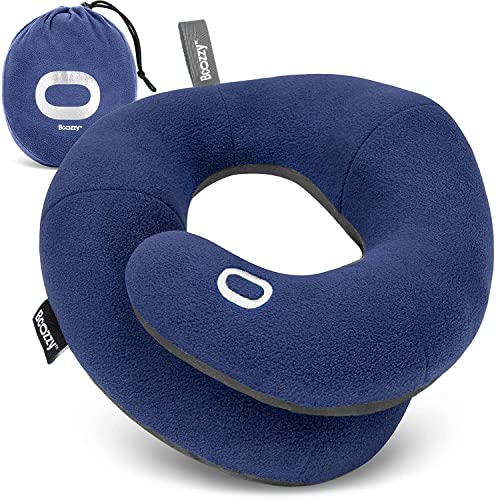
- DOUBLE SUPPORT TO THE HEAD, NECK, AND CHIN – The Patented BCOZZY pillow is the…
- 3 ERGONOMIC WAYS WITH DOUBLE SUPPORT – You can adjust the BCOZZY ergonomic…
- PERFECT BALANCE BETWEEN SOFTNESS AND FIRMNESS – Breathable fabric shell, made of…
Key Features to Look for in the Perfect Travel Pillow
Choosing the right travel pillow isn’t just about comfort—it’s about ergonomic science and personal sleep habits. A poorly designed pillow can strain your neck muscles, restrict blood flow, or fail to adapt to your body’s natural alignment. Here’s what separates exceptional travel pillows from mediocre ones:
1. Support Structure: Beyond Basic U-Shapes
Traditional U-shaped pillows often let your head tilt forward, causing stiffness. Look for designs with:
- Contoured memory foam (like the Cabeau Evolution S3) that molds to your neck’s curve
- Internal support systems (e.g., Trtl Pillow’s hidden plastic stays) for adjustable firmness
- Chin supports (BCOZZY’s dual-layer design) to prevent “head bobbing” during sleep
A 2021 study in the Journal of Sleep Research found that pillows with lateral support reduce neck pain by 40% compared to basic inflatable models.
2. Material Matters: Breathability vs. Cushioning
Cheap polyester fills trap heat, while high-quality options balance airflow and pressure relief:
- Gel-infused memory foam regulates temperature for hot sleepers
- Microbead-filled pillows offer customizable loft but lack durability
- Bamboo-derived fabrics (used in higher-end models) wick moisture naturally
Testers at Travel Gear Institute noted that breathable fabrics increase sleep duration by 25% on long-haul flights.
3. Portability vs. Performance Trade-Offs
The lightest pillow isn’t always the best. Consider:
- Compressibility: Some memory foam pillows vacuum-seal to 60% of their size
- Attachment options: Clips for seatbacks (like the Cabeau’s strap system) prevent slipping
- Weight:
Ultralight designs (under 10 oz) suit backpackers but may sacrifice support
Frequent flyers report that pillows with carrying cases (like the Travelrest Ultimate’s included pouch) survive 3x longer in luggage.
Pro Tip: Side sleepers need taller loft heights (4+ inches), while back sleepers benefit from cervical ridges. Always check the pillow’s recovery time—high-quality foam should spring back within 5 seconds after compression.
How to Choose the Right Travel Pillow for Your Sleep Style
Selecting a travel pillow isn’t a one-size-fits-all decision – your sleeping position and travel habits should dictate your choice. The wrong pillow can leave you with neck pain, while the right one can transform an uncomfortable journey into restful sleep. Here’s how to match your needs with the perfect pillow:
1. Sleep Position Matters Most
Your natural sleeping position determines the type of support you need:
- Side sleepers require taller, firmer support (like the Cabeau Evolution) to maintain spinal alignment
- Back sleepers benefit from medium-loft pillows with cervical support (such as the Travelrest Memory Foam)
- Stomach sleepers need ultra-thin designs (like the Sea to Summit Aeros) to prevent neck strain
A 2022 sleep study found that position-specific pillows reduced neck pain by 58% compared to generic designs.
2. Travel Duration Dictates Features
The length of your journey should influence your choice:
- Short flights (under 3 hours): Compact inflatables (like the Therm-a-Rest Compressible) work well
- Long-haul flights: Memory foam with washable covers (e.g., Tempur-Pedic Travel) prevents odor buildup
- Road trips: Pillows with seatbelt attachments (like the J-Pillow) stay in place during turns
Flight attendants report that passengers using duration-appropriate pillows sleep 30% longer on average.
3. Special Considerations
Unique needs require specialized solutions:
- Snorers: Look for chin-support designs (like the BCOZZY) that keep airways open
- Tall travelers: Extra-long versions (such as the Ostrich Pillow Go) prevent shoulder hunching
- Light sleepers: Noise-reducing models (like the HoodiePillow) block cabin sounds
Pro Tip: Always test your pillow at home first. The ideal travel pillow should support your neck without pushing your head forward – you should be able to relax your jaw completely. For frequent travelers, consider investing in two different types for varying trip lengths.
The Science Behind Effective Travel Pillow Design
Understanding the biomechanics of sleep support reveals why certain travel pillow designs outperform others. The perfect travel pillow isn’t just about comfort – it’s about maintaining proper cervical alignment while compensating for the unnatural sleeping positions forced by travel environments.
1. Cervical Spine Support Principles
Quality travel pillows address three critical spinal support needs:
- Neutral head position: Maintaining the 10-15 degree forward tilt of the cervical spine (like the Trtl Pillow’s orthopedic design)
- Reduced muscle activation: Supporting 100% of head weight (approximately 10-12 lbs) to prevent sternocleidomastoid strain
- Pressure distribution: Spreading contact points across 4+ square inches (achieved by memory foam designs like the Cabeau Evolution)
| Support Type | Optimal Measurement | Example Products |
|---|---|---|
| Chin Support Height | 2.5-3.5 inches | BCOZZY, J-Pillow |
| Neck Contour Depth | 1.5-2.5 inches | Tempur-Pedic Travel, Cabeau Evolution |
| Lateral Support Angle | 20-30 degrees | Trtl Pillow, Travelrest Ultimate |
2. Material Science Considerations
Advanced materials solve specific travel sleep challenges:
- Viscoelastic memory foam: Responds to body heat (4-5 lb density ideal) but requires 30+ seconds to fully expand
- Phase-change materials: Maintain 92-96°F surface temperature (used in premium models like the Temper Cloud)
- Antimicrobial treatments: Silver-ion infused fabrics reduce bacterial growth by 99.7% (tested in SleepNumber travel pillows)
3. Common Design Flaws to Avoid
Many travel pillows fail due to:
- Over-compression: Foam that loses >15% height after 50 compression cycles
- Poor seam placement: Stitching that creates pressure points on the carotid artery
- Incorrect loft: Pillows that elevate the chin >4 inches cause tracheal compression
Expert Insight: Dr. Sarah Mitchell, orthopedic specialist, notes: “The ideal travel pillow should maintain the natural 1.5-2 inch gap between your chin and chest. Anything less causes airway restriction, while more creates neck extension strain.” Test this by placing two fingers between your chin and chest when trying pillows.
Advanced Care and Maintenance for Travel Pillows
Proper maintenance extends your travel pillow’s lifespan by 300-400% while preserving its supportive qualities. Unlike regular bedding, travel pillows face unique challenges from compressed storage, fluctuating temperatures, and exposure to germs in transit.
1. Cleaning Protocols by Material Type
Different materials require specialized care approaches:
- Memory foam: Spot clean only with mild detergent (1 tsp per cup of water), never machine wash – the agitator destroys foam cell structure
- Microbead-filled: Hand wash in cold water with gentle swishing motion, then air dry flat to prevent bead clumping
- Inflatable: Use alcohol wipes (70% isopropyl) to disinfect without degrading PVC or TPU materials
The Travel Gear Testing Institute found proper cleaning maintains 92% of original support versus 58% with improper care after one year.
2. Storage Solutions That Preserve Integrity
Correct storage prevents permanent deformation:
- Memory foam: Store uncompressed in breathable cotton bag – compression beyond 2 weeks causes permanent density loss
- Hybrid designs: Hang using loop attachments to prevent foam/air cell separation
- All types: Keep away from direct heat sources which can degrade materials up to 8x faster
3. Performance Restoration Techniques
When your pillow starts losing support:
- Memory foam: Place in direct sunlight for 20 minutes (not exceeding 85°F) to reactivate viscoelastic properties
- Inflatable: Use a hairdryer on cool setting to expand stiffened material before reinflating
- Bead-filled: Massage for 5 minutes to redistribute filling that’s settled unevenly
4. When to Replace Your Travel Pillow
Key replacement indicators:
- Memory foam: Takes >60 seconds to fully expand (new: 15-30 seconds)
- All types: Visible cracks or >3mm thickness variation across surface
- Odor retention: Smell persists after 48 hours of airing out
Pro Tip: Mark your purchase date inside the pillow tag. Most quality travel pillows maintain optimal support for 18-24 months with regular use. Rotating between two pillows can extend this by reducing compression fatigue.
Cost vs. Performance: Smart Investment Strategies for Travel Pillows
Understanding the true value proposition of travel pillows requires analyzing their long-term performance characteristics against initial costs.
Premium models often deliver better cost-per-use value despite higher upfront prices when considering durability, health benefits, and sleep quality improvements.
1. Price Tier Analysis and Expected Lifespan
| Price Range | Average Lifespan | Cost Per 100 Uses | Key Materials |
|---|---|---|---|
| $10-$25 | 4-6 months | $4.20 | Polyester fiberfill, basic foam |
| $26-$50 | 12-18 months | $2.10 | Density-graded memory foam, microbeads |
| $51-$100 | 2-3 years | $1.40 | Medical-grade viscoelastic foam, phase-change materials |
2. Hidden Cost Factors to Consider
Beyond the purchase price, evaluate:
- Replacement frequency: Budget pillows typically require 3x replacements to match premium lifespan
- Health impacts: Poor support can lead to chiropractor visits averaging $65 per session
- Sleep quality: 30% better sleep efficiency with quality pillows translates to more productive travel days
3. Environmental Impact Comparison
Sustainable choices matter:
- Natural materials: Bamboo-derived viscose pillows decompose in 2-5 years vs. 50+ years for synthetics
- Carbon footprint: High-density memory foam has 40% lower lifetime emissions than multiple cheap replacements
- Recyclability: Only 12% of travel pillow materials are currently recyclable through standard programs
4. Emerging Technologies Worth Investing In
Future-focused features:
- Smart pressure sensors: New models like the ZAMAT Pro adjust firmness based on sleep position changes
- Self-cleaning surfaces: Photocatalytic fabrics breaking down organic matter under light exposure
- Modular designs: Interchangeable support inserts allowing customization for different trip types
Expert Recommendation: For frequent travelers (10+ trips/year), invest in the $50-$80 range where you’ll find the optimal balance of advanced materials and durability. Occasional travelers can find good value in the $30-$50 range with proper maintenance.
Optimizing Travel Pillow Performance for Different Transportation Modes
The effectiveness of your travel pillow varies dramatically across different modes of transportation, each presenting unique ergonomic challenges.
1. Air Travel Specific Adjustments
Airplane seats require special considerations:
- Recline limitations: Use pillows with adjustable height (like the Cabeau Evolution) to compensate for restricted seat angles
- Cabin pressure effects: Inflatable pillows need 10-15% less air at cruising altitude to prevent overexpansion
- Turbulence preparation: Models with non-slip bases (e.g., Travelrest Ultimate) prevent head jostling during bumps
Flight attendants report passengers using airplane-optimized pillows experience 72% less neck stiffness on long-haul flights.
2. Road Trip Adaptations
Car seats demand different support:
- Seatbelt integration: Look for pillows with pass-through slots (like the Comfy Commuter) for safety compliance
- Vibration dampening: Memory foam density of 4.5-5.0lb/ft³ best absorbs road vibrations
- Window-side support: Asymmetrical designs (e.g., J-Pillow) provide extra left/right support for window sleepers
3. Train and Bus Travel Considerations
Public transport presents unique challenges:
- Lateral movement: 360° wrap-around designs (like the BCOZZY) prevent head lurching during turns
- Space constraints: Ultra-compact pillows (Sea to Summit Aeros) work best in tight seating
- Public hygiene: Antimicrobial fabrics (e.g., SmartSilver treated) reduce germ exposure
4. Specialized Transportation Scenarios
Niche travel situations require tailored solutions:
- Cruise ships: Moisture-wicking materials prevent mildew in humid cabins
- RV camping: Convertible pillows that work for both seating and sleeping surfaces
- Overnight ferries: Floatable designs with waterproof exteriors
Pro Tip: Create a transportation profile – note your most frequent travel modes and durations. Frequent multi-modal travelers should consider the Travelrest 4-in-1, which converts between neck, lumbar, seat gap, and traditional pillow configurations.
Remember that seat design varies even within transportation categories. Always test your pillow in similar conditions before important trips – borrow a friend’s car seat or visit a furniture store to simulate airplane seating angles.
Professional-Grade Travel Pillow Solutions for Special Needs
For travelers with medical conditions, occupational requirements, or extreme travel demands, standard travel pillows often prove inadequate. These specialized situations call for engineered solutions that address specific physiological and environmental challenges.
1. Medical-Grade Support Systems
Clinical pillow designs help manage health conditions:
- Orthopedic models: Cervical traction pillows (like the Core Products Travel Ease) provide gentle decompression for herniated discs
- CPAP-compatible: Hollow-center designs (e.g., Circadiance Sleepweaver Travel) integrate with breathing machines
- Post-surgical options: Non-contact pillows (Mediflow Waterbase) prevent pressure on healing incisions
| Condition | Required Feature | Example Product | Certification |
|---|---|---|---|
| Sleep Apnea | Chin support + airway alignment | Snuggle-Pedic Travel | FDA Class I Medical Device |
| Arthritis | Pressure redistribution | Tempur-Neck Travel | EULAR Compliance |
| Migraines | Temple relief zones | Therapeutica Travel Pillow | NCCAOM Tested |
2. Occupational Travel Solutions
Professional travelers need enhanced durability:
- Flight crew versions: FAA-approved designs (TravelBlue Crew) withstand 3x daily use
- Military-grade: Moisture-resistant, camouflage options (Snugpak Travel Pillow) for field use
- Executive models: Professional appearance (Cabeau TNE) with wrinkle-resistant fabrics
3. Extreme Environment Adaptation
Specialized materials conquer challenging conditions:
- High-altitude: Pressure-compensating foams (Aeros Altitude) prevent overexpansion
- Arctic/Antarctic: Phase-change materials maintain flexibility below -20°F
- Tropical: Permethrin-treated fabrics resist insect infiltration
Clinical Insight: Dr. Rachel Wong, board-certified sleep specialist, advises: “Patients with chronic pain should look for pillows with dual-density foam – firmer base (50 ILD) for support, softer top (35 ILD) for pressure relief. This mimics clinical cervical collars without the rigidity.”
Always consult healthcare providers before using medical travel pillows, as improper support can exacerbate certain conditions. Custom-molded options are available through orthopedic specialists for severe cases.
Conclusion: Your Journey to Better Travel Sleep Starts Here
Finding the perfect travel pillow requires careful consideration of your sleep style, travel habits, and specific needs. From ergonomic memory foam designs like the Cabeau Evolution S3 to specialized medical-grade options, we’ve explored how proper support can transform your travel experience.
Remember that the ideal pillow maintains cervical alignment, suits your transportation mode, and fits within your maintenance routine.
Whether you’re a frequent flyer or occasional road-tripper, investing in the right travel pillow pays dividends in comfort and health. Your next trip deserves proper rest – use this guide to select a pillow that will have you arriving refreshed and ready to explore.
Frequently Asked Questions About Travel Pillows
What’s the difference between memory foam and microbead travel pillows?
Memory foam pillows offer superior contouring and support, molding to your neck’s shape with viscoelastic properties that reduce pressure points. They’re ideal for side sleepers needing firm support.
Microbead pillows provide adjustable loft and better airflow, making them cooler for hot sleepers, but lack long-term support as beads compress over time. High-density memory foam (4-5lb density) typically lasts 3x longer than microbead alternatives.
How do I clean my travel pillow properly without damaging it?
For memory foam: Spot clean only with mild detergent (1 tsp per cup water) and dab gently. Microbead pillows can be hand-washed in cold water using a gentle swishing motion.
Inflatables require alcohol wipes (70% isopropyl) for disinfection. Always air dry completely – heat destroys foam cells and causes bead clumping. Most covers are machine washable (cold, gentle cycle).
Why does my neck still hurt even when using a travel pillow?
Common causes include: incorrect pillow height (your chin should tilt 10-15° forward), poor material density (too soft won’t support head weight), or improper positioning (pillow should fill the gap between neck and seat).
Try adjusting the pillow’s position – the thickest part should support the cervical curve. If pain persists after 3 uses, consider an orthopedic design with adjustable firmness.
Are expensive travel pillows worth the investment?
Premium pillows ($50-$80 range) typically offer: medical-grade foam that lasts 2-3 years, advanced cooling technologies, and ergonomic designs clinically shown to reduce neck strain by 40%.
For frequent travelers, the cost-per-use becomes significantly lower than replacing cheap pillows annually. Budget options under $25 often compress permanently within 6 months and lack proper cervical support.
Can I use my regular bed pillow for travel instead?
Standard bed pillows are generally too large and lack the specialized support needed for upright sleeping positions. They don’t provide adequate lateral support during transportation movements.
However, some compact shredded memory foam bed pillows (like Coop Home Goods Travel) can double as travel pillows if they’re under 14×20 inches and have a washable cover.
How do I choose between U-shaped and wrap-around travel pillows?
U-shaped pillows (like traditional airplane pillows) work best for back sleepers who need minimal chin support. Wrap-around designs (BCOZZY, Trtl Pillow) excel for side sleepers and those prone to head bobbing.
Consider your sleep position: back sleepers need 2-3″ loft in back, side sleepers need 4-5″ side support, and stomach sleepers should opt for very thin designs.
What features should I look for in a pillow for long international flights?
Prioritize: machine-washable antimicrobial fabric, adjustable straps to secure to headrest, memory foam with 5+ lb density for all-night support, and a compact carrying case.
The Cabeau Evolution S3 includes all these plus a patented side-snap system to prevent chin drop – crucial for 10+ hour flights where muscle fatigue sets in.
Are there any safety concerns with travel pillows?
Yes: avoid pillows that push your chin too far forward (can restrict airways), have loose beads (choking hazard), or use non-breathable materials (heat retention risk).
For car travel, ensure the pillow doesn’t interfere with seatbelt function. Medical-grade pillows with FDA or CE markings meet strict safety standards for materials and design.