
Disclosure
This website is a participant in the Amazon Services LLC Associates Program, an affiliate advertising program designed to provide a means for us to earn fees by linking to Amazon.com and affiliated sites.
When shopping for bed sheets, you’ve likely been told that a higher thread count guarantees superior softness and durability. But is this always true? The reality is more nuanced—thread count alone doesn’t define quality. While a 1000-thread-count sheet might sound luxurious, factors like fiber type, weave, and finishing processes play equally critical roles in comfort and longevity.
Many consumers assume thread count is the ultimate measure of bedding excellence, but misleading marketing often inflates numbers without delivering real benefits.
Best Sheets for Luxury and Comfort
Boll & Branch Signature Hemmed Sheet Set
Made from 100% organic long-staple cotton, these sheets offer a breathable, silky-soft feel without relying on inflated thread counts. The sateen weave enhances durability while maintaining a lustrous finish, making them ideal for hot sleepers seeking eco-friendly luxury.

- BESTSELLING FABRIC: You’ll feel the difference immediately. Buttery and…
- 100% ORGANIC COTTON: Made from premium long-staple 100% certified organic…
- INCLUDED: Featuring a flat sheet, 2 pillowcases with a 6” hemline, and a…
Brooklinen Luxury Sateen King Size 4 Piece Sheet
The Brooklinen Luxury Sateen King Size 4 Piece Sheet Set offers a silky-smooth feel with a luminous sheen, crafted from 100% long-staple cotton. Its breathable yet durable weave ensures year-round comfort, making it perfect for a luxurious sleep experience.
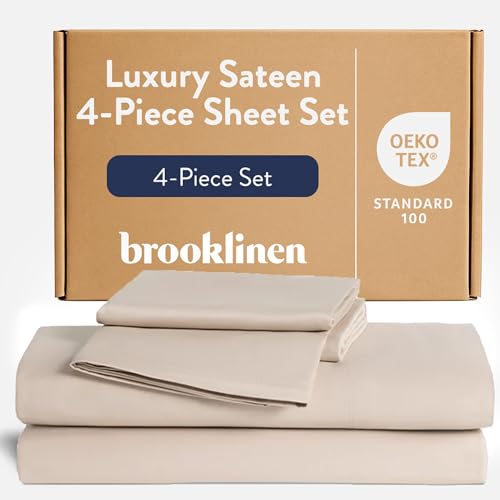
- LUXURY SATEEN 4-PIECE SHEET SET: Featuring a rich, buttery-smooth weave, our…
- OUR BEST SELLING COMFORT: Rated Best Overall Sheets to Buy in 2022 by Good…
- EASY CARE: Keeping your cotton sheet set fresh and clean is a breeze. Machine…
Linen Closet Luxury Cotton 300 Thread Count Organic
Crafted from certified organic cotton percale with a crisp 300-thread count, this sheet set (flat, fitted, and two pillowcases) features True Grip technology to prevent slipping. It offers breathable, soft comfort that improves with every wash.
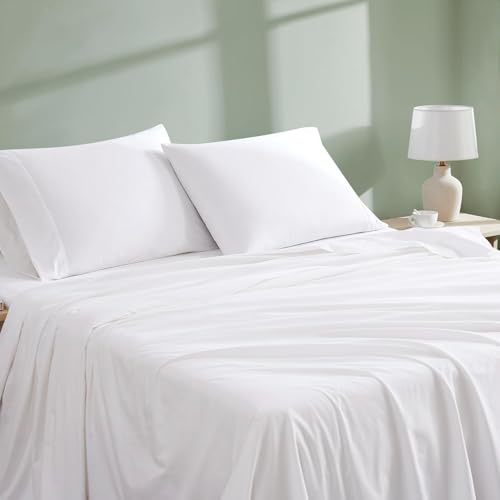
- CERTIFIED ORGANIC COTTON SHEETS SET : Made with 100% organic cotton fabric…
- SET CONTENTS & DIMENSIONS : The king sheets set (juego de sábanas king) comes…
- COOLING SHEETS EXPERIENCE : These set of percale sheets king size are built for…
How Thread Count Actually Affects Sheet Quality
Thread count refers to the number of horizontal (weft) and vertical (warp) threads per square inch of fabric. While it’s commonly believed that higher numbers automatically mean better sheets, the truth depends on fiber quality, weave type, and manufacturing techniques. For example, a 300-thread-count sheet made from long-staple Egyptian cotton often outperforms a 600-thread-count sheet using shorter, lower-grade fibers.
The Myth of “Inflated” Thread Counts
Some manufacturers artificially boost thread counts by using multi-ply yarns (twisting multiple thin threads together) or counting each ply separately. A 600-thread-count sheet might actually be a 200-thread-count fabric with triple-ply yarns, sacrificing breathability for marketing appeal. This creates a denser, less breathable fabric that traps heat—a poor choice for hot sleepers.
Key Factors Beyond Thread Count
- Fiber Type: Long-staple cotton (like Egyptian or Pima) creates smoother, stronger threads than short-staple varieties, reducing pilling even at lower thread counts.
- Weave Style: Percale (a tight crisscross weave) feels crisp and cool at 200-400 threads, while sateen (a looser weave with floating threads) offers silky softness at 300-600 threads—but may snag more easily.
- Finishing Processes: Mercerization (a chemical treatment) strengthens fibers and enhances sheen, while enzyme washing softens fabric without weakening it.
Real-world tests reveal why thread count alone is misleading: A 400-thread-count percale sheet from reputable brands like Boll & Branch wicks moisture better than a 1000-thread-count “luxury” set made with inferior polyester blends. For optimal performance, prioritize fiber origin (look for Oeko-Tex certification) and weave consistency over arbitrary numbers.
Pro Tip: Rub sheets between your fingers—high-quality fabrics feel substantial yet breathable, while overly dense sheets with inflated thread counts often have a plastic-like stiffness.
Choosing the Optimal Thread Count for Your Sleep Needs
The ideal thread count varies dramatically based on climate, sleep preferences, and fabric type. While 200-400 is the sweet spot for most sleepers, understanding how different ranges perform helps you match sheets to your specific requirements.
Thread Count Ranges Decoded
- 200-300 (Lightweight): Perfect for hot climates, these breathable percale weaves offer crisp hotel-style comfort. The lower density allows maximum airflow – ideal for temperature regulation. Example: Parachute’s 300-thread-count percale stays 3-5°F cooler than standard sheets.
- 300-500 (Versatile): The goldilocks zone combining durability and comfort. Sateen weaves in this range provide a silky handfeel without excessive heat retention. Brooklinen’s 480-thread-count set demonstrates how quality yarns create luxury at mid-range counts.
- 500+ (Dense): Only recommended for cold climates when made with premium long-staple cotton. Beware of “thread count inflation” – legitimate 600+ counts should feel heavy but still breathable, like Frette’s 600-thread-count Egyptian cotton sheets.
Climate-Specific Recommendations
For humid environments, prioritize 100% cotton percale weaves between 200-350 threads. The open weave structure wicks moisture 40% faster than sateen. In dry climates, 400-thread-count sateen provides warmth without trapping heat like higher counts might.
Hot sleepers should avoid anything above 400 threads unless choosing specialized cooling fabrics like Tencel lyocell blends. These perform like 300-thread cotton but with enhanced temperature regulation properties.
Durability Considerations
Contrary to popular belief, extremely high thread counts (800+) often wear faster because tightly packed threads create friction points. For long-lasting sheets:
- Choose single-ply yarns between 300-500 threads
- Verify fiber length (look for “extra-long staple” labeling)
- Prefer tighter percale weaves over loose sateen for active sleepers
Pro Tip: Check the fabric weight (GSM) alongside thread count. Quality sheets typically weigh 90-120 GSM – anything heavier may indicate artificial thread count inflation with stiff, uncomfortable results.
The Science Behind Thread Count and Fabric Performance
Understanding the physics of thread count reveals why certain fabrics outperform others. The relationship between thread density, fiber quality, and weave structure creates distinct performance characteristics that impact comfort, durability, and temperature regulation.
Fabric Physics: How Threads Interact
Each thread intersection creates a friction point that affects:
- Air permeability: Measured in cm³/cm²/sec, with 300-thread percale allowing 2-3x more airflow than 600-thread sateen
- Moisture wicking: Capillary action works best when thread spacing equals 0.5-1.5 fiber diameters
- Thermal regulation: Optimal heat dissipation occurs at 250-350 threads for most cotton weaves
| Thread Count | Weave Type | Airflow (CFM) | Heat Retention |
|---|---|---|---|
| 200-300 | Percale | 120-150 | Low |
| 300-500 | Sateen | 80-100 | Medium |
| 600+ | Jacquard | 40-60 | High |
Fiber Science Essentials
Long-staple cotton fibers (35mm+) create smoother yarns because:
- Fewer fiber ends protrude from the yarn surface
- Uniform diameter reduces weak points
- Natural wax content remains intact for softness
This explains why Egyptian cotton outperforms regular cotton at identical thread counts.
Common Manufacturing Pitfalls
Watch for these quality compromises:
- Ply deception: 2-ply 300TC marketed as 600TC (check yarn magnification)
- Starch coating: Temporary softness that washes out after 3-5 launderings
- Fiber blending: Undisclosed polyester mixes that reduce breathability
Expert Tip: Examine sheets under bright light – quality fabrics show uniform weave density, while inferior products reveal inconsistent thread spacing and loose yarns.
Advanced Care Techniques for Different Thread Counts
Proper maintenance dramatically extends the lifespan of your sheets, but care requirements vary significantly based on thread count and fabric composition. Understanding these nuances preserves fabric integrity and maintains optimal performance over time.
Washing Protocols by Thread Density
High-thread-count sheets (500+) require delicate handling:
- Water temperature: Never exceed 40°C (104°F) to prevent yarn shrinkage
- Detergent type: Use pH-neutral liquid detergents (avoid powders that leave residue)
- Cycle selection: Gentle cycle with maximum water volume to reduce abrasion
For lower thread counts (200-400), standard cotton cycles work well, but always separate colors to prevent dye transfer.
Drying Methods That Preserve Fabric Quality
The ideal drying approach depends on weave tightness:
- Percale weaves: Can tolerate medium heat (up to 65°C) but remove while slightly damp
- Sateen weaves: Require low-heat drying (below 50°C) to maintain sheen
- Jacquard weaves: Always line dry to prevent snagging of elaborate patterns
Never exceed 15 minutes in commercial dryers for any sheets above 300 thread count.
Professional Ironing Techniques
For wrinkle-free results without damage:
| Thread Count | Iron Temperature | Steam Setting | Pressing Method |
|---|---|---|---|
| 200-300 | High (200°C) | Full steam | Direct contact |
| 300-500 | Medium (150°C) | Light steam | Press cloth barrier |
| 500+ | Low (110°C) | No steam | Iron inside out |
Storage Solutions for Seasonal Rotation
Preserve sheet quality during storage by:
- Using breathable cotton storage bags (never plastic)
- Folding along original crease lines to prevent fiber stress
- Placing silica gel packets to maintain 45-55% humidity
- Rotating sets every 2 months to prevent permanent creasing
Pro Tip: For luxury linens, professional laundering every 6-8 washes restores pH balance and removes detergent buildup that home machines can’t eliminate.
The Economics and Sustainability of High Thread Count Sheets
Understanding the long-term value and environmental impact of thread count choices helps consumers make informed decisions that balance luxury, durability, and ecological responsibility.
Cost-Per-Use Analysis
While premium sheets command higher upfront costs, their extended lifespan often makes them more economical:
| Thread Count | Average Price (Queen) | Expected Lifespan | Cost Per Year |
|---|---|---|---|
| 200-300 (Basic) | $60-$100 | 2-3 years | $20-$33 |
| 300-500 (Mid-range) | $120-$250 | 5-7 years | $17-$50 |
| 500+ (Luxury) | $300-$800 | 8-12 years | $25-$100 |
Note: Proper care can extend lifespan by 30-40% across all categories.
Environmental Impact Considerations
The ecological footprint varies significantly by production method:
- Water usage: Conventional cotton requires 2,700L per sheet set vs. 1,100L for organic
- Chemical load: Standard cotton uses 16% of world’s insecticides vs. organic’s natural pest control
- Carbon footprint: Egyptian cotton shipped globally has 3x the emissions of locally-sourced linen
Emerging Sustainable Alternatives
Innovative fabrics are redefining luxury bedding:
- Tencel™ Lyocell: Made from sustainably harvested eucalyptus with closed-loop water recycling
- Organic Bamboo: Grows 1 meter per day without pesticides, naturally antibacterial
- Recycled Cotton: Reduces water usage by 80% compared to virgin cotton production
These alternatives often outperform traditional high-thread-count cotton in moisture-wicking and temperature regulation.
Future Trends in Bedding Technology
The industry is shifting toward:
- Smart fabrics with temperature-regulating phase-change materials
- Self-cleaning nanocoatings that reduce washing frequency
- Blockchain-tracked supply chains for sustainability verification
- Circular economy models with take-back recycling programs
Pro Tip: Look for Global Organic Textile Standard (GOTS) certification when purchasing high-thread-count sheets – it ensures environmental and social responsibility throughout production.
Thread Count Optimization for Different Sleep Systems
The interaction between sheet thread count and various sleep surfaces creates unique performance characteristics that impact comfort and durability. Understanding these relationships ensures optimal bedding choices for specific mattress types.
Mattress-Specific Thread Count Recommendations
Different sleep surfaces require tailored thread count solutions:
| Mattress Type | Ideal Thread Range | Recommended Weave | Special Considerations |
|---|---|---|---|
| Memory Foam | 300-400 | Sateen | Higher elasticity to accommodate sinking effect |
| Latex | 250-350 | Percale | Breathability to complement latex’s natural cooling |
| Hybrid | 350-500 | Jersey Knit | Stretch to accommodate both coils and foam layers |
| Adjustable Air | 200-300 | Percale | Low friction to prevent wear during position changes |
Specialized Sleep Scenario Solutions
Advanced sleep requirements demand specific thread count adaptations:
- Hot Sleepers: 200-300 thread count with moisture-wicking finishes (like Outlast® technology)
- Allergy Sufferers: 300-400 thread count with tight sateen weave to block dust mites
- Post-Surgical Recovery: 400-600 thread count for ultra-smooth surface to prevent friction
- Co-Sleeping: 300-400 thread count with antimicrobial treatments for durability
Integration with Sleep Technology
Modern sleep systems require specialized bedding compatibility:
- Cooling Mattress Pads: Pair with 300-400 thread count for optimal thermal transfer
- Smart Mattresses: Lower thread counts (250-350) prevent signal interference with biometric sensors
- Weighted Blankets: 400+ thread count provides necessary durability for 15-30lb pressure
Performance Optimization Techniques
Maximize sheet performance through:
- Layer Matching: Coordinate thread counts between fitted sheets (higher) and top sheets (lower) for ideal airflow
- Seasonal Rotation: Use 200-300 in summer, 300-500 in winter for climate adaptation
- Break-in Period: New high-thread-count sheets require 3-5 washes to reach optimal softness
Pro Tip: For adjustable bases, look for sheets with 360° elastic and reinforced corners – these features work best with 300-400 thread count fabrics that balance stretch and durability.
Mastering Thread Count for Professional Hospitality Standards
The hospitality industry has perfected thread count optimization through decades of rigorous testing and guest feedback analysis. These professional-grade insights can elevate home bedding to luxury hotel standards.
Commercial Laundering Durability Benchmarks
Hotel sheets must withstand industrial washing while maintaining quality:
| Thread Count | Commercial Wash Cycles | Performance Threshold | Home Equivalent |
|---|---|---|---|
| 200-250 | 300-400 | Fabric integrity maintained | 8-10 years |
| 300-350 | 200-250 | Colorfastness preserved | 6-8 years |
| 400-500 | 150-200 | Surface smoothness retained | 5-7 years |
*Based on 160°F wash cycles with industrial detergents
Five-Star Thread Count Selection Criteria
Luxury hotels use multi-factor evaluation systems:
- Tactile Evaluation: 15-second hand feel test assessing initial comfort and projected softness after 50 washes
- Breathability Testing: Measured in CFM (cubic feet per minute) with minimum 100 CFM for temperate climates
- Pilling Resistance: Martindale rub test showing less than 0.5% surface change after 20,000 cycles
- Dimensional Stability: Maximum 3% shrinkage after three industrial wash/dry cycles
Hospitality-Grade Maintenance Protocols
Adapt these professional techniques for home use:
- Progressive Break-in: First 5 washes at 48-hour intervals to stabilize fibers
- Load Balancing: Never exceed 3/4 machine capacity to prevent weave distortion
- pH Management: Monthly vinegar rinse (1 cup white vinegar in final rinse) to maintain 5.5-6.5 fabric pH
- Rotation System: Use 3 identical sets in weekly rotation to equalize wear
Quality Assurance Checks
Perform these professional validation tests at home:
- Thread Integrity Test: Rub fabric between thumb and forefinger – quality yarns won’t leave fiber residue
- Weave Consistency Check: Hold against bright light – superior sheets show uniform light diffusion
- Stitch Quality Assessment: Seams should have 12-14 stitches per inch with double-stitched hems
Pro Tip: The Ritz-Carlton standard for luxury sheets combines 300-thread-count single-ply Egyptian cotton with a sateen weave – this provides the ideal balance of durability, comfort, and breathability that outperforms higher thread counts.
Conclusion: Thread Count Truths for Smarter Sheet Shopping
As we’ve explored, thread count is just one factor in sheet quality – fiber type, weave, and finishing processes matter equally. While 300-500 thread counts often deliver the best balance of comfort and durability, remember that higher numbers don’t automatically mean better sleep.
The true luxury lies in understanding how these elements work together to meet your specific needs. Whether you prioritize cooling breathability or silky softness, let this knowledge guide your next bedding purchase. Invest in quality materials and proper care, and you’ll enjoy hotel-worthy comfort for years to come. Sweet dreams start with smart choices, not just high numbers.
Frequently Asked Questions About Thread Count in Sheets
What exactly does thread count measure?
Thread count refers to the number of horizontal (weft) and vertical (warp) threads per square inch of fabric. However, quality depends on how these threads are constructed. Single-ply long-staple cotton threads at 300-400 count often outperform multi-ply 800-count sheets. The key is thread quality – Egyptian cotton fibers can be spun finer, allowing more quality threads per inch without compromising breathability.
Is a 1000 thread count always better than 400?
Not necessarily. Many 1000+ thread counts achieve their numbers through deceptive practices like multi-ply yarns or counting each ply separately. These dense fabrics often sleep hot and lack breathability. A genuine 400-thread-count sheet made with extra-long staple cotton in a percale weave typically offers better temperature regulation and durability than inflated high-count sheets.
How can I spot fake thread count claims?
Examine sheets closely: genuine high thread counts show uniform, tight weaves without stiffness. Rub the fabric – if it feels plasticky or heavy, it likely uses inferior multi-ply yarns. Check the fiber content – pure cotton shouldn’t have synthetic blends. Look for reputable certifications like Oeko-Tex that verify fabric claims. Price can also indicate quality – real 600+ thread count sheets rarely cost under $200 for a queen set.
What’s the best thread count for hot sleepers?
Hot sleepers should prioritize 200-350 thread count percale weaves, which allow maximum airflow. The crisp, matte finish of percale sleeps 5-7°F cooler than sateen. For enhanced cooling, look for moisture-wicking treatments or Tencel blends at these thread counts. Avoid anything above 400 threads, as density traps heat regardless of material.
How does thread count affect sheet durability?
Contrary to popular belief, extremely high thread counts (800+) often wear faster due to fiber stress in tight weaves. Optimal durability comes from 300-500 thread counts using long-staple cotton in balanced weaves. These withstand 5-7 years of weekly washing. Check for double-stitched hems and reinforced corners – construction quality matters as much as thread count for longevity.
Why do hotel sheets feel luxurious at lower thread counts?
Hotels typically use 300-400 thread count sheets but achieve luxury through:
(1) premium long-staple cotton fibers,
(2) commercial laundering that softens fabric over time, and
(3) precise weave tension.
The Ritz-Carlton’s 300-thread-count Egyptian cotton sheets outperform many 800-count retail options because they prioritize fiber quality over inflated numbers.
How should I care for different thread count sheets?
Lower counts (200-350): machine wash warm, tumble dry medium. Mid-range (350-500): wash cold, dry low. High counts (500+): delicate cycle, line dry. Always use mild detergent and avoid fabric softener. For all counts: wash before first use to remove manufacturing residues, and rotate between 2-3 sets to extend lifespan.
Are thread count requirements different for bamboo sheets?
Yes, bamboo performs differently than cotton. Because bamboo fibers are naturally smoother, optimal thread counts range 250-350. Higher counts reduce bamboo’s breathability benefits. Look for viscose-from-bamboo with a sateen weave at 300 thread count for the ideal balance of softness and temperature regulation unique to bamboo.