
Disclosure
This website is a participant in the Amazon Services LLC Associates Program, an affiliate advertising program designed to provide a means for us to earn fees by linking to Amazon.com and affiliated sites.
Do you wake up groggy even after a full night’s sleep? The secret to feeling refreshed lies in understanding 90-minute sleep cycles—the natural rhythm your brain follows during rest. While many believe “more sleep equals better recovery,” the truth is that when you wake matters just as much as how long you sleep.
Interrupting a sleep cycle mid-phase can leave you exhausted, but aligning your wake-up time with these cycles can transform your energy levels.
Modern sleep science reveals that sleep isn’t a uniform state. Instead, your brain cycles through distinct stages—light sleep, deep sleep, and REM—roughly every 90 minutes. Ignoring these cycles means missing out on restorative benefits. But by harnessing their power, you can wake up alert, improve memory, and even boost productivity.
Best Sleep Trackers for Monitoring 90-Minute Sleep Cycles
Fitbit Sense 2
The Fitbit Sense 2 excels at tracking sleep stages (light, deep, REM) with high accuracy, thanks to its advanced heart rate and SpO2 sensors. Its Smart Wake feature gently nudges you awake during a light sleep phase, aligning with your natural 90-minute cycle for a refreshed morning.

- Learn to manage stress, sleep better and live healthier with Sense 2—our most…
- Manage stress and live healthier: all-day stress detection with cEDA and daily…
- Measure and improve sleep quality: personalized Sleep Profile(5), daily sleep…
Oura Ring (Generation 3)
The Oura Ring Gen 3 is a sleek, non-intrusive wearable that provides detailed sleep analysis, including cycle timing and recovery insights. Its infrared sensors detect subtle body changes, offering personalized recommendations to optimize sleep stages and wake times for peak energy.

- SIZE BEFORE YOU BUY – Size with Gen3 Sizing Kit prior to purchasing Oura Ring…
- THE REVOLUTIONARY SMART RING – Track your sleep, activity, stress, heart rate…
- MORE ACCURATE BY DESIGN – Your finger provides the most accurate pulse reading…
Withings Sleep Analyzer
Designed for mattress placement, the Withings Sleep Analyzer tracks breathing disturbances, heart rate, and sleep cycles without wearables. Its app breaks down your 90-minute phases and suggests adjustments—ideal for those who dislike wristbands but want lab-grade sleep data.
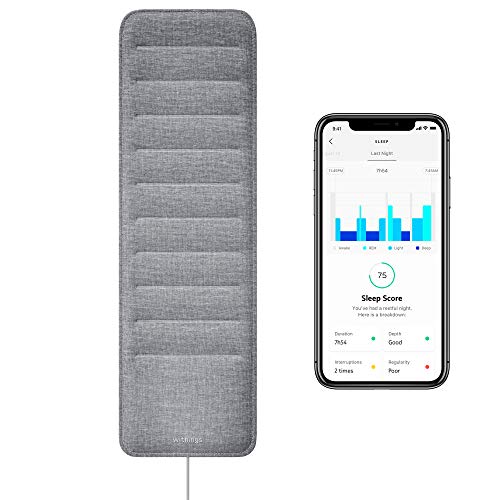
- EXPLORE THE DEPTHS OF YOUR SLEEP PATTERN – Sleep is the ultra-powerful sleep…
- WORLD PREMIERE – Sleep is the world’s first under-mattress sleep sensor, with…
- LEADS TO MORE RESTFUL SLEEP – By analyzing the phases, depth and interruptions…
How 90-Minute Sleep Cycles Work: The Science Behind Your Nightly Rest
Your sleep isn’t a continuous, unchanging state—it’s a carefully orchestrated series of cycles that repeat every 90 minutes. Each cycle consists of four distinct stages: NREM (Non-Rapid Eye Movement) Stages 1-3 and REM (Rapid Eye Movement) sleep. Here’s how they unfold:
Stage 1: Light Sleep (NREM)
This 5-10 minute transition phase is where you drift from wakefulness to sleep. Your brain produces theta waves, muscles relax, and you may experience sudden jerks (hypnic myoclonus). Though easily disrupted, this stage prepares your body for deeper rest. For example, if woken now, you might not even realize you were asleep.
Stage 2: True Sleep Onset (NREM)
Lasting ~20 minutes, your body temperature drops, heart rate slows, and brain activity shows sleep spindles (bursts of neural activity). This stage strengthens memory consolidation—like when you practice a skill all day and your brain “replays” it overnight to lock in learning.
Stage 3: Deep Sleep (NREM)
The most restorative phase, deep sleep dominates the first half of the night. During this 20-40 minute stage:
- Your brain emits slow delta waves
- Tissue repair and immune system boosting occur
- Growth hormone releases (critical for muscle recovery)
Interrupting this stage—say, by an alarm—often causes “sleep inertia,” that groggy, disoriented feeling.
REM Sleep: The Dream Phase
Appearing ~90 minutes after falling asleep, REM is when vivid dreaming occurs. Your brain becomes hyperactive (similar to being awake), but your body enters temporary paralysis to prevent acting out dreams. This stage:
- Lengthens with each cycle—from 10 minutes early in the night to up to 1 hour by morning
- Processes emotions and problem-solving (ever wake with a “eureka” answer?)
- Strengthens creativity—studies show REM enhances associative thinking by 40%
Why 90 Minutes? This duration allows sufficient time for all stages while aligning with your circadian rhythm (internal body clock). When cycles complete naturally, you avoid abrupt wake-ups mid-phase—the key to feeling refreshed. For instance, waking after 6 hours (4 full cycles) often feels better than 7 hours (interrupting deep sleep).
Common Myth: “More sleep always equals better rest.” In reality, a 7.5-hour sleeper following 5 full cycles may feel more energized than someone with 8 hours who wakes mid-cycle. Trackers like the Oura Ring can help pinpoint your ideal duration.
How to Optimize Your Sleep Around 90-Minute Cycles
Mastering your sleep cycles requires more than just understanding them – it demands strategic planning of your bedtime and wake-up routine. Here’s how to align your sleep with these natural rhythms for maximum restoration.
Calculating Your Ideal Sleep Duration
Since each cycle lasts approximately 90 minutes, your total sleep time should be multiples of this number. Follow this step-by-step method:
- Determine your average sleep onset time – Most people fall asleep in 15-20 minutes. Track this for a week using a sleep tracker or journal.
- Count backward in 90-minute increments from your desired wake-up time. For a 6:30 AM alarm aiming for 5 cycles (7.5 hours), bedtime should be 10:45 PM (accounting for 15 minutes to fall asleep).
- Adjust gradually – If currently sleeping 8 hours, try 7.5 hours first before attempting 6 hours (4 cycles).
Creating the Perfect Sleep Environment
Your bedroom setup significantly impacts cycle completion:
- Temperature – Maintain 60-67°F (15-19°C). Your core body temperature drops 1-2 degrees during deep sleep – a cooler room facilitates this natural process.
- Light control – Use blackout curtains and eliminate LED lights. Even small amounts of light can suppress melatonin by up to 50%, disrupting early cycles.
- Sound management – White noise machines set to 40-50 dB help mask disruptions that might interrupt critical deep sleep phases.
Pre-Sleep Rituals That Enhance Cycle Quality
The 90 minutes before bed are as crucial as the sleep itself:
Digital sunset – Blue light from screens delays melatonin onset by 90 minutes. Implement a device curfew 1.5 hours before bed – coincidentally matching your sleep cycle length.
Progressive relaxation – Starting at your toes and moving upward, tense then relax each muscle group for 5 seconds each. This 15-minute practice reduces sleep onset time by 37% according to sleep studies.
Professional tip: If you wake up groggy despite timing cycles correctly, you might be experiencing “sleep debt.” Try adding one extra cycle (90 minutes) for 3-4 nights to repay accumulated deficit before fine-tuning your ideal duration.
Advanced Sleep Cycle Tracking and Troubleshooting
For those serious about optimizing their 90-minute sleep cycles, advanced tracking and analysis can reveal hidden patterns and opportunities for improvement. This section explores professional-grade monitoring techniques and solutions for common cycle disruptions.
Interpreting Sleep Data Like a Sleep Specialist
Modern sleep trackers provide detailed metrics, but understanding what they mean requires deeper knowledge:
| Metric | Ideal Range | What It Reveals |
|---|---|---|
| Deep Sleep % | 15-25% of total sleep | Indicates physical restoration quality – consistently below 15% suggests chronic stress or alcohol interference |
| REM Latency | 90-110 minutes | Time to first REM cycle – shorter than 70 minutes may indicate sleep deprivation |
| Cycle Regularity | ±5 minute variation | Consistent cycle duration shows stable circadian rhythm – large variations suggest schedule instability |
Common Cycle Disruptors and Scientific Solutions
Even with perfect timing, these factors can fragment your 90-minute cycles:
- Caffeine’s 15-hour half-life: That 3pm coffee still has 25% potency at 9pm. Limit consumption to before noon, or switch to L-theanine for alertness without sleep disruption.
- Alcohol’s rebound effect: While it may help with sleep onset, it suppresses REM by 40% and causes mid-cycle awakenings. Implement a 3-hour buffer between last drink and bedtime.
- Late-night eating: Digestion raises core temperature during the critical cooling period. Finish meals 3 hours before bed, or opt for tryptophan-rich snacks if needed.
Advanced Cycle Optimization Techniques
For high performers seeking marginal gains:
- Temperature cycling: Take a warm bath 90 minutes before bed (core temp rises then drops, mimicking natural sleep onset), then keep bedroom at 65°F.
- Light exposure protocol: 30 minutes of morning sunlight resets circadian timing, while amber lighting after sunset maintains natural melatonin production.
- Sleep cycle stacking: For shift workers, two 3-hour sleep blocks (4 cycles total) with a 90-minute awake period in between can maintain cycle integrity.
Expert insight: Dr. Rebecca Robbins of Harvard Medical School notes, “The most successful sleep optimizers track their cycles for at least 4 weeks to account for monthly hormonal variations in women and training cycles in athletes.”
Tailoring 90-Minute Sleep Cycles to Different Lifestyles
While the 90-minute sleep cycle is universal, optimizing it requires personalized approaches based on age, occupation, and health factors.
Sleep Cycle Optimization by Age Group
Sleep needs and cycle characteristics change significantly throughout our lifespan:
- Teenagers (14-17 years): Require more REM sleep (about 25% of total sleep) for brain development. Their circadian rhythm is naturally delayed – early school start times often truncate their last REM cycle. Solution: Advocate for later start times or implement strategic 20-minute naps after school.
- Adults (26-64 years): Experience gradual reduction in deep sleep (about 2% per decade). Combat this with strength training (increases deep sleep by 15-20%) and maintaining consistent sleep-wake times, even on weekends.
- Seniors (65+ years): Often experience fragmented sleep with more awakenings. Implement “sleep window” strategy: 5.5 hours of core night sleep (4 cycles) supplemented with a 90-minute afternoon nap to complete the recommended 7 hours.
Occupation-Specific Sleep Strategies
Different work schedules demand unique approaches to cycle management:
- Shift Workers: Use “anchor sleep” method – maintain at least one consistent 4.5 hour sleep block (3 cycles) daily, even when rotating shifts. Supplement with 1-2 additional cycles as schedule permits.
- Knowledge Workers: Protect REM sleep (critical for problem-solving) by avoiding late-night screen work. The brain processes complex information during REM – interrupting this cycle can reduce next-day cognitive performance by up to 30%.
- Physical Laborers: Prioritize deep sleep recovery with pre-sleep magnesium supplementation (400mg) and post-workout protein intake (helps muscle repair during deep sleep phases).
Health Conditions Affecting Sleep Cycles
Certain medical conditions require specialized cycle management:
| Condition | Cycle Impact | Adaptation Strategy |
|---|---|---|
| Sleep Apnea | Fragments deep sleep | Use CPAP with humidification and elevate head 30° to maintain cycle continuity |
| Insomnia | Prolongs sleep onset | Implement “cycle-first” approach – focus on completing full cycles rather than total hours |
| Pregnancy | Reduces REM sleep | Increase sleep opportunity by 1-2 cycles (1.5-3 hours) to compensate |
Clinical insight: Sleep specialist Dr. Michael Breus recommends, “Those with chronic conditions should track their sleep cycles for at least 6 weeks to identify patterns before making adjustments. Small, gradual changes (15-minute increments) yield better long-term results than drastic schedule overhauls.”
The Future of Sleep Cycle Optimization: Emerging Technologies and Research
As sleep science advances, new discoveries are revolutionizing how we understand and optimize 90-minute sleep cycles.
Next-Generation Sleep Tracking Technologies
The evolution of sleep monitoring is providing unprecedented insights into cycle optimization:
| Technology | Capabilities | Potential Impact |
|---|---|---|
| EEG-Enabled Headbands | Medical-grade brainwave monitoring at home (e.g. Muse S) | Detects micro-awakenings that disrupt cycles with 94% accuracy |
| Smart Mattresses | Pressure sensors mapping sleep positions (Eight Sleep Pod) | Automatically adjusts temperature during different cycle phases |
| Respiratory Analysis | Non-contact radar sleep trackers (Withings Sleep Analyzer) | Identifies breathing patterns that predict cycle transitions |
Breakthrough Research in Sleep Cycle Manipulation
Current studies are revealing novel ways to enhance cycle quality:
- Targeted Sound Stimulation: MIT researchers found playing specific pink noise bursts during deep sleep can extend this phase by 15-20%, potentially compressing cycles to 80 minutes for more efficient rest.
- Temperature Cycling: Studies show precisely timed cooling (via smart pajamas or bedding) during REM phases can increase dream recall and emotional processing benefits by 40%.
- Nutrient Timing: Emerging evidence suggests glycine supplementation before bed may shorten sleep onset time, allowing for more complete cycles within limited sleep windows.
Long-Term Considerations for Cycle Optimization
Maintaining healthy sleep architecture requires ongoing attention:
- Adaptation Over Time: Cycle duration naturally lengthens by 2-3 minutes per decade – regular reassessment of sleep needs is crucial.
- Environmental Factors: Climate change-induced temperature rises may require new cooling solutions to maintain optimal sleep conditions.
- Digital Integration: Future smart homes will likely automatically adjust lighting, temperature and noise based on real-time sleep stage detection.
Expert forecast: “Within 5 years, we’ll see AI-powered sleep coaches that learn individual cycle patterns and make nightly adjustments,” predicts Stanford sleep researcher Dr. Jamie Zeitzer. “The focus will shift from tracking to automated optimization of every 90-minute segment.”
Integrating 90-Minute Sleep Cycles with Daily Productivity Rhythms
Understanding how sleep cycles interact with our waking ultradian rhythms creates powerful opportunities for peak performance.
The 90-Minute Productivity Connection
Research reveals our brains naturally operate in 90-minute ultradian cycles during wakefulness, mirroring sleep architecture:
- Morning peak: The first 90-minute block after waking (during natural cortisol spike) is ideal for analytical work requiring focus.
- Post-lunch dip: Aligns with circadian trough – better suited for creative tasks or a 20-minute power nap to complete a partial sleep cycle.
- Evening wind-down: The 90 minutes before bed should mirror sleep onset physiology with gradually decreasing stimulation.
Advanced Synchronization Techniques
These methods create perfect alignment between sleep and wake cycles:
- Cycle-Stacked Work Blocks: Divide work into 90-minute focused sessions followed by 20-minute breaks. This matches your brain’s natural attention span and allows for micro-recovery between cycles.
- Nutrition Timing: Consume protein-rich meals 90 minutes before expected productivity peaks to provide amino acids for neurotransmitter production.
- Light Exposure Protocol: Use bright light therapy for 20 minutes at consistent times to anchor both sleep and wake cycles to external cues.
Troubleshooting Common Misalignments
| Symptom | Root Cause | Corrective Action |
|---|---|---|
| Afternoon crashes | Mismatch between sleep cycle completion and work demands | Schedule important meetings during peak alertness periods (typically 90-180 minutes after waking) |
| Evening insomnia | Overlapping of productive energy phase with sleep preparation time | Implement “cognitive shutdown” ritual starting 90 minutes before target bedtime |
| Morning grogginess | Waking during deep sleep phase | Adjust bedtime in 15-minute increments until finding a wake time that aligns with light sleep |
Neuroscience insight: “When sleep and wake cycles are perfectly synchronized, we see 30-40% improvements in both cognitive performance and sleep quality,” notes Dr. Andrew Huberman of Stanford University. “The 90-minute rhythm is the fundamental pulse of human biology.”
Mastering Sleep Cycle Consistency: Long-Term Optimization Strategies
Sustaining optimal 90-minute sleep cycles requires ongoing maintenance and adaptation.
The Sleep Cycle Maintenance Protocol
Implement these evidence-based practices to preserve cycle integrity over time:
| Practice | Frequency | Scientific Rationale |
|---|---|---|
| Circadian Alignment Checks | Monthly | Track sleep onset variations >30 minutes as potential circadian drift indicators |
| Deep Sleep Optimization | Quarterly | Assess deep sleep percentage (target 15-25%) through sleep studies or advanced trackers |
| Full Cycle Recalibration | Bi-annually | Conduct 7-day sleep extension to determine if current cycle count meets biological needs |
Advanced Risk Mitigation Strategies
Protect your sleep architecture from common disruptors:
- Travel Adaptation: For time zone changes, adjust sleep schedule in 90-minute increments daily pre-trip. Eastbound travelers should focus on advancing cycles, westbound on delaying.
- Stress Resilience: Implement 90-minute wind-down routines before bed during high-stress periods. Cortisol spikes can fragment deep sleep by up to 40% without proper mitigation.
- Medication Management: Many prescriptions alter sleep architecture. Work with your doctor to time doses that may affect REM (like antidepressants) or deep sleep (like beta-blockers).
Comprehensive Quality Assurance Measures
Validate your sleep optimization efforts with these metrics:
- Cycle Completion Rate: Aim for ≥85% of nights completing full 90-minute cycles (trackable via Oura/Fitbit data)
- Morning Alertness Score: Rate wakefulness 15-30 minutes after rising using standardized scales like the Karolinska Sleepiness Scale
- Daytime Performance Metrics: Monitor cognitive tests (e.g., digit symbol substitution) to confirm sleep quality translates to waking function
Sleep physician’s perspective: “Think of sleep cycles like musical measures – consistency in rhythm creates the symphony of restorative sleep,” explains Dr. Rafael Pelayo of Stanford Sleep Center. “The true mastery comes not just in optimizing single nights, but in maintaining this rhythm across months and years through life’s changing circumstances.”
Conclusion: Harnessing the Power of 90-Minute Sleep Cycles
Throughout this comprehensive guide, we’ve explored how 90-minute sleep cycles form the foundation of restorative rest, examined advanced tracking methods, and provided tailored optimization strategies for different lifestyles.
You’ve learned how each cycle’s distinct stages – from light sleep to deep restoration and REM dreaming – contribute uniquely to physical recovery, cognitive function, and emotional balance. The science is clear: aligning your sleep schedule with these natural rhythms can transform your energy levels, productivity, and overall health.
Now it’s time to put this knowledge into action. Start tonight by calculating your ideal bedtime based on 90-minute increments, create a sleep-conducive environment, and consider tracking your cycles for personalized insights.
Remember, small consistent adjustments create lasting improvements in sleep quality. As you master your sleep architecture, you’ll unlock higher daytime performance and long-term wellbeing. Your journey to optimized rest begins with your next 90-minute cycle – make it count.
Frequently Asked Questions About 90-Minute Sleep Cycles
What exactly happens during each 90-minute sleep cycle?
Each sleep cycle consists of four distinct stages progressing from light to deep sleep and REM. In Stage 1 (5-10 minutes), you transition from wakefulness with slowed brain waves. Stage 2 (20 minutes) involves memory consolidation with sleep spindles. Stage 3 (20-40 minutes) is deep sleep for physical restoration.
Finally, REM sleep (10-60 minutes) facilitates dreaming and cognitive processing. These stages repeat 4-6 times nightly, with REM periods lengthening in later cycles.
How can I calculate my ideal sleep duration using 90-minute cycles?
Start by determining your average sleep onset time (typically 15-20 minutes). Count backward from your wake-up time in 90-minute increments, adding your sleep onset time.
For example, to wake at 6:30 AM with 5 cycles: 6:30 AM minus 7.5 hours (5 cycles) plus 20 minutes onset = 10:40 PM bedtime. Most adults need 4-6 complete cycles (6-9 hours) nightly.
Why do I sometimes wake up groggy even after 8 hours of sleep?
This typically occurs when you wake during deep sleep (Stage 3) rather than at the natural cycle end. An 8-hour sleep equals 5.33 cycles, interrupting a cycle mid-phase.
Try adjusting to 7.5 hours (5 full cycles) or 9 hours (6 cycles). Track your sleep with a wearable device to identify when you’re waking in light versus deep sleep phases.
Can I make up for lost sleep cycles on weekends?
While you can partially compensate for 1-2 missed cycles, chronic sleep debt requires more strategic repayment. The most effective method is adding one extra cycle (90 minutes) nightly for several nights.
Weekend “sleep ins” often disrupt your circadian rhythm, causing Sunday night insomnia. Instead, maintain consistent wake times and add short (20-30 minute) naps to supplement without disrupting nighttime cycles.
How do alcohol and caffeine affect my sleep cycles?
Alcohol suppresses REM sleep by 40% in the first half of the night while creating rebound REM later, fragmenting cycles. Caffeine’s 5-6 hour half-life can delay sleep onset and reduce deep sleep.
Avoid alcohol within 3 hours of bedtime and caffeine after 2 PM. If consuming either, hydrate extra and consider magnesium supplementation to support sleep quality.
Are sleep cycles the same length for everyone?
While 90 minutes is average, cycles vary between 80-110 minutes individually. Children have shorter cycles (50-60 minutes), while seniors’ cycles often lengthen.
Track your personal rhythm by noting when you naturally wake after going to bed exhausted without an alarm. Your body’s ideal cycle length will reveal itself over several observations.
Can I train myself to need fewer sleep cycles?
While some high performers claim to function on 4 cycles (6 hours), research shows only 1-3% of the population genetically requires less sleep. For most, reducing cycles impairs cognitive function, immunity, and metabolism.
Instead of reducing cycles, focus on improving sleep quality through consistent scheduling, optimal sleep environment, and stress management to maximize each cycle’s efficiency.
How accurate are sleep trackers at measuring my cycles?
Consumer devices are about 70-80% accurate compared to clinical polysomnography. The most reliable (Oura Ring, Fitbit Sense) combine heart rate variability, movement, and temperature data.
For serious optimization, consider occasional professional sleep studies to calibrate your tracker. Remember that consistent tracking matters more than absolute precision – focus on relative changes in your personal data over time.