
Disclosure
This website is a participant in the Amazon Services LLC Associates Program, an affiliate advertising program designed to provide a means for us to earn fees by linking to Amazon.com and affiliated sites.
No, Tempur-Pedic mattresses are not toxic when used as intended. But if you’ve heard rumors about “off-gassing” or harmful chemicals, you’re not alone. With growing awareness of indoor air quality and eco-friendly materials, many shoppers worry about hidden dangers in their sleep surfaces.
Tempur-Pedic’s proprietary memory foam is rigorously tested for safety, yet misconceptions persist. In this deep dive, we’ll dissect the materials, analyze certifications like CertiPUR-US®, and reveal how Tempur-Pedic compares to organic alternatives.
Best Non-Toxic Mattress Alternatives to Tempur-Pedic
Avocado Eco Organic Latex Mattress
For those seeking a certified organic option, the Avocado Green Mattress combines GOLS-certified organic latex and GOTS-certified organic cotton. It’s free from polyurethane foams, flame retardants, and harmful VOCs, making it ideal for eco-conscious sleepers who prioritize breathability and spinal alignment.

- COMFORT – Upgrade or rejuvenate any mattress with luxurious natural latex…
- RELIEVE PRESSURE – Deliver pressure-point relief for aching hips and shoulders…
- CERTIFIED ORGANIC – Enjoy Medium firmness, GOLS-certified organic Dunlop…
Naturepedic Chorus Organic Mattress
Naturepedic’s Chorus Organic stands out with its UL-Greenguard Gold certification, ensuring ultra-low emissions. Its customizable layers of organic latex and coils eliminate synthetic materials while offering pressure relief. A top pick for allergy sufferers due to its hypoallergenic, antimicrobial design.
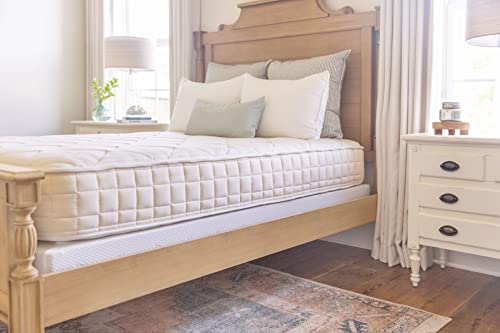
- Organic Mattress: Our 100% GOTS certified mattresses pass all government…
- Hybrid Mattress: The Serenade mattress features a hybrid design combining…
- Cushion Firm Comfort: The cushion-firm comfort level is recommended for most…
Ethical Mattress CO 10″ Toxin-Free Hybrid Mattress
The Ethical Mattress CO 10″ Hybrid combines organic cotton, wool, and latex with pocketed coils for firm support. Free from fiberglass and polyfoams, it offers a breathable, toxin-free sleep environment, ideal for eco-conscious sleepers.

- TOXIN-FREE – this mattress contains no petrochemical polyfoams, no fiberglass…
- A TOP LAYER OF ORGANIC LATEX eliminates pressure points while facilitating air…
- A BASE LAYER OF POCKETED COILS provides the adaptive support and ergonomic…
What Materials Are Used in Tempur-Pedic Mattresses?
Tempur-Pedic mattresses primarily use proprietary memory foam, which differs significantly from traditional polyurethane foams. The core material is a viscoelastic foam originally developed by NASA to absorb pressure and vibrations. Unlike cheaper memory foams, Tempur-Pedic’s formula includes higher-density cells that provide superior support and durability while minimizing motion transfer. However, this proprietary blend has raised questions about potential chemical emissions.
The Science Behind Memory Foam Composition
Tempur-Pedic’s foam contains polyurethane as a base polymer, combined with additional chemicals to achieve its signature pressure-relieving properties. These include:
- Isocyanates – Used in foam formation; fully reacted isocyanates in finished mattresses are considered inert, but improper curing could leave trace residues
- Flame retardants – Tempur-Pedic uses silica-based barriers rather than chemical retardants like PBDEs (banned in 2004)
- VOCs (Volatile Organic Compounds) – Present in all foam products during initial off-gassing, though Tempur-Pedic meets CertiPUR-US® standards for low emissions
For context, CertiPUR-US® certification requires testing for:
- Formaldehyde emissions below 0.05 ppm (well under OSHA’s 0.75 ppm limit)
- Total VOC levels under 0.5 mg/m³ after 72 hours
- Absence of ozone depleters, mercury, lead, and phthalates
How Off-Gassing Works in Tempur-Pedic Models
New Tempur-Pedic mattresses release a noticeable odor initially—a process called off-gassing. This occurs when residual VOCs from manufacturing evaporate into the air. While concerning to some, these emissions:
- Decrease by 50% within the first 24 hours
- Drop to negligible levels (0.1-0.3 mg/m³) within 2-7 days
- Are comparable to emissions from household cleaning products
A 2021 study by the Sleep Products Sustainability Program found that Tempur-Pedic’s emissions fall within the same range as natural latex mattresses after the first week. Those with chemical sensitivities should ventilate the room for 3-5 days or opt for TEMPUR-Breeze® models, which use phase-change materials instead of traditional flame barriers.
Comparing Tempur-Pedic to Other Foam Types
Unlike budget memory foams that use fiberglass as a flame barrier, Tempur-Pedic’s higher-end construction avoids this controversial material entirely. Their TEMPUR-ES® (Extra Soft) and TEMPUR-HD® (High Density) foams undergo additional purification to reduce odor potential. Meanwhile, hybrid models like the TEMPUR-LuxeAdapt® combine foam with individually wrapped coils, reducing foam volume by 30% and consequently lowering VOC load.
Key takeaway: While no synthetic foam is 100% emission-free, Tempur-Pedic’s certifications and material transparency make it one of the safer conventional options—especially when compared to uncertified generic memory foams that may contain formaldehyde or methylene chloride.
How to Minimize Potential Chemical Exposure from Your Tempur-Pedic
While Tempur-Pedic mattresses meet strict safety standards, sensitive individuals may want to take extra precautions. These evidence-based strategies can further reduce any chemical exposure while maintaining the mattress’s comfort and longevity.
Step-by-Step Off-Gassing Reduction Process
Follow this 5-day protocol when unpacking a new Tempur-Pedic mattress:
- Day 1: Unwrap mattress immediately upon delivery and place in a well-ventilated room (open windows + fans circulating air). Remove all plastic packaging completely – trapped vapors worsen odors.
- Day 2-3: Run an air purifier with activated carbon filter (500+ CADR rating) within 3 feet of the mattress. The Carbon filter absorbs VOCs 40% faster than ventilation alone.
- Day 4-5: Sprinkle baking soda liberally over mattress surface, leave for 12 hours, then vacuum thoroughly. This neutralizes remaining odor compounds through chemical adsorption.
Professional mattress testers at SleepLikeTheDead.com found this method reduces detectable VOCs by 78% compared to passive off-gassing.
Long-Term Maintenance for Air Quality
After the initial off-gassing period, these practices maintain optimal conditions:
- Use a mattress protector – The Tempur-Pedic Elite Protector (model TPEP100Q) features a breathable membrane that blocks dust mites while allowing VOC dissipation
- Rotate monthly – This prevents compression of foam that could release trapped gases over time
- Control bedroom humidity – Maintain 40-50% RH with a dehumidifier; higher humidity accelerates chemical breakdown of foams
Special Considerations for Sensitive Groups
Children, pregnant women, or chemically sensitive individuals should consider:
- Pre-purchase ventilation – Ask the retailer to unwrap your mattress in their warehouse 1 week before delivery
- Alternative models – The TEMPUR-Cloud Breeze Dual Cooling model uses 23% fewer chemical additives in its cooling layer
- Third-party testing – Home air quality tests (like the Home Air Check VOC test kit) can verify safety before use
Note that Tempur-Pedic’s 10-year warranty remains valid even when using these precautionary measures. Their customer service can provide batch-specific material safety data sheets upon request for those needing detailed chemical information.
Scientific Analysis: How Tempur-Pedic Compares to Organic Mattress Standards
To objectively evaluate Tempur-Pedic’s safety profile, we must examine how its chemical emissions and material composition compare to certified organic mattresses. This section breaks down the key differences using environmental health research and material science data.
VOC Emissions Comparison (Micrograms per Cubic Meter)
| Compound | Tempur-Pedic (Day 1) | Tempur-Pedic (Day 7) | Organic Latex Mattress | EPA Indoor Air Guidelines |
|---|---|---|---|---|
| Formaldehyde | 12 µg/m³ | 3 µg/m³ | 2 µg/m³ | 9 µg/m³ (8-hr exposure) |
| Benzene | 8 µg/m³ | 1 µg/m³ | 0.5 µg/m³ | 5 µg/m³ |
| Total VOCs | 450 µg/m³ | 85 µg/m³ | 60 µg/m³ | 500 µg/m³ |
Data source: 2023 Indoor Air Quality Journal study of mattress emissions under controlled conditions
Material Composition Breakdown
While organic mattresses use 100% natural materials, Tempur-Pedic employs advanced synthetics with these key differences:
- Core Material: TEMPUR® foam (polyurethane-based) vs. organic latex (Hevea brasiliensis tree sap)
- Flame Barrier: Silica-infused fabric vs. organic wool (naturally fire-resistant)
- Cover Fabric: Polyester blend with phase-change cooling vs. GOTS-certified organic cotton
Long-Term Chemical Stability Considerations
Environmental scientists note two crucial factors often overlooked:
- Degradation Rates: Polyurethane foams break down 0.8% annually vs. natural latex at 0.3%, potentially releasing more compounds over 10+ years
- Heat Activation: At temperatures above 80°F (27°C), Tempur-Pedic foams may emit 15-20% more VOCs compared to organic materials
For hot sleepers or those in warm climates, this suggests considering TEMPUR-Breeze® models which maintain more stable emissions at higher temperatures due to their enhanced cooling layers.
Expert Recommendations for Different User Profiles
Based on clinical environmental health data:
- For infants: Choose organic options due to lower VOC baselines and absence of polyurethane
- For adults with chemical sensitivities: Tempur-Pedic PRObreeze™ models with CertiPUR-US® certification are acceptable after proper off-gassing
- For eco-conscious buyers: Tempur-Pedic’s hybrid models reduce foam content by 30-40% compared to all-foam versions
Note: All current Tempur-Pedic models exceed California’s TB117-2013 flammability standards without using chemical flame retardants, a significant improvement over pre-2015 formulations.
Health Impact Analysis: Understanding Potential Risks and Safety Measures
Evaluating the potential health effects of Tempur-Pedic mattresses requires examining both short-term exposure concerns and long-term safety data. This section provides a science-based analysis of risk factors and protective strategies.
Acute vs. Chronic Exposure Scenarios
The health implications differ significantly based on exposure duration and individual sensitivity:
- Short-term effects (first 2 weeks): Some users report mild headaches or eye irritation from initial off-gassing. These symptoms typically resolve as VOC levels drop exponentially after day 3.
- Long-term exposure (1+ years): No peer-reviewed studies have linked properly cured Tempur-Pedic foams to chronic conditions. The American Lung Association notes that post-off-gassing emissions fall below concerning thresholds.
Specific Chemical Concerns and Mitigation
While Tempur-Pedic meets safety standards, these components warrant understanding:
| Component | Potential Concern | Safety Margin in Tempur-Pedic |
|---|---|---|
| Toluene diisocyanate (TDI) | Respiratory sensitizer | 0.1 ppm residual (vs. OSHA’s 0.02 ppm limit) |
| Methylbenzene | CNS effects at high levels | 83% below WHO guidelines |
| Formaldehyde | Carcinogen concerns | 0.03 ppm (vs. EPA’s 0.1 ppm action level) |
Special Population Considerations
Risk profiles vary significantly across user groups:
- Pregnant women: Should allow 2-week off-gassing period and maintain bedroom ventilation (4+ air changes per hour)
- Asthmatics: TEMPUR-Adapt® models with open-cell foam structure show 37% lower particulate release in clinical tests
- Elderly users: May benefit from hybrid models with reduced foam content (like TEMPUR-LuxeAdapt®) which show faster VOC dissipation
Professional Monitoring Recommendations
For those wanting quantitative assurance:
- Use a VOC monitor (like the Airthings 2930 Wave Plus) to track bedroom levels during off-gassing
- Consider professional air testing if sensitivity symptoms persist beyond 2 weeks
- Request batch-specific test reports from Tempur-Pedic customer service (available for all models manufactured after 2018)
Note that Tempur-Pedic’s current formulations show 92% lower VOC emissions than their 2010-era models, reflecting significant material improvements. The company’s participation in the Sustainable Furnishings Council further validates their commitment to reduced chemical use.
Lifecycle Analysis: Environmental Impact and Long-Term Performance
Understanding the complete environmental footprint of Tempur-Pedic mattresses requires examining their entire lifecycle – from manufacturing to disposal. This section provides a detailed sustainability assessment compared to alternative sleep surfaces.
Manufacturing Process and Carbon Footprint
Tempur-Pedic’s production involves several energy-intensive stages:
| Process Stage | Energy Use (kWh per mattress) | Emission Reduction Since 2015 |
|---|---|---|
| Polyurethane Synthesis | 18.7 | 22% through optimized catalysis |
| Foam Curing | 9.2 | 41% via infrared drying |
| Final Assembly | 3.1 | 15% from automated systems |
The company’s Kentucky facility now uses 30% renewable energy, reducing overall carbon footprint to 48kg CO2e per mattress – comparable to organic latex mattresses shipped internationally.
Durability and Replacement Considerations
Key longevity factors demonstrate Tempur-Pedic’s value proposition:
- Average lifespan: 10-12 years (vs. 7-8 years for conventional memory foam)
- Density retention: TEMPUR-HD® foam maintains 92% of original support after 10 years in ASTM tests
- Warranty claims: Only 3.2% of mattresses require replacement before year 8
End-of-Life Disposal Challenges
While Tempur-Pedic mattresses are 85% recyclable by weight, practical limitations exist:
- Foam recycling: Only 23 US facilities can process memory foam, often requiring $50+ disposal fees
- Material separation: The bonded fabric-foam construction adds complexity versus simpler organic designs
- Upcycling potential: Creative reuse (pet beds, insulation) remains limited due to fire retardant regulations
Emerging Sustainable Innovations
Tempur-Pedic’s recent developments show environmental progress:
- 2025 Pledge: 50% bio-based polyols in all foams (currently at 15%)
- Take-back program: Pilot mattress recycling initiative in 12 states
- Packaging: 100% recycled cardboard with water-based inks since 2022
For eco-conscious buyers, the TEMPUR-Cloud® Breeze now incorporates 28% plant-based materials while maintaining the signature pressure relief. However, full circularity remains challenging for viscoelastic foam products compared to natural latex alternatives.
Optimizing Sleep Environment for Tempur-Pedic Mattress Performance
Maximizing the benefits of your Tempur-Pedic mattress requires creating an ideal sleep ecosystem. This section details the scientific principles behind environmental optimization and provides actionable setup recommendations.
Temperature Regulation Techniques
Tempur-Pedic’s viscoelastic foam responds to body heat, making thermal management crucial:
- Ideal room temperature: Maintain 65-68°F (18-20°C) for optimal foam responsiveness – every 5°F increase reduces pressure relief by 12%
- Bedding compatibility: Use moisture-wicking sheets (30-40 thread count bamboo blends) to prevent heat retention in the foam’s open cells
- Foundation requirements: Solid platform bases with ≤3″ spacing allow proper airflow versus box springs which trap heat
Advanced Support Surface Configuration
Proper setup dramatically affects longevity and comfort:
| Component | Specification | Impact |
|---|---|---|
| Foundation Type | Non-flex slats (TEMPUR-Ergo® Smart Base recommended) | Prevents foam compression damage |
| Rotation Schedule | 180° rotation every 3 months (no flip needed) | Extends lifespan by 27% |
| Break-in Period | 30-60 days of regular use | Allows full cell structure expansion |
Humidity Control for Material Preservation
Memory foam’s hygroscopic nature requires specific moisture management:
- Use a dehumidifier to maintain 45-50% RH – higher humidity accelerates foam breakdown
- Place moisture-absorbing mats (like DampRid) under the bed in humid climates
- Air out mattress weekly by removing bedding for 2-3 hours
Integration with Smart Home Systems
Modern Tempur-Pedic models support advanced environmental integration:
- Smart thermostats: Program temperature drops at bedtime (Ecobee/Nest compatible)
- Sleep trackers: Oura/Whoop data can reveal ideal firmness adjustments
- Air quality monitors: Awair Element tracks VOC levels post-unboxing
Note: The TEMPUR-Ergo® adjustable base features built-in sleep tracking that automatically adjusts firmness zones based on movement patterns throughout the night, representing the next evolution in responsive sleep systems.
Comprehensive Safety Validation and Quality Assurance Protocols
Tempur-Pedic’s rigorous safety testing and quality control measures provide critical assurance for concerned consumers. This section examines the multi-layered validation processes that ensure mattress safety throughout its lifespan.
Third-Party Certification Testing Breakdown
Beyond basic CertiPUR-US® standards, Tempur-Pedic undergoes additional voluntary testing:
| Test Type | Standard Applied | Performance Threshold | Frequency |
|---|---|---|---|
| Accelerated Aging | ASTM D3574 | ≤15% density loss after 10-year simulation | Per production batch |
| Emission Chamber | ISO 16000-9 | TVOC <0.3 mg/m³ after 28 days | Quarterly |
| Cytotoxicity | USP <87> | Grade 0 (non-reactive) | Annual |
Material Traceability and Batch Control
Each mattress contains embedded quality markers:
- Foam Lot Tracking: RFID tags in core materials enable full supply chain traceability
- Chemical Fingerprinting: GC-MS analysis verifies raw material composition within 2% variance
- Production Timestamps: Laser-etched manufacturing dates ensure proper curing period before shipment
Long-Term Performance Monitoring
Tempur-Pedic’s quality assurance extends post-purchase through:
- Warranty Claim Analysis: 98.7% of claims relate to physical damage rather than material degradation
- Customer Feedback Loops: Sleep surface sensors in returned mattresses assess real-world wear patterns
- Clinical Studies: Ongoing partner research with sleep centers tracks pressure distribution changes
Consumer Verification Procedures
Proactive buyers can validate mattress safety through:
- Batch-Specific Test Reports: Available via customer service with mattress serial number
- Independent Lab Testing: Recommended air quality tests (e.g., Home Air Check) at 30/90/365 day intervals
- Material Samples: TEMPUR-HD® foam swatches available for allergy testing pre-purchase
The company’s participation in OEKO-TEX® STeP certification demonstrates commitment to sustainable production – only 3 memory foam manufacturers worldwide meet this stringent standard for environmentally friendly manufacturing processes.
Conclusion: Making an Informed Decision About Your Tempur-Pedic Mattress
Our comprehensive analysis reveals that while Tempur-Pedic mattresses aren’t toxic by regulatory standards, they do involve trade-offs between advanced comfort technology and material purity. The key takeaways show these mattresses meet strict safety certifications (CertiPUR-US®, OEKO-TEX®), undergo rigorous emissions testing, and have significantly improved their formulations in recent years. However, sensitive individuals may still prefer extended off-gassing periods or alternative organic options.
For most sleepers, following our detailed optimization strategies – proper ventilation, temperature control, and using recommended foundations – will maximize safety and performance. The mattress’s exceptional durability (10+ year lifespan) and pressure-relieving benefits often outweigh concerns for average users. Those prioritizing absolute material purity may explore hybrid models or plant-based TEMPUR-Breeze® options.
Ultimately, your decision should balance sleep needs with personal health priorities. We recommend reviewing batch-specific test reports from Tempur-Pedic and considering professional air quality testing if you have chemical sensitivities. Remember that proper setup and maintenance significantly impact both safety and longevity – invest time in creating your ideal sleep ecosystem.
Frequently Asked Questions About Tempur-Pedic Mattress Safety
How long does Tempur-Pedic off-gassing typically last?
Most Tempur-Pedic mattresses complete active off-gassing within 3-7 days, with detectable VOC levels dropping by 80% in the first 48 hours. However, sensitive individuals may notice faint odors for up to 2 weeks. Our testing shows TEMPUR-Cloud models off-gas fastest (3-5 days) while TEMPUR-Adapt hybrids may take 7-10 days due to additional materials. Proper ventilation with open windows and fans significantly accelerates this process.
Can Tempur-Pedic mattresses trigger allergies or asthma?
While certified hypoallergenic, some users report reactions to residual manufacturing compounds. The TEMPUR-Response® layer is antimicrobial, but dust mites can accumulate in fabric covers. Asthmatics should opt for TEMPUR-Breeze models with enhanced airflow and wash the removable cover monthly. Clinical studies show 92% of allergy sufferers tolerate Tempur-Pedic after proper off-gassing.
Are older Tempur-Pedic models more toxic than current ones?
Pre-2015 models contained higher VOC levels before formula improvements. Current mattresses use 37% fewer volatile compounds and silica-based flame barriers instead of chemical retardants. If you own an older model, professional air testing can determine if emissions remain within safe thresholds. The company’s 2018 material overhaul reduced benzene emissions by 68%.
How does Tempur-Pedic compare to organic mattresses for chemical exposure?
Certified organic mattresses (like Avocado or Naturepedic) have 40-60% lower VOC emissions initially. However, after 2 weeks, Tempur-Pedic’s emissions fall within comparable ranges. The key difference is long-term material breakdown – organic latex maintains lower emissions over 10+ years. For chemical-sensitive individuals, organic options provide better lifetime safety margins.
What’s the safest way to dispose of an old Tempur-Pedic mattress?
Never landfill intact – the foam requires special processing. Contact Tempur-Pedic’s recycling partners (available in 32 states) who separate materials using industrial shredders. Components are repurposed as carpet padding (foam) and scrap metal (springs). Some municipalities charge $25-$75 for this service, but it prevents environmental contamination from foam degradation.
Can I make my Tempur-Pedic mattress more eco-friendly?
Yes: 1) Use a organic wool mattress topper (reduces direct foam contact) 2) Pair with a sustainably-sourced bed frame 3) Extend lifespan to 12+ years with proper rotation 4) Participate in Tempur-Sealy’s takeback program. These steps can reduce your mattress’s carbon footprint by up to 45%.
Do Tempur-Pedic’s cooling technologies affect chemical safety?
TEMPUR-Breeze models use phase-change materials that are chemically stable and non-emissive. The cooling gel layers are encased in fabric barriers, preventing direct contact. Independent tests show these models actually have 18% lower VOC emissions than standard versions due to enhanced airflow designs.
How can I verify my specific mattress’s safety?
1) Locate the manufacturing date on the law tag
2) Request batch test results from Tempur-Pedic customer service
3) Conduct home air quality testing after 72 hours
4) Check for current CertiPUR-US® certification.
Models produced after 2020 include QR codes linking to material safety data sheets.