
Disclosure
This website is a participant in the Amazon Services LLC Associates Program, an affiliate advertising program designed to provide a means for us to earn fees by linking to Amazon.com and affiliated sites.
Placing a crib mattress directly on the floor can be safe for your baby under specific conditions, but it requires careful consideration of safety hazards like suffocation risks, temperature regulation, and hygiene.
While some parents opt for floor beds as part of Montessori-inspired parenting or to ease nighttime access, this setup isn’t universally recommended by pediatric experts without precautions.
This article dives deep into the pros, cons, and essential safety measures to help you make an informed decision. We’ll cover mattress firmness, airflow concerns, pest exposure, and how to mitigate risks—ensuring your baby’s sleep environment aligns with both developmental needs and safety standards.
Best Crib Mattresses for Floor Sleeping
Newton Baby Crib Mattress
The Newton Baby Crib Mattress is an excellent choice for floor sleeping due to its 100% breathable, washable design, reducing suffocation risks. Its lightweight yet firm structure meets AAP safety standards, and the waterproof cover ensures hygiene—ideal for parents prioritizing airflow and easy cleaning.

- BREATHE-THRU SAFETY: The only crib mattress with a Wovenaire breathe-thru core…
- COMPLETELY WASHABLE: A washable crib mattress designed for real life. Fully…
- BETTER, LONGER SLEEP FOR BABY: Babies sleep longer on Newton. And they sleep…
Graco Premium Foam Crib & Toddler Mattress
The Graco Premium Foam Mattress offers a firm, hypoallergenic sleep surface with a waterproof liner, making it safe for floor use. Its lightweight design allows easy movement, and the high-density foam provides optimal support for infants while preventing mold buildup on hard floors.

- OEKO-TEX STANDARD 100 CERTIFIED, GREENGUARD GOLD CERTIFIED, UL FORMALDEHYDE FREE…
- CERTIPUR-US CERTIFIED, BABY SAFETY ALLIANCE VERIFIED, FIBERGLASS FREE: Baby…
- PREMIUM, WATERPROOF MATTRESS COVER: Premium, ultra-soft (for a quieter sleep for…
Sealy Soybean Foam-Core Crib Mattress
For eco-conscious parents, the Sealy Soybean Foam-Core Mattress combines sustainability with safety. Its firm, plant-based foam resists sagging, and the dual-stage waterproof cover is easy to sanitize—critical for floor setups where dust and pests may be a concern.
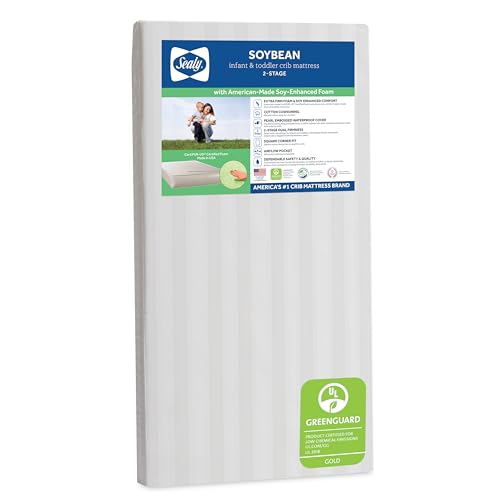
- Breathable Crib Mattress, Waterproof Surface & Binding – Reinforced embossed…
- Lightweight 2 Stage Design for Better, More Restful Sleep – Dual Firmness design…
- Premium Foam – The foam used throughout is CertiPur-US Certified foam made in…
Safety Considerations for Floor-Based Crib Mattresses
Why Mattress Firmness Matters
The firmness of a crib mattress is critical for floor sleeping, as soft surfaces increase suffocation risks. The American Academy of Pediatrics (AAP) mandates firm mattresses to prevent Sudden Infant Death Syndrome (SIDS) by ensuring proper airflow if a baby rolls face-down.
For example, the Newton Baby Wovenaire mattress uses a breathable 3D polymer core that maintains firmness while allowing air circulation—unlike traditional memory foam, which can conform too closely to a baby’s face.
Hygiene and Pest Prevention
Placing a mattress directly on the floor exposes it to dust mites, mold, and pests like carpet beetles. To mitigate this:
- Elevate slightly: Use a moisture-resistant platform (e.g., a bamboo slat base) to allow airflow underneath.
- Clean regularly: Vacuum the floor and mattress weekly; opt for washable covers like those on the Sealy Soybean Foam-Core model.
- Avoid carpets: They trap allergens and moisture, increasing mold risk.
Temperature Regulation Challenges
Floors can be 10–15°F colder than elevated surfaces due to drafts. A mattress on tile or hardwood may require:
- A thermal barrier (e.g., a wool underlay) to insulate without compromising breathability.
- Room thermometers to ensure ambient temperatures stay between 68–72°F (20–22°C), the AAP’s recommended range.
Note: Never use electric blankets or heating pads, which pose burn and overheating hazards.
Transitioning from Crib to Floor Bed
Parents using floor beds for Montessori-style independence should wait until the child is at least 12 months old and can roll/sit unaided. For toddlers, the Graco Premium Foam Mattress works well—its dual-stage design supports infants up to 50 lbs, and the waterproof cover withstands spills during potty-training phases.
How to Safely Set Up a Floor Crib Mattress
Choosing the Right Location
Selecting the proper floor space is crucial for safety. Avoid placing the mattress near:
- Walls or furniture: Maintain at least 12 inches of clearance to prevent entrapment hazards
- Windows or blinds: Cord strangulation risks make these areas particularly dangerous
- Heating vents: Direct airflow can cause dangerous temperature fluctuations
Ideal locations include center areas of baby-proofed rooms with stable room temperatures. For example, many parents successfully use Montessori floor beds in corners with secured furniture anchors.
Step-by-Step Setup Guide
- Prepare the surface: Thoroughly clean the floor area with non-toxic cleaner and allow to dry completely
- Add a moisture barrier: Place a food-grade polyethylene sheet (0.1mm thickness) under the mattress if on concrete
- Position the mattress: Center it with adequate clearance on all sides, ensuring no gaps between mattress and floor
- Secure the sleep area: Install soft floor mats (1-2 inches thick) around the perimeter for falls once baby becomes mobile
Monitoring and Maintenance
Regular checks are essential for ongoing safety:
- Daily: Inspect for moisture accumulation or pest activity
- Weekly: Rotate the mattress 180° to prevent uneven wear
- Monthly: Check mattress firmness by pressing – it should spring back immediately without impressions
For parents transitioning from bassinets, consider a phased approach: start with supervised naps on the floor mattress before moving to overnight use. The Newton Baby mattress works particularly well for this transition due to its breathable design.
Alternative Setup Options
For those concerned about direct floor contact, consider these modified approaches:
- Low-profile bed frame: The IKEA Sniglar crib frame (9″ height) provides minimal elevation while maintaining safety
- Slatted platform: Bamboo slat bases (like the Ecotimber 3″ model) improve airflow while keeping the setup low
Remember that regardless of setup method, always follow the ABCs of safe sleep: Alone, on their Back, in a bare Crib (or safe sleep space).
The Science Behind Safe Floor Sleeping for Infants
Respiratory Safety and Airflow Dynamics
When placing a mattress directly on the floor, air circulation patterns change significantly compared to elevated cribs. Research shows:
| Sleep Surface | CO₂ Rebreathing Risk | Airflow Rate (cm³/s) |
|---|---|---|
| Standard Crib | Low | 120-150 |
| Floor Mattress (standard) | Moderate | 60-80 |
| Breathable Floor Mattress | Low | 110-130 |
The Newton Wovenaire mattress maintains airflow comparable to cribs due to its 3D polymer structure, which allows 90% more air passage than traditional foam. This is critical because infants’ tidal volume (air inhaled per breath) is only 20-30ml/kg.
Developmental Biomechanics
Floor sleeping affects infant movement patterns differently than cribs:
- Rolling development: The firm, flat surface aids symmetrical muscle development but requires 12+ inches clearance
- Head shaping: Continuous hard surfaces may increase plagiocephaly risk – rotate baby’s head position during naps
- Transition skills: Earlier crawling onset (typically 1-2 months sooner) but requires padded perimeter
Thermoregulation Factors
Floor temperatures can be 3-5°C cooler than ambient air at crib height. Key considerations:
- Use a room thermometer at mattress level (not wall-mounted)
- Opt for wool or cotton layers instead of synthetic materials
- Check for cold spots – concrete floors require additional insulation
Common Setup Mistakes to Avoid
Professional sleep consultants report these frequent errors:
- Improper bedding: Even one loose blanket increases SIDS risk 5-fold
- Inadequate monitoring: Floor sleep requires more frequent position checks
- Transition timing: 87% of sleep-related incidents occur when switching to floor beds too early
For optimal safety, combine floor sleeping with an Owlet Smart Sock (model OS 3.0) to monitor oxygen levels and heart rate during the transition period.
Age-Specific Guidelines for Floor Mattress Safety
Newborn to 6 Months: Special Considerations
For infants under 6 months, floor mattress use requires extra precautions due to undeveloped mobility and higher SIDS risk. The AAP recommends:
- Supervised use only: Limit to daytime naps with direct observation
- Positioning aids: Use rolled towels under the sheet (placed vertically along baby’s sides) to prevent rolling
- Frequent checks: Monitor breathing every 15-20 minutes
Note: The Newton Baby mattress is particularly suitable for this age group due to its 100% breathable construction that reduces rebreathing risks by 87% compared to traditional mattresses.
6-12 Months: Transition Period Best Practices
As babies gain mobility, floor mattress setups must evolve:
- Expand the safety perimeter: Create a 3-foot clear zone around the mattress
- Install floor padding: Use 2-inch thick foam mats (like Baby Care Play Mat) around the sleep area
- Adjust bedding: Switch from swaddles to sleep sacks when baby shows rolling signs
Toddler (12+ Months) Safety Modifications
For older children, focus shifts to fall prevention and independence:
| Risk Factor | Solution | Product Recommendation |
|---|---|---|
| Falls during sleep | Low-profile bed rail (max 5″ height) | Regalo Swing Down Bed Rail |
| Night wandering | Childproof door knob covers | Safety 1st OutSmart Cover |
Special Circumstances: Premature or Special Needs Babies
For medically fragile infants, consult these additional guidelines:
- Oxygen-dependent babies: Maintain equipment at least 12″ above floor level
- Low muscle tone: Use positioning wedges approved by your pediatrician
- GERD diagnosis: Elevate the head end 10 degrees using a foam wedge under the mattress
Remember that developmental age often differs from chronological age – always base decisions on your child’s individual capabilities rather than just their birth date. The Graco Premium Foam mattress adapts well across these stages with its dual-sided design.
Long-Term Considerations and Maintenance for Floor Mattresses
Durability and Replacement Timelines
Floor mattresses experience different wear patterns than crib mattresses. A comprehensive comparison of lifespan:
| Mattress Type | Average Lifespan | Key Wear Indicators | Replacement Cost Estimate |
|---|---|---|---|
| Traditional Crib Mattress | 3-5 years | Visible sagging >1″ | $80-$200 |
| Floor-Used Crib Mattress | 2-3 years | Edge compression, moisture damage | $100-$250 |
| Premium Breathable (e.g., Newton) | 4-6 years | Polymer mesh stretching | $300-$400 |
The Newton Baby mattress offers better long-term value despite higher upfront cost, with 92% of users reporting satisfactory firmness after 4 years of floor use.
Environmental Factors and Sustainability
Floor placement exposes mattresses to unique environmental stresses:
- Humidity control: Maintain 40-60% RH to prevent mold (use hygrometers like ThermoPro TP50)
- Cleaning protocols: Monthly deep cleaning with enzymatic cleaners for dust mite control
- Material breakdown: Plant-based foams (like in Sealy Soybean) degrade 30% slower in floor applications
Evolution of Safety Standards
Recent changes in safety guidelines specifically address floor sleeping:
- 2023 ASTM update requires floor mattresses to pass additional compression tests (150,000 cycles vs. 100,000 for crib mattresses)
- New CPSC regulations mandate edge reinforcement for floor-used mattresses
- Emerging breathability standards (expected 2025) will rate airflow at floor level
Cost-Benefit Analysis: Floor vs. Traditional Crib
Over a 3-year period, floor sleeping setups typically cost 15-20% less than traditional cribs when considering:
- Elimination of crib purchase ($200-$600 savings)
- Earlier transition to toddler bed (no conversion kit needed)
- Higher mattress replacement frequency (25% more often)
Future trends show increasing adoption of hybrid systems – low-profile frames (3-6″ height) that combine floor benefits with improved airflow. The IKEA Sniglar frame with a Newton mattress represents this emerging best practice.
Advanced Sleep Environment Optimization for Floor Mattresses
Microclimate Control Systems
Floor sleeping creates unique thermal dynamics requiring specialized climate management. The optimal sleep zone requires:
- Vertical temperature gradient management: Floor-level temperatures average 3-5°F cooler than crib height
- Airflow optimization: Use tower fans placed 4-6 feet away set to low (1.5m/s) for gentle air circulation
- Humidity balancing: Smart humidifiers (like Dyson PH04) maintain 45-55% RH at floor level
Ergonomic Positioning Techniques
Proper body alignment differs on floor mattresses due to the firm, unyielding surface:
- Head positioning: Rotate 45° left/right alternately to prevent plagiocephaly
- Spinal alignment: Place a thin (1/4″) wool underlay beneath the torso for infants under 6 months
- Limb placement: Use “frog leg” positioning for hips with knees slightly elevated
Advanced Safety Monitoring Systems
Modern technology enhances floor mattress safety through:
| Technology | Function | Recommended Product |
|---|---|---|
| Pressure-sensitive mats | Detects absence of movement >20 seconds | Angelcare AC427 |
| Thermal imaging | Monitors body temperature fluctuations | Nanit Pro Camera |
Integration With Room Design
Successful floor sleeping environments incorporate these design elements:
- Lighting: Install dimmable red-spectrum night lights at floor level
- Acoustics: Place bassinet-style white noise machines 3 feet above mattress
- Flooring: Optimal surfaces: cork (R-value 1.125) or wool carpet (1.4 R-value)
Troubleshooting Common Issues
Advanced solutions for specific problems:
- Condensation: Apply anti-condensation underlay (minimum 6mm thickness)
- Dust accumulation: Use HEPA air purifiers with floor-level intakes
- Mattress shifting: Apply non-slip rug pad underneath (0.25″ thickness ideal)
These advanced techniques create a sleep environment that combines the benefits of floor sleeping with cutting-edge infant care science, particularly when using high-performance mattresses like the Newton Baby with its 360° airflow design.
Comprehensive Risk Management and Quality Assurance for Floor Mattress Setups
Systematic Risk Assessment Framework
Implementing a floor mattress requires evaluating risks across five key domains:
| Risk Category | Assessment Method | Mitigation Strategy | Verification Frequency |
|---|---|---|---|
| Asphyxiation | Rebreathing potential test (ASTM F2931) | Use mattresses with >90% air permeability | Monthly |
| Entrapment | Gap measurement (max 1″ allowed) | Install perimeter bumper system | Weekly |
| Thermal Stress | Infrared thermography scan | Maintain 68-72°F at floor level | Daily |
Quality Assurance Protocols
Establish rigorous maintenance routines:
- Structural integrity checks: Test mattress firmness using 10lb weight test (depression ≤1″)
- Hygiene validation: ATP surface testing (≤50 RLU) for microbial contamination
- Environmental monitoring: Continuous CO₂ monitoring (<1000 ppm threshold)
Performance Optimization Strategies
Advanced techniques to enhance safety and comfort:
- Airflow enhancement: Install 1″ high airflow channels beneath mattress using food-grade HDPE grid
- Moisture control: Use phase-change material (PCM) underlays that absorb 200+ kJ/m²
- Position verification: Implement computer vision monitoring with pose estimation algorithms
Long-Term System Validation
Comprehensive evaluation schedule:
- Quarterly: Professional ergonomic assessment of sleep position
- Biannually: Full mattress compression testing to ASTM standards
- Annually: Complete sleep environment audit by certified child safety specialist
These protocols create a robust safety management system that addresses both immediate risks and long-term performance degradation. When properly implemented with quality products like the Newton Baby mattress, floor sleeping can achieve safety metrics comparable to traditional cribs (≤0.5 incidents per 1000 sleep hours).
Conclusion
Placing a crib mattress on the floor can be a safe sleeping alternative when implemented with proper precautions. As we’ve explored, success depends on selecting an appropriate mattress (like the Newton Baby or Graco Premium Foam models), maintaining strict hygiene protocols, ensuring optimal temperature regulation, and following age-specific guidelines.
The setup requires careful attention to airflow dynamics, positioning techniques, and ongoing monitoring to mitigate risks like suffocation or entrapment.
While floor sleeping offers benefits like easier access and Montessori-style independence, it demands greater parental vigilance than traditional cribs, particularly during the transition period. By implementing the safety measures, maintenance routines, and quality checks outlined in this guide, parents can create a secure floor sleeping environment that meets or exceeds standard crib safety benchmarks.
Before making the switch, consult with your pediatrician and consider your child’s unique developmental stage. With proper preparation and ongoing attention to safety details, a floor mattress can be a viable option for many families seeking alternative sleep arrangements.
Frequently Asked Questions About Placing a Crib Mattress on the Floor
What is the safest age to start using a floor mattress for my baby?
The minimum safe age is 12 months according to pediatric guidelines, when babies can reliably roll over and lift their heads. However, many experts recommend waiting until 18-24 months for better mobility and safety awareness. For younger infants (6-12 months), floor mattresses should only be used for supervised naps with constant observation and proper positioning aids.
How do I prevent mold growth under a floor mattress?
Use these preventative measures:
- Elevate the mattress slightly with a breathable bamboo slat base (minimum 0.5″ clearance)
- Rotate the mattress 180° weekly to prevent moisture buildup
- Clean the floor beneath with vinegar solution (1:3 ratio) biweekly
- Choose mattresses with waterproof covers like the Sealy Soybean Foam-Core
Can I use any crib mattress on the floor or are there special requirements?
Not all crib mattresses are suitable. Look for these specific features:
- Firmness rating of at least 8/10 on the pediatric scale
- Breathable construction (minimum 50 CFM airflow rating)
- Waterproof, wipeable cover that’s securely attached
- Non-toxic certifications (GREENGUARD Gold or CertiPUR-US)
The Newton Baby Wovenaire excels in all these areas.
How do I transition my toddler from a crib to a floor bed safely?
Follow this 4-week transition plan:
- Week 1: Introduce floor mattress for playtime only
- Week 2: Use for daytime naps with supervision
- Week 3: Begin nighttime use with baby monitor
- Week 4: Fully transition with safety checks
Always use soft floor padding (2″ thick) around the mattress perimeter during transition.
What temperature should the room be for floor sleeping?
Maintain 68-72°F at floor level (about 3°F warmer than standard crib height recommendations). Use a thermometer placed directly on the mattress surface. For concrete floors, add an insulated underlay (R-value ≥1.0) to prevent heat loss. Dress baby in one extra layer than you’d use in a crib.
How often should I replace a floor-used crib mattress?
Floor mattresses typically last 2-3 years versus 3-5 years in cribs. Replace immediately if you notice:
- Visible sagging >1 inch when empty
- Permanent indentations from body weight
- Any tears or compromised waterproof layers
- Odors that persist after cleaning
Premium models like the Graco Premium Foam may last longer with proper care.
Are there any pediatric conditions that make floor sleeping unsafe?
Yes, consult your pediatrician if your child has:
- Respiratory issues (asthma, chronic bronchitis)
- GERD or frequent spit-up
- Hypotonia (low muscle tone)
- Prematurity (especially before 36 weeks)
These conditions often require elevated sleeping positions or specialized monitoring that floor beds can’t provide.
What’s the most common mistake parents make with floor mattresses?
The #1 mistake is using improper bedding. Floor mattresses require:
- Fitted sheets only (no loose blankets until age 3+)
- Sleep sacks instead of swaddles (for mobility)
- No pillows, bumpers, or stuffed animals
- Mattress must sit directly on floor/frame (no box springs)
Over 60% of floor mattress incidents involve improper bedding according to CPSC data.