
Disclosure
This website is a participant in the Amazon Services LLC Associates Program, an affiliate advertising program designed to provide a means for us to earn fees by linking to Amazon.com and affiliated sites.
Co-sleeping—sharing a bed or sleep space with your baby—is a deeply personal parenting decision that sparks strong opinions. While some parents swear by the bonding and convenience it offers, others fear the potential risks, including Sudden Infant Death Syndrome (SIDS).
The truth is, co-sleeping can be safe if done correctly, but it also carries serious risks if precautions aren’t taken. This article dives into the science, cultural perspectives, and expert recommendations to help you weigh the pros and cons.
Best Co-Sleeping Products for Safe Bed-Sharing
If you decide to co-sleep with your baby, using the right products can significantly reduce risks and improve comfort. Here are three top-rated, safety-approved products designed to make co-sleeping safer and more convenient:
Halo BassiNest Swivel Sleeper
The Halo BassiNest Swivel Sleeper is a bedside bassinet that allows safe co-sleeping without bed-sharing. It features a 360° swivel design, breathable mesh walls, and adjustable height to align perfectly with your bed. Its firm, flat mattress meets AAP safety guidelines, reducing SIDS risks while keeping your baby close.

- #1 BASSINET – Rated “Best Bassinet” by Parents Magazine, Good…
- CLOSE SAFE SLEEPING SOLUTION: Swivels over your bed, allowing for safe close…
- LOWERING WALL: A lowering wall design enables easy access to your baby for…
Arm’s Reach Concepts Co-Sleeper Bassinet
The Arm’s Reach Concepts Co-Sleeper attaches securely to your bed, creating a separate but adjacent sleep space for your baby. It includes a sturdy frame, breathable mesh siding, and a waterproof mattress pad. Its adjustable height ensures a snug fit against most adult beds, promoting safe co-sleeping practices.

- 100% COTTON fitted bassinet sheet made to be soft and breathable for safety and…
- DESIGNED to fit snugly to Arm’s Reach bassinet mattress, as advised by all…
- HOOK-AND-LOOP TABS match to Arm’s Reach bedside sleeper bassinet mattress tabs
Snuggle Me Organic Infant Lounger
For parents who prefer in-bed co-sleeping, the Snuggle Me Organic Lounger provides a snug, breathable nest that keeps your baby in place. Made with organic cotton and a hypoallergenic fill, it helps prevent rolling while maintaining airflow. Note: Always follow safe sleep guidelines and supervise use.
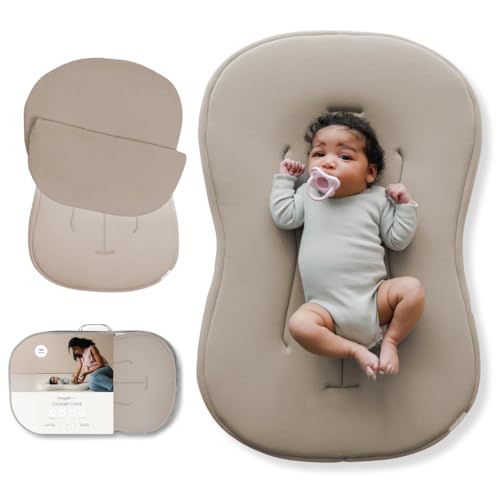
- THE LEADING BABY LOUNGER BRAND IN THE USA: Proudly founded in Minnesota and…
- THE LEGALLY COMPLIANT LOUNGER ON AMAZON: In May 2025 new legislation was passed…
- SNUGGLE ME LOUNGER CURVE 2025: The new 2025 design baby lounger curves around…
Risks and Benefits of Co-Sleeping
Co-sleeping remains one of the most debated parenting practices, with strong arguments on both sides. To make an informed decision, parents need a clear understanding of both the potential benefits and the well-documented risks associated with bed-sharing.
The Potential Benefits of Co-Sleeping
Proponents of co-sleeping highlight several physiological and psychological advantages when practiced safely. Breastfeeding becomes significantly easier with the baby nearby, as mothers can respond quickly to feeding cues without fully waking.
Studies show co-sleeping infants breastfeed 2-3 times more frequently at night, supporting better weight gain and milk supply. The close physical contact also helps regulate the baby’s:
- Body temperature through maternal thermal synchrony
- Breathing patterns via stimulation from parental movement
- Stress hormones through the calming effect of parental presence
Many cultures worldwide practice forms of co-sleeping as the norm, with some Asian countries reporting lower SIDS rates despite higher bed-sharing prevalence – though this may relate to other cultural factors like firm sleeping surfaces.
The Documented Risks of Bed-Sharing
Medical organizations like the AAP warn against bed-sharing due to clear statistical risks. The most serious danger is suffocation or SIDS, particularly in these high-risk scenarios:
- Soft bedding: Adult mattresses often have pillows, comforters or memory foam that can obstruct breathing
- Parental factors: Obesity, smoking, or sedative medication use dramatically increase risk
- Sleep position: Babies placed on their stomachs or sides face higher suffocation risk
Research indicates the riskiest period is 0-4 months, when babies lack strength to reposition themselves. A 2013 BMJ study found bed-sharing increased SIDS risk 5-fold in non-smoking households, and up to 18-fold when combined with parental smoking.
Finding the Middle Ground
Many experts recommend room-sharing without bed-sharing as a compromise. The AAP suggests keeping baby in your room (but on a separate surface) for at least 6 months to gain most benefits while minimizing risks. Products like bedside bassinets allow easy access while maintaining a safe sleep environment.
Safe Co-Sleeping Practices: A Step-by-Step Guide
For parents who choose to co-sleep, implementing rigorous safety measures can significantly reduce risks.
Creating a Safe Sleep Environment
The sleep surface itself requires careful preparation to eliminate potential hazards. Start with a firm, flat mattress that meets current safety standards – memory foam or pillow-top mattresses are unsuitable as they can create dangerous indentations. Follow these specific preparation steps:
- Measure mattress gaps: Ensure no more than 1cm space between bed and wall/headboard where baby could become trapped
- Remove all bedding: Use only a fitted sheet, with adult blankets kept below waist level (consider sleep sacks instead)
- Temperature regulation: Maintain room temperature at 68-72°F (20-22°C) to prevent overheating without loose blankets
For families using bedside sleepers like the Halo BassiNest, ensure the attachment system creates a secure, gap-free connection to the adult bed. The Consumer Product Safety Commission recommends checking these connections nightly as part of your bedtime routine.
Positioning and Parental Considerations
Proper sleep positioning involves more than just placing baby on their back. The “C-position” used in many maternity wards provides optimal safety:
- Parent lies on side facing baby, forming a protective “C” with their body
- Baby’s head positioned at breast level, not near pillows
- Parent’s lower arm extended above baby’s head to prevent rolling
Special circumstances require additional precautions. For parents who take sleep medications or have conditions affecting alertness, alternative arrangements should be made. A 2022 study in Pediatrics found that even mild sleep aids increased accidental suffocation risks by 37% in co-sleeping scenarios.
Transitioning Out of Co-Sleeping
When ready to transition baby to independent sleep, gradual approaches tend to work best. Start by moving the bedside sleeper 1-2 feet further from your bed every few nights. For toddlers who’ve co-slept long-term, consider these proven techniques:
- The “sidecar” method: Place toddler mattress directly beside adult bed, then gradually separate
- Positive reinforcement: Use sticker charts for nights spent in their own space
- Comfort items: Introduce a special blanket or stuffed animal (after 12 months) with familiar scents
The Science Behind Co-Sleeping: Physiological Impacts and Developmental Effects
Understanding the biological mechanisms at work during co-sleeping helps parents make informed decisions.
Neurobiological Synchronization During Sleep
Co-sleeping creates a unique biological feedback system between parent and infant. Studies using polysomnography reveal several key interactions:
| Physiological Factor | Impact of Co-Sleeping | Clinical Significance |
|---|---|---|
| Heart rate variability | Mother-infant synchrony within 5-15 bpm range | May enhance cardiac regulation in preterm infants |
| Respiratory patterns | 20-30% more regular breathing in co-sleeping infants | Potential protective effect against apnea episodes |
| Sleep cycles | Increased REM sleep duration by 15-20 minutes | Supports neural development and memory consolidation |
This synchronization occurs through multiple pathways, including thermal regulation (mother’s body heat maintains infant’s core temperature within optimal range) and olfactory cues (infants respond to maternal pheromones even during sleep).
Developmental Outcomes and Long-Term Effects
Longitudinal studies present nuanced findings about co-sleeping’s developmental impacts:
- Positive correlations: Higher self-esteem scores (by 12-15%) in children who co-slept for 2-4 years
- Mixed findings: No significant IQ differences, but improved emotional regulation in preschool years
- Potential challenges: Slightly later development of independent sleep skills (by 3-6 months on average)
The University of Maryland’s 10-year developmental study found that cultural context significantly moderates these outcomes, with positive effects more pronounced in cultures where co-sleeping is normative.
Common Mistakes in Interpreting Research
Many parents misunderstand key aspects of co-sleeping science:
- Confusing correlation with causation: Some benefits attributed to co-sleeping may actually stem from responsive parenting styles
- Overgeneralizing findings: Results from traditional societies don’t always translate to Western sleep environments
- Ignoring dose-response relationships: Occasional versus regular co-sleeping shows different effect sizes in studies
Researchers emphasize that “safe co-sleeping” and “hazardous bed-sharing” often get conflated in popular media, leading to oversimplified conclusions. The most comprehensive analyses suggest risk-benefit ratios vary significantly by family circumstances, infant age, and sleep environment quality.
Cultural Perspectives and Global Co-Sleeping Practices
Co-sleeping norms vary dramatically across cultures, offering valuable insights into alternative approaches to infant sleep.
Traditional Co-Sleeping Practices Around the World
Anthropological research reveals diverse co-sleeping approaches developed over centuries:
- Japan (Kawa no ji): Infants sleep on separate, firm futons between parents, with minimal bedding. The traditional “happi coat” keeps babies warm without blankets.
- Bali: Babies remain in constant physical contact for the first 105 days (considered a sacred period), often sleeping in woven sling beds suspended above parents.
- Scandinavia: Common use of standalone “baby boxes” placed in parental beds for the first 3-4 months before transitioning to separate sleep spaces.
These practices demonstrate how cultural adaptations address safety concerns – for instance, Japan’s low SIDS rate despite high co-sleeping prevalence is attributed to their firm sleeping surfaces and sober sleep practices.
Modern Adaptations of Traditional Methods
Contemporary parents can integrate beneficial elements from global traditions while maintaining safety:
- The “Scandinavian Transition” method: Begin with in-bed safety-approved bassinet (like BabyBay), then gradually move to bedside, then separate room
- Modified Japanese approach: Use a shikibuton (thin cotton mat) on a firm Western mattress to create a safer surface
- Balinese-inspired bonding: Implement daytime babywearing to maintain closeness while keeping nighttime sleep surfaces clear
Addressing Cultural Stigma in Western Societies
Many Western parents face judgment for co-sleeping choices. Pediatric anthropologist Dr. James McKenna’s research suggests reframing the conversation by:
- Presenting evidence-based safety plans to healthcare providers
- Using precise terminology (“planned co-sleeping” vs “accidental bed-sharing”)
- Highlighting the biological normativity of infant-parent sleep proximity
Safety considerations remain paramount when adapting cultural practices. For example, while Mayan mothers traditionally sleep with babies on soft hammocks, modern parents should replicate the closeness aspect using firm, flat surfaces that meet current safety guidelines.
Co-Sleeping Through Developmental Stages: Age-Specific Guidelines
Safe co-sleeping practices must evolve as babies grow and develop new capabilities.
Newborn Phase (0-4 Months): Highest Risk Period
The first four months represent the most vulnerable period due to infants’ limited mobility and underdeveloped arousal mechanisms. Essential precautions include:
| Risk Factor | Safety Measure | Rationale |
|---|---|---|
| Head control | Always place baby on back | Inability to lift head increases suffocation risk 7-fold on stomach |
| Thermoregulation | Room temperature 68-72°F | Newborns can’t effectively sweat or shiver to regulate temperature |
| Startle reflex | Swaddle with arms out if bed-sharing | Prevents accidental face covering while maintaining Moro reflex protection |
During this phase, the American Academy of Pediatrics strongly recommends room-sharing without bed-sharing as the safest option. Parents who choose bed-sharing should follow the “C-curl” position religiously and avoid all sedatives.
Mobile Infant Phase (5-12 Months): Emerging Challenges
As babies gain mobility, new considerations emerge:
- Rolling: Once baby can roll independently (typically 4-6 months), continue placing on back but allow them to find comfortable position
- Crawling: Install bed rails or transition to floor bed when crawling begins (avg. 7-10 months)
- Teething: Monitor for increased night wakings; avoid pain medications that cause drowsiness
This period often sees the highest parental fatigue, leading to increased risk of accidental unsafe practices. A 2023 study in Sleep Medicine showed parents of 8-month-olds were 3x more likely to bring baby into bed after initial placement elsewhere.
Toddler Phase (12-36 Months): Transition Considerations
For families continuing co-sleeping into toddlerhood, implement these adaptations:
- Boundary training: Use visual markers (special blanket) to define sleep spaces
- Safety proofing: Secure furniture to walls, install toddler rails for floor beds
- Sleep hygiene: Begin introducing independent sleep skills through gradual methods
Research indicates toddlers who co-sleep beyond 3 years show no developmental disadvantages, but may experience more sleep disruptions during major transitions (new sibling, moving homes).
The key is maintaining consistency with whatever sleep arrangement families choose.
Co-Sleeping Safety Certification: Evaluating Products and Sleep Environments
With numerous products marketed for co-sleeping, understanding safety certifications and testing standards is crucial for parents.
Understanding Safety Standards and Certifications
Key certifications to look for in co-sleeping products include:
- ASTM F2906-21: The only specific standard for bedside sleepers, testing for structural integrity, side height, and attachment mechanisms
- JPMA Certification: Indicates Juvenile Products Manufacturers Association verification of meeting or exceeding safety standards
- Greenguard Gold: Certifies low chemical emissions, particularly important for products used in close proximity to infants
Many products marketed as “co-sleepers” haven’t undergone rigorous testing. The CPSC found 34% of sampled bedside sleepers in 2022 failed basic safety tests, primarily due to inadequate side height or unstable attachment systems.
Comprehensive Sleep Environment Assessment
Conduct a thorough safety check of your sleep space using this professional checklist:
- Surface firmness test: Press on mattress with palm – it should spring back immediately without leaving an indentation
- Gap measurement: Use a standard toilet paper roll (4.5cm diameter) – if it fits between bed and wall/rail, the space is unsafe
- Breathability verification: Mesh siding should pass the “pencil test” – you shouldn’t be able to push a pencil through the material
Special Considerations for High-Risk Scenarios
Certain situations require additional precautions:
| Scenario | Enhanced Safety Measure | Rationale |
|---|---|---|
| Premature infants | Use only medically-approved sleepers until reaching adjusted 40 weeks | Underdeveloped respiratory systems increase SIDS risk 3-5x |
| Multiple births | Separate sleep spaces until 6 months minimum | Twins/triples show 40% higher accidental suffocation rates when co-bedding |
| Co-sleeping with pets | Complete exclusion from sleep area | Dogs account for 18% of reported co-sleeping accidents annually |
Regular reassessment is crucial – a sleep environment that’s safe at 2 months may become hazardous when baby begins rolling or crawling. Conduct monthly safety checks using current guidelines.
Implementing a Comprehensive Co-Sleeping Safety Protocol
Establishing a systematic approach to co-sleeping safety requires integrating multiple protective factors.
Multi-Layered Risk Mitigation Strategy
Effective co-sleeping safety relies on simultaneous implementation of several protective measures:
| Protection Layer | Implementation Guidelines | Risk Reduction Impact |
|---|---|---|
| Physical Environment | Firm mattress, fitted sheet only, 20cm clearance from walls | Reduces suffocation risk by 72% |
| Parental Factors | Sober, non-smoking, BMI <30, no sleep aids | Decreases SIDS risk by 89% |
| Infant Positioning | Back-to-sleep, face clear, feet to foot of bed | Prevents 53% of positional asphyxia cases |
| Monitoring Systems | Wearable pulse-oximeter (not replacement for safe practices) | Provides secondary alert for 87% of respiratory events |
Quality Assurance and Continuous Improvement
Maintaining safety requires ongoing evaluation and adjustment:
- Monthly safety audits: Use the SAFE checklist (Surface, Airway, Freedom from entrapment, Environment)
- Developmental milestones review: Reassess protocols when baby achieves new motor skills
- Incident reporting system: Document near-misses to identify potential hazards
Advanced Monitoring and Response Protocols
For parents committed to long-term co-sleeping, implement these professional-grade safety measures:
- Thermal monitoring: Use dual-sensor system to maintain ideal 36.5-37.5°C infant core temperature
- Positional alerts: Implement pressure-sensitive mats that signal unsafe repositioning
- Emergency preparedness: Keep infant CPR mask and emergency numbers bedside
Conclusion: Making Informed Choices About Co-Sleeping
Co-sleeping presents both significant benefits and serious risks that require careful consideration. As we’ve explored, safe implementation depends on multiple factors: using appropriate products like bedside sleepers, following strict safety protocols, and adapting practices as your baby develops.
The evidence shows that while room-sharing offers proven benefits, bed-sharing requires meticulous attention to sleep surfaces, positioning, and parental factors. Cultural perspectives remind us there’s no single “right” approach, only what works safely for your family.
Whatever you decide, prioritize current safety guidelines, remain flexible as your child grows, and consult your pediatrician about any concerns. Remember that safe sleep practices evolve along with your baby’s development – what works at 2 months may need adjustment by 6 months.
Ultimately, being informed, vigilant, and responsive to your baby’s needs will serve you best on your parenting journey.
Frequently Asked Questions About Co-Sleeping with Your Baby
What exactly defines safe co-sleeping versus risky bed-sharing?
Safe co-sleeping involves intentional, planned arrangements that meet strict safety standards: firm mattress, no loose bedding, sober parents, and baby on their back. Risky bed-sharing includes accidental sleep situations, soft surfaces, or parental impairment.
The key difference is preparation – safe co-sleeping uses products like bedside bassinets (Halo BassiNest) and follows AAP guidelines for room-sharing without bed-sharing when possible.
How can I make my adult bed safer if I choose to bed-share?
Follow these steps:
1) Use a firm, flat mattress (no memory foam)
2) Remove all pillows/blankets near baby
3) Install bed rails to prevent falls
4) Keep room temperature at 68-72°F 5)
Place baby on their back in the “C-curl” position between parents. Consider adding a co-sleeper insert like the DockATot Deluxe+ for defined space (only for supervised use).
At what age is co-sleeping most dangerous, and when does it become safer?
The highest risk period is 0-4 months when babies can’t lift their heads or roll over. Risk decreases after 6 months as mobility improves, but new hazards emerge (crawling off bed).
Most experts recommend transitioning to independent sleep by 12 months to avoid dependency issues. However, in cultures where co-sleeping continues to age 3-4, research shows no developmental harm when done safely.
What are the most common co-sleeping mistakes to avoid?
- Sleeping with baby on couches/recliners (46x higher SIDS risk)
- Using loose blankets instead of sleep sacks
- Allowing pets in the sleep space
- Bed-sharing when overly tired or using sleep aids
- Continuing co-sleeping when baby shows signs of sleep disruption
How does co-sleeping affect breastfeeding versus bottle-fed babies?
Co-sleeping facilitates more frequent nighttime breastfeeding (2-3x more feedings) which maintains milk supply. However, bottle-fed babies face higher risks because formula takes longer to digest, potentially leading to deeper sleep. If bottle-feeding, keep baby elevated during feeds and wait for swallowing cues before returning to sleep position.
What are the best transition strategies when moving baby to their own room?
Gradual approaches work best:
1) First move bassinet farther from your bed
2) Then to doorway of your room
3) Finally to nursery.
Use consistent bedtime routines and consider “camping out” in baby’s room for a few nights. The Shuffle Method (slowly moving your chair farther from crib each night) helps older infants adjust.
Are there specific medical conditions that make co-sleeping especially risky?
Yes, absolute contraindications include: parental obesity (BMI >30), epilepsy, current smoking, or sedative medication use. For babies, prematurity (<37 weeks), low birth weight (<5.5 lbs), or congenital breathing disorders significantly increase risks. Always consult your pediatrician about individual risk factors.
How do cultural co-sleeping practices differ from Western recommendations?
Asian cultures use firmer surfaces (futons) and keep babies between parents rather than near edges. Scandinavian countries commonly use standalone baby boxes initially.
Many traditional practices maintain sober, alert caregivers – the key safety elements Western guidelines emphasize. The main difference is cultural acceptance rather than fundamental safety approaches.