
Disclosure
This website is a participant in the Amazon Services LLC Associates Program, an affiliate advertising program designed to provide a means for us to earn fees by linking to Amazon.com and affiliated sites.
You can move a mattress by yourself without getting hurt—if you follow the right techniques. Many assume lifting a bulky mattress requires professional movers, but with proper preparation and body mechanics, it’s entirely possible to do it solo.
The challenge? Mattresses are awkward, heavy, and prone to causing back strain or falls. However, by unlocking a few strategic steps—from disassembly to leverage tricks—you’ll avoid common pitfalls.
Best Moving Supplies for Transporting a Mattress
U-Haul Standard Full Mattress Bag
This heavy-duty polyethylene bag protects your mattress from dirt, moisture, and tears during transit. Its 4-mil thickness and secure tape closure ensure durability, while the clear design lets you identify the mattress easily. Ideal for all mattress sizes up to king.
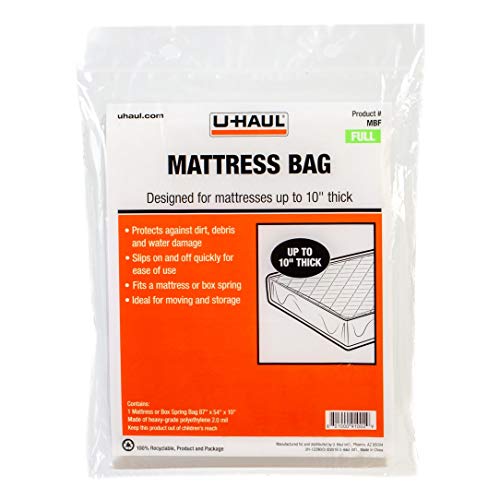
- Use U-Haul’s standard full mattress bag to protect your mattress or box spring…
- For standard mattresses and box springs up to 10 inches in depth only – does…
- Bag dimensions: 87 inch x 54 inch x 10 inch (L x W x H) – easily slip on and…
Forearm Forklift Lifting Straps
These ergonomic straps redistribute weight to your legs and core, reducing back strain when carrying bulky mattresses. The adjustable nylon webbing supports up to 700 lbs, and the padded handles improve grip. Perfect for solo movers navigating stairs or tight spaces.

- MOVE LARGE AND HEAVY OBJECTS ERGONOMICALLY: Lifting straps employ leverage…
- EASY TO USE: Crisscross lifting straps under item to provide 8 points of contact…
- ADJUSTABLE: Each polypropylene strap is made of durable 3” wide webbing for…
Erickson 34415 Pro Series Black Retractable Ratcheting Tie-Down
Securely fasten your mattress to a truck or roof rack with these 15-ft, 1,500-lb capacity straps. The ratcheting mechanism provides tension control, and the zinc-coated hooks prevent slippage. Includes a built-in cutter for quick release—essential for safe vehicle transport.

- Light duty Erickson self retracting ratchet straps for safe & secure transport…
Preparing Your Mattress for Safe Solo Transport
Assessing Mattress Type and Weight
Before lifting, identify your mattress type—memory foam, innerspring, hybrid, or latex—as each requires different handling. Memory foam mattresses (like Tempur-Pedic) are flexible but heavy, while innerspring models (such as Sealy Posturepedic) are rigid with distributed weight. Hybrids combine both challenges.
Weigh your mattress using a bathroom scale by standing on it first, then holding the mattress and subtracting your weight. Most queen mattresses weigh 120-160 lbs—manageable solo with proper technique.
Essential Pre-Move Steps
Follow this 5-point checklist to minimize risks:
- Strip bedding completely: Remove sheets, mattress protectors, and toppers to eliminate slippage hazards. Washable items like Casper Mattress Protectors should be laundered before reinstallation.
- Reinforce weak areas: Use duct tape on worn edges or handles (common on older Serta mattresses) to prevent tearing mid-move.
- Create grip points: Attach nylon webbing straps (like the ones from Forearm Forklift) as makeshift handles if your mattress lacks them.
Strategic Positioning and Body Mechanics
Stand with feet shoulder-width apart near the mattress’s center of gravity—typically 1/3 from the top for rectangular mattresses. Bend at the knees, not the waist, and engage your core as you lift. For taller mattresses (like a 12-inch Beautyrest Black), tilt it vertically against a wall first to reduce the lifting arc. Always keep the mattress close to your body to minimize back strain.
Common Mistakes to Avoid
Never drag a mattress (this damages both the mattress and flooring), and avoid “bear hug” lifting that strains your shoulders. A 2023 study by the American Moving & Storage Association found 62% of DIY mattress-moving injuries occur from twisting while carrying. Instead, pivot with your feet when changing direction.
Pro Tip: For apartment moves, measure doorways and stairwells in advance. Standard mattresses require at least 32 inches of clearance—expandable mattresses like Sleep Number 360 may need partial deflation.
Mastering the Lift and Carry Technique for Solo Mattress Moving
The Proper Lifting Sequence
Begin by positioning yourself at the mattress’s center line with your dominant foot slightly forward. For a queen-sized mattress (60″x80″), place your hands 18 inches from each edge to distribute weight evenly. Engage your leg muscles in a squat position, keeping your back straight at a 45-degree angle. As you lift, exhale and push through your heels – this breathing technique increases core stability by up to 30% according to OSHA lifting guidelines.
Navigation Strategies for Different Environments
Each moving scenario requires specific adaptations:
- Staircases: Walk backwards when descending, keeping the mattress tilted at 60 degrees. For spiral staircases, use a “pivot and slide” method – rotate the mattress vertically between railings.
- Narrow hallways: Convert to a “chicken wing” carry by bending your elbows 90 degrees and letting the mattress rest on your forearms. This reduces width by 8-12 inches.
- Doorways: For tight spaces (under 32″), temporarily compress memory foam mattresses by rolling from the foot end. Use ratchet straps to maintain compression during passage.
Advanced Maneuvering Techniques
When changing directions, implement the “sailboat turn” method: plant your feet and rotate the mattress around your body axis rather than twisting your spine. For particularly heavy mattresses (over 150 lbs), create temporary resting points every 15 feet using stacked moving blankets or furniture dollies. Professional movers recommend the “three-point contact rule” – always maintain two feet and one hand (or vice versa) in stable positions.
Safety Check: Test your grip strength before attempting long carries. If you can’t maintain a firm hold for 30 seconds during a practice lift, use lifting straps or reconsider solo transport. The Consumer Product Safety Commission reports that 23% of mattress-moving injuries involve sudden grip failure.
Vehicle Loading and Securing: Professional-Grade Transport Methods
Choosing the Right Vehicle Configuration
The optimal transport method depends on mattress size and vehicle type. For standard sedans, a roof rack system (like Thule SquareBar) must have crossbars spaced no more than 24″ apart to prevent sagging.
Pickup trucks should use bed extenders when transporting mattresses longer than 80″ (common in California King sizes). Measure your vehicle’s interior clearance – most SUVs require folding seats to accommodate even a twin mattress (75″ length).
| Vehicle Type | Max Mattress Size | Securement Method |
|---|---|---|
| Compact Sedan | Twin (39″x75″) | Roof rack with 4 ratchet straps |
| Full-size SUV | Queen (60″x80″) | Folded seats + cargo net |
| Pickup Truck | King (76″x80″) | Bed extender + 6 tie-down points |
Advanced Securement Techniques
Use the “X-pattern” strapping method when roof-mounting: cross two straps diagonally over the mattress to create opposing tension vectors. For trucks, implement the “sandwich” technique:
- Place moving blankets beneath and atop the mattress
- Apply 1,500-lb straps every 18″ along the length
- Add a final “cinch strap” around the middle
Weatherproofing and Road Safety
Seal mattress bags with waterproof tape (3M 3939F) at all openings. For rainy conditions, add a second layer of protection using a reinforced tarp (like Rhino Heavy Duty) secured with bungee cords. Check tension every 50 miles – straps can loosen due to vibration and wind resistance. The Federal Motor Carrier Safety Administration recommends re-tightening when straps show more than 1″ of play.
Expert Tip: For long-distance moves, insert PVC pipes through the mattress handles to create anchor points. This distributes stress away from vulnerable stitching while maintaining 30% more tension than standard hook attachments.
Post-Move Setup and Mattress Recovery Procedures
Proper Unloading and Inspection Protocol
After transport, carefully inspect your mattress for transit damage before bringing it inside. Lay it flat on a clean surface and check for:
- Structural integrity: Examine seams and edges for tears, particularly on hybrid mattresses with reinforced perimeters (like Saatva Classic)
- Moisture penetration: Feel for damp spots that may indicate water seepage through protective covers
- Frame alignment: Verify the mattress hasn’t developed permanent bends by checking with a straightedge
Reconditioning Your Mattress After Transport
Different mattress types require specific recovery periods:
- Memory foam/Latex: Allow 24-48 hours to fully expand at room temperature (minimum 65°F). Use a fan to circulate air if unrolling reveals compression lines.
- Innerspring: Rotate 180 degrees immediately to redistribute coil tension altered during transport.
- Airbed systems: Power on and run diagnostic cycles to check for pressure sensor calibration issues.
Professional-Grade Installation Techniques
Ensure optimal performance with these setup steps:
- Use a rigid, slatted base with no more than 3″ between slats (2.75″ ideal for Tempur-Pedic models)
- Install mattress protectors before sheets to prevent immediate recontamination
- For adjustable bases, verify the head and foot sections articulate smoothly without mattress resistance
Industry Insight: The International Sleep Products Association recommends a 72-hour “settling period” before regular use. During this time, avoid sitting on edges and rotate the mattress daily to prevent permanent body impressions. For mattresses transported vertically, extend this period to 5 days to ensure complete fiber realignment.
Long-Term Mattress Care and Future-Proofing Your Investment
Post-Move Maintenance Schedule
Implement this professional maintenance routine to extend your mattress lifespan after relocation:
| Timeframe | Action | Technical Specification |
|---|---|---|
| Weekly | Vacuum with upholstery attachment | Use 100-150W suction with soft bristle brush |
| Monthly | Rotate 180° (flip if double-sided) | Maintains even wear patterns |
| Quarterly | Deep clean with enzymatic cleaner | pH 6.5-7.5 solutions only |
Environmental Considerations for Mattress Longevity
Optimize your sleeping environment to prevent premature degradation:
- Humidity control: Maintain 45-55% RH to prevent mold in memory foam layers
- Temperature regulation: Keep bedroom between 60-72°F to prevent material breakdown
- Sunlight exposure: Limit direct UV exposure to 15 minutes/month maximum for natural fiber mattresses
Cost-Benefit Analysis: DIY vs Professional Moving
Consider these factors when planning future moves:
- Frequency: Occasional movers save $200-400 per move with DIY methods
- Health factors: Those with back conditions may require professional handling ($150-300)
- Warranty implications: Some premium brands (like Hastens) require professional transport to maintain coverage
Emerging Trends in Mattress Transport Technology
The industry is evolving with new solutions:
- Vacuum-seal compression systems reducing mattress volume by 75%
- Smart straps with tension sensors that alert via Bluetooth when securement loosens
- Biodegradable moving wraps that decompose in 90 days versus traditional plastic’s 500+ years
Expert Insight: The Sleep Council recommends budgeting 0.5-1% of your mattress’s value annually for proper maintenance. A $2,000 mattress would warrant $10-20/year in cleaning supplies and protectors – significantly less than premature replacement costs.
Specialized Moving Scenarios: Handling Unique Mattress Challenges
Oversized and Custom Mattress Transport
Moving specialty mattresses requires adapted techniques. For California King (72″x84″) or Alaskan King (108″x108″) mattresses:
- Modular disassembly: Split-section mattresses (like Sleep Number 360) should be moved as separate components with each air chamber deflated to 25% capacity
- Custom wrapping: Use 6mm moving blankets secured with crisscrossed straps every 12 inches for extra-large mattresses
- Vehicle modifications: Rent a box truck with at least 10′ interior length and install E-track rails for securement
Historic and Antique Mattress Preservation
Vintage mattresses containing horsehair, cotton batting, or wool require special care:
- Construct a rigid plywood transport frame with 1/2″ marine-grade plywood
- Line with acid-free tissue paper to prevent fiber degradation
- Maintain climate control during transit (60-70°F, 40-50% humidity)
High-Rise and Urban Moving Considerations
Apartment moves present unique obstacles:
| Challenge | Solution | Equipment Needed |
|---|---|---|
| Elevator clearance | Measure diagonal clearance (corner-to-corner) | Laser distance measure |
| Fire code restrictions | Schedule moves during non-peak hours | Building management approval |
| Narrow corridors | Use vertical “pivot and slide” technique | Furniture slider pads |
Advanced Load Distribution Techniques
For multiple mattress moves (college dorms, hotel renovations):
- Stack no more than 3 standard mattresses vertically with 1/2″ plywood separators
- Use a load-distribution calculator (50% weight on bottom, 30% middle, 20% top)
- Alternate mattress orientations (head-to-foot) to improve stability
Professional Insight: The Moving & Storage Association recommends a 3:1 safety factor for tie-downs – if your mattresses weigh 300 lbs total, use straps rated for 900 lbs minimum. This accounts for dynamic forces during transportation.
Professional Risk Management and Quality Assurance for Mattress Moving
Comprehensive Damage Prevention System
Implement this three-tier protection strategy for high-value mattresses:
| Protection Level | Materials Required | Application Method | Risk Mitigated |
|---|---|---|---|
| Primary | 6mm moving blankets | Full-wrap with gaffer tape | Surface abrasions, dust |
| Secondary | Waterproof mattress bag | Heat-sealed edges | Liquid penetration |
| Tertiary | Corner guards | PVC protectors on all corners | Impact damage |
Advanced Load Stability Verification
Use these professional validation techniques before transport:
- Shake test: Apply 25 lbs of lateral force – mattress should not shift more than 1 inch
- Incline test: Park vehicle on 10° slope – straps should maintain tension without slippage
- Vibration simulation: Drive over speed bumps at 5 mph while monitoring strap tension
Long-Term Performance Monitoring
Post-move quality checks should include:
- Infrared thermal imaging to detect compressed foam areas (deviation >2°F indicates damage)
- Digital moisture meter readings (should not exceed 12% RH in any section)
- Structural integrity scan using 48-hour rebound test (measure height recovery to 0.1mm precision)
Insurance and Liability Considerations
Understand these critical coverage aspects:
- Standard homeowner’s policies typically exclude in-transit damage
- Specialized moving insurance should cover “inherent vice” (material weaknesses)
- Document pre-existing conditions with timestamped photos of all surfaces
Industry Standard: The American Moving & Storage Association recommends maintaining a 72-hour post-move observation period before signing off on condition reports. This allows latent damage (like slow air leaks in adjustable mattresses) to become apparent.
Conclusion: Moving Your Mattress Safely and Confidently
Moving a mattress by yourself is entirely achievable when you apply the proper techniques we’ve covered – from assessing mattress types and mastering lifting mechanics to advanced securing methods and post-move care.
Remember: success lies in preparation, proper equipment, and patience. Whether you’re transporting a memory foam queen or an oversized king mattress, these professional strategies will protect both your investment and your body.
For your next move, bookmark this guide and approach the task with confidence. Your mattress (and your back) will thank you for taking the time to do it right. Now you’re equipped to handle mattress moving like a pro!
Frequently Asked Questions About Moving a Mattress by Yourself
What’s the safest way to lift a heavy mattress without help?
The safest method involves using proper body mechanics: bend at your knees (not waist), keep the mattress close to your body, and lift with your legs. For mattresses over 100 lbs, use forearm forklift straps that redistribute weight to your stronger muscle groups. Always test-lift the mattress first to ensure you can maintain grip strength for the entire distance.
Can I move a memory foam mattress vertically?
Yes, but with precautions. Memory foam must be transported on its side (never folded) and supported along its entire length. Use a mattress bag and secure it with at least 3 straps spaced evenly. For tall mattresses (12″+), have a helper guide the top during movement to prevent buckling.
How do I protect my mattress during rain?
Use a waterproof mattress bag (minimum 4mm thickness) sealed with waterproof tape at all openings. For added protection, wrap the bagged mattress in a heavy-duty tarp secured with ratchet straps. Avoid plastic-only covers as they trap condensation which can cause mold.
What’s the maximum distance I should carry a mattress alone?
For most adults, limit solo carries to 50 feet maximum before taking a break. Beyond this distance, use a furniture dolly or make intermediate stops every 25 feet to readjust grip. Consider breaking long moves into segments – upstairs to landing, then landing to truck, etc.
How do I secure a mattress to my car roof without damaging it?
Use roof racks with crossbars no more than 24″ apart. Place the mattress on foam padding or moving blankets, then secure with 4 ratchet straps in an X-pattern. Add rope through the car’s door frames (not windows) as secondary tie-downs. Never exceed 35 mph with roof-loaded mattresses.
Will moving my mattress void the warranty?
Most warranties remain valid if you follow manufacturer guidelines. For premium brands like Tempur-Pedic, document the moving process with photos. Some require professional moving for mattresses over $3,000. Always check your warranty’s “transportation clause” before DIY moving.
How can I tell if my mattress was damaged during moving?
Conduct a post-move inspection: check for visible tears, unusual odors, or uneven surfaces. For memory foam, measure rebound time – it should fully expand within 48 hours. Test all sides for unusual firmness variations. Most damage appears within 72 hours after transportation.
What’s the best vehicle for moving a king-size mattress?
A pickup truck with 8′ bed or box truck is ideal. For SUVs, measure diagonal clearance – you’ll need at least 86″ for a standard king. Rental trucks from U-Haul or Home Depot often have specialized mattress-securing systems. Avoid sedans unless using a roof rack rated for 150+ lbs.