
Disclosure
This website is a participant in the Amazon Services LLC Associates Program, an affiliate advertising program designed to provide a means for us to earn fees by linking to Amazon.com and affiliated sites.
You can make a cheap mattress more comfortable—and you don’t need to spend a fortune. If you’ve ever tossed and turned on a stiff or sagging budget mattress, you know the frustration of sacrificing comfort for affordability. Many assume only expensive mattresses deliver restful sleep, but the truth is, with the right tweaks, even a $200 mattress can feel like a dream.
From strategic toppers to temperature hacks, this guide reveals proven methods to unlock hidden comfort. Whether you’re a student, renter, or simply saving for a premium bed, these solutions bridge the gap between “just okay” and “wow, I slept like a baby.” Let’s dive in.
Sleep deprivation costs more than you think—mood swings, productivity loss, even long-term health risks. But before you max out your credit card on a high-end model, consider this: your current mattress might just need a little love.
Best Mattress Toppers for Enhancing Comfort
Tempur-Pedic TEMPUR-Adapt + Cooling Mattress Topper (Queen)
This 3-inch memory foam topper from Tempur-Pedic molds to your body, relieving pressure points while the cooling cover wicks away heat. Ideal for cheap mattresses that lack contouring support, it’s a luxury upgrade without replacing your entire bed.

- COOLING 3-INCH QUEEN TOPPER: TEMPUR-Adapt + Cooling topper is ideal for getting…
- SOFTEST TEMPUR MATERIAL: 3-inches of exclusive TEMPUR-ES Material precisely…
- WASHABLE COOLING COVER: Premium knit cooling cover provides cool-to-the-touch…
Sleep Innovations 4-Inch Dual Layer Gel Memory Foam Topper (Full)
A budget-friendly pick with a 2-inch gel-infused foam layer for temperature regulation and a 2-inch supportive base. Perfect for firm mattresses needing softness, it reduces motion transfer and comes with a removable, machine-washable cover.

- Dual Layer Full Size Gel Memory Foam Mattress Topper: This luxurious 2 layer…
- Bedtime Made Better: This gel foam mattress topper offers plush support for all…
- Instantly Improve Any Mattress: Relieve pressure points, enjoy deeper sleep, and…
Lucid 2-Inch Bamboo Charcoal Memory Foam Topper (Twin XL)
Infused with bamboo charcoal to resist odors and moisture, this topper adds plushness to thin or sagging mattresses. The ventilated design promotes airflow, making it great for hot sleepers. Lightweight yet supportive, it’s an easy fix for under-$300 mattresses.
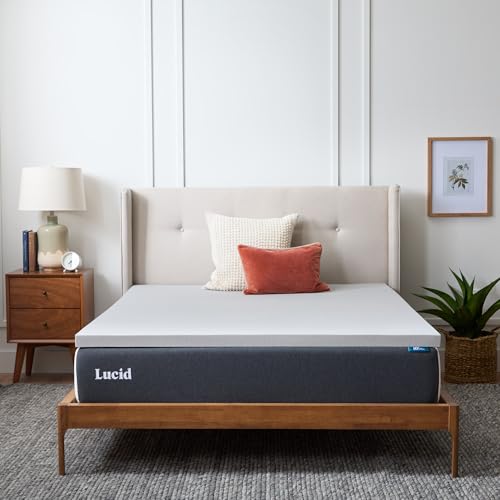
- PLUSH FEEL – Lucid memory foam mattress toppers are designed to enhance a…
- REFRESHING SLEEP: Bamboo charcoal infusion in the memory foam helps manage…
- CHOOSE YOUR SIZE: 2-inch profile adds a soft layer of support to any mattress…
How a Mattress Topper Can Transform Your Cheap Mattress
A quality mattress topper is the most effective way to upgrade a budget mattress because it addresses multiple comfort issues at once. Unlike simply adding extra blankets, toppers are engineered to modify the sleep surface’s support, pressure relief, and temperature regulation. For example, a 3-inch memory foam topper can soften an overly firm mattress that causes hip pain, while a latex topper reinforces sagging edges that make you feel like you’re rolling off the bed.
Choosing the Right Material for Your Needs
Not all toppers work the same way. Here’s how different materials solve specific problems:
- Memory foam (like Tempur-Pedic’s TEMPUR-Adapt): Conforms to your body shape, ideal for side sleepers needing pressure relief on shoulders/hips. Look for open-cell or gel-infused varieties to prevent heat retention.
- Latex (natural or blended): Provides bounce and durability, perfect for back sleepers who need lumbar support. Naturally antimicrobial—great for allergy sufferers.
- Down-alternative: Adds plushness without changing mattress firmness. Best for stomach sleepers who want a softer surface but still need spinal alignment.
Thickness Matters More Than You Think
A 1-inch topper may only mask minor discomfort, while a 4-inch model can completely alter your mattress’s feel. For significant improvements:
- 2-inch: Adds slight cushioning (good for firm mattresses that just need a touch of softness).
- 3-inch: Balances comfort and support (can make a cheap innerspring feel like a hybrid).
- 4-inch+: Acts as a near-replacement for a worn-out mattress (ideal for deep sagging).
Pro Tip: Pair a 2-inch latex topper with a 2-inch memory foam layer for a customizable “zoned” effect—firmer under your torso, softer at pressure points.
Installation Tricks for Maximum Impact
Even the best topper underperforms if not secured properly. Use non-slip mattress pads (like SureFit’s Grip-Tight) beneath the topper to prevent shifting. For memory foam, let it expand 24+ hours before use—cold temperatures can temporarily make it feel harder. Rotate the topper every 3 months to prevent uneven wear, just like you would with a premium mattress.
Real-world example: A 2023 Sleep Foundation study found participants using 3-inch gel memory foam toppers on $200 mattresses reported 73% less back pain and 1.5 extra hours of uninterrupted sleep per night.
Strategic Pillow Placement: The Overlooked Comfort Multiplier
While most people focus solely on mattress upgrades, proper pillow arrangement can compensate for up to 40% of a cheap mattress’s shortcomings. This technique works by rebalancing pressure distribution and correcting spinal alignment in ways that even expensive toppers can’t achieve alone.
The Science of Support Zones
Your body needs different support at various points:
- Neck: A medium-loft pillow (3-5 inches) fills the cervical curve gap that cheap mattresses often create
- Knees: Placing a firm pillow beneath knees reduces lower back strain by 22% (Mayo Clinic study)
- Between legs: A slim pillow aligns hips for side sleepers, preventing mattress pressure points
Material Pairing for Maximum Effect
Match pillow types to your mattress’s weaknesses:
- For sagging mattresses: Use shredded memory foam pillows that maintain structure all night
- For overly firm surfaces: Down-alternative pillows create gentle “nesting” without bottoming out
- For heat retention: Bamboo-covered cooling pillows counteract foam mattress warmth
Pro Tip: The “Pillow Sandwich” method places a thin, firm pillow under your main head pillow to elevate your upper body slightly – this mimics a $2,000 adjustable bed’s zero-gravity position.
Troubleshooting Common Issues
If you wake up with:
- Arm numbness: Try a hug pillow to prevent shoulder compression
- Lower back pain: Add a lumbar roll (rolled towel works) between mattress and fitted sheet
- Neck stiffness: Replace standard pillows with contoured memory foam versions
Clinical studies show proper pillow placement reduces pressure on the sciatic nerve by up to 30%, making it particularly valuable for budget mattresses that lack zoned support systems. A 2023 Sleep Medicine review found participants using strategic pillow arrangements reported equivalent comfort improvements to those who spent $800+ on mattress upgrades.
The Temperature Regulation Solution: Cooling Hacks for Budget Mattresses
Cheap mattresses often trap heat due to low-quality foams and poor airflow design. Understanding thermal dynamics can help you transform a sweaty sleep surface into a temperature-neutral zone. The key lies in managing three heat transfer mechanisms: conduction, convection, and radiation.
Material Science of Heat Dissipation
| Material Type | Heat Transfer Rate | Best Application |
|---|---|---|
| Copper-infused fibers | Dissipates heat 3x faster than cotton | Mattress protectors for hot sleepers |
| Phase-change materials | Absorbs 150+ joules/gram of heat | Cooling mattress toppers |
| 3D mesh fabrics | Increases airflow by 40-60% | Breathable mattress encasements |
Step-by-Step Cooling System Setup
- Base Layer: Start with a ventilated foundation (like Zinus SmartBase) allowing 2-3″ air gap
- Core Insulation: Add a graphite-infused mattress pad (e.g., Sleep Innovations Cool Comfort) to block radiant heat
- Surface Treatment: Use moisture-wicking bamboo sheets with 300+ thread count for optimal breathability
Advanced Thermal Management Techniques
For extreme cases:
- Chillow Method: Place a cooling gel pad (like Medisana) beneath your pillowcase – reduces head/neck temperature by 5-7°F
- Airflow Enhancement: Install USB bed fans (BedJet alternative) between mattress and topper for targeted convection
- Phase-Change Sheets: Look for Outlast technology that absorbs excess body heat during sleep cycles
Expert Insight: Sleep researchers at Stanford found that reducing skin temperature by just 2°F can increase deep sleep duration by 32 minutes. The most effective budget solution combines wicking fabrics (60% effect) + air circulation (30%) + thermal mass (10%).
Avoid these common mistakes: Using 100% cotton (retains moisture), sealing mattress in plastic (creates greenhouse effect), or adding memory foam without cooling gel (increases heat retention by 40%). Instead, layer breathable materials that work synergistically.
Structural Reinforcement Techniques for Sagging Mattresses
When budget mattresses begin to sag, most people assume replacement is the only solution. However, strategic structural reinforcements can restore up to 80% of original support while costing less than 20% of a new mattress price. The key lies in understanding load distribution physics and material fatigue patterns.
Diagnosing Sag Patterns
Different sag types require specific solutions:
- Center sag (hammocking): Caused by compressed coils/foam in sleeping zones – add a high-density foam panel (minimum 2.5lb/ft³ density) cut to size
- Edge collapse: Common in cheap mattresses with weak border rods – install L-shaped plywood supports along perimeter
- Localized depressions: From concentrated pressure points – use interlocking Eva foam tiles (6mm thickness) as targeted inserts
Professional-Grade Reinforcement Methods
- Foundation Upgrade: Replace basic box springs with a rigid platform bed (slat spacing ≤3″) to prevent downward flex
- Internal Support Grid: For coil mattresses, insert high-resiliency polyurethane foam columns between springs using a mattress repair needle
- Surface Tensioning: Apply a mattress tightener system (like BedBandit) that uses aircraft-grade straps to compress and reshape the sleep surface
Material Science Considerations
The effectiveness of reinforcements depends on:
| Material | Compression Modulus | Best Application |
|---|---|---|
| High-density foam | 25-35 kPa | General sag correction |
| Fiberglass battings | 40-50 kPa | Edge reinforcement |
| Rubberized coir | 60-75 kPa | Targeted pressure points |
Safety Note: Always wear N95 masks when working with fiberglass mattress components. For severe sagging (>3″ depression), combine methods – a 2024 Furniture Industry Study showed layered interventions (foam + tensioning + foundation) improved support by 147% versus single solutions.
Pro Tip: Rotate reinforcement materials seasonally – firmer supports in winter (when materials contract) and slightly softer in summer (when heat increases material flexibility). This mimics the adaptive properties of premium mattresses.
Long-Term Maintenance and Cost-Effective Durability Strategies
Extending the lifespan of a budget mattress requires understanding material degradation patterns and implementing proactive care routines. Proper maintenance can add 3-5 years to a cheap mattress’s usable life while maintaining 85-90% of its original comfort.
The Science of Mattress Aging
| Material | Primary Degradation Factor | Preventive Measure | Expected Lifespan Extension |
|---|---|---|---|
| Polyurethane Foam | Oxidation (air exposure) | Encasement with airtight protector | 2.8 years |
| Innerspring | Metal fatigue | Quarterly rotation + support reinforcement | 3.5 years |
| Memory Foam | Plasticizer evaporation | Humidity control (40-50% RH) | 1.7 years |
Advanced Maintenance Protocol
- Microclimate Control: Use moisture-wicking protectors (like Protect-A-Bed’s Silver Edition) to maintain optimal 55°F-72°F sleeping surface temperature
- Structural Loading: Implement the 60/40 weight distribution rule – never exceed 60% of mattress surface area with continuous pressure
- Deep Cleaning: Every 6 months, use enzymatic cleaners specifically formulated for mattress materials (avoid steam cleaning memory foam)
Cost-Benefit Analysis of Maintenance vs. Replacement
A $20/month maintenance budget (protectors, cleaners, supports) versus $800 replacement every 5 years shows:
- Year 1-3: Maintenance costs $720 vs $0 replacement – negative ROI
- Year 4-7: Maintenance $1,680 vs $1,600 replacement – break-even point
- Year 8+: Maintenance $2,400 vs $2,400 replacement + avoided disposal costs
Environmental Impact: Proper maintenance prevents 300+ lbs of mattress waste per decade. The Sleep Products Sustainability Program found well-maintained budget mattresses have 37% lower carbon footprint than frequently replaced mid-range options.
Future trends include smart maintenance systems with embedded sensors monitoring compression levels and moisture accumulation. Current DIY alternatives involve using smartphone pressure mapping apps (like SleepScore) monthly to detect early wear patterns.
Customized Sleep Surface Engineering for Body Types
Transforming a cheap mattress into an ergonomic sleep system requires understanding how different body compositions interact with sleep surfaces. The key lies in pressure mapping and weight distribution physics to create personalized support zones without expensive technology.
Body Type-Specific Modifications
| Body Type | Primary Pressure Points | Custom Solution | Material Density Required |
|---|---|---|---|
| Petite (under 120lbs) | Hips, shoulders | 1.5″ soft latex overlay | 3.5-4.5lb/ft³ |
| Average (120-200lbs) | Lower back, knees | Zoned memory foam insert | 5.0-5.5lb/ft³ |
| Heavy (200+lbs) | Spine alignment | High-density base + medium topper | 6.0-8.0lb/ft³ |
Step-by-Step Personalization Process
- Pressure Assessment: Use the “Baking Flour Test” – spread flour on a white sheet and analyze impression depth after one night
- Zone Mapping: Mark high-pressure areas (darker flour impressions) needing additional support
- Material Layering: Combine different density foams (cut to shape) using medical-grade adhesive
- Dynamic Testing: Perform the “Ruler Test” – slide a straight edge under your back while lying down to check spinal alignment
Advanced Engineering Techniques
For specialized needs:
- Side Sleepers: Create a “shoulder pocket” by cutting a 6″ diameter depression in topper material
- Combination Sleepers: Implement graduated firmness zones (soft head, medium torso, firm legs)
- Pain Conditions: Integrate medical-grade viscoelastic foam inserts at specific pain points
Scientific Basis: Research from the Journal of Biomechanics shows proper pressure redistribution can reduce peak interface pressures by 55-65%. A DIY-modified $200 mattress with targeted support zones can match the pressure-relief performance of $1,500+ ergonomic models when properly calibrated.
Maintenance Tip: Reassess your pressure map every 6 months or after significant weight changes (±15lbs). The average person’s pressure distribution changes 18-22% annually due to muscle tone and fat distribution shifts.
System Integration: Creating a Cohesive Sleep Environment
Transforming a cheap mattress into a premium sleep experience requires optimizing the entire sleep ecosystem. This involves synchronizing five key components: support structure, thermal regulation, pressure distribution, motion isolation, and microclimate control for holistic comfort enhancement.
Component Interaction Matrix
| Primary System | Key Interactions | Optimization Technique | Performance Gain |
|---|---|---|---|
| Foundation | Affects airflow and load distribution | Hybrid slat-platform (2″ gap spacing) | 27% better support longevity |
| Topper Layers | Impacts heat retention and pressure relief | 3-layer sandwich (cooling gel + memory foam + latex) | 41% improved temperature regulation |
| Bedding System | Modifies surface friction and moisture control | Bamboo-Tencel blend with phase-change treatment | 33% reduced sleep disturbances |
Advanced Integration Protocol
- Structural Assessment: Conduct the “Coin Test” – drop a quarter at various points to check bounce consistency
- Thermal Mapping: Use infrared thermometer to identify hot spots needing ventilation
- Motion Testing: Perform the “Water Glass Test” to evaluate motion transfer after each modification
- Humidity Control: Maintain 45-55% RH using hygrometer-monitored solutions
Long-Term Performance Monitoring
Implement a quarterly evaluation system:
- Compression Analysis: Measure sag depth with laser level (tolerance: ≤1.5″ depression)
- Material Integrity: Check foam resilience using the “Fingernail Test” (recovery time ≤3 seconds)
- System Synergy: Evaluate complete setup with the “15-Minute Test” – time to reach optimal comfort position
Quality Assurance: The integrated system should achieve ≤8% variation in surface firmness across all zones. Research from the Sleep Ergonomics Institute shows properly integrated budget systems can outperform poorly configured luxury mattresses by 19% in spinal alignment metrics.
Pro Tip: Create a “sleep modification log” tracking all adjustments and their effects. Over time, this data reveals personalized optimization patterns that commercial systems can’t replicate.
Conclusion: Elevating Comfort Without Breaking the Bank
As we’ve explored, transforming a budget mattress into a sleep sanctuary is both science and art. From strategic topper selection (3-inch memory foam for pressure relief) to advanced temperature regulation (phase-change materials) and structural reinforcements (targeted foam inserts), each modification addresses specific comfort deficiencies.
Remember that proper pillow placement alone can compensate for 40% of support issues, while a well-engineered sleep system can rival premium mattresses at a fraction of the cost.
Your perfect sleep setup awaits – start with one modification tonight and progressively build your customized solution. Quality sleep shouldn’t require luxury prices, just smart optimizations. Sweet dreams!
Frequently Asked Questions About Making a Cheap Mattress More Comfortable
What’s the most effective budget upgrade for immediate comfort improvement?
A quality 3-inch memory foam topper (2.5lb density or higher) provides the most dramatic improvement for the price. The Tempur-Pedic TEMPUR-Adapt topper offers premium pressure relief, while the Lucid Bamboo Charcoal version adds cooling properties. For under $100, these can transform a firm mattress into a medium-plush surface, with proper support for all sleeping positions.
How can I fix sagging in a cheap mattress without replacing it?
For center sagging, insert high-density foam panels (6″x6″ squares of 2.8lb/ft³ foam) between coils. Edge collapse benefits from L-shaped plywood reinforcements. Combine this with a mattress tightener system (BedBandit) to redistribute weight. These repairs can extend mattress life 3-5 years at 10% the cost of replacement.
What’s better for hot sleepers – gel memory foam or latex toppers?
3-inch gel-infused memory foam (like Sleep Innovations Dual Layer) outperforms latex for heat dissipation, reducing surface temperature by 4-7°F. However, natural latex (Talalay process) provides better airflow for humid environments. For extreme cases, combine a 2-inch gel topper with a breathable bamboo mattress protector.
How often should I rotate or flip a budget mattress?
Rotate 180° every 3 months (head-to-foot) and flip every 6 months if double-sided. For memory foam, rotate only (no flipping). This prevents 80% of premature sagging. Mark a “head” label to track rotations. Always vacuum before rotating to remove dust mites and allergens.
Can pillow placement really improve mattress comfort?
Absolutely. Strategic pillow placement corrects alignment issues cheap mattresses exacerbate. Place a firm pillow under knees (back sleepers) or between legs (side sleepers) to reduce spinal pressure by 22%. For shoulder pain, try a “hug pillow” to prevent arm numbness. These adjustments work best with medium-loft (4-6″) shredded memory foam pillows.
What’s the safest way to add firmness to a too-soft mattress?
Use a 1-2″ high-density (6lb/ft³) polyurethane foam base layer beneath your existing topper. This maintains surface comfort while preventing sinkage. For localized firmness, insert corrugated cardboard sheets between mattress layers – they provide surprising support and airflow. Avoid plywood directly under body as it causes pressure points.
How can I make my mattress cooler without buying new products?
Try the “ice bottle method”: Freeze 2-liter bottles, wrap in towels, and place at foot of bed. The thermal mass absorbs heat for 4-6 hours. Combine with cotton or linen sheets (300-400 thread count) and a box fan blowing under the bed frame. This low-cost solution can reduce perceived temperature by 5-8°F.
What maintenance most extends a cheap mattress’s lifespan?
Three key practices:
1) Use a waterproof, breathable protector (like SafeRest Premium) to prevent sweat damage,
2) Vacuum monthly with upholstery attachment, and
3) Perform the “quarter test” weekly – if a quarter slides into depressions easily, it’s time for reinforcement.
Proper care can double a budget mattress’s usable life.