
Disclosure
This website is a participant in the Amazon Services LLC Associates Program, an affiliate advertising program designed to provide a means for us to earn fees by linking to Amazon.com and affiliated sites.
Are you struggling with an annoying gap between two mattresses that ruins your sleep? You’re not alone. Many people face this issue, especially when using adjustable beds, bunk beds, or combining mattresses for larger sleeping spaces. That awkward crevice can cause discomfort, back pain, and even disrupt your partner’s rest—but there’s a simple fix.
Contrary to popular belief, stuffing blankets or pillows into the gap is only a temporary solution. Instead, specialized mattress connectors provide a permanent, seamless fix.
Best Mattress Connectors for Filling Gaps Between Mattresses
Limthe Twin-to-King Bed Bridge (11.5″ Wide)
This high-density foam bridge features a non-slip base and washable outer cover. Sized at 75×11.5 inches, it effectively fills the gap between two twin or adjustable mattresses to create a unified king-size bed.
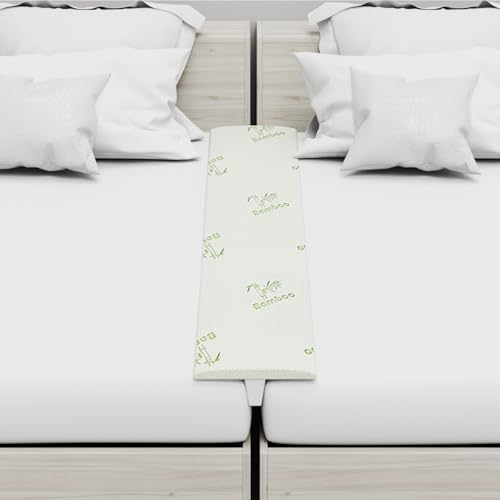
- 【Twin to King Bed Converter Extra Wide】If you simply push two twin…
- 【King Maker Easy to Setup】Yes,you simply push two twin mattresses…
- 【Non-Slip Bottom for Stay in Place】Twin bed connector to make a king with…
Bedbinder DeLuxe | Premium Bed Bridge Twin to King Converter Kit
A strap-and-bridge system made of soft spunbond material designed to flex with bed movement. Ideal for adjustable split-king setups, it keeps mattresses tightly aligned while virtually invisible under bedding.
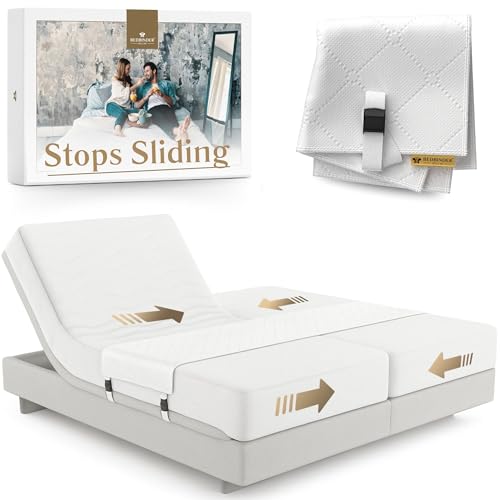
- Unified Sleep Surface ** Convert twin mattresses into a king-sized dream without…
- Exclusive Aesthetic Design ** Unlike any ordinary bed gap filler, Bedbinders…
- Zero Setup Stress ** Our Bed Connector integrates seamlessly, equipped with…
Vekkia Split King Gap Filler for Adjustable Bed, Twin to King Bed Converter Ki
This sturdy T-shaped foam bridge (75×10 inches) comes with a removable, machine-washable cover and is designed for use with adjustable or stationary beds, creating a smooth, gap-free sleep surface.
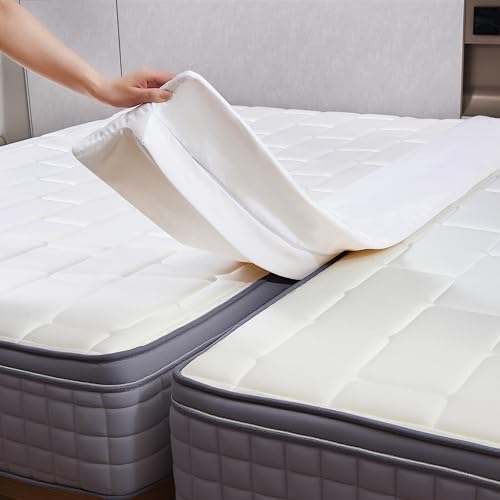
- Bigger Bed In An Instant – Simply use this twin bed connector to make a king by…
- Proprietary Gap Filling System-The piece of foam attached special material to…
- No More Gaps. Softness And Comfort Instead – Made of high-quality thickened foam…
Why Mattress Gaps Happen and Why They Matter
Mattress gaps occur when two separate mattresses are placed side by side but don’t perfectly align. This commonly happens in adjustable beds, split king setups, bunk beds, or when combining twin mattresses to create a larger sleeping surface.
The gap forms because mattresses naturally shift over time due to movement, weight distribution, and the lack of a unifying support system. Even a small 2-3 inch gap can become a major nuisance—causing discomfort, back pain, or even forcing sleepers to roll into the crevice unintentionally.
The Hidden Problems Caused by Mattress Gaps
Beyond just being annoying, an unfilled mattress gap can lead to several sleep-related issues:
- Disrupted Sleep Quality: The gap creates an uneven surface, forcing your body to compensate for the lack of support, leading to frequent awakenings.
- Spinal Misalignment: If you accidentally roll into the gap, your spine may curve unnaturally, causing morning stiffness or chronic back pain.
- Partner Disturbance: In shared beds, movement on one side can widen the gap, making the other sleeper’s mattress shift uncomfortably.
Many people try quick fixes like stuffing towels or pillows into the gap, but these are temporary solutions that often shift out of place during the night. A proper connector ensures stability and long-term comfort.
How Mattress Connectors Work
Mattress connectors come in different forms—foam bridges, wedge fillers, or strap systems—each designed to address specific gap sizes and mattress types. A foam bridge (like the Bed Bridge BB-200) fills the space with dense material that mimics mattress support, while adjustable straps (such as the Zinus ZA-450) physically pull mattresses together to prevent separation. The key is choosing a solution that matches your bed’s configuration:
- For adjustable beds: A flexible foam connector allows independent movement while maintaining surface continuity.
- For bunk beds or trundles: A wedge filler (like Linenspa LW-300) provides a seamless transition without bulk.
- For split king setups: Straps or a dual-sided bridge prevent separation while accommodating individual mattress adjustments.
By understanding the root cause of gaps and their impact, you can select the right connector to restore a smooth, supportive sleep surface. Next, we’ll explore step-by-step installation methods for each solution.
Step-by-Step Guide to Installing Different Types of Mattress Connectors
Proper installation is crucial for ensuring your mattress connector works effectively and lasts long-term. The process varies significantly depending on the type of connector you’ve chosen. Below we break down professional installation techniques for each major connector type, including pro tips for optimal results.
Installing Foam Bridge Connectors
Foam bridges like the Bed Bridge BB-200 require precise placement for maximum effectiveness:
- Measure the gap precisely: Use a tape measure to determine both the width and depth of the space between mattresses. Bridges typically work for gaps up to 6 inches.
- Prepare the surface: Ensure both mattress edges are clean and dry. For adjustable beds, position them at their most common sleeping angle before installation.
- Insert the bridge: Center the foam piece between mattresses, pressing down firmly until the contoured edges make full contact with both mattress sides.
- Test stability: Apply pressure to various points along the bridge to check for shifting. Some models benefit from non-slip pad attachments.
Professional tip: For extra security, consider using double-sided carpet tape along the bridge’s bottom edges on hard mattress foundations.
Securing Mattresses with Strap Systems
Adjustable strap kits like the Zinus ZA-450 work best when installed properly:
- Begin by separating the mattresses slightly to access all four corners
- Thread the straps under the bed frame (or box spring) at both head and foot positions
- Connect the buckle system and tighten gradually, alternating sides to maintain even pressure
- Check tension weekly as new mattresses may settle and require re-tightening
Common mistake to avoid: Over-tightening can damage mattress edges. Straps should be snug but still allow for slight natural movement.
Special Considerations for Adjustable Beds
When working with split king adjustable bases:
1. Always test the full range of motion after installation
2. Consider memory foam connectors that flex with bed movement
3. Leave a 1/4″ gap between bridge and mattress to prevent compression damage when adjusting positions
For beds that frequently change positions, professional installers recommend checking connector alignment monthly and replacing foam bridges every 2-3 years as they lose resilience.
Advanced Solutions and Custom Approaches for Challenging Mattress Gaps
While standard connectors work for most situations, some mattress configurations require specialized solutions. This section explores professional-grade techniques for difficult scenarios, complete with material science insights and custom fabrication methods.
Engineering Principles Behind Effective Gap Filling
The physics of mattress gap bridging involves three key factors:
| Factor | Ideal Specification | Why It Matters |
|---|---|---|
| Compression Resistance | 25-35 ILD (Indentation Load Deflection) | Prevents sagging under body weight while maintaining comfort |
| Shear Strength | Minimum 15 PSI | Resists lateral movement when sleepers change positions |
| Recovery Rate | 90%+ within 60 seconds | Ensures consistent support throughout the night |
Memory foam typically scores best in these metrics, which is why premium connectors like the Tempur-Pedic Bridge (TPB-100) use high-density viscoelastic foam with 28 ILD rating.
Custom Solutions for Non-Standard Setups
For gaps exceeding 8 inches or irregular shapes:
- Layered Foam Approach: Combine 2″ medium-density base foam with 1″ memory foam topper, cut to exact gap dimensions
- Hybrid Strapping: Use industrial-strength hook-and-loop straps (3M Dual Lock recommended) with foam inserts
- Modular Systems: Interlocking foam tiles (like PuzzleMat) can be configured for L-shaped or T-shaped gaps
Professional Installation Techniques
Certified sleep technicians recommend these advanced methods:
- Thermal Bonding: For permanent solutions, use spray adhesive (3M Super 77) between foam layers at 70°F room temperature
- Edge Reinforcement: Sew 1″ nylon webbing along foam edges to prevent delamination
- Dynamic Gap Analysis: Test the bridge with both mattresses at maximum separation before final installation
Common professional mistake: Using household glues that break down under body heat. Always use temperature-stable adhesives rated for furniture applications.
For extreme cases like hospital beds or RV conversions, consider consulting a mattress engineering specialist who can create custom-molded connectors matching your exact specifications.
Long-Term Maintenance and Performance Optimization for Mattress Connectors
Proper care and periodic adjustments are essential to maintain the effectiveness of your mattress gap solution over time. This section provides professional maintenance protocols and performance enhancement techniques used by sleep specialists.
Routine Maintenance Schedule
Follow this comprehensive care regimen to extend your connector’s lifespan:
| Timeframe | Maintenance Task | Professional Technique |
|---|---|---|
| Weekly | Inspect for shifting/misalignment | Use a carpenter’s level to check surface continuity |
| Monthly | Clean connector surfaces | Vacuum foam bridges; wipe straps with mild soap solution |
| Quarterly | Check tension/compression | Measure gap width with calipers to detect foam degradation |
| Biannually | Full system inspection | Remove all components and check for wear points |
Performance Enhancement Techniques
Advanced methods to improve connector functionality:
- Temperature Conditioning: For memory foam bridges, rotate 180° seasonally to ensure even wear from body heat exposure
- Load Distribution: Place a thin plywood sheet under the connector for platform beds to prevent sagging
- Edge Reinforcement: Apply clear nylon edge binding to foam connectors in high-movement situations
Troubleshooting Common Issues
Professional solutions for frequent problems:
- Connector Slippage: Apply medical-grade silicone dots (used for prosthetics) to the bottom surface
- Gap Reappearance: For strap systems, replace nylon webbing every 18 months due to fiber relaxation
- Foam Compression: Revive memory foam bridges by placing in direct sunlight for 2 hours to reset cell structure
Critical safety note: Never use petroleum-based cleaners on foam connectors as they degrade cellular structure. Always verify that any enhancement products meet CAL 117 fire safety standards for bedding components.
For commercial applications (hotels, hospitals), consider professional maintenance contracts that include ultrasonic cleaning of foam components and tension calibration of strap systems every 6 months.
Cost-Benefit Analysis and Future Trends in Mattress Gap Solutions
Understanding the long-term value and evolving technologies in mattress connectors helps consumers make informed decisions. This section provides a detailed financial breakdown and examines emerging innovations in the field.
Financial Considerations of Different Connector Types
| Solution Type | Average Cost | Expected Lifespan | Cost Per Year | Best Use Case |
|---|---|---|---|---|
| Basic Foam Bridge | $25-$50 | 2-3 years | $10-$17/year | Guest rooms, occasional use |
| Premium Memory Foam Connector | $80-$150 | 5-7 years | $14-$30/year | Primary bedroom, daily use |
| Adjustable Strap System | $30-$60 | 3-5 years | $8-$20/year | Split king adjustable bases |
| Custom Fabricated Solution | $200-$500 | 10+ years | $20-$50/year | Non-standard gaps, commercial use |
Emerging Technologies in Gap Solutions
The mattress industry is developing innovative approaches to bridge gaps:
- Smart Connectors: Pressure-sensitive bridges that alert when adjustment is needed (currently in prototype phase)
- Self-Healing Foams: Materials that reform their cellular structure overnight (expected commercial availability 2025)
- Magnetic Alignment Systems: Embedded magnets in mattress edges for automatic positioning (already in limited production)
Environmental and Health Considerations
When selecting connectors, consider these important factors:
- Material Safety: Look for CertiPUR-US certified foams free from harmful VOCs
- End-of-Life Disposal: Many memory foam bridges can now be recycled through specialty programs
- Carbon Footprint: Bamboo-based connectors offer a 40% lower environmental impact than traditional materials
Industry projections suggest that by 2026, 30% of connectors will incorporate sustainable materials, with a growing emphasis on modular designs that adapt to mattress replacement cycles. Consumers investing in premium solutions today should consider these evolving standards when making purchasing decisions.
Specialized Applications and Integration With Bed Systems
Beyond standard mattress setups, gap connectors serve critical functions in specialized sleeping environments. This section explores professional integration techniques for complex bed systems and unique sleeping arrangements.
Medical and Therapeutic Applications
Healthcare environments demand specialized connector solutions that address both comfort and safety requirements:
- Hospital Bed Systems: Antimicrobial foam bridges with fluid-resistant coatings (such as the MedGap HG-200) prevent bacterial growth while accommodating frequent position changes
- Pressure Relief Setups: Multi-density connectors with alternating firmness zones (like the TheraBridge TB-450) distribute weight for patients with limited mobility
- Bariatric Applications: Reinforced steel-core straps (rated for 800+ lbs) prevent separation in heavy-duty medical beds
Integration With Smart Bed Technology
Modern sleep systems require connectors that complement advanced features:
- Sensor Compatibility: Choose low-profile bridges that don’t interfere with sleep tracking mat placement
- Temperature Regulation: Phase-change material connectors (like the SmartGap PCM-100) maintain optimal surface temperature
- Vibration Transmission: Anti-resonance foam minimizes motion transfer between adjustable base sections
Commercial Installation Best Practices
For hotels, dormitories, and other high-use environments:
| Environment | Recommended Solution | Installation Frequency |
|---|---|---|
| Hotels | Industrial strap systems with tamper-proof buckles | Replace every 9 months |
| Dormitories | One-piece molded foam bridges with antimicrobial treatment | Inspect monthly |
| Senior Living | High-visibility edge connectors with fall prevention | Check weekly |
Professional tip: For beds with built-in massage functions, use connectors with a Shore hardness rating between 20-25 to allow vibration transmission while maintaining support. Always verify compatibility with the bed manufacturer’s specifications before installation.
Emerging integration challenges include accommodating new bed technologies like AI sleep coaches and biometric monitoring systems, requiring connectors that don’t obstruct sensors or data collection points. The industry is moving toward “smart ready” bridge designs with dedicated sensor cutouts and cable channels.
Professional Quality Assurance and Performance Validation Methods
Ensuring optimal performance and longevity of mattress connectors requires systematic quality control measures. This section details professional assessment protocols used by sleep specialists and manufacturing engineers to validate connector effectiveness.
Comprehensive Performance Testing Protocol
Industry-standard validation involves these critical assessments:
| Test Type | Standard Procedure | Acceptance Criteria |
|---|---|---|
| Compression Cycling | 10,000 compression cycles at 150lbs | <5% permanent deformation |
| Shear Resistance | Lateral force application at 45° angle | Maintains position under 25lbs force |
| Temperature Stability | 24hr exposure to 120°F then 40°F | No cracking or material separation |
| Edge Integrity | 500 edge compression cycles | No delamination or fraying |
Risk Assessment and Mitigation Strategies
Professional installers address these common failure points:
- Material Fatigue: Implement 6-month indentation testing for memory foam bridges
- Strap Degradation: Use UV-resistant nylon with minimum 600D denier rating
- Bacterial Growth: Specify connectors with Microban® treatment for healthcare settings
- Fire Safety: Verify all components meet CAL TB-117-2013 flammability standards
Long-Term Performance Optimization
Extend connector lifespan with these professional techniques:
- Rotate foam bridges 180° quarterly to equalize wear patterns
- Apply silicone-based conditioner to strap systems biannually
- Conduct annual compression testing with digital durometer
- Implement colorimetric wear indicators on high-stress areas
Advanced validation method: Sleep labs now use pressure mapping systems (like Tekscan or XSENSOR) to quantitatively measure interface pressure distribution across connector zones. This reveals microscopic performance issues invisible to visual inspection.
For commercial installations, certified inspectors recommend creating a Quality Control Checklist that includes torque measurements for strap systems, foam density verification, and gap dimension tolerances (±1/8″ maximum variance). Maintain detailed maintenance logs to predict replacement cycles accurately.
Conclusion: Creating a Seamless Sleep Experience
Throughout this comprehensive guide, we’ve explored the science and solutions behind effectively bridging mattress gaps – from basic foam connectors to advanced medical-grade systems.
You’ve learned professional installation techniques, long-term maintenance strategies, and specialized applications for unique sleeping arrangements. Whether you’re dealing with an adjustable bed, creating a custom sleep solution, or maintaining commercial bedding systems, the right connector approach can transform your sleep quality.
Take action today: Assess your specific mattress configuration, measure your gap precisely, and choose a solution that matches both your immediate needs and long-term sleep goals.
Remember that investing in proper gap elimination isn’t just about comfort – it’s about preserving spinal health and ensuring restorative sleep night after night. With the knowledge you’ve gained, you’re now equipped to create the perfect, gap-free sleep surface tailored to your unique requirements.
Frequently Asked Questions About Filling Mattress Gaps with Connectors
What’s the most effective type of connector for standard mattress gaps?
For typical 4-6 inch gaps between standard mattresses, high-density foam bridges (like the Bed Bridge BB-200) provide the best combination of support and comfort.
These medical-grade polyurethane foam connectors offer 25-35 ILD firmness, matching most mattress support levels. The contoured edges prevent shifting while allowing normal mattress movement. Memory foam variants work well for pressure relief, but standard polyurethane maintains better long-term shape retention.
How do I prevent my mattress connector from sliding out of place?
For foam bridges, apply non-slip rug pad material to the bottom surface using 3M Super 77 spray adhesive. With strap systems, ensure you’re threading them through bed frame slats (not just around mattresses).
For platform beds, consider adding silicone grip dots every 6 inches along the connector’s base. Professional installers often use double-sided carpet tape for permanent installations in stationary beds.
Can I use a mattress connector with an adjustable bed base?
Yes, but you’ll need specialized flexible connectors. Look for products like the Tempur-Pedic FlexBridge (FB-300) made from segmented memory foam that bends with bed movement.
Avoid rigid foam pieces that can crack. The connector should be 1/2″ narrower than your maximum gap width to prevent compression damage when the bed articulates. Always test full range of motion after installation.
What’s the safest way to bridge gaps for elderly sleepers?
Choose low-profile (2-3 inch) connectors with beveled edges and high-contrast coloring to prevent tripping. The Linenspa Safety Wedge (LSW-100) features a bright blue non-slip surface and gradual 15° slope.
For added safety, secure with medical-grade silicone adhesive rather than straps. Check the connector weekly for compression or displacement that could create fall hazards.
How often should I replace my mattress gap filler?
High-quality foam bridges typically last 3-5 years with proper care. Replace when you notice:
- Permanent indentations deeper than 1/2 inch
- Cracking or crumbling edges
- Failure to fully rebound within 60 seconds
Strap systems need replacement every 2-3 years as nylon fibers degrade. Commercial installations may require annual replacement due to heavier use.
Can I make my own mattress gap filler?
While possible, DIY solutions often underperform. If attempting, use:
- Closed-cell foam (minimum 2.5lb density)
- Precision-cut to exact gap dimensions
- Covered with breathable mattress fabric
Professional-grade connectors undergo rigorous compression testing (10,000+ cycles) that homemade versions can’t match. The cost difference rarely justifies the reduced performance and lifespan.
Will mattress connectors work with pillow-top mattresses?
Yes, but requires special considerations. Choose connectors with tapered edges (like the Sealy PostureBridge PB-150) that gradually blend height differences. For extreme pillow tops (4″+), use a layered approach: firm base foam topped with 1″ memory foam. Ensure the connector’s height matches the mattress’s support layer, not the plush top. Recheck alignment monthly as pillow tops compress over time.
How do I clean and maintain my mattress connector?
Monthly maintenance preserves performance:
- Vacuum foam surfaces with upholstery attachment
- Spot clean with mild detergent (1 tsp per quart water)
- Air dry completely before reinstallation
- Inspect straps for fraying or buckle damage
Never machine wash or use harsh chemicals that degrade foam cells. For antimicrobial protection, lightly mist with tea tree oil solution (10 drops per cup water) every 3 months.