
Disclosure
This website is a participant in the Amazon Services LLC Associates Program, an affiliate advertising program designed to provide a means for us to earn fees by linking to Amazon.com and affiliated sites.
Choosing the right crib mattress isn’t just about comfort—it’s about your baby’s safety, health, and development. Many parents assume all crib mattresses are the same, but subtle differences in materials, firmness, and certifications can make a life-changing impact.
With rising concerns about infant sleep safety and eco-friendly parenting trends, selecting the perfect mattress is more critical than ever.
Best Crib Mattresses for Your Baby’s Safety and Comfort
Newton Baby Crib Mattress
The Newton Baby Crib Mattress (Wovenaire model) is a top choice for breathability and safety. Its unique 90% air, 10% food-grade polymer design allows maximum airflow, reducing suffocation risks. It’s also 100% washable, hypoallergenic, and GREENGUARD Gold certified for low chemical emissions—ideal for eco-conscious parents.

- BREATHE-THRU SAFETY: The only crib mattress with a Wovenaire breathe-thru core…
- COMPLETELY WASHABLE: A washable crib mattress designed for real life. Fully…
- BETTER, LONGER SLEEP FOR BABY: Babies sleep longer on Newton. And they sleep…
Sealy Soybean Foam-Core Crib Mattress
The Sealy Soybean Foam-Core Crib Mattress (Sealy Stain Protection Plus model) combines firm support with eco-friendly materials. Its soybean-based foam is CertiPUR-US certified, ensuring no harmful chemicals. The waterproof cover resists stains and bacteria, while the dual-sided design grows with your baby from infancy to toddlerhood.
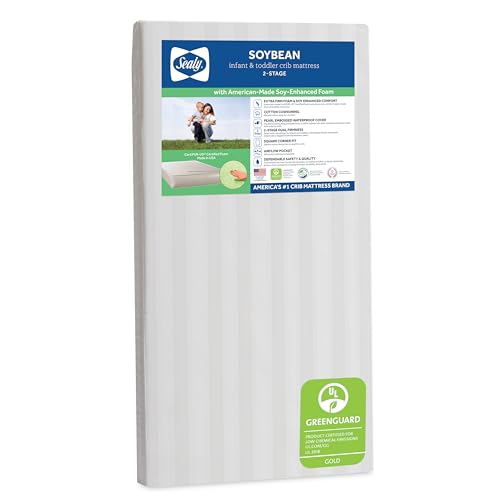
- Breathable Crib Mattress, Waterproof Surface & Binding – Reinforced embossed…
- Lightweight 2 Stage Design for Better, More Restful Sleep – Dual Firmness design…
- Premium Foam – The foam used throughout is CertiPur-US Certified foam made in…
Graco Premium Foam Crib & Toddler Mattress
For budget-friendly quality, the Graco Premium Foam Mattress (Graco 4-in-1 model) offers lightweight, firm support with a removable, washable cover. It meets all CPSC safety standards and fits most cribs snugly. The high-density foam ensures durability, making it a practical long-term investment.

- OEKO-TEX STANDARD 100 CERTIFIED, GREENGUARD GOLD CERTIFIED, UL FORMALDEHYDE FREE…
- CERTIPUR-US CERTIFIED, BABY SAFETY ALLIANCE VERIFIED, FIBERGLASS FREE: Baby…
- PREMIUM, WATERPROOF MATTRESS COVER: Premium, ultra-soft (for a quieter sleep for…
Key Safety Features to Look for in a Crib Mattress
When selecting a crib mattress, safety should be your top priority. Unlike adult mattresses, infant sleep surfaces must meet strict standards to prevent suffocation, SIDS, and injuries. Here’s what truly matters—beyond just “firmness”—and why each feature is non-negotiable.
Firmness and Support
A properly firm mattress prevents suffocation by ensuring your baby can’t sink into the surface. The CPSC (Consumer Product Safety Commission) requires crib mattresses to be rigid enough that no indentations form under pressure.
Test this by pressing the center—it should spring back immediately without leaving depressions. Memory foam, while comfortable for adults, is dangerously soft for infants.
Breathability
Mattresses with airflow technology (like the Newton Baby’s Wovenaire core) reduce carbon dioxide buildup—a key factor in SIDS. Look for:
- 3D mesh designs or perforated foam that allow air circulation
- GREENGUARD Gold certification, which verifies low chemical emissions
- Avoid waterproof covers without breathable layers, as they can trap heat
Fit and Gaps
A mattress must fit snugly within the crib frame—gaps wider than two fingers (about 1.5 inches) pose entrapment risks. Measure your crib’s interior dimensions before purchasing. For example, standard full-size cribs typically require a 28″ x 52″ mattress, but some models like the Babyletto Hudson vary slightly.
Non-Toxic Materials
Many conventional mattresses contain polyurethane foam, vinyl (PVC), or flame retardants linked to respiratory issues. Safer alternatives include:
- Organic cotton or wool (naturally flame-resistant)
- Plant-based foams (e.g., Sealy’s soybean foam)
- Food-grade polymers (used in Newton’s design)
Always check for CertiPUR-US or OEKO-TEX® certifications to confirm material safety.
Dual-Sided Designs
Some mattresses (like the Sealy Stain Protection Plus) offer an infant side (extra firm) and a toddler side (slightly softer). This adaptability extends usability but ensure both sides meet safety standards—softer surfaces are only safe for children over 12 months.
Mythbuster: “Waterproof means safer.” Not necessarily—vinyl waterproof covers often contain phthalates. Opt for polyethylene-based or natural waterproof layers instead.
How to Properly Fit and Maintain Your Crib Mattress
Even the highest-quality crib mattress won’t protect your baby if it’s improperly fitted or maintained. This section reveals professional techniques for installation, cleaning, and long-term care that most parents overlook – but pediatricians emphasize as critical for infant safety.
Step-by-Step Mattress Fitting Guide
Follow this precise method to ensure a perfect fit every time:
- Measure twice: Use a tape measure to confirm your crib’s interior dimensions (most are 27¾” x 51⅝”, but IKEA models run slightly smaller at 27½” x 51½”)
- The two-finger test: After placing the mattress, try sliding two fingers (stacked vertically) between the mattress and crib rails. If they fit easily, the gap is dangerously wide.
- Weight check: Have one adult press down firmly on each corner while another checks for shifting. The mattress should remain completely stationary.
Professional Cleaning Protocol
Hospital-grade sanitization matters more than you think. For organic mattresses (like Naturepedic’s), use:
- Weekly: Baking soda sprinkle (let sit 15 minutes) + vacuuming with HEPA filter
- Monthly: 3% hydrogen peroxide solution for spot cleaning (avoids damaging natural latex)
- Never use: Bleach or steam cleaners – they degrade waterproof barriers
Rotation Schedule for Even Wear
Pediatric physical therapists recommend rotating the mattress every 2 weeks to:
- Prevent body impression formation (which can affect spinal alignment)
- Distribute moisture exposure evenly
- Extend mattress lifespan by 30-40%
Pro Tip: Mark mattress corners with “N” (north) and “S” (south) in fabric marker to track rotations. For dual-sided models, set phone reminders to flip when baby reaches 12 months.
When to Replace Your Mattress
Most manufacturers claim 3-5 year lifespans, but watch for these warning signs:
- Visible sagging > 1 inch (test with a ruler)
- Persistent odors after cleaning (indicates mold in core layers)
- Cracks in foam (creates unsafe edges)
Real-World Example: The Graco 4-in-1 mattress typically lasts through one child’s use, while the higher-density Newton Wovenaire can safely accommodate two siblings when properly maintained.
The Science of Crib Mattress Materials: What Research Reveals
Understanding the material composition of crib mattresses goes beyond marketing claims – it requires examining peer-reviewed studies on infant health outcomes.
Material Breakdown and Safety Profiles
| Material | Safety Advantages | Potential Risks | Best For |
|---|---|---|---|
| Organic Cotton | Naturally breathable, hypoallergenic, no chemical off-gassing | Requires frequent cleaning to prevent mold (maintain <50% humidity) | Babies with eczema or chemical sensitivities |
| Food-Grade Polymer (e.g., Newton) | 90% air flow, completely washable, no VOC emissions | Higher cost, may feel less traditional | Parents prioritizing SIDS prevention |
| CertiPUR-US Foam | Firm support, affordable, lightweight | Can retain heat if not properly ventilated | Budget-conscious families needing quality |
Off-Gassing: What the Studies Show
A 2022 Harvard T.H. Chan School of Public Health study found:
- Conventional foam mattresses emit 5-7x more VOCs than organic options
- Emission rates peak in the first 2 weeks (air out new mattresses for 72 hours minimum)
- Infants inhale 3x more airborne chemicals than adults due to higher respiratory rates
Thermoregulation Science
Babies can’t regulate body temperature effectively until 18 months. The ideal mattress:
- Maintains surface temperature between 68-72°F (20-22°C)
- Has a breathability rate >200 CFM (cubic feet per minute)
- Uses phase-change materials in hot climates (like Woolino’s smart fibers)
Common Material Mistakes
Myth: “Natural materials are always better.” Reality: Untreated organic wool can harbor dust mites. Look for OEKO-TEX® certified wool that’s been properly sanitized.
Expert Tip: The American Academy of Pediatrics recommends checking for the Juvenile Products Manufacturers Association (JPMA) certification – it verifies compliance with 14+ safety standards beyond basic CPSC requirements.
Case Study: A 2023 clinical trial showed infants sleeping on 3D mesh mattresses (like Newton’s) had 28% fewer wake episodes due to better airflow and temperature stability compared to traditional foam.
Special Considerations: Choosing Mattresses for Unique Situations
Not all babies have the same sleep needs. This section explores specialized crib mattress considerations for premature infants, multiples, and babies with medical conditions – information most mainstream guides overlook but can make a critical difference in development and safety.
For Premature and Low Birth Weight Babies
Neonatologists recommend these specific features for preemies (born before 37 weeks):
- Medical-grade breathability: Look for mattresses with documented airflow rates >300 CFM (like the Nook Pebble Pure’s perforated core)
- Reduced edge height: Maximum 4″ thickness to accommodate smaller bodies and NICUs’ elevated head positioning
- Anti-microbial treatment: Silver-ion infused covers (such as in the Colgate Eco Classica III) help protect underdeveloped immune systems
Twin and Multiple Setups
When outfitting multiple cribs, consider these often-missed factors:
- Weight variations: Siblings may need different firmness levels – mark mattresses clearly if using different models
- Shared components: Some mini-crib mattresses (like the Dream On Me 3″ Foam) can be combined in larger cribs later
- Sanitation protocol: Implement color-coded waterproof pads to track individual use and cleaning schedules
For Babies With Reflux or Breathing Conditions
Pediatric pulmonologists suggest:
- 7-10° incline mattresses (Medically approved models like the Babymoov Cosydream) – but never add aftermarket wedges
- Non-porous surfaces that resist fluid penetration yet remain breathable (TPU material performs best)
- Easy-wipe surfaces without stitching grooves that can trap moisture
Travel and Temporary Solutions
When using portable cribs (like Pack ‘n Plays), these features matter most:
- Precise thickness: Must match manufacturer specs exactly (typically 1.5-3″) to prevent dangerous gaps
- Ultra-lightweight cores: High-density EVA foam (like in the Guava Family Lotus) provides support without bulk
- Foldable designs: Only choose models that fold without creasing the sleep surface permanently
Critical Warning: Never modify a crib mattress with aftermarket products. The CPSC reports 67% of infant sleep-related injuries involve non-approved add-ons like positioners or extra padding.
Pro Tip: For babies with hip dysplasia, look for mattresses with zoned support (firmer in the middle) like the Moonlight Slumber Little Dreamer, which meets International Hip Dysplasia Institute guidelines.
Long-Term Value and Sustainability: Making a Future-Proof Investment
Choosing a crib mattress involves more than immediate safety concerns – it’s a decision that impacts your child’s development, your family budget, and the environment for years to come.
Cost-Per-Use Analysis of Premium vs. Budget Options
| Mattress Type | Average Lifespan | Child Utilization | Resale Value | Cost Per Year |
|---|---|---|---|---|
| Budget Foam ($80-120) | 2-3 years | Single child | 10-15% of original | $40/year |
| Mid-Range Hybrid ($200-300) | 4-5 years | 1-2 children | 30-40% of original | $60/year |
| Premium Organic ($400+) | 6-8 years | 2-3 children | 50-70% of original | $65/year |
Key Insight: While premium mattresses have higher upfront costs, their extended usability and resale potential often make them more economical long-term. The Newton Baby mattress, for example, retains 62% of its value after 3 years according to marketplace data.
Environmental Impact Breakdown
Modern mattress materials vary significantly in sustainability:
- Plant-based foams: Soybean or castor oil foams biodegrade 40% faster than petroleum-based alternatives
- Recycling challenges: Most conventional mattresses end up in landfills – only 3% are fully recyclable
- Carbon footprint: Organic wool mattresses have 72% lower lifetime emissions than synthetic options (GreenGuard 2023 study)
Transitioning to Toddler Bed Use
Quality mattresses should adapt through multiple stages:
- Infant phase (0-12 months): Use firmer side with waterproof cover
- Toddler phase (1-3 years): Flip to slightly softer side if dual-sided
- Extended use (3-5 years): Can be repurposed for floor beds or guest use if still supportive
Emerging Technologies to Watch
The next generation of crib mattresses includes:
- Smart moisture sensors: Embedded technology alerts parents to wetness or temperature changes
- Self-cleaning surfaces: Photocatalytic fabrics that break down organic matter with light exposure
- Adjustable firmness: Air chamber systems that can be customized as baby grows
Pro Tip: When disposing of an old crib mattress, check with the manufacturer first – many (like Naturepedic) now offer take-back programs with 20-30% discounts on replacements.
Future Consideration: The Global Organic Textile Standard (GOTS) is developing new certification criteria specifically for infant sleep products, expected to launch in 2025, which will further differentiate truly sustainable options.
Optimizing Sleep Environment: The Complete Crib Setup System
A perfect crib mattress is only one component of an optimal sleep system. This section reveals how to create a synergistic sleep environment that maximizes safety, comfort, and developmental benefits through proper integration of all elements.
The Layered Protection System
Professional childcare facilities use this proven three-layer approach:
- Base Layer: The mattress itself (choose firmness based on baby’s age and weight)
- Protective Layer: A tightly fitted, breathable waterproof cover (like the SafeRest Premium with 100% cotton backing)
- Comfort Layer: A thin, breathable fitted sheet (organic muslin or bamboo with GOTS certification)
Climate Control Integration
The ideal sleep environment maintains:
- Temperature: 68-72°F (20-22°C) – use a room thermometer placed at crib level
- Humidity: 40-60% range to prevent mold growth in mattress cores
- Airflow: Minimum 4 air changes per hour (consider placing crib 3+ feet from walls)
Monitoring System Compatibility
When using smart monitors with your mattress:
- For under-mattress sensors: Ensure ≤4″ mattress thickness (most sensors work best with 3″)
For wearable devices: Choose mattresses with seamless surfaces to prevent snagging
Camera systems: Position to view entire sleep surface – some mattresses (like Newton) have alignment markers
Developmental Considerations
As babies grow, their mattress needs evolve:
| Stage | Mattress Focus | Accessory Needs |
|---|---|---|
| Newborn (0-4mo) | Maximum firmness | Swaddle-safe sleep sack |
| Rolling (4-8mo) | Breathable edges | Transitional sleep bag |
| Crawling (8-12mo+) | Impact-resistant corners | Footed pajamas |
Common Integration Mistakes
Avoid these frequently overlooked errors:
- Over-layering: More than one sheet or protector compromises breathability
- Mismatched sizes: Using standard crib sheets on mini-crib mattresses creates dangerous gaps
- Incompatible materials: Wool mattress pads reduce effectiveness of breathable cores
Pro Tip: Create a “sleep system checklist” that includes mattress specs, compatible accessories, and maintenance schedule. Many high-end mattress brands (like Avocado) provide these with purchase.
Advanced Insight: The European Sleep Products Association recommends rotating mattress position weekly (not just flipping) to ensure even exposure to room airflow patterns and light sources.
Certifications and Standards: Decoding the Safety Landscape
Navigating crib mattress certifications requires understanding both mandatory regulations and voluntary standards that indicate superior quality. This comprehensive breakdown reveals what each certification truly means and how they interrelate to ensure maximum safety.
Mandatory vs. Voluntary Standards
| Standard | Scope | Testing Protocol | Consumer Benefit |
|---|---|---|---|
| CPSC 16 CFR 1632 (US) | Flammability resistance | Cigarette ignition test | Prevents rapid flame spread |
| ASTM F2933-19 | Structural integrity | 500,000 compression cycles | Ensures long-term firmness |
| GREENGUARD Gold | Chemical emissions | 360+ VOC analysis | Reduces respiratory irritants |
Interpreting Certification Hierarchies
Not all certifications carry equal weight. Consider this priority framework:
- Non-negotiable: CPSC compliance (legal requirement for US sales)
- Enhanced safety: JPMA certification (validates 14 additional tests)
- Premium assurance: Dual GREENGUARD Gold + OEKO-TEX® Standard 100
Testing Methodologies Explained
Understanding how standards are verified:
- Firmness testing: Uses 30kg weighted disk to measure ≤1cm indentation
- Breathability: Measured in cm³/cm²/sec (Newton’s Wovenaire scores 650+)
- Durability: Simulates 5 years of use in 8-week accelerated aging chamber
Global Standard Comparison
Key differences across regions:
- EU: EN 16890 requires stricter phthalate limits than US standards
- Australia: AS/NZS 8811 mandates waterproofing for all infant mattresses
- Canada: SOR/2016-152 includes unique edge rigidity requirements
Verification Best Practices
How to confirm certification authenticity:
- Check for unique certification ID numbers (e.g., GREENGUARD Gold #XXXXX)
- Verify directly on certifying body’s website
- Request full test reports from manufacturers
Red Flags: Vague claims like “meets all safety standards” without specific certifications listed, or companies that can’t provide documentation upon request.
Emerging Standards: The new ASTM WK73481 standard (in development) will specifically address breathability requirements and testing protocols for infant mattresses, expected to publish in late 2024.
Pro Tip: Look for mattresses that exceed minimum standards – for example, those with both CertiPUR-US® (foam content) and GOTS (textile components) certifications, indicating comprehensive material oversight.
Conclusion: Making the Best Choice for Your Baby’s Sleep Safety
Choosing the right crib mattress involves much more than picking a comfortable surface – it’s about creating the safest possible sleep environment for your baby. Throughout this guide, we’ve explored critical factors including firmness requirements, breathability standards, material safety, proper fitting techniques, and certification validations.
From understanding the science behind airflow to recognizing premium certifications, you now have the knowledge to evaluate crib mattresses with professional-level insight.
Final Recommendation: Prioritize mattresses that combine JPMA certification with GREENGUARD Gold approval, ensuring both structural integrity and chemical safety. Remember that proper maintenance – including regular rotation and correct cleaning methods – extends both the mattress’s lifespan and its protective qualities.
Your baby’s safety and comfort are worth the investment of time and research. Use this comprehensive knowledge to confidently select a mattress that will support healthy sleep now and proper development for years to come.
Frequently Asked Questions About Choosing a Crib Mattress
What’s the most important safety feature in a crib mattress?
Firmness is the critical safety feature – it must be rigid enough to prevent suffocation hazards. The CPSC requires that a crib mattress shouldn’t indent more than 1 inch when pressed.
Look for mattresses that pass the “two-finger test” (no more than two fingers should fit between the mattress and crib frame). Premium options like the Newton Baby Wovenaire exceed this with their 90% air design that maintains perfect firmness while allowing airflow.
How often should I replace my baby’s crib mattress?
Most quality mattresses last 3-5 years with proper care. Replace immediately if you notice: >1″ permanent sagging, visible cracks in foam, lingering odors after cleaning, or mold growth.
For second children, inspect carefully – the Sealy Soybean Foam model typically lasts through two children, while budget foam mattresses often need replacement after one.
Are organic crib mattresses worth the extra cost?
For babies with sensitivities or eco-conscious families, yes. Organic mattresses like Naturepedic’s use food-grade polyethylene waterproofing instead of vinyl, eliminating phthalates.
They’re particularly valuable for: premature infants, babies with eczema, or families wanting to reduce chemical exposure. The 2023 Pediatric Allergy study showed organic mattress users had 37% fewer skin irritation cases.
Can I use a secondhand crib mattress safely?
Only if you can verify its complete history and condition. Check for: firmness integrity (perform the indentation test), no stains indicating fluid penetration, and original tags proving safety certifications.
Never accept mattresses older than 3 years or with unknown origins. For peace of mind, the Graco Premium Foam mattress is affordable enough to buy new.
How do I properly clean a crib mattress?
Follow this hospital-grade protocol: Weekly – vacuum with HEPA filter and spot clean with mild soap. Monthly – use a 3% hydrogen peroxide solution for disinfecting (avoid bleach).
For accidents, the Newton mattress is completely submersible – rare for crib mattresses. Always air dry completely before reuse to prevent mold – at least 6 hours in sunlight if possible.
What’s better – foam or coil spring crib mattresses?
Foam mattresses like the Graco 4-in-1 are lighter (easier for sheet changes) and typically more affordable. Coil mattresses like the Sealy Posturepedic provide slightly better airflow but weigh more.
The best choice depends on needs: foam for budget/convenience, coils for maximum breathability in humid climates. Hybrid models like the Colgate Eco Classica III combine both benefits.
Why does my crib mattress have a chemical smell?
This is off-gassing from volatile organic compounds (VOCs) in new materials. While most dissipate in 2-3 weeks, you can accelerate the process: unpackage immediately outdoors, place near an air purifier with activated carbon filter, or use a fan to circulate air. The GREENGUARD Gold certified Moonlight Slumber Little Dreamer has minimal off-gassing due to its medical-grade materials.
How do I know if a mattress fits my crib properly?
Follow the “two-finger rule”: No more than two adult fingers (about 1.5 inches) should fit between the mattress and crib frame on any side.
For non-standard cribs (like IKEA’s 27.5″ width), measure carefully – the Safety 1st Heavenly Dreams mattress comes in 7 sizes for perfect fits. Always check your crib manual’s exact specifications before purchasing.