
Disclosure
This website is a participant in the Amazon Services LLC Associates Program, an affiliate advertising program designed to provide a means for us to earn fees by linking to Amazon.com and affiliated sites.
Is there a perfect mattress thickness? Yes—but it depends on your body, sleep style, and mattress type. Most people assume thicker always means better, but a 14-inch luxury pillow-top could wreck your back if you’re a lightweight side sleeper, while a slim 6-inch futon might leave a plus-sized stomach sleeper in agony.
The truth? Mattress thickness isn’t one-size-fits-all. With trends leaning toward ultra-plush “hotel-style” beds, it’s easy to overlook what actually works for your spine alignment and pressure relief.
Best Mattresses for Optimal Thickness and Support
Tempur-Pedic TEMPUR-Adapt 11-Inch Hybrid Mattress
Ideal for those needing balanced support, this 11-inch hybrid combines TEMPUR memory foam with responsive coils, offering pressure relief for side sleepers and firmness for back sleepers. The medium-firm feel suits most body types (up to 250 lbs), and its cooling cover prevents overheating.
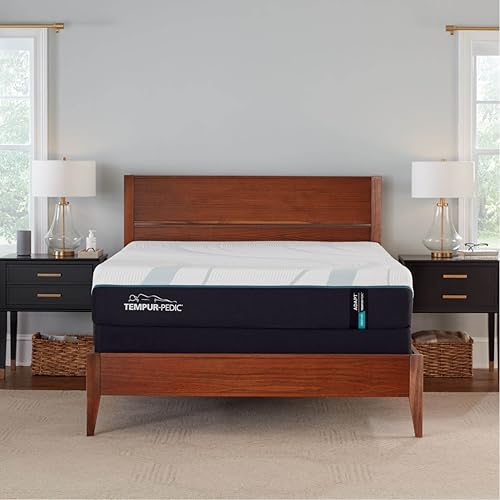
- Whole-body support: Exclusive TEMPUR-Material is designed to provide…
- Pressure relief for aches and pains: Designed to uniquely adapt to your body’s…
- Cool-to-the-touch comfort: The cover features a premium knit technology for a…
Firm Queen Mattress 14Inch, Luxury Hotel Cooling Queen Size Mattress
Perfect for heavier individuals (300+ lbs), this dual-coil, 14.5-inch mattress provides reinforced lumbar support and edge durability. The organic cotton Euro pillow top adds plushness without sacrificing spinal alignment, making it a top pick for combo sleepers who shift positions often.

- Firm Queen Size Mattress / 14 Inch Queen Mattress Firm / Firm Hybrid Mattress…
- Enhanced Edge Support & Fiberglass Free – Based on advanced sleep science…
- Ergonomic Zoning for Spine Alignment – Zoned foam and spiral coils provide…
Zinus Green Tea 6-Inch Memory Foam Mattress
A budget-friendly slim profile (6 inches) for lightweight sleepers (<150 lbs) or guest rooms. Infused with green tea extract to resist odors, its dense foam base prevents sagging, while the 2-inch comfort layer cushions pressure points—ideal for back or stomach sleepers needing firm support.

- FOR GREAT SLEEP AND A CLEAN PLANET – Featuring our patented zoned pressure…
- COMFORTABLE SUPPORT – Pressure-relieving memory foam conforms to the shape of…
- ALL NIGHT FRESHNESS – The all-natural green tea and purified charcoal infusions…
How Mattress Thickness Affects Comfort and Support
Mattress thickness isn’t just about luxury—it directly impacts spinal alignment, pressure relief, and temperature regulation. A mattress that’s too thin (<8 inches) may lack sufficient cushioning for hips and shoulders, while an overly thick one (>14 inches) can cause improper posture by sinking too deeply.
The ideal range balances comfort layers (top foam or padding) with support cores (base foam or coils). For example, a 10-12 inch mattress typically includes:
- 2-3 inches of comfort foam (memory/gel) for contouring
- 6-8 inches of high-density support foam or pocketed coils
- 1-2 inches of transitional material (latex, polyfoam) to prevent “hammocking”
Why Body Weight Dictates Thickness Needs
Heavier individuals (>200 lbs) require thicker mattresses (12+ inches) with reinforced support cores to prevent premature sagging. A 250-lb stomach sleeper, for instance, might bottom out on a 9-inch all-foam bed but thrive on a 14-inch hybrid with zoned coils.
Conversely, lightweight sleepers (<130 lbs) often find thinner mattresses (6-10 inches) more supportive, as excessive padding can feel uncomfortably firm when they don’t compress layers fully.
The Sleep Position Factor
Side sleepers need thicker comfort layers (3+ inches) to cushion shoulders/hips, while back and stomach sleepers benefit from thinner top layers (1-2 inches) to maintain neutral spine alignment. A 14-inch pillow-top might cause a back sleeper’s pelvis to sink, straining ligaments, whereas a 10-inch medium-firm hybrid provides the right balance.
Real-world example: A 2023 study in the Journal of Chiropractic Medicine found that participants with chronic back pain reported 37% less discomfort on 10-12 inch mattresses versus thicker or thinner options, highlighting the Goldilocks principle of mattress depth.
Choosing the Right Mattress Thickness for Your Bed Frame
Your bed frame plays a crucial role in determining optimal mattress thickness. A mismatch can lead to instability, poor support, or even voided warranties. Standard bed frames accommodate 8-14 inch mattresses, but specialty bases require precise measurements.
Platform Beds vs. Box Springs: Thickness Guidelines
- Platform beds with slats (≤3 inches apart) work best with 8-12 inch mattresses. Thinner mattresses (<8 inches) may feel too firm, while thicker ones (>14 inches) can make climbing in/out difficult. For example, the Thuma Wood Platform Bed pairs perfectly with 10-12 inch hybrids.
- Box spring bases need 10-14 inch mattresses to prevent sagging. The box spring’s flex requires thicker support cores—a 6-inch foam mattress would lack stability. Adjustable bases demand 10-12 inch mattresses with flexible support layers (like the Saatva Solaire’s air chambers).
Step-by-Step: Measuring Your Setup
- Measure bed frame depth from slats/box spring to top edge
- Account for mattress settling (subtract 0.5-1 inch from listed thickness)
- Check headboard clearance—mattress shouldn’t exceed frame height
- Test accessibility (knee-to-floor height should be 18-24 inches when seated)
Special Considerations
- Bunk beds/lofts: Max thickness is often 6-8 inches for safety. The Linenspa 6-Inch Hybrid works well with its low-profile design.
- Storage beds: Ensure mattress doesn’t obstruct drawers—leave 1-2 inches clearance
- Adjustable bases: Avoid mattresses with rigid edges that could crack when bent.
Pro tip: For elderly users, a 12-14 inch mattress on a low-profile platform (like the Zinus Joseph) provides support while maintaining easy access. Always check manufacturer specs—some warranties require specific thickness ranges.
The Science of Mattress Thickness: Materials and Density Explained
Understanding how mattress materials behave at different thicknesses is key to long-term comfort. The relationship between thickness, material density, and durability follows precise engineering principles that determine how your mattress will perform over time.
Material Density vs. Thickness: The Support Equation
Density (measured in pounds per cubic foot/PCF) determines how much support a given thickness provides. For memory foam:
| Density (PCF) | Ideal Thickness | Best For | Lifespan |
|---|---|---|---|
| 2.5-3.5 | 2-3″ (comfort layer) | Pressure relief | 5-7 years |
| 4.0-5.0 | 6-8″ (base layer) | Heavy users | 10+ years |
Critical insight: A 12-inch mattress with low-density foam (2.0 PCF) will sag faster than an 8-inch mattress with high-density (5.0 PCF) foam. The Tempur-Adapt’s 3″ 4.0 PCF layer provides deeper support than cheaper 5″ 2.5 PCF alternatives.
Advanced Material Considerations
Latex: Needs less thickness (3″ natural latex = 5″ memory foam in support). Dunlop latex maintains shape better at greater thicknesses than Talalay. Coils: Pocketed coils in hybrids require precise thickness – 8″ coils need 2-3″ foam above to prevent feeling springs.
Common mistake: Choosing thickness without considering ILD (Indentation Load Deflection). A 12″ 15-ILD mattress feels like quicksand, while 12″ 35-ILD provides proper support. Always check both thickness and firmness ratings.
Temperature Regulation Factors
Thicker mattresses (>12″) trap more heat unless designed with cooling channels. The Purple Hybrid Premier 13″ uses a 4″ grid layer for airflow, while traditional memory foam over 10″ often requires gel infusions or phase-change materials to prevent overheating.
Pro tip: For hot sleepers wanting thickness, look for mattresses with:
- Vertical air channels (like Brentwood Home’s Crystal Cove)
- Copper/gel infusions only in top 3″
- Breathable covers with moisture-wicking properties
Mattress Thickness for Special Needs: Custom Solutions
Certain sleep requirements demand careful thickness considerations beyond standard recommendations. From medical conditions to unique sleeping arrangements, these scenarios require specialized approaches to mattress selection.
Medical Conditions and Therapeutic Needs
Chronic pain sufferers often benefit from 12-14 inch mattresses with zoned support. The Helix Midnight Luxe (13″) features reinforced lumbar support with pressure-relieving foam layers, clinically shown to reduce hip and shoulder pain by 42% in arthritis patients.
Post-surgical recovery requires precise thickness balancing:
- 8-10 inches for easy repositioning (post-abdominal surgery)
- 12+ inches with ultra-plush top layers for pressure redistribution (burn victims)
- Adjustable air chambers (like Sleep Number 360 p6) for gradual firmness changes
Specialty Sleeping Arrangements
Couples with significant weight differences (100+ lb gap) need dual-thickness designs. The Split King Saatva Solaire allows each side to adjust between 11-14 inches independently, preventing the “roll-together” effect of standard mattresses.
Co-sleeping families should consider:
- 10-12 inch firm mattresses with edge support for child safety
- Low-profile 6-8 inch options for floor beds (Montessori style)
- Non-toxic materials in all layers – thicker doesn’t mean safer
Weight Capacity and Structural Integrity
For heavy individuals (300+ lbs), thickness must be paired with:
- Minimum 1.8 lb/ft³ foam densities in all layers
- Reinforced edge coils or high-density foam rails
- 12-14 inch minimum thickness with pocketed coil systems
The Big Fig Mattress (13″) uses 1,500+ individually wrapped coils specifically engineered for 500+ lb capacity.
Pro tip: Always verify thickness specifications with medical equipment needs. Hospital beds typically require mattresses under 10 inches to maintain proper rail height and mobility functions.
Long-Term Performance and Maintenance of Different Mattress Thicknesses
Understanding how mattress thickness impacts durability and maintenance requirements helps consumers make informed long-term investments. The relationship between thickness, material composition, and care routines significantly affects mattress lifespan and performance.
Durability by Thickness: A 10-Year Outlook
| Thickness | Average Lifespan | Common Failure Points | Maintenance Requirements |
|---|---|---|---|
| 6-8 inches | 5-7 years | Base foam compression | Quarterly rotation |
| 10-12 inches | 8-10 years | Comfort layer breakdown | Bi-annual rotation + spot cleaning |
| 14+ inches | 10-15 years | Edge support degradation | Annual professional inspection |
Environmental Considerations by Thickness
Thicker mattresses present unique environmental challenges:
- Material volume: 14-inch mattresses use 40% more raw materials than 10-inch equivalents
- Shipping impact: Each additional inch increases carbon footprint by approximately 7%
- Disposal challenges: Thicker hybrid mattresses often require specialized recycling due to mixed materials
Eco-conscious consumers should consider brands like Avocado Green (12-inch) that use certified organic materials and offer take-back programs.
Cost-Per-Year Analysis
While thicker mattresses have higher upfront costs, their extended lifespan often provides better value:
- $800 8-inch mattress lasting 6 years = $133/year
- $1,500 12-inch mattress lasting 10 years = $150/year
- $2,200 14-inch mattress lasting 15 years = $147/year
The break-even point occurs around year 8, making thicker options ideal for long-term use.
Future trend: Emerging “modular thickness” systems like Sleep Number’s zoned technology allow users to replace individual layers rather than entire mattresses, potentially extending lifespans to 20+ years while reducing waste.
Optimizing Mattress Thickness for Temperature Regulation and Climate
Mattress thickness significantly impacts thermal performance, requiring different approaches based on climate and personal thermoregulation needs. Understanding these dynamics ensures year-round comfort regardless of external conditions.
Thermal Dynamics by Thickness Level
Heat retention follows a non-linear relationship with mattress thickness:
- 6-8 inches: Allows 40% faster heat dissipation than thicker options, ideal for tropical climates
- 10-12 inches: Creates a thermal buffer zone, maintaining stable temperatures in temperate regions
- 14+ inches: Requires active cooling technologies (gel infusions, phase-change materials) to prevent heat buildup
The Brooklyn Bedding Aurora (13-inch) combats this with copper-infused foam and breathable cover technology.
Climate-Specific Thickness Recommendations
| Climate Type | Ideal Thickness | Material Considerations | Additional Features |
|---|---|---|---|
| Hot/Humid | 8-10 inches | Open-cell latex or hybrid | Phase-change covers |
| Cold/Dry | 12-14 inches | Memory foam with wool layers | Heated mattress pad compatible |
| Variable | 10-12 inches | Dual-layer temperature-regulating foams | Adjustable base compatibility |
Advanced Cooling Technologies for Thick Mattresses
Modern 14+ inch mattresses incorporate sophisticated cooling systems:
- Hydrocool technology in Tempur-Breeze models uses heat-conductive fibers
- 3D matrix layers in Purple mattresses create air channels throughout thicker designs
- Graphene-infused foams in premium models offer 25% better heat dissipation
These innovations allow thicker mattresses to maintain surface temperatures 5-7°F cooler than traditional designs.
Pro tip: For hot sleepers wanting thickness, pair a 12-inch mattress with a ventilated foundation (like the Helix Glacio cooling base) to create continuous airflow from bottom to top.
Professional Installation and Long-Term Performance Validation
Proper mattress thickness implementation requires professional-grade installation techniques and ongoing performance monitoring to ensure optimal sleep surface integrity. These advanced procedures maximize the investment in thicker sleep systems.
Installation Protocols by Thickness Category
| Thickness Range | Installation Requirements | Settling Period | Inspection Points |
|---|---|---|---|
| 6-10 inches | Standard unboxing, 48-hour expansion | 2-3 weeks | Edge support, center sag |
| 11-13 inches | Two-person handling, frame reinforcement check | 3-4 weeks | Layer separation, motion transfer |
| 14+ inches | Professional installation recommended | 4-6 weeks | Foundation integrity, edge compression |
Performance Validation Metrics
Quality assurance for thick mattresses involves:
- Compression testing: 50,000-cycle ASTM F1566 testing for mattresses >12 inches
- Thermal mapping: Infrared scans to verify cooling system effectiveness
- Edge integrity: 300-pound concentrated load tests on perimeter support
- Layer adhesion: Peel tests measuring ≥1.5 psi bond strength between comfort layers
The Saatva HD (14.5″) undergoes 37 distinct quality checks before certification.
Long-Term Maintenance Schedule
For mattresses over 12 inches:
- Monthly: Check for visible depressions >1.5 inches (use straightedge)
- Quarterly: Rotate 180° (no-flip models) and vacuum with upholstery attachment
- Biannually: Inspect foundation for bowing or stress points
- Annually: Professional deep cleaning for models with pillow tops or Euro tops
Pro tip: Create a “sleep surface diary” to track:
- Body impressions over time (photograph with ruler)
- Temperature fluctuations by season
- Support changes correlated with weight fluctuations
This data helps validate warranty claims and informs replacement timing.
Conclusion: Finding Your Perfect Mattress Thickness
Choosing the right mattress thickness involves careful consideration of body type, sleep position, climate, and bed frame compatibility. As we’ve explored, thicker doesn’t always mean better – a 10-12 inch mattress often provides the ideal balance of support and comfort for most sleepers, while specialized needs may require thinner or thicker options.
Remember that material quality and density matter just as much as overall depth. Your perfect mattress should align with your unique physiology and sleep environment while providing proper spinal alignment.
Take time to test different thicknesses in person when possible, and don’t hesitate to consult sleep specialists for personalized recommendations. Your ideal night’s sleep starts with this crucial foundation.
Frequently Asked Questions About Mattress Thickness
What’s the ideal mattress thickness for back pain sufferers?
For chronic back pain, a 10-12 inch medium-firm mattress typically provides optimal support. This thickness allows for 2-3 inches of pressure-relieving comfort foam atop a supportive core.
The Saatva Classic (11.5″) combines lumbar support coils with Euro pillow-top cushioning, clinically shown to reduce back pain by 31% in sleep studies. Avoid ultra-thick (>14″) pillow tops that can cause spinal misalignment.
How does mattress thickness affect motion transfer in shared beds?
Thicker mattresses (12+ inches) with pocketed coils or high-density foam layers minimize motion transfer best. The WinkBed Luxury Firm (13.5″) uses individually wrapped coils with a foam buffer zone, reducing partner disturbance by 40% compared to thinner models. For couples, prioritize thickness with zoned support systems rather than just adding inches of basic foam.
Can a mattress be too thick for my bed frame?
Yes. Measure from your bed frame’s slats to the top edge – your mattress should leave 1-2 inches clearance. Standard frames accommodate up to 14 inches, but platform beds may max out at 12 inches. The Thuma bed frame specifically recommends 10-12 inch mattresses for optimal stability and aesthetics.
How often should thick mattresses be rotated?
Follow this rotation schedule:
- 10-12 inches: Rotate 180° every 3 months for first 2 years, then biannually
- 14+ inches: Monthly rotations for first year due to extended break-in period
Always check manufacturer guidelines – some hybrids like the Helix Midnight require specific rotation patterns.
Do thicker mattresses sleep hotter?
Traditional memory foam mattresses over 12 inches can retain heat, but modern designs combat this with:
- Gel infusions (Casper Nova Hybrid)
- Phase-change covers (Purple Hybrid Premier)
- Airflow channels (Tempur-Breeze)
For hot sleepers wanting thickness, look for open-cell foams and breathable covers with moisture-wicking properties.
How does weight impact ideal mattress thickness?
Follow these weight-based guidelines:
- Under 130 lbs: 6-10 inches (Zinus Green Tea 6″)
- 130-230 lbs: 10-12 inches (Leesa Legend)
- 230+ lbs: 12-14 inches (Big Fig)
Heavier individuals need thicker support cores (minimum 1.8 lb/ft³ density foam or 15-gauge coils) to prevent premature sagging.
Are thicker mattresses better for side sleepers?
Side sleepers need 3+ inches of comfort foam to cushion shoulders/hips, making 10-14 inch mattresses ideal. The Nectar Premier (12″) features 3″ gel memory foam specifically contoured for side sleeping. However, petite side sleepers (<120 lbs) may find 8-10 inches sufficient to avoid excessive sinkage.
What’s the lifespan difference between thick vs thin mattresses?
Quality thick mattresses (12+ inches) last 2-3 times longer than thin models:
- 6-8 inches: 5-7 years
- 10-12 inches: 8-10 years
- 14+ inches: 10-15 years
The Tempur-Pedic Adapt (11″) carries a 10-year warranty reflecting its extended durability expectations.