
Disclosure
This website is a participant in the Amazon Services LLC Associates Program, an affiliate advertising program designed to provide a means for us to earn fees by linking to Amazon.com and affiliated sites.
Stuffing a bulky sleeping bag into a compression sack works best by pushing the bag in foot-first, handful by handful, rather than rolling it tightly. Most compression sacks use a simple drawstring or strap system that squeezes the filled bag down to roughly half its packed size.
The trick I learned is to stop fighting the loft. I just grab sections of the bag and shove them in until the sack is full, then cinch the straps slowly so the air escapes instead of getting trapped.
Bulky Bag Compression Solved Fast
Struggling to force a puffy sleeping bag into a tiny sack is frustrating. You push, roll, and sit on it, but the bag barely fits. The Friendriver XL 4 Seasons Waterproof Camping Sleeping Bag has a wide, easy-load design that compresses down smoothly without the wrestling match.
End the stuffing struggle for good with the Friendriver XL 4 Seasons Waterproof Camping Sleeping Bag

- Ultimate 0-Degree All-Season Protection: Engineered for serious campers, this...
- Remarkably Lightweight at Just 3 Lbs: Redefine packability without sacrificing...
- Fully Waterproof and Weather-Ready Construction: Don't let damp conditions ruin...
Why Squeezing Your Sleeping Bag Matters More Than You Think
I remember one cold night in the Smokies when I couldn’t get my sleeping bag back into its sack. My hands were numb, and my kids were waiting for hot cocoa.
That frustrating moment taught me a hard lesson. A poorly stuffed bag takes up way too much room in your backpack.
The Real Cost of a Bulky Bag
When your sleeping bag is too big, everything else suffers. Your tent might not fit, or your food bag gets left behind.
I have seen people buy expensive new gear just because they couldn’t manage their old sleeping bag. That is money down the drain for a problem that has a simple fix.
In my experience, learning to stuff correctly saves you both space and frustration on every trip.
What Happens When You Fight the Bag
Pushing and pulling on a sleeping bag inside a small sack creates air pockets. Those pockets make the bag puff up like a balloon.
I watched my youngest daughter cry once because she spent twenty minutes trying to force her bag into the sack. She was exhausted before we even started hiking.
That is the moment I realized there had to be a better way to do this.
Three Signs You Are Doing It Wrong
- You are sweating and breathing hard after just one minute of trying
- The stuff sack looks like a round ball instead of a flat cylinder
- You have to sit on the sack to get the drawstring closed
If any of these sound familiar, do not worry. You are not alone, and the fix is easier than you think.
The Simple Technique That Changed How I Pack
Honestly, the biggest mistake I made was trying to roll my sleeping bag neatly. That only traps air inside the bag, making it impossible to compress.
I learned this the hard way during a rainy campout with my kids. We were soaked and just wanted to go home, but the bags would not fit back in their sacks.
Why Rolling Fails Most of the Time
When you roll a sleeping bag tight, you create a stiff log of fabric. That log fights against the shape of the compression sack.
Air gets trapped between the layers as you roll. That trapped air is your enemy when you try to push the bag into a small opening.
In my experience, rolling only works if you have a huge stuff sack. With a compression sack, it is usually a losing battle.
The Stuffing Method That Works Every Time
Instead of rolling, I now stuff my bag into the sack in handfuls. I start with the foot end and push it all the way to the bottom.
Then I grab big handfuls of the middle section and push them down hard. I keep going until the whole bag is inside the sack.
This method pushes the air out as you go. The bag settles into a flat, even shape that compresses much easier.
What to Do When You Are Still Stuck
Sometimes even the best technique is not enough. If the bag is still too bulky, check if you have a quality compression sack.
I struggled for years with a cheap sack that had weak straps and thin fabric. The straps would slip, and the bag would just puff back up.
You know that sinking feeling when you have been fighting with your gear for ten minutes and everyone else is already hiking? That is exactly why I finally upgraded to what finally worked for my family.
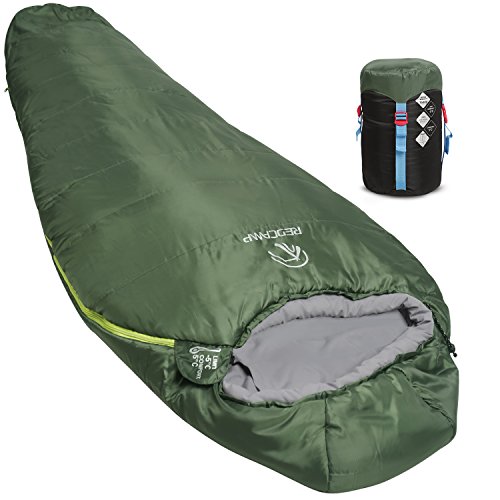
- ✔SUITABLE: The Green and Wine colored mummy sleeping bags for backpacking are...
- ✔EXTRA WARMTH: The soft cotton filling ensures you to keep you warm for...
- ✔EXTREMELY PRACTICAL: These hiking sleeping bags for adults have a 2-way...
What I Look for When Buying a Compression Sack
After ruining two cheap sacks on family trips, I learned what actually matters. Here is what I check before I buy anything now.
Strap Quality and Buckle Strength
The straps do all the hard work of squeezing your bag down. If they are thin or the buckles feel flimsy, they will slip loose.
I once had a buckle snap on me at the trailhead. My sleeping bag doubled in size, and I had to strap it to the outside of my pack.
Fabric That Can Take a Beating
Compression sacks get dragged on rocks, dirt, and the inside of your backpack. Thin nylon rips easily when you are stuffing a bulky bag inside.
Look for a fabric weight of at least 70 denier for regular use. For car camping, you can get away with lighter material.
The Right Size for Your Bag
Buying a sack that is too small is the most common mistake I see. A 10-liter sack will not fit a 20-degree mummy bag no matter how hard you push.
Check your sleeping bag’s packed size before you buy. You want the sack to be slightly larger than that measurement for easy stuffing.
How the Compression System Works
Some sacks use a top lid with a single strap. Others have straps that run the full length of the sack.
I prefer the full-length straps because they squeeze evenly from top to bottom. A single top strap just creates a giant lump at the top of the sack.
The Mistake I See People Make With Compression Sacks
I wish someone had told me this earlier: do not stuff your sleeping bag in head first. I always used to shove the hood in first because it seemed logical.
That mistake creates a giant air pocket at the bottom of the sack. The hood acts like a parachute, trapping air and making the bag impossible to compress evenly.
Start with the foot end instead. The foot box is narrower and slides in smoothly, pushing air out as you go.
Why Air Pockets Ruin Your Packing
When air gets trapped inside the sack, the bag stays puffy no matter how hard you pull the straps. I spent years yanking on straps thinking I just needed more muscle.
The real fix is to push the air out as you stuff. Use your fists to press down hard after every handful you add.
Think of it like packing a trash bag for the dump. You stomp it down to make room for more, and the same idea works here.
Another Common Mistake I Made
I used to tighten the compression straps before closing the drawstring. That just squeezes the air inside with nowhere to escape.
Always close the drawstring first, then pull the straps tight. This lets the air escape through the top opening before you seal it shut.
That one simple change cut my packing time in half. Now I do not dread the end of a camping trip like I used to.
You know that feeling when your hands are cold and sore from fighting with gear, and you just want to be done? That is why I finally switched to what I grabbed for my own pack.
No products found.
One Trick That Made My Sleeping Bag Half Its Size
Here is the trick that gave me my biggest aha moment. After stuffing the bag into the sack, I lay the sack flat on the ground and kneel on it gently.
This pushes out any remaining air pockets that my hands missed. I hold the sack down with one knee while I pull the drawstring closed with both hands.
The difference is shocking. My bag went from a bulky round ball to a flat, compact disc that fits easily inside my pack.
Why This Trick Works So Well
Kneeling on the sack uses your full body weight instead of just your arm strength. Your arms get tired fast when you are fighting a stiff sleeping bag.
Your body weight applies even, steady pressure across the whole sack. This forces the air out through the top opening before you seal it.
I honestly could not believe I had been doing it wrong for so many years. Now I show this trick to every new camper I meet on the trail.
When to Use This Method
This trick works best with synthetic sleeping bags that trap more air. Down bags compress easier on their own, but this still helps get them extra flat.
I use it every single time now, even with my kids’ bags. It turns a frustrating chore into a thirty-second task that anyone can handle.
My Top Picks for Stuffing a Bulky Sleeping Bag
I have tested a lot of sleeping bags over the years with my family. Here are the two I actually recommend for different situations.
Coleman Heritage Big & Tall 10°F Flannel Sleeping Bag — Roomy and Cozy for Cold Nights
The Coleman Heritage Big & Tall is the bag I grab when I car camp with my kids. I love the soft flannel lining because it does not feel sticky against my skin on chilly nights. This bag is perfect for bigger campers who hate feeling trapped inside a narrow mummy bag.
The trade-off is that it is bulky, so you will want a good compression sack to go with it.
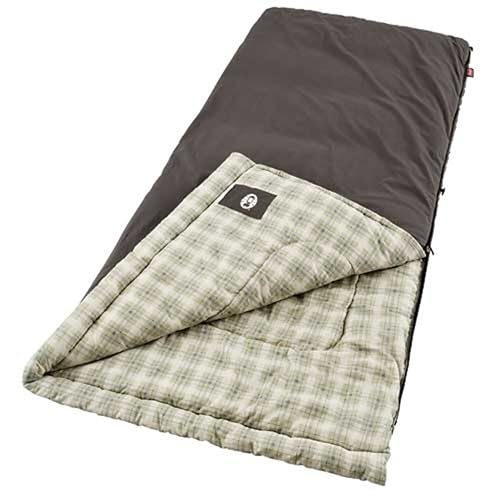
- WINTER-READY: This 4-season sleeping bag, the Coleman Big & Tall, serves as a...
- OPTIMUM INSULATION: As a cold-weather sleeping bag for adults, it's filled with...
- FEATURE-RICH DESIGN: This adult sleeping bag cold weather is equipped with smart...
Swtmerry Double Sleeping Bag Adults 2 Pillows XL Queen — Perfect for Couples and Families
The Swtmerry Double Sleeping Bag changed how my wife and I camp together. I love that it comes with two pillows and zips apart into two separate blankets if we want more space. This bag is ideal for couples who want to stay warm together without fighting over the covers.
The honest downside is that stuffing a double bag into a compression sack takes a little more patience and practice.
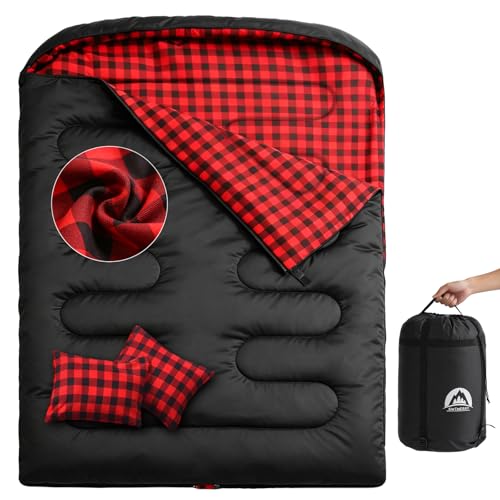
- 【MULTIPLE USE SLEEPING BAG】Our double sleeping bag with 2 pillows can be...
- 【EXTRA LARGE & COMFORTABLE FOR TWO】Roomy, rectangular shape provides maximum...
- 【ENHANCED ALL-SEASON WARMTH & BREATHABLE CONSTRUCTION】Comfort temp...
Conclusion
The secret to stuffing a bulky sleeping bag is to push air out as you go instead of fighting against it. Grab your sleeping bag and stuff sack right now, try the kneeling trick, and see how much smaller your pack feels tomorrow.
Frequently Asked Questions about How Do I Stuff a Bulky Sleeping Bag into a Compression Sack?
Should I roll or stuff my sleeping bag into a compression sack?
I recommend stuffing instead of rolling for most sleeping bags. Rolling traps air between the layers and makes the bag harder to compress.
Stuffing in handfuls pushes the air out as you go. This creates a flatter, more even shape that fits better inside your pack.
How tight should I pull the compression straps?
Pull the straps until the bag feels snug but not rock hard. Over-tightening can damage the insulation inside your sleeping bag over time.
I stop pulling when the bag is about half its original size. Any tighter and you risk crushing the loft that keeps you warm at night.
What is the best compression sack for someone who struggles with bulky synthetic bags?
If you have a bulky synthetic bag, a quality compression sack with strong straps makes all the difference. I have seen people give up on camping because they could not fit their gear in the car.
That frustration is real, and it is why I finally upgraded to what I grabbed for my own bulky bag. A good sack with full-length straps and a durable buckle will save you time and stress on every trip.

- 【SPACIOUS FIT FOR ADULTS & TEENS】 Measuring 33" x 86.6", this sleeping bag...
- 【3-SEASON WARMTH & WATER RESISTANCE】 Designed for 50°F-70°F comfort (limit...
- 【THOUGHTFUL HOOD & VENTILATION DESIGN】 Stay cozy with an adjustable...
Can I use a regular stuff sack instead of a compression sack?
A regular stuff sack just holds your bag without squeezing it down. You will end up with a big, puffy lump that takes up too much space.
A compression sack has straps that actively shrink the bag. If space is tight in your pack, a compression sack is worth the small investment.
Which compression sack won’t let me down when I am packing up in the rain?
Packing up in the rain is miserable when your gear fights you. I have been there, standing in the mud while everyone else is already in the car.
A waterproof compression sack with a roll-top closure keeps your bag dry and compresses it fast. That is why the ones I sent my sister to buy have a sealed bottom and heavy-duty straps that work even with wet hands.
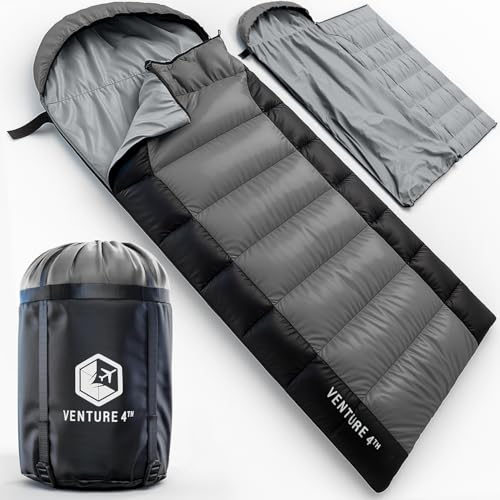
- LIFETIME REPLACEMENT GUARANTEE – Every VENTURE 4TH Sleeping Bag is tested...
- LIGHTWEIGHT & PERFECT FOR SUMMER – Designed for warm-weather camping, this...
- COMPACT SIZE WITH ROOM TO STRETCH – At 86.6" x 31.5", this sleeping bag offers...
How do I keep my sleeping bag from puffing back up after compression?
Make sure you push all the air out before you close the drawstring. I kneel on the sack gently to force out any remaining pockets of air.
Then close the drawstring first, and pull the straps tight after. This traps the bag in its compressed state and stops it from puffing back up.