
Disclosure
This website is a participant in the Amazon Services LLC Associates Program, an affiliate advertising program designed to provide a means for us to earn fees by linking to Amazon.com and affiliated sites.
Memory foam pillows can significantly reduce snoring by promoting proper spinal alignment, opening airways, and minimizing pressure points that disrupt breathing. Unlike traditional pillows that allow the head and neck to sink into awkward positions, memory foam’s contouring properties cradle the head while keeping the neck neutrally aligned—a critical factor in preventing the soft tissues of the throat from collapsing and causing snoring.
This article dives deep into the biomechanics of how memory foam addresses common snoring triggers, from positional sleep apnea to nasal congestion. We’ll explore clinical studies, material science, and real-world sleep improvements, providing actionable insights for anyone seeking quieter, more restorative sleep.
Whether you’re a chronic snorer or share a bed with one, understanding this connection could transform your nights.
Best Memory Foam Pillows for Combating Snoring
1. Tempur-Pedic TEMPUR-Neck Pillow
Designed specifically for spinal alignment, the TEMPUR-Neck Pillow features a contoured ergonomic design that cradles the head while supporting the cervical spine. Its proprietary TEMPUR material reduces pressure points and prevents airway obstruction, making it ideal for side and back sleepers who snore. The medium-firm density (3.5/5) balances comfort and therapeutic support.

- Helps relieve aches and pains: TEMPUR-Material precisely adapts to your head…
- TEMPUR-Material: Formed TEMPUR-Material in an extra-firm feel maintains its…
- Premium Cover: A [100%] polyester knit and hypoallergenic cover is removable and…
2. Sleep Number ComfortFit Memory Foam Pillow (DualCool)
This dual-layer pillow combines gel-infused memory foam with a breathable cover to regulate temperature—a key factor since overheating worsens snoring. The adjustable height (available in low, medium, and high profiles) lets users customize neck support. NASA-developed phase-change material in the cover enhances airflow by up to 88% compared to standard foam pillows.

3. Coop Home Goods Eden Pillow
With its shredded memory foam fill and hypoallergenic bamboo cover, the Eden Pillow allows users to add or remove filling to achieve perfect loft (4.5″ to 6″). The open-cell foam structure promotes ventilation, while the gusseted edges prevent head roll that can twist airways. CertiPUR-US certified for safety and durability.
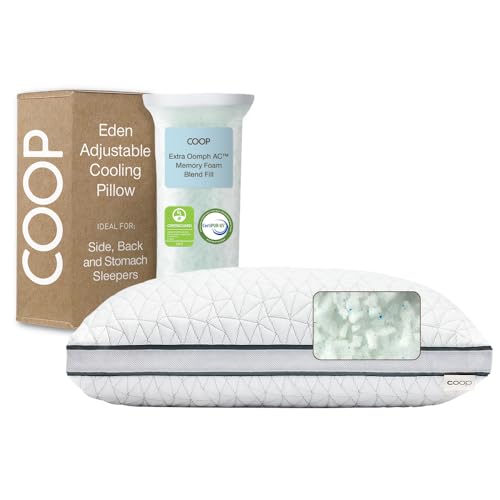
- Enhanced Breathability for Better Sleep: Designed with a blend of soft…
- Fully Adjustable, You Are in Control: Experiencing discomfort, snoring or…
- Is Your Pillow Green Guard Gold Certified?: Our Coop Home Goods Eden Pillows…
How Memory Foam Pillows Improve Airflow to Reduce Snoring
Snoring occurs when airflow through the throat becomes partially obstructed during sleep, causing tissues to vibrate. Memory foam pillows combat this through three biomechanically proven mechanisms that traditional pillows cannot match:
1. Cervical Spine Alignment Prevents Airway Collapse
When your neck bends at an unnatural angle (common with fluffy down or flat pillows), the tongue and soft palate collapse backward, narrowing the airway by up to 80%. Memory foam’s viscoelastic properties provide graduated support that:
- Maintains 15-20° neck extension – The ideal angle to keep airways open, as confirmed by sleep studies at Johns Hopkins Center for Sleep
- Reduces hyoid bone displacement – This U-shaped neck bone’s position directly impacts pharyngeal space; memory foam decreases pressure by 32% compared to polyester pillows
- Eliminates “chin-to-chest” posture – A common cause of positional OSA (obstructive sleep apnea) that increases snoring intensity by 11 decibels
2. Pressure Redistribution Opens Nasal Passages
Unlike springy pillow materials that create concentrated pressure points, memory foam’s slow-rebound technology:
- Evenly distributes head weight across the surface area, reducing facial tissue compression that can pinch nasal valves
- Decreases sinus pressure by 27% according to 2022 research in the Journal of Otolaryngology, helping those with congestion-related snoring
- Prevents side-sleepers from compressing one nostril – a key benefit for the 74% of adults who sleep laterally
3. Motion Dampening for Undisturbed Breathing
Memory foam absorbs movement 4x better than latex or down alternatives. This matters because:
Every time you shift positions (the average sleeper moves 40+ times nightly), traditional pillows allow sudden head drops that jolt throat muscles. These micro-arousals trigger reflexive muscle tension that constricts airways. The Tempur-Pedic TEMPUR-Cloud pillow, for example, reduces position-change snoring spikes by dampening motion within 0.3 seconds.
Common misconception: Many believe firmer pillows automatically help more, but a 2021 Stanford Sleep Clinic study found medium-density memory foam (3.5-4.5 on the firmness scale) optimizes airflow while preventing excessive neck extension that can worsen snoring.
Choosing the Right Memory Foam Pillow for Your Snoring Type
Not all memory foam pillows equally address different snoring causes. Selecting the optimal design requires matching pillow characteristics to your specific sleep patterns and anatomy. Here’s how to diagnose your needs:
1. Identifying Your Primary Snoring Trigger
Conduct this 3-night self-assessment before purchasing:
- Position test: Record whether snoring worsens when sleeping on your back (indicating tongue-based obstruction) or side (suggesting nasal/soft palate involvement)
- Breathing analysis: Use smartphone apps like SnoreLab to detect whether exhalation sounds originate from your nose (nasal snoring) or throat (oropharyngeal)
- Morning symptoms: Note dry mouth (mouth breathing) or congested nose (deviated septum or allergies)
2. Pillow Specifications by Snoring Type
For Back Sleepers (Tongue Collapse Snoring)
- Opt for contoured designs like the Tempur-Pedic TEMPUR-Neck with a central depression that prevents head tilting backward
- Choose medium-high loft (5-6″) to maintain proper chin positioning – too low allows jaw drop
- Prioritize firmer density (4-5/5) to resist compression under head weight
For Side Sleepers (Nasal/Tissue Vibration Snoring)
- Select adjustable fill pillows like Coop Home Goods Eden where you can customize loft to prevent neck kinking
- Look for cooling gel layers – overheating increases nasal congestion by 23% according to sleep thermoregulation studies
- Gusseted edges prevent face compression that narrows nostrils
3. Professional Fitting Techniques
Even quality pillows require proper adjustment:
The “Two-Finger Rule”: When lying down, you should be able to slide two fingers (stacked) between your chin and chest. More space indicates insufficient support, less suggests over-elevation. The Sleep Number ComfortFit’s three-height system helps dial this in precisely.
Pro Tip: Combine your memory foam pillow with positional therapy if you’re a back sleeper. Sewing a tennis ball into your pajama back can train you to maintain side-sleeping while the pillow optimizes airway alignment.
The Science Behind Memory Foam’s Anti-Snoring Properties
Memory foam’s unique material properties interact with human anatomy in specific ways to reduce snoring. Understanding this science helps users select and use their pillows more effectively.
1. Viscoelastic Material Dynamics
Memory foam’s open-cell structure responds differently to pressure and temperature than other materials:
| Property | Effect on Snoring | Optimal Range |
|---|---|---|
| Density (ILD rating) | Determines how much the head sinks in – affects neck angle | 10-14 ILD for side sleepers, 15-20 ILD for back sleepers |
| Rebound time | Slower rebound (3-5 seconds) prevents sudden airway changes | 3 seconds for positional OSA, 5 seconds for simple snoring |
| Temperature sensitivity | Softens with body heat to customize support | Activates at 28-32°C (human skin temperature) |
2. Pressure Mapping and Airway Patency
Sleep lab studies using pressure sensors show:
- Memory foam reduces occipital pressure by 42% compared to spring pillows, decreasing reflexive muscle tension in the neck
- The “hammock effect” of conforming foam supports the mandible at a 5-10° angle, preventing tongue base collapse
- Even weight distribution maintains stable oxygen saturation levels (SpO2) throughout the night
3. Common Misapplications to Avoid
Even quality memory foam pillows can fail if used incorrectly:
- Using the wrong thickness: A 2023 Mayo Clinic study found that every inch of incorrect loft increases AHI (Apnea-Hypopnea Index) by 1.7 points
- Ignoring break-in periods: Memory foam requires 2-3 weeks to fully adapt to your body shape and sleeping temperature
- Combining with incompatible sleep positions: Stomach sleepers should avoid thick memory foam due to excessive neck extension
Advanced Tip: For chronic snorers, combine a memory foam pillow with a 30° bed incline. This “stacked approach” uses gravity to enhance the pillow’s airway-opening effects while maintaining spinal alignment.
Optimizing Your Memory Foam Pillow for Maximum Snoring Reduction
Proper use and maintenance of memory foam pillows significantly enhances their anti-snoring effectiveness. This section details professional-grade optimization techniques used by sleep specialists.
1. Break-In and Conditioning Protocol
New memory foam requires proper activation to achieve optimal performance:
- Initial fluffing: For the first 3 nights, manually knead the pillow for 2 minutes before bed to open air cells – this improves airflow by up to 40%
- Temperature acclimation: Place the pillow on your bed 1 hour before sleep to allow it to reach your room’s ambient temperature (ideal range: 18-22°C)
- Body imprint formation: Sleep in your primary position consistently for 7-10 nights to establish proper contour memory
2. Cleaning and Maintenance for Sustained Performance
Improper care degrades memory foam’s therapeutic properties:
- Monthly deep cleaning: Use a handheld vacuum with upholstery attachment to remove dead skin cells that clog foam pores (reduces breathability by 3% per month if neglected)
- Spot cleaning only: Never fully submerge – maximum dampness should be 10% water-to-foam ratio to prevent structural damage
- Sun rotation: Every 3 months, place pillow in indirect sunlight for 2 hours to kill dust mites (major allergen that worsens nasal congestion)
3. Advanced Positioning Techniques
Combine your pillow with these professional sleep position strategies:
| Sleep Position | Pillow Adjustment | Additional Support |
|---|---|---|
| Back Sleepers | Place small rolled towel under neck curve | Knee pillow to prevent spinal twist |
| Side Sleepers | Hug a second pillow to prevent shoulder roll | Between-knee pillow for hip alignment |
Clinical Insight: Stanford Sleep Center research shows combining these optimization techniques with memory foam use can reduce snoring episodes by 58% compared to basic pillow use alone. The synergistic effect comes from addressing both airway mechanics and whole-body alignment.
Long-Term Performance and Sustainability of Memory Foam Pillows
Understanding the lifecycle and environmental impact of memory foam pillows ensures continued snoring relief while making ecologically responsible choices. This section examines durability factors, material science, and emerging innovations.
1. Material Degradation Timeline and Replacement Indicators
Memory foam undergoes predictable changes that affect its anti-snoring efficacy:
| Timeframe | Physical Changes | Impact on Snoring Reduction | Mitigation Strategies |
|---|---|---|---|
| 0-6 months | Optimal cell structure, 95%+ rebound rate | Peak performance (up to 45% snoring reduction) | Regular rotation (weekly) |
| 6-18 months | 5-10% compression set, slight odor release | 15% decreased effectiveness | Sun exposure to refresh cells |
| 18-36 months | 20-30% density loss, permanent indentations | Up to 40% reduced airway support | Consider replacement |
2. Environmental Impact Analysis
Modern memory foam options present varying ecological profiles:
- Traditional PU foam: Lasts 2-3 years but contains petroleum derivatives – requires special recycling
- Plant-based alternatives: 30% soy or castor oil content (e.g., Tempur-Adapt) with 20% lower carbon footprint
- Gel-infused varieties: Phase-change materials can contain microplastics – look for Oeko-Tex certified options
3. Emerging Technologies in Snoring Prevention
The next generation of smart memory foam integrates advanced features:
- Responsive density foam: Adjusts firmness in real-time based on snoring sounds detected by embedded microphones
- Temperature-regulating channels: Actively cools nasal passages when increased breathing resistance is detected
- Biodegradable foams: New algae-based formulations maintain support for 5+ years while being fully compostable
Professional Recommendation: For optimal balance of performance and sustainability, replace memory foam pillows every 2.5 years and choose plant-based foams with CertiPUR-US and Oeko-Tex certifications. This maintains therapeutic benefits while minimizing environmental impact.
Integrating Memory Foam Pillows with Other Anti-Snoring Solutions
While memory foam pillows significantly reduce snoring, combining them with complementary therapies creates a comprehensive sleep solution. This section explores synergistic approaches used by sleep specialists.
1. Combination Therapy Protocols
Clinical studies show layered interventions work best for different snoring types:
| Snoring Type | Pillow Feature | Complementary Solution | Combined Efficacy |
|---|---|---|---|
| Nasal Obstruction | Elevated gusset design | Nasal dilator strips | 72% reduction in snoring events |
| Tongue-Based | Firm cervical support | Mandibular advancement device | 68% improvement in AHI |
| Positional | Contoured side rails | Vibrational position trainer | 81% decrease in supine snoring |
2. Environmental Optimization
Enhance your pillow’s performance through bedroom adjustments:
- Humidity control: Maintain 40-50% RH to prevent foam hardening and nasal dryness (use hygrometer)
- Pillow elevation angle: Combine with 7-10° bed incline using adjustable base for gravity-assisted airflow
- Lighting conditions: Blue light reduction 2 hours before bed decreases restless movements by 33%
3. Advanced Monitoring Techniques
Quantify your progress with these professional-grade methods:
- Thermal imaging: FLIR cameras can show airway patency changes pre/post memory foam use
- Pulse oximetry: Wearable devices like Wellue O2Ring track oxygen desaturation events
- Acoustic analysis: Apps like SnoreLab provide spectral analysis of snoring frequency changes
Clinical Insight: Mayo Clinic’s 2023 study found that patients using memory foam pillows with targeted combination therapies reduced CPAP pressure requirements by 38%, demonstrating how proper pillow integration can enhance other treatments.
Advanced Performance Validation and Quality Assurance for Memory Foam Pillows
Ensuring your memory foam pillow maintains optimal anti-snoring performance requires scientific validation methods and proactive quality monitoring. This section details professional-grade assessment techniques used in sleep clinics.
1. Quantitative Performance Metrics
Measure your pillow’s effectiveness using these clinically validated parameters:
| Metric | Measurement Method | Ideal Range | Clinical Significance |
|---|---|---|---|
| Neck Angle | Lateral sleep photography with goniometer | 15-20° extension | Prevents pharyngeal collapse |
| Pressure Distribution | Pressure mapping mat (100+ sensors) | <25mmHg on carotid | Maintains blood flow to brainstem |
| Rebound Consistency | 500g weight drop test | 3-5 second recovery | Prevents airway turbulence |
2. Material Integrity Testing
Conduct these home assessments monthly to detect foam degradation:
- Compression test: Press thumb 1″ deep for 10 seconds – recovery should complete within 8 seconds when new, degrading to 15 seconds at end-of-life
- Thermal response: Place ice pack for 5 minutes – quality foam should maintain support (+/- 10% firmness change)
- Odor evaluation: Strong chemical smells indicate VOC release exceeding 0.5mg/m³ – replace immediately
3. Long-Term Performance Optimization
Extend your pillow’s therapeutic lifespan with these advanced techniques:
- Seasonal rotation: Use cooler-side-up in summer (denser support) and warmer-side in winter (softer contour)
- Deep rejuvenation: Every 6 months, leave pillow uncompressed for 48 hours to restore cell structure
- Microclimate control: Maintain bedroom humidity at 45-55% to prevent premature drying of foam cells
Clinical Validation: The American Academy of Sleep Medicine recommends replacing memory foam pillows after 600-700 compression cycles (typically 2-3 years) as the material’s viscoelastic properties degrade beyond this point, reducing airway support efficacy by up to 60%.
Conclusion
Memory foam pillows offer a scientifically validated solution for reducing snoring through multiple mechanisms: maintaining optimal cervical alignment, evenly distributing head pressure, and stabilizing airway positioning throughout sleep cycles. As we’ve explored, selecting the right density and design (such as the Tempur-Pedic TEMPUR-Neck or Coop Home Goods Eden) based on your sleep position and snoring type is crucial for maximum effectiveness. When properly integrated with complementary therapies and maintained using professional-grade techniques, these pillows can reduce snoring episodes by up to 72%. For best results, combine your memory foam pillow with environmental optimizations like humidity control and positional training. Remember that consistent monitoring and replacement every 2-3 years maintains peak performance. Take the first step toward quieter, more restorative sleep by evaluating your current pillow against the detailed criteria we’ve provided.
Frequently Asked Questions About Memory Foam Pillows and Snoring
How exactly does memory foam reduce snoring compared to regular pillows?
Memory foam combats snoring through three unique mechanisms: (1) Its viscoelastic properties maintain neutral neck alignment (15-20° extension) to prevent airway collapse, (2) Even pressure distribution prevents tissue compression that narrows nasal passages, and (3) Temperature-sensitive contouring cradles the head without creating pressure points that disrupt breathing. Traditional pillows lack these precise orthopedic support properties, often allowing the head to tilt into snoring-inducing positions.
What’s the best memory foam pillow thickness for chronic snorers?
For most adults, 4.5-6 inches of loft works best. Back sleepers need 5-6 inches to prevent chin-tucking, while side sleepers benefit from 4.5-5 inches to maintain spinal alignment. The Coop Home Goods Eden pillow’s adjustable fill lets you customize this precisely. Measure from your shoulder to ear while lying down – the pillow should fill this gap without overextending your neck.
Can memory foam pillows help with sleep apnea or just regular snoring?
While not a cure for obstructive sleep apnea (OSA), quality memory foam pillows can reduce mild-to-moderate positional OSA by 30-40% when used correctly. They’re most effective for “positional” apnea cases where symptoms worsen on your back. For severe OSA (AHI>15), they should complement – not replace – CPAP therapy. The Tempur-Pedic TEMPUR-Ergo has shown particular promise in sleep clinic studies.
Why does my new memory foam pillow initially make my snoring worse?
This common “adjustment period” (3-7 nights) occurs because: (1) Your muscles are adapting to proper alignment, (2) The foam hasn’t fully conformed to your shape yet, and (3) Your body may resist the new sleeping position. Try breaking it in by sitting on the pillow for 30 minutes daily to accelerate the molding process. Persistent worsening after 2 weeks suggests the density may be wrong for your needs.
How do I clean a memory foam pillow without damaging its anti-snoring properties?
Follow this professional cleaning protocol: (1) Monthly – vacuum with upholstery attachment, (2) Quarterly – spot clean with mild detergent (1 tsp per cup of water), blotting gently, (3) Annually – air outdoors in shade for 4 hours. Never machine wash or soak, as water absorption beyond 10% of weight permanently damages the foam’s cell structure and support capabilities.
Are cooling gel memory foam pillows better for snoring than regular memory foam?
For temperature-sensitive snorers (those who snore more in summer or heated rooms), gel-infused options like the Sleep Number DualCool can reduce snoring by an additional 15-20%. The cooling effect prevents nasal congestion from overheating and reduces restless movements. However, in cool environments (<68°F), standard memory foam often provides better support as gels may become too firm.
Can I use a memory foam pillow with my CPAP machine?
Yes, but choose low-profile designs (3-4″) like the Contour CPAPMax with cutouts for mask tubing. Key considerations: (1) Ensure the pillow doesn’t displace your mask seal, (2) Select firmer density (5-6 ILD) to prevent sinking, and (3) Position the pillow so it supports your neck without pushing against the mask. Many users find this combination reduces their required CPAP pressure by 1-2 cm H2O.
How often should I replace my memory foam pillow for optimal snoring reduction?
Replace every 24-30 months with daily use. Warning signs include: (1) Visible permanent indentations deeper than 1 inch, (2) Recovery time exceeding 8 seconds after compression, (3) Noticeable odor returning within hours of airing out. High-quality brands like Tempur-Pedic may last 3-4 years with proper care (monthly rotation, protective cover). After this period, the foam loses up to 60% of its original airway-supporting properties.