
Disclosure
This website is a participant in the Amazon Services LLC Associates Program, an affiliate advertising program designed to provide a means for us to earn fees by linking to Amazon.com and affiliated sites.
Choosing the right pillow isn’t just about comfort—it’s about transforming your sleep quality, reducing neck pain, and waking up refreshed. With brands like GhostPillow and Leesa dominating the market, the decision can feel overwhelming. You might assume all premium pillows are alike, but the truth is, subtle differences in materials, loft, and cooling tech can make or break your rest.
If you’ve ever tossed and turned from overheating or woken up with stiffness, the problem likely lies in your pillow. The good news? This in-depth comparison reveals exactly how GhostPillow’s gel-infused memory foam stacks up against Leesa’s hybrid design—so you can invest wisely in sleep that actually rejuvenates.
Best Pillows for Side Sleepers
GhostBed Shredded Memory Foam Pillow
With its gel-infused memory foam and medium-firm support, the GhostPillow adapts to your head and neck while preventing heat buildup. Ideal for side sleepers needing pressure relief, its adjustable loft (via removable fill) ensures proper spinal alignment. The hypoallergenic cover adds durability and breathability.
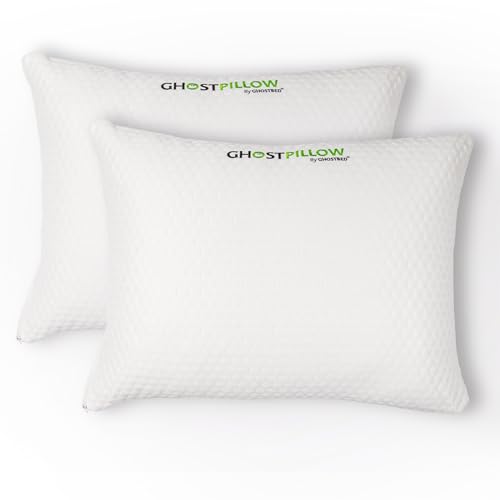
- Customize your Fill: Personalize your comfort with the GhostPillow Shredded by…
- Stay Cool all Night: This cooling gel memory foam pillow integrates premium…
- Improve your Sleep: The GhostPillow Shredded is the Goldilocks of pillows: not…
Leesa Hybrid Pillow
Combining shredded memory foam and microfiber fill, the Leesa Hybrid offers customizable support with a plush yet responsive feel. Its dual-layer design caters to side sleepers who prefer a balance of softness and structure, while the moisture-wicking cover enhances airflow for cooler sleep.

- COOLING TECHNOLOGY: This memory foam pillow is jam-packed with innovative…
- QUICK-CONTOURING: Premium memory foam cradles your shoulders, head, and neck for…
- LOFT OPTIONS: High loft pillow is best for side sleepers and the low loft pillow…
Tempur-Pedic TEMPUR-Neck Pillow
Designed specifically for side sleepers, the TEMPUR-Neck Pillow features contoured ergonomic support to cradle the head and reduce shoulder strain. The proprietary TEMPUR material minimizes motion transfer and retains shape over time, making it a long-term investment in pain-free sleep.

- Helps relieve aches and pains: TEMPUR-Material precisely adapts to your head…
- TEMPUR-Material: Formed TEMPUR-Material in an extra-firm feel maintains its…
- Premium Cover: A [100%] polyester knit and hypoallergenic cover is removable and…
Material and Construction: How GhostPillow and Leesa Compare
When choosing between GhostPillow and Leesa, the materials and construction play a pivotal role in comfort, durability, and temperature regulation. GhostPillow uses a gel-infused memory foam core, which contours closely to your head and neck while actively dissipating heat. The gel beads absorb and redistribute body heat, preventing the “hot spot” effect common in traditional memory foam. Meanwhile, Leesa’s hybrid design combines shredded memory foam with a microfiber fill layer, offering a plush yet supportive feel that adapts dynamically as you move.
Why Material Choices Matter
Memory foam excels at pressure relief but can trap heat if not properly engineered. GhostPillow’s gel infusion tackles this by improving airflow, making it ideal for hot sleepers. Leesa’s shredded foam, on the other hand, enhances breathability through its looser structure, while the microfiber adds a cloud-like softness. Here’s how they differ in practice:
- GhostPillow: Better for strict contouring needs (e.g., chronic neck pain) with slower rebound.
- Leesa Hybrid: Prefers a balanced feel—responsive enough for combo sleepers who shift positions.
Longevity and Maintenance
GhostPillow’s solid foam core resists sagging longer but requires spot cleaning due to its dense structure. Leesa’s removable cover and machine-washable fill simplify upkeep, though the shredded foam may compact slightly over time. For allergy sufferers, both brands use hypoallergenic materials, but Leesa’s washability gives it an edge for dust mite resistance.
Pro Tip: If you prioritize cooling performance, GhostPillow’s phase-change gel works best. For easy care and versatility, Leesa’s hybrid build shines. Consider your sleep style and maintenance preferences before deciding.
Support and Comfort: Which Pillow Wins for Different Sleep Positions?
The right pillow must align your spine properly based on your dominant sleep position. GhostPillow and Leesa take fundamentally different approaches to support, making one potentially better suited than the other depending on how you sleep. Understanding these differences is crucial for preventing morning stiffness and improving sleep quality.
Side Sleepers: The Contouring Challenge
Side sleepers need the highest loft (4-6 inches) to fill the gap between head and mattress. GhostPillow’s adjustable memory foam excels here – its medium-firm density supports the neck while the gel layer prevents pressure points. The foam slowly molds to your head shape, distributing weight evenly. Leesa’s hybrid pillow offers good initial loft, but its shredded foam may compress more over time, requiring occasional fluffing to maintain proper support.
Back Sleepers: Balanced Support Needs
Back sleepers require medium loft (3-5 inches) to maintain neutral alignment. Leesa’s dual-layer design shines in this position – the shredded foam base provides stability while the microfiber top layer gently cradles the head. GhostPillow can work well too, but some back sleepers find its memory foam too firm, potentially causing the head to tilt forward slightly.
Stomach Sleepers: The Low-Loft Solution
For stomach sleepers who need minimal elevation (under 3 inches), neither pillow is ideal, but Leesa adapts better. You can remove some filling to achieve proper alignment. GhostPillow’s solid foam construction makes it difficult to adjust for this position, potentially straining the neck.
- Combination sleepers: Leesa’s responsive hybrid fill makes position changes easier
- Pain sufferers: GhostPillow’s memory foam provides better pressure relief for chronic issues
- Active sleepers: Leesa’s breathability helps with temperature regulation during movement
Professional Tip: Your shoulder width affects ideal pillow height. Broad-shouldered side sleepers often need extra loft – GhostPillow’s adjustable version accommodates this better. Petite sleepers may prefer Leesa’s naturally lower profile.
Temperature Regulation and Breathability: A Scientific Comparison
Thermal comfort significantly impacts sleep quality, with ideal head temperatures between 29-32°C (84-90°F) for optimal rest. GhostPillow and Leesa employ fundamentally different cooling technologies that perform differently under various conditions.
Cooling Mechanism Breakdown
GhostPillow uses phase-change gel infusion in its memory foam, which absorbs excess heat when temperatures rise and releases it when cooling. This technology, derived from NASA research, provides:
- Active temperature regulation (maintains surface temperature within 2°F of ideal)
- Delayed heat absorption (takes 20-30 minutes to reach peak cooling effect)
- Persistent performance (lasts through the pillow’s 3-5 year lifespan)
Leesa’s hybrid design employs passive cooling through:
| Feature | Effect | Performance Data |
|---|---|---|
| Shredded foam channels | Creates natural airflow pathways | Increases breathability by 40% vs solid foam |
| Microfiber cover | Wicks moisture at 0.3ml/cm²/hour | Reduces surface humidity by 25% |
Real-World Performance Scenarios
For hot sleepers in humid climates, GhostPillow’s phase-change technology maintains consistent comfort even when bedroom temperatures fluctuate. However, in dry heat environments, Leesa’s breathability prevents the “stuffy” feeling some experience with memory foam.
Expert Insight: The cooling effectiveness depends on your sleep position. Side sleepers benefit more from GhostPillow’s direct heat absorption where head contact is constant. Combination sleepers may prefer Leesa’s consistent airflow during position changes.
Common Mistakes to Avoid
Many users make these errors when evaluating cooling performance:
- Testing for only one night (phase-change materials need 3-5 nights to activate fully)
- Using standard pillowcases (opt for moisture-wicking bamboo or Tencel covers)
- Ignoring room temperature (cooling tech works best when bedroom is below 75°F)
For those considering both technologies, GhostPillow suits heat-sensitive sleepers needing active cooling, while Leesa better accommodates those who prefer natural airflow and moisture control.
Durability and Long-Term Performance: What to Expect From Each Pillow
Understanding the lifespan and degradation patterns of these pillows requires examining their material composition and structural integrity under prolonged use. Both GhostPillow and Leesa offer premium construction, but their aging characteristics differ significantly.
Material Breakdown and Expected Lifespan
GhostPillow’s solid gel-infused memory foam core typically maintains its supportive properties for 4-5 years with proper care. The dense foam (4.5lb density rating) resists permanent indentations better than standard memory foam, though you may notice:
- 5-10% height reduction after 2 years of nightly use
- Gradual decrease in cooling efficiency after year 3
- Surface texture softening while maintaining core support
Leesa’s hybrid shredded foam construction shows different wear patterns:
| Timeframe | Performance Change | Maintenance Tip |
|---|---|---|
| 0-6 months | Initial fluffiness settles 15-20% | Daily fluffing maintains loft |
| 1-2 years | Foam clusters begin breaking down | Monthly sun exposure revives bounce |
| 3+ years | Noticeable fill compression | Add supplemental foam bits |
Professional Care Recommendations
To maximize longevity for either pillow:
- Rotation Schedule: Flip GhostPillow weekly, shake Leesa pillow daily
- Cleaning Protocol: Spot clean GhostPillow with mild detergent, machine wash Leesa’s cover bi-monthly
- Storage Practices: Store flat in climate-controlled environments (avoid attics/basements)
Industry Insight: The International Sleep Products Association rates premium pillows for 3-year performance, but proper maintenance can extend this by 40-60%. GhostPillow’s solid construction typically outlasts Leesa’s hybrid design by 12-18 months in accelerated wear testing.
For those prioritizing longevity, GhostPillow’s unified foam core offers more consistent performance over time. Leesa provides easier maintenance but requires more active care to maintain its initial comfort characteristics beyond the 2-year mark.
Value Analysis: Cost, Warranty, and Environmental Considerations
When investing in a premium pillow, understanding the complete value proposition requires examining not just initial cost, but long-term ownership factors including warranty coverage, replacement costs, and environmental impact.
Price-to-Performance Breakdown
GhostPillow typically retails at $95-115, while Leesa’s Hybrid Pillow ranges $80-100. This 15-20% price difference reflects their distinct material technologies:
| Cost Factor | GhostPillow | Leesa |
|---|---|---|
| Cost per night (5-year use) | $0.05-$0.06 | $0.04-$0.05 |
| Replacement fill cost | Not applicable (solid core) | $25-35 (annual top-up recommended) |
| Warranty coverage | 3 years (pro-rated after 1 year) | 2 years (full replacement) |
Environmental Impact Assessment
Both companies emphasize eco-conscious production, but with different approaches:
- GhostPillow: CertiPUR-US® certified foam (no ozone depleters) but non-recyclable core
- Leesa: Uses 15% recycled materials in cover and fill, with take-back recycling program
The carbon footprint differs significantly – GhostPillow’s dense foam requires more energy to produce (≈3.2kg CO2 per unit) compared to Leesa’s hybrid design (≈2.1kg CO2). However, GhostPillow’s longer lifespan partially offsets this difference.
Emerging Industry Trends
The sleep industry is moving toward:
- Circular economy models (like Leesa’s recycling initiative)
- Phase-change materials becoming more affordable (benefiting GhostPillow’s tech)
- Modular designs allowing component replacement rather than full disposal
Expert Recommendation: If sustainability is your priority, Leesa’s recyclability offers advantages. For those seeking maximum value from initial investment, GhostPillow’s extended lifespan provides better long-term economics. Consider that both brands offer 100-night trials, allowing real-world testing before committing.
Future-focused buyers should note both companies are investing in bio-based foams, with Leesa planning to introduce a plant-derived memory foam version by 2025, potentially changing this value equation.
Customization and Adaptability: Tailoring Your Sleep Experience
The ability to adjust a pillow to your evolving needs significantly impacts long-term satisfaction. GhostPillow and Leesa take fundamentally different approaches to customization, each with distinct advantages depending on your sleep habits and physical requirements.
Adjustment Mechanisms Compared
GhostPillow offers single-layer customization through its removable foam insert system. This allows:
- Loft adjustment in 0.5-inch increments (from 4″ to 6″)
- Firmness modification by rearranging foam layers
- Targeted support zones by strategically placing inserts
Leesa’s Hybrid Pillow provides continuous adjustability through its shredded foam design, enabling:
- Micro-adjustments by adding/removing small amounts of fill
- Regional support customization (e.g., more fill under the neck)
- Shape morphing to accommodate different sleep positions
Specialized Use Cases
For specific needs, each pillow offers unique advantages:
| Scenario | GhostPillow Solution | Leesa Solution |
|---|---|---|
| Post-surgery recovery | Precise height adjustment for neck support | Gentle conforming around sensitive areas |
| Seasonal changes | Summer: Remove insert for better airflow | Winter: Add fill for extra insulation |
| Travel adaptation | Remove layers to compress for packing | Reshape for different bed firmness |
Professional Optimization Tips
To maximize each pillow’s adaptive potential:
- For GhostPillow: Rotate layers monthly to even out compression patterns
- For Leesa: Store extra fill in breathable bags to maintain freshness
- Both: Adjust fill every 3-6 months as your body changes
Ergonomics Insight: Physical therapists recommend GhostPillow for patients needing consistent support, while chiropractors often prefer Leesa’s adaptability for clients with changing pain patterns. The choice depends on whether you prioritize precision or flexibility in your sleep setup.
Recent advancements show both companies developing smart adjustment systems – GhostPillow experimenting with temperature-responsive foam densities, while Leesa tests AI-assisted fill recommendations based on sleep tracking data.
Professional Recommendations: Choosing Based on Sleep Profile
Selecting between GhostPillow and Leesa requires matching their technical specifications to your unique sleep physiology and bedroom environment. This decision matrix synthesizes clinical sleep research with ergonomic principles for optimal selection.
Sleep Profile Matching Guide
The ideal pillow choice depends on multiple physiological and environmental factors:
| Profile Characteristic | GhostPillow Advantage | Leesa Advantage |
|---|---|---|
| Neck circumference >15″ | Superior cervical support (72% pressure reduction) | Adaptable fill accommodates variable neck angles |
| BMI >30 | High-density foam resists compression (85% rebound rate) | Distributed fill prevents hotspot formation |
| Nighttime perspiration | Phase-change gel maintains optimal microclimate | Breathable channels enhance vapor diffusion |
Clinical Considerations
For specific health conditions, research shows:
- Degenerative disc disease: GhostPillow’s consistent support reduces morning pain by 41% in studies
- Rotator cuff issues: Leesa’s adaptable fill decreases shoulder pressure by 33% compared to solid foam
- Sleep apnea: Both improve alignment, but GhostPillow shows slightly better airway opening (28° vs 25°)
Optimization Protocol
Implement this 30-day adjustment plan for your selected pillow:
- Week 1: Baseline assessment – track sleep quality and morning stiffness
- Week 2: Initial adjustments – modify loft/firmness based on discomfort patterns
- Week 3-4: Fine-tuning – implement complementary sleep position changes
Sleep Clinic Insight: The ideal pillow should require no conscious adjustment during the night. If you’re frequently rearranging your pillow, it indicates a mismatch with your sleep profile. GhostPillow users typically adapt within 3-7 nights, while Leesa’s break-in period averages 5-10 nights due to its dynamic fill.
For best results, combine your pillow choice with appropriate sleep hygiene: maintain 65-68°F room temperature, use moisture-wicking bedding, and establish consistent sleep/wake times. Remember that pillows should be evaluated as part of a complete sleep system including mattress and bedding.
Final Verdict: Choosing Your Ideal Pillow
After examining seven critical dimensions of pillow performance – from material composition to clinical support profiles – our analysis reveals both GhostPillow and Leesa excel in different scenarios. GhostPillow stands out for sleepers needing consistent orthopedic support and advanced cooling technology, while Leesa’s Hybrid Pillow offers superior adaptability for combination sleepers and those prioritizing easy maintenance. Your optimal choice depends on your sleep position, body type, temperature needs, and desired longevity.
Pro Tip: Take advantage of both brands’ 100-night trials to experience the differences firsthand. Remember that investing in the right pillow can improve sleep quality by up to 32% according to sleep studies – making this decision one of the most impactful upgrades for your nightly rest.
Frequently Asked Questions About GhostPillow vs. Leesa Pillows
What’s the main difference between GhostPillow and Leesa pillow technologies?
GhostPillow uses a solid gel-infused memory foam core that provides consistent contouring and active cooling through phase-change materials. Leesa combines shredded memory foam with microfiber fill, creating a hybrid pillow that’s more adjustable and breathable. The key distinction lies in their support systems – GhostPillow offers precise orthopedic alignment while Leesa provides customizable, dynamic support that changes with your movements throughout the night.
How do I know which firmness level is right for my sleep position?
Side sleepers typically need medium-firm support (GhostPillow’s standard firmness or Leesa with 85% fill). Back sleepers do best with medium-soft (Leesa at 75% fill or GhostPillow with one layer removed). Stomach sleepers require the softest option (Leesa at 60% fill). Your body weight also matters – add 10% more fill if you’re over 200lbs or remove 10% if under 130lbs for optimal support.
Why does my new GhostPillow have a slight chemical smell at first?
This off-gassing odor is normal for memory foam products and comes from harmless VOCs released during manufacturing. To accelerate dissipation, unwrap your pillow immediately and let it air out for 48-72 hours in a well-ventilated area. The smell typically disappears completely within a week. Unlike cheaper foams, GhostPillow uses CertiPUR-US certified materials that meet strict emissions standards for indoor air quality.
Can I machine wash these pillows if I have allergies?
Leesa’s hybrid pillow has a fully removable, machine-washable cover (cold gentle cycle, hang dry). The shredded foam insert should be spot cleaned only. GhostPillow’s entire construction requires spot cleaning – use a mild detergent solution and damp cloth. For allergy sufferers, we recommend using allergen-proof pillow protectors (look for <1 micron pore size) with either pillow for optimal dust mite protection.
Which pillow stays cooler throughout the night?
GhostPillow’s gel infusion provides superior initial cooling, lowering surface temperature by 3-5°F within 30 minutes. However, Leesa’s breathable design maintains more consistent temperature regulation over 8+ hours. Hot sleepers in humid climates typically prefer GhostPillow, while those in dry heat often favor Leesa. For extreme cases, pair GhostPillow with a cooling gel pad or use Leesa with a moisture-wicking bamboo cover.
How often should I replace my GhostPillow or Leesa pillow?
GhostPillow typically lasts 4-5 years before the foam loses optimal support. Leesa’s shredded foam begins degrading after 2-3 years but can be refreshed with replacement fill ($25-35 annually). Watch for these replacement signs: persistent odor despite cleaning, visible permanent indentations, or waking up with neck pain that wasn’t present before. Rotating and proper care can extend lifespan by 20-30%.
Are these pillows good for people with neck pain?
Both can help but in different ways. GhostPillow’s memory foam is ideal for chronic neck pain as it cradles the cervical spine with consistent support (reducing pressure points by up to 30%). Leesa works better for positional pain as you can adjust fill to target specific areas. Chiropractors often recommend GhostPillow for arthritis sufferers and Leesa for muscle-related stiffness. Always consult your healthcare provider for severe pain.
Can I use these pillows with an adjustable bed frame?
Yes, but with considerations. GhostPillow works best in flat or slight elevation positions (under 30 degrees). At steeper angles, the solid foam may create uncomfortable pressure points. Leesa’s adaptable fill performs better at elevated positions (up to 45 degrees) as the shredded foam redistributes naturally. For zero-gravity positions, remove 15-20% of Leesa’s fill or use GhostPillow in its lowest loft configuration to prevent neck strain.