
Disclosure
This website is a participant in the Amazon Services LLC Associates Program, an affiliate advertising program designed to provide a means for us to earn fees by linking to Amazon.com and affiliated sites.
Choosing the right memory foam mattress can feel overwhelming, especially when faced with options like gel-infused and traditional memory foam. Both promise pressure relief and comfort, but they cater to vastly different sleep needs.
If you’ve ever woken up sweating on a memory foam mattress or struggled with stiffness, the solution might lie in understanding these two materials deeply.
Many assume all memory foam is the same, but gel memory foam revolutionizes temperature regulation while traditional foam excels in contouring support. With sleep science advancing and cooling mattresses trending, knowing which foam aligns with your body’s needs is crucial.
Best Memory Foam Mattresses for Cooling and Support
Tempur-Pedic TEMPUR-Adapt + Cooling Mattress
This premium gel-infused memory foam mattress features TEMPUR material for superior pressure relief and a cooling cover that wicks away heat. Ideal for hot sleepers, it adapts to your body while maintaining airflow, ensuring a cooler, more comfortable night’s sleep.

- COOLING 3-INCH QUEEN TOPPER: TEMPUR-Adapt + Cooling topper is ideal for getting…
- SOFTEST TEMPUR MATERIAL: 3-inches of exclusive TEMPUR-ES Material precisely…
- WASHABLE COOLING COVER: Premium knit cooling cover provides cool-to-the-touch…
Sealy Dreamlife 14″ Hybrid Mattress
Combining gel memory foam with supportive coils, the Sealy Dreamlife offers enhanced breathability and motion isolation. The cooling technology reduces heat retention, making it perfect for couples or those who need both cooling and spinal alignment.

- 3” SEALYCOMFORT GEL MEMORY FOAM: This cushioning gel memory foam layer…
- 3.25” SEALYSUPPORT TRANSITION FOAM: This additional layer of high-density foam…
- 7” SEALYRESPONSIVE ENCASED COILS: Featuring individually encased coils, this…
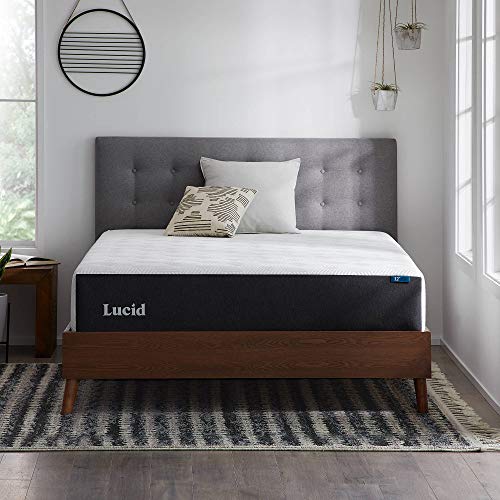
Lucid 12-Inch Gel Memory Foam Mattress
An affordable yet high-quality option, the Lucid mattress features ventilated gel memory foam for temperature regulation and deep contouring support. Its medium-firm feel suits back and side sleepers, providing a balanced mix of comfort and cooling at a budget-friendly price.
- SHIPS IN A BOX AND ARRIVES COMPRESSED: Your memory foam mattress is compressed…
- BAMBOO CHARCOAL AND GEL INFUSIONS: This comfortable memory foam mattress is…
- PRESSURE RELIEVING MEMORY FOAM: This all-foam mattress has layers of comfort…
How Gel Memory Foam and Traditional Memory Foam Work Differently
The Science Behind Traditional Memory Foam
Traditional memory foam, originally developed by NASA in the 1960s, is made from viscoelastic polyurethane that softens in response to body heat and pressure. When you lie down, the foam slowly molds to your body shape, distributing weight evenly to relieve pressure points.
However, this heat-activated responsiveness comes with a drawback—the dense structure traps body heat, often causing sleepers to overheat. The foam’s closed-cell design limits airflow, making it less breathable than other mattress materials.
Gel Memory Foam’s Cooling Innovation
Gel memory foam addresses traditional foam’s heat retention issues by incorporating gel beads or liquid gel infusions. These additions alter the foam’s thermal properties in two key ways:
- Phase-change materials absorb and dissipate body heat, preventing buildup
- Open-cell structures create air channels for better ventilation
For example, Tempur-Pedic’s TEMPUR-Adapt uses a proprietary gel layer that stays up to 3°F cooler than standard foam. The gel doesn’t just mask heat—it actively regulates temperature throughout the night.
Real-World Performance Differences
In practical terms, these material differences create distinct sleeping experiences:
- Temperature regulation: Gel foam maintains a neutral sleep surface, while traditional foam may feel warm within 30 minutes
- Response time: Gel-infused versions often have slightly faster rebound (2-3 seconds vs. 5+ seconds for traditional)
- Durability: High-quality gel foams resist indentation better because the gel particles reinforce the foam structure
A common misconception is that gel foam feels radically different—in reality, both types provide signature memory foam “hug,” but gel versions do so without the suffocating warmth. Side sleepers with shoulder pain might prefer traditional foam’s deeper contouring, while hot sleepers or combination sleepers will benefit more from gel foam’s balanced approach.
Choosing Between Gel and Traditional Memory Foam: Key Decision Factors
Sleeping Position and Body Type Considerations
Your preferred sleeping position dramatically impacts which foam type will serve you best. Side sleepers typically need deeper contouring to cushion shoulders and hips—traditional memory foam excels here with its slower response time and plush sink.
However, stomach sleepers and heavier individuals (over 230 lbs) often require the reinforced support of gel-infused foam, which provides better spinal alignment without excessive sinkage. For example, a 250-lb back sleeper might find traditional foam causes too much “hammocking,” while gel foam’s quicker rebound helps maintain proper posture.
Climate and Temperature Needs
Temperature regulation should drive your decision if you:
- Live in warm climates (average bedroom temperature above 72°F)
- Experience night sweats or menopause-related hot flashes
- Sleep with a partner who radiates heat
Gel foam’s phase-change materials work most effectively in these scenarios. In cooler environments (below 68°F), traditional foam’s heat retention can actually become an advantage—the material stays more responsive in cold rooms where gel foam might initially feel firm.
Budget and Longevity Tradeoffs
While gel foam commands a premium price, its durability often justifies the investment. High-density traditional foam (4.0+ lbs/ft³) lasts 7-10 years, but comparable gel foam extends to 10-12 years because:
- Gel particles reduce material breakdown from body heat
- Open-cell structures resist permanent compression
- Advanced formulations resist moisture absorption
Budget-conscious shoppers can find quality hybrid options—like the Zinus Green Tea Memory Foam Mattress—that blend gel layers with traditional foam for balanced performance at mid-range prices.
Pro Tip: Test foam responsiveness in-store by pressing your hand firmly for 30 seconds. Quality gel foam should bounce back completely within 3 seconds, while traditional foam leaves a brief indent—this demonstrates their real-world support differences.
Performance Comparison: Gel vs. Traditional Memory Foam in Real-World Use
Pressure Relief and Motion Isolation
Both foam types excel at pressure relief, but achieve it differently. Traditional memory foam provides deeper contouring due to its slower viscoelastic response – ideal for relieving pressure on joints. Gel foam offers more balanced support with its quicker rebound (typically 2-3 seconds vs 5-8 seconds), making it better for those who change positions frequently. For motion isolation:
| Feature | Traditional Foam | Gel Foam |
|---|---|---|
| Motion Transfer | Excellent (absorbs 95%+ movement) | Very Good (absorbs 85-90%) |
| Best For | Light sleepers with sensitive partners | Combination sleepers who move often |
Temperature Regulation Over Time
Gel foam’s cooling properties aren’t just initial features – they’re engineered to last. The phase-change materials (PCMs) in quality gel foams undergo thousands of heat absorption/release cycles without degrading. Traditional foam tends to sleep hotter as it ages because:
- The foam structure compresses, reducing airflow
- Body oils and moisture accumulate in the material
- The viscoelastic polymers break down slightly with heat exposure
Professional mattress testers measure this using infrared thermography – after 8 hours of simulated sleep, gel foam surfaces average 2-4°F cooler than traditional foam equivalents.
Maintenance and Care Differences
Proper care extends the life of both foam types, but with key differences:
- Rotation: Gel foam requires more frequent rotation (every 2 months vs 3-4 months) due to its quicker response
- Cleaning: Traditional foam absorbs spills more readily – requires immediate blotting with mild detergent
- Airing Out: Gel foam benefits from occasional airing (4-6 hours) to reactivate PCMs
Common mistake: Using mattress protectors that block airflow. For gel foam, look for protectors with PCM coatings (like Protect-A-Bed’s Cooling Protector) that enhance rather than inhibit cooling properties.
Special Considerations for Different Sleepers and Environments
Optimal Foam Choices for Medical Conditions
Memory foam selection becomes critical when addressing specific health concerns. For chronic pain sufferers, traditional memory foam’s deep contouring often provides better pressure relief for conditions like arthritis or fibromyalgia. However, gel foam’s temperature regulation makes it superior for:
- Multiple sclerosis patients who experience temperature dysregulation
- Post-surgical recovery where maintaining stable body temperature aids healing
- Menopausal women experiencing night sweats and hot flashes
Clinical studies show gel foam maintains more consistent surface temperatures (within 1.5°F variation vs 3-5°F for traditional foam), crucial for patients with circulatory issues. Always consult with a physical therapist for personalized recommendations based on medical history.
Climate-Specific Performance Factors
Environmental conditions dramatically affect foam performance. In humid climates (above 60% RH), traditional foam can feel “sticky” and lose responsiveness, while gel foam’s open-cell structure better resists moisture absorption. Consider these climate-specific factors:
| Climate Type | Traditional Foam Performance | Gel Foam Advantage |
|---|---|---|
| Hot & Dry (Desert) | Becomes overly firm | Maintains elasticity |
| Cold & Damp | Initial stiffness | Faster warm-up time |
In tropical climates, look for gel foams with antimicrobial treatments (like Tempur-Pedic’s SmartClimate System) to prevent mold growth in the foam’s deeper layers.
Partner Compatibility Considerations
Couples with different sleep preferences face unique challenges. The best compromise often involves:
- Split-firmness mattresses with gel foam on one side, traditional on the other
- Hybrid designs combining gel memory foam top layers with traditional foam support cores
- Dual-zone beds where each partner’s side has customized foam densities
Pro Tip: For partners with >30lb weight difference, gel foam’s quicker response better accommodates movement without creating a “roll together” effect. Test mattresses using the “spoon test” – have one partner change positions while the other notes motion transfer.
Long-Term Value and Environmental Considerations
Cost-Per-Use Analysis Over Time
While gel memory foam typically costs 20-35% more upfront than traditional foam, its extended lifespan creates better long-term value. A detailed cost breakdown for a queen-size mattress shows:
| Factor | Traditional Foam | Gel Foam |
|---|---|---|
| Average Lifespan | 7-8 years | 10-12 years |
| Annual Cost (based on $1,200 vs $1,600) | $150-$171/year | $133-$160/year |
| Support Retention | Loses 15-20% after 5 years | Loses 10-12% after 5 years |
This calculation doesn’t account for potential health benefits – reduced sleep interruptions from overheating can improve productivity and wellbeing, adding intangible value.
Environmental Impact and Sustainability
Modern foam production has evolved significantly in sustainability:
- Traditional foam now often uses plant-based oils (soy, castor) replacing 20-30% of petroleum content
- Gel foam manufacturers are developing bio-based phase change materials from coconut oil and salt hydrates
- Both types now commonly meet CertiPUR-US® standards for low VOC emissions
However, gel foam presents recycling challenges due to its composite materials. Some manufacturers like Tempur-Sealy now offer take-back programs that separate gel microbeads for specialized processing.
Emerging Technologies and Future Trends
The next generation of memory foams incorporates groundbreaking features:
- Smart temperature regulation using thermoelectric materials that actively cool/warm based on body temperature
- Self-cleaning foams with built-in antimicrobial copper or silver ions
- Pressure-adaptive foams that change firmness based on sleep position sensors
Industry experts predict hybrid designs will dominate, combining gel foam’s cooling benefits with traditional foam’s pressure relief in zoned configurations. These developments may narrow today’s performance gaps between the two foam types.
Pro Tip: When evaluating environmental claims, look for third-party certifications like OEKO-TEX® Standard 100, which tests for harmful substances throughout the entire product.
Customization and Specialized Applications
Professional Medical and Therapeutic Uses
Memory foam has evolved beyond consumer sleep products into specialized medical applications. Traditional memory foam dominates in wheelchair seat cushions and pressure ulcer prevention systems due to its superior pressure redistribution properties (often achieving 30-40% pressure reduction). Meanwhile, gel foam is revolutionizing:
- Burn patient beds where temperature regulation prevents additional trauma
- Post-operative recovery surfaces that maintain precise temperature zones
- Physical therapy tables needing both support and easy patient repositioning
Medical-grade foams undergo additional certifications like ISO 13485 and feature enhanced breathability (up to 8x more airflow than consumer versions). These specialized formulations often combine the best attributes of both foam types in layered constructions.
Custom Sleep System Configurations
Advanced sleep systems now allow precise foam customization through:
- Modular designs where users can swap 2-3″ foam toppers of different types and densities
- Zoned constructions with alternating gel and traditional foam sections targeting specific body areas
- Seasonal adjustment systems featuring removable gel layers for summer months
For example, the Sleep Number 360 Smart Bed allows independent adjustment of each side’s foam composition, combining gel particles with traditional memory foam in variable percentages controlled via smartphone app.
Commercial and Hospitality Applications
The hospitality industry has developed unique foam specifications that differ significantly from consumer products:
| Application | Traditional Foam Use | Gel Foam Advantage |
|---|---|---|
| Hotel Mattresses | Higher density (5.0+ lb/ft³) for durability | Reduces housekeeping complaints about “hot beds” |
| Hospital Beds | Used in static pressure relief surfaces | Ideal for bariatric patients needing cooling |
Commercial-grade foams undergo rigorous testing including 100,000+ compression cycles (versus 30,000 for residential). Many hotels now use hybrid systems with gel foam tops over traditional foam bases to balance comfort and longevity.
Pro Tip: For custom projects, always request foam core samples in multiple densities and compositions. The ideal foam should fully rebound within 5 seconds when compressed 50% at room temperature (22°C/72°F).
Advanced Maintenance and Performance Optimization
Professional-Grade Care Protocols
Extending the lifespan of memory foam requires specialized maintenance approaches based on foam type. For gel-infused memory foam, implement this quarterly care routine:
- Deep air circulation – Use a box fan on low for 4-6 hours to reactivate phase-change materials
- Surface rejuvenation – Gently brush with a upholstery brush to open cell structures
- Targeted cleaning – Apply foam-specific enzymatic cleaners (like Folex) for stain treatment
Traditional memory foam requires different care, focusing on moisture control with silica gel packs placed beneath the mattress and monthly rotation to prevent permanent body impressions.
Performance Monitoring and Quality Assurance
Professional facilities use these metrics to assess foam degradation:
| Parameter | Acceptable Range | Testing Method |
|---|---|---|
| Compression Set | <5% after 75,000 cycles | ASTM D3574 Test D |
| ILD (Firmness) | ±15% from original | ASTM D3574 Test B1 |
| Recovery Time | <8 seconds (traditional) <5 seconds (gel) | Stopwatch compression test |
Home users can conduct simplified checks by measuring indentation depth after removing weight (should fully recover within 2 minutes for quality foam).
Risk Mitigation Strategies
Common foam failure modes and prevention methods:
- Off-gassing odors – Pre-air for 72 hours in well-ventilated space before use
- Edge collapse – Use reinforced foam with higher density perimeter (≥2.5lb/ft³)
- Thermal breakdown – Keep away from direct heat sources (>90°F causes accelerated degradation)
For commercial applications, implement a preventive replacement schedule based on usage hours – high-traffic hotel mattresses should be replaced after approximately 3,500 sleep cycles regardless of visible wear.
Pro Tip: Maintain a “foam log” documenting rotation dates, cleaning sessions, and performance observations. This data helps identify degradation patterns and optimize replacement timing.
Conclusion: Making the Right Memory Foam Choice
Throughout this comprehensive comparison, we’ve explored how gel and traditional memory foams differ in temperature regulation, support characteristics, durability, and specialized applications. While traditional memory foam excels in deep pressure relief and motion isolation, gel-infused varieties offer superior cooling and faster response times. Your ideal choice depends on multiple factors – from sleep position and climate to health considerations and budget.
Remember that high-quality versions of either type will outperform budget options of the other. Before purchasing, test mattresses in-store whenever possible, paying particular attention to temperature changes over 15-20 minutes of contact. For those still uncertain, consider hybrid solutions that combine both technologies in zoned configurations.
Ultimately, investing in proper sleep support pays dividends in daily energy, long-term health, and overall quality of life. Use this guide as your roadmap to finding the perfect memory foam solution tailored to your unique needs.
Frequently Asked Questions About Gel vs. Traditional Memory Foam
What exactly makes gel memory foam cooler than traditional memory foam?
Gel memory foam incorporates microscopic gel beads or liquid gel infusions that actively regulate temperature through phase-change technology. These materials absorb excess body heat (typically 2-3°F more than traditional foam) and slowly release it.
The open-cell structure also improves airflow by 30-40% compared to traditional foam’s denser composition. High-quality gel foams like Tempur-Breeze use proprietary cooling gels that maintain this effect for 8-10 years.
How long does each type of memory foam typically last?
Traditional memory foam lasts 7-9 years with proper care, while gel memory foam averages 10-12 years. The difference comes from gel’s enhanced durability – the infused particles reinforce the foam’s cellular structure, reducing compression set by 15-20%. Density matters greatly; look for ≥4.0 lb/ft³ for traditional and ≥3.5 lb/ft³ for gel foams to ensure longevity.
Can I add a gel topper to my traditional memory foam mattress?
Yes, but with important considerations. A 2-3″ gel topper can improve cooling, but may alter the mattress’s pressure relief profile. Ensure the topper’s density (≥3.0 lb/ft³) matches your mattress’s firmness.
For best results, choose ventilated designs like Sleep Innovations Dual Layer that won’t trap heat between layers. Remember this is a temporary solution – the base foam will still retain heat.
Why does traditional memory foam sometimes have an odor?
The “off-gassing” smell comes from volatile organic compounds (VOCs) released during manufacturing. Higher quality foams (CertiPUR-US certified) minimize this with better ventilation during production.
The odor typically dissipates in 48-72 hours. Speed up the process by unrolling the mattress in a well-ventilated room with fans circulating air. Gel foams generally off-gas less due to their more open structure.
Which type is better for combination sleepers who change positions?
Gel memory foam’s quicker response time (2-3 second rebound vs 5-8 seconds) makes it superior for combination sleepers. The phase-change materials also prevent the “stuck” feeling when changing positions. Look for medium-firm gel foams (6-7 on the firmness scale) with zoned support, like the Amerisleep AS3, which accommodates all sleeping positions.
How do I clean and maintain each foam type properly?
For both types: vacuum monthly with an upholstery attachment, spot clean with mild detergent, and rotate every 3-6 months. Gel foam requires additional care: air out quarterly (4-6 hours) to reactivate cooling properties, and use a specialized foam cleaner like Foamite for deep cleaning. Never soak either type – moisture damages the foam’s cellular structure.
Is gel memory foam worth the extra cost?
The value depends on your sleep needs. Hot sleepers, couples with different temperature preferences, and those in warm climates benefit most from gel’s cooling properties.
Traditional foam offers better value if temperature regulation isn’t a priority. Consider that gel foam’s longer lifespan (25-30% more) offsets some of the initial price difference over time.
Can memory foam be too firm in cold rooms?
Yes, all memory foam becomes temporarily firmer in cold temperatures (below 65°F). Traditional foam is more affected due to its heat-activated properties. Gel foam maintains better flexibility in cool conditions because the gel particles don’t harden as much.
Solutions include pre-warming the bed with a heating pad (set to low) for 15 minutes before sleep or using a mattress protector with thermal regulation.