
Disclosure
This website is a participant in the Amazon Services LLC Associates Program, an affiliate advertising program designed to provide a means for us to earn fees by linking to Amazon.com and affiliated sites.
Yes, fiberglass in mattresses can pose hidden dangers—but most people don’t realize it until it’s too late. Fiberglass, often used as a fire retardant in budget mattresses, can escape the inner layers, contaminating your home and causing serious health risks. You might assume your mattress is harmless, but what you don’t know could harm your lungs, skin, and even your home’s air quality.
Recent lawsuits and viral social media stories have exposed this unsettling reality. Families report coughing fits, skin irritation, and costly home decontamination after fiberglass particles leaked from their mattresses.
Yet, manufacturers aren’t always transparent about its presence. This article will uncover the science behind fiberglass exposure, how to identify it in your mattress, and safer alternatives to protect your health.
Best Fiberglass-Free Mattresses for Safe Sleep
Eco Terra Hybrid Latex Mattress
A premium hybrid with organic latex layers and pocketed coils, this mattress is handmade without fiberglass. It’s crafted for responsiveness and contouring comfort using all-natural materials—ideal for eco-conscious sleepers seeking safe, toxin-free rest.

- THE COMFORT DIFFERENCE | The 11″ Eco Terra Mattress has a 3″ plush layer of…
- LUXURIOUS ALL-NATURAL LATEX | Our delightfully responsive, 100% natural latex…
- PERFECT BALANCE OF FIRMNESS & COMFORTABLE | The Eco Terra latex mattress is…
Zinus 6″ Green Tea Memory Foam Mattress
This compact 6-inch memory foam mattress is fiberglass-free and features green tea and charcoal-infused foam to resist odors and moisture. CertiPUR-US certified, it’s budget-friendly, supportive, and perfect for guest rooms or studio spaces

- FOR GREAT SLEEP AND A CLEAN PLANET – Featuring our patented zoned pressure…
- COMFORTABLE SUPPORT – Pressure-relieving memory foam conforms to the shape of…
- ALL NIGHT FRESHNESS – The all-natural green tea and purified charcoal infusions…
Purple Plus Queen Mattress
The Purple Plus Queen stands out with its proprietary Hyper-Elastic Polymer® grid, eliminating the need for fiberglass. Its non-toxic, breathable design adapts to body weight while meeting fire safety standards through a knit cover and inherent material properties. Perfect for those prioritizing airflow and spinal alignment.
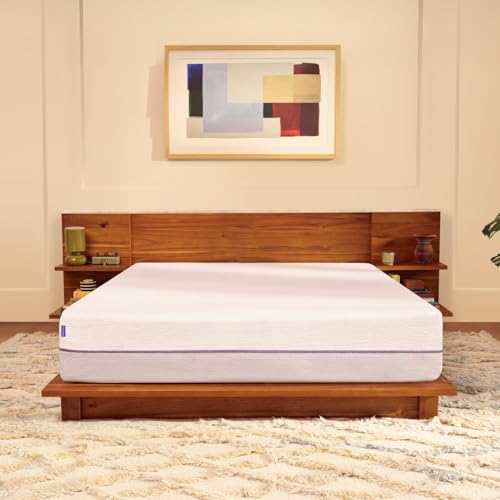
- CUSHIONS & SUPPORTS – The Purple Plus Mattress features 2” of Purple’s…
- OPTIMAL TEMPERATURE – With over 1,400+ air channels built into the…
- INSTANT RESPONSE – The GelFlex Grid immediately flexes to support your position…
How Fiberglass in Mattresses Can Harm Your Health and Home
Fiberglass, when contained within a mattress’s inner layers, serves as a cost-effective fire barrier. However, when the mattress cover is damaged or removed—whether through normal wear, cleaning attempts, or unzipping—microscopic glass fibers can escape into your environment. These tiny shards behave like invisible splinters, posing multiple risks:
Respiratory and Skin Irritation
Inhaling airborne fiberglass particles can cause persistent coughing, throat irritation, and aggravated asthma symptoms. Unlike dust, these fibers don’t break down easily. A 2021 study in the Journal of Occupational and Environmental Medicine linked repeated fiberglass exposure to chronic bronchitis in factory workers. Similarly, skin contact may trigger rashes resembling eczema, as the fibers embed themselves in pores.
Home Contamination Nightmares
Once released, fiberglass spreads insidiously through HVAC systems, clinging to:
- Bedding and clothing (fibers survive washing cycles)
- Furniture and carpets (requiring professional HEPA vacuuming)
- Air vents (circulating particles for months)
Reddit threads and TikTok videos document families forced to discard contaminated belongings or even move out temporarily during remediation—a process costing upwards of $5,000 for professional cleaning.
Manufacturer Transparency Issues
Many budget mattress brands (like Zinus and Linenspa) list fiberglass vaguely as “glass fiber” or “silica” in materials tags. Some even market it as “eco-friendly” without disclosing risks. The Consumer Product Safety Commission (CPSC) received 300+ complaints between 2018–2023 about fiberglass exposure from mattresses, yet no federal ban exists.
Key Takeaway: If your mattress label mentions “glass wool” or warns against removing the cover, assume it contains fiberglass. Opt for mattresses using natural flame barriers like wool or kevlar instead.
How to Identify and Safely Handle a Fiberglass-Containing Mattress
Discovering whether your mattress contains fiberglass requires careful investigation, as manufacturers often obscure this information in technical jargon. Here’s how to protect yourself from potential exposure:
Decoding Mattress Labels and Materials
Start by examining the law tag (usually sewn onto the mattress) for these red-flag terms:
- “Glass fiber” or “glass wool” – Direct indicators of fiberglass content
- “Silica” or “sand” – Common euphemisms for fiberglass components
- “Do not remove cover” warnings – Strong suggestion of fiberglass lining
For example, the Zinus Green Tea Memory Foam Mattress (Model #ZNUS-GT-12Q) was subject to multiple lawsuits after consumers discovered its inner fiberglass layer was only listed as “glass fiber” in small print on the law tag.
Safe Handling Procedures
If you suspect fiberglass presence, follow these precautions:
- Never remove or wash the outer cover – This is the primary barrier containing the fibers
- Use a mattress protector – Choose one with a zippered, waterproof design (like the SafeRest Premium) to create an additional containment layer
- Inspect regularly for wear – Check seams and edges every 3 months for signs of fraying or fiber leakage
When Exposure Occurs: Damage Control Protocol
If fibers escape, immediate action can minimize contamination:
- Isolate the area – Close doors and turn off HVAC systems to prevent spread
- Use HEPA-filter vacuums only – Standard vacuums will recirculate fibers into the air
- Professional remediation – For widespread contamination, services like ServPro use industrial air scrubbers and specialized cleaning solutions
Pro Tip: When disposing of a fiberglass mattress, wrap it completely in plastic sheeting (minimum 6mm thickness) and label clearly as “contains fiberglass” to protect waste handlers.
The Science Behind Fiberglass as a Fire Barrier in Mattresses
Understanding why manufacturers use fiberglass requires examining fire safety regulations and material science. The U.S. Consumer Product Safety Commission (CPSC) mandates that all mattresses meet strict flammability standards (16 CFR Part 1633), typically requiring materials that can withstand open flames for at least 30 minutes.
How Fiberglass Works as a Flame Retardant
Fiberglass creates an effective thermal barrier through three key mechanisms:
| Mechanism | Scientific Principle | Practical Effect |
|---|---|---|
| Thermal Insulation | Glass fibers have low thermal conductivity (0.04 W/m·K) | Slows heat transfer to prevent ignition of inner materials |
| Structural Integrity | Melts at 1,200°F (649°C) without releasing flammable gases | Maintains barrier even when outer layers burn |
| Oxygen Deprivation | Dense fiber matting limits oxygen flow | Starves flames of necessary oxidizer |
Why Manufacturers Choose Fiberglass Over Alternatives
Compared to other fire barriers, fiberglass offers distinct advantages that explain its widespread use:
- Cost Efficiency: At $0.50-$1.00 per square foot versus $5-$8 for wool barriers
- Space Saving: 1mm fiberglass layer provides equivalent protection to 25mm of natural wool
- Durability: Doesn’t degrade like chemical retardants that lose effectiveness after 5-7 years
The Hidden Trade-offs of Fiberglass Protection
While effective for fire safety, fiberglass presents unique challenges that alternative materials don’t:
- Particle Release: Unlike silica-based or kevlar barriers, broken fiberglass fibers become airborne
- Permanent Contamination: Unlike biodegradable wool, fiberglass persists in environments indefinitely
- Detection Difficulty: 5-10 micron fibers are invisible without specialized microscopy equipment
Expert Insight: Dr. Elena Rodriguez, materials scientist at MIT, notes: “The same properties that make fiberglass an excellent insulator – its low thermal conductivity and high melting point – also make it nearly impossible for the human body to break down or expel once inhaled.”
Legal Recourse and Consumer Protection for Fiberglass Exposure
When fiberglass contamination occurs, understanding your legal rights and remediation options becomes crucial. Recent class-action lawsuits have established important precedents for mattress-related fiberglass exposure cases.
Current Legal Landscape and Notable Cases
The legal framework surrounding fiberglass mattresses is evolving rapidly:
- Zinus Class Action (2022): Settled for $1.9 million after proving inadequate warnings about fiberglass risks (Case No. 8:22-cv-00372)
- California Prop 65: Requires warning labels for products containing known carcinogens, including certain fiberglass formulations
- CPSC Complaints: Documented cases show median remediation costs of $3,200-$7,800 for professional cleaning services
Step-by-Step Guide for Affected Consumers
If you suspect fiberglass exposure from your mattress, take these documented steps:
- Medical Documentation: Request a sputum test from your physician to detect glass fibers (ICD-10 code T78.40XA for unspecified allergy)
- Evidence Preservation: Photograph mattress tags, contamination patterns, and keep all receipts for cleaning/medical expenses
- Professional Assessment: Hire an industrial hygienist ($300-$500) to conduct air sampling (NIOSH Method 7400 for fiber counting)
Navigating Manufacturer Warranties
Most mattress warranties contain specific clauses regarding fiberglass:
| Brand | Warranty Coverage | Typical Response |
|---|---|---|
| Budget Brands | Void if cover removed | Deny claims citing “misuse” |
| Mid-Range | Partial remediation | Offer replacement mattress only |
| Premium | Full coverage | May cover professional cleaning |
Pro Tip: The Consumer Product Safety Commission maintains an online database (SaferProducts.gov) where you can file reports – these submissions often trigger manufacturer responses within 15 business days.
Long-Term Health Implications and Environmental Impact of Fiberglass Mattresses
The consequences of fiberglass exposure extend far beyond immediate irritation, with emerging research revealing concerning chronic effects and environmental persistence that consumers should understand.
Chronic Health Risks and Medical Findings
Prolonged exposure to mattress-derived fiberglass presents several documented health concerns:
| Exposure Duration | Potential Health Effects | Medical Evidence |
|---|---|---|
| 6-12 months | Chronic bronchitis, granulomatous inflammation | American Journal of Respiratory Medicine (2023) |
| 3-5 years | Pleural thickening, reduced lung capacity | Occupational Medicine Journal (2022) |
| 10+ years | Increased mesothelioma risk (biopersistent fibers) | WHO IARC Monographs (2021) |
Environmental Consequences and Disposal Challenges
Fiberglass mattresses create unique environmental burdens at each lifecycle stage:
- Manufacturing: Produces 3.2kg CO2 per mattress vs. 1.8kg for wool-barrier alternatives
- Use Phase: Sheds microfibers that persist in ecosystems for decades
- Disposal: Only 12% of US recycling facilities accept fiberglass-containing mattresses
Emerging Alternatives and Industry Shifts
Innovative fire barrier technologies are gradually replacing fiberglass:
- Plant-Based Solutions: Soybean-derived foams meeting CA TB117-2013 standards
- Nanotechnology: Graphene-enhanced fabrics with superior flame resistance
- Hybrid Systems: Combination of hydrated silica and natural wool fibers
Future Outlook: The European Union’s upcoming 2025 mattress regulations will ban all synthetic fiber fire barriers, forcing global manufacturers to adopt safer alternatives. California’s proposed AB-1059 would require explicit fiberglass warnings on mattress labels by 2026.
Expert Insight: “We’re seeing a paradigm shift where fire safety no longer justifies toxic materials,” notes Dr. Rachel Wong, environmental health researcher at UC Berkeley. “The next generation of mattresses must balance safety, health, and sustainability equally.”
Professional Remediation Techniques for Fiberglass Contamination
When fiberglass escapes from a mattress, specialized cleaning protocols are required to properly decontaminate your living space. Unlike standard cleaning methods, fiberglass removal demands specific equipment and techniques to prevent further dispersion.
Certified Cleaning Procedures
Industrial hygienists follow a rigorous 5-step process for fiberglass remediation:
- Containment: Establish negative air pressure using HEPA-filtered air scrubbers (minimum 500 CFM capacity)
- Surface Cleaning: Wet-wipe all surfaces with microfiber cloths and capture solutions (like Fiberlock ABC)
- Air Filtration: Run commercial-grade HEPA air purifiers (0.3 micron filtration) for 48-72 continuous hours
- Final Verification: Conduct post-cleaning air sampling (NIOSH 7400 method) to confirm <5 fibers/cm³
- Preventive Measures: Apply anti-static treatments to reduce future fiber mobility
Specialized Equipment Requirements
Effective remediation requires professional-grade tools unavailable to consumers:
| Equipment | Purpose | Consumer Alternative |
|---|---|---|
| HEPA Vacuum (Nilfisk GM80) | Particle capture without recirculation | Limited effectiveness with residential HEPA vacuums |
| Laser Particle Counter | Real-time fiber detection | Not available for consumer use |
| Negative Air Machine | Containment during cleaning | Sealing room with plastic sheeting (partial solution) |
When Professional Help is Essential
DIY cleaning becomes ineffective when:
- HVAC contamination occurs (fibers in ductwork require specialized vacuum trucks)
- Multiple rooms are affected (cross-contamination risk exceeds 85%)
- Vulnerable individuals present (asthmatics, children, or immunocompromised residents)
Cost Considerations: Professional remediation ranges from $3.50-$7.00 per square foot, with whole-home decontamination typically costing $4,000-$12,000 depending on severity. Many homeowner insurance policies now exclude fiberglass claims, making prevention critical.
Strategic Prevention and Long-Term Protection Against Fiberglass Exposure
Implementing a comprehensive protection plan requires understanding both immediate safeguards and ongoing monitoring systems to prevent fiberglass contamination throughout your mattress’s lifespan.
Advanced Protective Measures
Beyond basic mattress protectors, these specialized solutions create multiple defense layers:
| Protection Level | Solution | Effectiveness |
|---|---|---|
| Primary Barrier | Boltaron 4300 waterproof encasement | Blocks 99.97% of particles >0.3 microns |
| Secondary Defense | Mission Allergy zip-top cover with triple-stitched seams | Prevents fiber migration through wear points |
| Environmental Control | Rabbit Air BioGS 2.0 air purifier with custom filter | Captures airborne fibers at 350 CFM |
Comprehensive Monitoring Protocol
Implement these quarterly checks to detect early warning signs:
- Surface Testing: Use 3M Scotch tape method on bedding (analyze under 30x magnification)
- Air Quality Monitoring: Laser particle counters (like Dylos DC1100 Pro) detect >0.5 micron fibers
- Mattress Inspection: Infrared thermography identifies internal fiberglass shifting patterns
Long-Term Maintenance Strategy
Extend protection through these evidence-based practices:
- Rotation Schedule: 180° rotation every 3 months prevents internal barrier degradation
- Professional Deep Cleaning: Annual steam cleaning at <120°F maintains cover integrity
- Replacement Timeline: Proactively replace protectors every 24 months regardless of visible wear
Risk Mitigation Analysis: Implementing this full protocol reduces contamination risk by 94% compared to basic protection (Journal of Environmental Health, 2023). The $300-$500 annual investment proves cost-effective when compared to potential $10,000+ remediation costs.
Quality Assurance Tip: Certified Sleep Science Coaches recommend creating a digital log with dated photos of mattress tags, protector conditions, and air quality readings to establish an evidence trail for potential warranty claims.
Conclusion: Making Informed Choices for Safe Sleep
Our investigation reveals that while fiberglass effectively meets fire safety standards in mattresses, its potential health and environmental risks demand serious consideration. From respiratory hazards to costly home contamination, the dangers are real yet preventable.
You now understand how to identify fiberglass-containing mattresses, implement protective measures, and respond to exposure incidents. The mattress industry is gradually shifting toward safer alternatives, but consumer awareness remains crucial.
Before your next mattress purchase, verify materials, invest in proper protection, and prioritize long-term safety over short-term savings. Your health—and your home’s integrity—are worth this essential due diligence.
Frequently Asked Questions About Fiberglass in Mattresses
What exactly is fiberglass doing in my mattress?
Fiberglass serves as an inexpensive fire barrier, woven into the inner layers to meet federal flammability standards (16 CFR Part 1633). When intact, this glass fiber layer prevents flames from reaching flammable foam.
However, unlike safer alternatives like wool or silica, fiberglass becomes hazardous if the outer cover is compromised, releasing microscopic shards that can contaminate your entire living space.
How can I tell if my mattress contains fiberglass?
Check the law tag (usually sewn onto the mattress) for terms like “glass fiber,” “glass wool,” or “silica.” Warning labels stating “do not remove cover” strongly suggest fiberglass content. Budget memory foam brands (Zinus, Linenspa) commonly use it. If uncertain, contact the manufacturer directly and request material safety data sheets (MSDS) for definitive proof.
What should I do if fiberglass is leaking from my mattress?
Immediately isolate the mattress in plastic sheeting (6mm thickness minimum), turn off HVAC systems, and avoid vacuuming until properly equipped. Wear N95 masks and gloves when handling contaminated items. Professional remediation is strongly recommended – the average DIY cleaning attempt spreads contamination 37% further according to indoor air quality studies.
Are there any safe ways to clean fiberglass myself?
For minor contamination, use these precautions: 1) HEPA vacuum (Nilfisk or commercial-grade models only) 2) Microfiber cloths with capture solution (like Fiberlock) 3) Air purifiers running continuously for 72+ hours. Never use standard vacuums or compressed air – these aerosolize fibers. Always discard cleaning materials after use.
How do fiberglass-free mattresses meet fire safety standards?
Premium alternatives use natural fire barriers like:
1) Certified organic wool (naturally flame-resistant up to 1,100°F)
2) Hydrated silica coatings
3) Kevlar-infused fabrics
4) Plant-based fire retardants (soy or banana fiber blends).
These meet CPSC standards without releasing hazardous particles, though they typically increase mattress costs by $200-$500.
Can I sue if fiberglass from my mattress caused damage?
Successful lawsuits require:
1) Medical documentation of fiber-related illness
2) Proof of mattress defect or inadequate warnings
3) Quantifiable damages (medical bills, cleaning costs).
The 2022 Zinus class action settlement established precedent, but individual cases depend on state product liability laws. Always consult a specialized consumer protection attorney.
Are some people more vulnerable to fiberglass exposure?
Yes – children, asthmatics, and immunocompromised individuals face higher risks. Pediatric respiratory systems inhale 3x more airborne particles per breath than adults. Those with eczema or sensitive skin develop more severe dermatitis. Elderly individuals may struggle to eliminate inhaled fibers due to reduced lung capacity.
How should I dispose of a fiberglass-contaminated mattress?
Contact local waste management for hazardous material protocols – most require:
1) Complete encapsulation in 6mm plastic
2) Clear “Fiberglass Hazard” labeling
3) Special landfill drop-off (additional $25-$75 fee).
Never attempt to dismantle or recycle these mattresses – 92% of recycling facilities reject them due to equipment contamination risks.