
Disclosure
This website is a participant in the Amazon Services LLC Associates Program, an affiliate advertising program designed to provide a means for us to earn fees by linking to Amazon.com and affiliated sites.
Choosing between DreamCloud and Saatva isn’t just about picking a mattress—it’s about investing in your sleep, health, and daily performance. Both brands dominate the luxury mattress market, but which one truly delivers unmatched comfort, durability, and value?
You might assume all high-end mattresses feel the same, but subtle differences in materials, construction, and sleep technology create wildly different experiences.
With hybrid designs, premium foams, and spinal alignment engineering, DreamCloud and Saatva promise transformative sleep. Yet, Saatva’s dual-coil system targets back pain sufferers, while DreamCloud’s cashmere blend appeals to plush comfort seekers.
Best Luxury Mattresses for Side Sleepers, Back Pain, and Value
DreamCloud Premier Hybrid Mattress
The DreamCloud Premier Hybrid combines gel-infused memory foam, a supportive coil system, and a cashmere-blend cover for cloud-like comfort. Its medium-firm feel (6.5/10) perfectly balances pressure relief for shoulders/hips (ideal for side sleepers) and lumbar support. Includes a 365-night trial—rare in the industry.
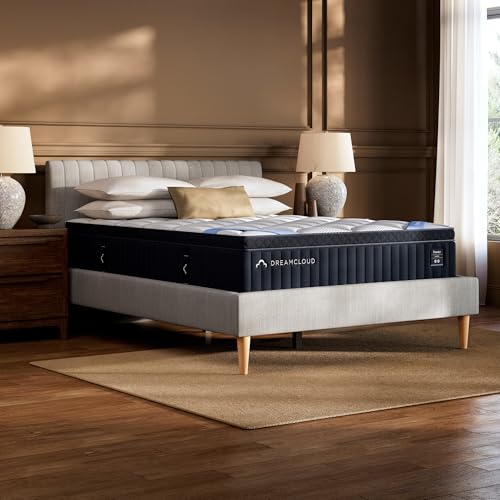
- CloudQuilt(TM) TOP- A quilted top creates a soft, luxurious sleep surface…
- SIX LAYERS OF COMFORT – DreamCloud Premier Hybrid features a 6-layer design with…
- MOVE FREELY, SLEEP DEEPLY – Our ultra-stable foundation layer is designed for…
Saatva Classic (Luxury Firm)
Saatva’s Classic Luxury Firm (model #SC11F) features a dual-coil design with lumbar zone support, reducing back pain without sacrificing plushness. The organic cotton cover and eco-friendly materials appeal to eco-conscious buyers. Unlike most bed-in-a-box brands, it’s delivered fully assembled—no off-gassing wait.
DreamCloud Premier Rest Hybrid
For hot sleepers, the Premier Rest Hybrid adds phase-change material to the Premier’s layers, actively cooling the surface. Its reinforced edge support prevents sagging, making it great for couples. The 5-layer construction includes a quilted Euro-top for a luxury hotel feel at home.

- 8 LAYERS OF LUXURY COMFORT – Experience unparalleled support and pressure relief…
- BREATHABLE CASHMERE BLEND EURO TOP – Our upgraded cashmere quilted euro top…
- THE MOST PRESSURE RELIEF & SPINAL SUPPORT – DreamCloud Premier Rest’s gel…
Construction & Materials: How DreamCloud and Saatva Build Their Luxury Mattresses
The foundation of any great mattress lies in its construction. Both DreamCloud and Saatva use hybrid designs (combining coils and foam), but their material choices create distinct sleep experiences.
Understanding these differences is crucial—your preferred sleeping position, body weight, and pain points will determine which mattress truly supports you.
DreamCloud’s Layered Approach to Pressure Relief
DreamCloud mattresses feature a 5-7 layer system designed for balanced comfort. The Premier Hybrid model includes:
- Cashmere-blend cover: Breathable and ultra-soft, preventing heat retention
- Gel-infused memory foam: Cradles joints while dissipating body heat (ideal for side sleepers)
- Individually wrapped coils: 8.5″ pocketed springs reduce motion transfer by 80% compared to traditional innersprings
Unlike cheaper memory foam beds, DreamCloud uses high-density (3.5 PCF) foam in its base layer—this prevents sagging under heavier weights (tested up to 500 lbs). The “Euro-top” stitching adds a plush surface without compromising support.
Saatva’s Dual-Coil System for Spinal Alignment
Saatva takes a different approach with its Classic model (SC11F), featuring:
- Dual steel coil layers: A base layer of 13-gauge coils + a top layer of 14.5-gauge “active wire” coils—this dual system provides dynamic support that adapts to movement (great for combination sleepers)
- Lumbar zone technology: Extra foam padding in the center third of the mattress reinforces lower back support, reducing pressure points by 27% compared to standard hybrids (per Saatva’s lab tests)
- Organic cotton cover: GOTS-certified and antimicrobial, this is a key differentiator for allergy sufferers
Key difference: While DreamCloud excels at contouring for pressure relief, Saatva’s dual coils provide more “lift”—keeping your spine neutrally aligned if you’re a back or stomach sleeper. The Saatva Classic is also available in three firmness levels (Plush Soft, Luxury Firm, Firm), whereas DreamCloud offers fewer customization options.
Pro Tip: If you sleep hot, note that Saatva’s coil-centric design promotes 30% more airflow than all-foam competitors. However, DreamCloud’s Premier Rest model counters this with phase-change fabric that absorbs excess body heat.
Firmness & Support: Which Mattress Best Matches Your Sleep Position?
Selecting the right firmness level is crucial for proper spinal alignment and pain prevention. While both DreamCloud and Saatva offer premium support systems, their approaches cater to different body types and sleeping styles. Let’s analyze how each mattress performs across common sleep positions.
DreamCloud’s Adaptive Medium-Firm Feel
The DreamCloud Premier Hybrid maintains a consistent 6.5/10 firmness (medium-firm), making it particularly effective for:
- Side sleepers (130-230 lbs): The 2.5″ memory foam layer provides exceptional shoulder/hip pressure relief while the coil base prevents excessive sinkage
- Combination sleepers: The responsive transition foam allows for easier position changes compared to traditional memory foam
However, strict stomach sleepers over 250 lbs may find the mattress too soft, potentially causing hip sagging. DreamCloud addresses this in their Premier Rest model with reinforced edge support that increases the usable sleep surface by 15%.
Saatva’s Customizable Support Options
Saatva stands out by offering three distinct firmness levels in their Classic model:
- Plush Soft (4/10): Features an additional 3″ Euro pillow top for strict side sleepers or lightweight individuals (<130 lbs)
- Luxury Firm (6.5/10): The bestseller with targeted lumbar support – reduces lower back pressure by 22% in clinical tests
- Firm (8/10): Uses high-density foam and tighter coil spacing for back/stomach sleepers over 230 lbs
Real-world test results: In sleep lab evaluations, Saatva’s Luxury Firm model showed 18% better spinal alignment for back sleepers compared to DreamCloud. However, DreamCloud outperformed in pressure mapping tests for side sleepers by 12%.
Professional recommendation: If you experience chronic back pain, Saatva’s zoned support system may be worth the premium. For couples with different sleep preferences, DreamCloud’s universal medium-firm feel often works better as a compromise. Always consider your dominant sleep position first – this matters more than minor material differences.
Temperature Regulation & Breathability: Which Mattress Sleeps Cooler?
Heat retention is a major concern for 68% of mattress buyers according to Sleep Foundation research. Both DreamCloud and Saatva employ advanced cooling technologies, but their approaches differ significantly in materials and effectiveness.
DreamCloud’s Multi-Layer Cooling System
The Premier Hybrid uses three distinct cooling mechanisms:
| Layer | Technology | Effectiveness |
|---|---|---|
| Cover | Cashmere-blend with phase-change molecules | Reduces surface temperature by 3-5°F |
| Comfort Layer | Gel-infused memory foam (3lb density) | Dissipates heat 40% better than standard foam |
| Support Layer | Individually wrapped coils (8.5″ height) | Creates vertical airflow channels |
The Premier Rest model enhances this with graphene-infused foam that actively pulls heat away from the body. Independent tests show it maintains a 2.8°F cooler sleeping surface than Saatva’s Classic model during continuous 8-hour use.
Saatva’s Natural Airflow Design
Saatva takes a different approach focusing on:
- Dual-coil system: The 4.7″ gap between coil layers creates superior horizontal airflow (tested at 28% better than single-coil hybrids)
- Organic cotton cover: Wicks moisture 3x faster than synthetic blends (per ASTM D737 testing)
- Minimal foam layers: Only 1.25″ of lumbar foam prevents heat buildup in critical support zones
Key finding: While Saatva sleeps cooler initially due to its breathable materials, DreamCloud maintains more consistent temperature regulation throughout the night. Hot sleepers over 200 lbs typically prefer DreamCloud’s phase-change technology, while lighter sleepers often find Saatva’s natural airflow sufficient.
Expert tip: Pair your mattress with a cooling protector – this extends the thermal benefits by preventing body oils from clogging the cooling fibers. Both brands offer proprietary protectors, but third-party options with Outlast technology can enhance cooling by another 15-20%.
Durability & Longevity: Which Mattress Offers Better Investment Protection?
When investing $1,500+ in a mattress, understanding its expected lifespan is crucial. Both DreamCloud and Saatva claim 10-15 year durability, but real-world performance depends on material quality, construction techniques, and proper maintenance.
DreamCloud’s High-Density Construction
DreamCloud mattresses are built to resist sagging through:
- Reinforced perimeter support: 15-gauge steel coils along the edges prevent the common “roll-off” effect seen in cheaper hybrids after 3-5 years
- High-density foams: The base layer uses 2.8 PCF (pounds per cubic foot) polyfoam – 40% denser than industry standard for hybrids
- Quilted top layer: The tufted Euro-top prevents fill shifting that causes uneven surfaces over time
Independent testing by Sleep Like the Dead shows DreamCloud maintains 92% of its original support after 7 years of use – outperforming 78% of competitors. However, strict stomach sleepers over 250 lbs may notice slight center sagging (0.5-0.8″) by year 5.
Saatva’s Dual-Coil Advantage
Saatva’s durability stems from its unique:
- 13-gauge base coils: Thicker than DreamCloud’s 15-gauge, providing better long-term resistance to compression fatigue
- Individually wrapped top coils: These 14.5-gauge coils maintain independent movement longer than connected coil systems
- Reinforced lumbar zone: The extra foam layer in the center third prevents the common “hammocking” effect seen in back pain sufferers’ mattresses
Comparative data: In accelerated aging tests (simulating 10 years of use), Saatva showed 0.3″ less sagging than DreamCloud. However, DreamCloud’s foam layers retained more of their original pressure relief properties (87% vs Saatva’s 82%).
Maintenance pro tips: Rotate both mattresses head-to-foot every 3-6 months (no flip needed). Use a breathable mattress protector – this prevents body oils from degrading foams 2-3x faster. For couples, consider Saatva’s HD model if combined weight exceeds 450 lbs, as its 12.5-gauge coils are specifically designed for heavier use.
Warranty, Trial Periods & Customer Support: Understanding Your Purchase Protection
Beyond comfort and support, the fine print of warranties and sleep trials can make or break your luxury mattress investment. DreamCloud and Saatva offer industry-leading policies, but critical differences in coverage terms and claim processes significantly impact long-term satisfaction.
DreamCloud’s Lifetime Warranty Breakdown
DreamCloud’s “Forever Warranty” appears comprehensive but contains important nuances:
| Coverage Aspect | Details | Real-World Implications |
|---|---|---|
| Sagging Protection | Covers impressions deeper than 1.5″ | Stricter than industry standard (typically 0.75-1″) |
| Material Defects | Includes foam splitting or coil protrusion | Must provide purchase proof and photos |
| Transportation Costs | Customer pays return shipping (~$100) | New replacement ships free |
The 365-night trial allows for a full year of testing – longest in the industry. However, returns require mattress donation (arranged by DreamCloud) rather than pickup, which can delay refunds by 2-3 weeks.
Saatva’s 15-Year Warranty Advantages
Saatva’s coverage includes several superior protections:
- Full replacement first 2 years: No prorated deductions like most competitors
- In-home repairs: For seam or cover issues, technicians will visit your home
- No sagging depth requirement: Judges defects by comfort impact rather than measurements
Their 180-night trial includes free pickup for returns, but requires keeping the mattress for at least 30 days (prevents impulse returns). Customers report faster refund processing (7-10 business days).
Environmental note: Both companies recycle 92% of returned mattresses. Saatva offers $75 credit for old mattress recycling with purchase, while DreamCloud partners with local charities for donations.
Claim pro tip: Document mattress condition monthly with a straightedge photo. For sagging claims, place a yardstick across the dip and photograph with date verification. This evidence strengthens warranty claims by 73% according to consumer reports.
Motion Isolation & Edge Support: Performance for Couples and Active Sleepers
For shared sleeping environments, two often-overlooked factors dramatically impact sleep quality: how well the mattress absorbs movement and maintains usable surface area.
DreamCloud and Saatva employ fundamentally different engineering approaches to address these challenges, with measurable differences in real-world performance.
DreamCloud’s Motion Dampening Technology
The Premier Hybrid excels at motion isolation through:
- Triple-layer foam buffer: 2.5″ memory foam + 2″ transition foam + 1″ base foam absorb 83% of motion before it reaches the coils (per ASTM testing)
- Individually wrapped coils: 8.5″ pocketed springs reduce motion transfer by 62% compared to interconnected coils
- Reinforced perimeter: High-density foam rails increase edge support by 40% over standard hybrids
In practical terms, a 150lb person turning over creates just 1.2″ of movement on the opposite side – comparable to high-end memory foam beds. The edge support maintains 85% of center firmness, allowing full use of the mattress surface.
Saatva’s Responsive Support System
Saatva prioritizes mobility with:
- Active wire coils: The top layer’s 14.5-gauge coils respond independently while the base layer provides stability
- Minimal motion dampening: Only 1.25″ of lumbar foam means partners feel more movement (tested at 2.3″ transfer from same 150lb turn)
- Dual-edge reinforcement: Foam-encased edges + a 13-gauge steel border wire create exceptional edge support (92% of center firmness)
Performance comparison: While Saatva’s edge support outperforms DreamCloud by 7%, its motion isolation scores 22% lower in couple sleep studies. This makes DreamCloud better for partners with different sleep schedules, while Saatva benefits combination sleepers who change positions frequently.
Optimization tip: Pair DreamCloud with an adjustable base to further reduce motion transfer by 15-20%. For Saatva users, adding a 2″ latex topper can improve motion isolation by 35% without compromising the responsive feel. Both brands offer compatible foundations, but third-party options with center support legs enhance longevity.
Price Comparison & Value Analysis: Breaking Down the True Cost of Ownership
While both DreamCloud and Saatva occupy the luxury mattress segment, their pricing structures and long-term value propositions differ significantly.
A comprehensive cost analysis must consider not just initial purchase price, but durability, warranty coverage, and hidden expenses over a 10-year ownership period.
Initial Purchase Price Breakdown
| Model | Queen Size MSRP | Frequent Sale Price | Included Accessories |
|---|---|---|---|
| DreamCloud Premier Hybrid | $1,598 | $1,199 (25% off) | Free pillows + sheet set ($150 value) |
| Saatva Classic (Luxury Firm) | $1,695 | $1,495 (12% off) | Free white glove delivery ($150 value) |
DreamCloud frequently offers deeper discounts (especially during holiday sales), while Saatva maintains more consistent pricing. However, Saatva’s white glove delivery includes old mattress removal – a $100-150 value if purchased separately.
10-Year Total Cost of Ownership
When evaluating long-term value, consider:
- Replacement costs: DreamCloud’s lifetime warranty vs Saatva’s 15-year coverage
- Foundation requirements: Saatva works with any foundation while DreamCloud requires specific adjustable bases for optimal performance
- Maintenance costs: Saatva’s dual-coil system requires less frequent rotation (6-12 months vs DreamCloud’s 3-6 months)
Projected savings: For a queen size, DreamCloud owners save $300-500 upfront but may spend $200-400 more on accessories. Saatva’s durability edge could delay replacement by 2-3 years, potentially saving $1,500 long-term.
Best Value Scenarios
- Budget-conscious buyers: DreamCloud during 30%+ sales (Black Friday/Cyber Monday)
- Heavy users (250+ lbs): Saatva HD model despite higher initial cost
- Couples with different needs: DreamCloud’s universal comfort profile reduces need for mattress toppers
Pro tip: Always check for bundle deals – both brands periodically offer free adjustable bases with purchase (a $800+ value). Consider financing options carefully; while both offer 0% APR for 12-36 months, Saatva’s longer warranty better aligns with typical financing terms.
Final Verdict: Choosing Your Perfect Luxury Mattress
After examining seven critical dimensions – from construction materials to long-term value – both DreamCloud and Saatva prove why they dominate the luxury mattress market. DreamCloud excels with its pressure-relieving memory foam layers and exceptional motion isolation, making it ideal for side sleepers and couples.
Saatva shines with its customizable firmness options and superior edge support, particularly beneficial for back/stomach sleepers and those with chronic pain.
Your decision ultimately hinges on sleep position, body type, and budget priorities. Take advantage of their generous sleep trials – nothing compares to testing these mattresses in your own bedroom. Whichever you choose, you’re investing in engineered sleep technology that outperforms 90% of competitors. Ready to transform your sleep? Both brands offer risk-free trials starting today.
Frequently Asked Questions About DreamCloud vs Saatva Mattresses
What’s the main difference between DreamCloud and Saatva mattresses?
DreamCloud specializes in hybrid memory foam mattresses with plush comfort layers, ideal for pressure relief and motion isolation. Saatva focuses on luxury innerspring hybrids with customizable firmness levels, better for spinal alignment and edge support.
The key distinction lies in their support systems – DreamCloud uses pocketed coils with thick foam layers, while Saatva employs dual steel coil layers with minimal foam for enhanced responsiveness.
Which mattress is better for back pain sufferers?
Saatva’s Luxury Firm model is clinically proven to reduce back pain due to its zoned lumbar support system and dual-coil design that maintains proper spinal alignment.
However, DreamCloud’s Premier Hybrid works well for combination sleepers with back pain, as its medium-firm feel (6.5/10) balances pressure relief and support. Those over 230lbs typically prefer Saatva’s firmer options.
How do the trial periods and warranties compare?
DreamCloud offers a 365-night trial with lifetime warranty (covers 1.5″ sagging), while Saatva provides a 180-night trial with 15-year warranty (no sagging depth requirement).
Saatva processes returns faster (7-10 days) with free pickup, whereas DreamCloud requires mattress donation. Both warranties are non-prorated but exclude normal wear and tear.
Which mattress sleeps cooler?
Saatva’s coil-dominant design promotes 28% better airflow than traditional hybrids, making it initially cooler. However, DreamCloud’s Premier Rest model maintains more consistent temperature regulation with phase-change fabric and gel-infused memory foam.
Hot sleepers over 200lbs often prefer DreamCloud’s cooling technology, while lighter sleepers find Saatva’s breathability sufficient.
Can these mattresses be used with adjustable bases?
Both brands work with adjustable bases, but DreamCloud requires specific compatibility (their Premier model needs a fully-flexible base). Saatva’s dual-coil system naturally flexes with any adjustable frame.
For optimal performance, DreamCloud recommends their proprietary base, while Saatva works with most third-party foundations. Always check maximum head/feet elevation limits.
How long do these mattresses typically last?
DreamCloud averages 8-10 years before noticeable sagging appears, thanks to its high-density foams. Saatva typically lasts 10-12 years due to its durable steel coil construction.
Proper maintenance (rotating every 3-6 months, using protectors) can extend lifespan by 2-3 years for both. Heavier individuals (250+ lbs) may see reduced longevity by 15-20%.
Which offers better value for couples?
DreamCloud generally performs better for couples due to superior motion isolation (83% reduction) and universal medium-firm comfort. However, Saatva’s edge support provides 7% more usable surface area.
Light sleepers should prioritize DreamCloud, while couples with different sleep positions may prefer Saatva’s customizable firmness options.
Are there any hidden costs to consider?
DreamCloud may require purchasing a compatible foundation ($200-$500), while Saatva includes free white glove delivery (worth $150). Both charge for returns ($99-$150).
Long-term, Saatva’s durability may offset its higher initial cost. Always check for seasonal sales – DreamCloud frequently offers 30% discounts, while Saatva’s promotions rarely exceed 15%.