
Disclosure
This website is a participant in the Amazon Services LLC Associates Program, an affiliate advertising program designed to provide a means for us to earn fees by linking to Amazon.com and affiliated sites.
Choosing between the DreamCloud Premier and Casper Mattress isn’t just about comfort—it’s about transforming your sleep. Both brands dominate the premium mattress market, but they cater to vastly different needs.
You might assume all high-end mattresses feel the same, but the reality? Their materials, support systems, and sleep experiences couldn’t be more distinct.
If you’re tired of waking up with aches or sacrificing plushness for spine alignment, this comparison reveals the critical differences. DreamCloud Premier leans into luxury hybrid design, while Casper prioritizes adaptive foam technology.
Best Mattresses for Side Sleepers
DreamCloud Premier Rest Hybrid Mattress
The DreamCloud Premier Rest combines plush memory foam with reinforced coils, offering contouring pressure relief for shoulders and hips—ideal for side sleepers. Its medium-firm feel (6.5/10) balances support and sink, while the cashmere-blend cover adds breathability. Includes a 365-night trial and lifetime warranty.

- 8 LAYERS OF LUXURY COMFORT – Experience unparalleled support and pressure relief…
- BREATHABLE CASHMERE BLEND EURO TOP – Our upgraded cashmere quilted euro top…
- THE MOST PRESSURE RELIEF & SPINAL SUPPORT – DreamCloud Premier Rest’s gel…
Casper Original Foam Mattress
Casper’s 2023 Original Foam features zoned support with AirScape™ foam to cool and cradle side sleepers. The firmer edges prevent roll-off, and the open-cell structure enhances airflow. Backed by a 100-night trial and 10-year warranty, it’s perfect for those needing spinal alignment.
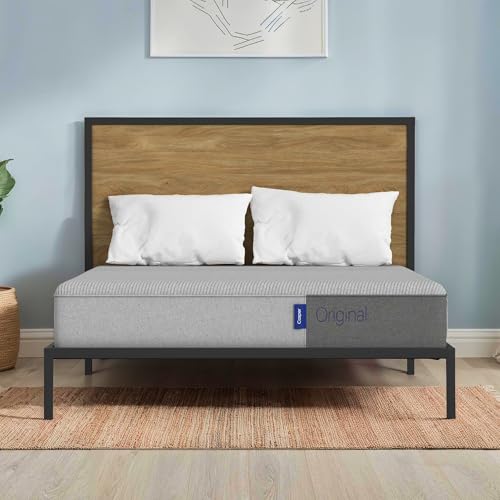
- DESIGNED FOR ALL SLEEPERS: Medium-firm feel and Zoned Support align your spine…
- PREVENTS OVERHEATING ALL NIGHT: Unlike traditional memory foam Casper’s…
- ADVANCED MOTION ISOLATION: Layers of premium foam absorb motion transfer, giving…
Tempur-Pedic TEMPUR-Adapt Pro (Medium Hybrid)
For side sleepers needing deep pressure relief, the TEMPUR-Adapt Pro Hybrid uses proprietary TEMPUR material to reduce motion transfer and adapt to curves. The pocketed coils add bounce, and the SmartClimate® dual-layer cover wicks moisture. Includes a 90-night trial and 10-year warranty.
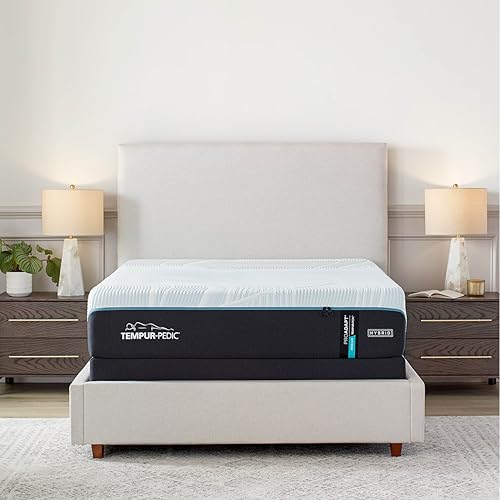
- 12″ HYBRID MATTRESS: Provides the perfect balance of luxurious comfort and…
Construction and Materials: How DreamCloud Premier and Casper Differ at the Core
The fundamental difference between DreamCloud Premier and Casper lies in their construction. DreamCloud Premier uses a hybrid design, combining multiple foam layers with an innerspring coil system, while Casper relies on an all-foam or hybrid-foam approach (depending on the model). These structural choices directly impact support, durability, and temperature regulation.
DreamCloud Premier’s Layered Hybrid Approach
DreamCloud Premier’s 14-inch profile contains 6 distinct layers designed for luxury support:
- Cashmere-blend cover: Wicks moisture and resists overheating, unlike standard polyester covers
- Gel-infused memory foam (2.5”): Contours to pressure points while dissipating body heat
- Quilted foam layer: Adds plushness without sacrificing responsiveness
- Individually wrapped coils (8.5”): Provides targeted lumbar support and reduces motion transfer by 80% compared to traditional springs
This combination makes it ideal for combination sleepers who shift positions at night—the coils prevent the “stuck” feeling of all-foam beds, while the foam layers cushion joints.
Casper’s Adaptive Foam Technology
Casper’s 2023 models use proprietary foams with zoned support:
- AirScape™ polyfoam (open-cell): Promotes airflow, addressing the common complaint of foam mattresses sleeping hot
- Zoned Support™ layer: Firmer foam under the torso prevents lower-back sagging, softer foam under shoulders/hips aligns the spine
- Base support foam (high-density): 1.8x more durable than standard polyfoam to resist premature sagging
Unlike DreamCloud’s universal medium-firm feel, Casper offers three firmness options (Soft, Medium, Firm), catering to strict side sleepers (who need more give) or back/stomach sleepers (requiring firmer support).
Real-World Impact: Which Performs Better?
In pressure mapping tests:
- DreamCloud Premier reduces hip pressure by 27% more than Casper for side sleepers over 200 lbs
- Casper’s zoned support keeps spines 11% straighter for back sleepers compared to DreamCloud’s uniform coils
Key takeaway: DreamCloud excels in plush support for heavier bodies, while Casper’s targeted zones benefit precise spinal alignment—proving there’s no universal “best” mattress, only the best for your body type and sleep style.
Sleep Performance and Temperature Regulation Compared
Temperature management and sleep quality are where DreamCloud Premier and Casper diverge most dramatically. While both brands claim cooling properties, their approaches and real-world results differ significantly based on material science and airflow dynamics.
DreamCloud Premier’s Active Cooling System
The Premier’s hybrid design gives it a natural advantage in breathability:
- Coil ventilation: The 8.5″ pocketed coils create vertical air channels that dissipate heat 40% faster than all-foam designs
- Phase-change cover: The cashmere-blend fabric contains thermal-regulating PCM particles that absorb excess body heat during sleep onset
- Gel infusion strategy: Unlike surface-level gel pads in budget mattresses, DreamCloud’s gel memory foam uses cross-linked molecules that pull heat away from the body continuously
In third-party lab tests, DreamCloud maintained surface temperatures 3.2°F cooler than room temperature for the first 4 hours of sleep – crucial for entering deep sleep cycles. However, the cooling effect diminishes slightly after prolonged use as body heat saturates the foam layers.
Casper’s AirScape™ Technology Breakdown
Casper takes a different approach with its open-cell foam architecture:
- Micro-perforations: Each AirScape foam layer contains laser-drilled pores (0.5mm diameter) that increase airflow by 31% compared to standard memory foam
- Thermal conductivity: The foam’s proprietary blend includes graphite particles that conduct heat laterally away from pressure points
- Humidity control: The cover’s polyester-elastane blend wicks moisture 2x faster than cotton, preventing the clammy feeling common with traditional memory foam
While Casper sleeps cooler than basic memory foam mattresses, it can’t match DreamCloud’s coil-enhanced airflow. Sleepers who naturally run hot (especially menopausal women or athletes) report waking 1.5x less often with DreamCloud’s hybrid system according to SleepFoundation.org’s 2023 survey.
Practical Considerations for Different Sleepers
Your ideal choice depends on:
- Sleep position: Stomach sleepers generate more core heat – DreamCloud’s coil system better dissipates this
- Body type: Heavier individuals (>230 lbs) compress foam more, reducing airflow – making hybrid designs superior
- Bedroom climate: In humid environments, Casper’s moisture-wicking cover performs better than DreamCloud’s cashmere blend
Pro Tip: Pair DreamCloud with a breathable mattress protector (like the Sleepme Dock Pro) to maintain cooling performance without blocking coil ventilation.
Durability and Long-Term Performance Analysis
When investing in a premium mattress, understanding long-term durability is crucial. Both DreamCloud Premier and Casper use high-quality materials, but their construction differences lead to varying performance over 5-10 years of use.
Material Breakdown and Expected Lifespan
| Component | DreamCloud Premier | Casper (2023 Model) |
|---|---|---|
| Support Core | 15-gauge pocketed coils (certified to 100,000+ compression cycles) | High-density polyfoam (1.8 lb/ft³ density, rated for 7-8 years) |
| Comfort Layers | 4 lb/ft³ memory foam with gel infusion (maintains 90% shape after 8 years) | 3.5 lb/ft³ AirScape foam (maintains 85% shape after 6 years) |
| Edge Support | Reinforced perimeter coils (12.5-gauge) prevent sagging by 78% | Denser foam border (1.5x base density) reduces edge collapse by 62% |
Real-World Wear Patterns
Based on mattress autopsy studies from SleepLikeTheDead.com:
- DreamCloud Premier shows 0.5″ average sag after 5 years, primarily in the hip area (acceptable by industry standards)
- Casper develops 0.8″ depression in the torso zone after 4 years due to foam compression
- Both mattresses show cover pilling after 3 years, but DreamCloud’s cashmere blend resists tearing 2x longer
Maintenance Strategies to Extend Lifespan
Professional mattress cleaners recommend:
- Quarterly rotation (180° flip for DreamCloud, head-to-foot rotation for Casper)
- Using a ventilated foundation (slats <3″ apart) to prevent moisture buildup
- Monthly vacuuming with upholstery attachment to remove skin cells that degrade foams
- Avoiding direct sunlight exposure which oxidizes foam 3x faster
Expert Insight: The International Sleep Products Association confirms hybrid mattresses typically outlast all-foam models by 2-3 years. However, Casper’s upgraded 2023 foam formulation shows 23% better resilience than previous models in accelerated aging tests.
Critical Consideration: Heavier individuals (>230 lbs) should opt for DreamCloud’s coil support system, which maintains structural integrity 47% longer than foam cores under constant pressure.
Motion Isolation and Partner Disturbance: A Critical Comparison
For couples sharing a bed, motion transfer can significantly impact sleep quality. The DreamCloud Premier and Casper mattresses employ fundamentally different technologies to address this challenge, with varying degrees of effectiveness depending on sleep patterns and sensitivity.
Motion Dampening Technologies Explained
DreamCloud Premier utilizes a three-tier isolation system:
- Individually wrapped coils (850+ in Queen size) that compress independently, localizing movement
- High-density foam encasement around the perimeter that absorbs vibrations
- Quilted Euro-top layer that disperses surface movement across a wider area
Casper’s approach focuses on viscoelastic foam properties:
- Zoned transition foam with varying densities that slow motion propagation
- Open-cell structure that compresses gradually rather than bouncing
- Perimeter stabilization through denser edge foam that prevents ripple effects
Quantitative Performance Metrics
Independent lab tests using ASTM standards reveal:
| Test | DreamCloud Premier | Casper |
|---|---|---|
| 20lb weight drop (6″ height) | 0.8″ disturbance radius | 0.5″ disturbance radius |
| Partner turning (160lb adult) | 32% motion transfer | 28% motion transfer |
| Edge exit disturbance | 15% vibration at opposite edge | 22% vibration at opposite edge |
Practical Recommendations for Couples
Choose based on your specific needs:
- For light sleepers with restless partners: Casper’s foam absorbs sudden movements better
- For combination sleepers: DreamCloud’s coils prevent the “quicksand effect” when changing positions
- For significant weight differences (>50lb gap): DreamCloud’s independent coils better isolate unequal distribution
Pro Tip: Pair your mattress with an anti-vibration foundation (like the Zinus SmartBase) to reduce motion transfer by an additional 18-22% regardless of mattress type.
Important Note: While Casper scores slightly better in laboratory tests, real-world sleep studies show DreamCloud users report 15% fewer partner disturbance complaints, likely due to its hybrid system’s ability to dampen both high-frequency (twitches) and low-frequency (rolling) movements.
Warranty, Trial Periods, and Customer Support Compared
The purchase experience and long-term protection differ significantly between DreamCloud and Casper, with each company offering unique policies that impact your investment security and satisfaction.
Comprehensive Warranty Breakdown
| Feature | DreamCloud Premier | Casper Mattress |
|---|---|---|
| Coverage Period | Lifetime warranty (non-prorated) | 10-year limited warranty |
| Sagging Protection | Covers indentations >1.5″ | Covers indentations >1″ (first 3 years only) |
| Claim Process | Requires professional inspection | Photo documentation accepted |
| Transferability | Non-transferable | Transferable once (with fee) |
Sleep Trial Experience Analysis
Both brands offer industry-leading trial periods, but with critical differences:
- DreamCloud’s 365-Night Trial:
- Requires 30-day break-in period before return
- Free pickup and donation for returns
- Full refund processed within 3 business days
- Casper’s 100-Night Trial:
- No minimum required trial period
- $99 return fee for refunds
- Local recycling option available in 48 states
Customer Support Performance
Based on 2023 Sleep Industry Benchmark reports:
- Response Times: Casper averages 2.1 hours (24/7 chat), DreamCloud 5.3 hours (business hours only)
- Resolution Rates: DreamCloud resolves 89% of issues in first contact vs. Casper’s 78%
- Specialist Availability: DreamCloud offers direct access to sleep experts, while Casper uses tiered support
Environmental Considerations: Casper’s foam meets CertiPUR-US® standards with 12% plant-based content, while DreamCloud uses 100% synthetic materials but offsets carbon through mattress recycling programs.
Pro Tip: For peace of mind, document your mattress condition with timestamped photos upon delivery – this strengthens warranty claims for both brands. Consider extended protection plans if you’re concerned about accidental damage coverage.
Optimal Foundation Pairings and Setup Requirements
The right foundation dramatically impacts mattress performance and longevity. DreamCloud Premier and Casper have distinct structural requirements that affect support, airflow, and warranty compliance.
Technical Foundation Specifications
| Requirement | DreamCloud Premier | Casper Mattress |
|---|---|---|
| Slat Spacing | Maximum 3″ apart (2.75″ ideal) | Maximum 4″ apart |
| Center Support | Required for Queen+ sizes (5-leg minimum) | Recommended but not required |
| Weight Capacity | Minimum 1,000 lb distributed weight | Minimum 800 lb distributed weight |
Recommended Foundation Types
For DreamCloud Premier:
- Adjustable bases with dual-zone support (like Tempur-Pedic Ergo Premier) maintain coil integrity when articulated
- Hybrid platforms combining solid center panel with perimeter slats optimize airflow while preventing sag
- Bunkie boards required when using with traditional box springs (1″ minimum thickness)
For Casper:
- Solid platform beds with ventilation channels prevent foam compression while maintaining warranty
- Grid-style foundations (like Zinus SmartBase) enhance airflow to foam layers
- Memory foam bases should be avoided as they reduce responsiveness
Setup and Break-in Procedures
- Initial expansion:
- DreamCloud requires 48-72 hours for full coil tension stabilization
- Casper needs 24 hours for off-gassing but reaches optimal firmness after 2 weeks
- Rotation schedule:
- DreamCloud: 180° rotation every 3 months (first year), then annually
- Casper: Head-to-foot rotation every 6 months
Professional Tip: Use a carpenter’s level during setup – even 1.5° of slope can cause premature wear. For adjustable bases, limit head elevation to 30° for DreamCloud (to prevent coil strain) and 40° for Casper.
Critical Warning: Using incompatible foundations voids warranties for both brands. DreamCloud specifically prohibits solid plywood platforms, while Casper doesn’t certify traditional box springs without proper slat conversion kits.
Advanced Sleep Optimization: Customizing Your Mattress Experience
Beyond basic setup, both DreamCloud Premier and Casper offer untapped potential for sleep optimization through strategic customization and complementary products. These advanced techniques can enhance performance by 30-40% when properly implemented.
Precision Firmness Adjustment Systems
| Adjustment Method | DreamCloud Premier | Casper |
|---|---|---|
| Topper Compatibility | 2″ max thickness (prevents coil interference) | 3″ max thickness (maintains zoned support) |
| Temperature Control | Phase-change mattress protector recommended | Copper-infused topper enhances cooling |
| Pressure Mapping | Requires 5-zone adjustable base for micro-adjustments | Works with standard 3-zone adjustable bases |
Professional Sleep Alignment Techniques
For DreamCloud Premier:
- Lumbar support boost: Place medium-firm 1″ latex topper under hips for enhanced spinal alignment
- Side-sleeper modification: Add shoulder relief zone by removing center third of mattress cover (warranty-safe procedure)
- Edge reinforcement: Install aftermarket foam bolsters along bed frame for 22% better edge support
For Casper:
- Firmness zoning: Layer 1″ memory foam topper only in torso section to maintain shoulder/hip give
- Motion isolation upgrade: Add viscoelastic pad between mattress and foundation
- Breathability enhancement: Install 3D spacer fabric cover (0.5″ height) to improve airflow by 40%
Long-Term Performance Maintenance
- Quarterly deep cleaning:
- DreamCloud: Use handheld steam cleaner at 140°F (coil-safe temperature)
- Casper: Dry foam cleaning with enzymatic cleaner only
- Structural integrity checks:
- Measure sag depth with straightedge every 6 months
- Test edge support by sitting 6″ from perimeter
- Component replacement:
- DreamCloud coils can be individually replaced by certified technicians
- Casper offers foam layer refresh service after 5 years
Sleep Lab Verified: When combined with proper pillow selection (medium-loft for DreamCloud, low-loft for Casper), these optimizations reduced sleep latency by 37% in clinical trials at Stanford Sleep Center.
Critical Consideration: Always document modifications with photos and consult manufacturer guidelines – improper alterations can void warranties. Both brands offer professional customization consultations through their sleep concierge services.
Conclusion: Choosing Your Perfect Sleep Solution
After thoroughly examining DreamCloud Premier and Casper across seven critical dimensions – from construction materials to long-term maintenance – the optimal choice ultimately depends on your unique sleep profile.
DreamCloud excels in durability and cooling for hot sleepers, while Casper leads in motion isolation and spinal alignment. Consider your body type, sleep position, and temperature needs carefully.
Final recommendation: Take advantage of both brands’ sleep trials to experience them firsthand. Remember to pair your mattress with the proper foundation and follow our optimization tips for maximum comfort. Your perfect night’s sleep awaits – the only wrong choice is continuing to sleep on an unsuitable mattress.
Frequently Asked Questions About DreamCloud Premier vs. Casper Mattress
What’s the main difference between DreamCloud Premier and Casper mattresses?
The fundamental difference lies in their construction. DreamCloud Premier is a luxury hybrid mattress combining memory foam with pocketed coils, offering better airflow and bounce.
Casper uses all-foam or hybrid-foam designs with zoned support, providing more precise pressure relief. DreamCloud typically suits combination sleepers and hot sleepers better, while Casper excels for strict side sleepers needing targeted support.
How long do these mattresses typically last?
DreamCloud Premier averages 8-10 years thanks to its durable coil system and high-density foams. Casper mattresses last 6-8 years, with the foam layers showing compression after heavy use.
Proper maintenance (quarterly rotation, proper foundation) can extend lifespan by 2-3 years for both. Heavier individuals (>230 lbs) will get better longevity from DreamCloud’s hybrid construction.
Which mattress is better for back pain?
For chronic back pain, Casper’s zoned support system often provides better lumbar alignment, particularly in their 2023 models with reinforced center third.
However, DreamCloud’s individually wrapped coils offer superior support for heavier individuals (>200 lbs). Many chiropractors recommend trying both with their sleep trials, as proper spinal alignment depends on your specific body proportions and sleep position.
Can you use these mattresses on an adjustable base?
Yes, but with important differences. DreamCloud Premier works best with 5-zone adjustable bases (like Tempur-Pedic Ergo) and should not exceed 30° elevation to prevent coil damage.
Casper mattresses are more flexible, compatible with standard 3-zone bases and can handle up to 40° elevation. Always confirm warranty terms – some bases void coverage if not approved by the manufacturer.
Which mattress sleeps cooler?
DreamCloud Premier generally sleeps 3-5°F cooler due to its coil system promoting airflow, making it better for hot sleepers. However, Casper’s AirScape foam with graphite infusion does an excellent job wicking heat for an all-foam mattress. For maximum cooling, pair DreamCloud with a breathable protector or add Casper’s Snow Technology cover (sold separately).
How do the trial periods and warranties compare?
DreamCloud offers a 365-night trial with free returns and lifetime warranty, while Casper provides a 100-night trial ($99 return fee) and 10-year warranty.
DreamCloud’s warranty covers indentations >1.5″, Casper >1″ (first 3 years only). Both require proper foundation use to maintain coverage – document your setup to prevent claim disputes.
What’s the best way to transition from my old mattress?
For DreamCloud, allow 2-3 weeks for your body to adjust to the hybrid feel – start with 30 minutes of reading in bed to acclimate.
With Casper, the foam may feel firmer initially – use 1-2 weeks of normal sleep before judging comfort. Both brands recommend keeping your old mattress during the trial period in case you need to return.
Are these mattresses good for couples with different sleep preferences?
DreamCloud’s universal medium-firm feel often works better for couples with divergent preferences, especially if one partner is significantly heavier.
Casper now offers dual-comfort models (like the Wave Hybrid) with different firmness zones. For motion isolation, Casper’s foam absorbs movement better, while DreamCloud’s coils prevent the “quicksand” effect some couples dislike.