
Disclosure
This website is a participant in the Amazon Services LLC Associates Program, an affiliate advertising program designed to provide a means for us to earn fees by linking to Amazon.com and affiliated sites.
Is your mattress topper constantly bunching up or sliding off the bed? This frustrating problem disrupts sleep and wastes your investment in comfort. A secure topper is essential for a restful night.
The main culprit is usually friction, or the lack of it. A smooth mattress cover or fitted sheet creates a slippery surface that allows the topper to shift with every movement you make during the night.
Are You Tired of Waking Up on a Bare Mattress Because Your Topper Slid Off Again?
A sliding topper ruins your sleep and your morning. The SHOUREN topper solves this with a 5-inch profile and dense memory foam that grips your mattress, preventing movement. Its substantial weight and conforming material anchor it in place, finally giving you a stable, comfortable surface that stays put all night long.
For a secure, slip-free night, we suggest: SHOUREN 5 Inch Memory Foam Mattress Topper
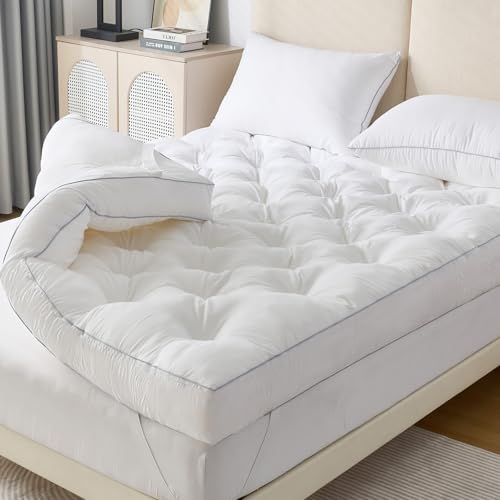
- 【5-Inch Extra Thick Comfort & Support】 SHOUREN mattress topper features a...
- 【Ergonomic Body-Contour Design】 Engineered to naturally fit your body...
- 【Upgraded 4-Way Elastic Anchor Straps】 Equipped with strong elastic straps...
The Root Causes: Why Your Mattress Topper Keeps Moving
Why your bed topper slides is the first step to a permanent fix. Several common factors work against you, turning a peaceful night into a wrestling match with your bedding. Identifying your specific issue is key.
Surface Friction and Material Slipperiness
The interaction between your topper and mattress surface is crucial. A lack of grip is the primary reason for a sliding mattress pad. This often comes down to the materials involved.
- Smooth Mattress Protectors: Vinyl or polyester covers create a very low-friction surface, allowing any topper to glide easily.
- Certain Topper Bottoms: Materials like quilted polyester or sateen can be slippery, especially on a firm, tight-weave mattress.
- Combination Issues: Pairing a slippery topper with a slippery mattress cover creates a perfect storm for movement.
Incorrect Size and Poor Fit
A topper that doesn’t match your mattress dimensions will never stay put. Even a small size discrepancy can cause major shifting problems over time.
Always check the exact measurements of your mattress before purchasing a new topper. A standard “Queen” size can vary between brands. An ill-fitting topper will have excess material that bunches and slides.
Lack of Proper Anchoring
Most mattress toppers are not designed with built-in security features. They are simply large pads meant to lie on top, relying on gravity and friction alone. This design is insufficient for active sleepers.
Without a dedicated anchoring system, the natural motion of turning and adjusting during sleep will slowly displace the topper. This is especially true for thicker, heavier memory foam toppers that can develop momentum once they start moving.
Effective Solutions: How to Stop a Mattress Topper from Sliding
Now that you know the causes, you can implement solutions to keep your bed topper securely in place. These methods range from simple household fixes to specialized products designed for this exact problem. You can combine techniques for maximum security.
Non-Slip Mattress Pads and Topper Sheets
Investing in a dedicated non-slip pad is one of the most effective permanent fixes. These pads act as a grippy layer between your mattress and topper.
- Rubberized Mattress Pads: These feature a dotted silicone or rubber backing that grips both surfaces firmly.
- Fitted Non-Slip Sheets: Some are designed like a fitted sheet that stretches over your mattress, with a grippy top surface for the topper.
- Benefits: They are low-profile, prevent bunching, and are often machine washable for easy maintenance.
DIY Gripping Methods and Bedding Adjustments
You can create an effective anti-slip solution with items you may already have at home. These are quick, low-cost ways to test what works for your setup.
Place a non-slip rug pad cut to size between the mattress and topper. The open-weave design allows breathability while providing excellent grip. Alternatively, use safety pins or quilt clips to secure the topper corners to your mattress or fitted sheet underneath.
- Place your fitted non-slip mattress pad directly on the bare mattress.
- Lay your mattress topper evenly on top of the grippy pad.
- Put a deep-pocket fitted sheet on over both layers, pulling it tightly to encase them together.
Strategic Use of Bed Sheets and Covers
Your bedding itself can be part of the anchoring system. The right technique can lock everything into place without extra products.
Use a deep-pocket fitted sheet that is specifically sized for a mattress with a topper. This creates a tight, encompassing fit. For ultimate security, consider a zippered mattress encasement large enough to fully enclose both your mattress and the topper as one unit.
Choosing the Right Products: Best Non-Slip Topper Accessories
Selecting the correct accessory is crucial for a long-term fix. The best product for you depends on your topper type, mattress, and personal preference. This comparison will help you make an informed decision quickly.
Comparing Gripper Pads, Sheets, and Straps
Different products solve the sliding problem in unique ways. Each has distinct advantages depending on your specific needs and setup.
| Product Type | Best For | Key Consideration |
|---|---|---|
| Non-Slip Gripper Pad | All topper types, especially memory foam. | Ensure it is breathable to prevent heat buildup. |
| Fitted Non-Slip Sheet | Those who want a seamless, sheet-like feel. | Check depth to accommodate your topper’s thickness. |
| Adjustable Topper Straps | Very thick or heavy toppers that need strong anchoring. | Straps may be felt through thinner mattress covers. |
Material Considerations for Breathability and Grip
The material of your non-slip solution affects comfort and performance. You need a balance between strong grip and adequate airflow.
- Silicone Dots: Offer excellent grip and are often more breathable than full rubber sheets.
- Mesh-Backed Rubber: Provides strong holding power with improved air circulation to keep you cool.
- Fabric Blends: Look for pads with a cotton or bamboo top layer for a more natural feel against your topper.
Ensuring a Perfect Fit for Your Mattress Size
A non-slip product that is too small or too large will not work effectively. Accurate measurement is the final, critical step before purchasing any accessory.
Measure the exact length, width, and depth of your mattress with the topper on it. Compare these dimensions to the product’s specifications, especially its “deep pocket” depth rating. A proper fit should be snug without over-stretching the material.
Prevention and Maintenance: Keeping Your Topper Securely in Place
After securing your topper, proper maintenance ensures it stays put for years. Simple habits and regular checks can prevent the sliding problem from recurring. A little ongoing attention protects your comfort investment.
Routine Bed-Making Techniques for Stability
How you make your bed daily can either help or hinder your topper’s stability. Adopt a method that reinforces its position each morning.
- The Tight Tuck: When putting on your fitted sheet, ensure it is stretched tightly over all four corners of the combined mattress and topper.
- Weekly Realignment: Once a week, when changing sheets, lift the topper and reposition it centrally on the bed to correct minor shifts.
- Layered Smoothing: Smooth each layer (topper, flat sheet) separately as you make the bed to eliminate wrinkles that can cause bunching.
Cleaning and Caring for Non-Slip Accessories
Your gripper pad or straps require care to maintain their effectiveness. Follow manufacturer instructions closely to preserve the non-slip properties.
Most rubber-backed pads can be machine washed on a gentle cycle in cold water. Always air dry them flat; high heat from a dryer can degrade the rubber and reduce grip. For straps, wipe them down with a damp cloth to prevent dirt buildup that can weaken elastic.
- Every 3 Months: Wash your non-slip pad according to care label instructions.
- When Rotating Mattress: Fully remove the topper and pad, then reposition them carefully after rotating.
- Inspect for Wear: Check straps for stretched elastic and pads for peeling silicone dots.
When to Consider a New Topper or Mattress
Persistent sliding can sometimes indicate a larger issue with your sleep setup. If fixes fail, the problem might be with the topper or mattress itself.
An old, lumpy mattress lacks a flat surface for any topper to grip. Similarly, a topper that has become overly compressed or misshapen will not lie flat. Consider if your investment in accessories outweighs the benefit of replacing worn-out core components.
Expert Tips and Troubleshooting for Stubborn Problems
Some sliding issues require advanced strategies. If standard solutions haven’t worked, these expert tips can tackle even the most stubborn topper. This section addresses specific, challenging scenarios for a complete fix.
Solutions for Heavy Memory Foam or Latex Toppers
Dense, heavy toppers present a unique challenge due to their weight and momentum. They require a more Strong anchoring system to prevent them from slowly creeping downhill.
- Combination Approach: Use a non-slip pad underneath and adjustable straps over the top for a full lockdown.
- Anti-Slide Underlay: Place a grippy shelf liner or a specially designed anti-creep mattress underlay beneath the entire mattress to stop the whole unit from shifting.
- Platform Bed Advantage: If possible, use a solid platform bed or place a non-slip pad between the mattress and slats to create a stable foundation.
Fixing a Topper That Slides on an Adjustable Bed
Adjustable bases add motion that exacerbates sliding. The solution must accommodate frequent position changes without losing grip.
You need accessories specifically labeled as “adjustable bed friendly”. These are made from flexible materials that won’t crack or bunch when the base articulates. Secure the topper with strong, elastic straps that hook under the mattress, allowing for movement while maintaining tension in all positions.
Addressing Shifting with Split King or Custom Sizes
Non-standard mattress sizes create gaps and seams that cause toppers to fall in or separate. Standard pads and sheets often do not fit these dimensions correctly.
For a split king, use two separate twin XL non-slip pads and toppers, treating each side independently. For custom sizes, seek out companies that offer custom-cut non-slip pads or use a large pad that can be trimmed to fit. Seamless anchoring is only possible with a perfect fit.
Will a mattress protector stop my topper from sliding?
It depends entirely on the protector’s material. A standard, smooth polyester or vinyl protector will likely make sliding worse. However, a fitted mattress protector with a non-slip bottom can be an excellent two-in-one solution. Look for protectors specifically marketed as “non-slip” or “gripping” to get this benefit.
How do I keep my mattress topper from sliding on a pillow top mattress?
Pillow top or euro top mattresses have a soft, rounded edge that makes anchoring difficult. The key is to use a deep anchoring method that accounts for the shape.
- Deep-Pocket Straps: Use extra-long topper straps that can reach under the mattress’s full depth, often 18 inches or more.
- Encasement Method: A zippered mattress encasement designed for deep mattresses can fully envelop both the mattress and topper as one unit.
- Strategic Tucking: Tuck the topper’s edges firmly between the pillow top and the mattress’s main body before putting on a tight fitted sheet.
Can I use safety pins or tape to secure my mattress topper?
While a quick fix, these methods have significant drawbacks. Safety pins can tear fabric, create uncomfortable lumps, and are difficult to remove for washing. Household tape loses its adhesive quickly and can leave a damaging residue on your mattress or topper. It is better to use products designed for bedding, like quilt clips or non-slip pads, for a safe and effective hold.
- Memory Foam: Non-slip rubber pad + deep-pocket fitted sheet.
- Feather/Down: Fitted non-slip sheet or pad, as straps may compress it.
- Wool or Latex: Breathable mesh gripper pad to maintain airflow and grip.
- Egg Crate Foam: A simple non-slip pad; straps may catch on the texture.
Cost-Effective Hacks and Immediate DIY Fixes
You don’t always need to buy new products to solve a sliding topper. Several highly effective solutions use common household items for an instant fix. These are perfect for stopping the slip tonight while you research a permanent solution.
Using Household Items for Instant Grip
Look in your linen closet, kitchen, or laundry room for items that can create friction. The goal is to add texture between the smooth surfaces of your mattress and topper.
- Non-Slip Rug Pads: Cut a section of a mesh rug gripper pad to fit your mattress. Its open weave is breathable and provides excellent traction.
- Shelf Liner: The rubbery, dotted liner used in kitchen drawers works perfectly. Cut it to size and place it textured-side up under your topper.
- Old Yoga Mat: A clean, worn yoga mat has a naturally grippy surface. Trim it to fit as a temporary, cushioned non-slip layer.
The Sheet Sandwich Technique for a Secure Hold
This method uses your existing bedding to lock the topper in place. It requires no extra purchases and can be surprisingly effective for medium-weight toppers.
- Place your bottom fitted sheet directly on the bare mattress and secure it tightly.
- Lay your mattress topper evenly on top of the fitted sheet.
- Put a second fitted sheet on over the topper, pulling it taut and anchoring the topper between the two sheet layers.
When to Re-evaluate Your Bedding Layers
Sometimes, the simplest fix is to remove a layer causing the problem. Excess bedding can create a slippery, unstable stack that no accessory can fully secure.
Try sleeping for a night with only your mattress, a non-slip solution, and the topper—no smooth mattress protector in between. If the sliding stops, you’ve identified the culprit. A bulky, old mattress pad underneath your topper can also be a hidden source of instability.
Best Mattress Topper Recommendations for a Secure Fit
Choosing a well-designed topper can minimize sliding from the start. These recommended options feature qualities that enhance stability, such as fitted designs and grippy bottoms. They are excellent choices for a comfortable, secure sleep surface.
Zalmureta 4 Inch Dual Layer Memory Foam Mattress Topper – Best for Deep Comfort & Grip
This topper combines a 4-inch profile with a breathable bamboo cover and a non-slip bottom. The dual-layer foam provides contouring support while the grippy base helps prevent movement. Its substantial weight also aids in staying put.
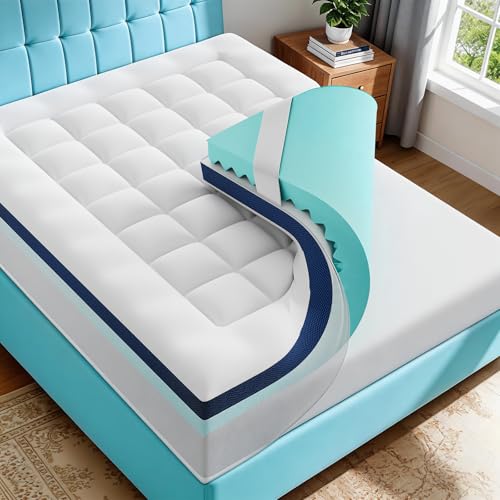
- 【4-Inch Dual-Layer Design】Our mattress topper features a 2-inch cooling...
- 【Breathable Design】This mattress topper is designed with Cold Gel Memory...
- 【Effective Body Support】Our mattress topper are ergonomically designed with...
COONP King Mattress Topper – Best Fitted, Quilted Design
Featuring a fitted sheet style with deep pockets and elastic straps, this topper is designed to stay in place. The quilted fiberfill adds plush comfort without the bulkiness that can cause sliding. Its secure fit makes it an ideal hassle-free option.

- 1.Extra Thick and Luxury Comfort: Drift into a sounder, deeper sleep on this...
- 2.Cool and Breathable: The top surface features good ventilation and distributes...
- 3.Elastic Deep Pocket: Elastic deep pocket will wrap mattress(8-21") tightly. It...
Linenspa Memory Foam Mattress Topper – Best Budget-Friendly Stability
This popular 2-inch gel-infused memory foam topper offers a balance of comfort and manageability. Its medium thickness is less prone to shifting than ultra-plush models, and it pairs well with a standard non-slip pad for a secure, affordable setup.

- PRESSURE RELIEVING MEMORY FOAM: Plush gel infused memory foam conforms to your...
- COOLING GEL INFUSIONS: This topper is infused with a cooling gel that helps...
- MULTIPLE PROFILE OPTIONS: Choose your own level of comfort with a plush 2-inch...
Conclusion
A sliding mattress topper is a common but fixable problem. The solution typically involves increasing friction, improving fit, or using dedicated anchoring products. From DIY hacks to specialized non-slip pads, you have many effective options.
The main point is to diagnose the root cause—slippery surfaces, incorrect size, or lack of anchors—and then apply the appropriate fix. With the right approach, you can enjoy a perfectly smooth, secure, and comfortable sleep surface every night.
Frequently Asked Questions about Why Your Topper Is Sliding Off And How To Fix It Fast
What is the single most effective way to stop a topper from sliding?
The most reliable solution is a dedicated non-slip mattress pad placed between your mattress and topper. These pads feature a silicone-dotted or rubberized backing that grips both surfaces firmly. They are designed specifically for this purpose and provide a permanent, low-profile fix.
For best results, ensure the pad is the correct size and is placed with the grippy side facing up. Combining this with a deep-pocket fitted sheet over both layers creates an exceptionally secure sleep surface that resists all movement.
Can I sew or attach straps to my existing topper?
Yes, you can sew fabric loops or straps onto the corners of your topper if it is made of a durable, sewable material. Use strong elastic and secure it with heavy-duty thread. This allows you to hook the straps under the corners of your mattress.
However, this may void any warranty and can be difficult with memory foam. A simpler alternative is to purchase adjustable topper straps that clip or hook on without modification. These are widely available and designed for easy installation and removal for washing.
Why does my topper only slide on one side of the bed?
This usually indicates an uneven sleeping surface or unequal weight distribution. One side of the mattress may be more worn or softer, creating a slight incline. It can also happen if one person is a more active sleeper, gradually pulling the topper toward their side.
To fix this, try rotating your mattress 180 degrees to balance the wear. You can also use anchoring on all four corners, not just two. Ensuring the topper is perfectly centered when making the bed each morning helps correct the nightly drift.
Will a heavier mattress topper slide less?
Not necessarily. While a heavier topper has more inertia, it also has more mass to overcome friction. Once a heavy topper like dense memory foam starts moving, its momentum can make the sliding worse. The key is not weight alone, but the grip of its bottom surface.
A lighter topper with a non-slip bottom will often stay in place better than a heavy, smooth-bottomed one. The solution is always to increase friction, regardless of the topper’s weight, using pads, straps, or fitted sheets.
How often should I replace my non-slip pad or straps?
Inspect these accessories every six months for signs of wear. Look for loss of elasticity in straps, peeling silicone dots, or a hardened, cracked rubber backing on pads. Most quality non-slip pads should last 2-3 years with proper care, including gentle washing.
Replace them when their gripping power visibly diminishes. Worn-out accessories will not perform effectively, leading to the sliding problem returning. Regular maintenance, like air-drying pads instead of machine drying, extends their lifespan significantly.
Is a sliding topper a sign of a bad-quality product?
Not usually. Sliding is primarily a design and physics issue, not a quality defect. Most toppers are simple pads without built-in anchoring, as this allows for maximum versatility. The problem arises from the interaction between the topper’s material and your specific mattress surface.
A high-quality topper can slide just as easily as a budget model if placed on a slippery protector. The fix lies in the accessories and techniques you use to secure it, not in the topper’s inherent comfort or durability. Focus on creating a stable foundation system.