
Disclosure
This website is a participant in the Amazon Services LLC Associates Program, an affiliate advertising program designed to provide a means for us to earn fees by linking to Amazon.com and affiliated sites.
A mattress topper that won’t stay flat can ruin your sleep and damage the topper itself. The common causes is the first step to a peaceful night’s rest.
Often, the issue isn’t the topper’s quality but an incompatible fit or a slippery mattress surface. Simple, non-damaging solutions can usually secure it without hassle.
Is Your Mattress Topper Constantly Sliding Off, Ruining Your Sleep Night After Night?
A shifting, bunched-up topper creates uncomfortable ridges and destroys sleep quality. The OLANLY topper solves this with a dual-layer design and a fitted skirt that grips your mattress securely, ensuring it stays perfectly flat and stable for uninterrupted comfort.
For a truly secure and flat fit, choose: OLANLY Dual-Layer 4 Inch Memory Foam Mattress Topper

- Dual-Layer Luxury for Supreme Comfort: Designed with a 2-inch gel-infused memory...
- Enhanced Pressure Relief & Body Alignment: Wake up refreshed and ache-free with...
- Snug Fit with Deep Pocket Skirt: The 360° elastic deep-pocket skirt hugs your...
Common Reasons Your Mattress Topper Won’t Stay in Place
A slipping mattress topper is a common frustration with several root causes. these reasons is essential for finding the right fix and preventing future sliding.
Incorrect Topper Size and Fit
One of the most frequent culprits is a simple size mismatch. A topper that is too small will naturally shift as you move during the night.
- Standard vs. Deep Pocket: If your mattress is extra thick, a standard fitted sheet or topper may not have deep enough pockets to grip the corners securely.
- Manufacturer Variance: Slight differences in dimensions between brands can create gaps, allowing the topper to bunch up or slide off-center.
- Mattress Shape: Non-standard mattress shapes, like round or RV-sized, almost always require a custom-cut topper for a secure, flat fit.
Slippery Materials and Surface Friction
The materials of both your mattress and topper play a huge role. Low-friction surfaces have nothing to grip onto, causing constant movement.
For example, a memory foam topper on a smooth, vinyl-covered mattress protector will slide easily. Similarly, a silky bamboo cover on a topper can slip against cotton sheets.
- Memory foam or latex on a smooth mattress cover.
- Bamboo or Tencel topper covers against cotton sheets.
- Plastic or vinyl mattress encasements.
Lack of Proper Anchoring
Even a well-fitted topper needs help staying put. Most toppers lack the built-in anchoring systems that fitted sheets have.
Without straps, elastic skirts, or non-slip backing, gravity and nightly movement will eventually displace it. This is especially true for heavier materials like dense memory foam.
How to Stop a Mattress Topper from Sliding: Effective Solutions
Fixing a sliding topper is often simpler than you think. These practical solutions address the root causes of movement, from quick fixes to permanent anchors.
Using Non-Slip Mattress Pads and Grippers
A dedicated non-slip pad is one of the easiest and most effective solutions. It creates a high-friction barrier between your mattress and topper.
- Rubberized Mattress Pads: These pads, often made of felt with a rubberized backing, grip both surfaces firmly. They are machine washable and add a layer of protection.
- Silicone Gripper Sheets: Clear, reusable sheets that use silicone’s natural grip to hold the topper in place without adhesives. They are ideal for sensitive materials.
- Non-Slip Rug Underlay: For a budget-friendly DIY option, a section of rug grip pad can be cut to size and placed underneath the topper.
Securing Your Topper with Straps and Anchors
For toppers that bunch or shift dramatically, physical anchors are the answer. These devices work like suspenders for your bed.
Mattress Topper Straps are the most common tool. They typically wrap under the entire mattress and clip or buckle over the topper’s corners. For a heavy memory foam topper, look for wide, adjustable straps with Strong buckles.
- Place your topper flat on the mattress, aligning the corners.
- Slide the strap’s long band under the mattress at the foot or head.
- Pull the strap ends up over the topper and fasten them snugly, but not tightly enough to compress the foam.
Optimizing Bedding for Maximum Grip
Your choice of sheets and protectors can either help or hinder your efforts. The right bedding acts as a secondary anchor.
Use a fitted sheet with deep pockets that can stretch over both the mattress and the topper. This creates a unified, sandwich-like effect. Avoid slippery satin or silk sheets on top of the topper, as these reduce friction.
Choosing the Right Topper and Preventative Maintenance
Preventing sliding starts with smart selection and simple care. Investing in the right features and performing routine checks can save you future hassle.
Features to Look for in a Non-Slip Mattress Topper
When shopping for a new topper, prioritize built-in stability features. These design elements are engineered to prevent movement from the start.
- Elastic Skirt or Fitted Design: A topper with a stretchy, skirted edge that fits like a fitted sheet will hug the mattress tightly, preventing corner lift and shift.
- Integrated Anchor Bands or Loops: Some toppers have fabric loops on the underside or corners. These allow you to easily attach them to your mattress using straps or cords.
- Non-Slip Bottom Surface: Look for toppers with a textured underside, such as a dotted silicone print or a grippy fabric like quilted cotton with a rubberized backing.
| Feature | Benefit | Best For |
|---|---|---|
| Elastic Skirt | Provides a snug, all-around fit | Standard mattress sizes, medium-weight toppers |
| Anchor Bands | Allows for customizable, secure fastening | Heavy memory foam, adjustable beds |
| Non-Slip Bottom | Eliminates the need for an extra pad | All topper types, especially on smooth surfaces |
Routine Checks and Adjustments for Longevity
A little regular maintenance keeps your topper flat and functional. Make it a habit to inspect and adjust your setup every time you change your sheets.
This is the perfect time to smooth out any wrinkles or bunched areas. Ensure any securing straps are still tight and haven’t stretched or loosened over time.
Furthermore, wash any removable non-slip pads or covers according to manufacturer instructions. Dirt and body oils can reduce their gripping power over time, making regular cleaning an essential part of maintenance.
Troubleshooting Persistent Mattress Topper Problems
If standard fixes aren’t working, your specific situation may need a tailored approach. These advanced solutions address complex or stubborn sliding issues.
Fixing a Topper on an Adjustable Bed
Adjustable beds present a unique challenge due to constant movement. A standard topper will wrinkle and slide at the hinge points without specialized securing.
The best solution is a split topper designed in two or three separate sections that move independently with the bed frame. If you have a single-piece topper, use multiple independent straps at each section.
- Use Flexible, Multi-Point Straps: Avoid one long strap. Use separate straps for the head, knee, and foot sections of the bed.
- Consider a Fitted, Stretchable Cover: A deep-pocketed, stretchy mattress encasement can hold the topper in place while allowing the bed to flex.
- Check Manufacturer Compatibility: Some topper brands specifically market models as “adjustable bed friendly” with flexible materials and anchoring.
When to Consider Professional Alterations or Replacement
Sometimes, the problem is fundamental. If your topper is the wrong size or material, DIY fixes may only be a temporary patch.
A local upholsterer can often alter a topper by adding anchor loops, taking in the sides for a tighter fit, or even cutting it down to a custom size. This can be a cost-effective solution for a high-quality topper that just doesn’t fit.
DIY Hacks for Immediate Stabilization
For a quick, no-cost fix, look to household items. These temporary solutions can stabilize your topper while you order proper supplies.
Place a non-slip shelf liner between the mattress and topper. You can also use safety pins or large binder clips to temporarily secure the topper’s corners to the mattress protector or sheet underneath, being careful not to damage materials.
Will a Mattress Pad Help Keep My Topper from Moving?
Yes, but the type of pad is crucial. A standard, smooth mattress protector will likely make sliding worse. You need a pad designed for grip.
A non-slip mattress pad with a rubberized or silicone backing is highly effective. It acts as a grippy interface, preventing both the topper and your fitted sheet from shifting. Ensure it is the correct size for your mattress.
How Do I Secure a Memory Foam Topper Without Damaging It?
Memory foam is delicate and can tear. Avoid adhesives, duct tape, or pins that puncture the foam. Instead, use gentle, full-surface grip or broad, soft straps.
- Non-Slip Pads: These provide grip without any adhesive residue or pressure points.
- Wide Mattress Straps: Use straps with wide, flat bands that distribute pressure evenly across the foam instead of cutting into it.
- Deep-Pocket Fitted Sheets: A sheet that stretches over both the mattress and topper compresses and holds the foam gently in place.
Why Does My Topper Slide More in the Winter?
This is often due to static electricity and drier air. In winter, low humidity increases static cling, which can make fabrics like cotton sheets more slippery against each other.
Using a humidifier in your bedroom can help. Additionally, switching to bedding made of natural fibers like flannel or wool can reduce static and increase friction, helping your topper stay in place during colder months.
Product Recommendations and Final Tips for a Flat Topper
Selecting the right tools can make all the difference. Here are specific product types and final practical advice to ensure your topper stays perfectly flat.
Top-Rated Products to Prevent Topper Sliding
Investing in a dedicated securing product offers a reliable, long-term solution. These items are consistently praised for their effectiveness.
- Luna Non-Slip Mattress Pad: This full-size pad features a silicone-infused backing that grips both mattress and topper firmly, is machine washable, and adds a protective layer.
- Bed Band Mattress Topper Straps: These heavy-duty, adjustable straps use a strong elastic band and secure buckle system to anchor toppers of any thickness without slipping.
- Dreamzie Non-Slip Mattress Gripper: A set of four corner grippers made from high-friction material that you simply tuck under each corner of your mattress to hold the topper in place.
Step-by-Step Guide for a Complete Secure Setup
For guaranteed results, follow this systematic process. This method combines multiple solutions for maximum stability.
- Prepare the Surface: Start with a bare, clean mattress. Center your non-slip pad (if using) on the mattress surface, ensuring it lies flat.
- Position the Topper: Carefully place your mattress topper on top, aligning all edges and corners perfectly with the mattress below.
- Apply Anchors: Secure the topper using your chosen method. If using straps, thread them under the mattress and fasten snugly over each corner.
- Add Bedding: Finally, put on a deep-pocket fitted sheet that stretches over the entire combined height of your mattress and topper.
When to Reassess Your Sleep Setup
If you’ve tried multiple solutions and your topper still won’t stay flat, the issue may be more fundamental. An extremely old or sagging mattress cannot provide a stable, flat base.
Similarly, a topper that is too thin, too thick, or made from poor-quality materials may be inherently unstable. In these cases, reassessing and potentially upgrading your core mattress or topper may be the most effective long-term solution for restful sleep.
Material-Specific Guide: Securing Different Topper Types
Not all mattress toppers behave the same way. The material it’s made from dictates the best method to keep it securely in place on your bed.
Keeping a Memory Foam Topper Flat
Memory foam is heavy and dense, which can cause it to slide if not properly secured. Its viscoelastic nature also means it should not be compressed too tightly.
- Use Wide, Padded Straps: Avoid thin straps that can cut into the foam. Look for bands that are at least 2-3 inches wide to distribute pressure.
- Prioritize Full-Surface Grip: A large non-slip pad underneath is ideal, as it supports the entire topper base and prevents sag-induced shifting.
- Allow for Full Expansion: After unboxing, let the topper expand fully on the mattress for 24-48 hours before securing it. This ensures it conforms to the surface.
Stabilizing a Feather or Down Topper
These lightweight, plush toppers are prone to bunching and shifting because they lack inherent structure. They require containment more than heavy anchoring.
The most effective solution is a fitted topper cover or encasement with a non-slip bottom. This acts like a duvet cover, holding the filling evenly in place while the grippy bottom prevents slide.
| Topper Material | Primary Challenge | Best Securing Method |
|---|---|---|
| Memory Foam | Heavy weight causing slide | Non-slip pad + Wide straps |
| Feather/Down | Lightweight bunching | Fitted, grippy encasement |
| Latex | Bouncy, rigid movement | Deep-pocket skirt or strong straps |
Managing a Latex or Wool Topper
Latex is bouncy and can have a tacky surface that actually grips well, but its rigidity may cause it to lift at the corners. Wool is heavy and stable but can compress over time.
For latex, a topper with a built-in elastic skirt is highly effective. For both latex and wool, ensure they are the exact mattress size and use corner-specific grippers or straps to prevent any corner lift, which is often the main issue.
Best Mattress Toppers for a Secure, Flat Fit
Choosing a topper with built-in stability features is the best prevention. These recommended options are designed to minimize sliding and provide a comfortable, secure sleep surface.
NicePlus Dual Layer 4 Inch Memory Foam Mattress Topper – Best for Deep Comfort & Grip
This topper combines a 4-inch profile with a non-slip bottom to prevent movement. The dual-layer foam design offers pressure relief while the grippy base adheres to your mattress, making it an ideal all-in-one solution.
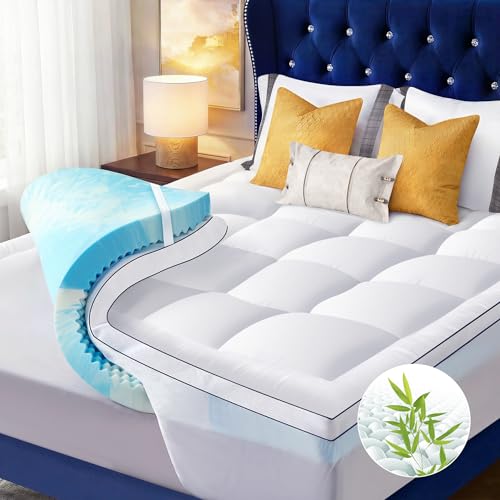
- 2-in-1 Double-Layer Mattress Topper: Featuring a dual-layer structure, designed...
- Relieves Pain & Supports Restful Sleep: The soft mattress topper bottom features...
- Cooling & Breathable: The 4 inch mattress topper fabric contains 40% Viscose...
SINWEEK Mattress Topper Twin XL – Best for Adjustable Beds
Specifically designed for Twin XL and split king adjustable bases, this model features a flexible, bendable design that moves with your bed frame without bunching. It’s the ideal option for preventing sliding on an adjustable foundation.

- GEL MEMORY FOAM MATERIAL: Our memory foam mattress topper readily conforms to...
- MORE COMFORTABLE SLEEP: The gel memory foam material used in our mattresses...
- SOFT BUT NOT FOLDABLE: our mattress is soft, do not roll up and store too long...
Sleep On Latex Pure Green Natural Latex Mattress Topper – Best Natural & Durable Option
Made from 100% natural latex, this topper is naturally breathable and resilient. Its substantial weight and density help it stay in place, and it pairs perfectly with a deep-pocket fitted sheet or anchor straps for a completely flat setup.
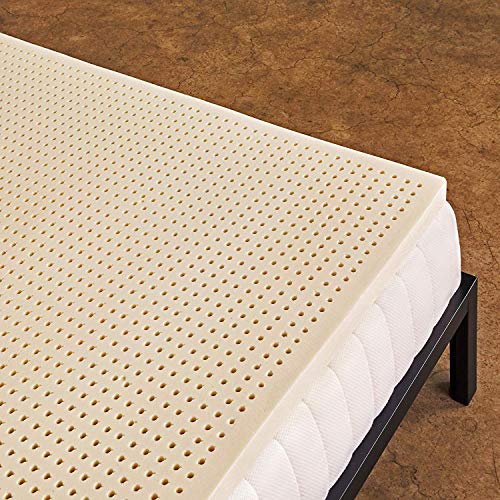
- Soft - Great for Adding Softness to the Surface of a Mattress
- Adjusts to Your Body Instantly - Latex Foam Naturally Stays Cool
- Made of Natural Latex Harvested from Organically Grown Rubber Trees
Conclusion
A mattress topper that slips and bunches is a solvable problem. The causes typically involve poor fit, slippery materials, or a lack of proper anchoring.
By diagnosing the specific issue and applying the right solution—from non-slip pads and securing straps to choosing a topper with built-in stability features—you can achieve a perfectly flat, comfortable sleep surface that stays securely in place night after night.
Frequently Asked Questions about Why Your Topper Is Not Staying Flat And Fix It
Can I use safety pins to secure my mattress topper?
It is not recommended to use safety pins. They can tear the fabric and damage the internal materials of both your topper and mattress. This creates weak points and can void warranties.
Instead, opt for non-damaging solutions like mattress topper straps, non-slip pads, or deep-pocket sheets. These methods provide a secure hold without risking permanent damage to your bedding investment.
How often should I adjust or check my topper’s position?
You should check and readjust your mattress topper every time you change your bed sheets. This is the perfect routine moment to smooth out any wrinkles and ensure it is centered.
Also, inspect any securing straps or non-slip pads for wear or loosening during this time. Consistent, minor adjustments prevent major shifting and extend the life of your topper setup.
Will a mattress protector help keep my topper in place?
Only if it is specifically a non-slip mattress protector. A standard, smooth protector will likely increase sliding by creating a slippery layer between the mattress and topper.
Look for a protector with a rubberized or silicone-grip backing. This type acts as a grippy barrier, holding both the mattress and topper firmly together to prevent movement.
What is the best way to secure a topper on a platform bed?
Platform beds with a solid, flat surface can actually help reduce sliding compared to spring mattresses. However, a topper can still shift from nightly movement.
Using a non-slip pad is highly effective on this smooth surface. For added security, especially with heavier toppers, combine the pad with soft, wide straps that wrap around the entire platform bed frame.
My topper slides only on one side of the bed. Why?
This usually indicates uneven weight distribution or frequent movement on that side. One person getting in and out more often, or a sleeper who tosses and turns, can gradually push the topper.
To fix this, ensure the topper is perfectly centered and use anchoring solutions on all four corners, not just the sliding side. This provides balanced tension to counteract the uneven force.
Are there any topper materials that slide less than others?
Yes, toppers with inherently grippy bottoms or heavier weights tend to slide less. Natural latex and dense memory foam have more friction and mass. Some come with built-in non-slip dots or fabric.
Lightweight, fluffy materials like down or polyester fiberfill are more prone to bunching and sliding. These almost always require a fitted, non-slip encasement or cover to keep them flat and in place.