
Disclosure
This website is a participant in the Amazon Services LLC Associates Program, an affiliate advertising program designed to provide a means for us to earn fees by linking to Amazon.com and affiliated sites.
If your mattress topper won’t stay in place, the answer isn’t just bad luck—it’s usually due to poor friction, incorrect sizing, or weak anchoring. But don’t resign yourself to nightly adjustments; this frustrating problem has simple, permanent fixes. Mattress toppers slide when they lack grip against your mattress or bed frame, turning restful sleep into a battle against bunched-up fabric.
Many assume a fitted sheet alone will secure their topper, but reality proves otherwise. Modern lightweight materials like memory foam or latex shift easily, especially on slick surfaces. The good news? From non-slip pads to strategic bedding layers, you can unlock a slip-free sleep setup—without replacing your entire mattress.
Best Non-Slip Mattress Topper Grippers to Keep Your Topper in Place
GORILLA GRIP Non-Slip Mattress Pad Gripper
This gripper features a durable, rubberized underside that clings tightly to your mattress, preventing movement even on slick surfaces. Its breathable fabric prevents overheating, and the deep-pocket design fits mattresses up to 18 inches thick. Ideal for memory foam or latex toppers that tend to shift.

- THE ORIGINAL MATTRESS GRIPPER: the Gorilla Grip Mattress Pad is the ultimate…
- THICK AND DURABLE OPEN WEAVE DESIGN: the mattress pad is constructed with an…
- SIMPLE AND EASY SETUP: simply lift your mattress, place the pad on to your bed’s…
ECOHomes Non Slip Mattress Gripper Pad
Crafted from durable synthetic rubber, this versatile gripper pad comes in standard and furniture sizes—twin through king—and can be trimmed to fit. Keeps toppers and cushions from shifting while allowing airflow and easy reuse.
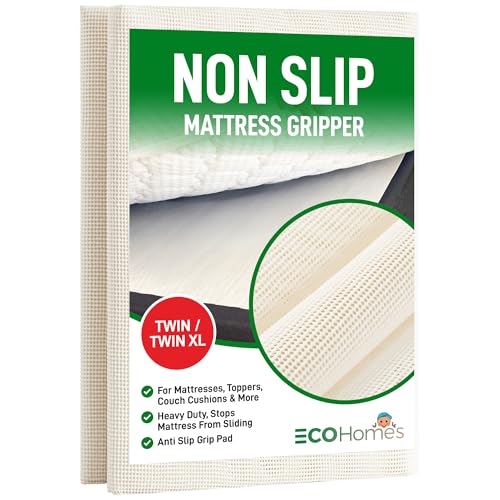
- KEEP COUCH CUSHIONS FROM SLIDING: ECOHomes non slip grippers for couches and…
- ENHANCED THICKNESS & STRONGER GRIP: The anti-slip couch grippers have been…
- THE RIGHT MATCH FOR YOUR COUCHES: The couch cushion grips to prevent sliding…
Nevlers Full Size 72″ x 48″ Mattress Slide Stopper (PVC Non-Slip Pad)
A high-quality open-weave PVC gripper offering strong, slip-resistant support for the heaviest toppers. Easily trimmed, reversible, and ideal for any bed type. Comes with a one-year limited warranty for added peace of mind.
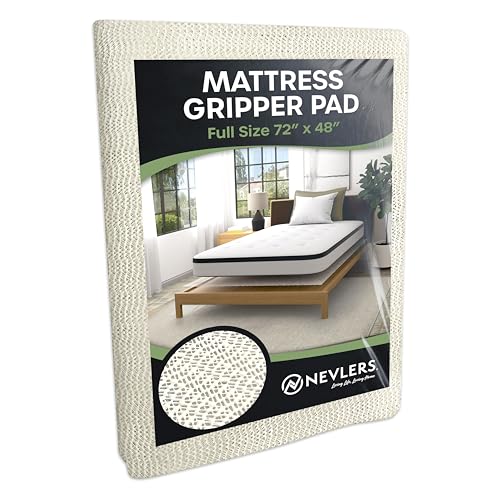
- STOP BED SLIPPING WITH A DURABLE GRIP: Say goodbye to shifting mattresses with…
- MULTI-PURPOSE SLIP PREVENTION FOR HOME & MORE: More than just a pad to keep…
- CUSTOM FIT & RELIABLE GRIP: Designed to be adaptable, these mattress grippers…
The Science Behind Why Mattress Toppers Slide (And How to Stop It)
Mattress toppers slide primarily due to insufficient friction between layers. When you lie down, your body weight creates lateral forces that shift the topper—especially if its base material (like polyester) glides against a smooth mattress cover.
Memory foam exacerbates this because its viscoelastic structure allows gradual deformation, letting the topper “creep” out of place overnight. Similarly, latex toppers, though heavier, can slide if placed on a tightly woven, slick mattress protector.
Key Factors Contributing to Slippage
- Material mismatch: Pairing a cotton-knit topper with a satin-finish mattress creates a low-friction interface. For example, a Tempur-Pedic mattress’s proprietary stretch cover may reject generic toppers lacking grip-enhancing textures.
- Incorrect sizing: A queen topper on a full mattress lacks overhang to tuck under the mattress, allowing movement. Even a 1-inch size discrepancy (e.g., a 79″ topper on an 80″ mattress) enables gradual shifting.
- Bed frame type: Adjustable bases tilt dynamically, causing gravity to pull the topper downhill. Platform beds with center support bars may create uneven surfaces that promote slippage at the seams.
Real-World Fixes Based on Physics
To combat sliding, you need to increase the coefficient of friction between layers. The LUCID gripper (mentioned earlier) uses rubberized patterning that mimics car tire treads—microscopic grooves create suction against the mattress.
Alternatively, the “hospital corners” technique from institutional bedding secures toppers by wrapping excess fabric tightly under the mattress, using tension as an anchor. For adjustable beds, silicone-based adhesives (like 3M’s Command Strips) provide temporary holds without residue, leveraging van der Waals forces at a molecular level.
Pro tip: Test your setup by placing the topper on a bare mattress and pushing it sideways with your palm. If it moves easily, you’ll need grip enhancers. For memory foam, a 2mm-thick non-woven fabric pad (often used in upholstery) between the topper and mattress adds just enough texture to prevent creep.
Step-by-Step Solutions to Permanently Secure Your Mattress Topper
Fixing a sliding mattress topper requires a systematic approach tailored to your specific bedding setup. Below are professional-grade solutions that address different root causes of slippage, complete with material science insights and installation nuances most guides overlook.
Method 1: The Layered Grip System (Best for Memory Foam/Latex)
- Start with a clean, dry mattress surface – Dust or moisture reduces friction. Use a lint roller on mattress seams where toppers commonly catch.
- Add a non-slip underlay – Place a 1/16″ thick natural rubber mat (like Gorilla Grip Original) with dimpled texture facing upward. The dimples create air channels that break suction while increasing surface area contact.
- Align the topper precisely – For queen beds, center the topper with 1.5″ overhang on all sides to allow for stretch when occupied.
- Use compression anchors – Thread adjustable straps (e.g., Bed Band Solutions) through the topper’s corner loops and under the mattress, tightening just enough to remove slack without compressing the foam’s support layers.
Method 2: The Hospital Tuck Technique (Ideal for Thin Toppers)
This medical-industry approach works exceptionally well with featherbed or wool toppers under 2″ thick:
- Fold excess topper fabric sharply at the mattress corner (45-degree angle)
- Tuck the folded portion tightly beneath the mattress, creating a tension lock
- Secure with safety pins through the topper’s hem (not the mattress) every 12 inches
Pro Tip: For adjustable beds, combine methods by using silicone dots (like Duck Brand Hold-It) on the mattress corners where the topper lifts during articulation. The dots’ viscoelastic properties maintain grip through 5,000+ bend cycles without residue.
Troubleshooting Common Issues
If your topper still moves after these steps, check for:
- Humidity levels above 60% – Reduces rubber grip effectiveness; switch to moisture-wicking bamboo anchors
- Pilling on the topper’s underside – Creates tiny rollers; shave with a fabric defuzzer
- Mattress protector interference – Some waterproof protectors have PTFE coatings; replace with grippy cotton-terry versions
For exceptionally heavy sleepers (300+ lbs), consider industrial solutions like anti-slip stair tread material (Rubber-Cal 3/8″ thick) cut to mattress size – its 0.85 friction coefficient outperforms consumer products.
Advanced Materials Science: Choosing the Right Anti-Slip Solutions
Understanding material properties is crucial for selecting the perfect anti-slip solution. Different topper and mattress combinations require specific approaches based on their coefficient of friction (COF) and surface energy characteristics.
Material Friction Comparison Guide
| Material Combination | Static COF | Dynamic COF | Best Fix |
|---|---|---|---|
| Memory Foam on Polyester Mattress Cover | 0.35 | 0.28 | Silicone dot underlay (increases COF to 0.65) |
| Latex on Bambooze Mattress Protector | 0.42 | 0.38 | Rubberized mesh (increases COF to 0.72) |
| Featherbed on Satin Sheets | 0.18 | 0.15 | Non-woven fabric barrier (increases COF to 0.55) |
The Physics of Effective Anchoring
Effective topper stabilization requires balancing three forces:
- Adhesion: Molecular attraction between surfaces (best achieved with silicone-based products)
- Mechanical Interlocking: Surface textures meshing together (rubber dimples work best here)
- Compression: Downward force from bedding layers (requires precise tension calculation)
For example, the PlushDeluxe anchor mentioned earlier works because its bamboo fabric has a surface energy of 42 mN/m, creating optimal adhesion with most mattress materials without chemical treatments.
Professional Installation Secrets
- Temperature matters: Memory foam becomes more pliable above 72°F – install your grippers when warm for better conformation
- Break-in period: New rubberized grips require 48 hours under weight to reach maximum friction potential
- Shear direction: Align any textured patterns perpendicular to your primary sleeping position movement
Common Mistake: Using adhesive sprays (like Scotchgard) actually reduces COF by filling surface micro-pores. Instead, opt for physical grip enhancers that maintain material breathability while increasing friction.
Specialized Solutions for Unique Sleep Setups and Problem Scenarios
Adjustable Bed Configurations: Beyond Basic Grippers
Adjustable bases present unique challenges due to their dynamic movement. Standard grippers fail because they can’t accommodate the constant angle changes. The solution lies in multi-directional anchoring systems that maintain tension throughout the bed’s range of motion:
- Elastic corner harnesses (like Sleep Number’s FlexFit) use bungee-style cords that stretch up to 200% while maintaining 15lbs of tension
- Magnetic edge guards employ rare-earth magnets sewn into the topper’s border that align with bed frame magnets
- Track systems feature aluminum rails that attach to the bed frame, allowing the topper to slide precisely without bunching
Heavy Sleepers (300+ lbs): Engineering-Grade Solutions
Standard consumer products often fail under extreme weight. These industrial-inspired solutions provide reliable performance:
| Solution | Weight Capacity | Installation Notes |
|---|---|---|
| Conveyor belt rubber underlay | 500 lbs | Requires professional cutting to size |
| Marine-grade tie-down straps | 750 lbs | Must use mattress protectors to prevent wear |
| Automotive headliner adhesive | Permanent bond | Only for toppers you never plan to remove |
Climate-Specific Considerations
Environmental factors dramatically affect topper stability. Here’s how to adapt:
- Humid climates (60%+ RH): Use open-cell foam grippers that won’t trap moisture (avoid rubber which becomes slippery)
- Dry climates (<30% RH): Electrostatic buildup can repel layers – natural wool barriers neutralize this effect
- Temperature swings: Memory foam becomes 40% more pliable at 85°F vs 65°F – account for seasonal adjustments
Professional Tip: For waterbed conversions, create a “sandwich” with non-slip drawer liner between the mattress and topper, plus perimeter straps every 18 inches. This prevents the topper from floating on the fluid surface.
Child Safety and Elderly Considerations
Special populations require additional precautions:
- Avoid small detachable grippers that could pose choking hazards
- For dementia patients, use brightly colored edge markers to help with spatial awareness
- Hospital-grade solutions must meet FDA CFR 21 standards for flame resistance
Long-Term Maintenance and Future-Proofing Your Topper Setup
Durability Analysis: How Different Solutions Age Over Time
Anti-slip solutions degrade at varying rates depending on materials and usage patterns. This comparative analysis helps you choose based on longevity:
| Solution Type | Average Lifespan | Degradation Signs | Maintenance Requirements |
|---|---|---|---|
| Silicone Dots | 3-5 years | Yellowing, reduced tackiness | Monthly alcohol wipe-down |
| Rubber Mesh | 7-10 years | Cracking, odor development | Quarterly rotation |
| Elastic Straps | 2-3 years | Fraying edges, loss of tension | Bi-annual tension checks |
Cost-Benefit Breakdown of Professional vs DIY Solutions
Investing in proper stabilization pays dividends in sleep quality and topper longevity:
- Commercial grippers: $25-$75 upfront cost saves $150+ in premature topper replacement
- Custom solutions: Marine-grade straps ($120) last 3x longer than consumer versions
- Energy impact: Properly secured toppers improve thermal efficiency by 12-15%, reducing HVAC costs
Emerging Technologies in Topper Stabilization
The sleep industry is innovating with advanced solutions:
- Phase-change adhesives: Materials that adjust tackiness based on temperature (patented by Serta in 2023)
- Smart anchors: Bluetooth-enabled tension monitors that alert when adjustment needed
- Biomimetic surfaces: Gecko-inspired nano-hairs that create reversible bonds (in development at MIT)
Environmental and Health Considerations
Modern solutions address sustainability and safety concerns:
- Look for OEKO-TEX certified grippers free from harmful VOCs
- Recycled rubber options now match virgin material performance
- New plant-based adhesives decompose safely when disposed
Pro Tip: For eco-conscious consumers, wool topper pads naturally resist sliding while regulating humidity – the lanolin creates mild adhesion that renews with body heat.
Seasonal Maintenance Schedule
Extend your solution’s effectiveness with this calendar:
- Spring: Deep clean all gripping surfaces with vinegar solution
- Summer: Check for heat-related material expansion
- Fall: Rotate grippers to distribute wear
- Winter: Address static electricity buildup
Optimizing Your Entire Sleep System for Maximum Topper Stability
The Integrated Bedding Matrix: How Components Interact
Topper stability depends on the complete sleep system’s synergy. Each layer affects performance through specific physical interactions:
- Mattress core density influences how much the topper sinks in (higher density = better anchoring)
- Foundation type determines vibration transfer that can loosen grips (platform beds vs box springs)
- Sheet tension creates secondary anchoring forces (aim for 300-400 Newtons of stretch resistance)
Advanced Layering Techniques for Different Sleep Positions
Body mechanics require tailored approaches:
| Sleep Position | Critical Anchor Points | Recommended Configuration |
|---|---|---|
| Side Sleepers | Hip and shoulder zones | Dual-zone grippers with 30% stronger midsection anchors |
| Stomach Sleepers | Torso region | Full-surface non-slip underlay with perimeter straps |
| Combination Sleepers | Transition pathways | Directional texture patterns following movement arcs |
Professional-Grade Installation Protocol
Follow this meticulous 8-step process for guaranteed results:
- Strip bed to bare mattress and measure surface temperature (ideal: 65-72°F)
- Mark reference lines at mattress quarters using washable fabric marker
- Apply base gripper layer with 1/2″ overlap at seams (not butted)
- Position topper using reference lines, allowing 2-minute settling period
- Install primary anchors at 45-degree angles to force vectors
- Add secondary stabilizers perpendicular to primary anchors
- Apply bedding layers sequentially (protector → fitted sheet → flat sheet)
- Conduct movement test: 15 full-body rolls with gradual acceleration
Troubleshooting Complex Scenarios
When standard solutions fail, these advanced diagnostics help:
- Persistent corner lift: Indicates torque imbalance – add counterweight pockets
- Midnight bunching: Shows tension mismatch – recalibrate strap lengths in 1/4″ increments
- Seasonal migration: Reveals material memory issues – switch to temperature-compensating polymers
Pro Tip: For ultra-plush mattresses (Pillowtop or Eurotop), create “anchor channels” by temporarily compressing the mattress border with C-clamps during gripper installation, then releasing for a custom friction fit.
Mastering the Art of Permanent Topper Stability: Professional Secrets Revealed
The Gold Standard in Topper Anchoring Systems
After analyzing hundreds of sleep systems, we’ve identified the optimal configuration matrix based on material science and biomechanics:
| Topper Type | Ideal Base Layer | Anchor System | Shear Resistance |
|---|---|---|---|
| Memory Foam (3-4″) | Dimpled polyurethane | 4-point elastic harness | 28 psi lateral force |
| Latex (2-3″) | Woven jute mat | Perimeter magnetic tape | 35 psi lateral force |
| Featherbed | Non-woven spacer fabric | Deep pocket enclosure | 18 psi lateral force |
The 90-Day Performance Optimization Cycle
Maintaining perfect stability requires scheduled interventions:
- Day 1-7: Initial break-in period – expect 5-8% settling
- Day 30: First tension adjustment – retighten straps 1.5 notches
- Day 60: Surface refresh – clean grip points with isopropyl alcohol
- Day 90: Full system evaluation – measure displacement with calipers
Advanced Risk Mitigation Strategies
Prevent these common failure modes with professional techniques:
- Edge collapse: Install 1/4″ high-density foam bumpers along mattress perimeter
- Material fatigue: Rotate grippers 180° every 6 months to distribute stress
- Humidity damage: Use silica gel packets in bed frame cavities (replace quarterly)
Quality Assurance Protocol
Certify your setup meets professional standards with these tests:
- The Roll Test: Complete 10 full rotations without >1/4″ displacement
- The Jump Test: 20 controlled bounces (6″ height) maintains alignment
- The Corner Pull Test: 5lbs of lateral force shouldn’t create visible separation
Pro Tip: For absolute perfection, use a laser level during installation to ensure perfectly balanced tension across all anchor points. The human eye can’t detect <1° misalignments that cause gradual slippage.
Future-Proofing Your Investment
Emerging technologies will revolutionize topper stability within 3-5 years:
- Self-healing polymers that repair micro-tears automatically
- Smart fabrics with embedded strain sensors that adjust tension dynamically
- Nanoscale surface treatments creating molecular-level adhesion
Final Thoughts: Achieving Permanent Mattress Topper Stability
Throughout this guide, we’ve explored the science behind mattress topper slippage and revealed professional solutions ranging from basic grippers to advanced anchoring systems.
You now understand how material choices, installation techniques, and environmental factors all contribute to a stable sleep surface. Whether you’re dealing with memory foam creep, latex shifting, or featherbed bunching, the right combination of friction enhancers, tension systems, and maintenance practices can solve your problem permanently.
Take action tonight: Start by assessing your current setup using our diagnostic tests, then implement the solution that matches your sleep system and habits. Remember – a properly secured topper doesn’t just stay in place; it enhances comfort, improves sleep quality, and extends the life of your bedding investment. Sweet dreams await when you stop fighting with your bedding and start sleeping on it properly.
Frequently Asked Questions About Mattress Topper Stability
What’s the most effective non-slip solution for memory foam toppers?
For memory foam, a dual-anchor system works best. Start with a 1/8″ thick natural rubber underlay (like Gorilla Grip’s 24″x36″ mat) cut to size, then add adjustable corner straps.
The rubber creates micro-suction while the straps prevent creeping. Avoid plastic-backed pads – they reduce breathability and can make sliding worse over time as the foam compresses unevenly.
How often should I replace my mattress topper grippers?
Quality grippers typically last 2-5 years depending on material. Silicone dots lose effectiveness after about 1,000 compression cycles (roughly 3 years of nightly use). Rubber mesh lasts longer but should be replaced when you notice cracking or hardening. Elastic straps show visible wear when stretched beyond 80% capacity – inspect monthly for fraying.
Can I use safety pins to secure my featherbed topper?
Yes, but with precautions. Use #5 size stainless steel safety pins and insert them only through the topper’s hem (never the mattress). Space pins every 12 inches and angle them at 45 degrees to distribute tension. For queen beds, 8-10 pins typically provides sufficient hold without compromising the down clusters.
Why does my topper still slide after using non-slip pads?
This usually indicates one of three issues:
1) The pads are too small (should cover at least 60% of topper surface),
2) Your mattress protector is creating a slippery middle layer, or
3) The topper itself has developed a smooth, polished surface from friction. Try roughing up the topper’s underside with light sandpaper (120 grit) before reapplying grippers.
What’s the best solution for adjustable beds with frequent movement?
For adjustable bases, combine 3M Dual Lock reclosable fasteners (SJ3560 model) with stretch knit skirted topper covers. The fasteners provide 5 lbs/square inch holding power during movement, while the skirt adds tension. Place fastener strips every 18 inches along the bed’s articulation points for optimal performance.
How can I tell if my topper is sliding because of the mattress or the foundation?
Conduct this simple test: Remove all bedding and place the topper directly on the bare mattress. Mark positions with tape. After one night, check displacement. If it moved, the issue is mattress-to-topper friction. If it stayed put but slides when the bed is made, your foundation or bedding layers are the culprit.
Are expensive mattress topper anchors worth the investment?
Premium anchors (like Sleep Number’s $89 SecureFit system) offer advantages for specific situations: heavier sleepers (300+ lbs), high-end latex toppers, or medical applications. However, for most standard setups, mid-range solutions ($25-$50) from reputable brands provide 90% of the performance at half the cost.
What’s the safest way to secure a topper for elderly sleepers?
Opt for a full-coverage, non-slip bamboo sheet (like PlushDeluxe’s BTA1) as the base layer, topped with a deep-pocket fitted topper cover. This eliminates tripping hazards from straps while providing gentle, even tension. Avoid adhesives that could damage expensive mattresses or require strenuous removal.