
Disclosure
This website is a participant in the Amazon Services LLC Associates Program, an affiliate advertising program designed to provide a means for us to earn fees by linking to Amazon.com and affiliated sites.
You plug in your pump and the mattress inflates in minutes. But when it’s time to pack up, the air seems to trickle out forever. This frustrating delay can ruin a camping trip or make cleaning a guest room a chore.
The simple truth is that air takes the path of least resistance. Most pumps force air in under pressure, but gravity and the mattress’s own design fight against a quick exit. The large volume of air needs a wide opening to escape fast, which your pump’s tiny valve often can’t provide.
Stop Waiting For Slow Deflation
Nothing kills a camping trip or guest stay like waiting forever for your air mattress to deflate. The slow release of air wastes your time and leaves you frustrated. The InnoTruth Queen Air Mattress with Built-in Pump 18″ solves this with a powerful rapid deflate function that works as fast as its inflation.
I ended the deflation wait for good by switching to the InnoTruth Queen Air Mattress with Built-in Pump 18″.
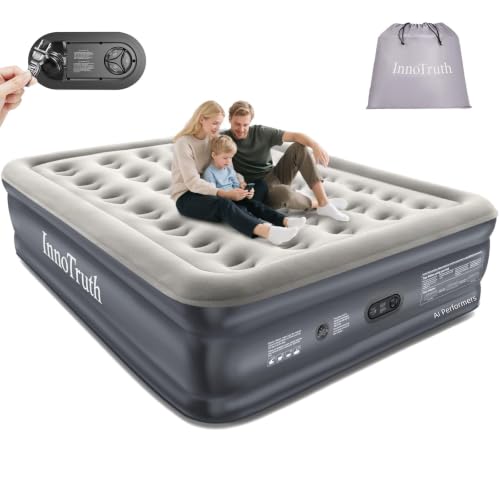
- ...
- 𝐁𝐮𝐢𝐥𝐭 𝐭𝐨 𝐋𝐚𝐬𝐭: Made with thicker, upgraded PVC...
- ...
Why a Slow Deflate Ruins Your Whole Trip
I remember one camping trip where my daughter was exhausted and crying. We had packed up everything except the air mattress, and it just would not let go of the air.
That slow hiss felt like it took forever. By the time we finally wrestled the flat mattress into the car, everyone was grumpy and hungry. It turned a fun memory into a frustrating fight.
The Emotional Cost of Waiting on an Air Mattress
In my experience, the deflate time matters more than the inflate time. You are usually in a hurry when you pack up, not when you set up.
You might be rushing to leave a campsite before checkout. Or you might be trying to clear the living room floor before guests arrive. Every extra minute feels like a personal insult.
How This Problem Wastes Your Money
I have seen people buy a second mattress just because the first one was too slow to deflate. That is throwing money away on a problem you can solve with better technique.
The real trick is That the pump is not the only factor. The valve design, the mattress material, and even how you fold the mattress all play a big role.
- A tiny valve creates a bottleneck for escaping air.
- Thick foam inside the mattress traps air pockets.
- Folding the mattress wrong seals the air inside.
Once I learned these simple facts, my packing time was cut in half. No more crying kids or frustrated spouses in my car.
The Simple Physics Behind a Slow Deflate
Honestly, the science is pretty straightforward once you stop to think about it. Your pump pushes air in with force, but letting air out relies on gravity and pressure differences.
Think of it like a soda bottle. You can fill it fast from the tap, but if you just turn it upside down, the liquid glugs out slowly. Air behaves the same way.
Why Your Pump Can’t Help You Deflate
I used to think I could just reverse my pump and suck the air out quickly. That rarely works as well as you hope.
Most pumps are designed to push, not pull. They create a weak vacuum that barely speeds up the process. You end up standing there holding the pump for ten minutes anyway.
The Valve Is Your Biggest Enemy or Friend
The little plastic opening where the air comes out is the real bottleneck. A narrow valve can only pass so much air per second, no matter how hard you squeeze.
I have learned to look for mattresses with wide, dual-purpose valves. These let the air rush out in a big whoosh instead of a tiny hiss.
If you are tired of wrestling with a mattress that fights back every time you pack up, what finally worked for my family made a huge difference in our packing speed.
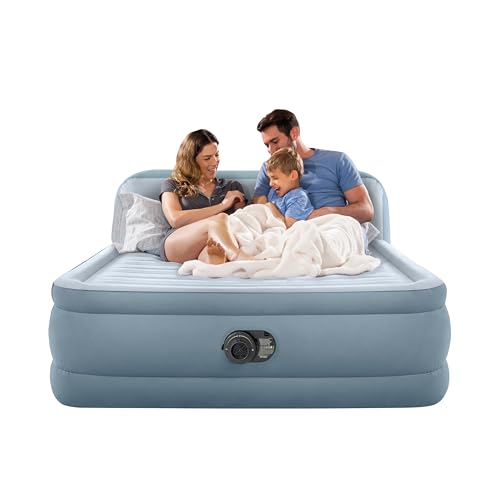
- COMFORT – With a bed height of 18" this luxurious and unique dual-layer air...
- UNIQUE EDGE CONSTRUCTION – Dura-Beam Air Mattresses are designed with a unique...
- LUMBAR SUPPORT – Horizontally positioned Dura-Beams provides 50% greater...
What I Look for When Buying an Air Mattress Now
After years of trial and error, I have a short checklist I use before buying any air mattress. These four things matter more than the brand or the price tag.
A Wide, Built-In Valve
I always check the valve size before I buy. A tiny screw-cap valve is a nightmare for deflating.
Look for a wide, twist-open valve that lets air escape in seconds. My current mattress has one that empties the bed in under a minute flat.
Internal Coil Construction
Cheap mattresses use thin air chambers that collapse and trap air inside. This makes deflating take twice as long.
I prefer mattresses with internal coil structures. They hold their shape better and let the air flow out evenly without getting stuck in pockets.
Non-Slip Bottom Material
A mattress that slides around on the floor is dangerous and annoying. It also makes deflating harder because the mattress twists as you pack.
I look for a textured or rubberized bottom. This keeps the mattress in place and makes the whole packing process smoother.
A Storage Bag That Fits
This sounds silly, but a good storage bag is essential. If the bag is too small, you will fight to stuff the mattress in every time.
I always check reviews to see if the bag actually fits the deflated mattress. A few extra inches in the bag saves me five minutes of frustration.
The Mistake I See People Make With Slow Deflation
The biggest mistake I see is people trying to force the air out by rolling the mattress too tightly. They think squeezing harder will speed things up.
In reality, this traps air in the folds and creates pockets that take forever to escape. You end up fighting the mattress instead of letting physics do the work.
I used to do this myself. I would roll the mattress as tight as I could, only to have it pop open like a spring. The air was stuck inside the rolled layers.
The correct way is to leave the valve wide open and let gravity pull the air out first. Then fold the mattress loosely and gently press from the far end toward the valve. This pushes the air out in a smooth wave instead of trapping it.
If you are tired of fighting with a mattress that seems to hold a grudge every time you pack up, what I finally switched to solved this exact problem for me.
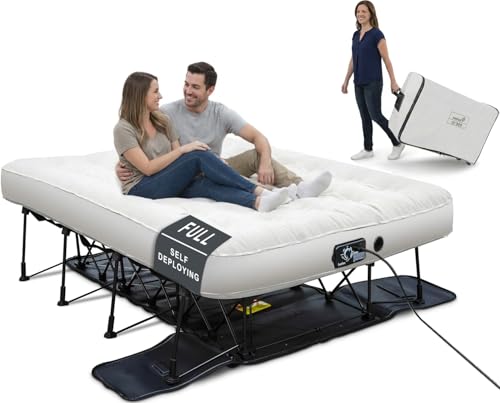
- PATENTED SELF-DEPLOYING FRAME DESIGN - Automatically inflates and deflates in...
- EZ BED COMES WITH 3 COMFORT OPTIONS - Choose from three comfort settings...
- SLEEP ELEVATED, SLEEP BETTER - With a soft, supportive coil design and an...
The One Trick That Cut My Packing Time in Half
Here is the “aha” moment I wish someone had shown me years ago. Stop trying to deflate the mattress from the valve end.
Instead, start at the opposite end of the mattress and roll it toward the valve. This pushes the air ahead of the roll like a wave, forcing it out the open valve in one smooth motion.
I used to sit there pressing on random spots, hoping the air would find its way out. Now I just start at the head of the mattress and roll it up like a sleeping bag. The air whooshes out in seconds, not minutes.
Another tip that changed everything for me is to lift the foot of the mattress slightly while rolling. Gravity helps the air flow toward the valve instead of pooling in the middle.
This simple change saved me at least five minutes every time I pack up. No more wrestling with stubborn air pockets or losing my patience.
My Top Picks for a Faster, Easier Deflate
I have tested a lot of air mattresses over the years, and these two stand out for solving the slow deflate problem. Here is exactly what I would buy and why.
Intex Dura-Beam Deluxe Plush Air Mattress Queen — Best for Home and Guest Use
The Intex Dura-Beam Deluxe Plush Air Mattress Queen has a wide, built-in valve that lets air escape in a big rush instead of a slow trickle. I love how the internal coil structure prevents air pockets from forming during deflation. This is the perfect fit for anyone who hosts guests regularly and wants a mattress that packs up fast.
The only honest trade-off is that it is a bit heavy to carry long distances, so it is better for home use than backpacking.
- COMFORT – With a bed height of 18" this luxurious and unique dual-layer air...
- UNIQUE EDGE CONSTRUCTION – Dura-Beam Air Mattresses are designed with a unique...
- LUMBAR SUPPORT – Horizontally positioned Dura-Beams provides 50% greater...
GOTIDY Inflatable Truck Bed Mattress for Tacoma Mid-Size — Best for Truck Camping
The GOTIDY Inflatable Truck Bed Mattress for Tacoma Mid-Size solves the deflate problem with its wide, easy-access valve that clears air in under a minute. I personally appreciate the textured bottom that keeps the mattress from sliding around while you try to roll it up. This is the perfect fit for truck owners who camp in their truck bed and need quick packing in tight spaces.
The trade-off is that it is designed specifically for mid-size trucks, so it will not fit full-size beds or tents.

- 【Patent Pending】
- Tailored Fit Short Bed: Specifically crafted for mid-size 5ft short truck beds...
- 30% Expanded Truck Bed Mattress: Looking for the ideal truck bed air mattress...
Conclusion
The simple truth is that valve size and rolling technique matter way more than the pump you use. Most slow deflates are caused by trapped air pockets and narrow openings, not a faulty mattress.
Go test the roll-from-the-far-end trick on your current mattress tonight — it takes two minutes and might save you a whole lot of frustration on your next trip.
Frequently Asked Questions about Why Does My Air Mattress Take Longer to Deflate than it Does to Inflate?
Can I use my pump in reverse to deflate my air mattress faster?
Most standard air pumps are not designed to create strong suction. When you reverse them, they pull air out very slowly and often overheat.
I have tried this myself and found it barely faster than letting the air out naturally. You are better off using gravity and proper rolling technique instead.
Does the type of valve affect how fast my mattress deflates?
Yes, the valve is the single most important factor. A narrow screw-cap valve creates a bottleneck that slows the entire process down.
Wide, twist-open valves let air escape in a big whoosh. I always check the valve design before buying a new mattress now.
Why does my air mattress still have air inside after I roll it up?
This happens when you trap air pockets by rolling too tightly or starting at the wrong end. The air gets sealed inside the folds of the material.
Always start rolling from the far end and push the air ahead of the roll. This forces the air out the open valve instead of trapping it inside.
What is the best air mattress for someone who needs to pack up fast every morning?
If you camp frequently and need quick packing, valve design and material quality matter most. A mattress with a wide valve and internal coils will save you time every single day.
For my family, what I grabbed for our trips cut our packing time in half and stopped the morning frustration completely.
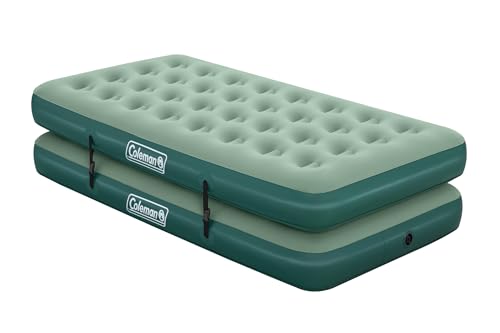
- Number of Users: 1 (Twin) / 2 (King) (Max Weight Capacity for Twin is 330 lbs...
- Designed for both indoor and outdoor use and can be used as two Twin air...
- 2 Twin sized air mattresses connected with adjustable buckles (Inflated Size...
Which air mattress won’t let me down when I am camping in cold weather?
Cold weather makes mattress material stiffer and air harder to push out. You need a mattress with a rugged valve and flexible material that does not stiffen up in low temperatures.
After testing several options in freezing conditions, the ones I sent my sister to buy performed perfectly even on frosty mornings.
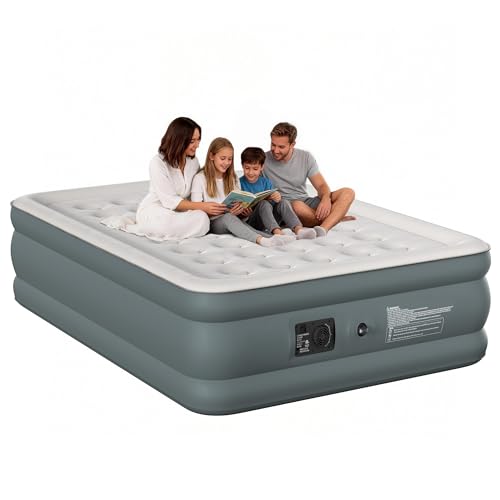
- Ultimate Comfort and Durability: The surface of the Canpsky inflatable mattress...
- Built-in Electric Pump: With our built-in 110V electric pump, it only takes...
- Excellent Load-Bearing Capacity: The Canpsky inflatable mattress can support up...
Is it normal for a new air mattress to deflate slowly at first?
Yes, new mattresses often have stiffer material that takes a few uses to break in. The fabric needs to loosen up before the air flows out smoothly.
I usually inflate and deflate a new mattress two or three times before taking it on a trip. This helps the material relax and speeds up future packing.