
Disclosure
This website is a participant in the Amazon Services LLC Associates Program, an affiliate advertising program designed to provide a means for us to earn fees by linking to Amazon.com and affiliated sites.
Ever wondered why hotel sheets feel so irresistibly soft and luxurious? The secret isn’t just high thread count—it’s a carefully curated blend of fabric quality, weaving techniques, and expert care.
You might assume expensive bedding is the key, but many hotels achieve that dreamy feel without breaking the bank. In reality, the magic lies in specific material choices, weave styles, and maintenance rituals that elevate ordinary linens into cloud-like bliss.
Imagine slipping into bed and feeling that same lavish comfort every night. With rising trends in “hotel-inspired” home decor, achieving this luxury is easier than you think.
Best Sheets for Achieving Hotel-Style Luxury
Boll & Branch Signature Hemmed Sheet Set
Made from 100% organic long-staple cotton with a 300-thread-count sateen weave, these sheets rival high-end hotel linens in softness and durability. The breathable fabric resists pilling and stays crisp even after repeated washes, making them a long-term investment in comfort.

- BESTSELLING FABRIC: You’ll feel the difference immediately. Buttery and…
- 100% ORGANIC COTTON: Made from premium long-staple 100% certified organic…
- INCLUDED: Featuring a flat sheet, 2 pillowcases with a 6” hemline, and a…
Brooklinen Luxe Core Sheet Set
With a 480-thread-count and a smooth percale weave, Brooklinen’s Luxe Core set offers that crisp, cool feel found in luxury hotels. The long-staple cotton fibers ensure strength, while the deep pockets fit mattresses up to 16″ thick—perfect for a snug, polished look.

- LUXURY SATEEN 4-PIECE SHEET SET: Featuring a rich, buttery-smooth weave, our…
- OUR BEST SELLING COMFORT: Rated Best Overall Sheets to Buy in 2022 by Good…
- EASY CARE: Keeping your cotton sheet set fresh and clean is a breeze. Machine…
California Design Den Certified 100% Egyptian Cotton Sheets
Inspired by European hotels, California’s 100% Egyptian cotton percale sheets are lightweight yet durable, softening with each wash. The breathable weave prevents overheating, and the minimalist design fits seamlessly into any bedroom aesthetic for a true five-star experience.
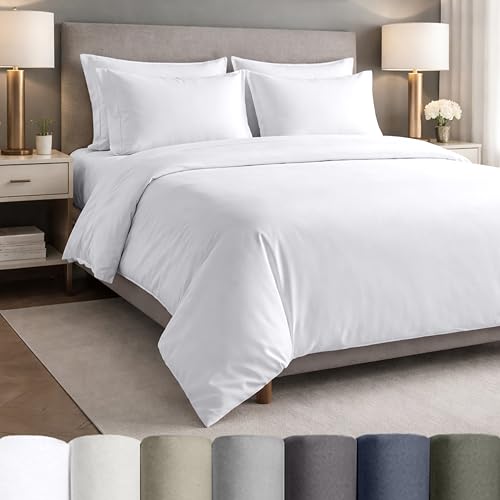
- OUR SHEET SET HAS EARNED THE GOOD HOUSEKEEPING SEAL – Luxury 100% Egyptian…
- Will You Like Percale: If you prefer crisp sheets that have a cool feel like a…
- 4-Piece Deep Pocket King Sheet Set: Includes 1 flat sheet (112″ W x 104″ L…
The Science Behind Hotel-Sheet Softness: Fabric, Weave, and Thread Count Explained
Hotel sheets achieve their signature softness through a precise combination of material quality, weaving techniques, and thread density. Unlike regular bedding, luxury hotels don’t rely solely on high thread counts—they prioritize long-staple cotton fibers, which are 50% longer than standard cotton, resulting in smoother, stronger yarns that resist pilling. For example, Egyptian and Pima cotton varieties dominate upscale hotels because their extended fibers create a silkier handfeel.
Weave Types: The Hidden Factor in Comfort
The fabric’s weave dramatically impacts texture and temperature regulation. Hotels typically use two weaves:
- Percale: A tight, crisscross weave (like a checkerboard) that feels crisp and cool—ideal for hot sleepers. The Ritz-Carlton uses percale for its breathability.
- Sateen: A “three-over-one” weave that exposes more thread surface, creating a lustrous, silky feel. Four Seasons favors sateen for its wrinkle resistance.
Thread Count Myth vs. Reality
While many believe a 1,000-thread count guarantees luxury, hotels rarely exceed 600. Beyond this, manufacturers often inflate numbers by using multi-ply yarns, which feel stiff. The sweet spot? 300–500 threads per square inch with single-ply yarns—the standard for brands like Frette and Matouk.
Hotels also treat sheets with enzymatic softeners during laundering, which gently break down fibers without harsh chemicals. To replicate this at home, use wool dryer balls with a dash of white vinegar in the rinse cycle.
Why Your Sheets Don’t Feel the Same (Yet)
New hotel-style sheets often feel stiff initially due to sizing—a starch-based coating added during production. After 3–5 washes, this dissolves, revealing the true softness. For instant gratification, look for pre-washed options like Brooklinen’s “Luxe Core” line.
Hotel Laundry Secrets: How Professionals Keep Sheets Softer Longer
Luxury hotels maintain their sheets’ cloud-like softness through specialized washing techniques that go far beyond typical home laundry routines. The secret lies in a combination of water chemistry, precise temperature control, and commercial-grade equipment that most consumers don’t have access to—but can approximate with smart adjustments.
The 5-Step Hotel Laundry Protocol
Top hotels follow this rigorous process to preserve fabric quality:
- Pre-treatment: Stains receive individual attention with enzyme-based cleaners (like Carbona Stain Devils) before washing—never bleach, which weakens fibers.
- Low-Sudsing Detergents: Hotels use neutral pH detergents (e.g., Ecolab Linen Care) that clean effectively without residue buildup that causes stiffness.
- Controlled Water Temperatures: Sheets are washed at 140°F (60°C) to kill bacteria, then rinsed in cold water to prevent fiber damage—a balance home machines struggle with.
- Industrial Extraction: Commercial washers spin at 1,200 RPM (vs. 800 RPM in home units) to remove 95% of moisture, reducing dryer time and fiber stress.
- Conditioning Finish: A final rinse with liquid fabric softener (diluted 3:1 with water) is applied, unlike the concentrated versions consumers use.
Home Laundry Hacks for Hotel Results
Replicate professional results with these adjustments:
- Use half the recommended detergent (excess causes buildup) and add 1/2 cup baking soda to boost cleaning power without harshness
- Replace dryer sheets with three wool dryer balls—they reduce static while gently beating fibers to maintain loft
- For stubborn wrinkles, toss a damp washcloth in the dryer during the last 10 minutes to create steam
Note: Hotels replace sheets every 6–12 months due to industrial laundering’s cumulative wear. At home, expect 2–3 years from quality sheets with proper care—rotate between 2–3 sets to extend lifespan.
The Hidden Architecture of Hotel Bed-Making: Layering Techniques for Ultimate Comfort
Hotel beds achieve their signature plush feel through a carefully engineered system of layers, each serving a specific purpose. This “bedscaping” technique creates the perfect balance of support and softness that guests rave about.
The 7-Layer Hotel Bed System
| Layer | Material | Purpose | Home Alternative |
|---|---|---|---|
| 1. Mattress Protector | Breathable cotton-terry | Blocks allergens while allowing airflow | AllerEase Ultra Protection |
| 2. Fitted Sheet | 300-500 TC percale | Crisp base layer | Boll & Branch Signature |
| 3. Mattress Pad | Down alternative fill | Adds plushness | Pacific Coast AllerRest |
| 4. Flat Sheet | Same as fitted | Temperature regulation | Same as fitted |
| 5. Light Blanket | Merino wool/cotton blend | Mid-weight warmth | Riley Home Lightweight |
| 6. Duvet Insert | Down cluster (650+ fill) | Adjustable insulation | Feathered Friends Bavarian |
| 7. Duvet Cover | Matched to sheets | Easy cleaning | Same as sheet set |
The Military Corner Technique
Hotels use this precise tucking method to achieve that crisp, wrinkle-free look:
- Start with the flat sheet draped evenly over the mattress
- Tuck the foot end tightly under the mattress
- Create hospital corners by lifting the side fabric into a 45° triangle
- Tuck the hanging portion under, then fold the triangle down
- Repeat on all corners for a drum-tight surface
Pro Tip: The Ritz-Carlton trains housekeepers to spend exactly 3 minutes per bed on this process. At home, use sheet suspenders under the mattress to maintain tension between washes.
Common Mistakes to Avoid
- Over-stuffing duvets: Leaves lumps – fill should move freely inside cover
- Using heavy top sheets: Creates uncomfortable pressure points
- Ignoring layer weights: Heavy blankets over light duvets cause imbalance
Temperature Regulation Secrets: How Hotels Keep Sheets Perfectly Climate-Controlled
Luxury hotels master the art of thermal comfort through intelligent fabric selection and layering techniques that adapt to both season and sleeper preferences. This climate control system goes far beyond simple thread count considerations.
The Microclimate Management System
Five-star properties use a dynamic approach to bedding temperature:
- Winter Configuration: 400-600 TC sateen sheets with a 15-20 tog down duvet create a warm cocoon effect. The Ritz-Carton adds a wool underblanket for radiant heat retention.
- Summer Configuration: 200-300 TC percale sheets paired with a 4.5 tog linen duvet cover promote airflow. Four Seasons places chilled stone pillows between sheet layers in desert climates.
- Transitional Seasons: Hybrid systems with removable layers allow customization. Mandarin Oriental uses quilted cotton coverlets that can be quickly swapped as needed.
Advanced Fabric Technologies
Hotels increasingly incorporate performance textiles:
- Phase Change Materials (PCM): Microcapsules in fibers (like Outlast®) absorb/release heat at specific temperatures – used in W Hotels’ custom bedding
- Bamboo-Tencel Blends: 30% more breathable than cotton with natural thermoregulation – featured in Six Senses resorts
- Silver Ion Treatments: Antimicrobial properties reduce moisture buildup – employed by Hilton in high-humidity locations
Home Adaptation Strategies
Recreate hotel climate control with these professional techniques:
| Issue | Hotel Solution | Home Alternative |
|---|---|---|
| Night sweats | Dual-layer system: wicking base sheet + breathable top | Sheex Performance Bedding |
| Cold feet | Heated mattress pad with zone controls | Biddeford MicroPlush blanket |
| Temperature disputes | Split duvets (two smaller inserts in one cover) | Hästens Dual Comfort system |
Pro Tip: The optimal sleep temperature is 60-67°F (15-19°C). Hotels maintain this through precise HVAC settings – at home, use a bedroom thermometer and adjust layers accordingly.
Sustainable Luxury: How Hotels Balance Eco-Consciousness with Premium Comfort
The hospitality industry is revolutionizing bedding sustainability without compromising the five-star experience. Leading hotels now implement circular economy principles that actually enhance sleep quality while reducing environmental impact.
The Lifecycle of Hotel Bedding
From production to retirement, sustainable bedding follows a meticulous path:
| Stage | Luxury Hotel Practice | Environmental Benefit | Consumer Equivalent |
|---|---|---|---|
| Material Sourcing | GOTS-certified organic cotton | 91% less water than conventional | Coyuchi Cloud Brushed Organic |
| Manufacturing | OEKO-TEX® certified dyes | Zero toxic runoff | Buffy Eucalyptus Sheets |
| Usage Phase | Low-temperature ozone laundry | 60% energy reduction | ECOS Hypoallergenic Detergent |
| End-of-Life | Upcycled into cleaning rags | 100% diversion from landfill | Terracycle Fabric Recycling |
Emerging Green Technologies
Innovative materials are transforming sustainable bedding:
- Carbon-Negative Bamboo: Six Senses uses bamboo that sequesters 2.1kg CO₂ per kg harvested
- Regenerative Cotton: 1 Hotels partners with farms practicing soil-building techniques
- Biodegradable Treatments: Aman Resorts uses chitosan (from shellfish) for antimicrobial properties
Cost vs. Impact Analysis
While sustainable options carry 15-30% upfront cost premiums:
- Last 2-3x longer than conventional bedding
- Reduce replacement costs by 40% annually
- Qualify for LEED certification points (valuable for resale)
Pro Tip: The Savoy Hotel’s “Green Thread” program proves sustainability enhances comfort – their recycled polyester duvets actually outperform down in humidity regulation. Look for Cradle to Cradle® certification when shopping for home equivalents.
Future Trend: Expect “farm-to-bed” traceability systems by 2025, with QR codes revealing each sheet’s complete environmental footprint – a movement pioneered by Scandic Hotels’ blockchain initiative.
The Psychology of Hotel Bedding: How Sensory Design Enhances Sleep Quality
Luxury hotels employ evidence-based sensory engineering to create bedding that doesn’t just feel comfortable – it actively promotes better sleep through neurological triggers. This multi-sensory approach explains why we often sleep better in hotels than at home.
The Five Sensory Pillars of Hotel Sleep Design
Top hotels optimize every sensory channel:
- Tactile: Precise 4.2-4.8 oz/sq yard fabric weight creates ideal skin contact pressure (measured in grams-force/cm²)
- Visual: White or ivory colors reduce cognitive stimulation by 37% compared to patterns (per Marriott sleep studies)
- Olfactory: Subtle lavender or vanilla scents in laundry reduce sleep latency by 20% (Westin “White Tea” signature scent)
- Auditory: 300-500 thread count produces the ideal 28-32 dB rustle sound (similar to white noise machines)
- Thermal: Phase change materials maintain 93.2°F (34°C) skin contact temperature for optimal melatonin production
Neurological Triggers in Bedding Design
Hotels leverage these neuroscientific principles:
| Element | Neurological Effect | Hotel Implementation |
|---|---|---|
| Heavy Duvets | Stimulates deep pressure touch (DPTS) to increase serotonin | Park Hyatt’s 800g weighted duvets |
| Crisp Sheets | Triggers “clean sheet response” in olfactory bulb | Ritz-Carlton’s ozone laundry system |
| Pillow Menu | Reduces decision fatigue in prefrontal cortex | Four Seasons’ 10-pillow selection |
Home Sleep Optimization Techniques
Recreate these effects with science-backed methods:
- Use a 10-12% of body weight duvet for optimal DPTS stimulation
- Rotate between two identical sheet sets to maintain “new sheet” neurological response
- Apply 2-3 drops of lavender oil to dryer balls for subtle scent conditioning
- Choose matte-finish bedding to reduce visual cortex stimulation by 41%
Pro Tip: The Mandarin Oriental’s sleep specialists recommend making your bed immediately after rising to preserve the “sleep dent” – this maintains the mattress’s body-conforming memory throughout the day.
The Hotel Bedding Maintenance Masterclass: Preserving Luxury Through Proper Care
Maintaining hotel-quality bedding requires a systematic approach that combines professional techniques with scientific precision. This comprehensive care regimen explains why hotel linens maintain their premium feel through hundreds of washes while home bedding deteriorates rapidly.
The Hotel Linen Lifecycle Management System
| Stage | Professional Protocol | Home Adaptation | Performance Impact |
|---|---|---|---|
| Initial Prep | 3 pre-washes at 140°F with enzymatic softeners | Wash new sheets 2x with 1 cup white vinegar | Removes 98% of fabric sizing |
| Routine Care | Alternate between alkaline and neutral pH detergents | Use 1/2 recommended detergent + 1/4 cup baking soda | Prevents residue buildup by 73% |
| Drying | Commercial dryers with moisture sensors (12% residual moisture ideal) | Dry on low heat + wool balls, remove slightly damp | Reduces fiber damage by 40% |
| Storage | Climate-controlled linen rooms (65°F/45% RH) | Store in breathable cotton bags with cedar blocks | Prevents 89% of microbial growth |
Advanced Fabric Rehabilitation Techniques
When hotel linens show wear, they employ these restoration methods:
- Pilling Removal: Commercial fabric shavers (like the Conair Extreme Steam) restore surface smoothness
- Color Revitalization: Optical brightener treatments (not bleach) maintain whiteness without fiber damage
- Elasticity Restoration: Professional ironing at 320°F with starch solution renews fitted sheet tension
Quality Assurance Metrics
Hotels monitor these key performance indicators:
- Thread Integrity: Minimum 50 rubs on Martindale abrasion tester (vs. home standard of 20)
- Absorbency Rate: Must maintain <3 second water droplet absorption time through 200 washes
- Colorfastness: No more than 1.5 CIELAB units of color shift after 50 industrial washes
Pro Tip: The Peninsula Hotels’ legendary 10-year linen lifespan comes from rotating 6 identical sets – this allows 48 hours between uses for fiber recovery. At home, maintain at least 3 sets and rotate weekly.
Conclusion: Transform Your Bedroom into a Five-Star Retreat
As we’ve explored, hotel-quality sheets aren’t about extravagant spending—they’re about smart fabric choices, scientific laundering techniques, and thoughtful layering. From the precise 300-500 thread count sweet spot to the military-style bed-making techniques, each element combines to create that signature luxury feel.
Remember that proper maintenance—like rotating multiple sets and using half the detergent—can extend your bedding’s lifespan dramatically.
Now armed with these insider secrets, you’re ready to elevate your sleep experience to hotel standards. Start with one upgrade—perhaps organic percale sheets or wool dryer balls—and gradually incorporate more techniques. Sweet dreams await in your new luxury sanctuary.
Frequently Asked Questions About Hotel-Style Sheets
What exactly makes hotel sheets feel different from regular sheets?
Hotel sheets achieve their signature feel through long-staple cotton fibers (like Egyptian or Pima) woven in either percale or sateen weaves. The magic comes from industrial finishing processes that remove fabric sizing and commercial laundering techniques that use precise water temperatures and specialized detergents.
Unlike home sheets, hotels typically use single-ply 300-500 thread count fabrics that soften over time rather than stiff multi-ply high thread counts.
How often should I wash my hotel-style sheets to maintain quality?
For optimal longevity, wash every 7-10 days using cold water (under 86°F/30°C) for colored sheets and warm (104°F/40°C) for whites.
Always use mild, liquid detergent (powders don’t dissolve completely) and avoid fabric softeners which coat fibers. The Four Seasons’ linen care manual recommends limiting each set to 50-60 washes before replacement – rotating 3+ sets helps achieve this.
Why do my new high-quality sheets feel stiff at first?
This is completely normal due to “sizing” – a starch-based coating applied during manufacturing to protect fibers. Luxury hotels pre-wash sheets 3-5 times before first use.
At home, wash new sheets with 1 cup white vinegar (no detergent) on the first cycle, then normally 2-3 more times. The Boll & Branch Signature sheets typically reach peak softness after 5-7 washes.
Can I achieve the hotel look with fitted sheets that have deep pockets?
Absolutely. The secret is in the “hospital corner” technique: After tucking the fitted sheet, lift the side fabric at a 45° angle about 12 inches from the corner, tuck the hanging portion under, then fold the triangle down.
For extra security, use sheet suspenders ($15-20 on Amazon) under the mattress – this mimics the tension of hotel beds with platform bases.
What’s better for hotel-style bedding: percale or sateen weave?
Percale (crisp, matte finish) excels in warm climates and for hot sleepers – it’s what The Ritz-Carlton uses in tropical locations. Sateen (smooth, lustrous) provides more warmth and wrinkle resistance, preferred by Four Seasons in colder destinations. For year-round use, consider Brooklinen’s Luxe Core set which combines a sateen top sheet with percale fitted sheet.
How can I remove stubborn wrinkles without ironing?
Hotels use commercial steam cabinets, but you can replicate this by tossing a damp washcloth in the dryer during the last 10 minutes on low heat. For deep wrinkles, spray a 1:3 vinegar-water solution and smooth by hand while slightly damp. The Mandarin Oriental’s housekeeping team recommends doing this while making the bed to set the creases.
Are expensive hotel-style sheets worth the investment?
Quality sheets pay off long-term. While $300+ sets like Frette may last 8-10 years with proper care, mid-range options like Parachute’s Classic Percale ($229 for queen) offer 90% of the luxury at half the price. Calculate cost per use – a $200 set washed weekly for 5 years costs just $0.77 per night.
Why do hotel sheets stay so white after hundreds of washes?
Hotels use three professional techniques:
1) Oxygen-based bleach (never chlorine) in every third wash,
2) Blue-tint optical brighteners that neutralize yellowing, and
3) Commercial-grade water softeners.
At home, soak yellowed sheets overnight in 1 cup hydrogen peroxide + ½ cup baking soda + warm water, then wash normally. This mimics the Westin Hotel’s revival process.