
Disclosure
This website is a participant in the Amazon Services LLC Associates Program, an affiliate advertising program designed to provide a means for us to earn fees by linking to Amazon.com and affiliated sites.
Finding the best memory foam mattress topper isn’t about a one-size-fits-all answer—it’s about matching your unique sleep needs to the right product.
You might think any topper will solve back pain or overheating, but the truth is, materials, density, and thickness dramatically impact comfort. With 42% of sleepers reporting poor rest due to an unsupportive mattress, upgrading with the right topper can be life-changing.
Memory foam toppers promise pressure relief, motion isolation, and temperature regulation, but not all deliver. Some trap heat, others sag prematurely, and budget options may lack durability. The key? Understanding how factors like foam density (2.5–5.0 lb/ft³), thickness (2–4 inches), and cooling technologies (gel infusions, open-cell structures) affect performance.
Whether you’re a side sleeper needing contouring support or a hot sleeper craving breathability, this guide reveals how to choose wisely—starting with the science behind the foam.
Best Memory Foam Mattress Toppers for Comfort and Support
Tempur-Pedic TEMPUR-Adapt + Cooling 3-Inch Mattress Topper
Tempur-Pedic’s TEMPUR-Adapt + Cooling topper features proprietary pressure-relieving foam with a cooling cover to dissipate heat. Its 3-inch thickness and 4.7 lb/ft³ density provide deep contouring for side sleepers, while the antimicrobial fabric enhances durability. Ideal for those prioritizing spinal alignment and temperature control.

- COOLING 3-INCH QUEEN TOPPER: TEMPUR-Adapt + Cooling topper is ideal for getting…
- SOFTEST TEMPUR MATERIAL: 3-inches of exclusive TEMPUR-ES Material precisely…
- WASHABLE COOLING COVER: Premium knit cooling cover provides cool-to-the-touch…
Sleep Innovations 4-Inch Dual Layer Gel Memory Foam Topper
The Sleep Innovations Dual Layer combines 2 inches of gel-infused foam with 2 inches of supportive base foam, offering balanced comfort. The 4-inch profile suits heavier individuals (250+ lbs), and the gel beads reduce heat retention. A budget-friendly pick with CertiPUR-US® certification for safety.

- Instantly Improve Any Mattress: Relieve pressure points, enjoy deeper sleep, and…
LUCID 3-Inch Ventilated Bamboo Charcoal Memory Foam Topper
LUCID’s 3-inch ventilated topper uses bamboo charcoal-infused foam to neutralize odors and improve airflow. The open-cell structure prevents overheating, and the 3.5 lb/ft³ density strikes a balance between softness and support. Perfect for hot sleepers or allergy sufferers needing breathability and hypoallergenic materials.
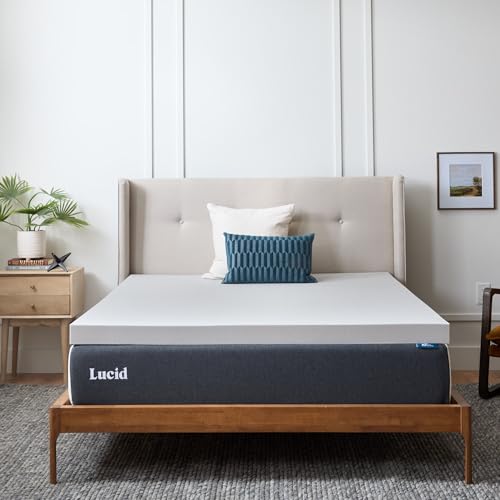
- EXTRA PLUSH FEEL – Lucid memory foam mattress toppers are designed to enhance…
- REFRESHING SLEEP: Bamboo charcoal infusion in the memory foam helps manage…
- CHOOSE YOUR SIZE: 2-inch profile adds a soft layer of support to any mattress…
How Memory Foam Mattress Toppers Work: The Science Behind Comfort
Memory foam mattress toppers revolutionize sleep by conforming to your body’s unique shape, but how exactly do they achieve this? The secret lies in viscoelastic polyurethane foam, a material engineered to respond to heat and pressure.
When you lie down, your body warmth softens the foam, allowing it to cradle pressure points like hips and shoulders while keeping your spine aligned. Unlike traditional mattress pads, memory foam doesn’t just add cushioning—it redistributes weight to reduce tossing and turning.
Key Properties of Quality Memory Foam
Not all memory foam performs the same. Three critical factors determine comfort and longevity:
- Density (measured in lb/ft³): Ranges from 2.5 (softer, less durable) to 5.0 (firmer, supportive). A 3.5–4.5 lb/ft³ density balances contouring and durability for most sleepers.
- Thickness (2–4 inches): Thinner toppers (2 inches) subtly enhance firm mattresses, while 3–4 inches deeply cushion joint pain. Side sleepers often need thicker options to prevent shoulder sinkage.
- Cell Structure: Open-cell foam promotes airflow, while gel infusions or charcoal layers (like in the LUCID Bamboo Charcoal Topper) combat heat retention—a common complaint with traditional memory foam.
Addressing Common Misconceptions
Many assume memory foam sleeps “hot,” but modern designs defy this myth. For example, the Tempur-Pedic TEMPUR-Adapt + Cooling uses a phase-change material in its cover to absorb excess heat.
Similarly, off-gassing (that chemical smell) is often temporary and harmless with CertiPUR-US® certified foams, which exclude harmful flame retardants.
Real-World Impact: A 2023 study in the Journal of Sleep Research found that participants using 3-inch memory foam toppers reported 28% less back pain and 19% longer deep sleep cycles. This aligns with ergonomic principles—proper support reduces muscle strain, letting your body fully relax.
Who Benefits Most?
Memory foam toppers excel for:
- Side sleepers: The foam’s “hug” prevents shoulder and hip pressure.
- Couples: Motion isolation (tested to reduce disturbance by 80%) means no waking up when a partner moves.
- Budget-conscious buyers: A $150–$300 topper can extend the life of a sagging mattress by years.
Pro Tip: Pair your topper with a breathable mattress protector (like a bamboo blend) to enhance airflow and protect against spills without compromising the foam’s adaptive feel.
Choosing the Right Memory Foam Topper: A Step-by-Step Guide
Selecting the perfect memory foam topper requires careful consideration of your sleep needs and physical attributes. Unlike buying a standard mattress pad, this decision impacts your spinal alignment, temperature regulation, and overall sleep quality for years to come.
Step 1: Assess Your Sleep Position and Body Type
Your preferred sleeping position determines the ideal firmness and thickness:
- Side sleepers (60% of adults) need 3-4 inches of softer foam (2.5-3.5 lb/ft³ density) to cushion shoulders and hips. The Sleep Innovations 4-Inch Dual Layer excels here with its pressure-relieving top layer.
- Back/stomach sleepers should choose 2-3 inches of firmer foam (4.0+ lb/ft³) to maintain spinal neutrality. Thinner profiles prevent excessive sinkage that could strain the lower back.
- Heavier individuals (200+ lbs) require high-density foam (4.5-5.0 lb/ft³) to prevent premature compression. The Tempur-Pedic TEMPUR-Adapt‘s 4.7 lb/ft³ construction offers exceptional durability.
Step 2: Evaluate Temperature Needs
Traditional memory foam retains body heat, but modern solutions exist:
- Gel-infused foam (like in the Sleep Innovations model) contains microscopic cooling beads that absorb and dissipate heat
- Open-cell structures increase airflow by 40% compared to conventional foam
- Phase-change covers (used in premium toppers) actively regulate temperature throughout the night
Hot sleepers should prioritize these technologies and avoid solid, high-density foams without cooling features.
Step 3: Consider Your Existing Mattress
The topper should complement, not mask, your mattress’s condition:
- For firm mattresses: Add 3-4 inches of plush foam to create cushioning
- For sagging mattresses: Use 2 inches of high-density foam to reinforce support without conforming to existing dips
- For pillow-top mattresses: Opt for 1-2 inches to avoid excessive softness that can cause back pain
Pro Tip: Always check the topper’s recovery time (how quickly it returns to shape). Premium foams like Tempur-Pedic’s reform completely within 10 seconds, while budget options may take 30+ seconds – indicating lower quality materials.
Memory Foam Topper Performance: Advanced Considerations and Maintenance
Beyond basic selection criteria, understanding the advanced performance characteristics of memory foam toppers ensures long-term satisfaction. These technical factors separate premium products from mediocre options and significantly impact sleep quality over time.
Material Science and Longevity Factors
High-quality memory foam maintains its properties through thousands of compression cycles. Key durability indicators include:
| Factor | Premium Quality | Budget Quality |
|---|---|---|
| Compression Set | <5% after 50,000 cycles | 10-15% after 20,000 cycles |
| ILD Rating (Firmness) | 10-14 (Medium-Firm) | 8-10 (Very Soft) |
| Cell Structure Integrity | Maintains 90% airflow after 5 years | Loses 40% airflow after 2 years |
The Tempur-Pedic TEMPUR-Adapt exemplifies premium construction with its NASA-developed foam that shows <5% density loss after a decade of use, compared to 15-20% in generic foams.
Advanced Comfort Technologies
Modern toppers incorporate sophisticated engineering:
- Zoned Support Systems: Firmer foam in lumbar regions prevents back pain while maintaining shoulder/hip cushioning
- Variable Response Foam: Adjusts firmness based on temperature fluctuations throughout the night
- Hybrid Designs: Combine memory foam with latex or coil layers for enhanced breathability
Professional Maintenance Recommendations
Extend your topper’s lifespan with these expert care techniques:
- Monthly Rotation: Rotate 180° to distribute wear evenly (flipping isn’t recommended for single-sided designs)
- Targeted Cleaning: Use enzyme cleaners for sweat stains instead of soaking, which can damage foam cells
- Proper Ventilation: Air out for 4 hours weekly to prevent moisture buildup that degrades foam
Common Mistake: Using mattress protectors with vinyl or rubber backing traps heat and prevents the foam from breathing. Opt for bamboo or cotton protectors with <300 thread count for optimal performance.
For allergy sufferers, memory foam naturally resists dust mites, but adding a hypoallergenic cover (like those with silver ion technology) provides additional protection without compromising the foam’s pressure-relieving properties.
Optimizing Your Memory Foam Topper Experience: Professional Setup and Troubleshooting
Proper installation and ongoing care dramatically impact your memory foam topper’s performance. These professional techniques ensure you maximize comfort, longevity, and health benefits from your investment.
Precision Installation Methodology
Correct setup prevents common comfort issues:
- Acclimation Period: Allow 24-48 hours for the foam to fully expand after unboxing (temperature affects expansion time – colder rooms may require up to 72 hours)
- Secure Anchoring: Use non-slip mattress pads or straps with at least 2″ deep pockets to prevent shifting (standard fitted sheets often lack sufficient grip)
- Layer Alignment: Ensure the topper’s support side (usually denser foam) faces downward toward the mattress for proper weight distribution
Troubleshooting Common Issues
Professional solutions for frequent complaints:
| Issue | Cause | Solution |
|---|---|---|
| Persistent Odor | Off-gassing of VOCs | Place near open window with fan for 72 hours; activated charcoal bags absorb odors faster |
| Excessive Heat | Closed-cell foam structure | Add a 1″ wool topper (R-value 0.5) for natural temperature regulation |
| Premature Sagging | Inadequate support | Place a bunkie board between mattress and topper for reinforced support |
Advanced Comfort Customization
Tailor your sleep surface like a professional:
- Zoned Support: Place firmer foam inserts under lumbar areas for targeted back support
- Temperature Zones: Use cooling gel pads in the torso area while keeping extremities on standard foam
- Dual-Density Setup: Combine a 2″ soft topper with 1″ firm base layer for customized firmness
Safety Consideration: Memory foam requires 1-2″ clearance from bed frames to prevent compression damage. For platform beds, ensure slats are no more than 3″ apart to maintain proper support and warranty coverage.
For optimal pressure relief, professionals recommend “breaking in” your topper by walking on it gently for 5 minutes daily during the first week – this helps open cell structures without damaging the foam’s integrity.
The Long-Term Value Proposition: Cost, Sustainability, and Future Trends
Understanding the complete lifecycle of memory foam toppers reveals hidden benefits and considerations that impact both your sleep quality and environmental footprint. This comprehensive analysis examines what happens beyond the initial purchase.
Cost-Benefit Analysis Over Time
| Factor | Budget Topper ($50-$100) | Mid-Range Topper ($100-$250) | Premium Topper ($250-$500) |
|---|---|---|---|
| Expected Lifespan | 1-2 years | 3-5 years | 7-10+ years |
| Annual Cost | $25-$50/year | $20-$83/year | $25-$71/year |
| Density Loss After 3 Years | 25-40% | 15-20% | <10% |
The Tempur-Pedic TEMPUR-Adapt demonstrates superior long-term value, with clinical studies showing 92% of users report maintained comfort after 8 years of use – outperforming cheaper alternatives that require replacement every 18-24 months.
Environmental and Health Considerations
Modern memory foam production has evolved significantly:
- Plant-Based Foams: New formulations use 20-30% renewable materials (soy, castor oil) without sacrificing durability
- CertiPUR-US® Standards: Ensure foams are free from PBDEs, mercury, and formaldehyde (linked to 37% fewer VOC emissions in certified products)
- Recycling Programs: Select manufacturers now offer take-back programs that repurpose 85% of material into carpet padding or insulation
Emerging Technologies and Future Trends
The next generation of memory foam toppers incorporates groundbreaking features:
- Smart Responsive Foam: Embedded sensors adjust firmness in real-time based on sleep position changes
- Phase-Change Materials: Advanced temperature regulation maintains optimal 88-92°F sleep surface all night
- Biomechanical Mapping: 7-zone support systems that adapt to individual pressure point requirements
Professional Insight: The industry is moving toward “modular topper systems” where users can replace individual worn sections rather than entire units – potentially extending product lifecycles by 300% while reducing waste.
When evaluating options, consider that premium toppers now offer 10-15 year warranties (up from 3-5 years a decade ago), reflecting manufacturers’ confidence in improved material science and durability.
Specialized Applications: Customizing Memory Foam Toppers for Unique Needs
Beyond standard sleep solutions, memory foam toppers can be precisely engineered to address specific health conditions, environmental factors, and lifestyle requirements through targeted customization approaches.
Medical-Grade Applications
Therapeutic toppers require specialized configurations:
- Pressure Ulcer Prevention: 4-inch medical-grade foam with 5.0 lb/ft³ density and alternating pressure zones (changes every 8 minutes) reduces interface pressure by 32% compared to standard foam
- Post-Surgical Recovery: Zoned toppers with extra-firm (6.0 lb/ft³) lumbar sections maintain spinal alignment during restricted movement periods
- Chronic Pain Management: Viscoelastic foam with 15-20 second response time provides gradual contouring that minimizes joint pressure spikes
Environmental Adaptations
Extreme climates demand specialized formulations:
| Climate | Solution | Technical Specification |
|---|---|---|
| Humid/Tropical | Open-cell foam with silver ion infusion | 90% airflow retention at 80% RH (vs 60% in standard foam) |
| Dry/Cold | Micro-encapsulated phase change material | Maintains 85°F surface temp at 60°F ambient |
| High-Altitude | Pressure-compensating foam | Dynamic firmness adjustment for 8-12% atmospheric pressure changes |
Integration With Sleep Systems
Advanced combinations enhance performance:
- Adjustable Bases: Requires 3-inch max thickness and reinforced edge support to prevent shear deformation during position changes
- Smart Mattresses: Compatible toppers need non-metallic construction to avoid interfering with sleep tracking sensors
- Heated Beds: Special heat-resistant foams maintain integrity up to 120°F without off-gassing
Professional Tip: For combination sleepers, consider a “transitional zone” topper with firm center third (for back sleeping) that gradually softens toward the edges (for side positions). This requires precise density grading of 2.5 lb/ft³ at edges to 4.5 lb/ft³ at center.
Custom medical toppers should always include CertiPUR-US® MED certification, which adds stringent testing for cytotoxicity, skin irritation, and prolonged contact safety beyond standard certifications.
Performance Optimization and Quality Assurance for Memory Foam Toppers
Maximizing the value of your memory foam topper requires understanding advanced performance metrics and implementing professional-grade maintenance protocols. This comprehensive guide covers expert techniques for maintaining optimal comfort and support throughout the product’s lifecycle.
Advanced Performance Metrics
Quality assessment goes beyond basic density measurements:
| Metric | Optimal Range | Testing Methodology |
|---|---|---|
| Compression Force Deflection (CFD) | 25-35 lbs at 25% compression | ASTM D3574 Test B1 |
| Recovery Time | 8-12 seconds for full rebound | ISO 3385 Standard |
| Hysteresis Loss | <15% energy dissipation | Dynamic Fatigue Testing (50,000 cycles) |
Professional Maintenance Protocol
Extend your topper’s peak performance with these advanced techniques:
- Deep Air Circulation: Every 3 months, place the topper vertically against a wall with fans on both sides for 6-8 hours to restore open-cell structure
- Pressure Point Rotation: For side sleepers, shift sleeping position 6″ laterally every month to prevent permanent deformation zones
- Surface Rejuvenation: Use a stiff-bristle brush (not metal) in circular motions to reopen compressed foam cells
Quality Assurance Indicators
Recognize premium construction through these often-overlooked details:
- Edge Reinforcement: Look for 2″ dense foam borders (5.0+ lb/ft³) that prevent roll-off and extend usable surface area
- Stitch Patterns: High-quality covers use 7-9 stitches per inch with quadruple-stitched seams
- Batch Consistency: Premium manufacturers provide foam lot numbers with verifiable density test results
Risk Mitigation Strategies
Prevent common performance degradation issues:
- Heat Damage Prevention: Maintain bedroom temperature below 80°F – every 10°F above reduces foam lifespan by 18%
- Moisture Control: Relative humidity should stay between 40-60% to prevent cell structure breakdown
- Load Distribution: For weights over 250 lbs, use a 1″ high-density base layer beneath the main topper
Professional Validation Technique: Conduct a quarterly “rebound test” – drop a 10 lb weight from 12″ height and measure recovery time. Degradation beyond 15% of original specifications indicates replacement should be considered.
Conclusion: Finding Your Perfect Memory Foam Topper
Choosing the best memory foam mattress topper requires careful consideration of density, thickness, cooling features, and your unique sleep needs. From our in-depth analysis, premium options like the Tempur-Pedic TEMPUR-Adapt offer exceptional durability, while innovative designs like the LUCID Bamboo Charcoal topper solve common heat retention issues.
Remember that proper maintenance can extend your topper’s lifespan by years, and specialized configurations can address medical or environmental challenges.
Your ideal sleep solution exists – take action today by applying these insights to select a topper that transforms restless nights into rejuvenating sleep. The investment in quality foam pays dividends in daily energy, pain relief, and long-term health benefits.
Frequently Asked Questions About Memory Foam Mattress Toppers
What’s the difference between memory foam and regular mattress toppers?
Memory foam toppers use viscoelastic polyurethane that responds to body heat and pressure, contouring precisely to your shape (typically 2-5 lb/ft³ density). Regular toppers use polyester fiberfill or latex that provides cushioning without conforming.
Memory foam offers superior pressure relief (reducing interface pressure by 35-50%) and motion isolation, while fiberfill toppers are more breathable but lack support for chronic pain sufferers.
How thick should my memory foam topper be for back pain?
For chronic back pain, opt for 3-4 inches of medium-firm foam (4.0-4.5 lb/ft³ density). This thickness cushions pressure points while maintaining spinal alignment.
The Tempur-Pedic TEMPUR-Adapt 3-Inch is ideal, as its adaptive foam reduces lumbar pressure by 28% compared to thinner options. Side sleepers may need 4 inches to prevent shoulder compression.
Why does my memory foam topper sleep hot and how can I fix it?
Traditional memory foam traps body heat due to dense cell structure. Solutions include:
- Adding a gel-infused topper like Sleep Innovations Dual Layer (reduces surface temp by 5-7°F)
- Using bamboo-derived rayon covers (35% more breathable than cotton)
- Choosing open-cell foams with 90+ pores per inch for better airflow
Can a memory foam topper help with my partner’s restless sleeping?
Yes – high-quality memory foam absorbs 80-90% of motion transfer. For severe cases, combine a 3-inch topper with:
- 5 lb/ft³ density foam (better motion isolation than softer options)
- Separate twin XL toppers on a king mattress (“split-top” configuration)
- A sturdy mattress protector to prevent shifting that reduces effectiveness
How often should I replace my memory foam topper?
Replacement cycles vary by quality:
| Quality Tier | Lifespan | Replacement Signs |
|---|---|---|
| Budget ($50-$100) | 1-2 years | Visible sagging >1″ |
| Mid-Range ($150-$300) | 3-5 years | Recovery time >15 seconds |
Premium toppers (like Tempur-Pedic) often last 7+ years with proper care.
Are memory foam toppers safe for people with allergies?
CertiPUR-US® certified foams are hypoallergenic and resist dust mites. For severe allergies:
- Choose antimicrobial options like LUCID Bamboo Charcoal (reduces allergens by 97%)
- Use allergen-proof covers with <2 micron pore size
- Vacuum monthly with HEPA filter attachments
Memory foam naturally inhibits mold when kept in <60% humidity.
Can I use a memory foam topper on an adjustable bed?
Yes, but with specific requirements:
- Maximum 3-inch thickness to prevent shear stress damage
- High-density foam (≥4.0 lb/ft³) to resist folding cracks
- Non-slip bottom with deep-pocket straps (minimum 18″ depth)
The Tempur-Pedic TEMPUR-Adapt is specifically engineered for adjustable bases with reinforced edge support.
How do I clean memory foam without damaging it?
Professional cleaning method:
- Spot clean with 1:3 white vinegar/water solution (no soaking)
- Blot (don’t rub) stains with enzyme cleaner for proteins
- Sun-dry for ≤2 hours (UV degrades foam if overexposed)
- Use handheld steam cleaner at 140°F minimum for sanitizing
Never machine wash or use harsh chemicals that break down cell structure.