
Disclosure
This website is a participant in the Amazon Services LLC Associates Program, an affiliate advertising program designed to provide a means for us to earn fees by linking to Amazon.com and affiliated sites.
Is Your Mattress Topper Already Sagging and Losing Support?
Nothing is more frustrating than investing in a mattress topper for comfort, only to have it flatten and fail within a year. The Niagara Sleep Solution Ultra Soft Mattress Topper directly addresses this with a robust 10-year warranty, ensuring long-term resilience and consistent pressure relief so your purchase is protected and your sleep stays comfortable for years.
For guaranteed long-term comfort, choose the: Niagara Sleep Solution Ultra Soft Mattress Topper

- ULTRA SOFT: Niagara Queen Mattress Topper is made from viscose made from bamboo...
- CLOUD-LIKE SLEEP: This queen mattress topper adds an extra cushion to...
- EASY TO USE: The cooling bed pad has a deep pocket, is easy to put on, and has...
Mattress Topper Warranty Coverage and Terms
A mattress topper warranty is a legal guarantee from the manufacturer. It outlines what defects are covered and for how long. The fine print is crucial to making a smart purchase.
Key Components of a Standard Warranty
Every warranty document contains several critical sections. These define your rights and the manufacturer’s responsibilities. Focus on these core elements to assess value.
- Coverage Period: This is the total length of the guarantee, often ranging from 1 to 10 years. The full coverage period typically includes a shorter period for full replacement.
- What’s Covered: Warranties usually protect against specific material flaws and workmanship issues. Common inclusions are splits in foam, unraveling seams, and permanent body impressions exceeding a certain depth.
- What’s Excluded: This list is often more important. It regularly includes stains, burns, damage from improper cleaning, and normal softening of materials over time.
Full vs. Prorated Warranty Periods
Most warranties are split into two distinct phases. The initial phase offers the strongest protection for your topper. The second phase reduces the manufacturer’s liability significantly.
During the full replacement period, the company will typically replace or repair your topper at no cost. This period might be the first 2 to 5 years of a 10-year warranty. It addresses major defects that render the product unusable.
After that, the prorated coverage begins. Under prorated terms, you are responsible for a percentage of the current retail price. Your cost increases each year the warranty ages, making a claim less valuable over time.
How to File a Warranty Claim Successfully
Filing a claim requires preparation and documentation. Following the correct steps streamlines the process and improves your chances of approval. Start by gathering your proof of purchase.
- Contact customer service with your order number and a detailed description of the defect.
- Provide clear photographs as requested, often showing tags, the issue, and the topper in its bed.
- Be prepared to cut a section from the topper as proof of destruction if a replacement is approved.
Keeping your original receipt is non-negotiable. Manufacturers almost always require it to validate your claim and start the warranty clock. Store it in a safe, easily accessible place.
Choosing the Right Warranty Length for Your Topper
The ideal warranty length depends on your topper’s material and your sleep needs. A longer guarantee often signals higher durability. However, it must be backed by strong coverage terms to be valuable.
Warranty Expectations by Material Type
Different mattress topper materials have varying lifespans and failure points. The warranty should realistically match the product’s expected performance. Here is a general guide to common materials.
| Material | Typical Warranty Range | What to Look For |
|---|---|---|
| Memory Foam | 3 to 10 years | Coverage for sagging over 1.5 inches and foam splitting. |
| Latex (Natural) | 5 to 10+ years | Protection against crumbling or cracking, with a non-prorated period. |
| Feather/Down | 1 to 3 years | Coverage for seam failure and cluster clumping, not flattening. |
| Fiberfill / Polyester | 1 to 2 years | Very limited; often only covers major seam defects. |
Is a Longer Mattress Topper Guarantee Always Better?
A long warranty term is attractive but not an absolute indicator of quality. Some companies use lengthy warranties as a marketing tool. You must scrutinize the coverage details beyond the headline number.
- Pro: A 10-year warranty suggests the manufacturer trusts the product’s longevity and uses durable materials.
- Con: The warranty may be mostly prorated, making a late-term claim costly. It also may exclude common issues like softening.
- Reality Check: A reputable brand with a strong 5-year full replacement warranty is often better than an unknown brand with a weak 10-year plan.
Questions to Ask Before You Buy
Always clarify warranty details with the retailer or manufacturer directly. Getting answers in writing can prevent future disputes. These questions cut through marketing language.
- What is the exact split between the full replacement and prorated coverage periods?
- What is the specific depth of body impression that constitutes a defect (e.g., 1.5 inches)?
- Does the warranty require use of a specific mattress foundation or bed frame?
This due diligence ensures the warranty matches your expectations. It helps you avoid surprises if you need to file a claim later. A transparent company will have clear, accessible answers.
Mattress Topper Warranty vs. Return Policy and Sleep Trial
Warranties, return policies, and sleep trials are distinct forms of consumer protection. Confusing them can lead to frustration and unexpected costs. each one’s purpose is essential for a risk-free purchase.
Defining the Difference: Guarantee, Trial, and Return
Each policy serves a different need and operates on a unique timeline. A sleep trial addresses immediate comfort, while a warranty is a long-term safeguard. The return policy governs the logistics of sending a product back.
- Sleep Trial: A short-term period (often 30-100 nights) to test comfort. You can return the topper for a full refund if unsatisfied, typically with free return shipping.
- Return Policy: The rules for initiating a return during the trial or standard period. It covers condition requirements, time limits, and potential restocking fees.
- Warranty: A long-term guarantee (1-10+ years) against material and workmanship defects. It requires proof of a specific flaw, not general dissatisfaction.
How Sleep Trials Complement Your Warranty
A Strong sleep trial allows you to evaluate the topper’s comfort and initial quality. This period can reveal immediate defects that might also be covered later under warranty. It acts as an early warning system.
If the topper develops a significant body impression or sags within the trial window, you can simply return it. This is far easier than filing a warranty claim. Use the trial to assess both feel and initial durability.
Always check if the trial requires a mandatory break-in period. Some companies ask for 30 nights before evaluating. Keep notes on any performance issues during this time for your records.
Common Warranty Pitfalls and Exclusions
Many warranty claims are denied due to preventable missteps. The most common exclusions are often related to care and maintenance. Being proactive protects your coverage.
- Improper Cleaning: Using harsh chemicals or machine washing a topper labeled “spot clean only” can void coverage.
- Missing Tags: Do not remove the law tag; it contains material information and is often required for a claim.
- Lack of Support: Using the topper on an inadequate or broken bed frame may invalidate the warranty.
Always follow the manufacturer’s care instructions precisely. Keep your receipt and product registration if required. This documentation is your first line of defense in upholding the warranty’s validity.
Top Brands Compared: Mattress Topper Warranty Analysis
Leading brands differentiate themselves through warranty strength and customer service. Comparing their guarantees reveals true commitment to product longevity. This analysis helps you identify which companies stand behind their products.
Industry-Leading Warranty Offerings
Several brands are noted for providing exceptional warranty terms on their toppers. These offers typically feature long full-replacement periods and clear defect definitions. They reduce long-term ownership risk significantly.
- Tempur-Pedic: Often provides a 10-year limited warranty with a substantial non-prorated period. Their coverage is specific about impression depth and material integrity.
- Sleep on Latex: Offers a simple, strong warranty on natural latex toppers, frequently with a multi-year full replacement guarantee and transparent terms.
- PlushBeds: Known for lengthy warranties on organic latex toppers, sometimes extending beyond 10 years, emphasizing material durability.
Evaluating Brand Reputation and Claim Support
A warranty is only as good as the company that honors it. Researching a brand’s reputation for handling claims is crucial. Positive customer experiences signal a reliable safety net.
Look for reviews that mention the warranty claim process specifically. Comments about hassle-free replacements or responsive service are strong indicators. Conversely, numerous complaints about denied claims are a major red flag.
Consider the company’s history and market presence. Established brands with a physical presence often have more structured support systems. Newer direct-to-consumer brands may offer great trials but untested long-term warranty support.
Final Checklist Before Finalizing Your Purchase
Use this practical list to ensure your chosen topper has the protection you need. Do not complete your order until you can confirm each point. This turns complex policy details into simple yes/no answers.
- Have I read the full warranty document, not just the summary?
- Do I know the exact depth of sagging (e.g., 1.5 inches) that qualifies as a defect?
- Am I clear on the split between the full replacement and prorated coverage years?
- Have I saved my receipt and completed any product registration?
- Do I understand the care instructions to avoid voiding the coverage?
Completing this checklist secures your investment. It transforms the warranty from a marketing feature into a usable, practical asset. You can now purchase with confidence in your long-term protection.
Maximizing Your Mattress Topper Warranty Value
Owning a strong warranty requires proactive maintenance and documentation. Proper care extends your topper’s life and keeps your coverage valid. These steps ensure you get the full value from your product guarantee.
Essential Care to Keep Your Warranty Valid
Manufacturers require reasonable care as a condition of the warranty. Neglect or improper cleaning are the top reasons for claim denial. Follow these universal care principles to protect your investment.
- Use a Protector: A waterproof, breathable mattress protector is non-negotiable. It shields against stains and spills, which are almost never covered.
- Follow Cleaning Labels: Never submerge or machine wash unless explicitly instructed. Most toppers require gentle spot cleaning with mild detergent only.
- Ensure Proper Support: Place your topper on a solid, supportive foundation. Sagging from an inadequate box spring or slats can void coverage.
Documentation and Record-Keeping Strategies
Organized records are your evidence if a defect arises. Start this system immediately after your topper arrives. Digital storage is recommended for easy access years later.
Take clear photos of your new topper, including the law tag and any labels. Save your emailed receipt and order confirmation in a dedicated folder. If you register the product, keep a screenshot of the confirmation.
Create a simple note with the warranty start date and key terms. Note the impression depth that constitutes a defect and the customer service contact. Update this file if you move or change contact information.
When to Consider an Extended Warranty or Protection Plan
Retailers sometimes offer separate extended protection plans at checkout. These are not the manufacturer’s warranty and require careful evaluation. They may duplicate coverage you already have.
- Review Overlap: Compare the plan’s coverage to the existing manufacturer warranty. Avoid paying for identical protection.
- Assess Cost vs. Value: Calculate the plan cost as a percentage of your topper’s price. For an inexpensive topper, it is rarely worthwhile.
- Check Covered Perils: Some plans cover accidental damage like spills or tears, which standard warranties exclude. This can be valuable for households with pets or children.
In most cases, a Strong manufacturer warranty is sufficient. Only consider an extended plan if it fills a specific, valuable gap in coverage. Always read its terms as critically as the original warranty.
Decoding Warranty Language and Legal Terminology
Warranty documents use specific legal terms that define your rights. Misunderstanding this language can lead to incorrect assumptions about coverage. Learning key phrases empowers you to compare guarantees accurately.
Common Legal Terms in Warranty Documents
These standard terms appear in nearly every mattress topper guarantee. Their definitions are critical for interpreting the scope of protection. Knowing them helps you identify potential limitations.
- Limited Warranty: This is the most common type. It restricts coverage to specific parts or defects and excludes others, as outlined in the document.
- Prorated Coverage: As defined earlier, this means your reimbursement decreases over time. You pay an increasing share of the replacement cost.
- Normal Wear and Tear: A broad exclusion for gradual softening, loss of loft, or comfort changes that occur with expected use. This is not a defect.
- Material or Workmanship Defect: The core of most warranties. It covers flaws in the materials used or errors in the manufacturing process itself.
“Lifetime Warranty” Claims: What They Really Mean
The phrase “lifetime warranty” is powerful but often misunderstood. It rarely means your literal lifetime or unlimited free replacements. The definition of “lifetime” is typically set by the company.
Often, “lifetime” refers to the expected useful life of the product, which the manufacturer defines. This could be 5, 10, or 20 years. The warranty may become prorated after a very short initial period.
Always request the written warranty details before buying based on a “lifetime” claim. Scrutinize it for the definition of lifetime and the coverage structure. This prevents disappointment years later.
Your Rights Under the Magnuson-Moss Warranty Act
This U.S. Federal law provides important consumer protections for products costing over $25. It governs how warranties are presented and enforced. It prevents manufacturers from imposing unreasonable conditions.
- Full Disclosure: The Act requires warranties to be available for you to read before purchase, often online or upon request.
- Tie-In Sales Provision: A company cannot void your warranty simply for using a third-party product for routine maintenance or cleaning, unless they provide that item for free.
- Clear Language: Warranties must be written in simple, easy-to-understand language. This helps you comprehend the terms and your obligations.
This law helps you advocate for yourself. If a company denies a claim for using a different brand of mattress protector, they may be violating this Act. Know your foundational rights.
Real-World Scenarios: Using Your Mattress Topper Warranty
How warranties work in practice clarifies their real value. These scenarios illustrate common issues and the claim process outcome. They help you anticipate what to expect if a problem arises.
Scenario 1: Deep Body Impression After 18 Months
Your memory foam topper has developed a permanent, deep sag where you sleep. You measure it at 2 inches, and the warranty defines a defect as any impression over 1.5 inches. This is a classic warranty claim.
First, review your warranty document to confirm the coverage period. If you have a 10-year warranty with a 3-year full replacement period, you are still within full coverage. Gather your receipt and take clear photos with a ruler showing the depth.
Contact customer service, provide your evidence, and follow their instructions. They will likely approve a replacement or repair at no cost. This scenario is exactly what a strong warranty is designed to cover.
Scenario 2: Split Seam on a Latex Topper After 4 Years
A seam has unraveled, causing the latex topper cover to separate. This is typically considered a workmanship defect. However, your warranty has a 5-year full replacement period followed by 5 years of prorated coverage.
Since 4 years is within the full replacement period, you should be eligible for a free repair or replacement. The process requires photos of the split seam and the law tag. The manufacturer may request you to cut a section from the topper to prevent resale.
This claim highlights the importance of the full coverage period. If the split occurred in year 6, you would pay a percentage of the current price under prorated terms.
Scenario 3: General Softening and Loss of Support
Your feather topper has flattened and no longer provides the plush feel it once did. This is a very common issue over time. You file a warranty claim, but it is almost certainly denied.
Warranties cover material failures, not changes in comfort or gradual softening from use. This is classified as normal wear and tear, a standard exclusion. The product performed as expected but reached the end of its functional life.
This scenario underscores a key limitation. A warranty is not a guarantee of perpetual comfort. It is insurance against premature manufacturing flaws, not the natural aging of materials. A sleep trial would have been the appropriate tool to address initial comfort concerns.
Best Mattress Toppers with Strong Warranty Protection
These recommended toppers combine quality materials with reliable warranty coverage. Each offers distinct features for different sleep needs and support preferences. They represent strong value with manufacturer-backed guarantees.
ChiXpace Dual Layer 4 Inch Memory Foam Mattress Topper – Best for Pressure Relief
This dual-layer topper features a cooling gel memory foam top and a high-density support base. It provides excellent contouring for side sleepers and helps alleviate joint pain. The breathable cover enhances airflow for a cooler night’s sleep.
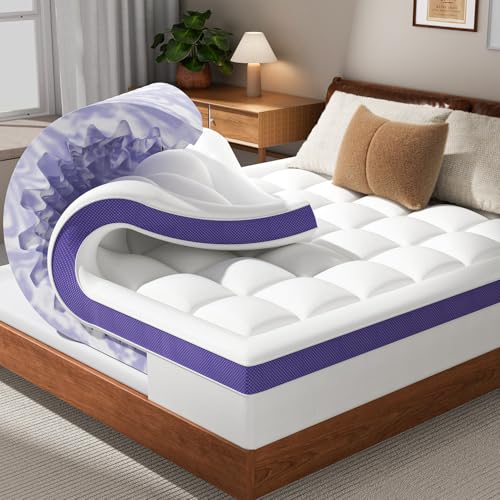
- Dual-Layer Design: This is Queen (60" x 80") size mattress topper. Our mattress...
- Comfortable Support: The memory foam with an egg-crate pattern provides...
- Cooling & Breathable: The ultra-soft fabric and premium gel-infused memory foam...
Sweetcrispy Memory Foam Mattress Topper – Best Budget-Friendly Option
An affordable choice that doesn’t compromise on comfort, featuring certified foam for safe materials. It effectively softens a firm mattress and reduces motion transfer. This is an ideal entry-level topper with solid basic protection.
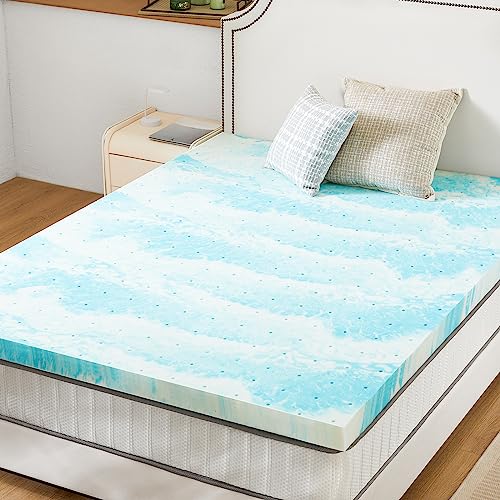
- ENHANCED COMFORT - With this memory foam mattress topper, say goodbye to...
- IMPROVED AIRFLOW - The gel infusion in this mattress pad helps to dissipate heat...
- VERSATILE USE - Whether you use it on your bed, sofa, or even in your RV, this...
Biteany Dual Layer Memory Foam Mattress Topper – Best for Edge Support
Designed with a 7-zone ergonomic support system to align the spine and reduce back pain. The reinforced edges prevent roll-off, making full use of the sleep surface. Its dual-layer construction offers both plush comfort and foundational support.

- GET 2X SUPPORT FROM MATERIAL REVOLUTION! Biteany queen mattress topper combines...
- PAIN-FREE SLEEP, CUSTOMIZES COMFORT! Our queen size mattress topper can...
- STAY COOL & SLEEP SAFE! The cooling mattress topper features a 3D air mesh...
Conclusion
Choosing the right mattress topper warranty is a critical step in protecting your sleep investment. It requires looking beyond the headline length to understand coverage periods, exclusions, and claim processes.
The ideal warranty offers a substantial full replacement period from a reputable brand. By selecting a quality topper and maintaining it properly, you ensure long-lasting comfort and value, backed by a guarantee that provides real peace of mind.
Frequently Asked Questions about What Mattress Topper Warranty Do You Need
What is the average warranty for a good mattress topper?
A good mattress topper typically offers a warranty between 3 and 10 years. Memory foam and natural latex models often have longer guarantees, around 5 to 10 years. Shorter warranties of 1-2 years are common for fiberfill or basic polyester toppers.
The warranty’s value depends more on its coverage terms than its length. Look for a substantial full replacement period within the total term. A 5-year warranty with 3 years of full coverage is often better than a 10-year warranty that is mostly prorated.
Can a mattress protector void my topper’s warranty?
No, using a mattress protector will not void your warranty. In fact, most manufacturers recommend using one. It protects against stains and spills, which are common reasons for claim denial under standard warranty exclusions.
However, the Magnuson-Moss Warranty Act prevents companies from requiring you to buy their brand of protector. You can use any quality protector. Just ensure it is breathable and does not cause overheating, which could be misconstrued as damage.
What is the difference between a warranty and a sleep trial?
A sleep trial is a short-term return period, usually 30-100 nights, for a full refund if you are unsatisfied with comfort. It addresses immediate personal preference. A warranty is a long-term guarantee against material defects in workmanship or materials.
Use the sleep trial to determine if the topper feels right. Rely on the warranty for protection years later if the foam splits or sags excessively. They are complementary forms of protection that serve different purposes.
How do I prove a warranty claim for sagging?
You must provide photographic evidence. Place a straight edge across the indented area and use a ruler to measure the depth of the sag. The photo must clearly show the ruler’s measurement against the straight edge.
Compare your measurement to the defect depth specified in your warranty document, often 1.5 or 2 inches. You will also need your original proof of purchase. Submit these items to customer service to initiate your claim review.
Are “lifetime” mattress topper warranties legitimate?
“Lifetime” warranties can be legitimate, but the term is legally defined by the company. It rarely means your personal lifetime. Usually, it refers to the product’s expected useful life, which the manufacturer sets, such as 10 or 20 years.
Always request the full written warranty details before purchasing. Scrutinize the definition of “lifetime” and the coverage structure. These plans often have a very short full replacement period before switching to prorated coverage.
What is the most common reason warranty claims are denied?
The most common denial reason is damage classified as “normal wear and tear.” This includes general softening, loss of loft, or comfort changes over time. Warranties cover manufacturing flaws, not the natural aging of materials.
Other frequent denials are for stains, liquid damage, or burns. Claims are also denied if the owner cannot provide a valid proof of purchase. Following care instructions and keeping your receipt are essential to avoid these pitfalls.