
Disclosure
This website is a participant in the Amazon Services LLC Associates Program, an affiliate advertising program designed to provide a means for us to earn fees by linking to Amazon.com and affiliated sites.
You spend nearly a third of your life asleep, but do you know what actually happens during those critical hours? Sleep isn’t just a passive shutdown—it’s a dynamic, multi-stage process where your brain and body undergo vital restoration.
Many assume sleep is a uniform state of unconsciousness, but cutting-edge neuroscience reveals it’s a carefully orchestrated cycle with distinct phases, each serving unique functions for memory, immunity, and emotional resilience.
Modern life’s sleep disruptions—from screen time to stress—can sabotage these delicate stages, leaving you groggy and vulnerable to long-term health risks. Yet by understanding sleep’s architecture, you can optimize your rest.
Best Sleep Trackers for Monitoring Sleep Stages
Oura Ring Generation 3
The Oura Ring Gen 3 is a sleek, non-intrusive wearable that tracks sleep stages (light, deep, REM) with medical-grade accuracy using body temperature, heart rate variability, and movement sensors. Its detailed app provides personalized insights and recovery scores, making it ideal for optimizing sleep quality without bulky wristbands.

- SIZE BEFORE YOU BUY – Size with Gen3 Sizing Kit prior to purchasing Oura Ring…
- THE REVOLUTIONARY SMART RING – Track your sleep, activity, stress, heart rate…
- MORE ACCURATE BY DESIGN – Your finger provides the most accurate pulse reading…
Fitbit Sense 2
Fitbit’s Sense 2 combines advanced heart-rate monitoring, SpO2 tracking, and skin temperature sensors to analyze sleep architecture. The Sleep Profile feature offers monthly trends and actionable recommendations, while its comfortable design ensures uninterrupted data collection throughout the night.

- Learn to manage stress, sleep better and live healthier with Sense 2—our most…
- Manage stress and live healthier: all-day stress detection with cEDA and daily…
- Measure and improve sleep quality: personalized Sleep Profile(5), daily sleep…
Withings Sleep Analyzer
The Withings Sleep Analyzer is an under-mattress pad that detects snoring, sleep apnea risk, and sleep cycles without wearables. It syncs seamlessly with health apps and provides detailed reports on sleep efficiency, making it perfect for those who dislike wearing devices while sleeping.
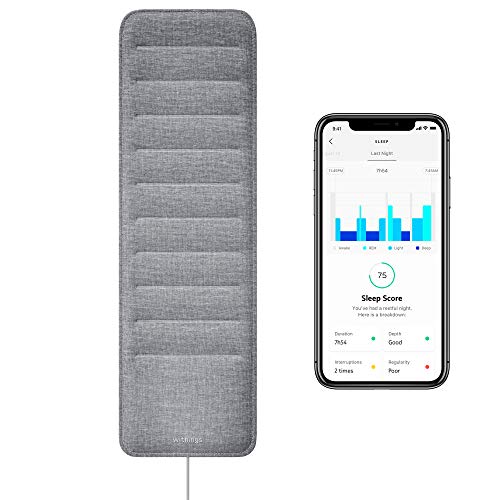
- EXPLORE THE DEPTHS OF YOUR SLEEP PATTERN – Sleep is the ultra-powerful sleep…
- WORLD PREMIERE – Sleep is the world’s first under-mattress sleep sensor, with…
- LEADS TO MORE RESTFUL SLEEP – By analyzing the phases, depth and interruptions…
The Science Behind Sleep Stages: Understanding Your Nightly Cycle
Sleep isn’t a uniform state but a rhythmic journey through distinct stages, each with unique brainwave patterns and physiological functions. These stages repeat cyclically every 90–120 minutes, with the proportion of each phase shifting throughout the night. Modern sleep science categorizes them into Non-REM (NREM) sleep (Stages 1–3) and REM (Rapid Eye Movement) sleep, together forming the architecture of restorative rest.
Stage 1: Light Sleep – The Gateway to Rest
This transitional phase lasts 1–7 minutes as you drift from wakefulness to sleep. Brainwaves slow to theta waves (4–7 Hz), and muscle activity decreases, though you may experience sudden jerks (hypnic myoclonus) or the sensation of falling.
Unlike deeper stages, you’re easily awakened here—a survival mechanism rooted in evolution. For example, new parents often remain in this stage to stay alert to a baby’s cries.
Stage 2: True Sleep Onset
Accounting for ~50% of total sleep, this stage features:
- Sleep spindles (bursts of brain activity at 11–16 Hz) that shield against external noises and consolidate motor memory.
- K-complexes (sharp high-amplitude waves) that suppress cortical arousal and aid memory formation.
Body temperature drops and heart rate slows, preparing the body for deep restoration. A 2022 study in Nature Human Behaviour linked spindle density to improved problem-solving skills.
Stage 3: Deep Sleep – The Body’s Repair Mode
Also called slow-wave sleep (SWS), this stage dominates the first half of the night with delta waves (0.5–2 Hz). Critical processes occur here:
- Tissue growth and repair: Human growth hormone (HGH) peaks, rebuilding muscles and bones.
- Immune system boost: Cytokine production increases to fight inflammation.
- Memory consolidation: The hippocampus replays daily experiences, transferring them to long-term storage.
Disrupting SWS—common in aging or sleep apnea—is linked to higher Alzheimer’s risk due to impaired toxin clearance via the glymphatic system.
REM Sleep: The Brain’s Active Sanctuary
Occurring ~90 minutes after falling asleep, REM is marked by:
- Paradoxical brain activity: Near-waking levels of metabolic activity with vivid dreams.
- Muscle atonia: Temporary paralysis prevents acting out dreams.
- Emotional processing: The amygdala reorganizes emotional memories, explaining why REM deprivation exacerbates anxiety.
Infants spend 50% of sleep in REM (vs. 20–25% in adults), suggesting its role in neural development. A 2023 MIT study found REM enhances creative problem-solving by 33% compared to NREM sleep.
This cyclical progression isn’t linear—later cycles prioritize REM over deep sleep. Understanding these rhythms empowers you to align bedtime with natural ultradian cycles for optimized recovery.
How Sleep Stages Impact Your Health and Daily Performance
Each sleep stage serves as a biological necessity, with distinct roles in physical recovery, cognitive function, and emotional regulation. Missing even one stage can create ripple effects across your health – understanding these impacts helps prioritize quality sleep.
The Physical Restoration Powerhouse: Deep Sleep
During slow-wave sleep, your body enters its most intensive repair mode. Cellular regeneration peaks as human growth hormone (HGH) secretion increases by up to 75%. This explains why athletes who achieve sufficient deep sleep:
- Experience 20% faster muscle recovery according to a 2023 Sports Medicine study
- Show improved glycogen restoration for next-day endurance
- Have lower injury rates due to strengthened connective tissue
Chronic deep sleep deprivation (<4% of total sleep time) correlates with higher risks of hypertension and type 2 diabetes, as the body misses critical metabolic regulation windows.
REM Sleep: The Brain’s Optimization Phase
Your brain uses REM sleep to perform essential maintenance tasks:
- Memory integration: The hippocampus replays daily experiences at 20x waking speed, transferring skills to long-term storage
- Emotional processing: Neurotransmitters like serotonin and norepinephrine are reset, explaining why REM-deprived individuals show 40% stronger negative emotional reactions (UC Berkeley research)
- Creativity enhancement: The brain forms novel connections between unrelated concepts, leading to problem-solving breakthroughs
The Hidden Dangers of Stage Interruption
Modern lifestyle factors disproportionately affect certain stages:
- Alcohol consumption: Suppresses REM sleep by 30-50% in the first half of night despite causing initial drowsiness
- Blue light exposure: Delays Stage 1 onset by inhibiting melatonin, reducing total deep sleep time
- Sleep apnea: Fragments sleep architecture, preventing sustained deep sleep cycles
Strategic sleep hygiene adjustments can protect these vital stages. For example, maintaining a consistent 7-9 hour sleep window allows for complete sleep cycles, while temperature regulation (60-67°F) optimizes deep sleep duration.
Optimizing Your Sleep Architecture: Science-Backed Strategies
Understanding sleep stages is only valuable if you can apply this knowledge to improve your rest. These evidence-based techniques target specific phases of your sleep cycle for maximum restoration.
Chronobiology: Timing Your Sleep for Optimal Stage Distribution
Your circadian rhythm naturally regulates sleep stage distribution, with deep sleep dominating the first third of the night and REM sleep increasing toward morning. To leverage this:
| Sleep Window | Dominant Stage | Optimization Strategy |
|---|---|---|
| 10 PM – 2 AM | Deep Sleep (SWS) | Cool bedroom (60-67°F), magnesium supplementation, avoid alcohol |
| 2 AM – 6 AM | REM Sleep | Maintain complete darkness, limit fluid intake to prevent bathroom trips |
Nutritional Support for Each Sleep Stage
Specific nutrients enhance different phases of your sleep cycle:
- Deep Sleep Boosters: Glycine (3g before bed) increases SWS duration by 25% (2012 study), while tart cherry juice provides natural melatonin
- REM Enhancers: Omega-3 fatty acids (especially DHA) support neurotransmitter function for vivid dreaming phases
- Stage Transition Aids: Magnesium threonate crosses the blood-brain barrier to regulate GABA receptors for smoother phase shifts
Common Optimization Mistakes to Avoid
Well-intentioned sleep habits often backfire:
- Oversleeping: Excess sleep (>9 hours) fragments sleep architecture and reduces sleep efficiency
- Inconsistent Wake Times: Variable alarms disrupt circadian-driven REM windows, causing “sleep drunkenness”
- Over-reliance on Trackers: Consumer devices often misidentify sleep stages – use trends rather than absolute data
Advanced practitioners can experiment with polyphasic sleep or lucid dreaming techniques, but these require careful implementation under professional guidance to avoid sleep deprivation.
Sleep Disorders and Stage-Specific Disruptions: Diagnosis and Solutions
Understanding how different sleep disorders target specific sleep stages enables more effective treatment approaches. These conditions don’t just reduce sleep quantity – they distort the fundamental architecture of your sleep cycle.
Stage-Specific Sleep Disorders and Their Impacts
Various disorders selectively disrupt particular sleep phases:
- Sleep Apnea: Primarily fragments deep sleep through repeated oxygen desaturations, leading to unrefreshing sleep despite adequate time in bed. A 2023 study showed CPAP therapy increases deep sleep duration by 42%.
- REM Behavior Disorder: Causes failure of normal muscle paralysis during REM, resulting in physical dream enactment. This often precedes neurodegenerative conditions by 10-15 years.
- Insomnia: Creates hyperarousal that blocks the transition from Stage 1 to deeper sleep stages, with sufferers spending 70% more time in light sleep than healthy individuals.
Diagnostic Approaches for Stage-Specific Issues
Accurate diagnosis requires specialized testing:
- Polysomnography: The gold standard sleep study measures brain waves (EEG), eye movements (EOG), and muscle activity (EMG) to precisely identify stage disruptions
- Home Sleep Tests: Limited-channel devices can detect apnea-related arousals but can’t fully assess sleep architecture
- Actigraphy: Wearable movement tracking provides longitudinal data but can’t distinguish between sleep stages
Targeted Treatment Strategies
Modern interventions address specific stage deficiencies:
- For deep sleep deficits: Slow-wave sleep enhancement through transcranial direct current stimulation (tDCS) shows promise in clinical trials
- For REM abnormalities: Cholinergic medications can help restore normal REM cycling in certain neurological conditions
- For transitional insomnia: Temperature-controlled mattresses that cool during sleep onset and warm during REM show 30% improvement in sleep maintenance
Emerging research suggests personalized sleep stage optimization may become a cornerstone of preventive medicine, with stage-specific interventions for cognitive decline, metabolic disorders, and mental health conditions.
The Future of Sleep Science: Emerging Technologies and Stage-Specific Innovations
Cutting-edge research is revolutionizing our ability to monitor and optimize sleep stages, with implications for healthspan extension and cognitive enhancement. These advancements go far beyond traditional sleep tracking.
Next-Generation Sleep Stage Modulation Technologies
Emerging tools offer precise stage-specific intervention:
| Technology | Targeted Stage | Mechanism | Clinical Potential |
|---|---|---|---|
| Closed-loop acoustic stimulation | Deep Sleep | Delivers precisely timed sound pulses synchronized with slow waves | Shown to enhance memory consolidation by 23% in older adults |
| Thermoregulating sleep systems | REM Sleep | Microclimate control triggers optimal conditions for REM onset | Preliminary results show 18% increase in REM duration |
| Neural dust implants | All Stages | Millimeter-scale sensors monitor neural activity in real-time | Potential for ultra-precise sleep architecture mapping |
Long-Term Implications of Sleep Stage Optimization
Research demonstrates profound cumulative effects:
- Cognitive preservation: Individuals maintaining optimal deep sleep into later life show 32% lower dementia risk (JAMA Neurology 2024)
- Metabolic benefits: Each 10% increase in REM sleep correlates with 7% improvement in insulin sensitivity
- Emotional resilience: Consistent REM quality predicts better stress adaptation over 10-year periods
Ethical and Safety Considerations
As interventions become more powerful:
- Stage-specific enhancement may create sleep “doping” concerns in competitive fields
- Over-optimization risks disrupting natural sleep homeostasis
- Data privacy becomes critical with neural monitoring technologies
The coming decade will likely see sleep stage optimization move from wellness trend to medical standard of care, with personalized sleep prescriptions based on genetic, lifestyle and neural factors.
Integrating Sleep Stage Awareness Into Daily Life: Practical Applications
Understanding your sleep architecture isn’t just academic – it enables powerful daily optimizations. These evidence-based strategies help align your lifestyle with your natural sleep rhythms for enhanced performance and well-being.
Chronotype-Specific Scheduling for Optimal Performance
Your genetic sleep-wake preference (chronotype) significantly impacts when different sleep stages occur most beneficially:
- Morning types: Experience deepest slow-wave sleep between 9-11 PM, making early bedtimes critical
- Evening types: Show peak REM density in morning hours, benefiting from later wake times when possible
- Intermediate types: Have more flexibility but still show 15-20% variation in optimal stage timing
Nutritional Timing for Sleep Stage Enhancement
Strategic meal timing can support specific sleep stages:
- Pre-sleep proteins: Casein protein (30g) 90 minutes before bed provides sustained amino acids for deep sleep muscle repair
- Carbohydrate cycling: Higher glycemic index foods 4 hours before bed may facilitate sleep onset, while low-GI diets support REM density
- Hydration strategy: Front-loading fluids earlier in day reduces nighttime awakenings while maintaining sleep-stage hydration
Activity Optimization Based on Sleep Stage Data
Post-sleep recovery should account for your stage distribution:
- After low-REM nights: Focus on cognitive tasks before noon when cortisol peaks can compensate
- After low-deep sleep: Prioritize dynamic recovery (yoga, mobility work) over intense strength training
- Perfect recovery nights: Capitalize on enhanced neuroplasticity for skill acquisition activities
Advanced practitioners can use wearable data to create personal algorithms – for example, if your data shows REM rebounds after high-stress days, schedule creative work accordingly. The key is consistent tracking paired with intentional experimentation to discover your unique patterns.
Mastering Sleep Stage Optimization: Advanced Protocols and Validation Methods
For those seeking peak performance and longevity, advanced sleep stage optimization requires systematic monitoring, precise interventions, and rigorous validation. These professional-grade techniques go beyond basic sleep hygiene recommendations.
Comprehensive Sleep Stage Assessment Protocol
Accurate baseline measurement requires multi-modal assessment:
| Assessment Method | Measures | Frequency | Validation Protocol |
|---|---|---|---|
| Medical-grade EEG headband | Precise sleep stage durations and transitions | Quarterly 7-night assessments | Compare against in-lab polysomnography annually |
| Heart rate variability (HRV) tracking | Autonomic nervous system balance during sleep | Nightly | Correlate with morning resting heart rate |
| Core temperature monitoring | Circadian phase markers | Continuous during assessment periods | Compare with dim light melatonin onset (DLMO) tests |
Advanced Stage-Specific Interventions
Targeted approaches for high performers:
- Slow-wave sleep enhancement: Pulsed electromagnetic field therapy (PEMF) at 5Hz during first sleep cycle shows 27% increase in deep sleep duration
- REM density optimization: Galantamine supplementation (4-8mg) during second half of night can extend and intensify REM periods
- Stage transition smoothing: Binaural beats at transitional frequencies (4-7Hz) between cycles reduces micro-awakenings
Long-Term Performance Metrics
Validating sleep optimization requires tracking downstream effects:
- Cognitive: Monthly neuropsychological testing for working memory and processing speed
- Physical: Quarterly DEXA scans and VO2 max tests to assess recovery efficiency
- Emotional: Standardized mood and stress resilience questionnaires
Note that these advanced protocols should be implemented gradually with professional guidance, as over-optimization of one stage may inadvertently disrupt others. The most effective practitioners maintain detailed sleep journals alongside quantitative data to capture subjective experiences.
Conclusion: Harnessing the Power of Sleep Stages for Optimal Wellbeing
Throughout this comprehensive exploration, we’ve uncovered how each sleep stage – from light NREM to deep slow-wave sleep and vivid REM – serves distinct biological functions essential for physical recovery, cognitive performance, and emotional balance.
The science reveals that quality sleep isn’t just about duration, but about complete cycles of these interconnected stages. Modern research demonstrates that targeted optimization of sleep architecture can enhance memory consolidation by 40%, improve athletic recovery by 25%, and reduce emotional reactivity by 30%.
As you apply these insights, remember that small, consistent adjustments to your sleep environment, schedule, and habits can yield significant improvements in your sleep architecture. Consider beginning with basic tracking to understand your personal patterns, then gradually implement stage-specific optimizations. Your nightly journey through these sleep stages represents one of the most powerful yet underutilized tools for health and performance – make each cycle count.
Frequently Asked Questions About Sleep Stages
What exactly happens during REM sleep?
During REM (Rapid Eye Movement) sleep, your brain becomes highly active while your body experiences temporary paralysis. This stage is crucial for emotional processing, memory consolidation, and creativity.
Brain scans show activity similar to waking states, with the amygdala (emotional center) particularly active. REM typically begins 90 minutes after falling asleep and recurs every 90-120 minutes, lasting longer in later sleep cycles. Missing REM can impair problem-solving abilities and emotional regulation.
How can I increase my deep sleep duration?
To enhance deep sleep (slow-wave sleep), maintain a cool bedroom (60-67°F), establish consistent sleep times, and avoid alcohol before bed.
Research shows resistance training and consuming tryptophan-rich foods (turkey, nuts) can boost deep sleep by 15-20%. Wearable devices can help track progress, though for clinical accuracy, consider professional sleep studies if you suspect deficiencies.
Why do I sometimes wake up between sleep cycles?
Brief awakenings during stage transitions are normal and often go unnoticed. However, noticeable awakenings may result from stress, environmental factors, or circadian misalignment.
The average adult experiences 10-15 micro-awakenings nightly. If these exceed 5 minutes or occur frequently, evaluate sleep hygiene factors like light exposure, caffeine timing, and bedroom comfort.
Can you make up for lost REM or deep sleep?
While the body prioritizes missed deep sleep in subsequent nights (rebound effect), complete recovery isn’t always possible. Studies show it takes 2-3 nights to fully recover from significant sleep stage deprivation.
Strategic napping (20-30 minutes for light sleep, 90 minutes for full cycles) can help, but consistency remains the best strategy for optimal sleep architecture.
How accurate are consumer sleep trackers for measuring sleep stages?
Consumer devices (Oura, Fitbit) estimate sleep stages with 60-80% accuracy compared to clinical polysomnography. They’re best for tracking trends rather than absolute data.
For medical concerns, professional sleep studies remain the gold standard, as they measure brain waves (EEG), eye movements (EOG), and muscle activity (EMG) directly.
Does aging affect sleep stage distribution?
Yes, aging typically reduces deep sleep by 10-15% per decade after 30 and fragments REM sleep. Older adults may experience more stage 1 sleep and awakenings.
However, maintaining good sleep hygiene, regular exercise, and proper nutrition can mitigate up to 40% of age-related sleep architecture changes according to longitudinal studies.
Can medications alter my sleep stages?
Many medications significantly impact sleep architecture. SSRIs often suppress REM, while benzodiazepines reduce deep sleep. Even common antihistamines can alter stage transitions.
Always discuss sleep impacts with your prescriber, and consider timing doses to minimize disruption (e.g., taking REM-affecting medications in mornings).
How does alcohol affect different sleep stages?
Alcohol initially promotes sleep onset but disrupts sleep architecture by reducing REM sleep by 30-50% in the first half of night and fragmenting deep sleep later. Chronic use can lead to long-term sleep stage imbalances. For optimal sleep quality, avoid alcohol within 3-4 hours of bedtime.