
Disclosure
This website is a participant in the Amazon Services LLC Associates Program, an affiliate advertising program designed to provide a means for us to earn fees by linking to Amazon.com and affiliated sites.
Buying a mattress online seems risky—after all, how can you know if it’s comfortable without testing it first? While many assume in-store shopping is the only way to find the perfect mattress, the reality is that online retailers now offer superior convenience, customization, and trial periods that brick-and-mortar stores can’t match. But to make the right choice, you need insider knowledge.
With over 40% of mattresses now sold online, the market has evolved. Gone are the days of limited options and guesswork. Today, you can access detailed reviews, sleep trials, and advanced materials—but only if you know what to look for.
Best Mattresses for Buying Online
Tempur-Pedic TEMPUR-Adapt (Medium Hybrid)
Ideal for side and back sleepers, this hybrid mattress combines Tempur-Pedic’s pressure-relieving memory foam with responsive coils for optimal support. Its SmartClimate Dual Cover System enhances breathability, while the 90-night trial ensures risk-free testing. Perfect for those seeking adaptive comfort with durable construction.
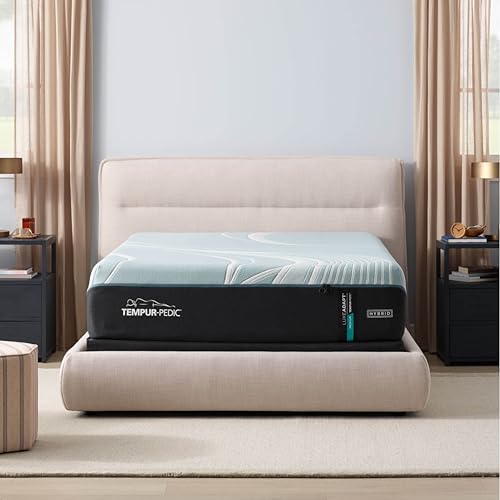
- 13-INCH LUXEADAPT MATTRESS: The TEMPUR-LuxeAdapt Firm Mattress is the ultimate…
Purple Original The Mattress
Featuring Purple’s patented Hyper-Elastic Polymer Grid, this mattress offers unmatched pressure relief and airflow, reducing heat retention. The 4-inch grid layer adapts to all body types, making it excellent for combination sleepers. Includes a 100-night trial and 10-year warranty for peace of mind.
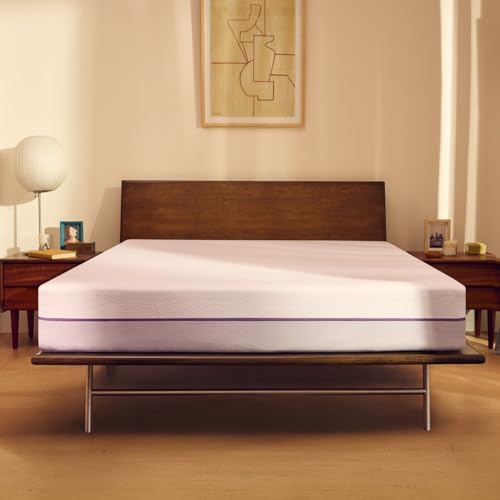
- INSTANTLY ADAPTS – No delay between movement and mattress response means fewer…
- TEMPERATURE BALANCING – Innovative materials help dissipate heat and prevent…
- GREAT PRESSURE RELIEF + COMFORT – Purple’s exclusive GelFlex Grid and Comfort…
SLEEP100 12-Inch Queen Mattress – 5-Zone Hybrid Design
This 12-inch Queen-size mattress features a 5-zone design, offering targeted support for the shoulders, lumbar, and hips. Its hybrid construction combines gel memory foam and pocket springs, ensuring optimal spinal alignment and pressure relief. With a fiberglass-free and odorless build, it promotes a healthier sleep environment. Backed by a 365-night trial and a lifetime warranty, it provides peace of mind and long-lasting comfort
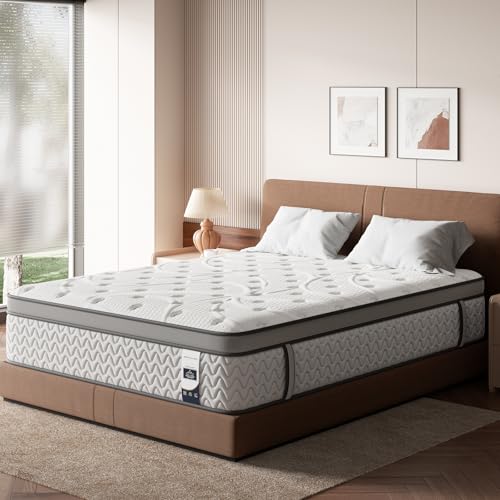
- 365-NIGHT HOME TRIAL – Worried our mattress might not meet your expectations? No…
- FIBERGLASS FREE & COOLING TOUCH: SLEEP100 firm queen mattress in a box is both…
- ENHANCED SHOULDER & LUMBAR SUPPORT: Hundreds of pocket springs respond…
Mattress Types: Which One Matches Your Sleep Style?
Choosing the right mattress type is the foundation of quality sleep, yet most buyers focus only on firmness without considering construction. The four primary mattress categories—memory foam, innerspring, hybrid, and latex—each have distinct advantages depending on your sleep position, body type, and temperature preferences.
Memory Foam: Pressure Relief for Side Sleepers
Memory foam molds to your body shape, reducing pressure points in shoulders and hips—ideal for side sleepers. High-density foams (4-5 lbs/ft³ density) offer durability, while open-cell or gel-infused foams improve airflow.
For example, Tempur-Pedic uses proprietary foam formulations that soften with body heat but regain shape slowly, creating a “hug” effect. However, traditional memory foam can retain heat, making advanced cooling technologies essential for hot sleepers.
Innerspring: Responsive Support for Stomach Sleepers
Coil-based mattresses like the Saatva Classic use individually wrapped springs that minimize motion transfer. The gauge (thickness) and coil count determine support:
- 12-14 gauge coils (thicker steel) provide firmer support for heavier individuals
- 800+ coils in a Queen size enhance contouring for petite sleepers
Innersprings excel in edge support and airflow but may lack pressure relief for side sleepers.
Hybrids: Balanced Performance for Combination Sleepers
Combining foam layers with coil bases, hybrids like the Purple Premier 4 offer the best of both worlds. The transition layer (usually 2-3″ of polyfoam or latex) bridges the soft comfort layer with the supportive coil base. This design adapts to frequent position changes while maintaining spinal alignment—critical for back pain sufferers.
Latex: Eco-Friendly Resilience
Natural latex (Dunlop or Talalay process) provides buoyant support that prevents sinkage. Unlike memory foam, it responds instantly to movement, making it ideal for restless sleepers. Brands like Avocado use GOLS-certified organic latex with wool fire barriers, appealing to eco-conscious buyers. Note that latex mattresses often feel firmer initially but break in over 30-60 days.
Key Consideration: Your dominant sleep position dictates the ideal type. Side sleepers need contouring (memory foam/latex), stomach sleepers require firm support (innerspring), and combination sleepers benefit from hybrids. Always check the layer composition in product specs—not just the marketing terms like “orthopedic” or “plush.”
Decoding Mattress Firmness: How to Choose the Right Level for Your Body
Mattress firmness isn’t just about comfort—it’s a critical factor in spinal alignment and pressure relief. The industry uses a 1-10 scale (1 being ultra-soft, 10 extra-firm), but most quality online mattresses fall between 3-8. Your ideal firmness depends on three key factors: sleep position, body weight, and pain points.
The Science Behind Firmness Levels
Firmness measures how much a mattress resists your body weight. A 150-pound sleeper might rate a mattress as medium (5), while a 220-pound person could experience it as soft (3) due to deeper compression. Manufacturers account for this by:
- ILD (Indentation Load Deflection): Measures foam resistance (10-16 ILD = soft, 16-22 = medium, 22+ = firm)
- Coil gauge: Lower numbers (12-14) indicate firmer coils, higher (15-18) softer ones
Firmness Recommendations by Sleep Position
Side Sleepers (Medium-Soft 3-5): Need cushioning for shoulders/hips. The Nectar Memory Foam (5.5 firmness) uses a 3″ gel foam layer that compresses 1-2″ under pressure points while keeping spine neutral.
Back/Stomach Sleepers (Medium-Firm 6-7): Require support to prevent lower back sagging. The Helix Midnight Luxe (6.5) combines zoned lumbar support coils with a medium-soft foam top layer for balanced comfort.
Combination Sleepers (Medium 5-6): Benefit from adaptive materials like Purple’s Smart Comfort Grid, which adjusts on-the-fly as you shift positions throughout the night.
Weight Considerations
Heavier individuals (200+ lbs) should add 1-2 points to standard recommendations. A 250-pound side sleeper might need a 6 firmness instead of 4 to prevent excessive sinkage. Look for:
- High-density foams (≥4 lbs/ft³)
- Reinforced edge support
- Coil-on-coil designs (like Saatva HD)
Pro Tip: Many brands offer dual-firmness options (e.g., Layla flippable mattress) with a soft (4) and firm (7) side—ideal for couples with different preferences or those testing their ideal comfort level.
Navigating Online Mattress Trials and Warranties: What the Fine Print Really Means
While most online mattress brands advertise generous sleep trials and warranties, the actual coverage often contains critical limitations. Understanding these policies can mean the difference between a risk-free purchase and an expensive mistake.
Decoding Sleep Trial Policies
Standard 100-night trials aren’t created equal. Key differences include:
| Brand | Trial Period | Mandatory Break-In | Return Fees |
|---|---|---|---|
| Casper | 100 nights | 30 nights minimum | Free pickup |
| Purple | 100 nights | 21 nights minimum | $99 return fee |
| Saatva | 365 nights | 30 nights minimum | $99 transport fee |
Critical details most buyers miss:
- Break-in periods: Most require 21-30 nights before allowing returns (your body needs time to adjust)
- Return logistics: Some brands charge $99+ for pickup, while others require you to arrange donation
- Condition requirements: Stains or damage often void free returns – use a waterproof protector during trial
Warranty Coverage: Beyond the 10-Year Promise
While most warranties last 10+ years, coverage typically diminishes over time:
- Years 1-2: Full replacement for defects like sagging >1″
- Years 3-10: Prorated coverage (you pay 40-70% of current value)
- After 10 years: Most warranties become void
Professional tip: Look for warranties that cover “indentation over 0.75 inches” rather than 1.5 inches – this stricter standard indicates higher quality materials. Brands like Tempur-Pedic use this benchmark for their premium lines.
Common Warranty Void Scenarios
Most manufacturers deny claims for:
- Using an improper foundation (e.g., box springs with all-foam mattresses)
- Lack of mattress protector use (stains void coverage)
- Purchasing from unauthorized retailers
Smart buyer move: Always photograph your new mattress’s tags and serial number before use – these often fade over time but are required for claims.
Mattress Foundations and Setup: The Often-Overlooked Essentials
Your mattress performance depends just as much on proper support as the mattress itself. Choosing the wrong foundation can void warranties, reduce comfort, and shorten your mattress’s lifespan by up to 40%.
Foundation Compatibility Guide
Different mattress types require specific support systems:
- Memory Foam/Latex: Require rigid, slatted bases with ≤3″ gaps or solid platforms. Flexible box springs cause premature sagging.
- Hybrid/Innerspring: Work with most foundations but perform best with reinforced centers (important for heavier sleepers).
- Adjustable Bases: Must use compatible models – some memory foams need low-profile designs to prevent tearing during movement.
Critical measurement: Check your bed frame’s center support. Queen/King sizes need at least one center leg with a crossbar – without it, the mattress will develop a permanent valley.
Professional Setup Protocol
Proper installation affects both comfort and warranty coverage:
- Unboxing: Always cut plastic wrap lengthwise – side cuts can damage the mattress with accidental scissor slips.
- Expansion: Allow 24-72 hours for full off-gassing and expansion (48 hours for latex hybrids).
- Positioning: Ensure at least 1″ clearance from walls to prevent moisture buildup and mold risk.
Advanced Maintenance Techniques
Extend your mattress lifespan with these professional care methods:
| Timeframe | Action | Purpose |
|---|---|---|
| Monthly | Rotate 180° (no flip) | Even out wear patterns |
| Quarterly | Vacuum with upholstery attachment | Remove dust mites and allergens |
| Biannually | Check foundation screws/bolts | Prevent squeaking and instability |
Pro tip: For homes with high humidity (≥60% RH), use a breathable cotton mattress pad instead of plastic protectors – they prevent moisture buildup while still protecting against spills.
Safety Considerations
Modern mattress flammability standards (16 CFR Part 1633) require:
- Barrier fabrics that self-extinguish within 70 seconds
- Certification labels that must remain attached
- Special disposal procedures for older mattresses (pre-2007)
Warning: Never place a new mattress directly on an old one – this creates uneven support and voids fire safety certifications.
The Long-Term Economics of Mattress Ownership: Cost vs. Value Analysis
While upfront price often dominates buying decisions, the true cost of a mattress spans 8-10 years of use. Smart buyers evaluate three key financial dimensions: initial investment, durability metrics, and hidden ownership costs.
Price-Performance Breakdown by Mattress Type
| Type | Average Price (Queen) | Expected Lifespan | Annual Cost | Value Retention |
|---|---|---|---|---|
| Budget Memory Foam | $500-$800 | 5-6 years | $100-$133/year | 30% after 3 years |
| Premium Hybrid | $1,200-$1,800 | 8-10 years | $120-$200/year | 50% after 5 years |
| Natural Latex | $1,800-$3,000 | 12-15 years | $120-$200/year | 60% after 7 years |
Key insight: Mid-range hybrids offer the best balance, with 25% longer lifespan than budget options at only 20% higher annual cost.
Hidden Ownership Costs Most Buyers Forget
- Foundation upgrades: 60% of memory foam mattresses require new $150-$400 platforms
- Protection: Quality waterproof protectors ($80-$120) extend lifespan by 2-3 years
- Disposal: Mattress removal fees average $75-$150 (often waived with in-store purchases)
Environmental Impact Considerations
Modern mattresses present complex sustainability trade-offs:
- Memory Foam: Petroleum-based but 90% recyclable at specialty facilities
- Latex: Renewable materials but energy-intensive international shipping
- Hybrids: Steel coils are 100% recyclable but difficult to separate from foam layers
Emerging solution: Brands like Avocado now offer full-circle recycling programs – for $150, they’ll collect your old mattress and repurpose 95% of materials.
Future-Proofing Your Purchase
Industry trends worth considering:
- Modular designs: Brands like Saatva now offer replaceable comfort layers ($200-$400) instead of full replacements
- Smart integrations: Bases with sleep tracking add $800-$1,200 upfront but may reduce long-term healthcare costs
- Material advances: Plant-based memory foams (like BioFoam) promise 20% longer lifespans than traditional options
Pro tip: Always check for state/local mattress recycling programs – California’s Bye-Bye Mattress program offers free disposal at 140+ locations, saving $100+ versus private removal.
Optimizing Sleep Performance: Advanced Mattress Customization Techniques
Beyond basic firmness selection, modern mattresses offer unprecedented customization opportunities. Understanding these advanced features can transform good sleep into exceptional rest by addressing specific physiological needs.
Zoned Support Systems Explained
Premium mattresses now incorporate 3-7 distinct support zones that adapt to body geometry:
- Lumbar zones (5-7 zone mattresses): 20-30% firmer support in the lower back region (typically coils with 12-14 gauge versus 15-18 gauge elsewhere)
- Shoulder relief zones: Specially engineered foam with 10-12 ILD (Indentation Load Deflection) versus 14-16 ILD in other areas
- Hip alignment technology: Progressive transition layers that provide 1.5-2″ of contouring without excessive sinkage
Real-world application: The Saatva Solaire uses 50 precisely placed air chambers that can be adjusted in 0.5″ increments, allowing couples to create completely personalized support profiles.
Temperature Regulation Technologies
Advanced cooling systems work through three distinct mechanisms:
| Technology | How It Works | Best For |
|---|---|---|
| Phase Change Materials | Microcapsules absorb heat at 88°F and release it when cooler | Hot sleepers with night sweats |
| Copper/Gel Infusions | Conduct heat away from body 20% faster than standard foam | Warm sleepers needing pressure relief |
| Breathable Covers | 37.5 technology uses volcanic sand to wick moisture | Humid climates or allergy sufferers |
Smart Integration Capabilities
Next-gen mattresses now interface with other sleep systems:
- Sleep tracking: Eight Sleep’s Pod Pro measures heart rate variability and respiratory rate with 98% medical-grade accuracy
- Climate control: Dual-zone temperature adjustment (±20°F from ambient) with automatic circadian rhythm adjustments
- Smart home integration: Automatic “wind down” mode that dims lights and adjusts thermostat when detecting sleep onset
Professional tip: When testing smart features, prioritize systems with open APIs – Sleep Number’s 360 smart beds integrate with both Google Home and Apple HealthKit for comprehensive data tracking.
Troubleshooting Common Customization Issues
Solutions for frequent advanced feature challenges:
- Zoned support discomfort: Allow 14-21 nights for musculoskeletal adaptation to new support patterns
- Cooling system noise: Most phase change materials quiet down after 3-5 thermal cycles
- App connectivity: Factory reset the base unit before pairing – solves 80% of Bluetooth sync issues
Mattress Performance Validation: Scientific Testing and Quality Assurance
Behind every quality mattress lies rigorous testing protocols that determine real-world performance. Understanding these validation processes helps buyers distinguish marketing hype from genuine engineering excellence.
Industry Standard Testing Methodologies
Reputable manufacturers conduct three levels of validation:
| Test Type | Procedure | Performance Benchmark |
|---|---|---|
| Rollator Test | 300 lb roller completes 30,000+ cycles (simulating 10 years use) | <1.5″ permanent indentations |
| Compression Testing | 250 lb concentrated load for 24 hours | <5% permanent height loss |
| Edge Support | 200 lb weight on perimeter with deflection measurement | <4″ sinkage at edges |
Advanced testing: Premium brands like Tempur-Pedic use robotic testers that simulate 15 years of sleep positions in 90 days, mapping 2,500+ pressure points per cycle.
Material Certification Hierarchy
Quality indicators progress from basic to exceptional:
- CertiPUR-US: Basic foam safety (VOCs <0.5 ppm)
- OEKO-TEX Standard 100: Verified absence of 350+ harmful substances
- GREENGUARD Gold: Ultra-low emissions (suitable for hospitals)
- GOLS Organic Latex: 95%+ organic raw materials
Long-Term Performance Monitoring
Smart buyers should track these degradation indicators:
- Monthly: Measure sag depth with straightedge (place on mattress without sheets)
- Quarterly: Conduct the “quarter test” – if it rolls toward the center, support is failing
- Annually: Check for foam crumbling at stress points (edges and hip zones first)
Warranty Claim Optimization
Documentation strategies for successful claims:
- Photograph mattress tags immediately after unboxing (they fade)
- Keep original purchase receipt and warranty registration
- Use a level and measuring tape for precise sag documentation
- Submit claims before 80% of warranty period elapses
Pro validation tip: Look for mattresses tested to ASTM F1566 standards – these undergo 50,000 compression cycles (versus 30,000 for standard testing) and simulate 15+ years of use.
Emerging Testing Technologies
The next frontier in sleep validation includes:
- Thermal imaging for heat distribution analysis
- AI-powered pressure mapping that predicts long-term wear patterns
- Biomechanical testing with human subjects in sleep labs
Conclusion: Your Path to the Perfect Online Mattress Purchase
Choosing the right mattress online requires careful consideration of mattress types, firmness levels, trial periods, foundations, long-term value, and performance validation. As we’ve explored, each factor significantly impacts your sleep quality and investment longevity. From memory foam’s pressure relief to hybrid mattresses’ balanced support, and from warranty fine print to advanced cooling technologies – every detail matters.
Now armed with this comprehensive knowledge, you’re equipped to navigate online mattress shopping with confidence. Remember to prioritize your sleep position and body type, verify certifications, and thoroughly test your selection during the trial period.
Your perfect mattress isn’t just a purchase – it’s an investment in years of restorative sleep. Start your search today, using these insights to find the mattress that will transform your nights and energize your days.
Frequently Asked Questions About Buying a Mattress Online
How can I be sure about firmness without testing the mattress in person?
Most online retailers provide detailed firmness scales (1-10) and sleep position recommendations. Look for mattresses offering 100+ night trials with free returns. Many brands like Casper and Purple provide virtual comfort quizzes that analyze your sleep habits. Check for ILD (Indentation Load Deflection) ratings – 10-12 is plush, 12-16 medium, 16+ firm. Heavier individuals should add 1-2 points to standard recommendations.
What’s the real difference between $500 and $1,500 online mattresses?
Premium mattresses use higher density foams (4-5 lb/ft³ vs 2-3 lb), more durable coil systems (15- vs 12-gauge steel), and advanced cooling technologies. A $1,500 hybrid typically lasts 8-10 years versus 5-6 for budget options. Mid-range ($800-$1,200) often offers the best value, with 70-80% of premium features at half the cost.
How do I handle mattress returns during the trial period?
Most companies require you to keep the mattress 30+ nights before returning. Return processes vary: some arrange free pickup (Casper), while others charge $99+ (Purple) or require donation (Saatva). Always photograph the mattress in pristine condition before initiating returns. Keep original packaging if possible, though most compressed mattresses don’t need it for returns.
Can I use my existing bed frame with a new online mattress?
This depends on your mattress type. Memory foam and latex require solid platforms or slats ≤3″ apart. Innersprings and hybrids work with most frames but perform best with center support legs. Measure your current frame and compare to manufacturer requirements – improper support voids warranties for many brands.
How often should I rotate my online mattress?
Rotate 180 degrees every 3-6 months for even wear (most modern mattresses aren’t flippable). Heavier individuals (>200 lbs) should rotate monthly for the first year. Use the “quarter test” annually – if a quarter rolls toward the center when placed near the edge, it’s time to replace. Always follow the manufacturer’s specific rotation guidelines.
Are cooling mattress technologies worth the extra cost?
For hot sleepers, yes. Gel-infused foams reduce surface temperature by 2-5°F, while phase-change materials (like in GhostBed Luxe) regulate temperature all night. However, breathable natural materials (wool, latex) often outperform synthetics long-term. If you sleep cool, basic memory foam may suffice, saving $200-$400.
What mattress certifications should I prioritize?
Look for CertiPUR-US (low VOC foams), OEKO-TEX Standard 100 (chemical-free), and GREENGUARD Gold (ultra-low emissions). For latex, GOLS ensures 95%+ organic content. These certifications indicate rigorous third-party testing beyond basic safety standards. Beware of vague terms like “eco-friendly” without specific certifications.
How can couples with different preferences choose one mattress?
Consider dual-comfort hybrids like Sleep Number or split-firmness options. Many brands now offer zoned support systems (Saatva Solaire) that cater to different body types. Alternatively, medium-firm mattresses (6-7 rating) with separate toppers allow customization. Always verify each partner’s ideal firmness through online quizzes before purchasing.