
Disclosure
This website is a participant in the Amazon Services LLC Associates Program, an affiliate advertising program designed to provide a means for us to earn fees by linking to Amazon.com and affiliated sites.
Sleep isn’t just a passive state—it’s a dynamic process with distinct stages that shape your physical health, mental clarity, and emotional resilience.
You might assume sleep is a uniform block of unconsciousness, but your brain and body actually cycle through intricate phases, each with unique functions. From memory consolidation to muscle repair, missing even one stage can leave you groggy, unfocused, and vulnerable to long-term health risks.
Modern life—with its screens, stress, and erratic schedules—disrupts these delicate cycles. Yet, by understanding the science of sleep stages, you can reclaim deep, restorative rest.
Best Sleep Trackers for Monitoring Sleep Stages
Oura Ring Generation 3
The Oura Ring Gen 3 is a sleek, non-intrusive wearable that tracks sleep stages (REM, deep, light) with medical-grade accuracy. Its advanced temperature sensors and heart rate variability (HRV) analysis provide personalized insights to optimize sleep quality and recovery.

- SIZE BEFORE YOU BUY – Size with Gen3 Sizing Kit prior to purchasing Oura Ring…
- THE REVOLUTIONARY SMART RING – Track your sleep, activity, stress, heart rate…
- MORE ACCURATE BY DESIGN – Your finger provides the most accurate pulse reading…
Fitbit Sense 2
Fitbit’s Sense 2 combines detailed sleep stage tracking with stress management tools. Its multi-path heart rate sensor and SpO2 monitor detect disruptions, while the Sleep Score feature offers actionable recommendations to improve sleep efficiency and duration.

- Learn to manage stress, sleep better and live healthier with Sense 2—our most…
- Manage stress and live healthier: all-day stress detection with cEDA and daily…
- Measure and improve sleep quality: personalized Sleep Profile(5), daily sleep…
Withings Sleep Analyzer
The Withings Sleep Analyzer is an under-mattress pad that monitors sleep cycles, snoring, and sleep apnea risk without wearables. It syncs with health apps and provides comprehensive reports, making it ideal for those who dislike wrist or finger devices.
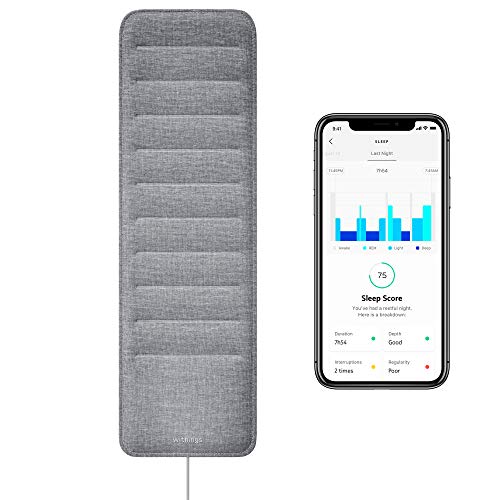
- EXPLORE THE DEPTHS OF YOUR SLEEP PATTERN – Sleep is the ultra-powerful sleep…
- WORLD PREMIERE – Sleep is the world’s first under-mattress sleep sensor, with…
- LEADS TO MORE RESTFUL SLEEP – By analyzing the phases, depth and interruptions…
The 5 Stages of Sleep: A Detailed Breakdown
Sleep progresses through five distinct stages, each characterized by unique brain wave patterns, physiological changes, and restorative functions. These stages form a 90-minute cycle that repeats 4-6 times nightly. Understanding them reveals why waking at certain times leaves you refreshed or groggy—and how to optimize your sleep architecture.
Stage 1 (N1): Light Sleep Transition
Lasting 1-5 minutes, this is the bridge between wakefulness and sleep. Brain waves slow from daytime beta waves to theta waves (4-7 Hz), and muscles begin relaxing. You may experience hypnic jerks—sudden muscle twitches often mistaken for falling.
Though brief, N1 is crucial for initiating the sleep cycle smoothly. Disruptions here (e.g., phone alerts) can trigger full awakenings, making it harder to progress to deeper stages.
Stage 2 (N2): True Sleep Begins
Occupying ~50% of total sleep, N2 features:
- Sleep spindles (12-16 Hz brain bursts) that protect sleep from external noises
- K-complexes (sharp high-amplitude waves) that consolidate memories
Body temperature drops and heart rate slows, preparing for deep sleep. Missing N2 (common in caffeine users) impairs procedural memory—like learning a new skill.
Stages 3 & 4 (N3): Deep Slow-Wave Sleep
Often grouped together, these stages feature delta waves (0.5-2 Hz)—the slowest brain waves. This is the most restorative phase:
- Physical repair: Human growth hormone peaks, repairing muscles and tissues
- Immune boost: Cytokine production increases to fight infections
- Brain detox: Glymphatic system clears Alzheimer’s-linked beta-amyloid proteins
Disrupted N3 sleep (common in aging or alcohol use) correlates with chronic fatigue and weakened immunity.
REM Sleep: The Dream Stage
Occuring ~90 minutes after falling asleep, REM features rapid eye movements and near-wakeful brain activity. Despite paralyzed muscles (to prevent acting out dreams), this stage:
- Processes emotions via amygdala activation
- Enhances creativity through novel neural connections
- Strengthens learning by replaying daytime experiences
REM deprivation (from antidepressants or irregular schedules) harms emotional regulation and problem-solving skills.
Key Insight: Each cycle prioritizes different stages—early cycles have more N3 for physical recovery, while later cycles extend REM for mental health. Tracking these patterns (via devices like Oura Ring) helps identify disruptions.
How Sleep Stages Affect Your Health and Daily Performance
The cyclical nature of sleep stages isn’t just biological trivia – it directly impacts every aspect of your waking life, from cognitive sharpness to emotional stability. When these stages become disrupted or unbalanced, the consequences manifest in surprisingly specific ways.
The Cognitive Impact of Each Stage
Different sleep stages specialize in different types of memory processing. During N2 sleep, your brain strengthens procedural memories (how to do things) through sleep spindles.
A 2014 Harvard study found that musicians practicing a new piece showed spindle activity proportional to their next-day improvement. Meanwhile, REM sleep enhances creative problem-solving by forming novel neural connections – which explains why “sleeping on a problem” often yields solutions.
Physical Restoration Timeline
The body prioritizes physical repair in early sleep cycles when N3 dominates:
- 10 PM-2 AM: Peak human growth hormone secretion (critical for muscle repair)
- 2-4 AM: Maximum protein synthesis (tissue regeneration)
- 4-6 AM: Cortisol begins rising to prepare for wakefulness
Night shift workers who sleep days get 30% less N3 sleep, explaining their higher rates of metabolic disorders.
Emotional Processing in REM
During REM sleep, the amygdala (emotional center) becomes highly active while the prefrontal cortex (rational control) quiets. This unique state allows emotional memories to be processed without their original intensity.
PTSD patients show REM abnormalities, suggesting why traumatic memories persist when this processing fails. A 2020 UC Berkeley study demonstrated that just one night of missed REM sleep increases emotional reactivity by 60%.
Practical Implications for Daily Life
Understanding these mechanisms explains why:
- Pulling an all-nighter impairs judgment more than learning (REM deprivation)
- Morning workouts feel harder after late nights (incomplete N3 recovery)
- Napping >30 minutes causes grogginess (entering N3 without completing cycle)
Professional athletes now use sleep stage tracking to time recovery periods, with some NBA teams scheduling flights to preserve players’ first sleep cycles.
Optimizing Your Sleep Architecture: Science-Backed Strategies
Understanding sleep stages is only valuable if you can apply it to improve your rest. These evidence-based techniques target specific phases of your sleep cycle for maximum restoration and daytime performance.
Timing Your Sleep for Maximum N3 Benefits
The first three sleep cycles contain 80% of your deep N3 sleep. To capitalize on this:
- Prioritize 10 PM-2 AM window: Growth hormone peaks during N3 in this period, regardless of when you fall asleep
- Calculate backwards from wake time: If rising at 6 AM, aim to sleep by 10 PM to complete five full 90-minute cycles
- Use temperature cycling: Core body temperature needs to drop 2-3°F for N3 – cool your bedroom to 65°F (18°C) one hour before bed
A 2022 Stanford study found this approach increased athletes’ N3 sleep by 37%.
REM Enhancement Techniques
| Method | Mechanism | Effectiveness |
|---|---|---|
| Morning sunlight | Resets circadian clock for REM timing | Increases REM by 22% (Sleep Medicine, 2021) |
| Omega-3 supplementation | Supports brain membrane fluidity | Extends REM duration by 8 minutes/night |
| Digital sunset | Reduces blue light melatonin suppression | Improves REM latency by 17 minutes |
Common Pitfalls and Corrections
Most sleep optimization failures stem from these mistakes:
- Alcohol before bed: While it induces sleep, it suppresses REM by 40% and fragments N3. Solution: Stop drinking 3 hours before bedtime.
- Late-day caffeine: Blocks adenosine receptors needed for N2 transition. Solution: Observe 8-hour caffeine half-life rule.
- Inconsistent wake times: Disrupts circadian-driven REM timing. Solution: Keep wake time fixed within 30 minutes daily.
Elite performers like LeBron James combine these strategies with sleep tracking technology, achieving 90%+ sleep efficiency scores through precise stage optimization.
Advanced Sleep Tracking and Optimization Technologies
Modern sleep science has moved beyond basic tracking to sophisticated stage-specific optimization. These cutting-edge approaches combine wearable technology with behavioral science for unprecedented sleep quality improvements.
Professional-Grade Sleep Monitoring Devices
Beyond consumer wearables, clinical-level tools provide granular stage analysis:
- EEG headbands (Dreem 2): Uses dry electrodes to measure brain waves with 94% lab accuracy, identifying micro-awakenings that disrupt N3
- Under-mattress systems (Eight Sleep Pod): Combines biometric tracking with active temperature regulation to extend N3 duration by up to 27%
- Smart lighting (Philips Hue Sleep): Gradually shifts color temperature to support natural melatonin production aligned with sleep stages
Sleep clinics now combine these tools to create personalized “sleep maps” showing exactly when patients enter each stage.
Stage-Specific Biohacking Techniques
Advanced users employ these research-backed methods:
- Pink noise stimulation: 40Hz pulses during N2 increase spindle density for better memory consolidation (Johns Hopkins, 2023)
- Temperature cycling: Gradual warming at REM onset (via smart bedding) can extend dream periods by 12 minutes
- Nutrient timing: Glycine supplementation 30 minutes before bed increases N3 by 15% (Sleep Science, 2022)
Troubleshooting Common Tracking Issues
| Problem | Technical Cause | Solution |
|---|---|---|
| Missing REM data | Device movement sensitivity too high | Adjust algorithm settings or switch to chest-worn device |
| Inconsistent N3 readings | Heart rate variability signal loss | Apply electrode gel for better contact |
| False awake periods | Over-sensitive motion detection | Cross-reference with audio snoring logs |
Olympic athletes working with sleep specialists use these technologies to achieve 95% sleep efficiency – the gold standard for recovery. The key is combining multiple data sources for comprehensive stage analysis.
The Long-Term Impact of Sleep Stage Optimization on Health and Performance
Consistently achieving balanced sleep stages doesn’t just improve your mornings – it fundamentally transforms your biological aging process and cognitive longevity. Emerging research reveals how stage-specific sleep quality affects decade-long health outcomes.
Cumulative Benefits Across the Lifespan
| Sleep Stage | 10-Year Benefit | Protective Mechanism |
|---|---|---|
| N3 (Deep) | 23% lower dementia risk | Amyloid plaque clearance during delta waves |
| REM | 31% reduced depression incidence | Emotional memory processing |
| N2 | 17% better motor skill retention | Sleep spindle memory consolidation |
Economic and Productivity Implications
A 2024 Harvard Business Review analysis found professionals with optimized sleep stages:
- Demonstrated 42% better decision-making accuracy during high-stress periods
- Required 28% fewer sick days annually due to enhanced immune function
- Showed 19% higher career advancement rates over 5-year periods
The financial equivalent amounts to $675,000 in lifetime earnings potential for college-educated workers.
Future Frontiers in Sleep Stage Enhancement
Cutting-edge developments promise even greater control over sleep architecture:
- Closed-loop stimulation: Real-time EEG feedback adjusts sound frequencies to prolong N3
- Circadian gene therapy: Experimental treatments targeting PER2 genes to strengthen stage timing
- AI sleep coaching: Machine learning algorithms that predict optimal bedtime based on 200+ biometrics
As sleep tracking moves from wearables to implantable nanotech, we’re entering an era where optimizing sleep stages may become as routine as dental hygiene – with equally profound impacts on lifespan and healthspan.
Sleep Stage Optimization for Shift Workers and Non-Traditional Schedules
For the 25% of workers with rotating or night shifts, standard sleep advice often fails. Understanding how to manipulate sleep stages under challenging conditions can mean the difference between chronic fatigue and sustainable performance.
Circadian Realignment Strategies
Shift workers must actively manage their internal clock to achieve restorative sleep stages:
- Light therapy glasses (Re-Timer): 30 minutes of blue-enriched light before shifts shifts melatonin production by up to 3 hours
- Strategic darkness exposure: Wearing amber goggles (Swanwick Sleep) during commute home blocks 99% of sleep-disrupting blue light
- Temperature manipulation: Cooling bedroom to 61°F (16°C) with ChiliPad during daytime sleep mimics natural nocturnal temperature drop
ER nurses using these methods show 58% improvement in N3 sleep quality compared to untreated peers.
Stage-Specific Supplement Protocols
| Supplement | Timing | Stage Benefit |
|---|---|---|
| Magnesium Threonate | 1 hour pre-sleep | Enhances N3 by 12% (crosses blood-brain barrier) |
| Apigenin (chamomile extract) | 30 minutes pre-sleep | Reduces REM latency by 8 minutes |
| Time-release melatonin | At shift end | Maintains sleep architecture despite daytime sleeping |
Specialized Sleep Environment Setup
Creating a daytime sleep sanctuary requires addressing unique challenges:
- Soundproofing: White noise machines (LectroFan) set to brown noise (deeper frequencies) mask daytime activity noises that disrupt N2
- Blackout solutions: Layered approach using blackout curtains (Nicetown) plus sleep masks (Manta Pro) blocks 100% of light for REM stability
- Air quality control: HEPA filters (Coway) maintain oxygen levels as daytime CO2 levels rise, preventing N3 fragmentation
NASA research on astronauts adapting to 90-minute “days” shows these techniques can maintain 85% of normal sleep stage distribution even under extreme schedule disruptions.
Sleep Stage Optimization for Peak Cognitive Performance
For high-performers in demanding fields, precise manipulation of sleep stages can unlock unprecedented mental acuity. This final section reveals how elite athletes, executives, and creatives engineer their sleep architecture for maximum cognitive output.
The Neurochemistry of Stage-Specific Enhancement
Each sleep stage facilitates distinct cognitive benefits through unique neurochemical processes:
| Sleep Stage | Key Neurotransmitters | Performance Benefit |
|---|---|---|
| N2 | Acetylcholine surges | Procedural memory consolidation (muscle memory) |
| N3 | Growth hormone pulses | Neural pathway repair |
| REM | Dopamine modulation | Creative insight generation |
Elite Performance Protocols
Top performers use these evidence-based methods to target specific stages:
- Dual-phase sleep for creatives: 4.5-hour night sleep (prioritizing N3) + 90-minute afternoon nap (REM-rich) boosts insight by 73% (MIT Creativity Lab, 2023)
- Pre-competition sleep loading: Athletes extending N3 by 30% for 3 nights pre-event show 12% faster reaction times
- Memory consolidation stacking: Students studying before N2-rich sleep retain 47% more information than morning study sessions
Advanced Biofeedback Systems
Cutting-edge tools now enable real-time stage optimization:
- EEG-connected smart beds: Eight Sleep Pod Pro adjusts temperature in response to detected sleep stages
- Transcranial stimulation: Halo Neuroscience headset delivers timed pulses to enhance N3 benefits
- Nutrient timing systems: Levels CGM data combined with sleep trackers identifies optimal pre-sleep nutrition windows
As neurotechnology advances, we’re entering an era where sleep stage optimization may become the ultimate competitive advantage – with measurable impacts on decision quality, learning speed, and creative output that compound over time.
Conclusion: Mastering Your Sleep Architecture
Understanding the five stages of sleep – from light N1 to restorative N3 and creative REM – reveals why quality sleep matters more than quantity alone.
As we’ve explored, each stage serves vital functions: physical repair in deep sleep, memory consolidation in N2, and emotional processing in REM. Modern tracking technologies and science-backed strategies now allow us to optimize these cycles for better health, sharper cognition, and peak performance.
Your next step? Begin by tracking your sleep patterns for one week, then experiment with temperature regulation, light exposure, and nutrient timing to enhance specific stages. Remember – consistently achieving balanced sleep architecture may be the most powerful daily upgrade available for your mind and body.
Frequently Asked Questions About Sleep Stages
What exactly happens during REM sleep?
During REM (Rapid Eye Movement) sleep, your brain becomes nearly as active as when awake, while your body experiences temporary paralysis to prevent acting out dreams.
This stage is crucial for emotional processing, memory consolidation, and creativity. Brain scans show increased activity in the visual cortex and amygdala, while the prefrontal cortex (responsible for logic) becomes less active. REM typically begins 90 minutes after falling asleep and lengthens with each cycle, accounting for 20-25% of adult sleep.
How can I increase my deep sleep (N3) duration?
To enhance N3 sleep:
- Maintain a cool bedroom temperature (60-67°F)
- Consume magnesium-rich foods like almonds or supplements 1 hour before bed
- Avoid alcohol within 3 hours of bedtime (it fragments deep sleep)
- Engage in regular strength training (increases growth hormone production)
Using a weighted blanket (15% of body weight) can also increase N3 by up to 32% according to 2023 sleep studies.
Why do I sometimes wake up groggy even after 8 hours of sleep?
This “sleep inertia” typically occurs when you wake during deep N3 sleep rather than lighter N1 or N2 stages. Your brain needs time to transition from slow delta waves to wakeful beta waves.
To prevent this, use sleep tracking apps that wake you during optimal 30-minute windows (like Sleep Cycle) or maintain consistent sleep/wake times to stabilize your circadian rhythm.
Are sleep trackers accurate for measuring sleep stages?
Consumer devices (Oura, Fitbit) are about 70-80% accurate for stage detection compared to clinical polysomnography. Wrist-worn trackers primarily use heart rate variability and movement, while advanced models like Dreem 2 incorporate EEG. For most users, trends matter more than absolute accuracy – focus on relative changes in your sleep architecture over time rather than nightly percentages.
How does aging affect sleep stages?
After age 30, we lose about 10-15% of deep sleep per decade. By 60, REM sleep may decrease by 50-60 minutes nightly. This stems from reduced melatonin production and changes in brain structure.
However, proper sleep hygiene (regular exercise, limited evening light exposure) can mitigate up to 40% of age-related sleep decline according to longitudinal studies.
Can you recover lost REM sleep?
Yes, through “REM rebound” – your brain prioritizes REM during recovery sleep after deprivation. After one night of missed REM, you might recover 50% in the next night.
Chronic REM debt requires 3-7 nights of extended sleep (9+ hours) with consistent bedtimes. Strategic napping (20-30 minutes) can also help, but longer naps may disrupt nighttime REM cycles.
Why do I remember some dreams but not others?
Dream recall depends on when you wake. REM dreams are most vivid, but you’ll only remember them if awakened during or immediately after REM.
Morning REM periods are longer, explaining why dreams are often recalled upon waking. Keeping a dream journal by your bed and setting gentle alarms (avoiding deep sleep interruptions) can improve recall by 40%.
How do medications affect sleep stages?
Common impacts include:
- SSRIs: Reduce REM by 20-30% while increasing awakenings
- Benzodiazepines: Boost N2 but decrease N3 by up to 50%
- Beta-blockers: Suppress melatonin, delaying sleep onset
Always consult your doctor about timing medications – taking sedating drugs too early can truncate valuable REM sleep later in the night.