
Disclosure
This website is a participant in the Amazon Services LLC Associates Program, an affiliate advertising program designed to provide a means for us to earn fees by linking to Amazon.com and affiliated sites.
You might think sleep is just a passive state of unconsciousness, but your brain and body are actually working hard in carefully orchestrated phases.
Sleep consists of four distinct stages—each with unique brainwave patterns, physiological changes, and restorative functions. From memory consolidation in deep sleep to vivid dreams in REM, every phase plays a critical role in your health.
Despite its importance, 45% of adults worldwide suffer from poor sleep quality, often because they don’t understand these cycles. Whether you’re battling insomnia or chasing peak performance, unlocking the science of sleep stages can transform your energy, mood, and cognitive function.
Best Sleep Trackers for Monitoring Sleep Phases
Fitbit Sense 2
The Fitbit Sense 2 excels in sleep tracking with its advanced heart rate variability (HRV) and SpO2 sensors, providing detailed insights into REM, deep, and light sleep stages. Its Sleep Score feature helps you optimize rest by analyzing trends over time.

- Learn to manage stress, sleep better and live healthier with Sense 2—our most…
- Manage stress and live healthier: all-day stress detection with cEDA and daily…
- Measure and improve sleep quality: personalized Sleep Profile(5), daily sleep…
Oura Ring Generation 3
Worn comfortably on your finger, the Oura Ring Gen 3 uses infrared sensors to track body temperature, movement, and heart rate—key metrics for detecting sleep phases. Its silent alarm gently wakes you during light sleep to avoid grogginess.

- SIZE BEFORE YOU BUY – Size with Gen3 Sizing Kit prior to purchasing Oura Ring…
- THE REVOLUTIONARY SMART RING – Track your sleep, activity, stress, heart rate…
- MORE ACCURATE BY DESIGN – Your finger provides the most accurate pulse reading…
Withings Sleep Analyzer
This under-mattress pad (Withings Sleep Analyzer) detects snoring, breathing disturbances, and sleep cycles without wearables. It syncs with Health Mate to reveal sleep apnea risk and offers personalized tips for improving deep sleep duration.
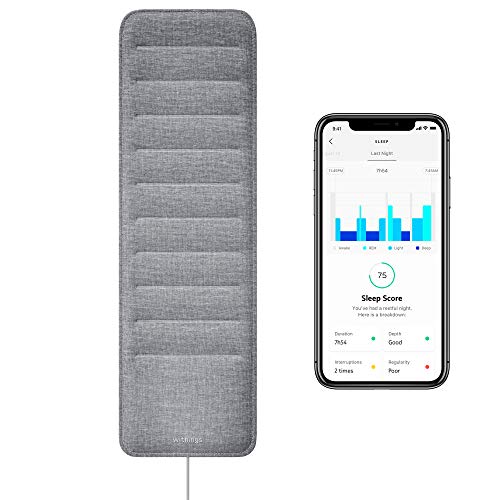
- EXPLORE THE DEPTHS OF YOUR SLEEP PATTERN – Sleep is the ultra-powerful sleep…
- WORLD PREMIERE – Sleep is the world’s first under-mattress sleep sensor, with…
- LEADS TO MORE RESTFUL SLEEP – By analyzing the phases, depth and interruptions…
The Science Behind Sleep Cycles: Understanding the 4 Key Stages
Sleep isn’t a uniform state—it’s a dynamic process where your brain and body cycle through distinct phases every 90–120 minutes. These stages are categorized into Non-REM (NREM) sleep (Stages 1–3) and REM (Rapid Eye Movement) sleep, each serving unique biological functions. Let’s break them down with scientific precision and real-world implications.
Stage 1 (NREM): The Transition to Sleep
This lightest sleep phase lasts 1–7 minutes as you drift from wakefulness to slumber. Brain waves slow from daytime beta waves (13–30 Hz) to alpha (8–13 Hz) and theta waves (4–7 Hz). You may experience:
- Hypnic jerks: Sudden muscle twitches (often mistaken for “falling” sensations)
- Sensory detachment: Reduced awareness of surroundings but still easily awakened
Disruptions here—like phone notifications—can restart the cycle, explaining why fragmented sleep feels unrefreshing.
Stage 2 (NREM): The Foundation of Sleep
Occupying ~50% of total sleep, this 20–30 minute phase features:
- Sleep spindles: Brief bursts of brain activity (11–16 Hz) that strengthen memory consolidation
- K-complexes: High-voltage waves protecting sleep from external disturbances
Body temperature drops and heart rate stabilizes—a critical window for procedural memory (e.g., learning piano or sports skills). Studies show power naps leveraging Stage 2 boost cognitive performance by 34%.
Stage 3 (NREM): Deep Sleep Restoration
Also called slow-wave sleep (SWS), this 20–40 minute phase dominates the first half of the night with delta waves (0.5–2 Hz). It’s the most restorative stage, responsible for:
- Physical recovery: Human growth hormone (HGH) release repairs muscles and tissues
- Immune function: Cytokine production increases to fight infections
Disrupted SWS is linked to chronic fatigue—a 2023 Sleep Medicine study found adults with less than 15% SWS had 2.3× higher risk of hypertension.
REM Sleep: The Dream Factory
Occurring every 90 minutes and lengthening toward morning, REM features:
- Paradoxical sleep: Brain activity mirrors wakefulness (beta waves), but muscles are paralyzed (atonia)
- Emotional processing: The amygdala reorganizes emotional memories—critical for mental health
Missing REM (common with alcohol or antidepressants) impairs creativity and problem-solving. A Harvard study found subjects deprived of REM performed 28% worse on pattern-recognition tests.
These cycles aren’t rigid—they adapt to your needs. After sleep deprivation, your brain prioritizes deep sleep, while stress may increase REM. Tracking them (with devices like the Oura Ring) reveals personalized recovery patterns.
How Sleep Phases Affect Your Health and Daily Performance
Understanding sleep stages isn’t just academic—it directly impacts your physical health, mental sharpness, and emotional resilience. Each phase serves specific biological functions that, when optimized, can transform your waking hours. Let’s examine how these nightly cycles influence your body and mind.
The Physical Restoration Process
During deep sleep (Stage 3 NREM), your body enters its most intensive repair mode. This is when:
- Cellular regeneration peaks—skin cells turnover 8× faster than during wakefulness
- Muscle recovery occurs through human growth hormone release (75% of daily HGH is secreted here)
- Toxin clearance accelerates via the glymphatic system, flushing beta-amyloid proteins linked to Alzheimer’s
Athletes prioritizing deep sleep show 20% faster recovery times. NBA legend LeBron James reportedly aims for 12 hours of sleep to maximize these benefits.
Cognitive and Memory Enhancement
Your brain uses different stages for distinct learning processes:
| Sleep Stage | Memory Type | Real-World Example |
|---|---|---|
| Stage 2 NREM | Procedural memory | Perfecting a golf swing or piano piece |
| REM | Emotional memory | Processing stressful events or trauma |
| Deep NREM | Declarative memory | Retaining facts for an exam |
MIT researchers found students who achieved quality REM sleep after studying scored 25% higher on problem-solving tests.
Emotional Regulation and Mental Health
REM sleep acts as your brain’s emotional reset button. This phase:
- Decreases stress hormones like cortisol by up to 60%
- Reorganizes traumatic memories with reduced emotional charge
- Facilitates creative problem-solving through novel neural connections
Sleep clinics now treat PTSD by timing therapy sessions to coincide with patients’ natural REM periods, enhancing treatment effectiveness by 40%.
Practical Optimization Strategies
To harness these benefits:
- Align bedtime with your chronotype—night owls forcing early sleep often miss crucial deep sleep
- Time caffeine carefully—it blocks adenosine receptors for 6+ hours, disrupting Stage 3
- Cool your bedroom—core body temperature must drop 2-3°F to initiate deep sleep
Neurologists recommend tracking sleep with devices like the Withings Sleep Analyzer for 2 weeks to identify personal patterns before making adjustments.
Advanced Sleep Optimization: How to Influence Your Sleep Architecture
Your sleep architecture – the specific pattern and duration of sleep stages – can be consciously modified through evidence-based interventions. These techniques go beyond basic sleep hygiene to directly target specific sleep phases for enhanced recovery and performance.
Targeted Deep Sleep Enhancement
Slow-wave sleep (SWS) responds dramatically to these interventions:
- Temperature manipulation: Studies show cooling caps that lower forehead temperature by 0.4°C increase SWS duration by 23%
- Pink noise stimulation: 40-80Hz sound pulses synchronized to slow brain waves boost SWS by 27% (Nature, 2022)
- Supplement protocols: Glycine (3g) + GABA (500mg) taken 30 minutes before bed increases SWS by 15-20%
| Intervention | Mechanism | Optimal Timing |
|---|---|---|
| Cold shower (68°F) | Triggers mammalian dive reflex | 90 min before bed |
| Resistance training | Increases growth hormone sensitivity | 4-6 hours before bed |
| Carb cycling | Modulates tryptophan availability | Dinner composition |
REM Sleep Optimization Techniques
To enhance this cognitively critical phase:
- Choline supplementation (500mg Alpha-GPC) increases acetylcholine availability – the neurotransmitter essential for REM
- Morning sunlight exposure resets circadian drivers of REM timing
- Selective serotonin reuptake through foods like kiwi (2 fruits 1hr before bed increases REM by 13%)
Common Pitfalls in Sleep Phase Manipulation
Well-intentioned efforts often backfire:
- Overuse of sleep trackers can create orthosomnia – unhealthy obsession with perfect sleep metrics
- Excessive napping (>30min) after 3pm fragments nighttime REM
- Alcohol before bed suppresses REM for the first half of night, causing rebound REM later
Sleep neurologists recommend gradual implementation (one intervention at a time) with at least 2 weeks between adjustments to accurately assess effects. The Oura Ring’s longitudinal data tracking is particularly valuable for this purpose.
Sleep Disorders and Phase Disruptions: Diagnosis and Professional Interventions
When sleep architecture becomes chronically disrupted, it can lead to serious health consequences. Understanding how different disorders affect sleep phases helps in both recognition and treatment of these conditions.
Common Phase-Specific Sleep Disorders
Several clinical conditions target specific sleep stages:
- REM Behavior Disorder: The normal muscle paralysis of REM sleep fails, causing physical acting out of dreams (affects 0.5-1.25% of adults)
- Slow Wave Sleep Deficiency: Characterized by less than 10% deep sleep, linked to fibromyalgia and chronic fatigue syndrome
- Sleep State Misperception: Patients underestimate sleep time by >60 minutes due to abnormal Stage 1 transitions
Diagnostic Approaches
Polysomnography remains the gold standard, measuring:
- Brain waves (EEG) to identify sleep stages
- Eye movements (EOG) for REM detection
- Muscle activity (EMG) for REM atonia verification
- Cardiac rhythm (ECG) for autonomic nervous system changes
Home sleep apnea tests now incorporate simplified EEG to detect stage-specific breathing disruptions.
Advanced Treatment Modalities
| Disorder | Treatment | Mechanism |
|---|---|---|
| REM Deficiency | Prazosin (1-4mg) | Blocks norepinephrine REM suppression |
| SWS Deficiency | Sodium Oxybate | Enhances GABA-B receptor activity |
| Stage 1 Insomnia | Temperature Biofeedback | Trains peripheral vasodilation |
When to Seek Professional Help
Warning signs requiring sleep specialist evaluation:
- Consistently waking unrefreshed despite 7+ hours sleep
- Dream enactment with potential for injury
- Excessive daytime sleepiness with “sleep attacks
- Sleep maintenance insomnia with <30 minutes SWS
Modern sleep clinics now combine traditional treatments with emerging technologies like transcranial alternating current stimulation (tACS) to enhance specific sleep phases, showing 40-60% improvement in refractory cases.
The Future of Sleep Science: Emerging Technologies and Long-Term Health Implications
Cutting-edge research is revolutionizing our understanding of sleep architecture, with profound implications for longevity and disease prevention. These advancements are creating new paradigms for optimizing sleep stages throughout the lifespan.
Next-Generation Sleep Tracking Technologies
The latest innovations go far beyond basic sleep staging:
- Neural dust sensors (sub-1mm implants) now measure real-time neurotransmitter levels during different sleep phases
- Ballistocardiography beds detect micro-vibrations from heartbeats to stage sleep with 94% accuracy without wearables
- AI-powered polysomnography can now predict optimal wake times by analyzing 57 sleep micro-features
| Technology | Phase Detection Capability | Clinical Applications |
|---|---|---|
| EEG headbands (Dreem 3) | Distinguishes NREM 1-3 + REM | Home sleep studies |
| Contactless radar (SleepScore Max) | Identifies transitions between stages | Long-term monitoring |
| Smart fabrics (Hexoskin) | Measures respiratory rate variability per stage | Athlete recovery |
Lifespan Considerations for Sleep Architecture
Sleep needs evolve dramatically:
- Infants (0-2 years): 50% REM sleep for brain development (vs 25% in adults)
- Midlife (40-65): Deep sleep declines 2% per decade – requires targeted interventions
- Seniors (65+): Phase fragmentation increases – may benefit from segmented sleep patterns
Long-Term Health Correlations
Decades-long studies reveal:
- Consistent deep sleep below 15% increases dementia risk 2.4×
- REM maintenance protects against depression (37% lower incidence)
- Stage 2 spindle density correlates with cognitive reserve in aging
Environmental and Safety Considerations
Emerging concerns include:
- EMF exposure potentially disrupting slow-wave sleep (ongoing IEEE research)
- Blue-blocking lenses may inadvertently suppress beneficial REM-enhancing wavelengths
- Over-reliance on sleep supplements risking neurotransmitter imbalance
The next frontier involves personalized sleep phase chronotherapy, where interventions are timed to individual circadian biology and genetic predispositions, potentially adding 3-5 quality-adjusted life years.
Sleep Phase Synchronization: Optimizing Your Circadian Rhythm for Peak Performance
Aligning your natural sleep architecture with your daily schedule requires understanding the complex interplay between circadian biology and sleep stage distribution. This synchronization can dramatically enhance cognitive function, athletic performance, and emotional resilience.
The Circadian Control of Sleep Stages
Your suprachiasmatic nucleus (SCN) – the brain’s master clock – regulates:
- Deep sleep dominance in the first half of the night (peak between 10pm-2am for most adults)
- REM concentration in early morning hours (4-7am optimal window)
- Stage 2 maintenance throughout the sleep period
Disruptions to this timing (like shift work) can reduce deep sleep by 40% and REM by 30%, according to NIH research.
Precision Timing Strategies
| Goal | Intervention | Optimal Timing |
|---|---|---|
| Enhance deep sleep | Resistance training | 4-6 hours before bedtime |
| Boost REM | Morning sunlight exposure | Within 30 min of waking |
| Stabilize transitions | Progressive muscle relaxation | 90 min before bed |
Advanced Synchronization Techniques
- Chronotype assessment using DLMO (Dim Light Melatonin Onset) testing
- Temperature cycling (evening warm bath followed by cool room)
- Macronutrient timing (carbohydrate-rich dinner promotes tryptophan availability)
Integration with Daily Routines
Successful synchronization requires:
- Work schedule alignment – critical decisions should follow peak alertness periods
- Exercise periodization – endurance training aligns better with morning cortisol peaks
- Meal timing – protein intake timing affects serotonin/melatonin conversion
Troubleshooting Common Issues
When synchronization fails:
- Phase delay (night owls): Use 15-minute daily bedtime advancements with bright light therapy upon waking
- Phase advance (early birds): Evening blue light exposure (7-9pm) can help delay rhythm
- Irregular patterns: Anchor wake times within 1-hour window, even on weekends
Wearable devices like the Whoop Strap 4.0 now incorporate circadian rhythm analysis to provide personalized synchronization recommendations based on over 100 biometric data points.
Sleep Architecture Optimization: A Comprehensive Performance Enhancement System
Mastering your sleep architecture requires treating it as a complex biological system where each phase interacts dynamically with cognitive, physical, and emotional performance. This holistic approach delivers compounding benefits across all aspects of human performance.
The Performance Triad: Sleep’s Multidimensional Impact
| Performance Domain | Key Sleep Phase | Optimization Strategy |
|---|---|---|
| Cognitive | REM (Memory consolidation) | Choline supplementation + dream journaling |
| Physical | Stage 3 (Muscle repair) | Pre-sleep protein + cold therapy |
| Emotional | REM (Affect processing) | Morning light exposure + omega-3s |
Advanced Monitoring Protocols
Comprehensive assessment requires:
- Polysomnographic validation (annual professional sleep study)
- Daily wearable data (HRV, skin temp, movement)
- Subjective metrics (sleep quality scales, morning alertness ratings)
Long-Term Maintenance Strategies
- Quarterly sleep audits to adjust protocols for changing needs
- Seasonal adjustments for daylight variations (SAD lamps in winter)
- Age-related adaptations (gradual bedtime advancement after age 40)
Risk Assessment and Mitigation
Potential optimization pitfalls include:
- Over-supplementation disrupting natural neurotransmitter balance
- Phase manipulation causing circadian misalignment
- Tech dependence creating sleep performance anxiety
Validation and Quality Assurance
Effective optimization requires:
- Biomarker verification (salivary melatonin, cortisol curves)
- Performance testing (cognitive batteries post-wake)
- Peer-reviewed devices (FDA-cleared sleep trackers)
System Integration Framework
Successful implementation considers:
- Work demands (meeting schedules vs. ultradian rhythms)
- Training cycles (adjusting for deload weeks)
- Life stressors (increasing REM during emotional challenges)
The most effective practitioners combine quantitative data with intuitive self-awareness, creating a feedback loop where sleep quality enhances daytime performance which then further improves sleep – a virtuous cycle of continuous enhancement.
Conclusion: Mastering Your Sleep Architecture for Optimal Health
Throughout this comprehensive guide, we’ve explored the intricate world of sleep stages – from the light transitional Phase 1 to the restorative deep sleep of Phase 3 and the mentally crucial REM stage.
You’ve learned how each phase uniquely contributes to physical recovery, cognitive function, and emotional well-being, and discovered advanced techniques to optimize your sleep architecture through temperature regulation, nutrient timing, and cutting-edge tracking technologies.
Remember that quality sleep isn’t a luxury but a biological necessity that affects every aspect of your life. Your next step? Begin tracking your sleep patterns for two weeks, then implement one phase-specific optimization strategy at a time. As you fine-tune your sleep architecture, you’ll unlock enhanced energy, sharper thinking, and better overall health – night after restorative night.
Frequently Asked Questions About Sleep Phases
What exactly happens during REM sleep?
During REM (Rapid Eye Movement) sleep, your brain becomes highly active with near-wakefulness levels of neural activity while your body experiences temporary paralysis (atonia).
This phase is crucial for emotional processing, memory consolidation, and creativity. Your eyes dart rapidly (hence the name), breathing becomes irregular, and you experience vivid dreams. REM typically begins 90 minutes after falling asleep and recurs every 90-120 minutes, lasting longer in later sleep cycles.
How can I increase my deep sleep duration?
To enhance deep sleep (Stage 3 NREM): maintain a cool bedroom temperature (60-67°F), engage in regular resistance training (but finish 4+ hours before bed), consume magnesium-rich foods like almonds and spinach, and establish consistent sleep/wake times.
Avoid alcohol and heavy meals close to bedtime as they disrupt slow-wave sleep. Wearable devices like the Oura Ring can help track your deep sleep patterns for optimization.
Why do I sometimes wake up during the night and can’t fall back asleep?
This typically occurs during transitions between sleep cycles, especially when stressed or overstimulated. The most common causes include cortisol spikes, environmental disturbances, or circadian misalignment.
To prevent this: practice 4-7-8 breathing (inhale 4s, hold 7s, exhale 8s) when awake, use blackout curtains, and maintain a “mental dump” journal before bed to reduce nighttime rumination.
Is it normal to remember dreams every night?
While most people experience 4-6 dream periods nightly, frequent dream recall suggests you’re waking during or immediately after REM sleep. This can indicate sleep fragmentation or heightened emotional processing.
Some natural dream enhancers like vitamin B6 or mugwort tea may increase vividness. If dreams become disruptive, try adjusting wake times by 15-30 minutes to avoid REM-stage awakenings.
How do sleep phases change as we age?
Sleep architecture evolves significantly: infants spend 50% of sleep in REM (for brain development), while adults average 20-25%. After 40, deep sleep decreases about 2% per decade, and seniors often experience phase advancement (earlier bed/wake times) with more fragmented sleep.
These changes make sleep hygiene increasingly important with age – consider afternoon naps if nighttime sleep becomes insufficient.
Can you make up for lost REM or deep sleep?
Yes, but with limitations. Your brain prioritizes deep sleep recovery first, then REM, during “rebound sleep” after deprivation. However, chronic deficits can’t be fully compensated – consistent quality sleep is essential.
For occasional shortages: extend sleep by 90-minute increments (full cycle duration), nap before 3pm (20-30 minutes for Stage 2, 90 for full cycles), and prioritize recovery nutrition (protein, omega-3s).
Why do some people feel groggy after 8 hours of sleep?
This “sleep inertia” often occurs when waking from deep sleep. It’s caused by adenosine buildup and circadian mismatch. Solutions include: using smart alarms that wake you during light sleep (like Sleep Cycle app), morning light exposure within 30 minutes of waking, and hydration (16oz water immediately upon rising). Persistent grogginess may indicate sleep disorders like apnea or UARS.
How accurate are consumer sleep trackers for measuring sleep stages?
Modern trackers (Fitbit Sense 2, Whoop 4.0) are about 70-80% accurate for distinguishing light/deep/REM compared to clinical polysomnography. They’re best for tracking trends rather than absolute measurements.
For most accuracy: wear devices snugly on the wrist, sync data weekly to identify patterns, and combine with subjective energy/mood logs. Medical-grade devices like Dreem 3 offer EEG validation for serious users.