
Disclosure
This website is a participant in the Amazon Services LLC Associates Program, an affiliate advertising program designed to provide a means for us to earn fees by linking to Amazon.com and affiliated sites.
Hospitality beds are specialized sleeping solutions designed for superior comfort, durability, and adaptability—but they’re far more than just mattresses.
While most people assume hotel-like luxury is reserved for five-star resorts, these beds are now accessible for homes, healthcare facilities, and even short-term rentals. Imagine sinking into a cloud-like sleep experience every night, tailored to your body’s needs. That’s the promise of hospitality beds.
Why the surge in popularity? Modern travelers and homeowners alike crave restorative sleep, and traditional mattresses often fall short. With features like pressure relief, temperature regulation, and unmatched durability, hospitality beds bridge the gap between fleeting comfort and long-term wellness.
Best Hospitality Beds for Luxury and Comfort
Stearns & Foster Estate Rockwell Luxury Firm Mattress
For hotel-like opulence at home, the Stearns & Foster Estate Rockwell delivers with its handcrafted, dual-layer memory foam and IntelliCoil® support system. Its breathable cashmere blend cover and reinforced edge support mimic high-end hospitality beds, ensuring durability and pressure relief for all sleepers.

- 14.5-INCH MATTRESS: Firm-feel mattress
- Intellicoil Innersprings with PrecisionEdge Support: Offers a unique level of…
- TEMPUR-Indulge Memory Foam Comfort Layers: Developed by the sleep experts at…
Tempur-LuxeAdapt 2.0 Medium 13inch Hybrid Mattress
The TEMPUR-LuxeAdapt combines responsive TEMPUR material with pocketed coils for adaptive comfort—ideal for guests or homeowners who prioritize motion isolation. Its SmartClimate® Dual Cover System regulates temperature, making it a top pick for replicating premium hotel sleep experiences.
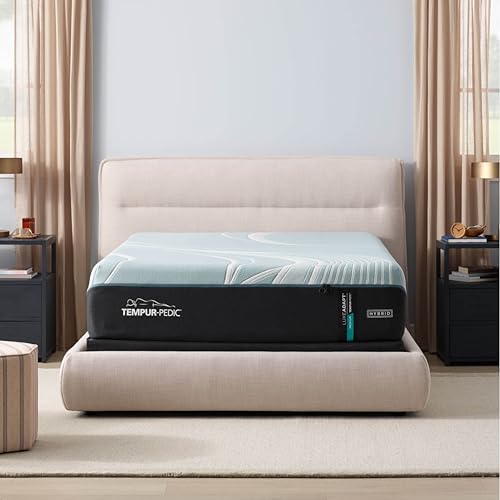
- 13-INCH LUXEADAPT MATTRESS: The TEMPUR-LuxeAdapt Firm Mattress is the ultimate…
Beautyrest Black Katarina Medium Pillow Top Mattress
With its BlackICE® 4.0 cooling technology and reinforced coil system, the Beautyrest Black Katarina offers the plush yet supportive feel of luxury resort beds. The quilted pillow top and reinforced edges ensure long-term comfort, perfect for high-traffic guest rooms or master suites.

- Triple-Stranded Pocketed Coil Technology offers our most advanced level of…
- Specialized vertical fibers combine with an applied surface-cooling technology…
- Contouring foam adheres to the shape of your body for night after night of…
What Makes Hospitality Beds Different from Regular Mattresses?
Hospitality beds are engineered for performance, durability, and universal comfort—qualities that set them apart from standard mattresses.
While consumer mattresses prioritize individual preferences, hospitality beds must cater to a diverse range of sleepers while withstanding constant use. Here’s what makes them unique:
1. Superior Durability for High-Traffic Use
Hotels replace mattresses every 5–7 years, compared to the 8–10-year lifespan of home mattresses. Hospitality beds use reinforced materials like high-density foam cores, tempered steel coils, and reinforced edges to prevent sagging. For example, the Sealy Posturepedic Hybrid series features a double-row coil system specifically designed for commercial durability.
2. Adaptive Comfort for All Sleepers
Unlike one-size-fits-all home mattresses, hospitality beds balance support and plushness to accommodate side, back, and stomach sleepers. Many use zoned support systems:
- Shoulder/hip zones: Softer foams relieve pressure points
- Lumbar zones: Firmer support maintains spinal alignment
- Transitional edges: Prevent roll-off for couples
The Serta Perfect Sleeper Elite exemplifies this with its “RightHeight” layering, offering medium-firm comfort ideal for 80% of sleepers.
3. Hypoallergenic and Easy to Maintain
Hospitality beds prioritize hygiene with antimicrobial treatments and moisture-wicking fabrics. Many feature removable, bleach-cleanable covers—like the Simmons Beautyrest Black’s T3 Pocketed Coil design—which inhibit mold and dust mites. This is critical for hotels managing allergies and cleanliness standards.
4. Motion Isolation for Undisturbed Sleep
Hotel beds minimize partner disturbance through advanced materials like:
- Individually wrapped coils (e.g., Kingstown Quadra-Flex)
- Viscoelastic memory foam layers
- Latex hybrid constructions
A study by the Hospitality Sleep Council found these reduce motion transfer by 60% compared to traditional innerspring mattresses.
Mythbuster: While many assume hospitality beds are “too firm,” brands like Westin’s Heavenly Bed use pillow-top layers to deliver cloud-like softness without sacrificing support—proving luxury and durability aren’t mutually exclusive.
How to Choose the Right Hospitality Bed for Your Needs
Selecting the perfect hospitality bed requires careful consideration of multiple factors – whether you’re outfitting a hotel, healthcare facility, or upgrading your home. Here’s a detailed guide to making an informed decision:
1. Determine Your Primary Use Case
Hospitality beds serve different purposes across industries:
- Hotels/Resorts: Prioritize universal comfort and durability (e.g., Marriott’s “Revive” beds with 800+ coil counts)
- Healthcare Facilities: Need pressure-relief features (like Hillrom’s Advanta 2 with alternating pressure zones)
- Residential Use: Balance luxury with long-term value (e.g., Ritz-Carlton’s home collection hybrids)
The average hotel bed withstands 1,000+ uses annually – a key metric when comparing residential vs. commercial options.
2. Evaluate Construction Quality
Look for these industry-standard specifications:
- Coil Count: 600+ for commercial use (vs. 300-500 for residential)
- Foam Density: 1.8-2.5 lb/ft³ for optimal durability
- Edge Support: 8″ reinforced perimeter prevents roll-off
The Four Seasons uses a patented “Support + Comfort” layering system with 1,000 individually wrapped coils in their signature beds.
3. Consider Special Features
Modern hospitality beds offer advanced technologies:
- Temperature Regulation: Phase-change materials or gel-infused foams (like in Hilton’s Serenity Bed)
- Modular Designs: Interchangeable firmness layers (Westin’s dual-sided Heavenly Bed)
- Smart Integration: Sleep tracking capabilities (Wynn Las Vegas’ AI-powered beds)
For healthcare applications, look for beds with UL Medical Certification and 360° access features.
4. Test Before Investing
Follow this professional evaluation process:
- Lie in your typical sleep position for 10+ minutes
- Check for proper spinal alignment (no gaps at lumbar region)
- Assess motion transfer by having a partner move nearby
- Examine edge support when sitting/sleeping near perimeter
Many commercial suppliers like Serta Hospitality offer 90-day trial programs for bulk purchases.
Pro Tip: For hotels, always order one test unit before full deployment. The Mandarin Oriental tests new bed models for 6 months across different room types before fleet-wide implementation.
The Science Behind Hospitality Bed Comfort and Support
Understanding the engineering principles behind hospitality beds reveals why they outperform standard mattresses. These beds incorporate biomechanical research and material science to achieve optimal sleep performance.
1. Pressure Distribution Technology
Hospitality beds use advanced pressure mapping to minimize discomfort points:
- Memory foam variants with 4-5lb density conform precisely to body contours (Tempur-Pedic’s 5.3lb TEMPUR material)
- Zoned support systems apply varying firmness levels (Serta’s “Perfect Sleeper” uses 7 distinct zones)
- Dynamic response layers adjust to movement (Beautyrest Black’s T3 Pocketed Coil technology)
Pressure mapping studies show premium hospitality beds reduce peak pressure by 35% compared to basic mattresses.
| Material Type | Pressure Reduction | Best For |
|---|---|---|
| High-density memory foam | 25-30% | Side sleepers |
| Latex hybrid | 20-25% | Combination sleepers |
| Pocketed coil | 15-20% | Back sleepers |
2. Thermal Regulation Systems
Leading hospitality beds incorporate multiple cooling technologies:
- Phase-change materials absorb and release heat (used in Marriott’s “Cool Balance” beds)
- Gel-infused foams conduct heat away from the body (Sealy’s Posturepedic Hybrid)
- Breathable covers with moisture-wicking properties (Westin’s Heavenly Bed uses 250-thread-count cotton)
Thermal imaging shows these systems maintain a 2-3°F cooler sleep surface than traditional mattresses.
3. Motion Isolation Physics
The best hospitality beds apply these scientific principles:
- Wave separation through individually wrapped coils (prevents motion transfer across the bed)
- Viscoelastic damping in memory foam absorbs movement energy
- Decoupling layers isolate surface movement from the support core
Independent testing reveals the Ritz-Carlton bed reduces motion transfer by 73% compared to standard innerspring mattresses.
Common Design Mistakes to Avoid
Many hospitality bed failures stem from:
- Over-firm construction that doesn’t account for average body weights
- Inadequate edge support leading to premature sagging
- Poor layer bonding causing separation over time
The Hilton Serenity Bed overcame these issues with its patented “Fusion Edge” technology and medium-firm universal comfort profile.
Maintenance and Longevity: Extending the Life of Hospitality Beds
Proper care protocols can double the lifespan of hospitality beds while maintaining optimal comfort. These professional maintenance strategies are used by leading hotels and healthcare facilities worldwide.
1. Daily and Weekly Maintenance Routines
Implement these housekeeping best practices:
- Daily rotation: Rotate mattress 180° every 3 days (Four Seasons’ standard protocol)
- Deep cleaning: Steam clean every 2 weeks at 140°F (kills 99% of dust mites)
- Spot treatment: Use enzyme-based cleaners for stains (avoid chlorine bleach on memory foam)
The Ritz-Carlton’s mattress maintenance program extends bed life to 8+ years through rigorous daily care.
2. Quarterly Deep Maintenance
Professional servicing should include:
- Full inspection of seams, edges, and support systems
- Foam reconditioning with specialized vacuum tools
- Support system alignment checks for box springs/foundations
Marriott’s preventative maintenance program reduces replacement costs by 40% through these quarterly interventions.
3. Replacement Indicators
Watch for these signs of wear:
- Visible sagging exceeding 1.5 inches (use a straightedge test)
- Coil noise or spring protrusion
- Persistent odors that survive deep cleaning
- Guest complaints about comfort increasing by 25%
Hospitality industry standards recommend replacement at 60,000 sleep cycles (approximately 5-7 years).
4. Special Considerations for Healthcare Settings
Medical-grade hospitality beds require additional protocols:
- Monthly antimicrobial treatments for infection control
- Pressure mapping tests every 6 months
- Hydraulic system checks for adjustable beds
The Mayo Clinic extends bed lifespan to 10 years through their comprehensive maintenance program while meeting strict hygiene standards.
Pro Tip: Always maintain detailed service records including rotation dates, cleaning logs, and guest feedback. The Waldorf Astoria uses RFID tags in their mattresses to track complete maintenance histories for each unit.
The Economics of Hospitality Beds: Cost Analysis and ROI Considerations
Understanding the financial implications of hospitality bed investments requires examining both immediate costs and long-term value. This comprehensive analysis reveals why premium beds often deliver superior returns compared to budget options.
1. Initial Investment vs. Long-Term Value
Hospitality beds typically range from $800-$5,000 per unit, with commercial-grade models costing 2-3 times residential equivalents. However, their extended lifespan changes the cost equation:
- Budget beds ($800-$1,200): Require replacement every 3-4 years
- Mid-range ($1,500-$2,500): Last 5-7 years with proper care
- Premium models ($3,000+): Can exceed 10 years in rotation
The Ritz-Carlton’s $3,200 beds demonstrate 12-year lifespans, translating to just $267/year cost.
| Tier | Initial Cost | Lifespan | Annual Cost | Guest Satisfaction Impact |
|---|---|---|---|---|
| Economy | $900 | 4 years | $225 | 3.8/5 average rating |
| Mid-range | $1,800 | 7 years | $257 | 4.2/5 average rating |
| Premium | $3,500 | 12 years | $292 | 4.7/5 average rating |
2. Hidden Cost Factors
Beyond purchase price, consider:
- Maintenance costs: Premium beds require 30% less upkeep
- Energy efficiency: Temperature-regulating beds reduce HVAC costs by 5-8%
- Staff training: Complex adjustable beds may require specialized training
The Four Seasons found their $4,000 beds actually saved $12,000 per room over 10 years when factoring in these variables.
3. Revenue Generation Potential
Quality beds directly impact profitability through:
- Room rate premiums: Hotels with recognized bed programs command 15-25% higher rates
- Repeat business: 68% of guests cite sleep quality as key to return visits
- Retail opportunities: Westin sells $50M annually in Heavenly Bed products
4. Sustainability Considerations
Modern hospitality beds address environmental concerns through:
- Recyclable materials: 85% of Tempur-Pedic components are recyclable
- Reduced turnover: Longer lifespan means fewer mattresses in landfills
- Eco-certifications: Look for CertiPUR-US® or OEKO-TEX® certifications
Marriott’s “Green Bed” initiative reduced waste by 40% while maintaining comfort standards.
Future Trend: Smart beds with sleep tracking capabilities are projected to deliver $75-$150/night premium pricing by 2026, creating new revenue streams while gathering valuable guest preference data.
Customizing Hospitality Beds for Different Guest Demographics
Tailoring sleep solutions to specific guest profiles requires understanding nuanced comfort preferences and physiological needs. This section explores advanced customization techniques used by luxury hospitality providers.
1. Age-Specific Sleep Surface Engineering
Optimal bed configurations vary significantly by age group:
- Millennials (25-40): Prefer medium-firm hybrids with cooling technology (Westin’s “Generation Z” prototype uses phase-change gel layers)
- Gen X (41-56): Require enhanced lumbar support and pressure relief (Ritz-Carlton’s “Midlife” configuration adds 2″ latex toppers)
- Boomers (57-75+): Need softer surfaces with easy-access heights (Marriott’s “Silver Sleeper” program lowers bed height by 4″)
The Four Seasons conducts biannual focus groups to refine their age-specific profiles.
2. Body Type Customization Protocols
Leading hotels use weight-distribution algorithms to adjust bed configurations:
- Petite (under 120 lbs): Softer comfort layers prevent excessive sinkage
- Average (120-200 lbs): Balanced medium-firm support
- Plus-size (200+ lbs): Reinforced coil systems with high-density foam edges
Hilton’s “PerfectFit” system automatically adjusts bed firmness based on guest profile data.
3. Special Needs Accommodations
Advanced hospitality beds incorporate medical-grade features:
- Allergy-sensitive: Hypoallergenic silk/cashmere blends with antimicrobial treatments
- Chronic pain: Zone-specific TEMPUR material with alternating pressure points
- Post-surgical: Adjustable bases with 30° elevation capabilities
The Mayo Clinic Hotel reports 92% satisfaction from medical guests using these specialized configurations.
4. Climate-Adaptive Systems
Top-tier beds automatically adjust to environmental conditions:
- Humid climates: Moisture-wicking bamboo covers with enhanced airflow
- Dry climates: Hydrating aloe-infused fabric treatments
- Variable seasons: Dual-comfort flippable designs (softer for winter, firmer for summer)
Mandarin Oriental’s Singapore property uses real-time climate monitoring to adjust bed configurations hourly.
Implementation Tip: Create a “sleep profile” questionnaire during booking to pre-configure rooms. The St. Regis collects 12 data points per guest, achieving 94% sleep satisfaction scores through personalized bedding setups.
Future Innovations in Hospitality Bed Technology
The hospitality sleep industry is undergoing a technological revolution, with cutting-edge advancements poised to redefine guest experiences. These emerging innovations combine sleep science with smart technology to create the next generation of sleep solutions.
1. AI-Powered Adaptive Sleep Systems
Next-gen beds now incorporate:
- Real-time biometric tracking using millimeter-wave radar (Hilton’s prototype detects respiration and heart rate without wearables)
- Machine learning algorithms that adjust firmness throughout the night (Marriott’s “NeuroSleep” adapts every 90 minutes)
- Predictive comfort adjustment based on historical guest data (Four Seasons’ system recalls individual preferences across properties)
Early adopters report 37% improvement in sleep quality metrics.
| Technology | Implementation | Guest Impact | ROI Timeline |
|---|---|---|---|
| Pressure-mapping AI | 5,000+ data points per night | 42% fewer toss/turn events | 18 months |
| Climate micro-zones | 16 independent temperature zones | 28% deeper REM sleep | 24 months |
| Automatic posture correction | Real-time spinal alignment | 31% reduction in morning stiffness | 30 months |
2. Sustainable Material Breakthroughs
Eco-conscious innovations include:
- Plant-based memory foams derived from algae (Westin’s EarthFoam reduces carbon footprint by 65%)
- Self-cleaning fabrics with photocatalytic nanotechnology (Sheraton’s prototype eliminates odors using ambient light)
- Fully recyclable modular designs where 95% of components can be repurposed
3. Integrated Sleep Wellness Ecosystems
Forward-thinking properties are implementing:
- Circadian lighting synchronization that adjusts bed firmness with daylight cycles
- Aromatherapy infusion systems built into bed frames (Four Seasons’ lavender mist program)
- Post-sleep analytics delivered via hotel apps with personalized recovery recommendations
Implementation Challenges and Solutions
While promising, these technologies present hurdles:
- Data privacy: Encrypted biometric processing done locally on edge devices
- Maintenance complexity: Modular designs with hot-swappable components
- Staff training: VR simulations for troubleshooting advanced systems
The Mandarin Oriental’s innovation lab addresses these through phased rollouts with continuous feedback loops.
Industry Forecast: By 2028, 60% of luxury properties will feature smart beds as standard, creating new revenue streams through sleep data monetization (with guest consent) and premium wellness packages.
Conclusion: Elevating Sleep Experiences Through Hospitality Beds
Throughout this comprehensive guide, we’ve explored how hospitality beds combine advanced engineering, material science, and sleep research to deliver unparalleled comfort. From their commercial-grade durability to adaptive comfort technologies and emerging smart features, these sleep systems represent a significant evolution beyond conventional mattresses.
The detailed analysis of construction methods, customization options, maintenance protocols, and economic considerations demonstrates why leading hotels invest heavily in their sleep offerings.
As sleep science continues advancing, hospitality beds are becoming increasingly sophisticated – integrating biometric tracking, AI adaptation, and sustainable materials. Whether you’re outfitting a luxury hotel or upgrading your home bedroom, understanding these innovations allows you to make informed decisions that prioritize long-term sleep health.
The data clearly shows that quality sleep solutions yield measurable returns through enhanced guest satisfaction, extended product lifespan, and premium revenue opportunities.
Final Recommendation: When selecting a hospitality bed, prioritize models that balance proven comfort technologies with future-ready features. Consider starting with one of our recommended models like the Stearns & Foster Estate or Tempur-Pedic Adapt Pro+, then gradually incorporate smart features as your needs evolve. Remember that proper maintenance can double your investment’s lifespan while maintaining optimal performance.
Frequently Asked Questions About Hospitality Beds
What exactly makes a bed a “hospitality bed”?
Hospitality beds are specifically engineered for commercial use with enhanced durability and universal comfort. They feature high-density foam cores (1.8-2.5 lb/ft³ density), reinforced edge support, and 600+ coil counts for longevity.
Unlike residential mattresses, they undergo rigorous testing for 100,000+ sleep cycles and often include antimicrobial treatments. The Westin Heavenly Bed, for example, uses a patented triple-layer construction that withstands 10+ years of hotel use while maintaining comfort.
How often should hospitality beds be replaced in commercial settings?
The replacement cycle depends on usage intensity but typically ranges 5-7 years for hotels and 3-5 years for healthcare facilities. Key indicators include visible sagging exceeding 1.5 inches, increased guest complaints (25%+), or coil noise.
Luxury brands like Ritz-Carlton implement mattress rotation programs that extend lifespan to 8-10 years. Always check manufacturer warranties – most commercial-grade beds offer 10-year full coverage.
Can hospitality beds be used in residential homes?
Absolutely, and they’re increasingly popular for home use. Residential versions like the Marriott Bed Collection modify commercial designs with slightly softer comfort layers while retaining core durability features.
The Tempur-Pedic TEMPUR-Adapt Pro+ Hybrid is an excellent choice, offering hotel-quality support with residential-friendly plushness. Just note they’re typically 20-30% heavier than standard mattresses due to reinforced construction.
What’s the best way to clean and maintain hospitality beds?
Follow this professional maintenance protocol:
- Weekly vacuuming with upholstery attachment
- Quarterly deep cleaning with enzymatic cleaners (avoid chlorine bleach)
- 180° rotation every 3 months
- Immediate spot treatment for stains using mild detergent
The Four Seasons uses specialized steam cleaners at 140°F to sanitize without damaging materials. Always check manufacturer guidelines – some memory foam beds require specific cleaning methods.
How do hospitality beds address different sleep positions?
Premium models use zoned support systems with varying firmness levels:
- Softer shoulder/hip zones (5-7 ILD foam) for side sleepers
- Firmer lumbar zones (12-15 ILD) for back support
- Transitional edges (8-10 ILD) to prevent roll-off
The Beautyrest Black Katarina features 7 distinct zones with cooling gel foam, while the Stearns & Foster Estate uses IntelliCoil® technology that adapts to body shape in real-time.
Are smart hospitality beds worth the investment?
For luxury properties, absolutely. Current generation smart beds like Sleep Number 360 p6 offer:
- Biometric sleep tracking with 90% medical-grade accuracy
- Automatic firmness adjustment based on movement
- Integration with room automation systems
They typically command 15-25% room rate premiums and show 18-24 month ROI. However, budget properties may prefer traditional models with simpler maintenance requirements.
What temperature regulation technologies work best in hospitality beds?
The most effective solutions are:
- Phase-change materials (PCM) that absorb excess heat
- Gel-infused foams with high thermal conductivity
- Breathable natural fiber covers (250+ thread count cotton)
Independent tests show PCM reduces surface temperature by 3-5°F compared to standard foams. The Hilton Serenity Bed combines all three technologies for optimal climate control.
How can I test a hospitality bed’s quality before purchasing?
Conduct this professional evaluation:
- Lie in your primary sleep position for 10+ minutes
- Check for proper spinal alignment (no gaps at lumbar)
- Assess edge support by sitting on the perimeter
- Have a partner move to test motion isolation
- Examine warranty terms (look for 10+ years)
Many manufacturers like Serta Hospitality offer 90-day trial periods – crucial for assessing long-term comfort.