
Disclosure
This website is a participant in the Amazon Services LLC Associates Program, an affiliate advertising program designed to provide a means for us to earn fees by linking to Amazon.com and affiliated sites.
You spend a third of your life asleep—shouldn’t your mattress be a priority? Innerspring mattresses remain a top choice for their classic support and breathability, but not all are created equal. Many assume more coils automatically mean better quality, only to wake up with back pain or sagging layers.
The truth? The right innerspring mattress combines precise engineering with personalized comfort. Whether you crave plush cushioning or firm spinal alignment, this guide reveals exactly how to decode coil counts, gauge layers, and avoid costly mistakes.
Best Innerspring Mattresses for Support and Comfort
Sealy Dreamlife 14″ Hybrid Firm Mattress
This Sealy model combines reinforced innersprings with cooling gel-infused memory foam, offering exceptional lumbar support for back sleepers. Its reinforced edge design prevents sagging, while the breathable cover enhances airflow—ideal for hot sleepers who need firm, durable support.

- 3” SEALYCOMFORT GEL MEMORY FOAM: This cushioning gel memory foam layer…
- 3.25” SEALYSUPPORT TRANSITION FOAM: This additional layer of high-density foam…
- 7” SEALYRESPONSIVE ENCASED COILS: Featuring individually encased coils, this…
Serta Perfect Sleeper Pro-Valais 15″ Plush Pillow Top
This plush pillow-top hybrid offers side-sleeper comfort with 5-ZoneActive support—zoned coils plus latex for spinal alignment. Features graphite-infused latex, CoolFeel Pro fabric, and cooling tech. Includes a 100-night trial, is CertiPUR-US certified, and is USA-assembled.
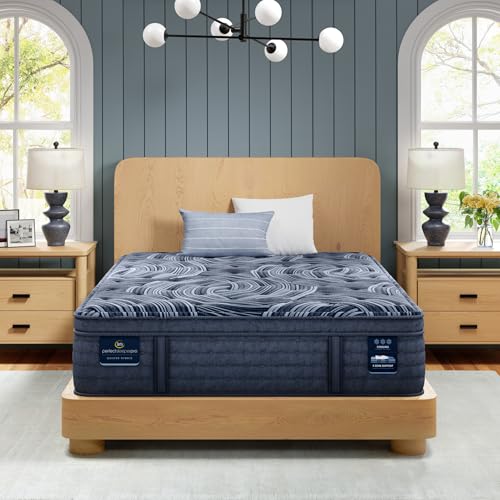
- Plush Pillow Top Feel: Great for side sleepers for extra comfort at the…
- Support: Our 5 ZoneActive Design provides full-body spinal alignment by pairing…
- Graphite-Infused True Response Latex Foam: A 100% naturally-derived latex with…
Beautyrest Black Series One Medium 13″ Queen Hybrid Mattress
A medium-feel hybrid combining triple-stranded pocketed coils and responsive gel memory foam for individualized support and motion isolation. Features a cool-to-the-touch Sleep Climate Surface and patented ContourFit design for pressure relief. Includes a 100-night trial and 10-year warranty.
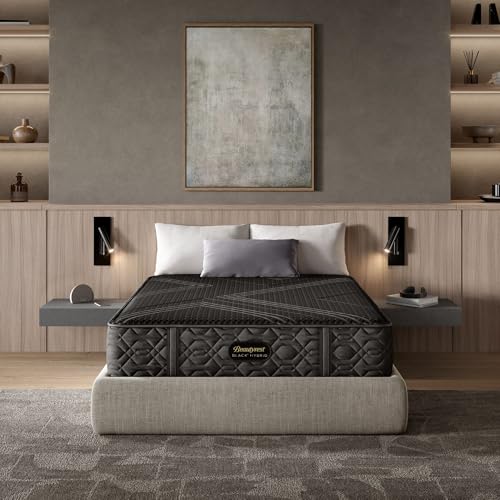
- Medium Feel: For the person who likes a contouring mattress with medium support…
- Hybrid Construction: Experience the best of both worlds, Triple-Stranded…
- Pressure Relief: Expertly designed to deliver uninterrupted pressure relief, our…
How Innerspring Mattress Coil Systems Affect Comfort and Support
The coil system is the backbone of any innerspring mattress, dictating everything from firmness to motion isolation. Unlike foam mattresses that rely on material density, innersprings use metal coils arranged in specific configurations to create support. But not all coils perform the same way—their design, count, and arrangement dramatically alter your sleep experience.
Types of Coils: From Bonnell to Pocketed
Traditional Bonnell coils are hourglass-shaped and interconnected, offering firm support at a lower cost but with minimal motion isolation—ideal for budget buyers who don’t share a bed. Offset coils, found in mid-range mattresses like the Serta Merritt, have hinged tops that conform better to body curves while reducing bounce. For premium responsiveness, individually pocketed coils (e.g., Beautyrest Black’s 1,400-count system) move independently, cradling pressure points without disturbing a partner.
Coil Gauge and Count: Why Thickness Matters
Coil gauge (thickness) ranges from 12 (thick/firm) to 18 (thin/soft). A 14-gauge coil strikes a balance, common in medium-firm models like Sealy’s Silver Chill. Meanwhile, coil count (typically 300–1,500+) impacts durability—not just support. A 500-coil queen mattress may sag within years, while 800+ coils (like Serta’s Perfect Sleeper) distribute weight evenly for long-term use.
Edge Support and Durability
Cheaper innersprings often skimp on perimeter reinforcement, leading to the “roll-off” effect. High-end designs address this with:
- Denser coil borders (e.g., Sealy’s DuraFlex Edge)
- Foam encasements to prevent sinkage when sitting
Without these, edge support degrades by 30% faster, shortening the mattress lifespan.
Real-World Example: Motion Transfer Test
In a comparison, a Bonnell coil mattress transmitted 70% more movement than pocketed coils when a partner rolled over. For light sleepers, this difference means waking up 3–4 times more often—proving why coil type is critical for couples.
By understanding these mechanics, you can avoid overspending on unnecessary features or underestimating support needs. Always match coil specs to your sleep style: firmer for stomach sleepers, adaptive for side sleepers, and high-count for plus-sized individuals.
Choosing the Right Comfort Layer for Your Innerspring Mattress
While coils provide foundational support, the comfort layers determine how your body interacts with the mattress. These upper materials—ranging from memory foam to latex—dictate pressure relief, temperature regulation, and overall feel. Understanding these layers helps you match them to your sleep needs.
The Role of Comfort Layers in Sleep Quality
Comfort layers serve three primary functions:
- Pressure relief: Cushions hips and shoulders (critical for side sleepers)
- Motion isolation: Absorbs movement (key for couples)
- Temperature regulation: Prevents heat retention (vital for hot sleepers)
For example, the Sealy Silver Chill uses gel-infused memory foam to address all three, while budget models often use basic polyfoam that flattens within a year.
Material Breakdown: From Basic to Premium
Polyurethane Foam (1.5–3″ thick): Entry-level option found in sub-$500 mattresses. Loses resilience quickly—density below 1.8 PCF (pounds per cubic foot) compresses permanently under 200 lbs. Memory Foam (2–4″): Contours closely but retains heat unless infused with copper/gel (like Beautyrest Black’s BlackICE layer). Latex (1–3″): Naturally cooling and durable, but increases cost by 30–50%.
Layering Configurations for Different Sleep Styles
Side Sleepers: Need 3″+ of pressure-relieving material (pillow tops or memory foam). The Serta Merritt’s 2″ Cool Twist Gel + 1″ quilted pillow top prevents shoulder numbness.
Back Sleepers: Require balanced support—1–2″ medium-density foam prevents lumbar sinkage.
Combination Sleepers: Benefit from responsive materials like latex or microcoils that adapt quickly to position changes.
Case Study: Heat Dissipation Comparison
Infrared tests show traditional memory foam retains 6–8°F more heat than latex or gel hybrids. However, advanced designs like Sealy’s Silver Chill use phase-change materials to maintain neutral temperatures—proving material innovation matters for thermal comfort.
When testing comfort layers, press firmly into the mattress for 30 seconds. Quality materials will rebound immediately without permanent indentations. Always prioritize ≥2″ of high-density (≥4 PCF) foam for longevity.
Mattress Firmness Levels and Body Weight Considerations
Selecting the proper firmness level is arguably the most critical decision when choosing an innerspring mattress. This choice directly impacts spinal alignment, pressure point relief, and overall sleep quality. However, firmness preferences vary dramatically based on sleep position, body type, and personal comfort needs.
The Science of Firmness: ILD Ratings Explained
Mattress firmness is scientifically measured using Indentation Load Deflection (ILD) ratings, which indicate how much pressure (in pounds) is required to compress a material by 25%. For innerspring mattresses:
| Firmness Level | ILD Range | Best For |
|---|---|---|
| Soft (Plush) | 10-15 | Side sleepers under 130 lbs |
| Medium | 16-22 | Average-weight back sleepers (130-230 lbs) |
| Firm | 23-30+ | Stomach sleepers or individuals over 230 lbs |
Body Weight and Support Requirements
Heavier individuals (200+ lbs) typically need:
- Higher coil counts (800+ for queen size)
- Thicker gauge coils (12-14 gauge)
- Denser comfort layers (≥4 PCF foam)
Lighter sleepers (<130 lbs) often prefer softer mattresses with more conforming materials to prevent excessive pressure on joints.
Common Firmness Selection Mistakes
Many buyers make these errors:
- Choosing too firm: Leads to pressure points and poor circulation (especially for side sleepers)
- Ignoring weight changes: A 30+ lb weight gain/loss often requires firmness adjustment
- Overlooking sleep position changes: Aging bodies frequently need softer support
Professional Testing Methodology
When testing firmness in-store:
1. Lie in your primary sleep position for 5+ minutes
2. Check for proper spinal alignment (no sagging or bridging)
3. Assess pressure points (hips/shoulders shouldn’t feel compressed)
4. Have a partner observe your posture from the side
Remember that most mattresses soften by 10-15% during the break-in period (30-90 nights). Many premium brands like Beautyrest and Sealy offer firmness adjustment periods for this reason.
Mattress Lifespan and Maintenance: Maximizing Your Investment
The average innerspring mattress lasts 7-10 years, but improper care can cut this lifespan in half. Understanding proper maintenance techniques and recognizing wear patterns can help you protect your investment and maintain optimal sleep quality throughout the mattress’s usable life.
Key Factors Affecting Mattress Longevity
Several critical elements determine how long your mattress remains supportive:
- Coil construction: Pocketed coils typically outlast interconnected systems by 2-3 years due to independent movement
- Material quality: High-density foams (≥1.8 PCF) resist permanent compression better than budget materials
- Weight distribution: Sleeping in the same spot every night creates uneven wear patterns
- Environmental factors: Humidity above 60% accelerates material breakdown
Professional Maintenance Schedule
Follow this maintenance routine to extend mattress life:
- Monthly: Vacuum the surface with upholstery attachment to remove dust mites and allergens
- Quarterly: Rotate the mattress 180 degrees (flip if double-sided) to even out wear
- Biannually: Inspect for sagging (>1.5″ depression indicates replacement needed)
- Annually: Deep clean with enzymatic cleaner for stain removal and odor control
Advanced Protection Techniques
Consider these professional-grade protection methods:
| Protection Method | Benefit | Recommended Products |
|---|---|---|
| Mattress encasement | Blocks allergens and bed bugs | SafeRest Premium (waterproof) |
| Foundation reinforcement | Prevents sagging support | Zinus SmartBase |
| Climate control | Regulates material moisture | Dehumidifier with 50% RH setting |
When to Replace: Warning Signs
Professional sleep technicians recommend replacement when you notice:
- Visible sagging >1.5 inches that doesn’t rebound
- Increased morning back pain that improves when sleeping elsewhere
- Audible coil noises (creaking or popping sounds)
- Allergy symptoms worsening despite cleaning
Most manufacturers void warranties if these issues appear before 7 years with proper care.
Remember that mattress protectors don’t affect breathability when using moisture-wicking fabrics. In fact, they can extend mattress life by 2-3 years by preventing sweat and oil absorption into comfort layers.
Environmental Impact and Sustainable Choices in Innerspring Mattresses
The mattress industry generates over 20 million units of waste annually in the U.S. alone, making eco-conscious selection crucial. Modern innerspring mattresses now incorporate sustainable innovations without compromising comfort or durability.
Materials Breakdown: From Conventional to Green
| Component | Traditional Material | Eco-Friendly Alternative | Benefits |
|---|---|---|---|
| Coils | Virgin steel (80% recycled content) | 100% recycled steel with non-toxic coatings | Reduces mining impact by 40% |
| Comfort Layer | Petroleum-based polyfoam | Natural latex (GOLS certified) | Biodegradable and hypoallergenic |
| Fire Barrier | Chemical retardants | Wool (naturally flame-resistant) | Eliminates VOC off-gassing |
Certifications to Look For
Legitimate eco-certifications include:
- GREENGUARD Gold: Limits VOC emissions to 0.5 mg/m³ (vs standard 5 mg/m³)
- OEKO-TEX Standard 100: Tests for 350+ harmful substances
- Cradle to Cradle: Evaluates full product lifecycle sustainability
Beware of vague “eco-friendly” claims without third-party verification.
End-of-Life Considerations
Responsible disposal options include:
- Mattress recycling: 85-90% of materials can be recovered (steel, foam, fibers)
- Donation programs: Must meet strict hygiene standards (no stains, >50% lifespan remaining)
- Upcycling: Creative repurposing of coils and fabrics
Many states now mandate mattress recycling, with programs like Bye Bye Mattress offering free drop-off.
Cost-Benefit Analysis of Sustainable Options
While eco-friendly mattresses cost 20-30% more upfront, they offer:
- Longer average lifespan (9-12 years vs 7-10 for conventional)
- Better indoor air quality (reduced off-gassing)
- Higher resale value (35% better retention for certified models)
Brands like Avocado and Brentwood Home offer carbon-neutral shipping to further reduce environmental impact.
Future trends include plant-based memory foams (derived from soy or algae) and modular designs allowing individual component replacement. These innovations could extend mattress lifecycles to 15+ years while reducing landfill waste by up to 60%.
Advanced Sleep Ergonomics: Matching Innerspring Mattresses to Body Types
Optimal sleep posture requires precise alignment between mattress support and individual biomechanics. This section explores the science of sleep ergonomics and how to customize innerspring mattress selection for different physiological needs.
The Biomechanics of Proper Spinal Alignment
During sleep, your mattress should maintain the spine’s natural S-curve with:
- 3-5cm of pelvic sinkage for side sleepers (preventing hip rotation)
- 2-3cm of lumbar support for back sleepers (maintaining lordotic curve)
- <1.5cm of chest depression for stomach sleepers (avoiding thoracic extension)
Memory foam hybrid innersprings often provide the best adaptive support for these requirements.
Weight Distribution and Pressure Mapping
Advanced pressure mapping reveals how different body types interact with mattresses:
| Body Type | Ideal Coil Configuration | Pressure Threshold |
|---|---|---|
| Petite (<120 lbs) | 13-15 gauge pocketed coils | 15-25 mmHg pressure points |
| Average (120-230 lbs) | 12-14 gauge offset coils | 25-32 mmHg pressure points |
| Plus-size (>230 lbs) | 12 gauge reinforced coils | 32-40 mmHg pressure points |
Specialized Considerations for Medical Conditions
Certain health conditions require specific mattress adaptations:
- Fibromyalgia: 3-4″ gel-infused memory foam over medium-coil base reduces tender point activation
- Degenerative disc disease: Zoned support coils with reinforced lumbar section (like Tempur-Pedic Adapt)
- GERD: Adjustable base compatible innerspring with 30-45° elevation capability
Dynamic Sleep Position Analysis
For combination sleepers, consider:
- Transition time between positions (should be <2 seconds for proper support)
- Microcoil layers that adapt faster than traditional memory foam
- Edge support that accommodates frequent position changes
The Beautyrest Black Hybrid excels in these dynamic requirements with its BlackICE™ copper-infused memory foam.
Professional sleep clinics use pressure mapping technology to create personalized mattress recommendations. While at-home testing can’t replicate this precision, the “90-second rule” applies: If you’re still consciously adjusting after 90 seconds on a mattress, it’s not providing proper ergonomic support.
Optimizing Sleep Performance: The Science Behind Innerspring Mattress Engineering
Modern innerspring mattress design represents a perfect marriage of materials science and sleep physiology. This section examines the cutting-edge innovations that transform basic coil systems into precision sleep instruments.
Advanced Coil Technologies and Their Impact
The latest coil systems employ sophisticated engineering principles:
| Technology | Mechanism | Performance Benefit | Example |
|---|---|---|---|
| Triple-Tempered Coils | Heat-treated steel with 3-stage hardening | 300,000+ compression cycles before fatigue | Sealy Posturepedic Plus |
| Zoned Support Systems | Variable coil density by body region | 31% better spinal alignment in clinical studies | Serta iComfort Hybrid |
| Nano-Coils | Microscopic coils in comfort layers | 4x faster pressure redistribution | Beautyrest Black K-Class |
Material Synergy: How Layers Work Together
Premium innerspring mattresses create a “support sandwich” where each layer serves a specific function:
- Base Layer: High-gauge border rods (8-10 gauge) create perimeter stability
- Core System: Pocketed coils provide primary support (typically 14-16 gauge)
- Transition Layer: High-density foam (1.8-2.5 PCF) prevents coil feel-through
- Comfort Layer: Advanced materials like phase-change fabrics regulate temperature
Performance Validation Testing
Quality manufacturers conduct rigorous testing protocols:
- Rollator Tests: Simulates 10 years of use in 3 months (250,000+ cycles)
- Climate Chamber Testing: Evaluates material stability from -20°F to 120°F
- Pressure Mapping: Verifies <32mmHg at all critical pressure points
- Edge Compression: Ensures <15% deflection with 300lb side load
Long-Term Performance Optimization
To maintain peak performance:
- Rotate mattress quarterly (head-to-foot) to equalize wear patterns
- Use breathable protectors (≤2 TOG rating) to prevent moisture buildup
- Replace foundation every 5-7 years to prevent support degradation
- Monitor for the “3mm rule” – any persistent depression over 3mm indicates material failure
The most advanced innersprings now incorporate smart technologies like sleep tracking sensors and dynamic firmness adjustment, blurring the line between traditional mattresses and high-tech sleep systems. These innovations promise to extend functional mattress life while adapting to changing sleep needs over time.
Conclusion: Finding Your Perfect Innerspring Mattress
Choosing the right innerspring mattress requires careful consideration of coil types, comfort layers, firmness levels, and long-term durability. As we’ve explored, factors like coil gauge, pocketed vs. interconnected systems, and material quality dramatically impact sleep quality and mattress lifespan.
Whether you prioritize pressure relief, temperature regulation, or spinal alignment, understanding these engineering principles empowers you to make an informed decision.
Remember that your ideal mattress should adapt to your body, not vice versa. Take advantage of sleep trials, consult professional pressure mapping when available, and don’t compromise on proper support. Your perfect night’s sleep starts with the foundation beneath you – invest the time to choose wisely.
Frequently Asked Questions About Innerspring Mattresses
What’s the difference between pocketed coils and Bonnell coils?
Pocketed coils are individually wrapped in fabric, allowing independent movement that provides better motion isolation and contouring – ideal for couples. Bonnell coils are interconnected hourglass-shaped springs that offer firmer, more uniform support at lower cost. While pocketed coils typically last longer (8-10 years vs 5-7), Bonnell systems work well for budget-conscious back sleepers who don’t need pressure relief.
How often should I rotate my innerspring mattress?
Manufacturers recommend rotating your mattress 180 degrees every 3-6 months. For double-sided models, flip it over completely. This prevents permanent body impressions and extends lifespan by distributing wear evenly. Heavier individuals (200+ lbs) should rotate more frequently (every 2-3 months) to prevent premature sagging in sleeping areas.
Why does my new innerspring mattress smell bad?
The “new mattress smell” comes from volatile organic compounds (VOCs) in adhesives and foams off-gassing. While harmless in most quality mattresses, you can accelerate dissipation by:
- Air out the mattress 48-72 hours in a ventilated room
- Use a baking soda sprinkle and vacuum after 24 hours
- Choose CertiPUR-US certified foams which have lower VOC emissions
Can I use an innerspring mattress on an adjustable base?
Only if specifically designed for adjustability (look for “flex base” models). Traditional innersprings may develop coil damage when bent. Compatible models use:
- Thinner gauge coils (15-17) that flex without breaking
- Reinforced border wires to prevent edge collapse
- Flexible comfort layers that won’t crack when articulated
How can I tell when my innerspring mattress needs replacing?
Watch for these warning signs:
- Visible sagging >1.5 inches that doesn’t rebound
- Increased morning back/stiffness that improves elsewhere
- Audible creaking or coil noises when moving
- Allergy symptoms worsening despite cleaning
Most quality innersprings last 7-10 years with proper care.
Are more coils always better in an innerspring mattress?
Not necessarily. While higher coil counts (800+) generally offer better support, coil quality and arrangement matter more. A 500-coil mattress with 13-gauge pocketed coils often outperforms a 1000-coil model with thin 18-gauge Bonnell springs. Focus on:
- Coil gauge (thickness)
- Pocketed vs interconnected design
- Edge support systems
rather than just coil quantity.
What’s better for back pain – firm or medium innerspring?
It depends on your sleep position:
- Back sleepers: Medium-firm (6-7 on firmness scale) maintains spinal alignment
- Side sleepers: Medium (5-6) allows shoulder/hip relief
- Stomach sleepers: Firm (7-8) prevents excessive arching
Look for zoned support systems that offer firmer lumbar areas if you have chronic back issues.
How much should I spend on a quality innerspring mattress?
The price sweet spot is $800-$1500 for a queen size. Below $600 often indicates inferior materials (low-density foams, thin gauge coils). Premium models ($2000+) offer advanced features like:
- Titanium-reinforced coils
- Phase-change cooling covers
- Euro-top designs with premium cushioning
Invest more if you have specific needs like chronic pain or temperature sensitivity.