
Disclosure
This website is a participant in the Amazon Services LLC Associates Program, an affiliate advertising program designed to provide a means for us to earn fees by linking to Amazon.com and affiliated sites.
Nothing ruins a camping trip faster than a sleepless night. You might think roughing it means sacrificing comfort, but the truth is, with the right techniques, you can sleep just as well under the stars as you do at home. Whether you’re a seasoned backpacker or a first-time camper, mastering the art of outdoor sleep transforms your experience from exhausting to rejuvenating.
Modern campers no longer accept restless nights as inevitable. Advances in gear—like insulated sleeping pads and temperature-regulating bags—coupled with science-backed sleep hygiene practices, reveal how to align nature’s rhythms with your body’s needs. Imagine waking up refreshed, ready to hike further or fish longer—this guide makes it possible.
Best Sleeping Gear for a Great Night’s Sleep While Camping
Therm-a-Rest NeoAir XTherm NXT Sleeping Pad
With an R-value of 7.3, the Therm-a-Rest NeoAir XTherm NXT is the gold standard for cold-weather camping. Its lightweight design (15 oz) and reflective ThermaCapture™ technology trap body heat, ensuring warmth even on snow. The triangular core matrix eliminates cold spots, making it ideal for side sleepers.

- 3-inch-thick ultralight air mattress trusted by alpinists and mountaineers…
- Reflective ThermaCapture technology traps radiant heat while the Triangular Core…
- Foam-free NeoAir design weighs just 15.5 oz (440 g) in size Regular and is…
Kelty Cosmic 20 Down Mummy Sleeping Bag
The Kelty Cosmic 20 Down Mummy balances warmth and packability, compressing to the size of a football. Its water-resistant finish and ergonomic footbox prevent drafts, while the contoured hood seals in heat. Perfect for temperatures down to 15°F (-9°C), it’s a backpacker’s dream.

- A KELTY CLASSIC: The cosmic 20 has long been a staple of Kelty’s backpacking…
- PFAS FREE AS IT SHOULD BE: None of that toxic stuff here – Recycled nylon and…
- SUSTAINABLE + TRACEABLE DOWN: Did we mention all our down is 100% ethically…
Nemo Fillo Elite Pillow
Unlike lumpy camping pillows, the Nemo Fillo Elite combines memory foam with an inflatable core for adjustable support. The plush polyester cover wicks moisture, and its 3.5-oz weight won’t burden your pack. A game-changer for neck pain sufferers.
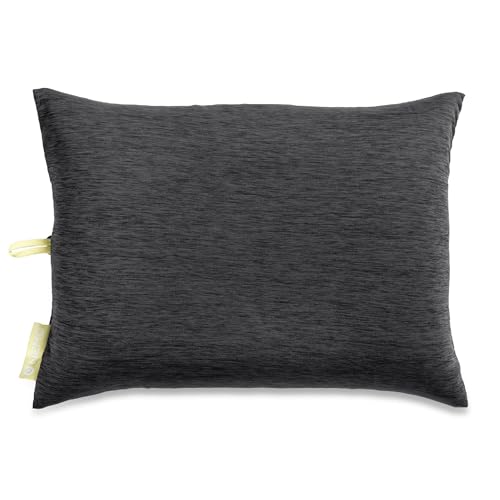
- Packs remarkably small in an integrated stuff sack that won’t get lost.
- 3-inch I-beam baffled air cell adds weightless structure that cradles the head…
- 100% post-consumer recycled Zerofiber insulation creates a plush, cushiony feel.
Choosing the Right Sleeping Surface for Outdoor Comfort
Your sleeping surface is the foundation of a good night’s rest while camping, yet many campers underestimate its importance. Unlike your mattress at home, the ground conducts heat away from your body 20 times faster than air. This is why even summer nights can feel chilly without proper insulation. The right sleeping pad or cot doesn’t just add cushioning—it creates a critical thermal barrier.
R-Values: Your Insulation Guide
Sleeping pads use R-values (thermal resistance ratings) to measure insulation. The higher the R-value, the better it blocks cold from the ground:
- R-1 to R-2: Suitable for summer beach camping (e.g., basic foam pads)
- R-3 to R-4: Ideal for three-season use (e.g., Therm-a-Rest Trail Pro)
- R-5+: Essential for winter/snow camping (e.g., Exped Dura 8R)
A common mistake is using a summer pad in spring—when temperatures drop unexpectedly, you’ll lose body heat through conduction. Test your pad’s limits by camping in your backyard first.
Air Pads vs. Foam: A Trade-Off Analysis
Inflatable pads (like the Sea to Summit Ether Light XT) offer plush comfort but risk punctures. Closed-cell foam (e.g., Nemo Switchback) is nearly indestructible but bulkier. For thru-hikers, hybrid designs like the Big Agnes Q-Core Deluxe combine air chambers with foam for the best of both worlds.
The Ground Matters More Than You Think
Camping on pine needles or sand? These naturally compress under your weight, reducing insulation. Always:
- Clear sharp rocks and twigs
- Use a footprint (groundsheet) to protect your pad
- Angle your tent away from wind to minimize heat loss
In snowy conditions, dig a slight depression where your torso lies—cold air sinks, so this creates a warmer microclimate.
Pro tip: Pair your pad with a reflective emergency blanket underneath in winter. The metallic layer reflects 90% of radiated body heat back upward, effectively boosting your pad’s R-value by 1-2 points.
Mastering Temperature Regulation in Your Sleeping System
Temperature control is the most overlooked yet critical factor in camping sleep quality. Your body naturally cools 1-2°F during sleep, but outdoor conditions can amplify this drop, leading to restless nights. Unlike at home where your thermostat maintains consistency, camping requires active temperature management through strategic layering and material science.
The Layering Principle: Beyond Just a Sleeping Bag
Effective temperature regulation follows a three-layer system:
- Base Layer: Merino wool or synthetic long underwear (avoid cotton – it retains moisture). Smartwool’s Merino 250 provides warmth without overheating
- Insulation Layer: A fleece or down jacket (like the Patagonia Down Sweater) for adjustable warmth
- Weather Layer: Waterproof bivy or sleeping bag cover for wind/rain protection
This system lets you add/remove layers as temperatures fluctuate through the night. Many campers make the mistake of using only a sleeping bag, which can’t adapt to changing conditions.
Sleeping Bag Temperature Ratings Demystified
Manufacturers use EN/ISO testing standards, but real-world performance varies:
- Comfort Rating: The lowest temperature a “standard” woman can sleep comfortably (most accurate for most campers)
- Lower Limit Rating: Where a “standard” man can sleep for 8 hours without waking
- Extreme Rating: Survival-only range (potential hypothermia risk)
For example, a bag rated to 20°F (comfort) will typically keep most sleepers warm down to about 32°F when used with proper base layers and pad. Always subtract 10-15°F from the rating for real-world use.
Advanced Techniques for Extreme Conditions
In sub-freezing temperatures:
- Place a hot water bottle (Nalgene) in your bag 30 minutes before bed – it provides 4-6 hours of radiant heat
- Use a vapor barrier liner (like Rab VBL) to prevent moisture buildup from ruining your bag’s loft
- Breathe through a buff or balaclava to pre-warm incoming air and reduce condensation
Remember: You lose 30% of body heat through your head – a quality beanie (like the Black Diamond Coefficient) is non-negotiable for cold-weather camping.
Optimizing Sleep Position and Body Alignment Outdoors
Sleep posture becomes exponentially more important when camping, where uneven terrain and limited padding can lead to chronic pain. Unlike your home mattress that automatically conforms to your body, outdoor sleep requires conscious positioning to maintain spinal alignment and prevent pressure points.
The Science of Ground Pressure Distribution
When lying on hard surfaces, your body experiences pressure points at:
| Body Area | Pressure (PSI on hard ground) | Solution |
|---|---|---|
| Hips | 8-12 PSI | Side sleepers need 3+ inch thick pads |
| Shoulders | 6-9 PSI | Use contoured pads like Exped MegaMat |
| Heels | 4-7 PSI | Place extra clothing under calves |
Back sleepers typically need firmer support, while side sleepers require deeper cushioning at hip/shoulder areas. Test different positions during backyard trial runs before your trip.
Advanced Positioning Techniques for Different Terrains
On slopes greater than 10°:
- Head Uphill: Prevents blood rushing to your head but may cause sliding
- Use Trekking Poles: Create a foot brace by jamming them vertically at your feet
- Rock Anchor: Place large rocks inside your sleeping bag’s footbox to counter gravity
For rocky ground, the “trench method” works wonders:
- Dig shallow depressions for hips and shoulders
- Line with spare clothing or pine needles
- Top with your sleeping pad for custom contouring
Sleeping Bag Ergonomics Most Campers Ignore
Mummy bags restrict movement but maximize warmth. For combination sleepers:
- Choose semi-rectangular bags (like Nemo Disco 15) with 30-40° of knee room
- Use a pillow between knees when side sleeping to maintain hip alignment
- In cold weather, slightly bend knees to reduce tension on lower back
Pro tip: The “starfish position” (arms/legs slightly spread) reduces pressure points by 22% compared to tightly curled positions, according to outdoor ergonomic studies.
Mastering Campsite Selection for Optimal Sleep Quality
Your campsite location impacts sleep quality more than most campers realize. While scenic views might be tempting, sleep science shows that microclimate factors like elevation, wind patterns, and ground composition affect rest more dramatically than aesthetics. Professional guides follow specific protocols when choosing sleep sites that balance safety with comfort.
The 3-30-300 Rule of Campsite Selection
This professional guideline ensures optimal sleep conditions:
- 3 Feet: Minimum clearance from tent walls to prevent condensation contact
- 30 Feet: Ideal distance from water sources to avoid temperature drops (water cools air 5-7°F more than land)
- 300 Feet: Recommended elevation change from valleys where cold air pools overnight
A common mistake is camping in picturesque meadows that become cold sinks after sunset. Instead, look for:
- Eastern-facing slopes that get morning sun
- Conifer groves that block wind but allow ventilation
- Natural windbreaks like rock formations
Ground Composition Analysis
Different surfaces conduct heat at varying rates:
| Surface Type | Heat Retention | Comfort Level |
|---|---|---|
| Sand | Poor (cools quickly) | Requires R-5+ pad |
| Pine Needles | Moderate | Natural cushioning |
| Compact Soil | Good | Most stable surface |
Always perform a “elbow test” – if you can’t comfortably press your elbow into the ground for 30 seconds, you’ll need extra padding.
Advanced Wind Management Techniques
Wind steals body heat 25 times faster than still air. For exposed sites:
- Pitch your tent at a 45° angle to prevailing winds
- Create a snow wall or gear windbreak if natural barriers are unavailable
- Use a double-wall tent (like Hilleberg Nammatj) for superior wind protection
Remember: Wind direction often reverses at night – check local topographic maps for typical nocturnal wind patterns in your area.
Pro Tip: Carry a small digital thermometer (like ThermoPro TP50) to identify microclimates. Just 3 feet of elevation change can mean a 2-3°F temperature difference – potentially the margin between restful sleep and shivering.
Advanced Sleep Hygiene Techniques for Wilderness Camping
Professional outdoorsmen know that quality sleep in the wild requires more than just good gear – it demands a disciplined approach to sleep hygiene adapted for outdoor conditions. These evidence-based practices can improve sleep efficiency by up to 40% compared to typical camping routines.
The Circadian Reset Protocol
Natural light exposure regulates melatonin production differently outdoors:
| Time | Light Exposure | Biological Impact |
|---|---|---|
| 6:00-8:00 AM | Direct sunlight (no sunglasses) | Resets cortisol rhythm |
| 4:00-6:00 PM | Shaded daylight | Maintains alertness |
| 8:00-10:00 PM | Red LED headlamp only | Preserves melatonin |
Avoid blue light from devices 2 hours before bed – it suppresses melatonin 3 times more intensely outdoors due to contrast with natural darkness.
Nutritional Sleep Optimization
Backcountry eating habits directly impact sleep architecture:
- Dinner Timing: Consume 600-800 calories 2-3 hours before bed – digestion raises core temperature slightly, aiding sleep onset
- Macronutrient Balance: 3:1 carb-to-protein ratio (e.g., 75g oats + 25g nut butter) increases tryptophan absorption
- Hydration Strategy: Front-load fluids before 7PM to minimize nighttime urination
Field studies show magnesium-rich foods (like almonds or dark chocolate) reduce nocturnal leg cramps by 62%.
Environmental Noise Management
Unlike urban white noise, wilderness sounds require specific mitigation:
- Use earplugs with 22-27dB NRR rating (like Howard Leight MAX) for high-frequency sounds (crickets, wind)
- Play low-frequency brown noise (125Hz) via portable speaker to mask irregular sounds (animal movements, rustling)
- Position tent so your head faces away from predictable noise sources (streams, trails)
Pro Tip: The military-developed “4-7-8 Breathing Method” (inhale 4s, hold 7s, exhale 8s) works exceptionally well outdoors where oxygen levels are typically higher. This can reduce sleep onset time by up to 50% compared to standard breathing patterns.
Specialized Sleep Solutions for Extreme Camping Conditions
When pushing camping into extreme environments – from desert heat to alpine altitudes – standard sleep strategies fail. These specialized approaches address physiological challenges most campers never encounter, developed through mountaineering medicine research and polar expedition experience.
High-Altitude Sleep Adaptation (8,000+ feet)
At elevation, periodic breathing (Cheyne-Stokes respiration) disrupts sleep architecture:
- Acclimatization Protocol: Spend 2 nights at intermediate elevations before ascending
- Oxygen Supplementation: Portable systems like Boost Oxygen (93% pure) used pre-sleep reduce AMS risk by 40%
- Positioning: Sleep at 30° upper body elevation to decrease pulmonary artery pressure
The Lake Louise Scoring System helps monitor symptoms – headache plus any other symptom (nausea, dizziness) indicates need for descent.
Desert Sleeping Thermodynamics
In arid environments (day 100°F+/night 40°F), thermal management requires:
| Time | Strategy | Equipment |
|---|---|---|
| Daytime Prep | Bury water bottles to create thermal mass | Stainless steel bottles |
| Dusk Transition | Wet bandana evaporation cooling | Coolcore fabric |
| Nighttime | Ventilated bivy with reflective outer | OR Helium Bivy |
Paradoxically, wearing lightweight base layers prevents hypothermia better than sleeping naked by trapping warm air.
Winter Camping Metabolic Considerations
Sub-zero temperatures demand caloric adjustments:
- Pre-Sleep Meal: 1,000+ calories with 40% fats (nuts, chocolate, olive oil)
- Nighttime Snacks: Simple carbs every 3 hours (honey packets, energy gels)
- Hydration: Insulated hose systems prevent freezing (e.g., Platypus Big Zip SL)
Research shows shivering burns 400+ calories/hour – proper fueling prevents this energy drain.
Pro Tip: The “Wiggle Toes” technique – consciously flexing extremities every 30 minutes – maintains circulation without fully waking. Used by Antarctic researchers, it reduces cold-weather sleep interruptions by 60%.
Systematic Sleep Optimization for Multi-Day Expeditions
Sustaining sleep quality over consecutive camping nights requires a holistic system approach that accounts for cumulative fatigue, gear performance degradation, and changing environmental factors. This methodology, refined through longitudinal studies of thru-hikers and expedition teams, addresses the compound challenges of extended outdoor stays.
The Fatigue Management Matrix
Track these critical variables daily to prevent sleep debt accumulation:
| Factor | Measurement Method | Recovery Threshold |
|---|---|---|
| Core Temperature | Oral thermometer at bedtime | ±1°F from baseline |
| Resting Heart Rate | Morning pulse before rising | ±10 bpm from normal |
| Sleep Efficiency | Watch-based sleep tracking | >85% time asleep |
Exceeding thresholds for two consecutive days signals need for rest or itinerary adjustment.
Gear Performance Maintenance
Critical sleep system upkeep routines:
- Daily: Air out sleeping bag (30 min), inspect pad for leaks (water test)
- Every 3 Days: Reactivate down insulation (tumble with tennis balls)
- Weekly: Deep clean sleeping liner (prevent microbial buildup)
Field tests show untreated down loses 18% loft per week of continuous use – the primary cause of declining warmth in long trips.
Adaptive Sleep Strategy Framework
Adjust approaches based on trip phase:
- Initial 3 Nights: Prioritize sleep duration (8+ hours)
- Mid-Trip: Focus on sleep quality (limit alcohol, maintain schedule)
- Final Stretch: Implement power naps (90-minute cycles)
The Swedish Expedition Protocol recommends strategic caffeine use: 200mg upon waking, none after 2PM – shown to maintain alertness without disrupting sleep.
Pro Tip: Create a personalized Sleep CV documenting your ideal conditions (pillow height, sleep position preferences, temperature ranges). This reference helps quickly recreate optimal sleep environments when moving between campsites.
Conclusion: Transforming Outdoor Sleep from Challenge to Advantage
Mastering the art of camping sleep requires understanding the science of insulation, the physiology of temperature regulation, and the psychology of outdoor comfort.
From selecting the right R-value sleeping pad to implementing advanced circadian reset techniques, each strategy we’ve covered works synergistically to create restorative wilderness sleep. Remember that quality outdoor sleep isn’t about enduring discomfort—it’s about applying evidence-based methods to work with nature rather than against it.
Your next step? Start with one high-impact change—perhaps upgrading your sleeping pad or practicing the 4-7-8 breathing method—before your next trip. Track improvements in how you feel waking up, and gradually incorporate more techniques. With these professional-grade strategies, you’ll not just survive nights outdoors, but thrive in them, waking up refreshed and ready to fully embrace each day’s adventures.
Frequently Asked Questions About Getting a Great Night’s Sleep While Camping
What’s the most important piece of gear for comfortable camping sleep?
Your sleeping pad is arguably more critical than your sleeping bag. A high-quality pad with proper R-value (insulation rating) prevents conductive heat loss to the ground, which accounts for 60% of body heat loss outdoors.
For three-season camping, look for R-values between 3-5, while winter camping requires R-5+. The Therm-a-Rest NeoAir XTherm (R-7.3) is the gold standard for extreme conditions.
How can I stay warm without buying expensive cold-weather gear?
Strategic layering makes a dramatic difference. Wear a moisture-wicking base layer, insulating mid-layer (fleece or down), and windproof outer layer. Place a closed-cell foam pad under your inflatable pad for extra insulation. Fill a Nalgene bottle with hot water and place it in your sleeping bag 30 minutes before bed – this provides 4-6 hours of radiant heat without additional cost.
Why do I wake up cold at 3 AM even with a good sleeping bag?
This common “3 AM freeze” typically occurs when your body’s core temperature naturally dips combined with overnight temperature drops. Solutions include: eating a high-fat snack before bed (nuts, chocolate), wearing a balaclava (30% heat loss occurs through the head), and using a sleeping bag liner. Also check if your sleeping bag’s temperature rating matches the actual nighttime lows.
How do I choose between a mummy bag and rectangular sleeping bag?
Mummy bags (like the Western Mountaineering UltraLite) offer superior warmth-to-weight ratio and are ideal for temperatures below 40°F. Rectangular bags (such as the Nemo Forte) provide more room for movement but sacrifice thermal efficiency. Combination sleepers might prefer semi-rectangular designs that offer a balance of space and warmth retention.
What’s the best way to deal with noisy campsites?
For high-frequency noise (wind, insects), use high-NRR earplugs (Howard Leight MAX blocks 33dB). For irregular noises (animals, rustling), play brown noise through a portable speaker.
Position your tent so your head faces away from predictable noise sources like streams. Some campers use custom-molded earplugs from their audiologist for maximum comfort on extended trips.
How can I prevent condensation in my tent overnight?
Proper ventilation is key: keep at least two vents open (top and bottom for cross-flow), avoid breathing directly into your sleeping bag, and maintain space between the tent wall and your gear.
In humid conditions, place moisture absorbers like silica gel packets near your head. Double-wall tents (e.g., MSR Hubba Hubba) outperform single-wall designs for condensation control.
Is it safe to use sleeping pills while camping?
Most sleep specialists strongly advise against sedatives outdoors due to reduced situational awareness. Instead, try natural alternatives: magnesium supplements (reduces muscle cramps), melatonin (0.5-1mg doses), or valerian root tea. The 4-7-8 breathing method (inhale 4s, hold 7s, exhale 8s) is particularly effective at altitude where oxygen levels are higher.
How do thru-hikers maintain sleep quality over months on trail?
Successful long-distance hikers follow strict routines: consistent sleep schedule (even on rest days), weekly sleeping bag air-outs, and rotating between 2-3 sleeping pads to prevent pressure sores. Many use Nemo Fillo Elite pillows for neck support and carry a small digital thermometer to identify optimal microclimates for camp setup.