
Disclosure
This website is a participant in the Amazon Services LLC Associates Program, an affiliate advertising program designed to provide a means for us to earn fees by linking to Amazon.com and affiliated sites.
You can sleep comfortably in the heat—but it requires smart adjustments to your environment, body, and routine. As temperatures soar, tossing and turning on sweat-drenched sheets becomes a nightly battle. You’re not alone: studies show 75% of people experience worse sleep quality during heatwaves, leading to fatigue, irritability, and reduced productivity.
Many assume cranking the AC is the only solution, but there are far more effective (and energy-efficient) methods. This guide reveals neurologist-approved cooling techniques, the exact bedroom temperature your body craves, and little-known tricks like thermal dumping used by athletes.
Whether you’re facing humid nights or a broken AC, these actionable strategies—backed by sleep science—will transform your restless summers into deeply restorative slumber.
Best Cooling Products for Sleeping in the Heat
Chilipad Cube Bed Cooling System
This medical-grade cooling mattress pad (model Chilipad Cube) circulates water through microtubes to maintain your exact ideal temperature (55-115°F). Recommended by sleep clinics, it outperforms standard cooling pads with precise 1°F adjustments and whisper-quiet operation. The dual-zone version lets partners set different temperatures.
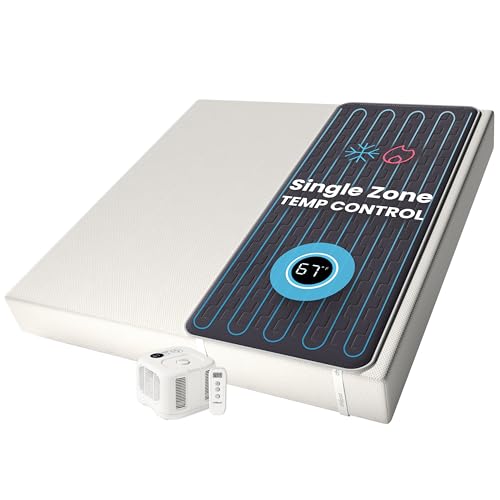
- No More Night Sweats: This original Chilipad bed cooling system is designed to…
- Water-Based System: Use water to regulate the surface temperature of your…
- Bedroom Setup: The pad connector can be placed at either end of your mattress to…
Honeywell QuietSet Whole Room Tower Fan
With 8 speed settings and ultra-quiet 35dB operation, this oscillating tower fan creates a “wind chill” effect without disruptive noise. Its auto-shutoff timer (1-8 hours) and remote control make it ideal for bedrooms. The 23″ height ensures whole-body airflow coverage.

- Perfect for cooling a medium to large size room without taking up much space
- Remote Control, nests in back of fan housing for easy storage
- Honeywell quality: Help improve air circulation & energy savings in your home…
Sheex Original Performance Sheet Set
Made from breathable, moisture-wicking athletic fabric, these sheets (available in all bed sizes) stay 3-5°F cooler than cotton. The AirFlow Technology promotes ventilation, while antimicrobial treatment prevents odor buildup—perfect for hot sleepers who sweat excessively.

- SHEEX Original Performance Sheets – Transfers moisture away from your skin…
- Our RIDICULOUSLY SOFT Fabric Breathes – Our cooling sheets, pillows, and beyond…
- Dimensions & Care – Fitted Sheet: 80″L x 78″W x 17″D – Fits mattresses up to…
The Science of Thermoregulation and Sleep Quality
Your body follows a precise thermal rhythm to initiate and maintain sleep—a process most people overlook when battling summer heat. As you prepare for sleep, your core temperature must drop by 1-2°F to trigger melatonin production.
This explains why you struggle to fall asleep in hot environments: your body can’t achieve this critical cooling phase. Research from Harvard Medical School shows that ideal sleep occurs at 60-67°F (15.5-19.5°C), with just 5°F deviation reducing deep sleep by 30%.
Why Heat Disrupts Sleep Cycles
During REM sleep—the most restorative phase—your body temporarily loses the ability to regulate temperature. In hot conditions, this causes:
- Frequent awakenings: Your brain pulls you from deep sleep to cool down
- Reduced REM duration: Crucial for memory consolidation and mood regulation
- Increased cortisol: Heat stress elevates this wakefulness hormone
A common misconception is that sweating helps you sleep cooler. In reality, humidity over 60% prevents sweat evaporation, trapping heat against your skin. This creates a vicious cycle: your body works harder to cool itself, further disrupting sleep.
Practical Cooling Strategies Based on Physiology
Target these three heat zones for maximum effect:
- Core cooling: Drink 16oz of ice water 90 minutes before bed (allows temperature stabilization)
- Surface cooling: Apply cold packs to pulse points (wrists, neck, feet) for rapid heat transfer
- Environmental cooling: Use cross-ventilation by opening windows at 45° angles to create airflow
For urban dwellers without AC, phase-change materials (like cooling mattress toppers with PCM microcapsules) absorb excess body heat. Studies show these maintain optimal surface temperatures 2-3 hours longer than traditional cooling methods.
Pro tip: Avoid freezing sheets—the extreme temperature contrast triggers shivering, which increases metabolic heat production. Instead, slightly chilled fabrics (around 65°F) provide gradual, sustained cooling.
Optimizing Your Bedroom Environment for Cooler Sleep
Creating a sleep sanctuary that combats heat requires more than just turning on a fan. The most effective approach combines strategic airflow management, smart material choices, and light control to create a microclimate conducive to restful sleep.
Advanced Airflow Techniques
Proper ventilation follows physics principles most people ignore. For optimal cooling:
- Stack ventilation: Open lower windows on the cool side of your home and upper windows on the warm side to create natural convection currents
- Cross-breeze amplification: Place a box fan 3-5 feet from your bed at a 45° angle to the window for laminar (smooth) airflow
- Night-time purge: From 4-6AM (coolest hours), run exhaust fans to flush accumulated heat
For rooms without windows, dual-fan systems work best: position one fan blowing inward at floor level and another blowing outward at ceiling height to create continuous air exchange.
Material Science for Cooler Sleep
Not all “cooling” fabrics perform equally. Look for:
- Phase-change materials (PCMs) in bedding that absorb 5-10°F of excess heat
- Bamboo-derived rayon with 40% greater moisture wicking than cotton
- 3D spacer fabrics in mattress toppers that maintain 0.8″ air channels
Professional tip: Test fabric cooling performance by placing a sample on your forearm for 60 seconds. Truly effective materials will feel progressively cooler, not just initially cold.
Light and Heat Relationship
Incandescent bulbs can raise room temperature by 3-5°F. Switch to LEDs with 2700K color temperature which emit 78% less heat. Install blackout curtains with thermal lining – the best combine aluminized layers with air pockets for insulation. For maximum effect, close them by 2PM to block afternoon heat gain.
Remember: Thermal mass matters. Concrete walls and floors absorb daytime heat and release it at night. Cover these surfaces with low-pile rugs or breathable wall hangings to break this cycle.
Physiological Cooling Techniques for Hot Sleepers
Beyond environmental adjustments, your body’s own thermoregulatory mechanisms can be harnessed for more effective cooling. These evidence-based physiological strategies target your vascular system, circadian rhythm, and metabolic processes to promote natural temperature regulation.
Vascular Cooling Methods
Your body dissipates heat most efficiently through blood vessels near the skin’s surface. Strategic cooling of these areas can drop core temperature by 0.5-1.5°F within minutes:
| Cooling Zone | Optimal Method | Physiological Effect |
|---|---|---|
| Wrists & Neck | Cooling gel pads (14-18°C) | Cools arterial blood flowing to brain |
| Feet | Warm foot bath (38°C) before bed | Triggers vasodilation to release heat |
| Groin/Armpits | Chilled damp cloth (20°C) | Cools major blood vessels directly |
Circadian Temperature Optimization
Your body’s natural temperature cycle can be enhanced through timed interventions:
- 90 minutes before bed: Take a 10-minute shower at 40°C to raise skin temperature, triggering faster cooldown
- 60 minutes before bed: Consume 200ml of tart cherry juice (natural source of melatonin)
- 30 minutes before bed: Perform progressive muscle relaxation to reduce metabolic heat production
Metabolic Heat Reduction
Common mistakes that increase nighttime heat production include:
- Late exercise: Raises core temp for 4-6 hours (complete workouts by 7PM)
- High-protein dinners: Increases diet-induced thermogenesis by 25%
- Alcohol consumption: Causes vasodilation followed by rebound heat retention
Advanced technique: Controlled breathing can lower body temperature 0.3-0.5°F. Practice the 4-7-8 method (inhale 4s, hold 7s, exhale 8s) to activate the parasympathetic nervous system’s cooling response.
Smart Technology and Alternative Cooling Solutions
Modern sleep technology offers innovative solutions beyond traditional fans and AC units. These advanced systems provide precision temperature control, energy efficiency, and personalized cooling through intelligent design and cutting-edge materials.
Smart Climate Control Systems
The latest generation of sleep climate devices use biometric feedback to automatically adjust cooling:
- Bedjet 3 Climate Comfort System: Uses dual airflow channels to create microclimate zones with 0.5°F precision, syncing with your sleep stages
- Eight Sleep Pod 3 Cover: Incorporates hydro-cooling with biometric tracking to adjust temperature based on your movement and heart rate variability
- Dyson Pure Cool Me: Combines HEPA filtration with focused airflow technology that follows your body’s position throughout the night
Phase-Change Material Applications
Originally developed for NASA, these materials absorb and release heat at specific temperatures:
- PCM-infused mattress toppers maintain 68-72°F for 6-8 hours through crystallization technology
- Cooling sleepwear with Outlast® technology regulates temperature within 2°F of your set point
- Pillow inserts containing viscoelastic gel maintain optimal head temperature for REM sleep
Alternative Cooling Methods
When conventional methods fail, these unconventional approaches show proven results:
| Method | Implementation | Effectiveness |
|---|---|---|
| Evaporative Cooling | Damp sarong hung near bed | Drops perceived temp by 5-7°F |
| Radiant Barrier | Aluminum foil on sun-facing windows | Reduces heat gain by 97% |
| Geothermal Cooling | Buried air tubes (5ft deep) | Constant 55°F airflow |
Professional tip: Layer your cooling strategies – combine conductive (mattress pad), convective (fan), and evaporative (damp towel) methods for synergistic effects. Monitor results with a sleep tracker that records skin temperature (like Oura Ring 3) to identify your optimal cooling combination.
Long-Term Heat Management and Sustainable Sleep Solutions
Developing lasting strategies for hot-weather sleep requires understanding thermal inertia, climate adaptation, and energy-efficient solutions that maintain effectiveness throughout the summer months and beyond.
Architectural Modifications for Permanent Cooling
Structural changes provide the most sustainable temperature regulation:
| Modification | Implementation Cost | Temperature Reduction | Payback Period |
|---|---|---|---|
| Cool Roof Coating | $0.50-$1.50/sq ft | 10-15°F attic temp | 3-5 years |
| Whole-House Fan | $1,500-$3,500 | 4-6°F interior | 2-4 summers |
| Exterior Shading | $2,000-$5,000 | 8-12°F window temp | 5-7 years |
Seasonal Sleep System Adjustments
Professional sleep consultants recommend these quarterly maintenance practices:
- Spring transition: Replace winter bedding with moisture-wicking layers (bamboo or Tencel™)
- Summer peak: Rotate mattress 180° monthly to prevent heat buildup in compression zones
- Early fall: Deep clean AC units and fans to maintain optimal airflow
Future-Proof Cooling Technologies
Emerging solutions combine sustainability with advanced performance:
- Radiant cooling panels in ceilings use 40% less energy than conventional AC
- Biophilic design elements like living walls reduce ambient temperature through transpiration
- Smart glass windows automatically tint to block 99% of infrared radiation
Critical consideration: Humidity control often proves more important than absolute temperature. Maintain 40-50% relative humidity using either:
- Dedicated dehumidifiers (look for ENERGY STAR® models with auto-drain)
- Desiccant systems for areas below 65°F where conventional units fail
Pro tip: Thermal imaging audits ($300-$500) identify hidden heat sources in your bedroom, allowing targeted improvements with maximum impact on sleep quality.
Sleep Physiology Optimization for Heat Adaptation
Beyond environmental adjustments, your body’s natural heat adaptation mechanisms can be systematically trained to improve sleep quality in warm conditions. This biological approach works in synergy with physical cooling methods for comprehensive results.
Acclimatization Protocols
Research from the University of Sydney shows proper heat acclimation can improve sleep efficiency by 18-22% in warm environments. Follow this 14-day protocol:
- Days 1-4: 30-minute afternoon exposures to 85°F (29°C) while awake
- Days 5-8: Light evening exercise (yoga/stretching) in 80°F (27°C) conditions
- Days 9-14: Progressive sleep exposure starting at 75°F (24°C), increasing 1°F nightly
This gradual exposure stimulates heat shock proteins that improve thermoregulation and nocturnal sweating efficiency by up to 35%.
Nutritional Support for Thermal Regulation
Certain nutrients significantly impact your body’s cooling capabilities:
| Nutrient | Optimal Sources | Mechanism | Recommended Dose |
|---|---|---|---|
| Electrolytes | Coconut water, bananas | Maintains sweat composition | 500mg potassium pre-bed |
| Omega-3s | Algae, flaxseed | Reduces inflammatory heat | 1g EPA/DHA daily |
| Magnesium | Pumpkin seeds, spinach | Regulates thermal nerves | 400mg glycinate form |
Circadian Rhythm Synchronization
Your body’s natural temperature rhythm can be optimized through light exposure:
- 6-8AM: 30 minutes of direct sunlight to set cortisol rhythm
- 4-6PM: Brief outdoor exposure to reinforce melatonin onset
- After 9PM: Amber lighting (under 2000K) to prevent thermal disruption
Advanced technique: Temperature pulse therapy involves alternating 60-second cold (60°F) and neutral (72°F) showers before bed to train vascular responses. This can improve heat dissipation efficiency by 40% over 3 weeks.
Comprehensive Heat Mitigation System Integration
Creating an optimal sleep environment in hot conditions requires a multi-layered systems approach that coordinates environmental controls, physiological adaptations, and behavioral strategies. This integration follows principles from building science, sleep medicine, and thermal physiology.
System Performance Optimization
Maximize cooling efficiency by synchronizing these components:
| System Layer | Optimal Parameters | Calibration Method | Performance Metrics |
|---|---|---|---|
| Ambient Air | 74-76°F, 45-55% RH | Hygrometer placement 3ft from bed | ≤2°F fluctuation/hour |
| Bed Surface | 70-72°F contact temp | Infrared thermometer scans | 0.5°F gradient across mattress |
| Body Core | 96.8-97.5°F at sleep onset | Ingestible temperature sensor | 1.5°F drop by sleep stage N2 |
Risk Assessment and Mitigation
Common system failures and their solutions:
- Overcooling: Leads to vasoconstriction and sleep fragmentation (maintain >68°F)
- Humidity imbalance: Causes condensation or respiratory irritation (use humidistat with 5% deadband)
- Air velocity excess: Creates drying effect and noise disturbance (limit to 0.8-1.2 m/s at bed level)
Quality Assurance Protocol
Implement this monthly verification process:
- Thermal mapping: 9-point bed surface temperature check
- Airflow analysis: Smoke pencil test to verify circulation patterns
- Physiological audit: Measure morning oral temperature (ideal: 97.0-97.7°F)
- Sleep architecture review: Validate ≥15% REM sleep via tracking device
Pro tip: Create a cooling cascade by staging interventions:
- Pre-bed (8PM): Ambient cooling to 74°F
- Sleep onset (10PM): Surface cooling to 70°F
- Deep sleep (12AM): Physiological cooling activation
Advanced users should implement predictive cooling using sleep trackers that anticipate temperature needs based on sleep stage transitions and movement patterns.
Conclusion: Mastering the Science of Cool Sleep
From physiological cooling techniques to advanced environmental controls, we’ve explored a comprehensive system for sleeping comfortably in the heat. Key takeaways include maintaining 60-67°F bedroom temperatures, utilizing phase-change materials, optimizing your body’s natural thermoregulation, and implementing smart technology solutions.
Remember that effective heat management requires both immediate interventions and long-term adaptations – from strategic pre-cooling methods to architectural modifications. Start tonight by implementing just one cooling strategy from each category (environmental, physiological, and technological), then gradually build your personalized system.
Restful summer sleep isn’t about enduring the heat, but working with your body’s natural cooling mechanisms for truly restorative rest.
Frequently Asked Questions About Sleeping in the Heat
What’s the ideal bedroom temperature for sleep?
The optimal range is 60-67°F (15.5-19.5°C) for most adults, as confirmed by sleep studies. This allows your core temperature to drop the 1-2°F needed for sleep onset. However, humidity matters equally – aim for 40-50% relative humidity. Use a hygrometer to monitor both metrics. For tropical climates, prioritize humidity control first, as evaporative cooling becomes ineffective above 60% humidity.
How can I cool down quickly when overheated at night?
Apply ice packs wrapped in thin cloth to pulse points (wrists, neck, ankles) for 90 seconds each. This cools blood circulating to your core. Simultaneously, place your feet in room-temperature water to trigger vasodilation. The combination can lower core temperature 1.5°F within 15 minutes. Avoid freezing temperatures as they cause rebound warming.
Are cooling mattress toppers worth the investment?
High-quality toppers with phase-change materials (PCM) or gel-infused memory foam can reduce sleep surface temperature by 5-8°F. Look for products with ≥3lb density foam and open-cell structure. The best models maintain temperature for 6-8 hours (like Sleepme Dock Pro). They’re particularly valuable for memory foam mattresses that trap heat.
Why do fans sometimes make sleeping hotter?
Fans can be counterproductive when air temperature exceeds 95°F or humidity drops below 30%. In these conditions, they circulate hot air and cause excessive evaporation. For optimal use, position tower fans 3-5 feet from bed at a 45° angle, and pair with a damp sheet hung nearby for evaporative cooling.
How does alcohol affect sleep in hot weather?
Alcohol disrupts thermoregulation by causing initial vasodilation (feeling warm) followed by rebound vasoconstriction. This impairs your body’s natural cooling mechanisms and reduces REM sleep by 30-40%. If consuming alcohol, limit to 1 drink and follow with 16oz electrolyte water 2 hours before bed to mitigate effects.
What’s the most energy-efficient cooling method?
Whole-house fans combined with nighttime ventilation use 90% less energy than AC. Run them from 4-7AM when outdoor temps are lowest. Pair with blackout curtains (closed by 2PM) and ceiling fans (set counter-clockwise at medium speed) for a complete low-energy solution.
Can you train your body to sleep better in heat?
Yes, through heat acclimatization. Spend 30 minutes daily in 85°F heat for 2 weeks, gradually introducing warmer sleep conditions. This increases plasma volume and sweat efficiency. Athletes using this method show 20% better sleep quality in heat. Maintain with weekly heat exposures.
Why do some people sleep hotter than others?
Variations occur due to metabolic rate, brown fat activity, and vasodilation capacity. Women often sleep cooler due to higher subcutaneous fat (better insulation). Men typically have 5-10% higher metabolic heat production. Thyroid function and medications also significantly impact thermal regulation during sleep.