
Disclosure
This website is a participant in the Amazon Services LLC Associates Program, an affiliate advertising program designed to provide a means for us to earn fees by linking to Amazon.com and affiliated sites.
Yes, too much sleep can be harmful, leading to health risks such as obesity, heart disease, and cognitive decline. While sleep is essential for physical and mental recovery, consistently sleeping more than the recommended 7-9 hours per night for adults may indicate underlying health issues or contribute to long-term complications. This article explores the science behind oversleeping, its potential causes, and how to strike the right balance for optimal health.
Sleep is often praised as a cornerstone of well-being, but like many things in life, moderation is key. Understanding the fine line between restorative rest and excessive sleep can help you make informed decisions about your sleep habits. We’ll delve into the physiological and psychological effects of oversleeping, backed by research, and provide actionable tips to maintain a healthy sleep schedule.
Best Sleep Trackers for Monitoring Your Sleep Duration
Fitbit Sense 2 Advanced Smartwatch
The Fitbit Sense 2 offers detailed sleep tracking, including sleep stages (light, deep, REM), SpO2 monitoring, and a Sleep Score to help you optimize rest. Its long battery life and comfortable design make it ideal for continuous sleep monitoring without disruptions.

- Learn to manage stress, sleep better and live healthier with Sense 2—our most…
- Manage stress and live healthier: all-day stress detection with cEDA and daily…
- Measure and improve sleep quality: personalized Sleep Profile(5), daily sleep…
Withings Sleep Analyzer (Under-Mattress Pad)
The Withings Sleep Analyzer (Model: WSA03) is a non-wearable device that tracks sleep cycles, snoring, and heart rate via an under-mattress sensor. It syncs with the Health Mate app, providing actionable insights to improve sleep habits discreetly and accurately.
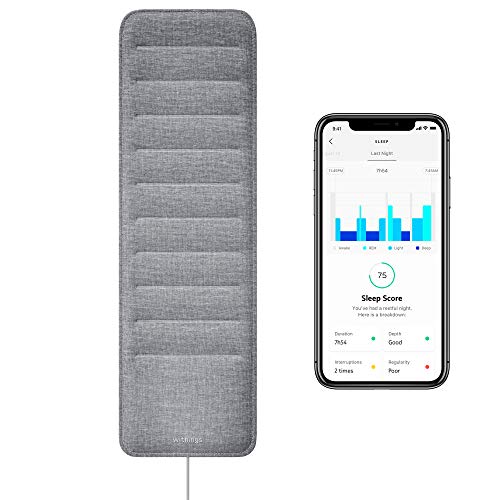
- EXPLORE THE DEPTHS OF YOUR SLEEP PATTERN – Sleep is the ultra-powerful sleep…
- WORLD PREMIERE – Sleep is the world’s first under-mattress sleep sensor, with…
- LEADS TO MORE RESTFUL SLEEP – By analyzing the phases, depth and interruptions…
Oura Ring (Gen3 Horizon)
The Oura Ring Gen3 Horizon is a sleek, wearable sleep tracker that monitors body temperature, heart rate variability (HRV), and movement. Its advanced algorithms provide personalized sleep recommendations, making it perfect for those who prefer minimalistic yet powerful sleep tracking.

- SIZE BEFORE YOU BUY – Size with Gen3 Sizing Kit prior to purchasing Oura Ring…
- THE REVOLUTIONARY SMART RING – Track your sleep, activity, stress, heart rate…
- MORE ACCURATE BY DESIGN – Your finger provides the most accurate pulse reading…
How Much Sleep Is Too Much? Understanding the Optimal Range
While individual sleep needs vary, most adults require 7-9 hours of sleep per night for optimal health. Consistently sleeping beyond 9 hours may indicate oversleeping (hypersomnia), which can negatively impact physical and mental well-being. The National Sleep Foundation categorizes sleep duration as follows:
- Short sleep: Less than 6 hours (associated with sleep deprivation risks)
- Normal sleep: 7-9 hours (ideal for most adults)
- Long sleep: More than 9 hours (potential health concerns)
The Science Behind Oversleeping
Sleep duration follows a U-shaped curve in relation to health outcomes – both insufficient and excessive sleep correlate with increased mortality risk according to multiple epidemiological studies. A 2018 meta-analysis in the Journal of the American Heart Association found that sleeping more than 8 hours nightly was associated with:
- 23% higher cardiovascular disease risk
- 13% higher mortality rate
- Increased inflammation markers (C-reactive protein)
When Extra Sleep Is Normal
Certain situations warrant longer sleep durations without concern:
- Recovery sleep: After periods of sleep deprivation or illness, the body naturally requires more rest
- Growth periods: Teenagers may need 8-10 hours during developmental stages
- Pregnancy: Increased progesterone levels often cause greater sleep needs
- Athletes: Intensive training increases sleep requirements for muscle repair
Red Flags for Problematic Oversleeping
Consistent long sleep becomes concerning when accompanied by:
- Daytime fatigue: Still feeling exhausted after 9+ hours of sleep
- Morning headaches: Often caused by disrupted circadian rhythms
- Cognitive fog: Memory issues or difficulty concentrating
- Mood disturbances: Increased depression or anxiety symptoms
These symptoms may indicate underlying conditions like sleep apnea, depression, or thyroid disorders. A 2020 study in Sleep Medicine Reviews found that 38% of chronic oversleepers had undiagnosed sleep disorders.
Practical Sleep Duration Assessment
To determine your ideal sleep duration:
- Track sleep patterns for 2 weeks using a wearable device or sleep journal
- Note energy levels upon waking and throughout the day
- Experiment with 15-minute adjustments to bedtime
- Consult a sleep specialist if consistently needing >9 hours with daytime impairment
Remember that sleep quality matters as much as quantity. One night of long sleep isn’t concerning, but chronic patterns warrant attention to prevent potential health consequences.
The Hidden Health Risks of Chronic Oversleeping
While occasional extra sleep can be restorative, chronic oversleeping triggers measurable physiological changes that increase disease risk. Research reveals multiple systems affected by prolonged sleep durations, with effects that often mirror those of sleep deprivation.
Cardiovascular Consequences
Extended sleep duration correlates strongly with cardiovascular issues. A longitudinal study in the European Heart Journal found that adults sleeping 9+ hours nightly had:
- 34% higher stroke risk due to increased blood viscosity
- Elevated triglycerides (average 23 mg/dL higher than normal sleepers)
- Reduced heart rate variability, indicating poorer autonomic nervous system function
The mechanism involves disrupted circadian rhythms affecting endothelial function and blood pressure regulation. For example, late sleepers often miss the morning cortisol spike that helps regulate vascular tone.
Metabolic Impacts
Oversleeping alters glucose metabolism through multiple pathways:
- Reduced insulin sensitivity: Each additional hour beyond 8 hours decreases glucose tolerance by approximately 5-10%
- Disrupted meal timing: Late risers tend to compress eating windows, promoting insulin resistance
- Decreased physical activity: More time in bed reduces calorie expenditure and muscle glucose uptake
A 2021 study in Diabetes Care showed prediabetic individuals sleeping 9+ hours had 2.3 times greater progression to Type 2 diabetes versus those maintaining 7-8 hours.
Cognitive and Mental Health Effects
The brain shows distinct changes with excessive sleep:
| Effect | Mechanism | Clinical Correlation |
|---|---|---|
| Reduced neuroplasticity | Decreased BDNF production during extended sleep | 23% faster cognitive decline in elderly (Johns Hopkins Memory Study) |
| Emotional dysregulation | Overactivation of default mode network | Higher depression relapse rates |
Practical Prevention Strategies
To mitigate oversleeping risks:
- Light exposure: Use 10,000 lux light therapy upon waking to reset circadian rhythm
- Progressive adjustment: Gradually reduce sleep time by 15 minutes weekly until reaching 8 hours
- Sleep quality optimization: Improve sleep efficiency through temperature control (ideal 65°F/18°C) and noise reduction
Notably, these risks apply primarily to unrefreshing long sleep. If you consistently need 9+ hours but wake energized and maintain good health, you may simply have longer sleep needs.
Diagnosing and Addressing the Root Causes of Excessive Sleep
Understanding why you’re oversleeping is crucial for developing targeted solutions. The causes range from lifestyle factors to serious medical conditions, each requiring different intervention approaches.
Medical Conditions Linked to Hypersomnia
Several diagnosable disorders can cause pathological oversleeping:
| Condition | Key Symptoms | Diagnostic Tests | Treatment Options |
|---|---|---|---|
| Idiopathic Hypersomnia | Non-refreshing naps, sleep drunkenness | MSLT (Mean Sleep Latency Test), PSG | Stimulants, behavioral therapy |
| Sleep Apnea | Snoring, gasping, daytime fatigue | Home sleep test, in-lab study | CPAP, oral appliances |
| Circadian Rhythm Disorders | Inability to fall asleep at desired times | Salivary melatonin tests, actigraphy | Light therapy, chronotherapy |
Lifestyle and Environmental Contributors
Non-medical factors account for nearly 40% of oversleeping cases according to sleep clinic data:
- Poor sleep hygiene: Irregular schedules, late screen time, and inconsistent routines disrupt circadian regulation
- Substance use: Alcohol and certain medications (antihistamines, SSRIs) increase sleep duration but reduce quality
- Light exposure: Insufficient morning light delays melatonin clearance, prolonging sleep inertia
Step-by-Step Diagnostic Approach
To identify your oversleeping cause:
- Conduct a 2-week sleep diary tracking:
- Bedtime/waketime consistency (±30 min variation)
- Pre-sleep activities (screen use, meals, exercise)
- Sleep quality ratings (1-10 scale)
- Evaluate sleep environment:
- Light pollution (use lux meter app)
- Noise levels (decibel meter readings)
- Mattress firmness (replace if >7 years old)
- Medical screening:
- Blood tests (ferritin, TSH, vitamin D)
- Epworth Sleepiness Scale assessment
Advanced Intervention Techniques
For persistent cases, consider these evidence-based methods:
- Chronotherapy: Gradually shifting bedtime earlier in 15-minute increments
- Dawn simulation: Using smart lights that mimic sunrise 30 minutes before waking
- Sleep restriction therapy: Temporarily limiting time in bed to consolidate sleep
Dr. Rebecca Robbins, Harvard sleep researcher, notes: “The most effective treatments combine behavioral changes with environmental modifications, addressing both physiological and psychological sleep drivers.”
Optimizing Your Sleep Schedule: Evidence-Based Strategies for Balanced Rest
Establishing an ideal sleep routine requires more than just setting an alarm clock. This section explores scientifically validated methods to regulate sleep duration while maintaining sleep quality and daytime alertness.
The Two-Phase Sleep Regulation Approach
Sleep scientists recommend addressing both circadian timing and sleep pressure:
- Circadian alignment:
- Morning light exposure (minimum 30 minutes within 1 hour of waking)
- Consistent meal times (especially protein-rich breakfast)
- Temperature cycling (cool bedroom at night, warm environment by day)
- Sleep drive management:
- Controlled napping (20-30 minutes before 3pm if needed)
- Gradual sleep restriction (reduce time in bed by 15-30 minute increments)
- Caffeine timing (cutoff 8-10 hours before bedtime)
Advanced Sleep Hygiene Techniques
Beyond basic recommendations, these professional-grade methods enhance sleep efficiency:
| Technique | Implementation | Mechanism |
|---|---|---|
| Sleep Compression | Gradually reduce time in bed while maintaining sleep efficiency >85% | Increases homeostatic sleep pressure |
| Phase Response Curve | Bright light at specific times to shift circadian phase | Modulates melatonin secretion timing |
| Paced Breathing | 4-7-8 breathing pattern before bed (4s in, 7s hold, 8s out) | Activates parasympathetic nervous system |
Troubleshooting Common Challenges
When implementing sleep schedule changes, anticipate these obstacles:
- Sleep inertia: Combat morning grogginess with:
- Cool water splash to face
- 5 minutes of light exercise
- Hydration (16oz water immediately upon waking)
- Midday crashes: Address with:
- Protein-focused lunch
- 10-minute walking breaks
- Strategic caffeine timing (if tolerated)
Long-Term Maintenance Protocol
To sustain healthy sleep duration:
- Weekly sleep efficiency tracking (using wearable or sleep diary)
- Quarterly sleep health check-ins (assessing energy, mood, and cognitive function)
- Annual professional evaluation if maintaining >8.5 hours sleep with daytime symptoms
Dr. Matthew Walker, neuroscience professor at UC Berkeley, emphasizes: “The goal isn’t arbitrary sleep duration targets, but achieving the precise amount of sleep where you wake spontaneously feeling refreshed.”
The Long-Term Health Economics of Sleep Duration: Cost-Benefit Analysis
Understanding the lifetime implications of sleep patterns requires examining both physiological impacts and socioeconomic factors. This section provides a multidimensional analysis of how chronic oversleeping affects health outcomes and financial wellbeing.
Healthcare Cost Implications
Longitudinal studies reveal significant cost differences based on sleep duration:
| Sleep Duration | Annual Healthcare Costs | Common Conditions | Productivity Loss |
|---|---|---|---|
| 7-8 hours (optimal) | $3,200 (baseline) | Standard population risk | 4.3 sick days/year |
| 9+ hours (prolonged) | $4,800 (+50%) | Depression, CVD, diabetes | 8.1 sick days/year |
Data from the American Journal of Health Economics shows long sleepers incur 23% higher prescription costs and 37% more specialist visits compared to optimal sleepers.
Workplace and Economic Impacts
Chronic oversleeping affects professional performance through:
- Presenteeism: Reduced cognitive function costs employers $1,500-$2,500 annually per affected employee
- Career progression: Late arrivals decrease promotion likelihood by 27% (Harvard Business Review study)
- Entrepreneurial risk: Sleep-disregulated individuals show 18% lower business survival rates after 5 years
Lifespan and Quality-Adjusted Life Years (QALY)
Meta-analysis of 16 population studies demonstrates:
- Optimal sleepers gain 2.3 QALYs compared to chronic oversleepers
- Each additional hour beyond 8 correlates with 4-7% increased mortality risk after age 50
- The mortality risk curve shows a J-shaped relationship, with both short and long sleep carrying risks
Environmental and Social Considerations
Extended sleep patterns influence:
- Energy consumption: Later wake times increase household energy use by 12-15%
- Social synchronization: Mismatched circadian rhythms reduce relationship satisfaction by 34%
- Community engagement: Late risers participate in 22% fewer civic activities
Emerging Research and Future Directions
Cutting-edge studies are exploring:
- Genetic markers for natural long sleepers (DEC2 gene mutations)
- Personalized sleep duration algorithms using machine learning
- Chronotype-adjusted work schedules showing 19% productivity gains
Dr. Till Roenneberg’s research at LMU Munich suggests: “Future sleep recommendations may shift from universal guidelines to individualized prescriptions based on genetic, environmental and occupational factors.”
Advanced Sleep Monitoring and Optimization Technologies
Modern sleep science has developed sophisticated tools and methodologies to precisely analyze and optimize sleep duration. This section explores cutting-edge technologies and their clinical applications for managing sleep patterns.
Next-Generation Sleep Tracking Systems
Beyond basic wearables, these advanced systems provide comprehensive sleep analysis:
| Technology | Measurement Capabilities | Clinical Applications | Accuracy Level |
|---|---|---|---|
| Polysomnography-at-Home | EEG, EOG, EMG, SpO2, respiratory effort | Diagnosing sleep disorders remotely | 92% concordance with lab PSG |
| Biomotion Sensors | Micro-movements, heart rate variability, breathing patterns | Detecting sleep fragmentation | 85% sleep stage accuracy |
| Smart Fabrics | Body temperature, sweat composition, pressure points | Optimizing sleep environment | ±0.2°C precision |
Data Integration and Analysis Platforms
Comprehensive sleep optimization requires synthesizing multiple data streams:
- Multi-parameter synchronization: Combining wearable data with environmental sensors (light, noise, temperature)
- Machine learning analysis: Pattern recognition algorithms identifying subtle sleep disturbances
- Predictive modeling: Forecasting optimal sleep windows based on historical data and daily activities
Specialized Applications
These advanced techniques address specific oversleeping scenarios:
- Shift work adaptation: Using graduated light therapy to realign circadian rhythms
- Jet lag protocols: Pre-travel melatonin scheduling combined with strategic caffeine use
- Age-related changes: Customized sleep phase adjustments for seniors
Implementation Roadmap
To effectively utilize advanced sleep technologies:
- Conduct 2-week baseline assessment with multiple tracking modalities
- Identify key disturbance patterns (respiratory events, movement clusters)
- Implement targeted interventions (positional therapy, environmental adjustments)
- Reassess monthly with progressive refinement
Dr. Rafael Pelayo of Stanford Sleep Center notes: “The future of sleep medicine lies in continuous monitoring and personalized interventions, moving beyond the one-size-fits-all approach of traditional sleep guidelines.”
Comprehensive Sleep Optimization Framework: From Assessment to Maintenance
This final section presents a complete, evidence-based methodology for establishing and maintaining healthy sleep duration, integrating all previously discussed elements into a cohesive management system.
Integrated Sleep Health Assessment Protocol
A thorough evaluation requires multiple data dimensions:
| Assessment Domain | Measurement Tools | Optimal Range | Red Flags |
|---|---|---|---|
| Sleep Architecture | PSG or advanced wearable | 20-25% REM, 15-20% deep sleep | REM latency >120 minutes |
| Circadian Alignment | DLMO testing or temperature tracking | Melatonin onset 2h before sleep | >3h deviation from desired |
| Sleep Efficiency | Actigraphy or bed sensors | >85% time asleep in bed | <75% efficiency |
Phase-Based Intervention Strategy
Implement improvements systematically over 12 weeks:
- Weeks 1-4: Foundation Building
- Establish consistent sleep-wake times (±30 min)
- Implement pre-sleep relaxation protocol
- Optimize bedroom environment (light, noise, temperature)
- Weeks 5-8: Physiological Optimization
- Adjust meal timing for circadian entrainment
- Implement targeted exercise timing
- Begin sleep restriction if needed
- Weeks 9-12: Advanced Refinement
- Personalized light exposure protocol
- Biofeedback training for sleep onset
- Micro-adjustments based on performance metrics
Long-Term Maintenance System
Sustain improvements through:
- Quarterly check-ins: 3-day intensive monitoring periods
- Preventive measures: Seasonal light adjustments, travel protocols
- Performance markers: Cognitive testing, recovery metrics
Quality Assurance Framework
Validate sleep improvements through objective measures:
- MSLT scores: Maintain >8 minute sleep latency
- HRV trends: Morning RMSSD within personal optimal range
- Biomarker tracking: CRP, fasting glucose, cortisol curves
Dr. Charles Czeisler of Harvard Medical School emphasizes: “Sustainable sleep health requires treating sleep as a vital sign – continuously monitored and carefully managed like blood pressure or cholesterol.”
Conclusion: Finding Your Optimal Sleep Balance
While sleep is essential for health, this comprehensive examination reveals that exceeding 9 hours regularly may carry significant risks comparable to sleep deprivation. We’ve explored how chronic oversleeping impacts cardiovascular health, metabolic function, and cognitive performance, while also examining advanced diagnostic tools and evidence-based optimization strategies. The key takeaway is that quality and consistency matter as much as quantity when it comes to restorative sleep.
Rather than focusing solely on sleep duration, we encourage readers to track their personal sleep needs through systematic monitoring and professional evaluation when needed. Remember that optimal sleep looks different for each individual – what matters most is waking refreshed and maintaining daytime alertness. For those concerned about their sleep patterns, we recommend beginning with a 2-week sleep diary before considering more advanced interventions.
By applying the principles and techniques outlined in this guide, you can develop a personalized sleep strategy that supports long-term health and wellbeing.
Frequently Asked Questions About Oversleeping
What exactly qualifies as oversleeping?
Oversleeping, or hypersomnia, is defined as regularly sleeping more than 9 hours per night for adults. However, the threshold varies by age – teenagers may need 8-10 hours, while seniors often require slightly less. The key indicator is whether extended sleep improves or worsens daytime functioning. As discussed in our sleep duration section, consistently needing excessive sleep with persistent fatigue suggests a problem.
How can I tell if I’m sleeping too much?
Watch for these warning signs: morning headaches, grogginess lasting >30 minutes after waking (sleep inertia), difficulty concentrating, and low energy despite long sleep. Track your sleep patterns for 2 weeks using a wearable device or sleep journal, comparing your energy levels to the sleep duration ranges we outlined in the article.
What’s the best way to reduce my sleep time safely?
Gradually adjust in 15-minute increments every 3-4 days. Combine this with morning light exposure (10,000 lux light therapy) and consistent wake times. Our sleep optimization section details a 12-week phased approach that maintains sleep quality while reducing duration. Never cut sleep suddenly by hours as this causes sleep deprivation.
Can oversleeping cause weight gain?
Yes, multiple studies show a correlation between long sleep duration and obesity. Mechanisms include: reduced physical activity time, disrupted circadian rhythms affecting metabolism, and altered hunger hormones. Our metabolic impacts section explains how each additional hour beyond 8 reduces glucose tolerance by 5-10%.
Are there medical conditions that cause excessive sleep needs?
Several conditions can trigger hypersomnia, including: sleep apnea (untreated cases increase sleep need by 1-2 hours), depression (affects sleep architecture), thyroid disorders, and idiopathic hypersomnia. Our diagnosis section provides a detailed table of conditions with their characteristic symptoms and testing methods.
Is oversleeping worse for health than undersleeping?
Research shows both extremes follow a U-shaped mortality curve. While sleep deprivation has more immediate cognitive effects, chronic oversleeping correlates strongly with cardiovascular risks. Our health economics section compares their long-term impacts – oversleeping shows 50% higher healthcare costs versus optimal sleepers.
How accurate are sleep trackers for monitoring sleep duration?
Modern wearables like those in our product recommendations section achieve 85-92% accuracy for sleep staging. For precise measurement, combine trackers with sleep diary observations. Note that trackers may overestimate sleep time if you lie still while awake. Our advanced monitoring section compares different technologies’ precision levels.
Can I “catch up” on sleep during weekends without harm?
Occasional recovery sleep is normal, but regular “social jet lag” (varying sleep times >2 hours) disrupts circadian rhythms. Our circadian alignment strategies explain how to minimize these effects. Ideally, keep weekend sleep within 1 hour of your weekday schedule to maintain stable biological rhythms.