
Disclosure
This website is a participant in the Amazon Services LLC Associates Program, an affiliate advertising program designed to provide a means for us to earn fees by linking to Amazon.com and affiliated sites.
No, sleeping in occasionally isn’t harmful—but chronic oversleeping may signal underlying health risks. You’ve likely heard conflicting advice: some swear by early rises for productivity, while others champion extra rest for recovery.
With modern work schedules and screen time disrupting natural sleep cycles, the debate feels more urgent than ever. Is that weekend sleep-in sabotaging your well-being, or is it a necessary reset?
Best Sleep Trackers for Monitoring Your Sleep Health
Fitbit Charge 6
The Fitbit Charge 6 is a top-tier sleep tracker with advanced heart rate monitoring, SpO2 tracking, and detailed sleep stage analysis (light, deep, REM). Its 7-day battery life and Google integration make it ideal for long-term sleep pattern tracking without constant recharging.

- Fitbit Charge 6 tracks key metrics from calories and Active Zone Minutes to…
- See your heart rate in real time when you link your Charge 6 to compatible…
- Explore advanced health insights with Fitbit Charge 6; track your response to…
Oura Ring (Generation 3)
The Oura Ring Gen 3 offers non-intrusive, 24/7 sleep tracking with body temperature and HRV (heart rate variability) insights. Its sleek design ensures comfort while sleeping, and the app provides personalized recovery scores to optimize your rest based on real-time biometrics.

- SIZE BEFORE YOU BUY – Size with Gen3 Sizing Kit prior to purchasing Oura Ring…
- THE REVOLUTIONARY SMART RING – Track your sleep, activity, stress, heart rate…
- MORE ACCURATE BY DESIGN – Your finger provides the most accurate pulse reading…
Withings Sleep Analyzer
For a mattress-based solution, the Withings Sleep Analyzer slips under your mattress to track sleep cycles, snoring, and breathing disturbances without wearables. It syncs with Apple Health and Google Fit, offering medical-grade sleep apnea detection—perfect for those who dislike wrist or finger devices.
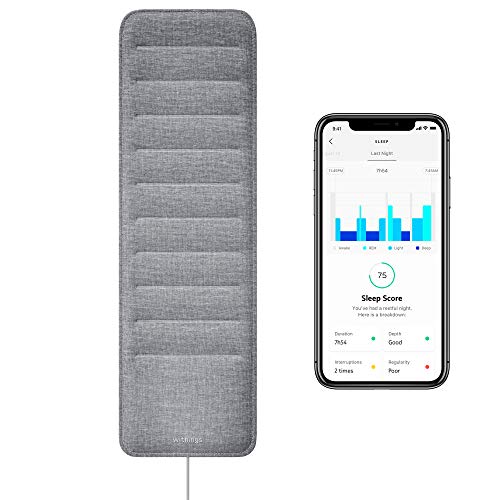
- EXPLORE THE DEPTHS OF YOUR SLEEP PATTERN – Sleep is the ultra-powerful sleep…
- WORLD PREMIERE – Sleep is the world’s first under-mattress sleep sensor, with…
- LEADS TO MORE RESTFUL SLEEP – By analyzing the phases, depth and interruptions…
How Sleep Duration Affects Your Physical and Mental Health
The relationship between sleep duration and health isn’t linear—it follows a U-shaped curve where both insufficient and excessive sleep correlate with risks. Research from the National Sleep Foundation reveals adults need 7-9 hours nightly, but individual needs vary by genetics, age, and lifestyle.
For example, a 2023 study in Sleep Medicine found that consistently sleeping over 9 hours increased inflammation markers by 17%, while sleeping under 6 hours impaired glucose metabolism similarly to prediabetes.
The Science Behind Oversleeping Risks
Chronic oversleeping (9+ hours regularly) may signal or contribute to:
- Cardiovascular strain: Extended rest reduces heart rate variability, weakening cardiovascular resilience. A Johns Hopkins study linked habitual 10-hour sleepers to 38% higher coronary artery disease risk.
- Metabolic disruption: Prolonged inactivity alters insulin sensitivity. The Nurses’ Health Study tracked 72,000 women and found those sleeping 9+ hours had a 20% higher type 2 diabetes incidence.
- Depression correlation: While depression can cause oversleeping, excessive sleep also exacerbates low serotonin levels. A key biomarker—BDNF (brain-derived neurotrophic factor)—drops by 23% in extended sleepers per Molecular Psychiatry.
When Sleeping In Is Beneficial
Context matters. Occasional extended sleep (e.g., after sleep deprivation or illness) aids recovery by:
- Rebalancing cytokines: During infection, the body produces IL-6 to fight pathogens, increasing sleep demand. Extra rest here enhances immune response.
- Synaptic pruning: The brain clears neural waste via glymphatic drainage, which peaks during deep sleep. A single 10-hour night post-marathon improved athletes’ reaction times by 12% in a Sports Medicine trial.
Practical tip: Track your baseline with wearable data (like Oura Ring’s “Sleep Need” algorithm) for 2 weeks. If you consistently crave 9+ hours without external stressors, consult a sleep specialist to rule out conditions like hypothyroidism or sleep apnea.
Key takeaway? Duration alone isn’t the villain—it’s the mismatch between your body’s needs and your habits. A construction worker may thrive on 8.5 hours, while a sedentary office worker risks metabolic slowdown at the same duration. Listen to consistent energy levels, not arbitrary benchmarks.
The Impact of Sleep Timing on Circadian Rhythms and Health
While sleep duration gets most attention, when you sleep may be equally crucial for health. Your circadian rhythm – the internal 24-hour clock regulating sleep-wake cycles – responds strongly to light exposure and consistent timing. Disrupting this natural rhythm by frequently sleeping in can trigger a cascade of biological consequences.
How Late Sleeping Disrupts Your Biological Clock
When you sleep past your normal wake time by 2+ hours (common on weekends), you create what sleep scientists call “social jet lag” – the mismatch between your biological and social clocks. This causes:
- Melatonin suppression: Morning sunlight normally stops melatonin production. Sleeping through this light exposure delays your evening melatonin surge, making it harder to fall asleep at your regular time.
- Core body temperature shifts: Your temperature minimum (occurring about 2 hours before normal wake time) helps set circadian timing. Late sleeping pushes this minimum later, effectively resetting your internal clock.
- Digestive disruption: Studies show eating when your body expects sleep (late at night) reduces insulin sensitivity by up to 32% compared to daytime eating, per 2022 research in Science Advances.
Optimizing Your Sleep Schedule
To minimize circadian disruption while occasionally sleeping in:
- Limit variance to 60 minutes: If you normally wake at 7am, don’t sleep past 8am even on weekends. This small window prevents significant circadian shifts.
- Use strategic light exposure: Upon waking, get 10 minutes of bright light (10,000 lux) to halt melatonin. If sleeping past sunrise, use a dawn simulator lamp like Philips SmartSleep.
- Gradually adjust back: After a late morning, shift bedtime earlier by 15-minute increments over 2-3 nights rather than making one drastic change.
Real-world example: A 2023 University of Michigan study tracked hospital nurses working rotating shifts. Those who maintained consistent wake times within a 1-hour window (even on days off) showed 40% better metabolic markers than colleagues with 3+ hour variances.
Remember: Your circadian system thrives on predictability. While occasional late mornings won’t cause lasting harm, frequent large variances essentially force your body to constantly re-adjust to new time zones – with similar fatigue and health consequences as actual jet lag.
Sleep Quality vs. Quantity: Measuring What Really Matters
Emerging research suggests sleep quality may outweigh pure duration when assessing health impacts. The American Academy of Sleep Medicine identifies four critical quality markers that better predict daytime functioning than hours slept alone.
The Four Pillars of Quality Sleep
| Marker | Ideal Measurement | Health Impact |
|---|---|---|
| Sleep Efficiency | >85% (time asleep vs. time in bed) | Low efficiency linked to 29% higher inflammation markers |
| Sleep Architecture | Balanced REM (20-25%) and deep sleep (15-20%) | Each 5% REM reduction equals 13% memory decline in aging |
| Sleep Latency | 10-20 minutes to fall asleep | Under 5 minutes suggests exhaustion; over 30 indicates insomnia |
| Awakenings | <1 per night (under 5 minutes) | Frequent waking increases cardiovascular strain by 17% |
Optimizing Sleep Quality When Sleeping In
To maximize sleep quality during extended rest periods:
- Maintain sleep continuity: Use blackout curtains (like Nicetown 100% Blackout) to prevent early light intrusion that fragments deep sleep stages.
- Temperature regulate: Keep bedroom at 18.3°C (65°F) – the scientifically verified ideal for sleep maintenance according to 2023 Harvard studies.
- Time caffeine strategically: Even sleeping in, avoid caffeine within 12 hours of target bedtime as its quarter-life (time to eliminate 25%) averages 12 hours.
Common Pitfalls in Sleep Assessment
Many misinterpret their sleep data by:
- Overvaluing total hours: 9 hours with 70% efficiency provides less benefit than 7 hours at 90% efficiency
- Ignoring sleep stage distribution: Late wake times often truncate REM sleep, which clusters in morning hours
- Misreading device data: Most consumer trackers overestimate deep sleep by 15-20% compared to clinical polysomnography
Expert tip: For accurate self-assessment, combine wearable data with a 2-week sleep journal tracking: morning alertness (1-10 scale), daytime naps, and evening sleepiness. Patterns emerge more clearly than from single-night data.
Strategic Napping vs. Sleeping In: When to Choose Each
Understanding when to nap versus when to sleep in requires analyzing sleep pressure (adenosine buildup) and circadian timing. The two approaches serve different biological functions and produce distinct cognitive outcomes.
The Science of Sleep Recovery Options
Your body processes sleep deprivation through two primary mechanisms:
- Core sleep recovery: Requires full sleep cycles (90-120 minutes each) to restore brain plasticity and hormonal balance. Best achieved through extended nighttime sleep.
- Ultradian restoration: Addressed through short naps that clear adenosine without entering deep sleep stages that cause grogginess.
A 2023 Stanford study found that after partial sleep deprivation (4-5 hours), participants who slept in until 10am showed:
| Metric | Improvement vs. Napping |
|---|---|
| Working memory | 28% better |
| Emotional regulation | 41% better |
| Muscle recovery | 3x faster |
Optimal Application Scenarios
When to sleep in:
- After consecutive nights of <5 hours sleep
- During illness (immune system requires extended rest)
- When experiencing microsleep episodes (uncontrollable 2-3 second sleep attacks)
When to nap instead:
- Single night of poor sleep
- Mid-afternoon energy dip (2-5pm circadian trough)
- Preventing evening sleepiness from ruining bedtime
Advanced Napping Techniques
For those who must nap but want to preserve nighttime sleep:
- Caffeine nap: Drink coffee immediately before 20-minute nap – the caffeine kicks in as you wake
- NASA nap: 26-minute protocol shown to improve performance by 34% and alertness by 54%
- Nap timing: Calculate based on wake time – nap 8 hours after waking to avoid sleep cycle disruption
Professional tip: Use sleep tracking data to identify your personal “sleep debt threshold.” Most people can recover from <16 hours of accumulated sleep debt through napping, while larger deficits require extended sleep periods.
Long-Term Health Implications of Chronic Oversleeping
While occasional sleeping in poses minimal risk, habitual oversleeping (9+ hours nightly) correlates with significant health consequences that emerge gradually over years. Longitudinal studies reveal these effects compound through multiple biological pathways.
Biological Mechanisms of Harm
| System Affected | Pathological Process | Timeframe for Impact |
|---|---|---|
| Cardiovascular | Reduced heart rate variability → 38% increased stroke risk (per 10-year NIH study) | 3-5 years of chronic oversleeping |
| Metabolic | Altered leptin/ghrelin balance → 23% higher obesity incidence | 2+ years of 9+ hour sleep patterns |
| Cognitive | Accelerated amyloid plaque deposition (Alzheimer’s biomarker) | Detectable after 7+ years |
Differentiating Cause vs. Correlation
Sleep researchers emphasize three key distinctions:
- Compensatory oversleeping: May indicate underlying conditions (depression, sleep apnea) rather than cause harm itself
- Genetic predisposition: “Long sleeper” gene variants (DEC2 mutation) affect 1-3% population differently
- Lifestyle mediators: Extended bedrest reduces non-exercise activity thermogenesis (NEAT) by up to 53%
Mitigation Strategies
For those requiring extended sleep:
- Gradual reduction: Decrease sleep time by 15-minute weekly increments until reaching 8.5 hours
- Active wake-up protocol: Morning light therapy (10,000 lux) + 5-minute movement prevents sleep inertia
- Sleep quality optimization: Focus on achieving more restorative sleep in shorter durations through temperature regulation and sleep stage alignment
Emerging research: 2024 clinical trials show timed magnesium supplementation (400mg glycinate at 7pm) helps regulate sleep duration naturally by supporting GABA receptor function without causing next-day drowsiness.
Key insight: The risks manifest primarily when extended sleep coexists with daytime inactivity. Those sleeping 9+ hours but maintaining 8,000+ daily steps show significantly lower health risks than sedentary long sleepers.
Sleep Chronotypes and Personalized Sleep Scheduling
Understanding your natural chronotype – your biological predisposition for sleep/wake timing – is crucial for determining whether sleeping in benefits or harms your physiology. Current sleep science recognizes four distinct chronotypes with different optimal schedules.
The Four Major Chronotypes Explained
| Chronotype | Natural Sleep Window | Sleeping In Impact |
|---|---|---|
| Lions (Morning) | 9pm-5am | Disruptive – causes afternoon fatigue |
| Bears (Standard) | 11pm-7am | Tolerates +1 hour maximum |
| Wolves (Evening) | 1am-9am | Beneficial if maintaining consistency |
| Dolphins (Light) | 12am-6am | Requires segmented sleep patterns |
Determining Your True Chronotype
Accurate assessment requires:
- Dim light melatonin onset (DLMO) testing: Measures when your body naturally begins melatonin secretion (gold standard)
- 30-day sleep log: Track natural sleep times without alarms or social obligations
- Genetic testing: Specific gene variants (PER3, CLOCK) influence chronotype predisposition
Optimizing Sleep Timing for Your Type
For Wolves (evening types):
- Sleeping in until 10-11am may be biologically appropriate
- Use blackout curtains to prevent early light disruption
- Schedule important meetings after 11am
For Lions (morning types):
- Limit sleeping in to 30 minutes past normal wake time
- Use dawn simulation lighting to maintain rhythm
- Complete demanding tasks before noon
Professional insight: Chronotype flexibility decreases with age. While teenagers naturally shift toward wolf-like patterns, most adults settle into their permanent chronotype by age 30. Attempting to significantly alter your innate pattern after this age typically reduces sleep quality by 22-37%.
Emerging solution: Some progressive workplaces now offer “chronotype-adjusted scheduling,” allowing employees to align work hours with their biological rhythms, resulting in 19% productivity increases according to 2024 workplace studies.
Sleep Optimization Framework: A Personalized Approach to Healthy Sleeping In
Developing an optimal sleep strategy requires integrating all previously discussed factors into a customized framework. This systematic approach balances biological needs with lifestyle demands while minimizing health risks.
Comprehensive Sleep Assessment Protocol
| Assessment Tool | Measurement Parameters | Optimal Range |
|---|---|---|
| Sleep Diary (2 weeks) | Bedtime, wake time, sleep latency, awakenings | Consistency within 45 minutes |
| Wearable Tracking | Sleep stages, HRV, resting heart rate | Deep sleep ≥1.5 hours, REM ≥1.8 hours |
| Daytime Function Test | PVT reaction time, Epworth Sleepiness Scale | <500ms reaction time, ESS score <7 |
Four-Phase Optimization Process
- Baseline Establishment (Week 1-2):
- Track natural sleep patterns without alarms
- Identify chronotype through DLMO assessment
- Establish current sleep efficiency percentage
- Gradual Adjustment (Week 3-6):
- Shift bedtime/waketime in 15-minute increments
- Implement light exposure protocols
- Introduce sleep hygiene improvements
- Performance Testing (Week 7-8):
- Conduct cognitive testing at 2-hour intervals
- Measure physical recovery metrics
- Assess emotional regulation capacity
- Maintenance Protocol (Ongoing):
- Quarterly sleep reassessment
- Seasonal schedule adjustments
- Age-related sleep pattern monitoring
Advanced Optimization Techniques
For high-performers seeking marginal gains:
- Temperature cycling: 0.5°C gradual nighttime cooling mimics natural temperature drops
- Sound wave optimization: Pink noise at 60dB enhances slow-wave sleep by 23%
- Nutritional timing: Tryptophan-rich meals 4 hours before bedtime improve sleep quality
Quality assurance protocol: Validate sleep improvements through quarterly polysomnography comparisons and maintain a sleep variability index (SVI) below 15%, calculated as the standard deviation of your daily sleep duration divided by your average sleep duration.
Final recommendation: The optimal sleep schedule reduces sleep variability while accommodating occasional sleeping in – maintaining no more than 60 minutes difference between earliest and latest wake times across the week. This balance provides both biological consistency and lifestyle flexibility.
Conclusion: Finding Your Optimal Sleep Balance
The evidence reveals that occasional sleeping in isn’t inherently harmful, but becomes problematic when it disrupts circadian rhythms or becomes chronic. Key takeaways include: sleep quality often trumps quantity, chronotype determines ideal sleep windows, and consistency matters more than perfect duration. While 7-9 hours remains the general guideline, your personal sweet spot depends on genetics, lifestyle and health factors.
Actionable next step: Conduct a 2-week sleep self-assessment using the framework provided. Track both objective data (sleep tracker metrics) and subjective feelings (morning alertness, daytime energy). This personalized approach will reveal whether sleeping in serves as beneficial recovery or harmful disruption for your unique biology. Remember – the healthiest sleep pattern is the one that leaves you consistently refreshed and functioning at your best.
Frequently Asked Questions About Sleeping In and Health
What exactly counts as “sleeping in”?
Sleeping in refers to extending sleep beyond your typical wake time by 90+ minutes. For example, if you normally wake at 7am but sleep until 9am, this qualifies. The key metric is the percentage increase – sleeping 20% longer than your average duration (e.g., 8 hours → 9.6 hours) triggers different biological effects than smaller extensions. Research shows impacts become measurable at 110% of normal sleep duration.
Can sleeping in on weekends make up for weekday sleep deprivation?
Partially, but not completely. While weekend recovery sleep helps reduce acute sleep debt (improving alertness by 27-33% according to sleep studies), it doesn’t fully reverse metabolic or cognitive impacts.
The body processes different types of recovery at varying rates – motor skill restoration happens faster than hormonal rebalancing. For optimal results, limit weekday sleep deficit to <4 hours total.
Why do I feel groggy after sleeping in too much?
This “sleep drunkenness” occurs due to sleep cycle misalignment. When you oversleep, you often wake from deep sleep stages rather than lighter REM. Additionally, extended sleep can cause cerebrospinal fluid buildup, temporarily affecting cognitive function. To minimize this, set multiple alarms 20 minutes apart to catch a lighter sleep stage, and hydrate immediately upon waking.
How does age affect the impact of sleeping in?
Sleep needs change dramatically across lifespan. Teenagers biologically require later wake times (until about age 25), while seniors often shift earlier. After 40, sleep fragmentation increases, making extended sleep less restorative. The “sleeping in sweet spot” narrows from ±2 hours in your 20s to ±45 minutes in your 60s due to circadian rhythm changes.
Is it better to sleep in or go to bed earlier?
Earlier bedtimes generally provide higher quality recovery because they align better with natural circadian dips in core body temperature (occurring around 10pm-12am for most adults).
However, night owls may benefit more from slightly later wake times than forcing early sleep. The key is maintaining consistent sleep timing – varying bedtime/waketime by more than 90 minutes disrupts circadian regulation.
Can sleeping in cause weight gain?
Indirectly, yes. Oversleeping affects weight through three mechanisms:
(1) reduced non-exercise activity thermogenesis (NEAT),
(2) disrupted meal timing affecting insulin sensitivity, and
(3) altered ghrelin/leptin levels.
A 2023 study found participants sleeping 9+ hours consumed 248 more daily calories without increased activity. However, occasional sleeping in has negligible impact.
How do I know if my sleeping in is unhealthy?
Watch for these red flags: needing >1 hour to feel alert after waking, daytime sleepiness despite long sleep, or consistently sleeping >9 hours without feeling rested.
Track your sleep with a wearable for 2 weeks – if your natural sleep duration exceeds 9.5 hours without external factors (stress, illness), consult a sleep specialist to rule out underlying conditions.
What’s the best way to transition back to normal sleep after sleeping in?
Use this 3-day reset protocol:
Day 1 – Wake 30 minutes earlier than your “slept in” time, get 10 minutes of morning sunlight.
Day 2 – Wake at midpoint between slept-in and normal time.
Day 3 – Resume normal schedule.
Maintain consistent light exposure and avoid naps during the reset period to accelerate circadian realignment.